Meet The Harvard Neuroscientist With $650M In Exits | Agentic EP 09
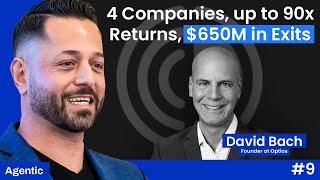
This is a YouTube video titled "Meet The Harvard Neuroscientist With $650M In Exits | Agentic EP 09" published in February 2025. It features a podcast-style interview hosted by George Bandarian, a general partner at Untapped Ventures, with David Bach, a Harvard-educated doctor and serial entrepreneur with multiple successful exits totaling $650 million. The discussion centers on Bach's journey from medicine to entrepreneurship, the founding and mission of Optios, an AI-based neurotech company focused on human cognitive performance and flow states, and insights on tech transfer, startup founding, and fundraising strategies. The content is a detailed, single-speaker interview with George Bandarian as the host and David Bach as the guest, exploring neurotechnology, AI, and venture capital lessons.
Tell us what's Optios and why is it so special?
We are defined as an AI based neuro performance company and what was so amazing for Optios was what I discovered is that the US government, mainly through the DoD, has now spent $7.2 billion funding research around this idea of human optimization. Particularly cognitively, that IP was just gathering dust. Now I see a market need. Now I see ip. I'm going to now bring those together and see if I can actually, actually create a commercial application to build a bridge from the tech to the market need. The mistake I made the first time around was I came up with an idea. I went to people, they said, oh that sounds great, but now I know if somebody says that sounds great and I don't see either fear or greed in their face, it's not a good idea.
You've also been on the VC side. So what's the biggest lessons you've learned that you think would be valuable for founders going through their first or second round of funding? That helps you?
I view it as a psychological game. If I'm going to sell to you, I need to induce fear or grieving you. Many investors don't have the information they need to make intelligent decisions. And so I want to know what are they afraid of, what are they greedy about? How do I tell the story to induce the emotional sense that they're missing out? Right now it's very hard to raise money, but if you have the right AI story, like you're going to have 500 investors banging down your door.
Welcome to the Agentic podcast where we dive deep with the pioneer AI founders reimagining business and investors betting on them. We bring you the war stories, insights and perspectives you won't hear anywhere else else. I'm your host, George Van Darrien, the general partner of Untapped Ventures, a VC fund that invests in early stage AI startups. Let's go. Hello everybody and welcome back to the Gentek podcast. I'm your host George Bandarian and today we have a very, very special guest with us. He's a dear friend of mine, he's a Harvard educated Doctor. He's had four companies, multiple exits in the aggregate of $650 million of exits, delivering anywhere from 5 to 90x return for his investors. Co founder and CEO of Optios, a neurotech AI company. And I'm really, really excited about this conversation we're going to have because as you guys know about me, I'm big in neurotech. The reason for the name of the Fund Untapped Ventures is based on helping humanity reach our untapped human potential. And the starting point for that is really in the mind and better understanding the mind, the brain and being able to become the best version of ourselves as humans to be able to create a better planet and a better civilization going forward. So with that said, I'm really excited. Let's welcome David Bach to today's episode. Hello everybody and welcome back to the Gentec podcast. I'm your host George Bandarian and today we have a very, very special guest with us. He's a dear friend of mine, he's a Harvard educated Doctor. He's had four companies, multiple exits, in the aggregate of $650 million of exits, delivering anywhere from 5 to 90x return for his investors today. He's the co founder and CEO of Optios, a neurotech AI company. And I'm really, really excited about this conversation we're going to have because as you guys know about me, I'm big in neurotech. The reason for the name of the fund, Untapped Ventures is based on helping humanity reach our untapped human potential. And the starting point for that is really in the mind and better understanding the mind, the brain and being able to become the best version of ourselves as humans to be able to create a better planet and a better civilization going forward. So with that said, I'm really excited. Let's welcome David Bok to today's episode.
Thank you, George. Hi.
So great to have you here today. So I like to just dive right in. We'll go back into learning a little bit more about your storied career. But tell us what's Optios and why is it so special?
Very briefly, we are defined as an AI based neuro performance company. So very much in line with of course, what it is that you are committed to. We'll get into a lot of detail, but fundamentally the brand promise of the company is a technology platform that allows people to measure and materially improve the performance of their brain. Things like learning to access a flow state on a more regular basis.
Gotcha. Yes. And we definitely will dive into that because our brain state and our mental state is just so important. It regulates and creates a lot of our reality. As you know, I asked you to give me a couple extra minutes so I could meditate before our call because I wanted to be in a flow state and in the best state that I can be. But let's step back and get to know you a little bit. Tell me a little bit about Your life journey and how you ended up at Harvard. Were you studying to become a doctor and you wanted to be a physician? Was that the goal or what was the goal that led you to Harvard? And then how did you go on to create these companies and tell us about these companies?
It's probably important to begin by saying, I come from a family of scientists. So my dad is the guy who invented bone marrow transplantation. My mom was a world famous biochemist. No pressure, right? You know, so just as a child, the world I grew up in was the world of science. And so the kind of principles around the scientific method, as well as kind of the sense of science being a really beautiful thing to devote your life to, was there for me in my childhood when I got older and I went to college. I think a lot of the reason I became a doctor, frankly, was just kind of my childhood. I mean, that was pretty much what was expected of us. There's a joke among Jews that, you know, in the Jewish tradition, there's an argument among Talmudic scholars about whether you should consider a fetus viable or not before it's graduated from medical school. And so, you know, I think. I think in retrospect, it wasn't like there was a sort of a profound passion driving me as much as just kind of this cultural expectation. And so I did that and I did science. And I think that part of my life was really very much just kind of, you know, following in what was expected of me, you know, And I should tell you, like, you know, we've got a lot of science and medicine in my family. And then after a while, something in me, as I was kind of seeing patients and working in labs, was just screaming at me, saying, you know, this isn't what you should be doing. It just, you know, back then, this isn't true now, but back then it was a pretty secure profession, but it just didn't nourish my soul. And so I left and I just said, I want to, you know, go into the business world. And it's funny because when I left, it was a really kind of. From a societal perspective, it was considered to be a really stupid idea. And so it was one. It was like the beginning of a journey in which I'm kind of trying to find, you know, what the Buddhists call my dharma, you know, the thing that I'm meant to do on the planet. And the funny thing is the timing really worked out well, because when I left was right at the inception of the emergence of the true healthcare industry, both on the provider side hospitals and physician groups, and also a lot of what was going on in the medical device and pharma world. And so I kind of went into that space along with seven of my medical school classmates. There were one hundred and fifty of us in Harvard Medical School. We left right as I was beginning. And because we went in and we were like the only doctors in the space kind of, we were just able to ride this incredible wave. And I don't know why, but I mean, I've been very fortunate in my life to. Maybe it's clever or maybe it's luck, but I mean, I've just had, I've had good timing in my life, you know, and so all seven of us have ended up kind of doing really well in life. Actually, you, you know Peter Diamandis, who is a friend of yours. He, he was like. Yeah, no, he was in my medical school class and yeah, actually we were roommates. Yeah. So like, you know, but all, all of us, all of us kind of ended up just riding this incredible wave. So, you know, I actually got a job at a consulting firm and then I became a partner at a venture capital firm, kind of doing the work you do. And, you know, I kept kind of, this is, this is close to right, this is close to right, but it isn't there. And then I left the VC firm. And all of these times I sort of leave a really good opportunity because I'm trying to find my passion. And then I started my first company and I was like, oh my God, I found myself. I mean, I, you know, you invest in people like me, but, you know, I think, I think I have that particular brand of mental illness that you need to just love entrepreneurship. And so, you know, I found myself and. But you know, what I really have discovered is my gift and my passion is this kind of trying to find the intersection between interesting stuff around medicine and science and the commercial world. And so I'm probably not the best scientist in the world. I may not be the best business guy in the world, but I do think I'm uniquely capable of kind of putting one foot into each of those worlds and creating a bridge. And, you know, it's been a wonderful journey. And what I will tell you is Optios is kind of hands down the coolest, most exciting venture I've ever had the privilege of participating in.
Yeah. So let's jump into that. And then if we have time, maybe we can back up and learn a little bit more about the other adventures along the way that led you here. Certainly the lessons learned. What we'll want to extract the lessons learned if we don't get into the details of the nitty gritty of what each of those companies did and all that. But so. So the Optio story. And again, for full disclosure, we're an investor, and we're a very happy investor in Optios, but the journey starts with DARPA developing some technology and then you coming into the picture. So walk us into that.
It's funny when you, when you talk about the. The journey, it begins before I start the company, and it's actually grounded in that question of lessons learned.
Okay, awesome.
My first company ended up being a 5x return, but it was pretty, pretty brutal. And the thing I learned from that company is basically, is not to do the thing that every entrepreneur does, which is to fall in love with your tech. So in my first company, I was a classic entrepreneur, where I had an idea that I knew was good for the market, and I didn't really care what the market told me because I knew it was the right kind of product for them. And, you know, I went through exactly the same journey everybody does when you. When you do that. And so beginning with my second company, and now, I think I've done this three times. One of the key mantras I've discovered is that you have to begin with an understanding of the customer before. Or at least for me, you have to begin with an understanding of the customer and the need before you start a company. And so for this company and the last one, I actually spent a bunch of time doing market research, some of which is kind of formal. You know, hire a market research firm and do surveys and the like, but much of which is just interviews and focus groups. And what I have come to believe, at least for myself, is when I start a company, I want to deeply understand the need in the customer. And it really comes from talking to people, looking at them when they speak, and seeing a need in their face. And so the mistake I made the first time around was I came up with an idea. I went to people, they said, oh, that sounds great. But now I know if somebody says that sounds great, and I don't see either fear or greed in their face, it's not a good idea.
So not. Not necessarily a check and a commitment, but you're looking for a visceral, emotional reaction.
That's right. I am looking for an emotional response from a potential customer where it is like, holy shit, if you do this, I will give up my first child to buy this product. And until I See that reaction in a customer's face. At this point, I have a discipline where I won't start a company. You know, I think, you know, we're mainly a B2B company. So, you know, for us that, that's, you know, a business. But we have to speak to something which is a sort of a profound need. And you know, when you get to that, we were talking about the flow state. What I learned from the focus groups was this notion of being in the flow state is something everybody understands. Everybody also understands what it's like to not be in it, to kind of be on, you know, what they call a tilt state. And the visceral hunger to learn to understand and access that state was so profound. What became clear to me is if we can go to people and say, we will help you reliably access that, people will do anything for it. And so that was part of the market research. And then there was also, this was five years ago, you saw the emergence of Fitbit. It preceded really the Apple Watch, but you could see that this whole kind of biohacking world was taking off. So 50% of my work was really on the customer side. And it, you know, and I actually didn't even start with neuroscience. I was just thinking about human optimization.
That's what I was going to ask. What was your. So you sold your company and your last one and you did not. So you knew you wanted to do something else.
Actually, I did the classic, I retired for a couple years, I'm never going to work again. I hit my number, you know, I'm going to travel. And then I. Right. So. But then the itch came back. And then I spent a year kind of figuring out what my next venture would be.
I think what I heard you say is it was in the human optimization space.
And by the way, that's, that's because I have passion there. I didn't know how to do it.
But yeah, you didn't know how to do it. And it wasn't necessarily around flow state. The flow got discovered as part of your discovery. Once you said, I'm going to focus on human optimization, you started doing customer discovery research, talking to people. And then, and this is a great lesson, right, because, and this is what I try to help founders, first time founders, young founders, understand, so, so I love how you've learned that in your journey. And so you, you found a space you're passionate about, but you didn't get biased by this a solution. You stayed open, you talked to a bunch of people and that Led you to the idea, the bird, the hair on fire problem of, you know, flow state.
Right. And I would say that's only half of it because the other half of what I do is tech transfer. So 50% was market research and 50% was can I find some cool tech, some cool IP that is being underutilized. And what was so amazing for Optios was what I discovered is that the US government, mainly through the DoD, has now spent $7.2 billion funding research around this idea of human optimization, particularly cognitively. And that. That IP was just gathering dust. Like the, the government funded all this research, like in the. For the tune of hundreds of millions of dollars. You read these scientific articles. I'm allowed to swear on this podcast, right? Because again, it is like it really is. You read it and your eyes pop out and you're saying that can't be true. But the doubling of learning speeds for a DARPA project in language learning, taking a sniper and accelerating their learning speed and improving their performance by massive orders of magnitude. A threefold improvement in productivity for CIA intelligence analysts. Crazy shit. But, you know, built by a bunch of scientists who are not commercial in nature. And it was just like sitting there that that IP was just gathering dust. And so it was this kind of, okay, now I see a market need, now I see ip. I'm going to now bring those together and see if I can actually create a commercial application to build a bridge from the tech to the, to the market need. And that. So it was really that combination of things that. That sparked my decision to start the company.
Gotcha. So before we go further on the tech transfer bit, so I know Naveen Jain and his company viome also had, I think, well, I'm not sure what department of the government, but there was some tech transfer involved with, with his. What's the TLDR on this whole tech transfer game? Is this reserved for billionaires that have exclusive access to specific people in the government? Or is there some viable way to go search and understand and discover what's available and try to acquire it?
It's kind of a little of both. It's harder than it may seem at first, but it's actually easier than you might imagine. If you think about it like this is a problem for the entire venture capital world. Like, you know, people who invest in med tech. I mean, this is fundamentally the issue is like, there's cool tech. Now we're going to invest and try to bring it over that bridge. There's two problems. The first one is you have to Be really skilled at evaluating the tech because it always has more hair on it than you think. And by the way, we have that same problem at Optios. Like I'm pretty good and still you need to be really skilled at evaluating the tech. And it's best if you have a deep understanding of the market. But if you have that skill set, it represents, you know, an incredible wealth generation opportunity which is actually increasing as time goes on. Because you know, the fact of the matter is there are so many scientists out there who develop really cool stuff that they don't know what to do with and the venture capital community by its nature doesn't have the ability to access that. So, you know, if you know what you're doing and if you are careful. I am. Look, I've been doing it my whole life. It is, it is an incredibly lucrative way to construct a career. But you know, it's not for the faint of heart. You know, it's like you, you know, I think I'm going to be successful at Optios because I've been doing it for a while and I've just learned lessons. I don't, I don't think kind of your average first time founder could just go pick up this tech and know how to do it. I mean, I also, I know how to talk to scientists and so on. But yeah, I mean, I'm a huge believer in this.
If you're a scientifically, not just any technical founder, but a scientifically inclined technical founder and commercially minded, then this might be. Looking into university and government and other tech transfer programs might be a viable way to get pieces of your solution once you already have identified a problem.
Yeah, and actually let me say there's an entire ecosystem designed to try to do this tech transfer. So I mean NATO has an entire department designed to license the IP that they have funded. You know, every university is looking for this. So the truth is the people who've created the IP have put a lot of effort into trying to find people to do something with it. So yeah, I mean it's, you know, it's a, it's a very, it's a very, if you go into this business, it's a very good business to be in, I think.
Makes sense. Makes sense. So, okay, so, so let's dive into Optio. So walk us through what was the original technology that you acquired or the original ip and then where are we at today? I know over the process it's really exciting. You validated this idea of flow state and tilt state on different commercial markets. Including sports and financial with Wall street sports, with baseball, with, you know, you've done gaming and a few others. Feel free to share what you think is interesting. And where are we at today and where are we going with this?
Let me begin and talk about where I, and I think most of us in this neural performance industry believe the world is headed. So we're building a software platform, and the notion is that we're going to be able to measure brain states very easily. So, kind of right now you're wearing earbuds, right? Apple's filed a whole bunch of patents to be able to do brain monitoring with those. And you can actually get to the brain pretty easily. It's very thin, the skull inside your ears to the extent that you can get those signals, decode them, or maybe decode stuff from a hat and mix it with stuff from facial recognition and heart rate and so on, you'll be able to kind of know moment by moment if you're in a. If you're paying attention or if you're falling asleep, you can already do that to some extent. But we're getting better and better at this. As you think about the evolution of the Metaverse, which is really. I mean, it's going to happen and essentially is the world we're all going into, whether it is in gaming or whether it's in education or military training, increasingly we're going to move to a VR XR kind of environment. What is abundantly clear is that having this ability to measure and improve the brain is going to become foundational to most of the applications in the Metaverse. I'll give you an example from the military. Every branch of the military is pouring money into figuring out how do I monitor the mental state of a pilot. Now, why would you do that? It's because nowadays planes are no longer being flown just by a person, but they also can't just be flown by AI. And for a lot of reasons. The sense is it'll for decades not be able to take the human out of the loop. But if you can have this brain data, feed it into the AI and build a kind of human machine team. The theory is we're recording this podcast just after that absolutely awful crash in Washington where everybody died and it was clearly human error. That kind of thing happens in the military a lot. So in essence, they've concluded we need to do this. And I will say, by the way, the Chinese military is already ahead there in the gaming realm, which half of the world is involved in as a customer. If you can Know the state of the player, are they engaged? Are they excited? You're going to be able to modify the game with AI, AI and the like to make it more engaging, to make it more compelling. Meanwhile, the users are always trying to get better. So to the extent they can know, am I in a good state, will I get better? It's going to be part of it. Now, it won't be part of it until you can just throw brain monitoring into a headset. And so you've just got that. And it costs, you know, pennies to have the data, but when you do, it is very clear to me it's just going to come part of the world the same way. Nowadays, heart rate monitoring is everywhere. That's the direction we're headed in. The original use case was with snipers, where they measured the difference between an expert and a novice. Found this flow state in the experts, showed you could measure it with a headset. Showed that by giving snipers feedback about it, they could learn to access it, accelerating their learning. That was the first patent we bought, but again, you know, $7 billion, we bought up about 5% of that, about $300 million worth. I will share for a total cost of $15 million, because like I said, it was gathering dust. Fortunately, today, kind of that's worth a lot more just because of our timing. But in essence, we've got a bunch of brain data. And now with AI tools, we've made the system much more user friendly, much more efficient. We can now train models with less data, with higher efficacy. And the cost of doing it is kind of plummeting tenfold every year. And so the biggest opportunity set for us is right now in the military because they're definitely leading the trouble charge. It is a major theme in the sports world. And so at this point, if you go talk to, at least in the U.S. professional team owners and general managers, they're all saying neuroscience is one of their top priorities. And similarly, Adidas and Nike and the like, it's actually not as there's some work being done on that in the gaming realm, but we believe, we believe if we can bring our tech into the gaming realm, we can kind of make it part of that ecosystem. And as you know, I'm excited about it because, you know, there's 3.3 billion users and, you know, we think we could just kind of in a, in a few years, become part of, part of the ecosystem. And, you know, we're evolving very fast and it's getting a lot faster, particularly with the advent of all these AI tools, I mean, we've now got a foundation model for the brain. We're much more accurate. We're feeding the data from that, we're tokenizing and feeding it into LLMs, using the LLMs to interpret the brain. It's like we're a radically different company than we were a year ago, and a year from now it'll be again, kind of radically better. I hope that answers your question.
Yeah, definitely. So basically you identified these key verticals that you just shared and the plan is to build out products for those markets and scale it out. And that's how this becomes a venture scale company and grows over the long run. So I love the lesson that you shared in the beginning because this is a common topic in general, especially with these new crop of AI founders. You know your mantra about not starting a company until you validated, found the need and validated it with, you know, like you said, a visceral emotional reaction, either fear or greed. Fear was fear or greed, right?
I did say that, yeah.
Okay, so. So in your decades of experience, what other key lessons would you have for some founders that are earlier in their journey? What else comes to mind that you think is really important that they know? What are your next top two or three lessons?
People come to me all the time, you know, young founders, and because I got so much help when I was young, I kind of find myself paying it forward. And one of my favorite things is actually to do, to do those kinds of calls. My personal sense is it's pretty important when you're an entrepreneur to become relatively self aware about what motivates you, what demotivates you, what you're good at and what you're not good at. I see a lot of people starting companies doing something that they think is a good idea. And I look at them and I'm like, there's 500 other people doing the same exact thing as you and you've got nothing to bring to the table here. Like there's nothing about you which is going to make you succeed as the.
Next like crypto entrepreneur or as the next agentic entrepreneur. You know, we get a lot of people building the next agentic sales tool. Agentic marketing tool.
Yeah, I mean it's like there's, well there, there's just, you know, that's another point and I'll just bring that up in a second as we, you know, as we wrap here. I think if someone's going to build a business, it's not only about having a good business idea, but it's having something about either who you are or what your background is where you have a competitive advantage. And you know, George, like most entrepreneurs, I'm really good at a few things and I really suck at a lot of things. And I've become successful by saying I'm really good at these things. I like doing these things. And I need to structure businesses that capitalize on what I am good at and that I don't need to, you know, like I, I could never, you know, run something which requires operational efficiency. Right. I mean, it's just like it drives me crazy, you know, and I can never be an also ran. I mean for me it's all about being first in the market. Like for me, I'm good at innovation. I'm good at kind of painting a vision and getting a first mover advantage. And I got to be in a business like that and I've got to have something where I, you know, my, my competitive advantage is I know science and I know business. So I come in where I know stuff that others don't know in an area where I can see into the future a little bit sooner than others and that's how I've won. But there's other people where, you know what I'm really good at? Managing money. And I can start a business where I can get a 3% cost advantage over these guys and I'm going to win in that way. And I think similarly, you know, and I guess I'll make this my final point. I really do think knowing what your advantage is, not just personally, but for the business matters, you know, the world is, I mean it's getting harder and harder to be successful and easier and easier to get successful. Right. I mean, it's cheaper and cheaper to start a business. There's all sorts of tools, but with that there's more and more competition. And so I really think whether it's due to something unique you have, whether it's due to some ip, whether it's due to some unique capabilities that you can bring to the table, if you're going to start, you better have an opinion about why you're set up to win. The problem is what I'm going to say is what everybody says, but you know, you basically have to be someone who kind of likes getting knocked down and getting up and you know, what does Elon Musk say? It's like, you know, eating glass while jumping out of an airplane or something. Like, but, but I mean that really is like that. Like you have to be turned on by the, you know, there's no way that this is going to make it. I got nobody here supporting me. You know, we're going to run out of cash in three days, you know, whatever. We're getting sued by the fcc. And then you're like, okay, this is fun now. Now I'm going to have a good time. And if you're not someone who thrives on, like, it's all falling apart, then, you know, go get a job.
Like, I think, I think that's great. I think that the previous point was around, you know, founder market fit we talk about. Right. And so why you? Why do you have the right to win? And then, you know, I think this is around some of those characteristics, around crazy grit, perseverance, fortitude. Last one I wanted to touch on was fundraising. So, you know, you've raised a lot of money over the course of time. Now you try to avoid having to raise money if you don't have to be cash flow, positive growth through revenue. What. What is the biggest lessons you've learned about how to successfully. And you've also been on the VC side. So what's the biggest lessons you've learned that you think would be valuable for founders going through their first or second round of funding? That helps you?
I mean, I'll give you the answer. I'm not sure if you're going to like it. I mean, you know, look, I love working with you. I have very deep respect for you. But when I'm fundraising from you, you know, you are my prey, you are my enemy.
And.
I view it as a psychological game. If I'm going to sell to you, I need to induce fear or greed in you. And so when I'm selling to you and, you know, I, it's true, I've had people look at it in. My close rate with investors tends to be much higher than the average. I mean, I, I sort of work on the assumption that many investors don't have the information they need to make intelligent decisions and they're going to operate by whatever rule set they operate on. And so I want to know, what are they afraid of? What are they greedy about? How do I tell the story to induce the emotional sense that they're missing out, Right. If they don't, if they don't invest in me. And, you know, that, you know, for me, because I've, I mean, at this point, I'm wealthier than many of the VCs I work with, right. And I'm older than most of them. And so I have the ability right now to almost be a little condescending when I go there, where essentially my, and you've, you've experienced this with me, right? But, you know, in essence, I look at you and my only thought is, you know, I, I'm not sure if I'm going to give you the opportunity to be able to ride on this journey. And people can smell that. And if, if they feel fear on the part of the founder, if they feel any sense of, you know, supplication, you know, they run. It's an unusual perspective because, you know, normally the balance of power is very much where the VC has all the power. I'm the guy with the checkbook. I get to treat you. And I've just, I never, I never speak to an investor like that. My, my attitude is entirely like, I'm the power. I'm the one who has the ability to make you money. You know, you, you are replaceable. I've got a thousand more of you where you come from. And you know, when I tell the story, I, I forgive me because, but you asked me, so I'm going to give you the honest answer. But I think VCs and private investors are human and they respond to emotional, you know, they respond to emotional needs. And so just like I, when I, you know, think about customers and look for fear and greed, I look for the same in investors. And I make my entire pitch based entirely on what's going to induce an emotional reaction. And so, you know, right now, kind of, right now it's very hard to raise money. But if you have the right AI story, like you're going to have 500 investors banging down your door because everybody's got their theme about what they're investing in. The next week, it'll be a new theme. But if you're their ticket to get their 50x or their 100x and make their fun big, you're gonna get it.
No, I, I, I love that. I think, I think it's great advice. That's a great, that last bit was worth, it's weighed in gold. So that's a great way to close off. I, I know you need to hop to the next thing, but I, I really enjoyed that and I think that there's a lot to be said there. If we just summarize the key points that you made for founders, if they do those key, I think we talked about four or five key points, it will allow them to then fundraise and, and be able to have a company that's deserving of fundraising. Manage the fundraising process and then be able to grow from there. So, David, thank you so much for sharing your journey and insights and passion with us and more about your and Optios journey. Excited to follow along and see what's ahead. And for those listening, I'm sure that his wisdom David's wisdom has sparked a lot of ideas and maybe re evaluate what you're doing and how you're doing it and who you're doing it for. So to our listeners, thanks for tuning in. Don't forget to subscribe, share and leave us a review. And if you're an AI founder, we're aggressively investing in the space at Precede and Seed. Feel free to reach out and until next time, keep reaching your untapped potential.
More from George

The AI Agent Getting More Supplier Data in 5 Weeks Than a Team Did in 2 Years








