The AI Platform That Could Launch 10,000 Startups | Woz
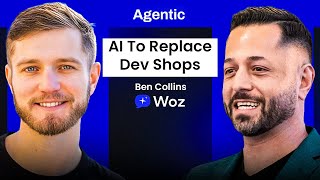
This is a YouTube video titled "The AI Platform That Could Launch 10,000 Startups | Woz" created in May 2025. It features a conversational interview hosted by George Bandarian with Ben Collins and Brad Eckert, co-founders of Woz, an AI platform designed to enable non-technical entrepreneurs to build and scale software businesses without coding. The discussion covers the platform's vision, technology approach, differentiation from no-code tools, the founders' backgrounds, their experience in Y Combinator, and the broader impact of AI on entrepreneurship and job displacement. The content is a multi-speaker conversation with George Bandarian as the host and key participant.
AI code generation is happening now. This is our window. Let's start messing around and figuring out like where the opportunity is to build something big into this inflection.
Building the first version of the app that you launch is like 1% of the work. What comes after that is 99%. Like how do you scale this up? How do you make sure it's reliable? How do you get all the certifications you need, deal with regulation, all the updates, bug fixing, everything that comes after it. We let them never have to worry about those things. And that's where our laws will really succeed.
Our goal, our goal at Woz is for the businesses built on our platform to be as successful as possible. And so that means our incentives are totally in line with our entrepreneurs to help provide them the best in class tools and services, just as Shopify does for your e commerce business. I think over 2 million stores at this point to be built on its platform. I'd say there's no shortage of people with great ideas and now we're giving them the ability to go execute on those visions and so that's really exciting for us.
I wonder like if Woz went away, like what would you guys do? Let's just say Microsoft came and gave you 100 billion and they gave you a non compete. Part of the contract was you have to start a new business in the next 90 days. To the Gentec podcast where we dive deep with the pioneer AI founders reimagining business and investors betting on them. We bring you the war stories, insights and perspectives you won't hear anywhere else. I'm your host, George Van Darren, the general partner of Untapped Ventures, a VC fund that invests in early stage AI startups. Let's go. All right, welcome back to the Agentic Podcast. I'm your host George Bandarian and today we have two incredible guests with us, Ben Collins and Brad Eckert, co founders of Woz. If you haven't heard, Woz is a groundbreaking AI platform enabling anyone, technical or not, to build and scale web and mobile products, software businesses without any coding. Think Shopify, but for launching fully operational software startups and very different than some of the other names you might be familiar with. So I'd like to welcome Ben Collins, the founder and CEO. He's an MIT engineer turned Stanford mba, extensive experience scaling frontier tech startups, as well as the other co founder, Brad Eckert, the cto, a seasoned entrepreneur with deep technical roots, previously with another startup that went through Y Combinator. And we'll talk a little bit about yc. With that said, welcome Ben and Brad. How are you guys?
Awesome. Happy to be here. Thanks for having us.
Thanks, George.
Cool. Well, to kick off, let's just pretend for a second that I'm a non technical startup founder or even an entrepreneur, right. Of any small business owner. What can I do now with Woz that I couldn't do before and that I can't do anywhere else with some of the other similar products?
It's a great question and we're living in a pretty interesting time, right? AI for co generation, you know, has never really existed before in a, in a way like it does today. And so what it means is barriers for business building are, you know, dramatically lower than they've ever been in the past. And you know, what we do at Woz is we built an AI platform that enables anyone to build really high quality, best in class customer facing software applications, web and mobile. The way we go about doing this is we start from robust building blocks rooted in industry best practice and then we plug in LLMs and very structured kind of constrained areas where outputs are predictable and reliable. And by doing so we get to get a lot of the benefits of building with AI which are, you know, speed and cost and while maintaining kind of the reliability of like high quality handcrafted software. And so we're really, really excited to, to be building this platform and most importantly to be helping, you know, hundreds and thousands and hopefully tens of thousands of aspiring entrepreneurs to build and scale businesses on our product.
So just to understand that a little bit better, am I going in to put a prompt and get a fully functional product at the end or based on what I understand, right, you want them to understand a little bit about what they're doing and maybe have some designs, but as long as they have that then you believe that was, is going to build the product better from there on out. Is that right?
Yeah, I think it's a, it's a good question around kind of our, our product vision and there's a lot of tools out there in the market right now if you're kind of paying attention to the space of AI code generation. No code tools you're probably familiar with, familiar with the likes of like a lovable or a bolt. And those are very much tools that a user learns to use, right? And there's like, it's a, it's a whole new skill set that you kind of have to, to learn and you know, and get better at over time through hours and hours of practice. And you know, our vision is very Much that we don't want to build another tool. So what we're striving to do is to emulate the experience of an entrepreneur, a business owner talking in the room with their engineering leader.
Right.
And so what we want to emulate is that discussion that's a really rich and deep discussion about kind of the root and core of the business where the entrepreneur describes kind of the customers, the use cases, the key features where value is created and that our laws. Your engineering leader brings a lot of opinion rooted in best practice and experience from building and scaling things to many, many, many users. And so what we do is we bring that opinion and kind of the output of that is a really high quality, quality, kind of scalable, customer ready, functional product.
Okay, that's exciting. So yeah, it sounds like the vision's developed a little bit more since my last understanding of it. So maybe initially there's some designs required, but really where you're at today and where you're really going is being able to talk with it. Where an entrepreneur can just have a voice and or text conversation was, can talk back, help ask questions, guide the conversation and then the result is an MVP can test that and then a full functional product all the way to your main goal. Right. Which is this vision that is part of what had us excited to invest, which is like the Shopify for software businesses. Right. So can you talk, can you talk to us a little bit about that analogy?
Yeah, for sure. I think, yeah, like, like you mentioned, like we think Shopify is a kind.
Of a, a great.
Example that kind of we're shaping our vision of laws after. There's a lot of similarities as to what they did to bring kind of e commerce online and accessible to the masses and make a lot of new e commerce businesses possible that, that weren't before. Before possible, yeah. So look, if businesses run on WAZ as you know we're enabling them to do it puts us in a really advantaged position to be able to layer on a lot of agentic tools and services to help you run your business. Our goal at WOZ is for the businesses built on our platform to be as successful as possible. And so that means our incentives are totally aligned with our entrepreneurs to help provide them the best in class tools and services just as Shopify does for your e commerce business.
Right.
There's this third party marketplace which is kind of attracting the best services that help amplify and grow those e commerce businesses. And our vision is to do very much the same both on like the sexy go to market stuff.
Right.
That's the content creation, that's the go. You know, whether it's AI creators and AI influencers or connecting you with like real influencers. And it's also kind of the more, you know, tactical, boring, back of house stuff.
Right.
It's like AB testing, it's looking at a lot of product analytics, customer analytics, you know, even eventually like accounting and things like this in the background. Yeah.
Anyone who's ever launched sort of a real business software business knows that sort of building the first version of the app that you Launch is like 1% of the work. You know, what comes after that is 99%. Like how do you scale this up? How do you make sure it's reliable? How do you get all the certifications you need, deal with regulation, do all the distribution, all the updates, bug fixing, everything that comes after it. That's where we think the long term ability of people to be able to host and scale on our platform really gives us an advantage. We let them never have to worry about those things and that's where our WAZ will really succeed.
Yeah, including when users actually start using it and then you find out that the way they want to use it is completely different than all those conversations you had with Woz or your Indian dev shop or expensive local dev shop or whatever, however you built it. So once people start using it and especially once you get paying customers onto it, when your customers do, that's when they learn. So what you're saying is, and again like unlike some of the others where the goal is to be like speed to an mvp, what you're focused on is really paying attention to, okay, once I get that first version up, then there's going to be a lot of changes. And so your system I'm going to, I'm going to be able to continue to talk to Woz and say, hey, you know, these five users complained that they couldn't find the search button, move the search button here and stuff like that.
Yeah, we want to be long term partner, right? Like the long term partner. Instead of build, you know, building a business or building a software app on a tool and then taking it off and kind of having to run that yourself as you scale, we want to be your long term partner that you can, you can trust. Just like if you're building a Shopify site, you know, you stay on Shopify and they kind of help with everything that's needed to scale your business.
Exactly. So. So I know once you guys launched as part of the recent Bicombinator Winter cohort. You went public, you came out of stealth, you went public, you got tens of thousands of wait lists and a bunch of people going all the way through your process submitting their ideas and, and you guys could only start with a handful for your kind of your alpha set. So I'm kind of curious Brad, what, what, what has been the most interesting or impressive kind of real world apps that, that you've guys have started to focus on building for customers?
I'll say just like that at a high level. I mean we knew this going into this but just getting so much interest, so many people that spent you know, 15, 30 minutes doing that, you know, to, to a technical co founder type of conversation that we have on our website like was just re, you know, kind of reinvigorated Ben and I saying like there are even larger number of people that want to build things than we could have ever imagined. So there's no shortage of those folks out there. And for we're kind of in a.
Super.
Advantaged position right now where we can kind of choose the best ideas that come through and work with the early customers as we build out more of the technical system. So I'll let Ben answer more about sort of the highlights of the best businesses he's seen, but there's been some amazing ones that have come through.
I would echo Brad's point that like there's no shortage of people out there who either have existing businesses and want to add products to it or like have an idea to launch a new product based business. So I think it's like honestly the most energizing and best part of our job is that like we get to go talk to those people and help them actually like turn their vision into reality. It's probably what, what I love most about, about building this company to answer your question in more detail, like what are things that people are building and, and why are they exciting? You know it's a lot of things that, that you would, that you would suspect. People want to build marketplaces for various products and services. People see some an example of a business that works and they want to recreate it for a particular niche or a particular geography. People are offering a course or a service and they want to augment it with AI through an application. We're seeing a lot of that from people in professional services. So it's a lot of the things you would, you would expect communities and social platforms for particular groups. So yeah, really, really, really interesting, compelling businesses. Like not only do people have, is there no shortage of People with ideas. I'd say there's no shortage of people with great ideas. And now we're giving them the ability to go execute on those, on those visions. And so that's really exciting for us.
Okay, well. Well, we dove right in. But before we go any further, let's rewind a little bit. So let's hear a little bit about the origin story. What, what brought you guys together? From what I understand, you guys were roommates, right? At MIT back in the day.
A long time ago.
Yeah. So maybe. So maybe kind of like take us through how you guys met and how we got to this point.
Yeah, no, like you, like you mentioned, we, we met, I think 12 going on 13 years ago. We were roommates at MIT. Luckily, we've upgraded our housing situation since then. I think we had six. Six guys living in a very small apartment, barely two and a half bedroom.
Yeah, yeah, yeah.
Fond memories looking back, but happy to be where we are now. Yeah, I mean, I think you always, when you, when you think about starting a business, you're always, you know, thinking about who could be a potential partner and you want to find people who are really complementary to you.
Right.
A shared vision and complementary skill sets. And I think, you know, Brad and I complement each other really nicely. So, you know, when, when timing kind of aligned, it made sense for us to team up and, and start working on was together. But we both have taken different paths to get here. And I think, like I said, like I see us was, is the culmination of like our experiences and plus the experiences of our team. And we think, you know, that allows us to bring a unique angle and a unique vision to market that other teams aren't doing. I think the, I mean, Brad, you can tell your, your founding story, but I mean, it would just became so clear to us about a year ago that AI co generation was going to take off. And George, you know, you're talking to entrepreneurs all the time who are building in this space, but for us it was like, holy crap, this is the moment you have to start building here because this moment has never existed before and it's going to be a window that only exists for a certain amount of time. And so we started rolling around in the mud for a couple months, figuring out what was the right angle to build into it.
Right.
We started as thinking, okay, maybe we start a venture studio and we start incubating a ton of ideas. So we were talking to a bunch of founders to potentially like bring into a venture studio to build out our tech team. And then basically run, build a tech, internal tech platform that could support hopefully dozens and dozens of these AI enabled businesses. And you know, the more entrepreneurs we talk to and the more the technology advanced, we just realized like, holy crap, this opportunity is way, way bigger than we can go after with a venture studio.
Right?
So why don't we just build this, you know, horizontal enabling platform and open it up to the world and let on, you know, thousands, tens of thousands of entrepreneurs build on top of it. So it wasn't like a light bulb flash. There was one moment where like, this is Woz. It was a lot of like AI code generation is happening now. This is our window. Let's start messing around and figuring out like where the opportunity is to build something big into this inflection. And that was the process. And we eventually landed on Woz in.
Sort of technological history where like a business like Woz is financially possible. Right. Like we're now at the point where customizing software is cheap enough that we can do it at real scale. So, you know, was enables that. So let me tell you my side of the story. Yeah, Coming from the technical perspective here, you know, I dropped out of my master's at mit. I was the first employee at a startup building. Basically we were building a mobile app. And we built that from scratch. Everything that you needed to support that. Then when I started my last company, you know, there's a whole ton of other hardware and radar stuff that happened behind the scenes, but we also had to build, you know, a mobile app, a web app, everything that went behind that. So we rebuilt the same thing over and over again. And then when I got to, you know, after I left, my last company was looking kind of what I wanted to work on next. And people kept coming to me over and over again with, you know, ideas that they were trying to build. And I just kept thinking like, you know, I've built this same system multiple times and it's, it's at its core, it's very reusable. But the problem is that like that top 20% of work that is custom to each business, like that is an insane amount of work still. And now with the code gen tools, like, and then the ability of them to kind of take an example and take it further and customize it to a specific business, I thought this is the time when that is now possible. So building kind of a core 80% of a business in a super modular way with the same team that I've done it with over the last 10 years, multiple times, and then Applying the cogen on top of it, it was like, wow, this is now something that can truly scale and can truly serve many, many, many different types of businesses with almost unlimited customization. So as these tools get better, the broadness with which we can serve customers just. Just grow. So it's. It's kind of like an amazing time to be building this business.
Yeah, no, that's really exciting. And I love that you guys went through that iteration of the venture studio incubator model and just realizing how, yeah, we could probably help like 5 or 10 a year if we do it the old way, or we can build this agentic, you know, cogent System and help 10,000 or a million a year or over our lifetime. And so I think that's really exciting. So. So then let's talk about you. You guys have become, you know, experts in this field that you're in. And so. But yet there's still a lot of confusion. So I'd love for you guys to talk about some of the trends and terms that we see. You know, there's. There's obviously Agentic, which is the name of this podcast, you know, for agentic AI, but yet we hear people using AI agents even still to mean, like a chatbot. Somebody builds a chatbot and they call that an agent. But people are confusing agent and agentic. Then now we have this new trend with vibe coding. And I wasn't sure if what you were talking about talking with was if you would consider that vibe coding and what is vibe coding and how that differs from like AI engineering, for example. So, yeah, maybe kind of give us an overview and define some of these terms and where was fits in.
Yeah. So first of all, I'll just say I think vibe coding is absolutely amazing that now someone who has never built something before can see something come to life in front of them. So I think that's absolutely awesome that they can do that. I think the problem arises and why we call what we do AI engineering is the code that becomes is vibe coded. If you don't understand it, there's no way to take that code further than something that's super temporary. Vibe coding is fun until you kind of have to vibe debug or vibe maintenance or all of those things that come afterwards. That's really where it becomes a pain.
Take a step back and just say, what's the difference between vibe coding and AI augmented coding? I think that would be helpful context. Yeah, sure.
So there's a lot of videos you can see of people doing vibe coding, which is Basically, you go to one of the no code tools you use, Cursor, Windsurf, whatever it is, and you basically say, like, build me this landing page. You hit enter, you pull out your phone, you start scrolling for two minutes while it does its thing. You look, it doesn't work. You hit please fix, please fix, please fix, right? And you kind of like trying to understand what happens a little bit, saying, like, oh, this button doesn't work. Make it happen. But it gets in these loops, and it just generates a ton of, like, spaghetti code. Eventually you might get something that works or you might have to kind of restart. So I'd say that's what I would define as vibe coding. I'd say AI engineering or AI augmented code generation is much more like, changing with how we interact with the computer, but your mind is still what's dictating the logic of what's happening. One of our engineers told me this the other day. His best analogy for it was back in the day, you know, you had to use punch cards to code with, right? So, like, that was the modality with which you interacted with the machines. And then we switched to typing and IDs and all of that stuff. And now it's like, all right, we can use the AI to be what writes the actual code, but you as a human still need to be building that understanding. Like, your understanding is what coding is like, being the details of what is happening behind the scenes of exactly what you're instructing the computer to do. So I think that is AI augmented engineering, and that is what we do. All of our engineers, they use all these tools super extensively, but every single line of code that is written by the AI is directed by the human and then reviewed by not only themselves, but someone else. So as the engineer, you are still responsible for making sure that the code you write is high quality, maintainable, understandable, all of those things.
Gotcha. So. So you guys are. And there's a lot of articles and. And coming out where the vibe coding is. Is. Is not working out that great. And. And. And I'm sure it'll mature and the tools will improve. And maybe the. The market for that is like, the easier, like, simple use cases, right? Where you just need a more basic landing page and not maybe a fully functional mobile app with payments and stuff like that. And you're really going after, like, just like the Shopify business. As a business, you know, I'm a skater in San Diego. I now want to start selling skateboards. I need a storefront. I need product I need shipping, I need billing, I need taxes. Like is a legit business. If it takes off and it's a multi million dollar a year business, it's a real business of, of I'm selling skateboards around the world and Shopify has become my all in one to help me with that business. And that's what you're trying to do for anybody that's trying to either build or add a web or mobile software component that is going to be a valuable component to their business. Right. And generate revenue, take revenue through there. And so, so you guys are taking a different approach which is you're calling that AI engineering. And so I'm talking to the AI. I'm, I'm still responsible to be the business person to say what I want built. Why, how is the user going to use it? And then the AI will build it for me. So it's going to be more time up front for me and more direction from me. It may not make for a great YouTube video where I just throw out one sentence and it shoots out a page or an app. But in the end, you know, one of the sayings that I use is, you know, go slow to go fast, right? So you know, I'm going to go slow so I could build the app I need so then I could go fast. Scaling it out to hundreds of thousands of users potentially.
Brad in his previous comment was talking about like how our engineers internally leverage AI.
Okay.
And not necessarily about how our users interact with was Brad, how would you describe that process of like a user interacting with woas and like. And you know where that falls between, you know, a no code tool, engineering, like traditional engineering by coding. What would you describe that?
I mean it's very similar to kind of what you said at the beginning. Use, you know, what the data model looks like, you know, what technologies are used under the hood, what languages like frankly you don't care, right? You just want it to work and you want it to be something you feel confident putting in front of a customer. And you know that if something breaks, someone is there who knows what, what the system is to fix it. Right. And so like that, that I think is the experience we're trying to give. Our, our founders on our platform is using it as if they have an engineering team that they are directing what to do.
So that makes sense. And then I guess continuing this discussion around, you know, no code tools and I, I think I've heard you say that, you know, no code tools are, can be erased to the bottom. That's A kind of a bold statement, I guess. You know, why do you think that traditional no code tools aren't, won't scale for real businesses? And, and what are the, the true moats, the moats and defensibility for AI kind of code gen tools?
My high level thinking on this is that like if you're letting the LLM do basically the entire coding of a project right from scratch, it chooses what to do. You're just messaging with it back and forth. You put a little bit of sort of scaffolding to do web hosting or mobile app hosting, whatever around it. The differentiation you see between other companies who are doing basically the same thing just kind of goes down and down. As we've seen. There's like tons and tons and tons of companies similar to the Lovable and Bolt that are being spun up kind of every day. And the way I see it is like people right now go and test all of them, right? They spin off, they go to five different sites, they type in the same prompt, they hit go and then they see which ones they like the most and they take that one and then they kind of repeat the process over and over again for each step that they do. So it's a super interesting phenomenon. It's the same way with kind of like the model providers right now. Like we switch to the best model provider every day, whichever one is the best at that given moment. It's kind of the same with these tools. There's really no moat in sticking to them as you can, you know, you can take your code and move it to the next one or you can spin up a new project that's a copy of your old one and maybe slightly better because the other team has figured something out. So it's a really interesting how do they create a moat? How do they build a real business that's sustainable as the LLMs get better and it just becomes easier and easier to spin up a full copy of what they're doing. So that's kind of my thought on why I've said that. I think it is a race to the bottom and there'll just be thousands of people doing the same things, maybe slightly customized to tiny different niches. But beyond that, unless they, they build some serious tools to allow people to build real businesses, I feel like it is a race to the bottom on those tools.
So if we play that out and take how you're doing things differently, right, so what do you feel is the real impact that was could have if you're successful?
I mean, very similar to the way that Shopify today, 20 years after founding, has enabled, you know, I think over 2 million stores at this point to be built on its platform. And that's 2 million businesses that the vast majority of which probably wouldn't have existed before.
You used to need to have a, like a founder on your team or someone super technical to build your e commerce site for you. Right. Like that was a skill set that was required to start one of these businesses. Shopify, reduce that. We're doing kind of the same thing for software businesses.
Yeah, but I think, I think the need today is like even more urgent, right. We're seeing clearly low hanging fruit service industry jobs are being automated by AI. Like that, that is 100% happening, right, George, I think you have some companies in your portfolio who are, who are like playing a part in this, right. You can think it's happening at two ends. It's happening at kind of the lower cost labor end with like customer service type jobs. And then it's happening at the higher end.
Right.
Because that's where the willingness to pay is higher. And legal and accounting. And we're seeing just dozens and dozens of companies kind of focus in on these spaces. And so what is that like? Let's just like play that trend out. More jobs are performed, more kind of traditional jobs or you know, jobs that as we would describe them today in 2025 are being performed by AI, which means people need something to do.
Right.
And so what our vision is is that instead of like default, just thinking of, okay, I should go find a job and earn a wage by being an employee for, you know, a large software company. It's like, well, why don't I try starting a software company and take on more of kind of an owner, entrepreneurial mindset. And so a big part of our vision at WOZ is like providing that on ramp for people. There will be fewer and fewer kind of traditional white collar service industry jobs. Let's create an on ramp for those people to start their own businesses. And so like that's a big part of what we're doing at was we're trying to remove those barriers and make business building as accessible as possible. Because like, because we have to. There's a huge need for it that's, you know, exists today and like will only continue to grow as foundation models improve and AI adoption, you know, permeates more industries.
Yeah, I mean that's a really exciting vision. And you know, as we've talked about in the past, I'm part of a number of different Entrepreneurial communities both inside the venture ecosystem and outside the venture ecosystem. And you know what I call like traditional entrepreneurial circles, either the lifestyle entrepreneurs or just the non venture backed ones that have built businesses the regular good old fashioned way without a single penny of venture. They've built, you know, one ten hundred million billion, multi billion dollar businesses just amazingly without any outside capital. And in every one of those cases there's just so many people that want, that have ideas, that have hired dev shops, have had bad experiences. The onshore guys are too expensive, the offshore guys are, you know, the quality is not there. Failed project, they've hired teams and you know, you hire people but if you're not a developer, typically you can't, you don't know how to hire a good developer from a bad project. Management, product management is a key, you know, so I think except for technical teams, all other kinds of entrepreneurs really struggle with this. But yet they have, there's no shortage of ideas. And I like what you're saying, like there's basically going to be a lot of people that are going to be displaced because of AI and they're going to, and I get asked this question a lot in my keynotes which is okay, well you just painted a picture of how AI and its complementary and converging technologies like robotics and others are going to displace millions, tens of millions of jobs in the next decade. What, how are we going to take care of these people? And what you're saying is like, well we're going to do our part from Woz is we're going to make it easy that you know, if they have a good idea for a business, it's going to be maybe not as simple as one click, but it's going to be as simple as get in there, create an account over the course of some short period, start talking to Woz and let Woz build that out. And it could either be a passion business, it could just be, it could be an income business which is just meant to replace the income I lost from my full time job. Or it could be, you know, very fast scaling, you know, very profitable business. But you're going to do your part. So that's all very exciting. Now like what do you guys see as the critical path to make this vision happen and kind of make was the go to platform for entrepreneurs worldwide, like how Shopify became the go to platform for E commerce worldwide?
Yeah, I think you kind of hinted at it in your, in your explanation right there when you're describing like how complicated it is to actually get a product off the ground and that how many more challenges there are beyond just building the technology.
Right.
You kind of, you, you describe some of these.
Right?
It's kind of. Well, I'm not technical, so I don't even know the right, I don't know who to hire. I don't know how to define this product in the right way. I don't know which vendors to use for what the people I could hire. Well, the incentives don't really make sense because I'm paying them an hourly rate to deliver this, so they have no incentive to like build the right thing the fastest. So it's all about creating the right incentives to complement the ability to build the right technology. And I think that's really our aim, right, our North Star is for the businesses built on our platform to be as successful as they could possibly be. And I think our aim is that if we make WAZ the place where your business has the highest likelihood of succeeding, then we can succeed on this vision of kind of becoming this, this next version of an AI Shopify, if you might. Yeah, but it's a big, it's a hard, hard problem.
Right?
It's a hard, hard problem with a lot, a lot of engineering required. And so that's why we see a lot more defensibility in it than kind of taking the other approach which Brad, you know, described earlier.
Right.
Which is why there are so many of these kind of prompt to landing page type companies that exist, is that by taking that approach you're basically betting on the LLMs.
Right.
And you're asking the LLM to be the workhorse of your product. And we're saying yes, absolutely, LLMs are amazing, they'll be the workhorse, but you still have to build the carriage and build the road and build all the infrastructure around it so that that workhorse can get you to the best destination.
Right.
Well, that's why we invested in the pre seed. And, and that was before you got accepted into Y Combinator. And, and so then, you know, you were in the current, well, the recent Y Combinator winter cohort. You graduated in March with demo day. You had a very successful demo day and fundraiser. So let's talk about that. You know, we have a lot of AI founders that are listening and there's a lot that I think could be helpful to the next generation of founders. You know, YC is, you know, is one of the premier brands, obviously is without, you know, bar none. It's the best accelerator program, it's the most coveted it's the one that, you know, your likelihood of success goes up dramatically if you get into it and, and all the stuff that we know. So, so why don't you maybe, you know, open up the veil a little bit, help us understand what that experience was like. I know it was great. You met a lot of great people. The YC people were great, the court's great, all the usual stuff. But I guess what, you know, give us like the interesting stuff, like what was one unforgettable lesson or moment from that cohort.
Yeah, I would just echo your point. I think like the data shows that if you're, if you take part in yc, your likelihood of, you know, a big outcome is significantly, significantly higher. I think Brad has a really interesting perspective. As you know, he's gone through the program twice, kind of like in its earlier days and now once it's much more, I suppose, built out.
Yeah, they definitely improved a lot of their operational processes to make things work smoother. I tell Ben this, but like when I did the last time it was kind of like this was in 2017, right? 2017, yeah. There was basically like one lady and then like I think she had like a couple people helping her that were in charge of all the logistics of everything. So everything that was happening, you know, you get multiple emails from her, scheduling and all and dealing with it. Now they have kind of software that organizes, you know, most of, most of what happens. But like they've gotten a lot better at that kind of stuff. It is really interesting to see the difference, the different trends. I think YC as a whole has moved to companies that are seemingly earlier in their life cycle. So by the, it's almost a different set of funds that are doing the fund. The investing at the end of YC from when I did it before. Before it was kind of like the big multi stage funds were the biggest investors or the most prolific investors in most of the YC companies. And now it seems like there's more like angels, smaller funds, YC focused funds and then obviously a few of the bigger ones still participate, but not at the same rate they used to. And I think that's just a change in how the companies are being built. You can do a lot more with a lot less. You don't need as much capital right away. Founders are looking to give away less percentages of their companies and then you know, when they are ready, that's when they kind of go, you know, six, 12, 18 months after YC to kind of the bigger funds and ask for The. Those bigger rounds when they have more to show for it.
That's a really interesting observation. Anything else interesting happened during the course of the court? We'll talk about the demo day and the investor meetings in a second. But anything else throughout the cohort that really stuck out to you guys or was a big surprise or, like, your biggest lesson learned from yc?
I mean, there were. There were, you know, so many incredible people come and speak, and you have the chance to kind of ask questions and interact with them. So, I mean, hey, go through a laundry list of lessons people. People shared. You know, there's one thing. Our partner was Tom Blomfield. I mean, and he's awesome. He, you know, took a chance on us and then was incredibly, you know, helpful throughout the. Throughout the program. There's one thing he always said which is like, you always have to be increasing your surface area for luck. For luck, especially as a startup. And I think inherently, like, this is a lesson, you know, and everyone knows, like, we should always be increasing your service area for luck, but it's just like, even more and more important in the early stages of company building. So I often, you know, find myself kind of reminding myself to take that.
Mindset, like, so, like, what does that mean to you? Or how did he help us understand what that means and what we could do to maximize that?
Yeah, sure. I mean, it means, like, show more to the world. Like, even if 10 people think you're dumb, maybe you meet one person who becomes a customer.
Right?
That's a really concrete example. Go talk. Go talk to 10x more customers because, like, you might get lucky and learn something.
Right?
It's like, you never know. Like, you just need to put more out there so that there's more surface area. Like, the more surface area for waz out there, the more chances that something really good happens.
Got it. So part of that is like the numbers game idea, right? Like more investor meetings, more customer discovery calls. Is that what he meant or did he mean more to it than that?
I think how it translated for us and like, the most meaningful thing was, like, putting our launch out there kind of more earlier than we were originally comfortable with. Basically just to see what people wanted and help us then direct our product development from that in a more meaningful way. So, like, I think without Tom's advice, we probably would not have done that.
Yeah, yeah. So, like, even as experienced founders, you know, like, you have to get your MVP out sooner, but sooner to you was not as soon as Tom would.
Yes.
Would have liked.
Yeah, yeah.
And Having done it, you're like, he was right. No, that makes a lot of sense. So then I think you guys took about 80 investor meetings over a course of a week or two in that time period around and after demo day. I mean, that. That's a pretty, you know, nuts amount. 80 investor meetings over, like, 10 to 14 days. What was that experience like? And what did you learn from, from that?
I mean, you learn a lot of different things. Like, first of all, it's absolutely exhausting. I mean, I think we were, we were doing, you know, 12 plus meetings a day for I don't know how many days in a row. But, like, I saw a friend afterwards, he's like, you look like you, you look like you've aged 10 years in a week. I was like, I feel like. I feel like I've aged 10 years in a week. I mean, you, you learn a lot. You learn what resonates with people. You learn, you know, maybe how to improve your storytelling. I think you also learn that there's like a line between kind of changing your narrative to fit what other people want to hear and telling the story that you really believe in firmly based off of the data, based off of your experience, and based off your vision for the company. And, like, it's kind of counterintuitive and it's kind of like sales, right?
Where.
If you double down, like, instead of bending to what people want to hear, if you double down on what you really believe in and what your experience has showed you, then, like, you'll find the investors that really believe in you and want to double down on you as well. And I think that was an interesting learning, right? Like, it's tempting after, you know, you go to five straight meetings and five straight people said they're not interested. It's tempting in that six meeting to tweak your narrative to be more like what they want to hear. But I think the right thing to do, at least the right thing for us, was actually to, like, no, double down on what we believe in, on what the data is telling us, on what our vision is. And like, that will attract the right backers.
And I think, Brad, I totally agree. I think we were super lucky that we had some early backers, yourself included, who, like, who really believed in the vision that we were selling. And then we went to the post YC investors, you know, a couple early on. Like, we immediately, Ben and I were like, they got it. Like, they understood the vision we're going for. And it was pretty clear within the first five to ten Minutes of any pitch meeting, whether this person we're talking to, like, truly gets the vision that we're going for. And so, you know, having that behind us to say, like, you know, all these other folks that don't get it are not our audience. That's not who we're selling to. You know, we're. We're selling the people that understand the vision and then showing them that we are the right folks to build it. And that's, that's who we have to go for and not change ourselves to match any investors, you know, preconceived notions of what we should be doing.
Yeah, that. That's really valuable advice. And, and so with that, you were able to have a very successful seed fundraise, raise more than you expected, even initially, and you found your lead. And so how did you go about ultimately choosing your lead? What, what did you see in them that you felt like they would be the best to lead you through the next chapter?
Yeah, that's a great question, I think.
Yeah.
Just to preface, like you said, you know, we had a really successful time fundraising, I think, ended up raising a bit more than we originally anticipated just because we were so excited about the quality of the investors. And it was like, how could we not bring this person around the table and like, bring their expertise onto our team? And so we ended up raising a bit more than, than the original plan. We haven't announced it yet, but. But kind of happy to just talk through the process of how we found a lead and like, why we decided to kind of go the more traditional price drown versus the kind of party round you often see at yc. I think, again, it was kind of just a reflection of what I just described. Like, when you have really high quality investors and high quality people that want to be a part of your team, like, of course you want that. And so we were in. We were just so impressed by our lead, by the speed at which they executed, by the level of depth at which they were able to understand our business and our vision on a short time period and their track record. So the track record of executing both from the, you know, investor perspective, but also from a business building perspective.
Right.
The partners at the firm have taken public multiple companies, and, you know, that's our vision. And so it was just really exciting to be able to bring those folks to TV House.
Yeah, I mean, we also, of course, did a bunch of reference checks on, on everyone that we were getting on our cap table and our lead, like, hands down, by far, every person we talked to like glowing, unbelievably glowing reviews saying like that's the best person you could possibly work with type of reviews. So I mean it was almost a no brainer, like they were the right, the right folks for us.
That's awesome. That's great. Yeah, really happy, really excited about having them part of the journey and helping lead so well. I guess as we think about, for the audience that's listening, that might be a few steps behind you in their journey. As an AI founder, you know, maybe in the ideation formation precede kind of stages. You know, the AI field is moving so quickly and so I want to know maybe some what's your biggest advice and lessons learned? Do you like to share with founders? But before that I feel like because AI is moving so fast, the advice on what to do and what you're building is helpful. But I think just like figuring out what to build, given how fast things are changing is more important now or equally important. What are your thoughts? You know we talked a little bit about the landscape and how AI code gen and vibe coding and stuff is changing. You could have an entrepreneur like we're seeing record numbers of ARR in 16 months, 12 months, 4 months, 2 months, like just numbers we've never seen before. You know, there was the kid that had the AI tutor or sorry the cal AI, the calorie counting that was in multiple millions. And so what are your thoughts on the space? Like I, I feel like agentic got filled up pretty quickly. We're already looking at what's next. You know, I guess, you know, if, if you guys had, you know, younger brothers or sisters or, or if you were mentoring at, you know, speaking at MIT or or Stanford at your alma maters and, and they're asking you hey, we want to start a business in the next six to 12 months. What's your advice on where you think the opportunity is first and then once they pick a good opportunity space. Any general advice on how to be successful?
Yeah, a big piece of advice I give to younger entrepreneurs is don't constrain yourself to going after a venture backed outcome. Right now AI is so democratizing and reduce the cost to build that. There are a lot, a lot of businesses that can be built right now that don't necessarily require a lot of venture capital funding. And like I think that universe is massive. Right now is kind of a time where like yes, some of the low hanging fruit are being consumed and have been consumed as you kind of alluded to. But like it's a big world and there's a lot of opportunities where you could carve out a nice AI enabled kind of agentic business for yourself. You kind of mentioned a few examples of these that could be really, really great outcomes. So I think like there are, if you just want to start a business, there are, you know, more than enough opportunities to go start a successful AI enabled business. Maybe Brad wants a. Brad, if you have thoughts on that or like I'd be curious what you think are the best areas to build like venture backable AI businesses.
Yeah, so.
Or even both. Right. I want to hear what you have to say Brad. Like I wonder like if was went away, like what would you guys do right? You couldn't do anything. It was in this space. Let's just say Microsoft came and gave you a hundred billion dollars and they gave you a non compete right. But you know, but they, they part of the contract was you, you have to start a new business in the next 90 days. Right. Like let's make it real and tangible since you guys have really good insight into the space. You're not just like building an insurance or building in some side vertical. You're like in the agentic software code gen layer. Yeah. What do you guys think about that?
Yeah, I mean Ben and I, we have a bunch of, a bunch of other ideas. You know it's, that's the hardest part of doing a startup is like you need to focus, right. So every day being in this world you see some new place where you're like wow, we could do that better or like we should invest in doing that better. But no, we have to focus, right. So there's tons of things that come along like that. I will say that we are still very much in the early days. You know, I think I saw this a couple days ago. Someone posted that like even if none of the models get better over the next 10 years, like the change in how we interact with technology and a change in the world will still be insanely large. So like if you look at that, that just says that there are so many areas that are still ripe for someone to come in and build big businesses in all of the, you know, the companies raising huge funds right now with huge crazy amounts of arrow like that is if it can go 0 to you know, 40 million ARR in X number of months it can also go 40 to 0 in, in that many number of months. It's not as sticky as, as like you know, you built this business over 10 years and solid reliable customers. It's very much early days for all of these folks for this entire industry. So things are changing so fast and I'd say to like a new entrepreneur looking at it, it's think about what like if, think about if AI does get better at certain pieces, like what will it still not be able to do? And that I think Ben's analogy of like the roads, the bridges, all the infrastructure around the horse drawn carriage which might become a Ferrari, that stuff will still be needed for that Ferrari to drive. So like what does that look like? I think that that is there. And then I'll just say like a lot of these businesses are pieces of the solution. And you know, I still think people hate having to use 10 different pieces to one solution. So some, you know, there'll be big companies built around doing the entire platform and the entire system end to end. More verticalized AI if you want to call it that as well. So I, yeah, there's a lot, there's a lot, a lot of things to work on.
Yeah, you can add anything to that Ben or.
Yeah, no, I mean I would echo everything Brad said. I said if you're, I think the best, the most, you know, broad piece of advice would be like start building something. Like you got to get your hands dirty because that's, that's the way that you realize where are the needs, where are the weak points, which way is technology moving, where is investment flowing?
Right.
Like you really just have to get your hands dirty. You have to start rolling around in the mud trying to, trying to build things, figuring out what's working and what's not. And like that's how you'll figure out what the right business to build is.
And that's what YC gives you. I mean the number of companies that came in with one idea and changed to another and then changed to another and are now doing great. You know, that's what they do is like you just keep trying things until something works, until you find it. And you can only do that by being in there, by seeing your tool being used by like understanding users needs. That's how you can understand where to build.
Yeah, so, so not just build something but build something and put it in the hands of users and customers, get feedback and kind of go through that. Build iterate, like learn cycle. Right? Build learn iterate cycle.
I don't know, I think it's just an incredible time to be building. I think it's an incredible time to be investing in, in new businesses to have conversations like these. It's like every day we're learning, learning new angles, you know, running new thought experiments about, like, what the world's going to look like in 6 months, 9 months, 12 months. And I think the crazy thing is, like, we don't know. That's what's awesome about AI, right? And how it's different from previous generations of software building. Like, we were in a world that was very deterministic. You talk to a customer, you figured out what they needed and you built it and it worked. And AI is a little different, right? Like, okay, you invest in this new model. Maybe you invest in kind of the environment and the structure for this model to be deployed in, but then you have to, like, deploy it and let it loose and see how it. See how it performs. And we don't know until you do that. And that's what, like, makes building in this time so exciting is because, you know, the proof's in the pudding and we don't really know what's going to work until it starts working.
I. I couldn't agree with you anymore. It's a really exciting time. It's hard to keep up at times, even as an investor that's on the leading edge of thought leadership, but that's what makes this fun and exciting. And it's a great journey that we're all on. And it's just the start. And, you know, I'm looking forward to it, but this was a great conversation. Ben and Brad, I want to thank you. I think it was really exciting. We have a lot to look forward to with bringing more entrepreneurship in the future by letting entrepreneurs be able to build software products more easily using woz. So I'm really excited about that. Thanks, guys. That was. That was awesome, honestly. Yeah.
Thanks, George. Appreciate the time. It was a lot of fun.
Want to say thank you to our listeners for tuning into this episode. If you found it valuable, go ahead ahead and share it with a friend. Hit. Like, hit. Subscribe so you don't miss out on future episodes, because we have some really amazing guests coming up that I know you're going to love. And if you're an AI founder that's currently raising or planning on raising soon, we'd love to hear from you. You can pitch us via our founder form, which is in the show notes, or you should be able to click below. We're actively investing, and either way, until next time, keep reaching your untapped potential.
More from George

The AI Agent Getting More Supplier Data in 5 Weeks Than a Team Did in 2 Years








