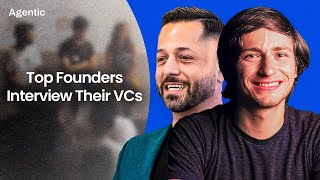
This is a YouTube video titled "The One Question That Filters Out the Wrong VCs" created in May 2025. It features a multi-speaker discussion including George Bandarian and several other participants, focusing on fundraising strategies, the importance of VC alignment on AI and agent theses, and advice for founders on navigating investor relationships. The conversation highlights the dynamics of power between founders and investors and emphasizes building a strong business foundation over just fundraising.
The very first question, this is almost the perfect disqualifying question I would ask the VC is like, what's your thesis on AI? What's your thesis on agents? If I got a non answer, I knew almost on the spot that they were going to pass. It's not just people giving you money, it's finding partners on this journey. And good partners is what makes the journey worth it.
Your goal is not fundraising. Your goal is building a great business. And the way you know you're on track with that is by getting those initial set of customers that show that there is large tam to go. After you do that, the funding will come.
Right now it's very hard to raise money, but if you have the right AI story, you're going to have 500 investors banging down your door.
The core thing that you should focus on is just building your business. If you build a business that in X amount of months is making $1 million of air, you won't have to think about fundraising. People will come to you to talk about fundraising. And I would say where we are today is a lot of inbound investor interest because people realize services businesses that are transformed by AI will be massive JP Morgan skill style style businesses with the right leadership and the right team. And I think if you can show a path towards execution not for the flashy thing, but for the thing that's creating real economic value and people can see it, you will never have a problem fundraising from anybody. And that is like the core thing. But don't get distracted because it can be a really big distraction to focus on that. The core thing that matters is like do you have a business that's adding value? Are people really, really buying into it and like that value creation should be the thing that makes you hungry, that not the flash of any other pieces. Even though that's important. You need to fund your company and find the right people to fund your company.
Yeah, exactly. I think that sometimes people get it mixed up and think that the name of the game is fundraising. The name of the game is solving a problem, having customers, creating revenue.
Our fundraising war story was we started fundraising kind of tail end of 2023. So we actually raised some angel checks from early investors in Stability AI, some senior guys from Google Gemini. Back then it was Google Bard as well as senior ML researcher or ML applications expert at Airbnb. We spoke to a handful of VCs who were just complete thesis alignment who really understood the future potential of AI agents. I remember distinctly we spoke with several VCs and and they just said as feedback like look, you guys are incredible. I think you what you're working on, you know, you have a very ambitious idea. I just don't think agents will ever work. Fast forward to 2025. The only thing people talk about are agents. We found investors who really did believe in the vision of the future here, that it was not too far away. But you had to have kind of a lot of belief and conviction that the law of these models progressing the way they are is going to be a reality.
I think, I think any like founders who are listening, VC funds are amazing but like think about who their Rolodex is, thinking about who you can get access to from their networks and these. I think a lot of the things that we recommend founders to lean in on as much as possible just because there's a, you know, you can be as high tech with your investors as you want. And I think if you're just, you know, one of the main things we get on is we get on monthly calls with these folks and we're just like okay, these are the 10 people we want to meet. How do we get introductions to all these folks? And this has been one of the most pivotal things for our business by getting these like really, really high tech.
That's great advice to founders. You know, at some point the interview is two ways. Maybe in the begin getting the, the VCs interviewing the founder but at some point you have the right to start asking them about, you know, how they do business and what their value add is and, and how they work with other portfolio companies and things of that nature. So that's good advice. So you guys raised 2.6 million back in 2023 or early 2024 by the.
Time it closed November, early December 2023. And yeah, I mean just hammer on the point. It's like really it's a two way interview, right? The very first question, this is almost the perfect disqualifying question. The very first question I would ask the VC is like what's your thesis on AI? What's your thesis on agents? If I got a non answer I knew almost on the spot that they were going to pass. But when people were saying okay, I'm actually diving into the research, it was almost always a meaningful conversation that went either the last rounds or like actually, you know, majority of them closed, right? It's not just people giving you money, it's many partners on this journey and good is what makes the journey worth it.
I view it as a psychological game. If I'm going to sell to you, I need to induce fear or greed in you. And so when I'm selling to you, and you know it's true, I've had people look at it and my close rate with investors tends to be much higher than the average. I mean, I, I sort of work on the assumption that many investors don't have the information they need to make intelligent decisions and they're going to operate by whatever rule set they operate on. And so I want to know what are they afraid of? What are they greedy about? How do I tell the story to induce the emotional sense that they're missing out, right. If they don't, if they don't invest in me and you know that, you know, for me, because I've, I mean, at this point I'm wealthier than many of the VCs I work with, right? And I'm older than most of them. And so I have the ability right now to almost be a little condescending when I go there where essentially my. And you've experienced this with me, right? But, you know, in essence, I look at you and my only thought is, you know, I'm not sure if I'm going to give you the opportunity to be able to ride on this journey. And people can smell it. And if they feel fear on the part of the founder, if they feel any sense of supplication, they run. It's an unusual perspective because normally the balance of power is very much where the VC has all the power. I'm the guy with the checkbook. I get to treat you. And I never speak to an investor like that. My attitude is entirely like, I'm the power. I'm the one who has the ability to make you money. You are replaceable. I've got a thousand.