Why Smart Money is Investing in Startup Studios Fireside Chat With Startup Studio Investors
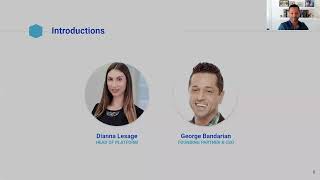
This is a YouTube video titled "Why Smart Money is Investing in Startup Studios Fireside Chat With Startup Studio Investors" recorded in December 2021. The content is a detailed webinar-style discussion featuring George Bandarian, founder and CEO of Untapped Ventures, and Deanna Lesage, head of platform at Untapped. They discuss the startup studio investment model, its advantages, key investors, and how to evaluate and invest in startup studios. The session includes an educational presentation, Q&A, and information about upcoming events, targeting investors and startup studio community members.
Yeah. All right.
Looks like people are getting started to filter in. How many people so far? Oh, 28. Growing rapidly.
I'm just closing off my slack and any possible distractions.
See some people that we know. We're gonna launch the screen in a second. We're just kind of waiting for all the attendees to join. Thanks for entering this. Melda. Whenever you're ready.
You can. You can get us started. Deanna, I'm just gonna.
Okay.
I mean, just in terms of welcoming.
Yeah, for. All right, so we'll get started. So a couple minutes after the hour. So good afternoon or good morning, depending on where you're calling in from. We want to welcome everyone. Thanks for joining today. We're going to get started in just a couple minutes, but in the meantime, can you drop your name and location in the chat? We want to definitely see where everyone is joining from today. We have. Let's see. Let's look at the attendees really quick. We have.
Is it too late to play the cool music we had queued up?
I mean, we can play it. I think people are still trickling in for sure.
So is that coming through? I don't think so.
I don't hear it.
You don't hear music?
No, I saw it coming through on there. So, yeah. So we have over 100 attendees from all around the world. I'm looking at the list now. Let's get down.
Let's get down to business. Give you one more night. One more night. Get this, we've had a million just like this. Back and forth, back and forth with the bullshit. No, I said it before. I don't mean it. It's been a while since I had your.
There we go. Yeah, I think it's not really lowering, but that's okay. So awesome. So thanks for dropping your names in the chat. Sky. In the chat. We have, I think, a great ecosystem mix. We have, like I was saying, LPs, some. I see some studios on the line, some VCs. Awesome. A number of studios online from the GSSN community, from the studio upstart community. So welcome everybody. Oops. Looks like we have some media and corporates and even some founders, it looks like. So awesome. Welcome. Thanks for joining us. To kick it off, I am going to just kind of go over a couple of things. Housekeeping. And then we'll kind of go forward from there. Let's see. Next slide. Okay, awesome. So we have a couple of upcoming events that we are super excited to announce. We are going to put on a series of events similar to this and, you know, you can come here to see these. We'll see them at the end of the presentation. So just take note of this slide and we'll keep it moving. So with housekeeping, let's see, am I controlling the screen? Yeah, there we go. So you want to drop your questions in the QA box, not the chat. We have Nalda on the line, who is going to help moderate the chat for us and moderate the QA box so you can upvote questions that you'd like us to answer. This webinar is being recorded and we're going to provide the slides. They'll be available afterwards along with the recording. If you would like to request that or anything else, email us at HelloTapped Ventures. We're happy to accommodate, provide all of those. So let's kind of dive into the agenda, what you'll learn today. We really want to make this educational, make this inspirational, help you really learn about the ecosystem, the industry and why, you know, investing in startup studios is such a great idea. So we're going to talk a little bit about who's investing in studios and why. We're going to talk about what a startup studio is and what it's not. We're going to talk about why they're a good investment. We're going to talk about where to find great studios and how to diligence them. So we have a lot coming up and then, you know, we'll do Q and A at the end. So, you know, I kind of touched on intentions, but we really just want to. We're doing this today to raise awareness for the startup studio model. We're doing also to inform and educate on investing in studios. And we want to highlight the growth across the ecosystem, the industry, with case studies and examples from all different studios and different types. So not just this isn't a pitch for Untapped Ventures, although we're very proud. But we want to highlight, you know, everybody across the ecosystem. So we have that in store. And sorry. With that, I will introduce myself and George. I get this to go to the next slide. Sorry, guys. Technological issues. All right, awesome. So my name is Deanna Lesage. My background is in operations and entrepreneurship. In 2016, I discovered kind of the startup studio model wanted to bring awareness the ecosystem. I launched Studio Upstart, which is kind of a media channel, blog videos, and just kind of content for the startup studio community. And then, you know, I connected with George. Untapped Ventures acquired Studio Upstart, and I joined Untapped as employee number three. In the chief of staff position. And now I proudly sit as head of platform. So very excited to introduce George Bandarrian, our fearless leader. He is the founder and CEO of Untapped Ventures. This is a startup studio, in case you don't know. We build the future of work ventures so we're focused mostly on helping people self actualize and live their best lives through work is kind of, you know, our thesis. George is also the founder and general partner of the Untapped Ventures venture fund. So as you'll learn, many studios have a separate venture arm which is run by the operators of the studio Studio, but it's inherently independent. So George runs, you know, he's the CEO of Untapped and the GP of that firm. George's life purpose is to help millions of people achieve breakthroughs and access their untapped potential. He's manifesting that purpose through Untapped and with our team to really help help people self actualize. Previously, George was president and CEO of ami, a company that he grew and sold to a strategic buyer for a successful multimillion dollar exit in. He lives in LA with Miriam, his wife and their three boys. So with that, George, how are you feeling?
I'm doing great, thank you, Deanna. Thank you, Nela. That was a great intro. Awesome. All right, so I guess let's dive in. Let's get the show started. We have hundreds of people here and it's going to be fun. I want to welcome everybody again. I'm super excited to dive into the data with you. Deanna and I are. We're not just in the studio game, but we're students of the studio game. We've been studying it for a few years and we're excited to share what we've learned. And we just completed probably what's the most comprehensive research in studio investors. Who are they, why did they invest, when did they invest, what studios, what size? And this is the first time we're presenting this data. So it's really exciting. And kind of the first thing that we found is that more and more adventure investors from all walks of life are taking the plunge and jumping in and they fall into four different categories. So here's the who's who, right? This is kind of like a summary of some of the top ones. They fall into four categories. You have your angels and high net worth there on the left you have your VC firms, you have your corporates, and then on the right you have your fund, the funds and institutions, institutional LPs. So you know, we just kind of Spent some time going down each column. So you'll notice there on the left we have Blake Irving, the CEO of GoDaddy. Tim Ferriss needs no introduction. I think we all know who he is. Prolific investor, angel investor on top of best selling author and podcast host, of course. Mark Andreessen, founding partner of Andreessen horowitz Global top 10 VC firm. Meg Whitman, HP's former CEO, Peter Thiel, PayPal, Mafia Founders Fund. Spencer Rascoff, former founder and CEO of Zillow. David Rubenstein, the billionaire founder of the PE firm Carlyle Group. Yeah, that sounds like a pretty smart and successful group of people there, doesn't it?
Yeah, absolutely.
Yeah. I would put my money where they're putting their money for sure. The VC list is like, you know, it doesn't want to be outdone by the angels list. That's the who's who in VC firms from Softbank to Sequoia and Index and Benchmark and Foundry, Greatcroft Greylock. You have all the grays in there up front. And even we noticed the accelerators, which we'll talk about later, got in the game, right? We have YC and techstars investing. Then you have corporates. There's a lot of success and a lot of interest from corporates. A few here, Intel, Virgin, AOL, New York Times. And then you have like your institutional LPs, two of the leaders, BlackRock and Green Spring. You have like some government bodies like the State of Michigan and the Abu Dhabi Investment Authority. And then you have interestingly now we're starting to see a couple fund of studios. So they're fund of funds but their thesis is on studios, exclusively on studios. So we have Vault Fund, who I'll be sitting down with in an upcoming Fireside Chat. My friend Sarah over there, the founding partner on June 9, that's one of our upcoming events. And probably one of the two partners from Laden Studio Fund also will be joining us. Might be, we plan to have one or two other speakers as well join us. People that have made multiple investments into studios. So I think that's going to be a great discussion. But anyway, going back to this whole idea of these funds that are exclusively focused on studios, to me it proves the industry is really maturing and investors are starting to see that this is a real big opportunity. So I think there's a critical mass that we see. Investors are seeing their peers and other notable investors and VCs and they're seeing them not just make one large investment, but repeat investments. And I think it's Making more and more people learn about this model and jump in. So that's a little bit about the who, but now in order to get to the why, why did they make the investments? What we want to do is just kind of take a step back and just let's just make sure that we're all on a level playing field, that we're all on the same page as far as what is a studio. So a studio at a very basic level is a startup that builds startups. And by the way, Deanna Nelda, if I start going too fast, let me know that I should slow down. Sometimes I get excited and I just get very excited. Thank you. Yeah, send me a text because Slack is closed. Yeah. So at a basic level, a startup studio is a startup that builds startups. It's a company that builds multiple venture scale startups in parallel with speed and precision. Essentially it's like a startup factory where the end product that comes out are companies. But it goes through a methodical process. There's a process and methodology to ideate, validate and get traction and spin out these companies. And as you could see in the graphic, there's well defined stage gates with go no go criterias that's objective to kill ideas and only the good ones advance. And all of this is wrapped up and executed with great capital efficiency. So that's basically what a startup studio is and what it is not. Do not compare us to an incubator accelerator. Traditional VC firms, the studios will take it personally because it really is much. It's very different, it's almost entirely different. It's an entirely different asset class than the others listed. Studios work with companies and founders and ideas much longer. They're more hands on, they invest more time, more cost more money and usually take more risk and as a result get compensated equitably with the appropriate amount of equity. So if we take a look at kind of what the raw materials are that come out of this factory, well you could start as like an internal idea. So it's something that the studio hatched on its own. So idealab in Pasadena is kind of famous for this model. They're very super inside the building. They come up with their own ideas, they validate and kill hundreds of ideas and only a few events and we'll talk more about them later. We're bringing a future of work idea in the corporate wellness space tied to our thesis and we validated that so we're recruiting the best co founding team. And typically in cases like that, the Studio starts with 100% equity, it's our idea and then we're sharing equity and building the right co founding team. And typically studios will share anywhere from like 10 to 50% of the equity, let's just say on average 30%. So going into the seed round the studio owns 70% and the one or two or three founders will own 30% just as an average all the way. On the other end of the spectrum is when studios work with founders and sometimes pre validation and even pre idea out of Europe. You have Antler and Entrepreneur first that are best known for this model. Very similar, they both have six month programs. They make an investment. Usually a studio will get at least 10% and it may look and smell like an accelerator but they do provide a lot more value add and support. So in our case we have our 2021 Future of Work Studio program. It's a one year program. We have 12 teams racing to validate their ideas, get a chance to earn investment from untapped and be able to present at our showcase on June 30 in City of Burbank with our partner. And so and then you have the corporate studio partnerships that's working really well. That's where corporates are coming to studios trying to respond to the disruption that was increased accelerated due to the pandemic. And studios are helping the innovation efforts by co building venture scale companies. So again we've been working with our first corporate partners since January. We're bringing to bring that first product out. Q3, Q4 we have our second corporate. Excuse me, I'm going to take a sip of water. We have our second corporate starting later this year and that's going to be around a company culture kind of problem, you know, solving the company culture. Culture and equity splits with studios. Corporates vary but you could say they're somewhere in the middle between that 10 and kind of 80%. So hopefully that makes sense as you're starting to see how studios work and you're getting a sense of how the model works. Right. So it's kind of like the two things we've established is a process for building better companies, better built companies and the economics because there's a lot more time invested in risk, there's higher equity stock to start. So with that let's continue and get back to answering this question. Why is the smart money then investing in studios? Well, it's because the returns, right? The returns are amazing. So we saw in March alone, you guys probably saw this in some of our marketing materials. So in March alone we had Atomic close a $260 million fund, PSL 121 million. Juxtaposed 300 million. High alpha 110 million redesign held 250 million for a total of over a billion. And just today, right before the webinar Madrona announced their fourth fund, $8 million fund with kind of a unique angle. So as you can see, these are not first time funds, which means investors are coming back, they're getting the returns they wanted probably and then some, and they're coming back for more and probably with larger size checks. I can assure you the first funds for these companies were not this size, they were much smaller. Like in our case, we're raising a $10 million fund right now. So again, the reason that this is happening is pretty simple. The model is working. There's plenty of success stories that show that you have these fast growing companies coming out of studios. But what's different now, what we're seeing is that there's an exponential growth in the quantity and quality of the successes the last few years, not necessarily even tied, you could argue some of the inflation. The valuations are tied to the markets in general. But I think in general there's a lot more data now and studios have gotten better and I think that's why it's hitting the inflection point. So if we take a look at some of the breakout hits that you'll be familiar with, we have Snowflake, that was in a studio like manner at Sutter Hill. $33 billion IPO last year. You have clubhouse right now. It's $4 billion HelloFresh from Rocket Internet in Europe and Germany. Hims and hers was like the fastest, I think one of the fastest companies ever from zero to IPO in 36 months. You had Moderna which was launched by Nubara Faience, flagship pioneering. I think we're all familiar with that. That company is now worth 63 billion based on the guaranteed business that they have. And then the Dollar Shave Club is another kind of great example of amazing founder going around town pitching his story. Nobody wanted to invest in a silly razor company. But Science, the studio saw the vision, took him on and they had a billion dollar exit to Unilever just a few years later. I'm sure you guys remember those commercials so you could start to see that the model's working. This is why smart money is investing in startup studios. And while the baseline, let's make no mistake about it, show me the money. It's all about the returns. But each investor type is drawn for certain reasons. So like if we look at the right, you have your LPs and funds usually a little bit more concerned about protecting the downside. So when you Compare with the VC firm that might average 3x returns but could return 0 and many people don't know this, but a lot of VC firms do return zero and then kind of go away. Studios have a much less chance of that. So pretending the downside is really important for LPs and fund the funds. They're writing bigger checks, they don't want to lose it all. Of course they want bigger returns. But that's what's more important on the other side with angels and high net worth, you know, it's like angels like to have their, you know, be hands on, be really involved. But when you invest in a fund there's more distance and typically the fund just wants to give you investor updates. Maybe they want to get the LP's help, of course they want LP's help. But I think a studio represents a good balance between instead of putting a single check in a company, you're essentially putting a check in a studio that's going to go across a dozen or a couple dozen companies and then you still get to be involved from that ideation validation process. VCs entirely different rationale, right? Seed and series AVCs are making investments because they want access to that quality deal flow that's coming out of studios. They know that what comes out of studios is good stuff. It doesn't fold as often, it's built well. They want to be able to have that deal flow and allocation carved out for themselves for the spin outs. And then corporates, again, it's an entirely different story. They're worried about their own needs, they're worried about their own innovation goals and the things that they want to accomplish but lack in execution ability. And even if they had the idea like the immune system would probably kill it. And so studios serve as a skunk works on the side to help the corporate launch a digital exponential disruptive venture scale company. So kind of those are the four, those are the reasons each of the four investor types are investing in studios on top of the returns. I think the returns are more than enough. But there you go, Some, some kind of icing and cherry on top. So the, let's see. Yeah, so, so I'm calling this kind of what I've been outlining here, I'm calling this the investment trifecta. And I think it's this investment trifecta that we're coining here today that's Creating consistent outsize returns. So not one off, not a VC firm that had like one winner, like one Airbnb or one Uber, but they couldn't repeat that. But a consistent. What I mean by that is a single studio can do it multiple times, but also that multiple studios are able to provide outsized returns. So I think it's this investment trifecta that creates consistent outsized returns for the industry. So let's dive in. So here it is, the combination of less losses, faster exits and higher liquidity. So let me paint a picture for you. I wish we had a graphic. Nelda, I should have asked you for this, but this would actually be a pretty cool graphic. But it's almost like the other guys, like the VC firms and accelerators and stuff are playing regular baseball, like regular MLB baseball. And studios are playing a variant of baseball with robotics, with robot gear, Ironman with robot teammates and like AI, like analyzing all the data and VR and like other cool stuff that would make studios strike out less, right? Less losses, get to home base faster than everybody else. And every time a studio scores a run, instead of it being worth one point, it's worth two to five points, sometimes 10 points. That's basically the game the studios are playing. So you can imagine with these superpowers, a studio playing baseball with these rules is going to consistently outperform kind of a traditional team. And that's, I think, what we're seeing happening. And we didn't have the data, but we finally have the data now and I'll share some of that here. So let's talk about less losses. So bottom line, studios kill the bad ideas early and avoid founder bias. We don't make the same mistakes that first time founders, even sometimes multi time founders make. Not because we're smart, but because we're following a process. We don't fall in love with our solution, we fall in love with the problem and the customer. You know, we don't, we don't rush the MVP development, we rush to customer development, right? So we eliminate a lot of the founder bias and mistakes. And so then whatever does come out, whatever we present, the world is well prepared for battle. Another way to look at it is, you know, if it was not going to work, chances are the studio would have already killed it. So they just kind of come out already with a higher likelihood of success. Next is faster exits. So in general, studio spin outs get there faster. And if we look at the data, here's what I was talking about, we didn't have the data until Q4 of last year when GSSN, the global startup studio network, released this amazing white paper and Sarah will be joining me on June 9, was part of putting this together is that when you compare the VC funded startups to studio startups, the results are just staggering. Right. So studio startups go from zero to C three times faster and from zero to series A in half the time or twice as fast. So you could imagine that trajectory just continues. And if we look at the third component of the investment trifecta, we have higher liquidity. And if we look back at the chart, what we see is that studio startups have a TVPI that's 3.7 times higher that of the traditional startup and an IRR that's essentially two and a half times higher and even double that of the best in class VC funded startups. So overall the studios are building companies faster and more profitably than the traditional route. Okay, so I know that was a lot. Let's just take a look at a couple case studies and then we'll open it up to some questions and take our first poll on time wise, we're actually doing perfect. So take a look at this. This is a case study from Atomic. This was back in 2017 Forbes article that talks about Atomic delivering an IRR of 65% investors. Did you hear that? An IRR is 65%. Now you can understand why they're able to raise the following larger funds. Right. And now let's go to the startup studio king himself, Bill Gross, my personal role model. He literally created the category 30 years ago. He's next door to me here in Pasadena. I've been to their offices before.
Very, very one thing. Sorry, your video is off.
Oh, that just happened.
Yeah, it just happened. Now it. All right, that's okay, we can still hear you. I just wanted to let you. Oh, there you go.
All right, there we go. Perfect. Thanks for letting me know. Yeah, so I think I got a little excited over, I got giddy over Bill. Yeah. So I mean check this out. He's created over 150 companies. Think like tickets.com, cars, direct net zero and over 45 exits like IPOs and acquisitions. That's almost 33% and you know, 5% becoming unicorns. That's like seven or eight unicorns. He has more unicorns than Elon does. So that's, you know, clearly you could see that's the path that I hope to follow. Definitely look up to him and the great work that he's done over the course of his career. All Right, Deanna. So I think that was good. We basically covered who the smart money is, why they're investing, what is a startup studio, what it is, why it's creating consistent, outsized returns, and this concept of the investment trifecta. So hopefully that was a clear case. Hopefully. People, the audience is getting excited. I haven't been able to monitor the Q and A or the questions, but we're going to go there now. We're going to pause and just take some questions that might be related to this part and see what you're thinking about, what you're feeling right now, what questions are on your mind as you're thinking about investing in studios. So drop them in the Q and A box again, not in the chat, and we'll go there in just a second.
Yeah, you're gonna launch it out so people can vote. But I think this is the poll that we would. We're going to. Yeah, it's, you know, we really want to find out where everybody in is in their, you know, startup studio journey. So I think.
Yeah. So if you guys want to, you know, this is. This is to kind of give a chance to see where your fellow audience members are at in the journey of investing. So I'm going to launch the poll in a second. Like, basically the first one is, I've done it and I want more. I'm just trying to get started. I want to make my first investment just learning Plannington. Well, you get it. I don't need to read all that to you. So let's go ahead and launch the poll and we'll just give it a minute. So if you guys should. It should come up on your screen. So if you guys can respond. We have about 100 people, so this should give us a good sampling. We'll leave it open for a little bit. If you were on your phone or checking email, this is a good time to come back with us. But I don't think you were because my content was just out of this world. All right, so that's about 30 seconds. It looks like at least half of you guys have voted. We'll give it just another 10 seconds to try to get close to full participation as possible. All right, I think we're about there. So about 68% of you have voted. So I'm going to go ahead and end the polling and let's share the results and take a look at where everybody is. So I can't see it, but I'm assuming it's on screen now.
Yes, it's about 5% invested before. I would like to do more. About 18% considering investing for the first time. 24% investor, not an investor here to learn and about 5% not planning to, but then 48%. We are a startup studio. There's a lot of studios.
A lot of studios. Welcome. Welcome to all my studio for I attended many of these kinds of events as I was learning and so I love that you guys are all here and learning and if I could be a resource to you in any way, I'm here for that. It's all about paying it forward. So great. So only a few investors that have already invested but looks like a lot of people that are considering it or looking or just learning for now. And then the big majority is other studios. So that's cool. So thank you for that. Let's take a look at the questions. So I've stopped that now I'm going to pull up the Q and A and probably what I'll do is anything that is studio questions, I'd rather take that offline with the studios. I want to, you know, since this is an investor training, I want to more directly tackle the things that questions that investors are asking. So let's take a look and see what's coming up. So Daniel's asking, where do investors put the money In a special vehicle in the studio is the GP or into the studio directly. Okay, so great question. So we're going to talk about this a little bit more in the next section. But you have two common models. I think the traditional model is the operating entity model where you have a company, usually a Delaware C Corp. It raises money like a startup and then it uses that to build off the balance sheet. From my perspective, the now more common model is the dual entity model where you have a fund, a traditional GPLP structure and the studio. This is the model that we're going with. And so the fund allows us to maintain that GPLP relationship. It allows the fund to seed the studio with some money and then kind of sit back and wait. And anytime the studio has something, it makes an initial investment. And then in our case at least our investment strategies, it then doubles down at seed. So when the spin out gets to seed and our seed VC partners are making that investment, the fund then makes a follow on investment. And so we essentially kind of optimize the risk return in that scenario. I didn't make that up. I think that that's the model where a lot of the studios are using and that's the one we decided to go with. So great. Question on that. Let's see. Yeah. So Peter is asking about, do you know of a venture studio that's helping to launch venture studios? So I do know of one that's in stealth right now. You also have some other communities and I'll kind of get to that. We have our studio upstart community and I'll talk more about that in a couple minutes, Peter. Okay, so just keep, keep your questions coming in. I think a lot of them go into what we're going to touch on in the next section. So with that I'm going to keep us plugging ahead. The next sections are where to find studios and how to diligence them we've established. Okay, sounds like studios are a pretty darn good bet. Now where do I go next? Where do I find them? There are 732 studios globally. Our friend Al Perselan from Enhanced Ventures in Dubai, they've done a great job of creating a studio map. Nelda will share the link, so you could go there. I will say that the prior wave of studios were much more geographically, geographically focused. But what you'll see in the most recent wave, like untapped, is that they're either more vertically focused or mission focused. So I think you could start with geography. If you're like in Japan and you want to look at who's in Japan, but you know, I would go by, I would look at other factors as well. So, so ideally you want to find studios that are pre vetted and there's basically three main communities in the space. There's gssn, Studio Hub and Studio Upstart. So GSSN is the global startup studio network. It's a highly curated community of studios. We're part of it. A number of the studios on the line are also part of it. There's only 37 members globally and only 20 in the U.S. it's kind of like the super selective unofficial governing body for studios at the moment. So, so you have gssn, you could take a look there and find a studio. And then the other is Studio Hub and they're really big in Europe, although they're expanding globally. We're members of Studio Hub as well because of our ties to the Armenian and Eastern European ecosystem. And then the third is Studio Upstart, which is our community that Deanna created and that's the community for emerging studios. So to the question earlier, I think I was Peter that asked that. So a studio upstart is a great place to go for emerging studios. Our plan is to create an accelerator for emerging studios and then a fund of studios to invest in the winners that come out of our accelerator. So we're both doing good and creating deal flow and investing. But anyway, so as you can tell, we're pretty well connected between Deanna and myself. If you want to meet any studios, happy to introduce you. If we don't know them, we probably can get access to them. And so hopefully that helps you in your journey on where to find them. And now the final section on how to diligence them. And doing diligence is tricky because like we talked about earlier, it's kind of like you're both investing in a startup and a fund, right? It's a fund. Whether it's a traditional fund structure or even the operating entity structure, you're still investing in an entity that's going to build multiple startups. So you have to look at the kind of the fund viewpoint and then it's a startup in that what is their team. Right, so we'll get into all that. So I think diligence is hard, but I would start with the following questions. And so if they're an established studio, there's one question. Show me your spin outs, right? Like show me your track record. But chances are, if they've had the spin outs, then it's going to be a lot harder for investors to get into. They're probably going to have larger check sizes, the minimum check sizes are going to be much larger. It's kind of like emerging VCs, right? You don't, the average investor doesn't get a chance to invest in Sequoia and Benchmark and stuff. You have to have caught that emerging VC in fund one and be able to like take the ride with them. So the diligence here, I'm really going to focus on emerging studios. So if you're looking at emerging studios, here's the questions I would ask, right? So who's the team? Who's the founder? Do they have proven operator experience? Have they had an exit? You know, do they have a strong network? What is their team like? Right? And then on the thesis, are they agnostic or do they have a focus? You know, my personal view is agnostic is going to be hard to win moving forward. You know, we've seen this in almost all like MBA business case studies, right? All industries, when they start a tool or a company can be generic. But as competition increases, there's a need to focus and be best in the world at something. So we want to be best in the world at the future work Right. So anyway, does the founder thesis fit work? So did the, what the founder picked as the thesis? Does that make a lot of sense? So like, one of our fellow Studios is verdant AI. They're a group of like AI whizzes, right? High Alpha in Indianapolis is a B2B studio. It was created by the founders of Exact Target who sold to Salesforce for a billion. Makes sense that they would start a B2B SAS studio. In our case, we're mission driven. But anyway, I want to keep going. So then you have differentiation. You know, what is, you know, what is going to be proprietary, what's going to make them unique and different in a way that's going to help them attract talent, founders, investors. What is their brand and culture like? What is their process and methodology like? You know, what, what, what is their competitive advantage? What will make them win? What will they be best in the world at? And then lastly, the questions that I think were popping up was a lot around structure and fundraising. So is it an operating entity or dual entity fund structure? If it's a fund structure, which is becoming more common and preferred for a variety of reasons, you know, as soon as you talk about that, you're talking about a vc, right? Because it's managing a fund, you know, are they, are they qualified to be an emerging vc? Do they understand that game? You know, are they going to be able to fundraise enough to sustain the studio? What are their personal networks like, what communities do they belong to? So hopefully this gives you some questions. Probably not too different than when you meet with regular startups, but with some customization there. With that, I guess I was supposed to click through the animation, so I apologize that that did not give you the benefit of having the beautiful animations that Nelda set up. All right, so with that, we're pretty much at the end. We're doing great on time. So I want to just recap by saying studios are a great high yield, low risk investment, right? To produce accelerated results. We're taught in business, right? In investing, low risk, low returns, high risk, high returns. It's not often you see low risk, high returns. And that's the interesting unique value prop that studios are presenting. And again, I'm by no means suggesting that all studios can provide that. I think you absolutely need to do your diligence and understand what you're investing in. And I'm not giving any investment advice and any legal disclaimers that the SEC would want me to say here. This is just purely educating you guys on this exciting asset class and why it's truly hitting its inflection point here in 2021. So with that, Diana, why don't we open it up to more questions?
Yeah, I think first. So thank you. That was excellent. I know a lot of people learned a lot in the chat, for sure. The questions that are coming through, you can see that for sure. I just want to. I told everybody in the beginning I would come back to this slide at the end. So we do have several upcoming. Several events upcoming. The next one is next week, May 19, same time as this one. It's gonna be a great Fireside Chat on the future of work. The next after that is May 26th. George will be doing a similar presentation to this actually for the studio hub community. So if you want to attend that or share that with a friend, you can invite them to that one and join in. And also if you'd like George to come present something like this to your organization or community, let us know. On June 9th, we'll be hosting a Fireside Chat with studio investors. George, did you. It's your friend Sarah, right?
Oh, yeah, yeah, Sarah will be there. We're hoping to get.
Let us know. On June 9th, we'll be hosting a Fireside Chat with studio investors. George, did you. It's your friend Sarah, right?
Oh, yeah, yeah, Sarah will be there. We're hoping to get Doug. I see Doug's on the line. I think we'll have either Alper or his partner that are launching Layden and then anybody else on the line, if you've made one or ideally multiple studio investments, would love to have you as part of that fireside chat on June 9th.
Awesome. And then lastly, if you're in the LA area, we'll be having our untapped showcase. As George mentioned before, we have a studio program running currently. A lot of, sorry, a lot of great companies in there and they're going to have. We're going to have a showcase on June 30th from 3 to 6pm you know, Burbank, so PST. The event itself will actually have a fireside chat. Local VCs, unicorn founders will all be there and giving a panel and chat and then our cohort will present in kind of like a demo day fashion. So it's fun because Covid restrictions will probably, I mean, very likely be lifted on June 15th in California. So this might be one of the area's biggest first events. So we hope you'll join us. But also it will be live streamed so you can join remotely. I Think I can take. I think if you want to hit the next slide.
Yeah.
But yes, now we can move on to questions and answers. Sorry, I just wanted to get to those events quickly and I think. So how do we. I think I can give you a couple of the first questions, the ones that I've seen upvoted the most, if that's okay. And then you can. We can maybe just pick ad hoc from there. Yeah, sounds good. All right, awesome. Okay, so first, I guess this question that everybody has. Can we get a copy of the recording or in the deck?
Yeah. So like Deanna said, just. Just email us at hellontapventures. We'll mention that a few times. So, like, if you. Whatever it is you want, email hello at Untapped Thought Ventures. And then in the subject, put what you want. If you want a copy of the recording or the deck, just say hi. Like, let us know how you found today and let us know what you need, and we'd be happy to provide that to you.
Secondly, lots of questions around the opportunity to invest in untapped. So how can they get more information about that?
That's great. I definitely would want the investors to invest in studios if you're interested in investing in us. That's a good time to talk now. We're closing next month in June, so I'm happy to schedule some time to chat. You have my email that's there on the screen. If it's easier for you, you can just. Just hit my calendly link and book a call. Would love to chat. Whether it's directly about the investment opportunity and untapped or whether you just want to kind of get to know each other better or you want to pick my brains about some, you know, other investment opportunity. Happy to help. I think Deanna's. Sorry, Nelda's dropping some of those links, so feel free to email me or book that calendly link. I'm here to serve and happy to help in any way I can.
Awesome. And then to come back to the question that you kind of answered a little bit earlier, but a lot of people are kind of asking the same how can untapped or the team help RStudio increase traction, get funding help RStudio essentially.
Yeah, I see that with Daniel and Keith and some others asking about that. So just drop us an email at hello and just put studio help in the subject line or whatever, something like that. We are laser focused on this close with investors next month in June. That's our top priority. But we'd love to hear from you as part of our customer discovery and validation process. Right. Like we eat our own dog food so we don't want to bring a product to market. We want to hear from the studios that want our help. Like if you want us to help you do what we did in 10 months, like let us know where you're at and what you want help on and we're happy to, happy to help with that. We can address that in July. But like I said, we are thinking about like an accelerator for studios, like a four month program to help you.
Do the team, help our studio increase traction, get funding. Like how, you know, help our studio essentially.
Yeah, yeah, I see that with Daniel and Keith and some others asking about that. So, so just drop us an email at hello, all the things to like if the investor was going to ask you all those diligence questions so you would shine in that. So anyway, we have some thoughts but feel free to email us at hello and just inquire about that.
Awesome, thanks. Hi Tom.
And just put studio help in the subject line or whatever, something like that. We are laser focused on this close with investors next month from the audience.
All right, so let's see some other questions. The equity structure model in startup studios you touched on a little bit in the beginning. So the question is actually, could you please elaborate more on the equity structure models in startup studios?
June, that's our top priority. But we'd love to hear from you as part of our customer discovery and validation process. Right. Like we eat our own dog food so we don't want to bring a product.
Well, how would you tackle that one?
Which one are you looking at?
Could you please elaborate more on the equity structure model in startup studios?
Yeah, I guess I would need a little more context on what they're asking on that one market. We want to hear from the studios that want our help. Like if you want us to help you do what we did in 10 months, like let us know where you're at and what you want help on. And we're happy to, happy to help with that. We can address that in July. But like I said, we are thinking about like an accelerator for studios, like a four month program to help you do.
Okay, Yeah, I think maybe it might be about the founder equity structure. That's what I get questions about the most is kind of like, you know, how much equity is split between the studio and the founders and the VC and the investors in each startup. But that's, that's fine. So what else?
Yeah, I mean, I think that's one of the like, objections that comes up, right, Is wait, The studio gets 70% and this amazing founder gets 20% and then the co founder gets 10%. The other kind of co founder gets 10%. Is that enough after dilution and all that? That's like the one kind of thing that when people are new to the model, that's the first thing that jumps. All the things to like, if the investor was going to ask you all those diligence questions, so you would shine in that. So anyway, we have some thoughts, but feel free to email us at hello and just inquire about that.
Awesome, thanks. Hi, Tom. Shouting out.
Some people shout at them. So I don't know if that's what the question is, but I always like to address objections even before they're asked. So. So yeah, I mean, on that one, it's a really clear answer. I mean, I think like, if you're Elon Musk, you're going to start your own company, your studio model is probably not for you, but there's plenty of founders that this model is genius for. Right. If a studio is going to go identify the problem space, do some initial validation and have like everything you need and you're going to be building with like somebody that you consider pretty badass.
Like from the audience. All right, so let's see some other questions. The equity structure model in startup studios, you touched on a little bit in the beginning, the studio owner.
Like, that's a pretty good situation to walk into, especially if you're a founder that just came off of a small exit or a failed startup or the.
Question is actually, could you please elaborate more on the equity structure models and startup studios?
Like, you're on a management team, but you're not, it's not actually yours. Right. Like, it's a great opportunity to walk into. Like, one day you're like coming off of this, the next day you're right into this environment for 20% or whatever. That's. That's not a bad scenario. When I say 20%, that's. I'm just making that up. In some cases it might be 50%.
Well, how would you tackle that one?
Which one are you looking at?
Could you please elaborate more on the equity structure model in startup studios?
There might be more. So from the founder side, I think it's a really compelling value prop. It's not for everyone, but if you talk to founders that have worked with studios, they're very. Yeah, I guess I would need a little more context on what they're asking. On that one. Happy. They wouldn't change a thing.
Yeah, and actually with, I think it was entrepreneur first or something. A lot of the investors in the studio fund were the founders that went through the studio. So they like built their company, sold them, came back and put money into it. So that just shows you how great or how much value those founders are getting out of the studios that they, they go through. Let's see, we maybe have time for like a couple more. Okay. Yeah, I think maybe it might be about the founder equity structure. That's what I get questions about the most, is kind of like, you know, how much equity is split between the studio and the founders and the VC and the investors in each startup. But that's, that's fine. So what else?
Yeah, I mean, I think that's one question.
So we answered this one. Do you, the second one, do you see studios taking batches and building bigger numbers of startups, like perhaps more than four in a year at, you know, sometime in the future?
So I, I mean, I think that depends on different studios. I can only answer for ourselves. You know, we're, we have each of those three models. Right. So we have internal idea. Another like objections that comes up. Right. Is wait, the studio gets as we have corporate and we have kind of the. More of like the program 70% and this amazing founder gets 20% and then the co founder gets 10%. And I launched this 10 months ago on June 26th, the same day my third son was born. He's actually like not in the other kind of co founder gets 10%. Is that enough after dilution and all that? That's like the one kind of thing that when people are new to the model, that's the first thing that jumps. Those photos, I need like new photos on here. And it's been going incredibly well for us. We've been validating a lot of assumptions and definitely, you know, we're going to need to find our focus soon. So in our case, we're doing all of them. Like all three raw materials are going through our factory. They're all following the same process. And we'll see. For other studios, I can't really comment. I audit them. So I don't know if that's what the question is, but I always like to address objections even before they're asked. So yeah, I mean on that one it's a really clear answer. I mean, I think like if you're Elon Musk, you're going to start your own company, your studio model is probably not for you but there's plenty of founders that this model is genius for. Right. If a studio is going to go, I think the goal is, you know, our goal is to have a few spin outs by the end of this year. So we have a November demo day, our big real demo day. Not that the showcase isn't real, but our big demo day in November where we plan to have a number of our spin outs featured, identify the problem space, do some initial validation and have like everything you need and you're going to be building with like some somebody that you consider pretty badass, like in la. So that's our main goal. So that's what we're focused on. And as soon as we complete the fundraise, we're gonna put our heads down and get, go back to that. I mean, not that it stopped, but you know what I mean, as far as the focus. So that's, you know, that's all I could comment on there. Why don't we bounce to the studio owner? Like that's a pretty good situation to walk into, especially if you're a founder that just came off of a small exit or a failed startup or questions that look like they're from investors. So how many studios are raising venture funds for the first versus raising directly into the holding company? I think if you look at that slide that I showed with those big raises, I think probably they were all funds, right. So once you get to a certain point, that operating entity, like you're on a management team but you're not, it's not actually yours. Right. Like it's a great opportunity to walk into. Like one day you're like coming off of this, the next day you're right into this environment for 20% or whatever. That's, that's not a bad scenario. When I say 20%, that's, I'm just making that up. In some cases it might be. 50% model is not sustainable. So I think like once you get to a certain size of validation and success, they are all going to the fund model. And then I think you have people like me that are coming and saying, do I either want to, do I want to make that, do I want to learn that lesson later or do I want to start off, in my opinion, correctly from the beginning? So in our case we're doing that from the beginning. So I don't know numbers and percentages, but I could just kind of share anecdotally what I'm seeing. Let's see, Daniel's asking, in terms of thesis, do you think there'll be more studios that emerge with a narrow focus the way micro micro. So from the founder side I think it's a really compelling value prop. It's not for everyone but if you talk to founders that have worked with studios they're very happy. They wouldn't, they wouldn't, they wouldn't change a thing.
Yeah and actually with I think it was entrepreneur first or something a lot of the investors in the studio fund.
We see an accelerators have gone. So I think I already answered that question. Right. That was probably before I shared it. Absolutely, absolutely. I think generic agnostic, you know, studios, it's just like even accelerators. Right. It's hard, it's hard to compete, it's hard to attract the best talent if you don't have a focus. So I absolutely think that it's gonna like we have future of work. We've defined five focus areas. Purpose and personal development, like finding your purpose in life, your passion.
We're the founders that went through the studio so they like superpowers and getting.
Your self development, mental health and well being.
Number two, built their company, sold them, came back and put money into that.
So that just shows you how you enhancing entrepreneurship. Number three, emerging models for work Number great.
Or how much value those founders are getting out of the studios that they go through. Let's see, we maybe have time for.
Like a couple more Indiana, which one am I missing? Oh, productivity tools number five. So that's even pretty big. Our little umbrella future of work with those five focus areas is big. I can't imagine us trying to manage all of B2B SaaS or just be agnostic. So I absolutely think that focus is going to be key and it helps to succeed because then we're leveraging the same customers. We're building a database of early adopter B2B custom that want to try out all the cool stuff that we're question.
So we answered this one, do you the second one, do you see studios taking batches and building bigger numbers of startups like perhaps more than doing in those areas.
They're waiting for us to give them that, that cool tech for them for.
In a year at you know, sometime in the future.
So I mean I think that depends on different studios. I can only answer for ourselves to pilot and beta and try out. So we're leveraging the customers, we're leveraging some of the tools in the code base. There's a lot that you leverage and get that economies of scope and economies of scale when you have that tighter focus. Somebody suggested to me that even future of work was too broad. And they're like, why don't you just do future of benefits? I thought that was a little too specific, but that gives you an example. Okay, so we only have a few more minutes left. You know, we're. We have each of those three models, right? So we have internal ideas, we have corporate, and we have kind of the. More of like the program approach. And I launched this 10 months ago on. Is there a minimum investment? I think that's a. Darren's asking. I'm happy to kind of talk. June 26th, the same day my third son was born. He's actually like not in duck one on one. If you're asking any direct questions about the investment in untapped. Happy to talk about that offline. Just go ahead and book some time with me or shoot me an email. There is a minimum investment. It's small compared to what most funds are. It's the type that an angel would write a check for a company. So it's feasible. But we're also selective. We're looking for strategic LPs. Right. We want one anchor and some strategic LPs. But we can talk more about that offline. Those photos, I need like new photos on here. And it's been going incredibly well for us. We've been validating a lot of assumptions and definitely we're going to need to find our focus soon. So in our case, we're doing all of them. Like all three raw materials are going through our factory. They're all following the same process. So we took that one. And let's see. So Ben's asking, do studios follow a similar fee structure of 220? So again, I think you're going to want to talk to different studios to get their take on it. In our case with the fund, yes. But that may not be the same for everybody. You know what's different is that a venture fund only has to. And we'll see. For other studios, I can't really comment. I think, I think the goal is, you know, our goal is to have a few spin out, make direct investments. A studio fund has to fund and see the studio somehow. So whether it comes out of a little bit out of the fund or a little bit out of the mess by the end of this year. So we have a November demo day, our big real demo day. Not that the showcase isn't real, but our big demo day, management fees to get the value, the outsized returns, the consistent outsized returns. In the trifecta that we talked about you have to allocate a portion of the investment to the studio and the amazing team like Deanna, Nelda and others to be able to get it to create those spin outs. Right. In November where we plan to have a number of our spin outs featured in la. So that's our main goal. So that's what we're focused. So different studios attack that problem. They skin the cat different ways. So. And as soon as we complete the fundraise, we're going to put our heads down and get. Go back to that.
I mean, awesome. I think, I think that's probably. I mean it's what, one minute to close?
Yeah, I think we're. I mean not that it stopped, but you know what I mean, as far as the focus. So that's, you know, good.
Yeah.
For whatever questions we didn't get to answer. I think a lot of them were studios and I didn't mean to skip you on purpose except I didn't want the investor's eyes to glaze over as we geeked out on studio stuff. So happy to continue that offline. I been thinking about doing just like a studio ama if you guys wanted. That's all I could comment on there. Why don't we bounce to questions that look like they're from investors? So how many studios are raising venture funds for the first versus raising directly into the holding company? Do that as an upcoming event. We can all just hop on the call and just kind of chat and get not just my perspective, but we had some really established studios on the line. I think if you look at that slide that I showed with those big raises, I think as well like Tom Higley and others that I see a bunch of people from Revelry and others so we can all get together and talk through some of it as well.
Awesome. Well, thanks so much for coming guys. We really appreciate your time today. We hope you learned a lot. Feel free to email.
Probably they were all funds, right? So once you get to a certain point, that operating entity model is not sustainable. So I think like once you get to a certain size of validation, hellotapped.
Ventures asking for anything, including the recording which we'll share at the end of this with everyone who registered success, they.
Are all going to the fund model and then I think you have people like me that are coming and saying do I either want to do I want to make that.
So thanks so much, we appreciate it and have a great rest of your day.
Yeah, thank you so much guys. This was awesome. I had so much fun presenting and I look forward to finding, following up with you guys afterwards.
All right, thanks.
Do I want to learn that lesson later or do I want to start off, in my opinion, correctly from the. Did you close it? No, I have a lot of screens open. All right, there we go. Let's end it. All right, bye. Beginning. So in our case, we're doing that from the beginning. So I don't know numbers and percentages, but I could just kind of share anecdotally what I'm seeing. Let's see. Daniel's asking, in terms of thesis, do you think there'll be more studios that emerge with a narrow focus the way micro VC and accelerators have gone? So I think I already answered that question. Right. That was probably before I shared it. Absolutely, absolutely. I think generic, agnostic, you know, studios, it's just like even accelerators, right. It's hard. It's hard to compete. It's hard to attract the best talent if you don't have a focus. So I absolutely think that it's gonna. Like we have future of work. We've defined five focus areas. Purpose and personal development, like finding your purpose in life, your passion, superpowers, and getting your self. Development, mental health and well being. Number two, enhancing entrepreneurship. Number three, emerging models for work. Number four, Indiana. Which one am I missing? Oh, productivity tools. Number five. So that's even pretty big. Like our little umbrella. Future of work with those five focus areas is big. I can't imagine us trying to manage all of B2B SaaS or just be agnostic. So I absolutely think that focus is going to be key and it helps to succeed because then we're leveraging the same customers. Right. So we're building a database of early adopter B2B customers that want to try out all the cool stuff that we're doing in those areas. They're waiting for us to give them that cool tech for them to pilot and beta and try out. So we're leveraging the customers, we're leveraging some of the tools in the code base. You know, there's a lot that you leverage and get that economies of scope and economies of scale when you have that tighter focus. Somebody suggested to me that even future of work was too broad and they're like, why don't you just do future of benefits? I thought that was a little too specific, but that gives you an example. Okay, so we only have a few more minutes left. Is there a minimum investment? I think that's a. Darren's asking, happy to kind of talk one on one. If you're asking any direct questions about the investment in untapped, happy to talk about that offline. Just go ahead and book some time with me or shoot me an email. There is a minimum investment. It's small compared to what most funds are. It's the type that an angel would write a check for a company. So it's feasible. But we're also selective. We're looking for strategic LPs. Right. We want one anchor and some strategic LPs, but we can talk more about that offline. So we took that one. And let's see. So Ben's asking, do studios follow a similar fee structure of 220? So again, I think you're going to want to talk to different studios to get their take on it. In our case with the fund. Yes. But that may not be the same for everybody. You know what's different is that a venture fund only has to make direct investments. A studio fund has to fund and see the studio somehow. So whether it comes out of a little bit out of the fund or a little bit out of the management fees, to get the value, the outsized returns, the consistent outsized returns in the trifecta that we talked about, you have to allocate a portion of the investment to the studio and the amazing team like Deanna, Nelda and others to be able to get it, to create those spin outs. Right. So different studios attack that problem. They skin the cat different ways. So.
I mean, awesome. I think, I think that's probably. I mean, it's what, one minute to close?
Yeah, I think we're good.
Yeah.
Whatever questions we didn't get to answer, I think a lot of them were studios. And I didn't mean to skip you on purpose except I didn't want the investor's eyes to glaze over as we geeked out on studio stuff. So happy to continue that offline. I been thinking about doing just like a studio ama. If you guys want to do that as an upcoming event, we can all just hop on the call and just kind of chat and get not just my perspective, but we had some really established studios on the line as well, like Tom Higley and others that I see a bunch of people from Revelry and others so we can all get together and talk through some of it as well.
Awesome. Well, thanks so much for coming, guys. We really appreciate your time today. We hope you learned a lot. Feel free to email us at HelloTapped Ventures asking for anything, including the recording, which we'll share at the end of this with everyone who registered, so thanks so much. We appreciate it, and have a great rest of your day.
Yeah. Thank you so much, guys. This was awesome. I had so much fun presenting, and I look forward to following up with you guys afterwards.
All right, thanks. Did you close it?
No, I have a lot of screens open. All right, there we go. Let's end it.
More from George

The AI Agent Getting More Supplier Data in 5 Weeks Than a Team Did in 2 Years








