2022 America’s Seed Fund Startup Expo: Supply Chain Resiliency Panel
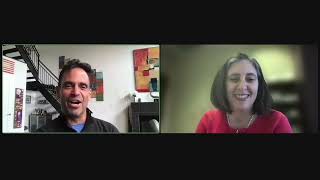
Javier Saade moderates three startups solving supply chain problems: Chromatic 3D Materials prints flexible industrial parts, Delta Development built an autonomous refrigeration unit for blood storage, and Re3D makes large-format 3D printers that work with recycled plastic.
Chapters
Yes.
And to everybody in the audience, we would love to hear your thoughts as well. So be sure to go check out on hoppin in the polls section. Let us know what you thought about this past session. And I really enjoyed also hearing about how the companies found partners and support. So I do focus on the investment and innovation ecosystem, but not using the term ecosystem in the original ecological sense, but more in that general complex network interconnected system. And the complex interconnected system that makes up a supply chain for so many of the products that we use every day has been in stark relief because of the challenges of getting these products over the past few years. It's really made it clear the need to have a more resilient supply chain, one that is diverse and secure and sustainable. So what we're going to hear next from companies in the supply chain resiliency category and what makes them innovative is really their solutions to overcome supply chain challenges. A couple of the companies make it possible to produce objects more quickly, lower cost, less equipment. It's huge if you're able to print locally on demand, especially if you're in a remote part of the country or the world, and then thinking about other ways to think of the supply chain broadly. Right. Another company is creating resiliency in the cold chain for life saving products. Supply chain resiliency is a broad and critical topic and we're honored to welcome back to the Small Business Administration Javier Sadei, whose decades of experience as a venture capitalist and private equity investor, operator and board member give him a broad view of the innovation ecosystem. SBA was lucky to have Javier previously serve as the Associate Administrator for the Office of Investment and Innovation. He's currently a partner at Fenway Summer and Impact Master holdings and I will be so happy to turn the floor over to our exciting ventures and Javier very shortly.
Hello everyone and welcome to the Supply Chain Resiliency panel. I am super psyched to be a small part of America's Seed Fund Startup Expo and talk with three amazing entrepreneurs before we get to the meat of it. A short personal story. This is personal for me in more ways than one. My dad has been in remission from non hodgkin's lymphoma for 15 years thanks to a drug called Rituxent which was invented by Genentech, which was early funded by NIH's SBIR. Amazing my dad's life in terms of taxpayer investment returns. That company alone has returned all of the taxpayer money in full $50 billion over the course of history of the program. But I digress some quick background on the topic we're going to talk about today. The US Is the largest importer in the world and the second largest exporter after China. Overall, hundreds of thousands of products and components making up multiple trillions of dollars of economic activity and trade. Supply chains are brutally complex and when they work, awesome. But when they don't, like now, the ripple effects are devastating. Global pandemics, war, climate, macroeconomic imbalances, currencies, national priorities, and yes, political pressures are some of the disruptive forces affecting many things. As we all know, baby food, cars, energy inputs, construction materials and agriculture, you name it. We are now facing some of the most critical challenges in history, nationally and globally. Supply chains matter, as do their resiliency, and the American public looks to our government to stabilize them. One of the manifestation of that is technology and innovation investment and is one of the reasons why America's seed fund exists. A recent Fortune survey found that 93% of organizations are investing in supply chain resiliency. Over half of those say that the long term value of these investments outweighs short term profits. How will they do that? Well, one way is that they leverage the companies like those catalyzed by America C Fund. Today we will talk to three incredible innovators, Chromatic 3D, Delta Development and Red 3D, all working on the cutting edge of different aspects of the supply chain. So let's get to it. Up first, chromatic 3D based in Minneapolis.
Hi, I'm Cora Liebig and I'm the founder and CEO of Chromatic 3D Materials. Customers around the world are recognizing Chromatic as a primary source of industrial innovation. I'm grateful for this opportunity to tell you about our exciting progress at chromatic 3D materials. We've cracked the code for 3D printing with the most durable flexible materials on the planet. There are a lot of players in 3D printing, but how Chromatic stands out is that our printing is good for functional industrial parts. Other technologies in the market just aren't strong enough or versatile enough. The companies with the capability to deliver for industrial markets is predicted to drive the growth of the 3D printing market from a $12 billion market to $160 billion in the next five years. Our approach is unique. Rather than building a printer design and finding materials to fit, we started with industrial grade materials and built the print around them. From the start, my partner Bart and I have been determined to develop the 3D printing materials and processes necessary to move 3D printing out of the prototype paradigm and into manufacturing. I lead the Technology development from our headquarters in Minneapolis and BART leads the business development from our German subsidiary. Our team includes four PhDs and bring depth in chemistry software and 3D printing.
Unlike a melting or powder fusion process, Our next generation 3D printing technology uses chemical reactions to form the part. Our proprietary liquid resins start to chemically react as they move through the printhead and the reactions continue to form a bond with the printing substrate. The result is a bonded part with the strength of an injection molded part. We are able to formulate the resins to meet the requirements of a broad range of industries. Today we print with polyurethane chemistry and the approach can be extended to a range of other industrially relevant materials.
Not only are our materials unique, but our printing method allows us to do things that other printing technologies cannot. We have tremendous design versatility. We can print solid parts, thick parts, large parts, multi material parts. Our success with Deutsche Bahn came from the fact that our parts are not porous and concealed against air pressure. Our prints have smooth surface finishes without any post processing. And our methods allow us to print complex structures like a rubber gasket on a metal screen to form a filter, or even printing around electronic components like a pressure sensor. We've had multiple Customers with internal 3D printing expertise centers look at these capabilities and say, wow. We need to completely rethink how we are using 3D printing today.
Today, we have sales and prospective customers in multiple sectors. Our hearing aid product has been in the market for nine months and is winning approvals from numerous providers. We are starting production for an athletic apparel product. We have ongoing sales for agricultural spare parts. Furthermore, we have strong qualification progress in automotive and defensive markets. All of these customers are proving that our technology is competitive economically and and solves problems that cannot be solved with conventional processes. This is true industrial implementation. Our customers are applying our technology in ways that impact their triple bottom line. Some of the most dramatic impacts involve reduction of as much as 90% of material waste associated with reduced milling and inventories.
Other customers are able to reduce manufacturing.
Steps and implement novel designs for their customers. And at least half of our customers are finding that our technology enables cost efficient production to reduce their dependence on long supply chains and localize their manufacturing. Today, we're focused on conversion of our leads for our polyurethane products, particularly in.
Automotive and textiles markets.
We've also identified exciting opportunities to fuel our growth further by adding new chemistries to our portfolio. These new chemistries can facilitate rapid response for repair of oil and gas pipelines as well as high performance Defense technologies. We are actively seeking support in the form of strategic development partnerships in industrial sectors, as well as financing to propel our growth plans.
True to our Minnesota origins, we have found that our technology is at the true headwaters of industrial innovation. Every day our customers tell us that our technology is totally transforming how they look at manufacturing in their businesses, all the way from rail providers to the US Navy to pipeline suppliers to apparel manufacturers. We make it possible with a truly versatile, flexible 3D printing platform. You won't want to miss this opportunity to grow with us on this exciting journey.
Thank you.
Hey, Cora, how are you?
I'm really glad to be here. Thanks for the introduction.
So I have a lot of questions for you. Incredible work you're doing. I'm going to shoot a few questions at you and then just riff a little bit. So these new materials you are creating have a wide range of applications like ISO flip flops, ISO tractors. What are you targeting from a commercial standpoint first and why?
So we are looking at, we've been really looking for places where people need spare parts specifically so this and where they need just in time manufacturing. So we've been reaching out to sectors where they are smaller fleets like tractors are a great example where it's a small fleet, not as large as something like an automotive fleet where spare parts can be hard to come by. We reach out to their purchasers who might be struggling with how do you source spare parts for an aging fleet especially? And usually we can help them go through their inventory and identify parts that can be made with our technology. The other thing that we benefit from is that we can look at places.
Where the materials that we use today.
Polyurethanes, the materials we print with, where they are commonly used in their current applications. And we target those as well. But overall, we target a lot of industrial manufacturers of machines and of components of small fleets.
Makes sense that you're targeting these, these parts of the industrial supply chain. Just tell us a little bit about the role that this government funding has played up, thus has played in terms of your success thus far.
Yeah. So one of the most important meetings I had right after I founded the company was with Pat Dillon at the Minnesota SBIR Group, and she really helped us put together winning proposals. I think my first proposal that she helped me write was the one to the National Science foundation, and that one was a winner. So without a doubt, the due diligence that the national groups like the National Science foundation put into looking at our technology brings a lot of credibility to the technology. First and foremost, of course, the financing is great for getting your RD going, bringing some security to your, to your Runway so that you can invest in.
The right people to build your team.
But you know, the advances that we were able to make with that National Science foundation financing has been just absolutely fantastic. And it's launched us to be able to do, you know, typical corporate financing.
There's a lot of acronyms to learn once you get into the IR program. That's for sure. That's for sure. So there's catalytic capital that helped you launch and now you're building a company, you're building a commercial endeavor. What's next for you in terms of just growth?
We're very excited by some defense applications that we've learned about where our technology can be absolutely critical for launching space vehicles or even to just general new defense technologies. In the Defense Department they're very interested in how to be able to localize manufacturing of the components that they need in the locations around the world where they need it. We're really excited about that. Then we've also discovered that a really important component of what we can do is what we call multimodal printing. Where we're able to print on top of other objects. Could be glass, can be textiles. These really start to transform how people design parts and allow them to bring functionality to their designs that they were, that were never possible before. We can do it much more efficiently. So those are two exciting areas.
So to reach you, I assume that all the information is in the website. Thank you. He will get you back up here on the back end of the other two presentations to have a discussion. And next up from Tucson, Arizona, let's learn about Delta development.
All over the world, war fighters need fresh whole blood and they need it at a moment's notice. Getting blood to the point of injury at the right time and at the right temperature is critical to increasing survival rates. Delta Development's technology allows life saving blood products to be carried further forward.
Delta is a fusion of engineers, combat veterans, tactical medics and business professionals. The foundation of this company is to provide extreme thermal systems that operate in all conditions. While blood storage technology has been widely adapted, there has yet to be a product that was mobile enough, light enough and reliable enough to meet military demands. Until now. The autonomous portable refrigeration unit is designed to expand the medic's life saving capabilities by providing reliable medical refrigeration for whole blood storage and transportation. This medical device was influenced by pararescue men, special force cosmetics, special operations medics and Navy Corpsman what they require is a small battery operated mobile refrigerator that can reliably maintain cold chain custody in austere environments. The APRU provides that solution. This impact resistant rugged compact refrigerator has a 6 liter storage capacity holding up to 6 units of 450mL bags of blood. It can easily store vaccines, medications, virus samples and more. It is able to maintain temperatures of 4 to 6 Celsius even at 110 Fahrenheit. The battery can be recharged with 110, 220, 12 volt and 24 volt military vehicle power. It can operate on one battery charge for four days with an additional 20 hours of pacifier cooler. Included is an internal temperature recorder that records every four hours. This medical grade refrigerator operates in all military environments, land, sea or air. It is air droppable and drone deliverable. The internal battery is commonly found on the battlefield. The APRU is listed as a FDA whole blood refrigerator. It has been tested by intertec to the UL standard, CSA and IEC 61010 1. It is certified for waterproof outdoor use to the NEMA 4x and IP66 standards.
Delta is partnered with the end users to integrate their needs during the development process. With this partnership, warfighters get the product they need right from the start. Rapid prototyping technique allow Delta development to bring this needed technology to the field faster.
We recognize the need for our products in the civilian market. From disaster relief to vaccine distribution, these medical professionals are going to have the same demanding requirements as their military counterparts. That their life saving products be kept safe, properly tracked and temperature controlled. No matter the situation.
Any environment, any mission, Delta development has the gear for life saving care.
Robert, welcome to the stage. I don't think I've ever been so excited to talk about blood. Nice to see you. So as you can guess, I have a few questions for you and let's start with kind of a just a basic one. Refrigeration has been around for a while. Portable batteries have been around for a while. Why hasn't this seemingly big problem being addressed sooner? And what about your technology makes this kind of version 3.0?
You got it. Well, we've seen a bunch of people try to solve this problem already, right? We've seen people try to make better batteries, they're trying to make better compressors. Bill, my co founder and I, we've seen those SBR requests go out for years, you know, for people trying to solve this portable refrigeration problem. And we also saw those SBRS fizzle out, you know, either for a lack of performance or product market fit or something. And then, and then we heard users, after we started talking to users, we heard they don't really want a better battery. They want to be able to use the batteries that they have. Right. The ones that are available already. And those, those standard milliker batteries, they're ubiquitous. So if only there was a way to use the same batteries they're using, but just use less energy out of those batteries. So we, that's what Bill and I decided. We had to come up with a way to use the components at hand. And what we ended up with was sort of a hybrid between the technologies that are out there right now of merging old fashioned vapor compression refrigeration technology and thermal storage. And now we have the world's smallest, lightest and longest lasting battery powered refrigerator.
I mean, it's remarkable what you're doing and sometimes very daunting to work with what is essentially the largest purchaser of things in the world, the federal government. I did see you have a Dun and Bradstreet, you know, different things that point to commercial. How did you actually get started working with the government, Department of Defense, and what has been the biggest benefit to your company from that?
Well, I'll tell you this, way back when Bill and I were working together at another company called Sundance Air, where we were doing development contracts for air conditioning systems. That's where we started. And we're always on the SBR contract websites looking out for what's the next opportunity that's in our wheelhouse there. And so that's how we saw all these requests going out. We saw request after request for better portable refrigeration and nobody had solved it. So we realized this is a big problem. The government's really interested in it. A bunch of people have tried to solve it. Nobody's managed yet. We got to be the ones to find the solution. And around the same time, that's where we're introduced to Monty Leha, the third co founder. And he spent 24 years in the army as a medic. So the combination of Monty's medical expertise and Bill and I with mechanical engineering and all of our background in government purchasing, another way that Monty brought in his expertise is he was deeply familiar with not just the user, the medic. Right. But also the purchaser, the people that are buying the equipment, which is not always the medic in that case, sometimes it's the sergeant or somebody else on their team there. So not only building the medic's favorite gear, but the sergeant's Favorite gear was our goal there. That's our motto, is to build the sergeant's favorite gear.
I love it. I love how you are integrating ranks as to who does what. I love it. So this has, I mean, I can think of 10 commercial applications for this. You're starting with a critical, important one that the government needs. So what do you think are going to be your biggest challenges to commercialization as you move forward?
Well, I think our number one problem that we want to solve right now is making blood available to people. Like you said, people call it the golden hour, or it's the amount of time that a person usually has to live after a serious injury or serious loss of blood. And, you know, people in big cities, they generally have enough time for an ambulance to get to them or to get to a hospital. But that's not the case in rural areas or certainly not in the military application. So that's the number one problem we're trying to solve there and bringing awareness to especially the rural civilian teams that may not be aware of this technology yet, that were aware that it's possible to now provide blood in the field. Whereas the military medical counterparts, they've been doing this for a while now. That was quick for them to adopt the technology. So now we're introducing the concept of giving blood in the field to these civilian medical teams.
Yeah, I mean, talk about disrupting supply chains. You're just making up a new way of actually getting this done. So I assume that your website has all the information needed for people to be able to reach you.
Yes, you got it. Deltadevteam.com awesome.
So we'll see you back up here in a few minutes when we have a group panel. Next up, keeping it weird in Austin and my little hometown of san Juan is red 3D.
Thank you for the opportunity to share with you today. I'm so honored to have the opportunity to compete for a slot in the roadshow. I'm going to go ahead and share my screen.
And tell you a little.
Bit about Re 3D, where we are decimating the cost and scale barriers to 3D printing. You see, when you go to buy a plastic 3D printer, this is the landscape. On one end there's desktop systems, which are great, but they only make things you can hold in your hand. On the opposite end of the spectrum are industrial systems, but they're often cost prohibitive. They're locked in. They're a big black box. They can't be deployed easily because they're heavy. They take a lot of power and they require their own materials. This leaves a $37 billion market opportunity for large, affordable industrial 3D systems that are more locally driven when it comes to the feedstock. Enter Gigabot. It's our flagship technology that starts at 30 times the size of a desktop.
Printer, but it's a fraction of the.
Cost of the industrial equivalent because it's less than $10,000. It comes with a whole host of services to help the user figure out the design and the materials testing and every consideration that they need as they think about whether or not this has application for their need. We've been honored to ship gigabytes across 50 countries, partly due to the America Seed Fund and as we enable problem solvers Everywhere investigating where 3D printing makes sense for their use case we were funded via Kickstarter in just one day at south by Southwest, which allowed us to instantly be in 23 countries. But as many manufacturing technologists will share, it's been a little bit tricky because we have to think about how we're going to version up and do the R and D. And that's where NSF as well as SBIR program have come in. It's also allowed us to stay resilient despite having a hurricane hit our Factory in Houston, Texas in 2017 and then just a few weeks later hit our offices in San Juan, Puerto Rico when Irma Maria hit. Despite that, we were able to make a printer that can print from waste via the NSF program. With support later by the NASA and DOD efforts. We have a 1 for 100 program at re3d where we give away one printer for every 100 we deliver to someone trying to make a difference in their community. We call it the gigaprise and it's our commitment to social responsibility. And furthermore, we've had a challenge within our team to modify the printers to be even more accessible. Based on the community request to print from directly from plastic waste. Seen here are three images taken from outside of our offices in San Juan, Puerto Rico. And it's the same for wherever you sit today, where less than 10% of plastic waste is repurposed, we sought to give that trash a home. By modifying gigabyte to directly print from garbage, we knew we could unlock a whole host of opportunities around the products, the models and the ecosystems around this. We also knew we could do it. Between me and my co founder, we have 100 years of manufacturing experience. Matthew, my co founder, worked on the DaVinci robot and spent eight years in NASA. I met him after selling my first hardware company in Life Sciences based on our DARPA grant where I was recruited to NASA and then had the opportunity to wrangle a whole host of space geeks and technologists who have a passion for 3D printing. We're also complimented by an awesome military working dog named Major Patty that keeps everything fun. But it was really the NSF SBIR Phase 1, Phase 2, Phase TV, TECB, Tava and now IPERF program that enabled us to 3D print directly from plastic waste. And we're so grateful this hardware is shipping. It's now commercialized, it's been shipped across three continents with multiple users. And it is more than just an idea. We call it the Gigabot X and we're looking forward to hearing your feedback and where it should go from here. We've also been honored to receive an STTR Phase 1 with DTK which has allowed us to grow a relationship with Oak Ridge National Labs as we think about not only printing on a flat surface, but conformally and also with paste, which the community has requested. Additionally, we've been pushed to go bigger and so thanks to the AF Works SBIR Phase 1 and Phase 2, we've made a 6 foot tall 3D printer we call Exabot. Then most recently the community has asked us to modify to print directly from trash as well. So it really is America's seed fund that's allowed us to go bigger and to do these things. Most recently we received an award from AppWorks, a phase two to Pioneer Gigalab, which is all of our printers and services combined and grid shipping container. As we think about more resilient supply chains. Over the next 12 months we'll be delivering these to USAFA where they will be processing and printing from waste on a base to see where it has application worldwide. This has enabled a whole host of circular pilots where we are and we would love and we're so honored to receive the Tibbets Award for our success in commercialization. And now we're looking to you, the SBIR community and America Seed Fund for feedback on where we go from here. Intros to strategic pilots as well as the opportunity to truly enable sustainable and locally driven manufacturing. Thank you.
Where do I start? Samantha Tibbets Awards the da Vinci Experience, which was actually originally funded by sbir. An amazing, amazing machine. And it seems to me like in the DNA of your company there's a social, almost a social mission, just you're taking trash and making amazing things out of it. But on top of that you do the 1 in 100 did that social mission. Was that from day one or that develop over time?
Yeah, that's a great question. For us, we've been, what we say is flamboyantly bootstrapped, open source and socially driven since the beginning. But really, if, if you go to our website, you'll notice Charlotte's probably typing it in now it's re3d.org and that's because when we got started, we were actually working as contractors for NASA Johnson Space center and then later NASA Headquarters, and we were volunteering with Engineers Without Borders, NASA Johnson Space Center. And so really what this was is a group of engineers, scientists, astronauts who had the opportunity to travel to Rwanda, Uganda, Nicaragua and rural Mexico. And we were having this dialogue about how much lift we were putting into translating what we were learning, living and working in space and these communities and navigating import regulations and whatnot. And what we learned in those communities is that the people that we had the privilege to work with were pioneers and they were problem solvers and they didn't want to be dependent on a long supply chain, just as we don't today post pandemic and, or a big government or an aid organization. And a lot of the solutions that were being brought in weren't a good cultural fit or couldn't be maintained. So we started this blog and applying to different competitions as a group, really with just the intent of having this open source platform that would be community funded, that they could print things as large as a toilet. We called it a toilet sized 3D printer and ultimately also print from garbage with these communities in mind. And lo and behold, we were a finalist on a challenge with Jack Daniels and Instructables. They gave us some intrigue in the community and a following. And then we shared that application with Startup Chile and next thing I know, my supervisor through NASA was liking the status that we were in this program called Startup Chile that gave us 40k to try and make a toilet sized 3d printer and start a company. And he said, when are you quitting your job? So again, I consider myself an accidental entrepreneur that's kind of wrangled some friends and in this big social experiment we called RE3D and we launched our platform, the toilet size 3D printer at south by Southwest on Kickstarter at the Startup Chile booth. And it was funded in 27 hours, 23 countries and gave us a quarter of a million. And my co founder Matthew then quit his job as a contractor and said, I think this is a little bit bigger than my living room. So again, it's kind of been baked into our mission. We weren't intending to have a social enterprise, but we're very honored to be community driven.
Yeah. And it's amazing when you're able to actually create a commercially sustainable and enterprise that does things that are pretty amazing that are not necessarily putting ones and zeros on the bottom line. So look, it looks like you've had a significant amount of success navigating the programs and it'd be interesting for you to give the audience just your perspectives on doing that. I know it's not easy. As you probably know, I used to run the programs some time ago. Just a little bit of is it worth the pain to where you are now? Just however you want to take that question.
Yeah, you know. So again, I think what's unique about Re3D IS and being open source is that we are community driven and having the 1 for 100 model allows us to get insights and see opportunities to support problem solvers globally that maybe can't afford our hardware as well as the ones we've been selling to. And you know, it depends on how you define success. I am we are not afraid of failure. We actually announce our failures as a company every Friday to each other over email. And I didn't get the NSF SBIR the first time I applied which is, you know, many individuals experience and was fortunate to be able to use Dawnbreaker and to be invited to be a reviewer for NSF to learn where maybe I went wrong before reapplying. I didn't even know there were there were other SBIR programs. But once we heard about the SBIR program through the Unreasonable group and NSF after applying our first time making some mistakes, that feedback was really helpful for us and it allowed us to craft a second opportunity. And around that time too, as you're aware, we opened our outpost in Puerto Rico and Juan Figueroa and the Puerto Rican Science and Research Trust and yourself and so many individuals through these resources that are freely available exposed us to other the SBIR ecosystem and that as a broad based technology when our community is asking for feature development in an industry that's rapidly evolving, everyone has a lot to say about 3D printing and all the things we need to do better. There's this lever called America's Seed Fund that can allow us in parallel with selling our hardware to incubate and to do the R and D which can be really expensive in hardware and manufacturing the features needed to support our community, our current base and to test new markets. So it's A safe place to fail. I think sometimes being, you know, bootstrapped, we might, some individuals might say we're anti vc and it's not that we are, but we are a broad based technology and what is an unproven market, especially with printing from garbage? So we see America's seed fund and the SBIR program is a way to identify customers, such as in the DOD when they came to us and offered us an MOU to make a 6 foot tall 3D printer is a way to develop those platforms to test the market in a really safe way. And it gives some transparency too to our engineers around, you know, what we're budgeting for, for their salary and some assurance that even if we don't know what the market is, that we'll be able to pay them during the duration of that.
Fascinating. And you know, exploration always has obstacles and mistakes and it's how you come out on the other side. And no real entrepreneur will tell you that they become a success quickly. Failing is actually part of the gig. So stay with me, Samantha. We're going to get Robert and Cora back on the stage so we can spend a few minutes talking together. So please come in and then basically I'm going to ask a few jumble questions and end it. So kind of a flash question. We have lived through a very crazy time with the pandemic, very difficult on people, society, and we've seen that the world's economy, when supply chains fail, has a big domino effect on those supply chains. Your thoughts on how and why your company has thrived during this period? I'll start with Robert, then Cora, then Samantha.
I'd say the most important thing was having a strong digital mindset during this whole period. Right. That was a bit of a personal goal for myself as CTO here was to start the company with a digital mindset from the very beginning. Everybody knows about the benefits of having safe backups and there's easy change control. But I don't think in 2018 a lot of people were thinking about remote work.
Right.
And that certainly turned out to be a massive benefit of starting the whole company with this digital mindset where I think we got a little bit lucky, where it was easy for us to transition to remote work when everything we do was digital at that point, when we were in development before manufacturing. So that was, that was a big help. I'll say we also got a little bit lucky during that time when it became household knowledge that vaccines require refrigeration. So that was really good marketing for us. Now that People can easily recognize the importance of portable refrigeration.
Ora I think for us, when you start a company, you're already scratching together. What does it take to make things work? That just having the pandemic happen or economic, you know, slump or whatever we have right now is something where you say, well, if I can keep going today, I'm going to keep going. And I think that determination has really taken us through. And, you know, even when we had a number of our potential customers, you know, shut down due to Covid, so what we still have research to do and what that allowed us to do is that when the, when our customers came back, we had advanced the product and we had something to move them.
Forward with as well.
So, you know, it's sort of like, well, live to fight another day and you keep going. And that kind of perseverance that goes to starting a company is just what keeps you going through the downtimes as well. We're lucky.
Samantha?
Yeah, we had a similar experience to Cora. But I would be honest and say in the spirit of transparency, you know, while, you know, we. We are still charging and fighting another day in terms of thriving, it's been hard as supply chains are disrupted and here's your exports and your imports are stuck at borders and there's constant shutdowns. We had Covid in the shop just recently. But, you know, having the opportunity, such as SBIR program to supplement our research has been great. I think for us, what was interesting is again focusing on our community, looking at the market shifts and additive manufacturing and now the resurgence and interest as we become cool again and in 3D printing and on demand manufacturing is having the opportunity in these hard times to think about what the community needed and leveraging the SBIR program for it. So one thing that came out of the pandemic that wasn't quite a pivot was taking all of the hardware and the services we were currently supporting in 50 countries and being asked to put it in a shipping container first for the Puerto Rican Science and Research Trust is a match against our nsf. And then with this award we just started with the US Air Force Academy. That looks like it could be pretty scalable. We had just a couple inbounds for these shipping containers this morning. And so I think the opportunity in the pandemic was just to be really humbled, to sit back, to be thankful that we have money coming in when things are shut down, to focus on research as Chromatic did, and then, and then saying, okay, are there tools out there to Think about how we stay relevant to the community.
Yeah. Robert, just a question to you. Have you started the process of going to Angels VCs for funding? And how do they view America's seed fund being on the kind of the capital stack with these non dilutive? It's a trick question because I am a vc, but generally how. I'm assuming it helps. But can you give some perspective on that?
I tell you, I've learned in the past few weeks more about angel funding than I ever planned on learning. But that's been part of the growth here where now we've got our product market fit, we've launched it out to countries all over the world and so we're looking to grow from here. And so, yeah, we've been pitching to angel groups recently. And part of what I learned was that these VCs and angel groups, they really like companies that are funded by sbirs first. Usually it means that you're already successful, you've already completed your phase one and your phase two. Somebody else already took the risk. The SBIR program took the risk on you to launch your company. And it also helps at that point that the company is not too diluted, which is another attractive option to those type of investors.
Yeah, American taxpayers are happy to take the risk because you're expanding the frontiers of human knowledge. But these companies over decades have returned trillions of dollars of value. Literally trillions. So, Cora, I'm going to close it. I'm going to close it with a question to you, which is there's, I don't know, I heard hundreds, I heard a thousand. A lot of people are listening here and watching. If you were to have calls and book some meetings with people at this stage, who would it be? Would it be investors? Would it be commercial partners, SBIR managers, customers? All of the above? Like what, what would be the goal?
For me, the number one is development partners, people who own a company or who are part of a corporation that's looking to implement 3D printing and think that they have a good application for the types of materials we have. So that's number one and I'd be a fool if I didn't say it. Also, talk to any investor. We're not running current fundraising round right now, but you know, it's always, it's always right around the corner.
Yep, you're always raising money. Well, listen, I am. We're getting the, the old cane out of the stage. So I want to thank all three of you for an amazing conversation. You're all doing just so such cool work. It's mind blowing. And listen, all of those, all of the people listening here, an amazing resource, as evidenced by the people you saw on the previous panels and these three amazing entrepreneurs. So thank you, America Seed Fund. And with that, we conclude this part of the program. Thank you so much.
More from Your







President Donald J. Trump and First Lady Melania Trump Visit Grieving Texas After Deadly Floods

💪 Thinking of starting a #biz? Go for it! — Kerry Boyle, Vermont #SmallBiz Person of the Year

President Trump Participates in a Bilateral Meeting with the Prime Minister of Canada, May 6, 2025

