Above, Below & Beyond: A Presidential Special
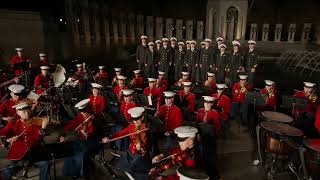
A commemorative YouTube special marking 250 years of the U.S. Navy and Marine Corps, presented as a conversational monologue between Jay and Kelly. The transcript traces the services’ origins (Continental Congress authorizations in 1775), celebrates defining battles (e.g., Iwo Jima), explains recruit training rituals (Parris Island, Crucible, Battle Stations), highlights institutions (Naval Academy, Norfolk Naval Shipyard, Blue Angels, Military Sealift Command), and emphasizes evolving threats in cyber and space alongside the enduring values of honor, courage, and commitment.
Chapters
Gather to celebrate 250 years of strength, tenacity and unwavering courage. Booyah. Navy. Hoorah. Marines. Navy and the Marine Corps embody the resilience of our country. 250 years of United States Marines. From the American Revolution until today, the story of the US Navy is a tale of loyalty, sacrifice, sacrifice and commitment stretching back 250 years. God bless the United States of America. 250 years. That's two and a half centuries of sailors and Marines answering the call. Not because it was easy, but because it mattered. Every generation has carried that torch through war, through peace, through uncertainty. It's not just history, it's legacy, written in sweat, forged in discipline. The men and women who wear the uniform uphold that proud tradition. The mission has not changed. Protect freedom, defend our nation and stand ready. This is who we are. This is 250 years of sailors and Marines holding the line. The American colony stood at the brink of revolution. On land, our founding fathers had already established Continental army and entrusted its command to General George Washington. But they soon came to a sobering realization. Their war for independence could not be won by land alone. Several delegates of the Continental Congress understood that control of the seas was was critical to breaking free from the grip of British tyranny. But not all delegates agreed. On October 3, 1775, when the Rhode island delegation proposed the creation of a naval force supported by all 13 colonies, Maryland delegate Samuel Chase called it the maddest idea in the world. The objections were rooted in pragmatism, cost, lack of capacity and fear of the far superior British Royal Navy, proven by their 200 year victory spree over the waves. The assured retribution from the tyrant King George fueled congressional trepidation. With Washington's support, the Continental Congress chose resolve over fear. On October 13, 1775, was authorized the outfitting of two armed vessels to intercept British supply ships for much needed gunpowder, weapons and other critical materials. From that authorization, the United States Navy was born. Not from vast resources or naval supremacy, but from the bold determination of a young nation fighting for freedom. Since the birth of the Corps, we have answered the call. Through every battle, in every climb, in every place, no matter the odds, no matter the obstacle, we adapt. We overcome and close with and destroy the enemy. We know the future will not be the same. But the one thing we know will always remain is the Marine. For 250 years we have formed ranks and held the line we will in the next 250. As Secretary of the Navy, I'm profoundly grateful to every individual who has served. And to every sailor and Marine who stood to watch, past and present, in defense of our Republic, let us honor the legacy of those who came before us. Let us reflect on the enduring spirit that began in 1775. Because that spirit, one forged in honor, courage and commitment, remains in all of us today. Thank you for joining me today to celebrate our shared heritage. May God bless you, the Navy Marine Corps team and the United States of America. Oh, say can you see by the dawn's early light what so proudly we hailed at the twilight's last gleaming Whose broad stripes and bright force through the perilous fight for the ramparts we watch Were so gallantly strengthened Love of mercy gave proof through the night that our flag was still there. Oh, sa. For the land of the free and the home of the great the great. Iwo Jima was critical. It was a turning point battle in World War II. It brought our bombers close enough to strike the Japanese Home Islands. And it was savage fighting. A couple of square miles of hell is what it was for them. And when they finally got to the top and they raised the flag on Iwo Jima, it guaranteed a Marine Corps for the next 500 years. Marines don't wait for perfect conditions. They act with purpose, lead with confidence, and finish the mission. The Marines just knew the mission was to take the island. And that's all they needed to know. Through explosions, bullets and screams of war, Marines have always kept going. We are unapologetic about who we are and what we are supposed to do for this country. We fight for our Constitution, we defend our Constitution, but we fight for each other. We fight for the Marine on our left and our right. Today, we celebrate their uncommon valor. The uncommon valor that comes with being a United States Marine. Uncommon valor was a common virtue. The principles of the Marine Corps of honor, courage and commitment. It's not just a job. It's not a cool T shirt phrase. It's a way of life. It's not about weapon systems or ships. It's about people and character. You earn the title Marine, you. You don't join the Marine Corps, you become a Marine. You know, the Marine Corps doesn't promise you a title. It doesn't promise you a contract. It just promises you an opportunity to become a Marine. The character of war is changing, but the character of Marines is not. When I see that statue, it represents the very best of the human dynamic at the worst place, hell on earth. So today, as we stand in the shadow of these giants, we reflect on the last 250 years of battles fought and won, uniting every generation in an enduring purpose greater than self. A purpose rooted in sacrifice, sustained in brotherhood and bound by love of country. Decades have passed. Marines still stand. And we look to the future with confidence. Semper fidelis, Marines. May God bless you and the republic you protect. Once a Marine, always a Marine.
When we're looking back, we're like they were all the puzzle pieces that made this work.
Yes. And how we were, how we forged them into amazing warriors.
It's that tenacity. That's what's in our sailors and Marines. Yes, they have that tenacity and that's what makes it so special.
Uncommon valor from I dare say common everyday individuals. That's what made the continental military back in the day. Everyday average citizens who stepped up and said, I am willing to serve. That's what built that uncommon valor.
I think that's why it's so important is that we're not special. No, we're not special. I think we make this organization special. But it's that grit that's going to make our organization continue to thrive for another 250.
We are, we are becoming the past. I'm a dinosaur, you know, I'm the past part of the 250 years. But who will be the next man up for the future? 250 years?
It could be anyone. It could be the person watching this video right now. The thing that's keeping them from this experience is fear. They're scared, they don't know. But I think that there's a little bit of excitement in that. That adventure is going to want to inspire the next person.
You know, there was no part of the journey. I know for you or for me that at some time there wasn't a little bit of fear, a little bit of doubt. But I will tell you this, having done a lot of high speed dangerous things, there can be no courage without a little bit of fear or doubt.
Right.
They are the future.
Right.
And they are the next man up. And I'll say this, carrying on the legacy of that uncommon valor. Uncommon valor starts with one step.
One step.
We are joined. I will lay my life down for you. The Marine Corps has been making Marines at the historic iconic depot at parris island for 110 years. Hardest thing you will ever earn in your entire life. A drone shifter gets on the bus, tells everyone to get off. Thousands and thousands of marines that came through here and all stood on the same yellow footprints. Your heels are touching feet out of 45 degree angles and your mouth is shut. Each day you're going to discover something about yourself that you never knew existed. You chose to undertake the arduous task of becoming a United States Marine. The Crucible is a grueling 54 hour event to ensure they are ready to earn the title of United States Marine. The culminating event of the Crucible was this morning where they were presented their eagle, globe and anchor for the first time. If you feel like you need to be part of the Marine Corps, we'll take care of you. We'll show you how it's done.
Well, Battle stations is a capstone event for Navy recruits. It takes everything that they've learned throughout boot camp and puts it in some kind of scenario.
All of our general quarter scenarios are based on events that happen to ship throughout naval history.
It's not a teaching environment anymore. Now they've learned everything they've learned and.
Now they have to apply it. If you don't work together as a team, nothing will get done in the Navy. It doesn't matter what the individual does. It matters what you do as a team. No one job runs the ship. When the ship is in the middle of the ocean, any fire, any danger, they are the only ones to handle and take care of it. When they come through here, it's not always clear just how important they are. By the end of the debrief for each scenario, it's really solidified for them. The moment I took off the recruit ball cap and put on the Navy.
Ball cap, I felt overwhelmed with a sense of pride for serving my country. I feel so much more confident now.
Than I did yesterday.
The Marines and sailors at officer candidate school are some of the best in class. Dedicated technical experts, wholly invested.
We challenge them mentally, physically, to make sure that they're able to function under pressure. Through the coaching and mentorship phase, I work with the candidates to execute critical thinking. Combat is dynamic in nature. I want to see how they perform because in the future it could be bullets going over their head. We take that a step further during their small unit leadership evaluation. The candidates are leading their own fire team through a problem set in the tree line. And they have a very limited time to develop their own plan and then execute that plan to the best of their ability. The Marine Corps, we have a saying that the title is earned, it's never given, and it's something that's very, very special to us as Marines. They've earned that right to hold our emblem of the eagle, globe and anchor. Congratulations. Thank you, sir. That is the moment that person realizes that they have achieved it. And it's something that can never be taken away from us. Once we've earned that title of Marine.
This isn't for everybody. The desire to serve, to be part of something bigger, to be part of the most feared and revered war fighting organizations in the world. The transformation starts from the moment that they step onto the yellow footprints. Physically, mentally, spiritually, emotionally. When candidates graduate, they have met or exceeded the standard and go on to accomplish great things in our service.
Kelly, I gotta tell you, one of the greatest honors of my life. Everybody always asks me, jay, what's the biggest speaking engagement you've done? I was honored to do a forestall lecture series at the Naval Academy in 2015 to the student body. And it was so moving and impactful to think these young men and women are literally the future leaders of our great nation. They will shape the United States Navy and Marine Corps for generations to come. And Kelly, you are a Naval Academy graduate. You are part of that legacy.
Yes, it taught me how to excel, but that's hard work. That's hard work. And your willingness to serve other people.
That'S what it's all about. It unlocks the greatest leader that lives within you. If you were looking for that, the Naval Academy is calling you.
I thought, if I get through this, what else can I get through in my life? And I got addicted to that ability to not just help evolve, you know, myself, but see the difference I can make in others. The Naval Academy is a whole person concept. It's moral, mental and physical. You can't just be good at academics, you can't just be good at athletics. You have to have integrity. You have to lead with that heart to serve others. And you're leading Sailors and Marines at the end of the day. So it's not just about survival. It's really about excellence and leading with that excellence and learning to become the best version of yourself for others. I wanted to be surrounded by people who were bright, who were outgoing, people who had the same goals as I did. That was the Naval Academy for me.
And when I visited the United States Naval Academy for first time, it just hit me. The culture, the people, this is the place for me to not only get an amazing education, but to also serve my country and become a better person.
It offers so many opportunities, both academically and then professionally. You're going to graduate with a well paying job. You're going to be making a difference and standing for something that's greater than yourself. It is just an incredibly special place to be. And to live in and to get to walk the yard every single day. What a beautiful, beautiful campus. I have met my best friends, I have met amazing mentors that have taught me so much.
All the amazing buildings. The amount of history comes from this place. Being able to be here with some of the best and brightest in the world, you just continue to grow. It's never a day where you're not improving yourself as a leader, as a midshipman, as a person.
The location, it's beautiful, right on the water. The fall, you get to see the leaves change.
It's the prestige, it's the challenge. And it's about the opportunity to serve your country and do something more for yourself that really drew myself closer to this place. It's a feeling of pride, it's a sense of accomplishment and it's a sense of opportunity, of what I get to do afterwards here. It's a 40 year decision, not a four year decision. I heard that's a challenge. That's gonna make me a better person. I said, this is the place for me. That's gonna be your life. Not just in this game, but for the rest of your life when you're wearing a different kind of uniform.
From a young age, I always knew that I wanted to do something so much bigger with my life. And I, I knew that there was a bigger purpose for me.
Standards, discipline, accountability. It's the basics. It's blocking and tackling of leadership. That's what you're learning here. That's what your formations need. That's what the country. I think that's great about the Naval Academy is it allows you to grow in your leadership styles and try different things out and learn.
The Naval Academy just provided so many opportunities. Both the things that you do on the yard, if it's on a sports team or the different clubs that we have here.
I've been on the parachute team since my freshman year. I love it. It's unlike any other sp. Being at the glee club has been incredible. We tour around the country. You have people come up to you when you're done singing. They're just like you have restored faith in our country. That's beautiful.
Dance Captain has genuinely taught me a lot more about my leadership skills. Getting to instill certain values of the Naval Academy. Those moments have really defined me as a leader. It is the perfect place to develop these leadership skills and to make a difference in the military, in the world, in the fleet, wherever it is. The leadership role that's meant the most to me here at the Academy is being 13th Company Commander, my company trusts me to make decisions that is going to better everyone around me.
It's going to prepare me for the fleet and serving America. Because one day I will be in charge of sailors and Marines. My decisions will affect their lives and potentially could save their lives. What you do in those moments is what's going to be the difference between, between life and death for the men, the Americans, for the sailors, for the SEALs, for the Marines that you lead in the future. Real leaders are the ones that step up and try to do the hard thing. The values and morals that have been instilled in me will last forever.
You get to be a part of something that is just so much bigger than yourself that you're not going to experience anywhere else.
You chose something bigger than yourself on day one that means something. You have my responsibility, respect because of it. And I'm going to make sure you have everything you need whenever you need it, in the formations you have. Gentlemen, men, warriors. Go Navy. Let's go. One of the things that Blue Angels get to do week in and week out for 33 different show sites every single year is to showcase the teamwork and professionalism of the Navy and Marine Corps through flight demonstration and community outreach, while inspiring a culture of excellence in service to country. To make the six F18 Super Hornets fly and the C130J Super Hercules takes an entire team effort. We have about 160 personnel on this team, but only nine of us at a given time are flying the aircraft. So the rest of them are in a support role. They come from the fleet. They experience and they work day in and day out to make these machines fly and to put the show on for the public. They're experts at their craft, but they're even better people. They pump me up every day to do my job. They make me a better commanding officer. Good morning, everyone. We are parked in reverse order for a normal walk down. Delta will be in front of the craft, the Maneuvering Delta, or in front of the crowd. Seeing that the Maneuvering Delta trash, perhaps.
Buddy, was that Dream 106.
I'm F. Rio Diamond Soul Comfort Tower. Let's have a good one. Out there in the shadows, in the silence, there's a new battlefield. One you can't see, One where every click, every signal, and every line of code can tip the balance. The Navy dominates this battle space. Before the fleet sails, before the jets are launched, our cyber warriors are already there in stealth, securing the battlefield before the first shot is even fired.
As we look at the Modern fight Increasingly this is about maintaining dominance in the cyber and space domains as well as how they integrate in with the maritime domain, air and land domain.
The old ES on adversary UAV bearing.
Two force the first shots in the future conflict will be in cyberspace. There is potential zero day vulnerability activity.
And the virus it 2 notify the task force. There is a zero day exploit that goes live in an hour. Fights on in cyberspace has been for a long time. The adversary knows that it's something we depend on and they go after it. Mission is picking up, so that means we gotta step our game up.
Warfare is moving towards cyber operations. You have the ability to take down entire infrastructures with well placed cyber attacks.
Flycom set CPCON 3 mission package is ready for execution.
Keeping our intelligence protected is the next step moving forward to fighting off adversaries.
We're adversary focused, we're threat focused and we're really looking at where are they trying to go, what are they trying to accomplish against and how do we keep them from doing that. So that means we gotta stay ready. Fired up, fired up, fired up, fired up. I think we're facing the greatest threat that we've seen in my lifetime, maybe in the history of the United States. The adversary is trying to degrade our capability, steal our information. We have to be on top of it every single day. Strike group is preparing for a formation transit. Working in this field, the skills and qualities you have, first of all, you gotta be assertive. I think it's very important that you know what you're getting yourself into. Technology is constantly evolving. The way we communicate is evolving. So being able to learn, diversify yourself and being able to accept those challenges that come along with it is going to help in the long run. I believe the skills and personality traits that I possess are persistence and commitment. It allows me to be more focused on the Navy's mission. It allows me to be a top tier war fighter in the cyber domain. Coordination with supported commander, timing and tempo are complete. I believe that if anyone has the same mindset that I do, there's a spot for you on our team. The Navy fleet is only as strong as the people who maintain it. Ships and boats can't stay at sea forever. They need repair, they need overhaul, they need constant attention. Every bolt, every panel, every system matters. One mistake, one overlooked detail and lives are at risk. That's why shipyards are the backbone of the fleet. The men and women who work here keep our ships ready and reliable. Let's take a closer look at the skill and dedication that make all this possible. So Norfolk Naval Shipyard, I consider the oldest naval shipyard. We were established November 1, 1767, so that makes us 258 years old. This November, we do nuclear overhaul submarines and aircraft carriers with the shipgator trade. So heavy steel work, we are working on the actual tools that the nation uses to live the way we live. Right. And that just creates a great sense of pride in being able to be a part of that, whatever that part is. I've been here 16 years, but I've been welding over 20 years. I start out teaching them how to weld, how to strike a knot all the way until they come welders. When you sit back and you look at the size of the nuclear warships that we work on here, both submarines and carriers, and then you actually get to see what those ships are capable of, it really motivates me to come to work every day and really give back to the navy. We're the most dominant maritime force in the world, but we have areas that we need to improve on. Fixing the maritime industrial base and getting shipbuilding back. And teaching people to use their hands again in this country, I think is very, very important. You know, we've spent the last decade teaching people how to code. We're going to spend the next decade teaching them how to use their hands.
Sailors will work and they'll work hard. They are out there every day busting rust, laying decks, painting spaces, fixing equipment, and making this ship better for themselves. And then for future sailors that are going to come on board the ship after them, we have to ensure that our ships and our aircraft across the spectrum are ready for any fight. The fact that we're making a difference downrange for the future sailors on this is fantastic.
Our evolution is not just about ships and systems. It's about culture. It's about people. And we have the best people in the world, and the best culture in the world is one that's going to be faster, more adaptable, and quicker. We got a lot of material, we got a lot of parts, we got a lot of processes, but it's the people that do it that make it. The people learn these trades and learn how to apply them and do some of the most amazing stuff that I've ever seen. Military sealift command. Our primary job and mission is to keep the navy at sea so we resupply them, rearmament, anything they need to make sure that they do not need to pull into port. We keep them at sea and in the fight.
And our sailors, they need to be ready. They need to be ready for anything. But that also means that our ships need to be ready for anything.
Merchant Mary for our position, we are professional sailors on that civilian side that comes out and facilitates the Navy's functionality. On that DoD operation, we still have chain of command, but it's just that civilian side versus the quote, unquote, military aspect. It is pertinent that those crews work cohesively and hand to hand. So you have to be able to trust your crew, whether it's active duty or civilian. Continued excellence is so important. It begins with the small things. Following through on our tasks, following through in our exercises, following through in our drills. Train hard, work hard. And we have positioned the Navy and Marine Corps for the next 250 years to continue to be the most dominant maritime force. It.
More from Your







President Donald J. Trump and First Lady Melania Trump Visit Grieving Texas After Deadly Floods

💪 Thinking of starting a #biz? Go for it! — Kerry Boyle, Vermont #SmallBiz Person of the Year

President Trump Participates in a Bilateral Meeting with the Prime Minister of Canada, May 6, 2025

