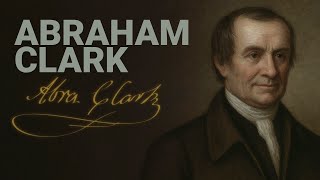
Abraham Clark, a self-taught lawyer from New Jersey, signed the Declaration on August 2, 1776. The British captured his two sons and held them on a prison ship, offering to release them if Clark would abandon the cause. He refused. He later pushed to abolish slave importation in New Jersey and made the Bill of Rights a condition of his support for the Constitution.
Chapters
Good day. I am Abraham Clark of Elizabethtown, New Jersey, the poor man's counselor and signer of the Declaration of Independence. I was born fit for numbers and law. I taught myself justice with no formal schooling and earned a name settling disputes. They say I wore no wig nor ruffles, only plain clothes and plainer speech. Yet I sat in Congress, speaking for men who could not be heard. In 1776, I was sent to Philadelphia to replace those unwilling to declare independence. That July 4th, I wrote, it has gone so far that we must now be a free independent state or a conquered country. On August 2, I signed as the enemy gathered on Staten island. And not long after, they made me pay. Two of my sons, both officers, were captured and held on the prison ship Jersey. A floating hell. No fresh air, no light. One was starved, the other was beaten near death. The enemy offered to release them if I betrayed the cause. I refused. Imagine the heart wrenching choice. Your son's in chains and you still choose liberty. Freedom must be earned without privilege and defended without compromise. I served in Congress through war and peace, authored reforms and fought to abolish slave importation in my state. When our Constitution came, I supported it, but only after securing a bill of rights to guard against new tyrannies. Even now, my life's work protects the common man. Let it be said, I was not just a poor man's counsellor, I was every man's counsel. It.








