Ascension's Jeanna Hondel | Winning Business: Resilient Stories of U.S. Small Business Owners
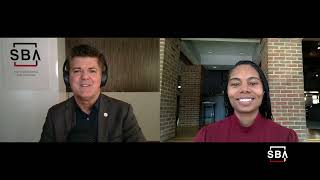
A recorded interview (SBA "Winning Business" series) of Jeanna (Gina) Hondel, founder/CEO/president of Ascension Construction Solutions (Columbus, OH). Hondel describes her path from discovering civil engineering in high school to earning an MBA and a PE license, then founding Ascension in 2018. The company provides construction management and general contracting across mission-critical (wastewater, hospitals, data centers, airports), education (pre-K through higher ed), water/wastewater infrastructure, and parks. Hondel emphasizes company culture built on respect and transparency, the role of the Women’s Business Center in early support, lessons on scaling (SOPs, benefits, being non‑bottleneck), hiring tied to cultural fit, and the value of workforce diversity. Notable facts: company registered 2017, officially opened July 2, 2018; Hondel named 2023 Ohio Small Business Person of the Year; team size expanded from ~32 to about 50.
Questions this video answers
2017.
July 2, 2018.
2023 Ohio Small Business Person of the Year (SBA).
Construction management and general contracting (also holds professional design licenses but focuses on construction management).
Mission-critical (wastewater, hospitals, data centers, airports), education (pre-K through higher ed), water/wastewater infrastructure, and parks.
Chapters
Hi, I'm Jack bianco of the U.S. small Business Administration. Today I'm talking to Gina Handel, founder, CEO and president of Ascension Construction, based in Columbus, Ohio. Ascension has worked on projects with the city of Columbus, the Ohio Department of Transportation, the Army Corps of Engineers, among many others. And in 2023, the SBA named Gina Ohio Small Business Person of the Year. Welcome, Gina. Tell me a little bit about a younger Gina, what you sort of aspired to be when you're talking to your parents, your grandparents, and what you might have sort of pursued academically at that time because of your future dreams.
Really young Gina just wanted to be a Power Ranger, you know, the pink one. But really, it wasn't really until I got into high school that I really started to uncover engineering and construction and things of that nature. And so I think most like other kids, you know, I just wanted to have fun. Honestly, even in high school. I remember my teacher asking me, I was taking a draft in class, and I was pretty good at it. And he asked me, like, you know, what. What are you going to do? Like, are you going to college? And I'm like, yeah, I'm going. He's like, what are you going to do? I'm like, I'm going to run. He was like, but what are you going to do? I'm like, the 200, the 400. He's like, Gina, what are you going to learn? What are you going to study? And, like, literally, that was the first time it clicked or like, anybody had ever asked me that question. I'm like, I don't know. And so, you know, he kind of took me under his wing and started giving me, like, engineering literature. Like, there's so many different fields of engineering. And I fell in love with civil. I love the idea of seeing things come from paper and being built in the real world. And so that was, like, the first thing that opened up my eyes into the world of engineering.
That leads into a question of, you're going down the civil engineering path, right? The world is wide open. A lot of job opportunities across the board, but you make a decision to pivot out of that and, well, not totally out of it, but to utilize that as a small business owner. So at that point in your career where you're working for a firm and you decided to pivot over to entrepreneurship, Tell me about that, that period and why you made that decision.
So there's always a catalyst that happens that kind of makes you think that you want to do this. But before that, it wasn't like, One morning I woke up like, I'm going to be an entrepreneur and I'm going to have a construction management company. That definitely wasn't the case. So I worked for quite a few different companies to gain experience in the field. I also got my MBA during that time as well. I took my professional engineering license and passed that. And so there was a lot of steps that went into preparing to start a business. But I think the main thing is that regardless of where I was working, there was always a part of me that felt like I didn't fit in. So whether if it was I was the only woman or the only African American or just didn't feel like I jailed, there was a lot of times where, you know, this being a male dominated field, like I was a lot of times the only woman and I just didn't feel that inclusivity and that, that familial aspect. You know, you spend most of your time with the people that you work with and so, you know, to spend all that time and still not have any real connections bothered me. And I learned that, you know, construction and construction management, you can learn, you can teach people those skills. But trying to find a place, a home that embody all of those things was I think really what I was looking for. So although I was trying to create a company focus and construction management, I think I was really trying to create a space for inclusivity where your opinion matters, where your opinion is heard and which, those are the foundational things of the core of ascension. So, you know, respect transparency. When I talk about transparency, in my previous care, there was times where it's two weeks before the project that I'm working on is going to end and I don't even know what my next assignment is. And so however, companies have backlog know that they know what projects they're going after. And so sharing that information, just being open with your team, whether something good or something bad happens. I'll tell you a quick story to, to go with that regarding transparency. And so unfortunately we were defrauded. We were getting ready to purchase our first building and we were defrauded. I, I'll, I'll spill you and give you the, the, the high point. We got the money back, thank God, but you know, we were defrauded. And I went back and forth whether or not to tell the team that time. You know, I'm hopping out of meetings, closed doors, eyes puffy because I've been crying. This is a lot of money, you know what I mean? Like, might not have killed the business, but we'd have been back in the basement, so, you know, that's a big thing. And so, again, the idea of transparency, I decided, hey, you know what? I went around to every project site, myself, our COO and our cfo, the three of us who went together to every project site and let everybody know that what was going on, because you could see it on my face. There was stress, there was tension, like, there's something going on. And instead of letting people come to their own conclusions about what's going on, I wanted to be the first to tell them, you know, it was because they're part of this company as much as I started, and. And I'm the owner. They're part of it. They're part of the culture. And so they need to know what's going on. So that's kind of like one of the stories when I. When I share about transparency that I. I would hope maybe it's not. Not that level that other companies could share as well. I think it would go a long way with their team.
Yeah. Thank you for sharing that. It had to be very stressful, but beneficial on your journey, but also your team building trust and other things I definitely want to talk to you about. I do want to sort of ask about that early stage again. So you make the decision to jump into. You got the great technical background, you got some experience under your belt and on your resume. You've probably got a network because you've been working in the field for a little while, but. But you've made this internal decision. But let me ask you about that. Was it an internal decision? Did you have early supporters or people saying, hey, Gina, no, no, no. Bad decision. You know, stay with the steady nine to five. Or was everybody like, wow, if we know a leader, it's. You go for it. What was that reality check?
It was really interesting. So obviously I kept it under wraps because I was still working. But I did speak to a few people and said, hey, if I start my own business, would you be interested in working with us? And the answer was always yes. But then when it came time to start Ascension and you start calling those people that were saying yes, now you're getting crickets, you know what I mean? And so it's very interesting. The business plan that I created to essentially start the business with it is so far different than what actually happened. So you. It's kind of like budget versus actual. You know what I mean? You forecast this is what you're going to do. But how that actually looks was A very different thing. And so I think like what, what I did is starting off I basically like you said I had because I'd been in the field for, you know, a few years already, I made sure I had all the contacts. And the first thing that I did when we officially opened doors for Ascension, I sent out individual emails to every person that I knew in my contacts and was like, I would like to introduce reintroduce myself as a sentient construction solutions where this provided capability statement, hey, can we meet for tea, lunch? Anything like that. And so got great responses but also really working to build a new network. And that's where a lot of the opportunities came in is from those new connections that I was making along the way.
So awesome. Yeah, you've done a wonderful job of it. So now it's commercial time, right? We haven't told everybody about the awesome projects that you work on. Give them. Give me a commercial. What is essential work on what type of projects? Mixed bag. It started in one sort of aspect of civil engineering, but grew and expanded. You hinted at that a little bit.
Yes, indeed. So Ascension Construction Solutions we focus on construction management and general contracting. So although we are licensed and professional, we can design. That is not where our passion lies. However, we take that experience and we may join a design team to provide our expertise. Now that you get more an authentic project that has less issues because you're combining the background of being on the client side as a representative and then also being on the construction side. So you can understand if that's a real application that can be built in the world or if there's another avenue or better way to go about something. So that's one thing that we do. The second thing we do as the general contractor is essentially manage at risk projects on behalf, you know, of our clients. So that basically means that we hold the contracts with the subcontractors and trades and basically are responsible from cradle to grave to meet the project scope, budget and deadline. The types of projects. So those are the departments that we essentially have. The types of projects that we have. We work in quite a few different areas. Five primarily. So one is what we consider mission critical. So that's basically anything regarding like wastewater, hospitals, data centers, all projects like that are considered to be mission critical. So we work in that sector. We also work in education. So anything from pre K. We were actually on a project on the west side of Columbus Early Learning center for the city. So we manage that project for them. Projects just different educational schools a lot. With City of Columbus, when we talk about education then higher ed as well. We also do a lot in water and wastewater infrastructure. So as you know, there's a lot of things coming to Columbus and with that growth, this infrastructure has to grow as well. And so you know, we do a lot of work with the water, wastewater utility departments, with the city of Columbus regarding projects as well as parks. We manage the construction of parks as well. Other mission critical will be considered airports. So that lovely Conor, if you've been to the airport, right next to the McDonald's, that new building that went up, that, that rental car facility, we were part of that team to help bring that, that vision to life. And so those are just a handful of the different types of projects that we do and the different types of clients that we have.
Wonderful. I think anybody in the audience you're mentioning things that touch all of us, right? Schools, roads in our daily lives, our professional lives, you name it, right. All that, all those projects impact. Thank you for working on that. It's a big area. Obviously every community state in our country, we need talented small business owners and engineers such as yourself, sort of building teams along that path. So you interact with one of our beloved partners, the Women's Business Center. They're probably one of our more robust Women's Business center within our network. All of them are great, but yours does some Microsoft microlending and some other programs first. How'd you discover them? And then tell me about that engagement and what you got out of that relationship you built with the Women's Business Center.
So how I identified, basically part of my research before starting, I wanted to know what resources were available to me to make sure that my plan before I jumped to make sure that my plan was solid and the Women's Business center came up top and they were very helpful. From reviewing my base business plan to providing other resources, even though I didn't need funding at the time, you know, helping me and figuring out how to get pre approved, pre qualified for loans and things that matter that actually came really in handy later on down the line. They were very instrumental, just basically giving me a place where I can go. You know, when you're small, you know you're working from home and it's kind of hard to have that separation of church and state, so to speak. And so it's kind of like I was always working nonstop because it was there. So every time I had an idea or something. So this kind of gave me a place where I could go be around other like minded people, share my ideas and not have the fear of someone taking those ideas and using them as their own, actually, like real, true support. And I think that was the best part, the trust that was developed with the Women's Business center and being able to utilize those services to help really catapult ascension forward.
Well, we're proud of their work. We're proud of what, you know, you've done. And some, you know, keywords. I want to turn to a little bit. You had talked about transparency earlier with the employee team, and I know you call them teams.
Oh, I gotta pause. I gotta pause. You. We don't call them employees. We're team members here. Yeah. And honestly, it's a big difference. Like, we all work together. You know, right now I get to wear the hat as a CEO, but in small companies, you wear a lot of hats. And so in two minutes, I might be wearing the hat of a project manager. And so my team, we work hand in hand, you know what I mean? So I work for them, if anything. You know what I mean? So we don't call employees here. Everybody is a team member. We're all one family.
Excellent point. I think, especially somebody who's done a lot of the jobs, a lot of the technical components of your partnership that you've built there. But from that aspect, and you just mentioned with the Women's Business center, you felt an environment of trust. You could do a lot of back and forth, leveraging that, talk a little bit more about what you were just elaborating on sort of the culture, which sounds like you wanted to build right off the bat. Some people deal with culture in my experience, after the fact, after culture has gone askew or they don't know why mistrust is happening or why people are on the same page. And it sounds like maybe because of your experience that you mentioned earlier, but other reasons, your values maybe that you wanted that built in early on and talk a little bit to some of your colleagues who maybe underappreciate that and why it's so important to your success.
I think if you don't have a vision or if you don't have values, it's hard to know where you're going to go. And it's hard to make decisions because you don't have a core focus. And so all our decisions that we make at Ascension are tied back to our core values of respect. And so having that really helps because a lot. You get a lot of noise, you might have opportunities like, hey, here's this project. We should go after this. We should go after that. But is it aligned with our core values and our core mission as a company? And if you don't have those, when you start out trying to build that, after you have, you know, other people who have joined the team and now you're trying to create, you, you leave it up to everybody else to tell you or to infer what the value or the core values of the organization are. And so I think it's very important that you start there because that's, that's what's not going to change. You know, we may change the type of projects that we do, but our. Who we are at our core will never change. And so I think it's very important that all companies kind of start and look at that. How are you expressing to others who you are as an organization? How are you telling the story that will make people want to come and be a part of your team? So if you don't have that, and that's, I think what's missing a lot of times is that people have words as culture. You have to practice that culture. And that's the other biggest thing. Once you figure out who you are, your core values, you now you have to practice it, and people have to be able to see who you are. And then once you do that, you know, you can show people, like, you can say, hey, our core value is this, and this is how we're aligned with it, and this is what we do, and this is how we make decisions.
Great. And I'm going to focus us a little bit on extracting these type of, you know, critical lessons for all small business owners. And I want to say congratulations on being the 2023 Ohio Small Business Person of the Year. Again, if folks don't know about you or your firm, amazing. Rapid growth. Growth can be intimidating, though, right? So what things do you share when you're growing?
So I would definitely agree with you. It has been rapid, but I will say it's sustainable growth. And that's what's most important. From 2017, when we registered with the Secretary of State, till we officially opened the doors on July 2nd of 2018 until now, we have a team officially up today. We had a new team member, start of 32. And that is a lot of growth. So in less, you know, in about six years, we've had that much growth. And so I think the most important thing or the thing that would keep me up at night is one, how do we maintain that culture? Because, you know, when we were a team of like three, I could be there with everyone you know, I could be on those project sites. We were growing and we were learning together. But as you expand and you grow, if you want your company grow, you cannot be the bottleneck. And so making sure that you know, as you're growing that you have SOPs, you know, standard operating procedures in place so that regardless who your client is, they're receiving that same standard level of service that, that our model is rise above expectations. So whether you get somebody who is entry level or new, or someone who is, I call them the og, the, the originals, you know, the first team members that came on board, you're getting the same level of service. And so when you ask me about how have I sustained through rapid growth, really it's about your base procedures. It's about fundamentalizing those things that are repeatable, but also being flexible enough to be able to accept new input from others that could improve systems and processes as your company is growing. So obviously a company that has one employee, well, guess what, you probably really don't need, you know, insurance and health benefits and things like that. But like when you are a team of this size and with the growth and you want to be competitive in the market, you have to make sure that, you know, you're set up. So like the things that I would definitely recommend for people who are going through rapid growth, look at now, but look at where you're going to be in a year from now. And when you look at that, that's what you need to be shooting for. So if you're saying, hey, I might have 10 team members by the end of next year, okay, what does that look like? Do you need to be able to provide health benefits? Okay, what are the services that you can utilize to. So for instance, the chamber, they have access to, I call it access to the power of the chamber. So instead of looking like a 10 person company to insurance companies with the power of the chamber, it looks like thousands. So you're able to provide that high level of insurance for a very economical cost. And that's what people need. Right? I definitely say when you're having that kind of growth, you need to be more decisive and you need to be more matter of fact. So I like to go at everything as an open conversation, but sometimes that leads to a spider web that you did not plan to weave. And so sometimes when you get larger, it can't be a discussion, it kind of has to be, this is where it is. But I'll be happy to answer any questions with that. And you have to be prepared for those Changes other things. Like if you're growing and now you're a 50 person company. Well, 50 is a. Granted doesn't seem like a lot, but 40 to 50, there's a lot of things that change Flma. You know, there's a lot of triggers that happen once you hit that magic number of 50. And so really it's about the research and trying to be as best prepared for that catalyst for that growth to make sure that you're staying ahead of it. And so, like, because you can get buried, you know, so you're still managing your company as it is. And even at this point, you still may be working in projects. So again, you're wearing a lot of hats. And so with that, you have to find the time to come out of the weeds and kind of do like that circle, you know, that aerial view. Okay, where are we as a company? Where do we need to be and how can I get us there? You set up a plan and then you go back down in the weeds and you start working. But you're working with this. You gave yourself timeline to be able to, you know, meet these deadlines. And I think that is probably the biggest thing that I will offer, you know, companies who are experiencing, you know, great growth is that you have to try to stay in front of it as best you can.
God, yeah, we, we hear a lot of different sort of terms associated with that. First you're working in the business, then you're working on the business. And as a small business owner, it's a delicate balance. You know, you need to stay fresh too. As a leader, you've got a lot of great team members too. So how you as a leader, stay fresh? So all great points. I got two sort of quick items for you. Appreciate so much your time. I truly know our entrepreneurs out there have busy schedules. So any time you can spend with us and share your experience is truly appreciated. One of the questions fairly quickly, and it deserves its own full discussion. But with a team hovering at about 50, diversity of experience, diversity of background, building the transparent and inclusive community and culture you have there. Any quick tips on why that's really propelled you into the opportunity to grow when you have that diverse type of workforce and team talent base.
So statistically, when you talk about diversity, the first thing that people want to think of or it comes to mind is skin color. And that's not the only thing that means diversity. It's diversity of thought. People from different backgrounds have different experiences. They approach a situation or a challenge differently. And so having diversity of Thought diversity of background actually spurs innovation. So now you're brainstorming with one another. You can feedback like, oh, okay, that's a great idea. Let's think about this. So not only does it help build and grow the team, it helps provide solid, innovative solutions for our clients. And it's just a smart thing to do. If you look statistically, companies that have diversity in all areas are more profitable because of that diverse stock. Because you're, you're learning different ways of how to do things that benefit everybody involved.
My final technical question for you is I suspect you're a really good hiring manager. What tips? I mean you never guaranteed that your new hires, as you're growing, especially around, you know, the 50 person mark, that everything goes great. How have you perfected that skill? I shouldn't say perfect. I'm sure you, like all of us, sometimes have challenges. What have you learned along the way? Is it, is it through experience? Have you had mentors or what other skills or tips would you recommend a leader like me?
Now you're asking for the secret sauce. I don't know if I can get you on that, but I'll give you a glimpse. I'll give you a little glimpse. 1. Again, I probably worked for five, four or five different companies in my career. That's five professional interviews that I've been on. And so recalling those is very important and just things that you learn. And so as I mentioned before, you know, one of the first questions that we ask in interviews is what are your core values? And if that person's core values don't align with the company, then they're not the right fit. There's no reason to move any further that they may be a great person, they're just not the great person for Ascension Construction Solutions. And so again, when I come back to say knowing who you are, having that foundation and using your core values to make decisions, that's where that kind of comes back around. Also one thing that we do is we have a multi interview process and so it kind of gives you a different feel. And then we intermix to see how people can go from technical questions to softball questions. And when I say like softball, it's more like, you know, as I mentioned, the, you know, what are your core values, what are your motivators, what are your long and short term goals? But we sprinkle those in so like people can easily talk about what, what they know and what they're. So technically, if that's what they've been doing, they can talk about that very freely all day. But when you start asking questions of who they are, things that they might never have thought of, like, okay, what's my five year goals look like? You get, you know, deer in headlights sometimes, or like they really have to think about it to come up with the answer. So intermixing those gives you a real feel of who that person is, not only as, as a technical resource, but as a human being.
So, Gina, thank you so much for your time today. I want to reemphasize that we applaud all the success you've experienced. You're impacting so many parts of our lives with your projects in the parks, the waterways.
Thank you, thank you.
Education system and all this infrastructure that the team is working on. It's no surprise that you are our 2023 small business person of the year in Ohio. So, again, kudos and thanks for taking the time really to share your tips, your experiences with our audience. We really appreciate it.
Thank you, Jack. And it was my pleasure. I'm happy to have the opportunity to share about, you know, how I got to where I am and there's anything that I can do to help, you know, as always, please feel free to reach out. You guys have been amazing as part of my journey to growing Ascension. So thank you so much. Jack.
Thank you to my guest, Gina Handel, founder, CEO and president of Ascension Construction Services. For more educational resources to grow your business, please go to our learning platform on SBA.gov thanks so much for tuning in.
More from Your







President Donald J. Trump and First Lady Melania Trump Visit Grieving Texas After Deadly Floods

💪 Thinking of starting a #biz? Go for it! — Kerry Boyle, Vermont #SmallBiz Person of the Year

President Trump Participates in a Bilateral Meeting with the Prime Minister of Canada, May 6, 2025

