Boca Raton NSBW Part 1
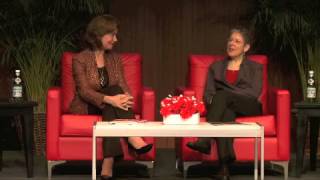
SBA Administrator Maria Contreras-Sweet and federal officials discuss small business financing at Office Depot's Florida headquarters. Topics include 7(a) loans, microloans, SCORE counseling, and the LINC matchmaking portal. The SBA lent nearly $29 billion nationwide and $5 billion in the Southeast region.
Chapters
Hello, I'm Maria Contrera Sweet. The leader of the U.S. small Business Administration, or SBA. America was founded by risk taking pioneers in search of new horizons. More than two centuries later, what sets our country apart in the world continues to be our willingness to take risks. I think that there's nothing more optimistic anybody can do than to start a small business. Our society doesn't stigmatize failure. We celebrate it. We support the resourceful entrepreneur who dreams big and creates jobs and commercial breakthroughs that move us forward as a nation. You all share the entrepreneurial spirit that.
Has always been central to our nation's prosperity.
President Obama calls entrepreneurship the greatest force the world has ever known for lifting people out of poverty and promoting social mobility.
And we believe that if you have.
A good idea and are willing to.
Work hard enough, you can turn that.
Idea into a successful business. Every year since 1963, our President has issued a proclamation declaring National Small Business Week recognizing the companies that create most of our new jobs. This year, our theme is Dream big, Start small. Iconic Companies like Nike, FedEx and Apple have one thing in common. They were all supported by SBA in their infancy. So if you're a small business owner, look us up@sba.gov and learn more about the free resources and services we have to help you grow.
When opportunity presents itself, ladies and gentlemen, don't be afraid to go after.
From May 4th through 8th, I encourage consumers from all walks of life to shop small, dine small, and support the small businesses that are the lifeblood of our economy and the lifeline for millions of families who depend on their success.
But what's really cool is that when.
A small business succeeds, their community succeeds as well.
Every day, small business entrepreneurs create 21st century jobs. They drive innovation and increase America's global competitiveness.
Our journey of discovery has only just begun.
The SBA is here to support the risk takers of our economy. Today's SBA stands for smart, bold and accessible. The SBA is implementing smart systems to make it faster, easier, and more affordable to get a small loan. We're coming off a record year for lending. We've made more capital available to mainstream businesses. Regardless of where you come from, how old you are, and what you look like, or even where you live. Our new link online matchmaking portal@sba.gov can help arrange a date with a lender. We want to see you succeed, so we will be with you for the whole journey. The SBA is being bold by helping small businesses reach the 95% of consumers who live outside of our borders. We're focused on helping small businesses grow through export, corporate and government contracts. Finally, the SBA is being accessible by embracing all Americans with a broad, inclusive vision. This year during National Small Business Week, we're rolling out our Spanish language SBA website and we're working every day to empower the growing number of small business owners who are women, minorities, veterans, seniors, immigrants and lgbt. When we help underserved entrepreneurs succeed in business, it can lift up entire communities. No matter where you live, SBA has a nationwide network of business advisors who can provide advice on a range of top Mentoring makes a difference.
So if you don't have one, get one.
This year during National Small Business Week, we recommit ourselves to those fearless entrepreneurs who plan well, work hard, and dream big. Vivian Har set up a lemonade stand to raise money to eradicate child slavery. She showed us how social media can turn a lemonade stand into an instrument of slavery. Social change lemonade lesson 5 it's not how small your business is, it's how big you think it can change the world. If I can, you can. I came to this country as a five year old immigrant who didn't speak a word of English. Today, I serve in the cabinet of the President of the United States. My story is possible only because of America's capital commitment to the entrepreneurial spirit. Success in business comes one step at a time. So dream big, take that next step today. Because who knows, the next great American success story could be staring back at you in the Mirror.
Depot. Good afternoon everyone. As the speaker said, I'm Steve Calkins, Executive Vice President for the Business Solutions division for Office Depot. And I'm sure a lot of you are familiar with Office Depot. We sell through different, different channels. And the Business Solutions channel is the one that sells directly to businesses, directly to schools, directly to government customers. So on behalf of the company and the U.S. small Business Administration, I'd like you to welcome you to the National Small Business Week. So thank you everyone. Now, this is a pretty impressive room. There are business leaders, there are entrepreneurs, and there are market disruptors amongst you. I'm looking across the audience and I see the folks that are the true backbone of America. And I'm not overstating things because when you think about small business, you really think about America and the American dream in creating a small business. It's a fact that more than half of this country's workforce either owns works for a small business. Each year, small businesses like you create about two out of every three new Jobs, something that probably goes unrecognized more than it should. So when I think about small business, relative to me, I go back a few years. I was just talking to Cassius a few minutes ago when I was in high school. You grew up in Orlando? I grew up in a small town in Michigan. And before high school, I remember buying my sporting goods at a particular store. It was called the Varsity Shop, Little Main Street Shop. It was owned by a father and son. I was in there at 10 years old, 11 years old, 12 years old. Well, I turned 16 years old, and I really wanted to work, and they hired me. Now, I started out as a stock boy because, quite frankly, I had no business working. But they gave me an opportunity, and, you know, it was one of those opportunities that later on found its way onto my college application. So when I was in high school, I, you know, I was obviously studying, playing sports. But it also looks great when you have an opportunity, like a work opportunity when you're young and you can put that on your resume, you can put that on your college application, and it carries forward and pays dividends down the road for you. So less than three decades ago, the first Office Depot opened its doors just down the road in Fort Lauderdale. Like you, our founders weren't just entrepreneurs. They were dreamers who said, I can and found a wage, a way to forge their own path and to give others an opportunity, much like I was given when I was a young person. While our corporate profile may have changed, our roots have not, which is why we are so committed today to small businesses. You're the job creators, the doers, the innovators, and the force that is driving our nation forward. For that Office Depot, your employees and communities thank you. Today is all about supporting you and recognizing your hard work. The blood, the sweat, and, let's admit it, the tears, they have gotten you this far. Office depot and the U.S. small Business Administration are committed to helping you achieve your dreams for the future and excitement to celebrate the National Small Business Week with you today. So Please welcome the SBA's Regional Administrator and your emcee for today's event, Cassius Butts.
Thank you so much. Thank you so much. Let's give him another round of applause, please. Thank you so much, Steve. We are so glad to be here today in South Florida. This is an amazing event. We are here at Office Depot, the headquarters to kick off National Small Business Week, and we are truly honored to have this celebration taking place across our great country today. We wanted to also make certain that we are Welcoming our folks who are watching through cyberspace, online, streaming live, through video. Let's give them a round of applause, let them know we hear them out there in the world in cyberspace. You know, I don't know about you, but it's pretty cool to be in the headquarters of Office Depot. And this is kind of something that's, you know, you think about crossing off of your bucket list. I mean, the room looks great. There's a lot of energy in the room today. There's some good folks here today that always remind me of why we do what we do. And we're so glad to do it. I think it will be nothing more but welcoming to give the Office Depot team a round of applause for putting this together today. Roland Smith and his team, please. Let's give them a round of applause. SBA administrator Maria Contrera Sweet, who you will hear from later today, has rebranded our agency. She has rebranded in the terms of being smart, bold, and accessible. And speaking of accessible, did you know that this event is being live streamed not just here, but across the world, so no matter where you are, you can actually log on and watch this. So if you're watching out there now, tell some of your folks who are unable to log in today, maybe they didn't know about it, just tell them to log in. We're having a great time here this morning. We're going to honor some of our small businesses and make sure that we have a great panel this morning as well, too. You can continue watching National Small Business Week this week through our livestream as it continues through Los Angeles, San Antonio, New York, and then it ends up in Washington, D.C. where we're going to announce the national winners. We have one of our products is our seven day loan. Another one of our products is our 504 loan, which we're very proud of. And I have to say that, you know, it's always good to have some good champions in a room. Emmanuel, Manny Manna was reminding me that today is 504 day. It's the fifth month of the fourth day, and it's 504 day. So, Manny, you know, I don't know if you ever thought about going into marketing, but can we give Manny a round applause for just. You may have to coin that before we leave today. SBA's National Small Business Week has been in celebration for the last 52 years, and that proves that the small businesses really never go out of style. I like to say we like to make certain that everyone has opportunity to be recognized this week. Is a dedication honoring all small businesses and to take a chance to say, you know, thank you, we really appreciate what you do by adding jobs to the American economy. It takes the likes of many of the folks in the room who are here today and for you who are watching online as well, to be a part of this celebration. During the this week, we're not only recognizing the hard work and deserving small business owners, but we are also honoring the lenders, the resource partners like Manny, and also the spouses and significant others who provide support for the small businesses. We are honoring support supporting corporations such as Office Depot who support our efforts. Every day. Small Business Week is a celebration that everyone can participate. If you ever shop at a local store, what we would consider sometimes mom and pop, it's a small business. We like to think that everyone plays a role in adding to what 98% of our economy is ran off, which is small business. This year's theme, the National Small Business Week, is Dream Big, Start small. And please notice that we are using DreamSmallBiz. It isn't a sign of the times that I'm actually encouraging you to pull out your phones and actually tweet, but I'd really like for you to pull out your phones and tweet about this today. No texting and surfing, but go ahead and tweet about this and let many people know about it. Back to dreaming big. I believe that the small business owners who are being honored here today dream big at some point in time in their lives. And one of our the great nation that we live in, we have a great opportunity to honor them today. We believe that, you know, it's important to encourage the small business owners on a daily basis to follow their entrepreneurial dreams. And I've learned that I should shorten that to actually this tag to dream small biz. I think that will work out a little bit better. I think there are some other folks who have helped to amplify our message today and it's always very good to see. John Frazier, America's Entrepreneur TV talk show. John, so glad you're here with us today. Let's give John a round of applause. He's amplified our message. Thank you so much. You know, we think about small businesses, we think about our resource partners, our score chapters. We also appreciate the folks who've made differences in places. We may not have had established relationships, but we have done a great job in recent years of making certain that we're thinking smarter, bolder and accessible. Victoria Hughes of the Florida Women Business center, if you're here. Let's see ya. There you go. Let's give her a round of applause. Victoria, thank you so much. Thank you so much. You know, it's always those unsung heroes that we like to make a point to say, hey, you're doing a great job, whether you're nominated for a small Business Person of the Year or you're just here to celebrate someone else's success. And I believe one of those folks here is actually here with us today from Chandler, Campbell and Daschle, Mr. Darrell Cerxy. Thank you so much, Darrell, for what you're doing here in South Florida. Let's give Darrell a round of applause. Thank you so much. To get today moving in full swing, let's talk about this first panel that's going to come up today. Our Nation witnessed nearly $29 billion SBA backed lending this past fiscal year. And I have to say, I'm very fortunate to say in region four, we have backed nearly 5 billion. And we're very proud about that. You can clap for that. It's okay. There you go. You know, I often say that with regarding business, it's not necessarily looking at left or right or red or blue, but to me, it's really looking at green. Access to capital at the right time for the right opportunity is what really runs our country. We're very proud about that. Maria Contraire suite has come in and she has labeled, really put this label on our agency a place it has never been before. And that's why we're glad to be here in South Florida today, kicking off our Small Business Week. You know, it is important for us just to say that, hey, this is the right opportunity for the small businesses. And I think we're going to have fun with this panel that's coming up here. You're going to hear some innovative things. You're going to hear some innovative ideas about what takes place not just in South Florida, but across the country. Our moderator for this next panel is Ms. Althea Harris. She is the assistant District Director for Marketing Outreach for the South Florida office. Ms. Harris has spent nearly 20 years in marketing as well as business here in the South Florida office. She is a graduate of Howard University and University of Miami School of Law. We are very proud to have Ms. Harris here with us today. She's going to lead a great panel, and I think that you will be very, very, very pleasant to hear all the wonderful things that are taking place here at the SBA. Let's give Ms. Harris a round of applause as she Makes her way to the stage.
This is a good looking group.
Yeah, I think it's a pretty good looking group. So, Ms. Harris, starting today, you're mic'd up and ready to go?
I believe I am.
Okay. I think. Are you. Can you hear okay?
All right.
So without further ado, let's get our Small Business Week kicked off today. I'm so proud that we're doing it here in South Florida. Ladies and gentlemen, we give you Ms. Althea Harris.
Thank you. Thank you, Cassius. I'm very pleased to be here at Office Depot. Obviously a company that started back in the 1980s and they dreamed big, though they started small. And this is the culmination of what happens when you mix dreaming big, starting small, and pushing forward on that vision. So today I'm going to be joined by Peter Salas. If you'd come on up from JP Morgan Chase. He is the vice President and regional manager for business banking here in South Florida and he's going to give us an insider view into what big banks are thinking about these days. Also, we have Bob Naples from the West Palm Beach SCORE chapter. SCORE is the. They are the counselors to America's small business. They are resource partners of the U.S. small Business Administration. They give high quality counseling and training to business owners. And he is also the assistant district director for the South Florida region and that encompasses several SCORE chapters. Thank you for coming. We also have Pamela Stewart from Paragon, Florida. They are an intermediary lender here in South Florida. They are starting perhaps small. They've got a big dream and they're going to take over Florida in terms of financing small businesses. Welcome, Pam. And last but certainly not least, we have two Tula Amana. She is the owner of the Flashback Diner and she's going to share with us how she was able to start small dreaming big. And now the owner of four Flashback Diners. Welcome. Three and one. She corrected me. Now, Peter, we. Everyone knows that banks are in the business of making loans. But of course, when we were going through the recession, it didn't feel that way. And there are some who still think that the banks are not lending though we heard from Cassius that at least in this region, we see financing of small businesses making a comeback. In our district alone, we did about a billion dollars last year in SBA backed loans. That represents the kind of volume in terms of dollars that we saw before the recession. Can you give us a little insight into what it is big banks are thinking about that will help small businesses begin to access capital? If that's something they need.
Well, at Chase, we're very excited. Just last year alone, we lent 19 billion, a lot of that significant amount in SBA. We earned for three years running. The number one designation in the country for minority owned businesses and women owned businesses. We're a leader in sba. We're number one in Florida, where I'm from. I'm based out of Miami, so I'm really proud of that. So we do a lot to help bridge the gap between small businesses, access to capital, traditional financing. So when they're at the business stage where they meet the big bank criteria, which has expanded, you know, as the economy improves, we're there to help them. We support SBA Express loans, 7A loans, 504 loans, and all those different solutions that the SBA provides, you know, guarantees provides us a way to provide access to capital to the businesses. And then we joined the organizations like paragon and other CDFIs, community development financial institutions that are able to provide access to capital to the micro entrepreneurs. Those small businesses that are home based or need a very small loan, and we partner with those and help bring together the community. Really, it takes, you know, a village to make it happen.
That's right. Very good. That reminds me, I should tell you that with sba, we offer solutions for small businesses along a spectrum of financing. Businesses can get microloans through our microlenders as little as $500 and the maximum loan guarantee portions can do deals up to $12 million in the 504 program, which is our real estate acquisition program. But on the regular 7A, that would be about $5 million. So we operate along a spectrum that small businesses can access. Where do you think Chase fits into that spectrum?
We fit in all of it. We support all of those. And if I may, the 7A, if you're a manufacturer, can go to 5.5 million.
Excellent.
So we're very, you know, proactive with those products. We love to provide sales comparison tools to business owners and tell them, you know, here's what it'll look if we do this type of loan. Here's what we look at. If we do this type of loan with the SBA or conventional and really try to do the best thing for the client's needs. So we support the SBA Express, the 7A, the 504, and it's really what does the client need? We try to be very customer centric and look at what it is that they need and try to position the appropriate products for them.
Excellent.
Thank you. Pam, tell us about Paragon, Florida.
Paragon is an IOP lender. And what that means is that the Small Business Administrator Administration actually provided us with capital to lend to those businesses that might not qualify for the programs like Chase. We actually do loans between $10,000 and $200,000 for startup and emerging businesses. And the beauty with organizations such as ours is that we facilitate access to capital to groups that may not have been in business for three years or maybe they have some credit issues, but our underwriting is flexible enough that we can get comfortable with with loans, and we help that market that is, you know, suffering from not being able to access the capital. And that's what we primarily do as a lender. The other thing that we do as a CDFI is we also offer technical assistance to our small businesses. Those that might need assistance with, you know, putting together their financial information or that might need a business plan, we'll refer them to our partners like SCORE in the Small Business Development Center. We actually do some hand holding just to help them get through that process. And the last thing I'll say is that one of the things that Paragon does is we actually have what we call a transition initiative, where we try to, after a client has been with us for a number of years, our goal is actually to transition them away from our organization and into traditional lenders so that they can actually establish a banking relationship with.
And why do you think that's important that you would actually turn away? Not turn away, but move a small business owner to the next level?
Well, the whole goal at the end of the day is for businesses to become bankable, and it's about being financially strong. So for me, it's a great way and a great testimony to how to make things work and when you really are able to make a difference. So that's why it's important to us, aside from the fact that when we do transition them, we get the capital back and we can re lend it. So that's another good part about it.
So you have a practical reason for.
Wanting to move them along.
Very good. Now, can you tell us, are there any pitfalls to being successful with Paragon? Are there some things that you're seeing maybe in applications by applicants that really put them out of the running for lending from Paragon?
The main thing that I will say is there are two things. The business planning aspect of things. One of the requirements for our program is that the businesses do have a business plan so that we can understand how they're going to be using the proceeds and show that they have the capacity to pay us back. The other part about that, it is financially having their house in order. I can't stress how important that is and how what a difference it makes to us in terms of just trying to make an assessment of your business acumen. If you have your ducks in a row. And for those clients who are not, there are classes, there are small business counselors and the like to help you do that. But those are two main things that really need to be together when you come in to get a loan from Paragon or any lender for that matter.
Well, I see you nodding your head. Peter, tell us, what kind of things are you seeing from business owners who are not successful with Chase?
Yeah, I think you touched on a lot of them. You know, being prepared, do your homework, have a business plan, have, you know, a focus and a vision of what the business is going to do, and then obviously leverage with SCORE and other types of organization that can provide that technical assistance and access to capital in that small spectrum. The $500 to $50,000 to start realizing your dreams. We've had success stories with CDFIs. We work with several, and where they've lent, you know, thousand, $5000 loans, and now there's customers that are coming back to us, they're becoming bankable. That's the mission of the CETA PHI, where now we're doing loans, 50,000, $100,000 for them and creating jobs. So, you know, 99% of the businesses employ 500 employees or less. So that's why it's very important to get these small businesses to have 1 to 20, 50, 100 employees, access to more capital, to be able to expand and create more jobs.
That's right. That is a priority of the federal government. And that's one of the things we take priority at sba, that with each successful entrepreneur, they at least create one job. And if we can, through our programs and services, help them grow and expand, then we are doing our part to help the economy grow. Now, Bob, you've heard Pam and Peter refer to you as a very valuable resource to small businesses. Could you tell this audience what SCORE does to help entrepreneurs start and grow and succeed?
For the past year, I believe we had 18,000 people come through our doors in South Florida. And we get the dreamers, and we get the good dreamers, and it's our job to segregate the dreamers from the good dreamers and then figure out how we're going to train that good dreamer to put a package together that's going to be convincing to the banks and the funders as they go forward. So it's the start of a long trip. We spend a lot of time with them, not only putting a business plan together, but making sure that they have the talents to run that business. And if they don't, then we have to figure out how we're going to help them get the talents to run that business. And so we've had a great amount of success with those people who came up with a good product or a good service business and spent a lot of time training them. And we're very proud of what we've done with them so far.
So when you say that you take a lot of time with the business owner or the would be entrepreneur, it suggests that you're looking for a long term relationship with your clients.
That's right. Okay, absolutely.
And so what do you have some statistics on how long the average client stays with you?
Well, if we, well, we have some, some clients that are with us for a number of years. They keep coming back. Those that have started with us, developed a business, created a good business and then they came back, said, now we're ready to go to the next step. So we get involved with them and train them on what they need for the next step and make sure that their financials and their business plan tell exactly what they're going to do and convincing enough to the lenders that it's going to happen. So we're really the trainers, we're the business school for the dreamers.
Excellent.
And we have about. In South Florida, I think There are about 300 mentors and these people keep coming back every once in a while. I look at the records and I see one Gal has been coming to us. I think she was with us. She came to us 42 times and she's been very successful in the, the dog business. And so we cater to the good dreamers and we spend a lot of time with them and we have enough talent in the mentors themselves that we can pass them from one expertise to another. So that if the mentor who's working with them needs some help, then he just goes and he looks to the other profiles to see where he can get his best help. Whether it's in marketing, whether it's in finance, or whether it's in general operations or how to put a business plan together, making sure it is solid and it's just full of meat and potatoes. It is so convincing to the lender that hey, we got to go with this guy or gal.
Excellent And Peter and Pam, either one of you, have you found that the clients who have gone to SCORE have been successful with your organizations?
Well, yes, we've had a great success with School score, with Paragon. They're one of our more active partners. I think maybe four months ago, we did a loan. We closed on a loan for a contemporary furniture store that was brought to us by score. And one of the conditions of closing was that this young lady was going to have to receive technical assistance during the term of the loan, and SCORE agreed to provide that to her. So that's how we work together to make it happen.
And so ours is always an ongoing situation. Whether they're in business for a year, two years, or three years, they always have the right to come back to SCORE and use the talents that we have within each of the chapters to help them in their continued success.
And what is the cost to the business owner to work with score?
If they come to score, the cost is zero.
Excellent. Excellent. So they are able to access high quality mentorship, and it doesn't cost them any money out of their pockets, just the time.
And they can email us on a daily basis if they want. They can ask us to attend some of their management meetings. And it's all at no cost.
So it's like having your very own personal business consultant, or almost like someone on staff, perhaps.
Absolutely.
Excellent. Excellent. Now, Tula, I'm very excited about your story and I want to give you an opportunity to tell us how you got into business, why you got into business, and just tell us about the Flashback Diner.
I'm actually an immigrant. I came here when I was 18 to go to college. And it was actually very easy because I was able to get my own business from 50,000 borrowed capital from friends and family. And then through SBA504 in 1997, some amazing bankers, some of whom are out there today, they were able to bring all the groups together to make the loans that I needed happen. So I put together the real estate, we renovated the building, staffed it and started operating it. I thought, gee, this is easy. Anyone can do it. The only difficulty I had in the beginning was to put together the paperwork. But if you can't do paperwork, you shouldn't be in business. Frankly, it was easy. And then I did another one and another one. And it always involved taking an older building, renovating it. And I started with 25 people. Today we have 250 and growing. We are thinking of going into other areas that SBA504 has some spectacular programs such as the LEED certified buildings. One of our restaurants, the Deerfield Beach Cafe at the Deerfield Beach Pier, is a LEED certified building. So we process our garbage, we make compost, and we thought that was easy too. So that's our next project. We're looking for the next building for that. And what's so unique is that per guarantor, it used to be that SBA had a limit of 5 million as a 40% of the 12 million you spoke about. But now when it comes to a LEED certified building, the sky's the limit and it goes per project. So it's amazing programs. I have used the program four times for 504. One was a refinance of that building. And also I've used SBA Express Line in the past. Amazing programs. But of course it takes a team. And when I say a team, we work with SBDC to facilitate the colonies, the conversation between the SBA and the bank. And also at the back end, after profits started being generated and all we wanted to do was expand and put more people to work, then came beautiful tax programs like accelerated depreciation, Section 179. That made it possible actually, and gave us an incentive to move up.
Now you're very knowledgeable. Now my question is, how did you get that way? Did you use our Small Business Development?
Did they.
When you said you worked with a Small Business Development center, is it that they kept an eye out for things that you could benefit from or you knew of things and you asked them for help or a combination?
That's an excellent question, because that's what we really, I think we need to improve a little bit more. Don't Forget the year 1997 was the first financing. At that time, in order to get the information, you had to go to meetings to try to, as cities were sponsoring meetings, come over, hear about it. Today is very different. We didn't even have Internet then. Just to remind you, it wasn't really. So it was very difficult to get info. Today it's available at our fingertips and basically score. I'm also a member of the directors of the Greater Melody alliance and we always refer people to SCORE in order to bring them to the next level. But getting the information is easy. I find that most small business people, they think it's too good to be true, but it really is not. It's excellent and it's unique. You're not going to find it this easy in any country in the world. It's amazing and it is very, very good and very True.
So you invested, evidently, in your relationship with the Small Business Development center, with score, with your team of bankers, and that is part of how you've been successful. Successful, because it seems to me that a lot of we hear often, and I say often, that small businesses really need to have a team to help them succeed.
Right.
We always say you should have your lawyer, your accountant, your banker. And I would go even further and say that you should definitely have SBA on your team to help you really grow your business. And so it sounds to me like you really invested in those relationships, why you were able to put together a successful business in the first place when you said you started with friends and family, which should not be overlooked as a financing source, but then you really kept your team intact to open each successive business.
In the beginning, friends and family are the only ones that trust you, and even if they lose it, they want you to succeed. But the element of trust comes from a very, very long time where your banker knows that you're going to pay everything on time, that you're going to communicate when you have a problem before it gets too bad. Reach out to score, while SCORE can help you before the business gets out of control in a negative way. So keep it under control and be proactive. Basically, the element of trust is huge with all the parties you're dealing with.
Right.
And there's other sources, of course, of financing that out there used CRA Community Development Agency Grants, as we did in the town of Davie. They were amazing there, too. And when you put it all together, I'm actually showing people in certain occasions that 10% that you would need for an SBA504 loan. You can cover even the gap with a grant from the city, like I did with the town of Davie, for example. So therefore, literally, you can do it with zero money out of your pocket.
Tell us a little bit about that CRA grant. And what were they hoping you would give in exchange for the grant? Right. Because it's not just free money. Right. I mean, they must have some expectation of you.
Yes. They want to make the neighborhood better. This facade renovation loans, I use that in Highlandale excessively. Very, very good programs there. And they want you to make the neighborhood better and to put people to work. It's very simple. It's what everybody wants, every one of us. So it was very easy. They have good programs. The mayors helped us, the building inspectors helped us, and people want to do the right thing.
When did this happen? For example, the CRA grant.
CRA grant was in 2009, from the town of Davie, I also got, prior to that from the city of Hallandale, a couple of grants. They gave 85% loan, not 4%, and the other 15% was a grant. Wow, you're forgiven. After a while, that money goes away, and you only have to pay back the 85%. Every city has a different program. Some cities Also, they give 2,000 per employee that you put to work. And we're really taking some people who are very hard to employ. Let's not forget that we're in a service industry. So we give them some very, very good jobs and we take them off the streets.
So you're almost the poster child for the person who really takes on that teamwork approach. I mean, you've used local government, federal government, corporate money, all kinds of money to really grow your business. Now, what was the. How did you do? Where were you when you thought to yourself, okay, there has to be a way for me to get this done? Did you have that question within yourself? Did someone come to you and say, hey, let me help you strategize on how to put this whole thing together?
I went to a lot of meetings sponsored by score, by city halls, by cra. Different cities have a lot of different programs. So I attended everyone I could, and I read a lot and I asked a lot of questions. I put myself out there. It's very simple. When you put yourself out there, people are willing to help and give you the answers. You just have to ask.
Well, you bring up a very good point, Bob. And I thought maybe you could expound on that a little. Do you find that many business owners are, as the saying goes, are working in their businesses instead of on their businesses? Meaning that they're so busy being an employee, they're not acting as the visionary and the person who's getting out there to see what's happening in their industry or in the marketplace to really access success and take advantage.
We found a lot of that. They are busy. They're working from 8 in the morning until 9 at night. And we were having difficulty trying to get them to come into our office. So we changed it, turned it around, and went to them. And so we spent some time in their business, and that helped out tremendously. It took a while for them to gain respect for the people that were sent there, but it became a big plus for them in the long run. And so what we're trying to do now is to make the rest of the community in the small business aware of the support they can get from SCORE so that we can spend more time in helping people in business as well as those that we help try to start business.
So you allow people to come to you. You allow. You also go to them.
We make house calls.
You make house calls. That's wonderful. And what about e counseling, online counseling? Does SCORE engage in that?
We do a lot of email counseling, and there are about 75% of the mentors in each chapter that do email counseling sign on to it. And that's a pretty busy process. Some of our mentors only do email counseling, and so they're filled up at their desk all day long if they want to. But that part of it is a little more difficult because it's impersonal. Whereas if you're actually sitting down with the people and talking to them and looking at successes they've had and the failures that they've had, it all goes back to the business plan.
And that's why we mean, people really read business plans.
Yeah.
There's an article on the web that says that, you know, it's the myth of the business plan, and they call for the death of the business plan. Why is that so critical?
Some people put together a plan, and included in that plan is the financial cash flow and projections. And so we go to them and say, okay, when's the last time you looked at that plan? And they said that, oh, we haven't looked at it in a while. And from my experience of business, you put a plan together, you look at it every month. How well did you do against that plan? And you train your people to do that. And in most cases, it works.
The sales projections are very important in the business plan. So when we talk business plan, you want to talk about vision and you want to talk about where you want to go and all of that. But really it comes down to forecasting and making sure you have reasonable projections and that kind of thing, because that's very important to know where the cash flow is going to come. But I wanted to touch on the relationship because that's what I hear from the panel a lot, is having relationships. And at church are business relationship managers. They're called business relationship managers. And it's because they do go out and make house calls. That's part of their focus, and really have an advisory role where they're looking at the operation and seeing ways we can help them improve efficiencies, accelerate cash flow, you know, just really become a more wheel machine in all aspects, not just giving them a loan.
Well, this is very interesting to hear you say, because I think in general, and to capitalize on what you said, Tula, I think a lot of business owners may be afraid to talk to their banker and bring them into the process to see the business and how things are, how they're managing their business, and afraid that you might find out something that may cause you to want to accelerate their loan or something like that. But I hear you saying something different.
I think that's changing. Maybe that's the way it was in the past. Maybe it was more an adversarial role in the past. But at Chase and other banks. I'm here because I work at Chase, but I think the financial industry has changed a lot. Where we're more partners, we're more providing advice, you know, service. And with that, obviously solutions and recommendations and other things happen naturally. But we really gotta be customer centric and help the business any way we can. That'll really hit on trust that Tula was talking about. If we can do that and go in there and help them with whatever it is that they need. And sometimes it's saying go to paragon, right? So I don't win, you know, if I go to Paragon, I do win. We win down the road, right? And the community wins and then we'll win. Because the more people we put back in the labor force, that's really becoming a productive member of society, the better it is for everyone.
Right.
Well, in our last 10 minutes, I would like each of you to give our audience maybe your best advice, a tip, even a success story maybe that demonstrates that tip, if you have one, to really help them understand how to find funding for their business, what is it going to take from their end to be successful with your organization? If you're a lender or maybe for you, Bob, how you can really help them access these two organizations or any of the other ones that are out there, because there are lots of other lenders in the marketplace. Chase, you happen to be number one, and I think you were number one last year and the year before in this market. But if you have any tips or advice for our audience, why don't we start with you, Pam?
Okay, thanks.
Things have.
I guess my biggest tip is that you have to stay engaged and know what you don't know. I know that sounds kind of weird, but information is power. Knowledge is power. So the more you do your research and the more you look at options that are available to you, the better you're going to do. One of the things that Tua said that was really interesting is about deal structure, restructuring. And so for businesses that come to Paragon, we're always looking for the best alternative for that business. And if someone comes in and they need a line of credit, we're not going to do a loan with that business. We're going to see if we can find a banking partner that's willing to do the line of credit. And if the CRA wants to work with us to do a bridge loan or something like that to facilitate a grant, we'll do that as well. But it really involves you getting the information that you need before you jump out there, before you sign the lease, before you go out there and make a big purchase or invest in inventory and those sorts of things. Just make sure that you've done the business planning and that you know all the resources that are available to you. And relationship banking, I think is the way that we're going in the future. So that it's not just about a loan, it's about lease options, it's about credit card services, it's about all those things that businesses need and know what you don't know. I guess that's the. That would be my advice.
Excellent, Tula.
Just because the biggest tip, just because you have a hobby and you like to cook and you can flip an egg, it doesn't mean you can own a restaurant. So that is very, very important to tell all restaurateurs that are going out there saying I know how to cook hookah can do. It's primarily a business and you have to have absolute must, an ongoing business plan and one that takes also into consideration your competition, a very realistic one. Do it in a very pessimistic way and build in 20% contingencies for the items that you will do wrong and something will happen that will throw you off your initial budget. So be pessimistic, Think about the business. Don't think about how you would like to go every day and do your hobby and do a lot of self criticism. Be proactive. When you see you're not doing good, don't wait till the end. Do something about it sooner. There's lots of choices. Stick to your business plan. If not, find ways to revise it. I need to mention also the SBA website. Valuable things are changing constantly in this country. People think of new ways to improve things. Therefore, there's some programs that become available that are phenomenal. And it's on the SBA website also that contains sample structures of business plans and it's a great tool to just go on that website and tear it apart before you start. Gives you so much insight.
Excellent. Thank you for that plug, Bob.
Well, I guess you got to get them to believe in what they wrote in the business plan. They got to memorize it, they have to follow it, and if they do, they'll do fine. Get a little plug in. We in West Palm beach have a little seminar we put together that's offered to anybody for a small price. It's called simple how to Start a Business. And it's just jam packed with a lot of good information that will prep people into not getting, moving themselves into big mistakes. And I think that that's really important.
Excellent, Peter.
Be passionate and be realistic, and you got to have both because a lot of people are passionate about things and they're dreamers, right? And you know, they're not realistic with their expectations. So if you're passionate and you're realistic and you prepare and do your homework.
Overestimate sales and underestimate expense. Right?
Yeah, exactly.
You know, then. Then you can make it happen. I mean, Tula has. Has said it better than anyone can. I mean, she's a great example of persistence and perseverance and, you know, just. It's out there. You just gotta have both passion and be realistic.
Passion and realism, information. We've gotta be engaged. We've gotta be prepared. Gotta have a plan. That's your advice to our audience. And Tula, thank you so much for plugging the SVG website. It is jam packed with information. I invite you to check out our website. We have some folks here in this room, my colleagues from Washington, who have done a phenomenal job of getting our website populated with information, blogs, videos. Of course, you are always able to access us, the staff, at the local level. Our office is in Miami, but we have staff who service the 24 counties south of Orlando. And of course, we have staff nationwide. But there are some wonderful tools available on our website. As you mentioned, Tula, a business plan builder. If you haven't bothered to take all that information out of your head and put it on page paper where the rest of us can see it, you can use our website to build that business plan. We have a tool that allows you to assess your competition and again, you can tap into the expertise of the resource partners at sba. Score is just one of them. Tula mentioned the Small Business Development Center. Cash is introduced. Victoria from the Women's Business center right here in Delray. I invite you to access us. We are the Small Business Administration. We're smart, we're bold, but we're accessible, so please do access us. And we thank you all very much for being here today. Thank you to our panel for bringing that great insight.
I think we can go that way.
Thank you so much. You did a great job. Thank you, Bob.
Excellent.
Thank you, Pam.
Thank you.
Okay, Let's give our panel al another round of applause, please. Thank you so much for your contributions this morning. They have really shown the way of what it really takes to be a part of this small business ecosystem. It is now my honor and privilege to introduce to you the person who truly has made today possible. Mr. Roland C. Smith was named Chairman and CEO of Office Depot in November of 2013. Mr. Smith has an impressive track record. Let me know if you heard of some of these companies that he's led in the past. Prior to joining Office Depot Incorporated, Mr. Smith was recently the Chief Executive Officer and President of Delhai's America LLC. Previously, he was the President and CEO of the Wendy's Company, the President and CEO of Wendy's Arby's Group, and the CEO of Wendy's International Group. Mr. Smith also served as the Chief Executive Officer for Triarch Companies, Chief Executive Officer for Arby's Restaurant Group, and Chief and present Executive Officer of the American Golf Corporation and the national golf properties. Mr. Smith was also the Chief Executive Officer of AMF Bowling Worldwide Incorporated. He has held senior management positions with KFC International, Pepsi Cola International, Sherrick, plo, Ann Procter and Gamble. I'm sure you recognize a couple of those names and believe me, this is just the short part of his bio. He is a graduate of the U.S. military Military Academy at West Point in New York City and he has also served in the United States army for seven years. Mr. Smith is the Chairman and Board of Directors for Carmike Cinema Incorporated, where he is also Chairman of of Compensation and Nominating Committee. He is a National Trustee of the Boys and Girls Club of America and a member of the World's President's Organization International. Please help me in welcoming Mr. Roland Smith to kick off the National Small Business Week. Thank you, sir.
Thank you for joining us today and I sincerely hope that you enjoyed the first part of our program. It's an honor to host the kickoff of National Small Business Week here at Office Depot and I'm pleased to have the opportunity to celebrate the hard work and efforts of small businesses across the US Small business brings growth and innovation to our economy. Small business creates employment opportunities that stimulate our economy and small business ensures the viability of our communities. I think President Obama said It best when he said that small business is the backbone of our nation's economy. Office Depot is a company that prides itself on serving small businesses and helping them succeed. We recognize and appreciate the hard work and dedication it takes to operate a business today. We know that the business environment is both complex and unpredictable and is changing daily with globalization and digitalization. We also know that it's getting harder and harder to compete and to succeed. And while there are many elements that that I think help small businesses to succeed, there are two that I especially respect and appreciate. The first is passion, believing in and loving what you do. And the second is perseverance. Never giving up and always being willing to go the extra mile. However, as you all know, passion and perseverance alone are not enough to succeed in business today. I Learned this firsthand 30 years ago when I was part of starting a small business myself. A boutique recruiting firm that placed former military officers in corporate America. I learned the hard way that in addition to passion and perseverance, to succeed in business you need a solid business plan, affordable financing, a motivated team and excellent execution. Great leadership and a little luck. Fortunately, if you need help or support with any of these elements, there's a great place to get it. Our Small Business Administration. By the way, the small business that I helped start 30 years ago is Cameron Brooks. Today, it's a thriving company and a leader in the junior military officer placement category. Now it's my pleasure and an honor to introduce our next guest. She is someone who can speak about what it takes to succeed in small business better than anyone else. U.S. small Business Administrator Maria Contreras Sweet. She was named the 24th Administrator of the U.S. small Business Administration and a member of President Obama's Cabinet in April 2014. She is a successful entrepreneur, business executive and state cabinet official. She has worked in both the public and private sectors and is a champion of diversity, access to capital and equal opportunity for all Americans. Prior to arriving in Washington, Administrator Contreras Sweet founded the first Latino formed commercial bank in California in more than 35 years. Her focus was to provide access to capital and counseling to small and mid sized businesses in Los Angeles. Administrator Contreras Sweet was the first Latina to hold a state cabinet post in California as Secretary of Business, Transportation and Housing where she managed 13 departments. Please help me in welcoming Administrator Maria Contreras Sweet.
That was very generous. Thank you so much.
Thank you.
Thank you.
And then I think you're going to bring Joyce up.
All right, can we give it up for our Administrator, Mary Contrary. Sweet. One more time, please. You know, it is remarkable when you can get the power that we have in this room today. And for many of you all, and especially for the folks who are watching live stream, you are in for a real treat. I want to take the opportunity now to introduce the facilitator for this event, for this one on one conversation who's going to actually bring a little bit more a specific detail in our conversation today. And I believe that she is going to be very engaging and I think she's also very happy to be here today. We were just talking backstage. Ms. Joyce M. Rosenberg has been a small business reporter and columnist of the Associated Press since 1999. She has also served the AP's Financial Markets as editor and held other supervisory positions in management roles as well. She has also been involved in the cooperative business news department of the same organization as a reporter. She's also covered retailing, mergers and the economy. She's a graduate of Brooklyn Law School and is a licensed psychoanalysis from New York. Please help me in welcoming to the stage Ms. Joyce Rosenberg.
Why don't we take the two center?
All right.
So.
It is Small Business Week and this is the week when we start hearing more about small business. It's time to celebrate it, recognize it, not just it. The small business owners validate the work that they do. But this is a year round. And actually for you, not just year round. This is something you've been doing for many, many, many years. But it is. And for small business owners, it's also a year round enterprise. They don't work one week of the year. It's never ending. It's 24 7. But you've had a very interesting perspective over the last year. And so I think let's start by talking about what the last year has been like for you. You've been meeting many, many, many small business owners and will be meeting many this week. So what have you picked up in the last year? After decades of working with small business, this has brought you a different perspective. So tell us about that.
Well, thank you. First of all, you have to know that Joyce is such a stalwart representative of the Small Business Committee in her own right. You have told so many courageous stories about what's taking place across our country. So thank you so much for that. But let me just say, speaking of courageous, that what I've learned is I started three different businesses and the last one was a community bank. And there are some really nice highs that you get when things go right. When you get that contract. And then there's really low lows when you can't make payroll. It's not easy. And so what I hear from small businesses across the country is that now they want to understand how to engage in the future. And the future is about the globalness of our economy. And so I'm hearing, and of course, understanding that as soon as you light up your website, whether you think you're international commerce or not, when you light up that website, you are engaging in international commerce. When I put up my, my first request to get a designer for my website on my second business, I had responses from around the world. And so we're all challenged to make sure that we're competing against all of these people around the world. And we need to make sure that the SBA is being responsive to these emerging opportunities. Understanding that in today's times, there are going to be a billion to 2 billion middle class consumers coming online. And we want to make sure that America ekes out at least their fair share.
That's something I think that a lot of business owners may not realize that when they start that website that they are no longer, I mean, I think they have a dream of we're going to sell to people in Oregon if they're in Iowa. And they don't realize that it's going everywhere. So most, I think small businesses understand now they need to be online. What does the SBA do to help get the message out to the others? You know, because there are, you know, education is a big part of the.
Sba just to level set. Joyce is right. The SBA is known for what we call three C's and a D. For those of you who aren't familiar and haven't gone to our website, we have a vast network, a very impressive, probably the best network in the world of counseling. And this is free, complimentary counseling that's available to you. And it comes in different forms. You can Visit first, our 68 district offices across the country. We have a fabulous team here in Miami as an example, or you could go to our SCORE offices throughout the country. Again, these are seasoned, experienced executives who have had success and now are volunteering their services. And to help entrepreneurs, we have Women in Business Outreach Centers. And of course, we have the SBDCs, the small business Development Centers. All of these are available to you complimentary. The second thing after you have your business plan is you ask us about contracts. How do I get work? And so the SBA has a strong matchmaking program for women, for vets, for our encore, entrepreneurs and we help people get saved, certified to be able to go in and get business from the federal government, which is the largest procure in the world, or the corporate supply chain or international marketplace. And then third, what you ask us for is capital. And some people have a wealthy uncle, but in the SBA you have Uncle Sam who will stand in for you to be a guarantor. And so I hope that you will go to SBA.gov and, and engage in the services that we have, whether you're looking for a microloan or up to our cap, which is $5 million and anything in between. These loans are available at 50, 75. And for expert loans, we guarantee up to 90% of that loan. It's a remarkable program.
You've hinted at a couple of things that lead me to my next question. What are you finding to be small business owners biggest challenges? And some of it, you know, tangentially you've touched on.
Well, it's true for those businesses. I was recently, for example, in a community called over the Rhine in Cincinnati. This was a little company that served dog food and they have the only, at least she asserts, the only gluten free dog food in the country. Now, I don't know, I haven't diagnosed my dog to find out whether that's true or not. But the point is that she said that for her it was tariffs. Now here's a company that has just a couple of employees and she's concerned about tariffs because again, there's certain products that she brings in. It was her bag in particular. And so these are the stories that we're finding around the country that people now want to engage in international commerce, but they don't know the rules of engagement. And that's why I'm working closely with President Obama to help pass what we call the Trans Pacific Partnership, which is a partnership amongst the Americas, the American hemisphere, to make sure that we understand the rules of engagement in terms of labor and environmental standards and a place to resolve our disputes. So really hoping that Congress will pass this. It's the first time a trade agreement has an SME Small Business Enterprises chapter. And I think this will help us all be able to navigate more safely.
When you talk about one company talking about tariffs, that's pointing out how individual a company's problems are. Even though small businesses, you could say generally they need more capital.
They need.
Help getting training, but they have very small specific problems that have to do with who they are, what they make, where they operate. So does that make it harder to help Small business in general.
You know, often when I'm out in the field, people will say, you know, I'm a small business owner. What's the best advice you could give me? And I'm flattered, first and foremost. But the point is, to your point, it's about customization. Everybody's in a different place. Everybody's circumstances are different, whether they have collateral to borrow or they don't have recourse, how much they need, what their target market is. And so that's the important point to convey here, and that is that since each of you is unique, we want to make sure that you are getting down to the digit, that one size does not fit all. And so SBA has got to be responsive and make certain that we can sit down with you and understand your challenges and then assign you a counselor that really is responsive and has experience in your field. And I think that's the best solution. So that would be my recommendation, is to walk in and make that connection. What we're also doing is around technology. You're all using technology more than ever, and we need to make certain that we understand the technology that's available for you to optimize the efficiencies of your business, but that we also use those technologies within our own systems to make sure that we are current and relevant to your services. And so in that regard, we've launched a major initiative across the country that we call the modernization of sba. And for us, it takes the form of what we call smart, bold, and accessible. So it's about deploying smart systems technology for the bankers and the borrowers alike to streamline our loan programs. And the b about Boulder is to make sure that we are understanding the rules of engagement around the world. So SBA has been engaging more than ever. We just came back from the Summit of the Americas with the President to meet with the heads of state of the Western Hemisphere and to learn about what the opportunities are within those countries, from Costa Rica to Brazil to Panama, so that we could come back and help counsel you more special specifically. And then the A is around making certain that we're accessible. You know, just look inside this room, and you have such a nice, diverse audience here. You have some millennials, and you have some encore entrepreneurs. You certainly have women, and you have some veterans here, and they all have special challenges that they're facing. And so we want to make certain that the SBA is accessible wherever you are in your journey.
When you mention technology, I know you're aware that so many of the Brand new companies, the startups these days do tend to be in technology because people have an idea for an app and there they are in their dining room, their bedroom, just starting a company.
And.
They have opportunities, people in technology to work with the government, like with the SBIR program. So do you want to, you may be introducing that program to some people?
Yeah, if you raise your hand. If you let me know if you've heard of our SBIR Small Business Innovation and Research program.
Well, good.
We have a few folks here, quite a few, thank you. But for those just to level set again, we want to seed innovation. The federal government has an interest in having you seed innovation. We've helped seed so many companies in different ways. We helped start a little company called Apple in their early stage and you know, and I think many of us would have one of their products today on our lap here. We helped start FedEx just recently I was at an event in New York and I met the founder of Under Armour who said that we helped us start him, but we want to seed that kind of innovation. And so we have this program and what the SBA does, it helps direct a several percentage program points of the large research dollars that are in NIH and Defense and some of those departments. And we direct it to small businesses and they come in the form of grants. It's a wonderful grant. There's stiff competition there. But if you have an innovation that you think has the potential to go to scale and is marketable commercial, that we can take it to commercialization, then you get the square and we have phase one where you get to write it up and then phase two to actually build it out. And we've helped start so many companies. If I can just brag, because we just met with one this morning. This gentleman saw that our senior population was trembling. You know, maybe they have Parkinson's or something. And so he saw that they couldn't eat and they were struggling to eat in public. And so he came up with this little spoon that has a miniature suspension motorization in it and as a result it undulates a little more softly and so that you can eat with dignity and eat with your family and in public. And it's just life altering. You know, food is, and eating and being with family is so essential. And so we helped to start that company and we're proud to tell you that Google was so fascinated by this that he was recently bought out. And when I went to see him in Silicon Valley, he said, said, I'm a son of a immigrant family and So I know what it's like to be able to help others because I've been helped. And so he said that he and his wife now were launching their own foundation to help other people coming in, to be able to innovate. It's marvelous what the SBIR program does.
Would you want to give us a sneak preview of your next year as administrator?
Oh.
We'Re very, very much looking forward to what we call SBA1. I've been talking about it a little bit, but we're actually going to launch it in a few weeks. And what it is is that now what you get is an application paper. And yes, I'm going to use this word. You actually have to fax it. The banks fax it back to us. Yeah, I did say that. And so what we're wanting to do is obviously revolutionize the way we process our loans. And. And so we're going to be launching that in the next few weeks. And it's really marvelous. I already have the beta up, and some small banks are using this beta, and it's really nice to be able to say we're going to blow up those fax machines. So that's one initiative, and the other one is already underway. Joyce, I have to tell you, I'm very heartened by this one. It's called Linc L I N C for Capital. And so normally, what happens, and I can tell you as a former banker, that when you want a loan, you walk into a bank and you get a very slow. Maybe sometimes, you know, they say, we're looking at your application. We'll let you know. And you're waiting, and months can go by, and it's very painful because you may lose your deal. And so we just said, how do we put the borrowers in the driver's seat? So now this is like match.com, but what we do is, after you answer a few questions, is we create a date event with the lender. And so you answer these questions, and now the banks compete for your business. So you already know who's interested in your loan and you're more likely to get to yes faster. So that's the kind of thing that we're doing with our technological initiatives.
I want to.
Oh, I got one, boss.
You got more than that.
Thank you.
I want to talk about something that's more serious. We've got business owners in Baltimore now who are really struggling. Their businesses have been damaged. Some of them have insurance, some don't. And it's not just companies in this kind of situation. When we have floods, when we have tornadoes, earthquakes. But let's talk about. Let's focus on Baltimore for the moment. What can the SBA do to help these companies?
We have another office that we really need to boast more often, and it's our disaster assistance relief. So when there's a sudden or natural disaster in a community, this is the time where we can come in as a direct lender for home recovery or your business economic recovery. And so we've now put in, again, same thing, more technology so that we can do these loans faster online. We've created two queues so that we separate now the home loans from the business loans so we can process those. We've learned that from past, that if we separate them, people develop expertise and process them a little faster. But more importantly, the way we reach out, we go on site within 24 hours of seeing, you know, getting the call. And we're very quick now to do our outreach through this technology that we're using. So all of that is really, is really giving us more success. We're now going in this week, as a matter of fact, into Baltimore specifically to understand how many. How large is the problem and what our role can be, what kind of assistance, as you aptly point out, do they have insurance? What are the things that we can do? These are loans. Again, so you don't want to take on debt unless you really have to. But more important, on an ongoing basis, we think it really is important to help people who have not been able to find. Find a job, to help them start their own job. And so that's why I've reached out to credit unions across the country to ask them to help us get out more of the, what we call microloans, $50,000 and under. And I was just delighted that the credit unions responded. And we're now training them to make themselves available. They're embedded in the communities they already know how to underwrite. And so many people have relationships with them. And largely, the larger financial institutions have a harder time doing the really small loans. So it's perfect for credit unions. We've also taken initiative to zero out fees on loans under $150,000, because that's where you really start job creation. And so we've done that as well as the more outlets and the streamlined technology. As a result, we just hit a record in SBA lending this last year. You may recall, in the last two weeks of the fiscal year, I went in to ask Congress for an additional billion dollars because we had pushed out our Loan authority, and they responded with yes. So this year we've gone back and asked for more. Last year was the first year in eight years we met our contracting goals because of these extra initiatives. So I think that's why we're experiencing right now 61 months of consecutive job growth, which is a record for American Americans.
Now the contracts are across the government, and they're not with the sba. The SBA isn't the one signing on the dotted line, but the SBA is, I think, leaning a little on other agencies advocating for small business. Could you explain what that process is like? Because you're a Cabinet secretary now, so how has that helped you? Maybe get some other branches of government more concerned about small business more interested?
First, I should just really give credit where credit is due. And that is the President is really committed to the small businesses. And I think when you hear him talk, he often refers to what he's doing is for middle class economics, for the small businesses. So that helps tremendously. He has lifted the Small Business Administration to be a member of his Cabinet. And so it is much better to be, you know, as equal, sitting at the table, looking at the Secretary of Defense, looking at the Secretary of Energy and all of the, you know, the. The departments to make sure that they're making the numbers. But what the SBA is empowered to do by Congress is that we actually issue a report card. And so if somebody isn't issuing their proper allocation, then we go after them and give them a really bad grade. And we do, by the way. We do. I get calls from Cabinet members saying, you know, well, this C isn't fair, this D isn't fair, or the F isn't fair. And we say, we call it as it is. You know what I mean? America needs to know whether you're doing right by us or not.
Not.
And so we're very straightforward about that. And let me just say, that really moves them. But specifically to your question, what I admire most about what SBA is doing is that we actually have buying activity officers being watched by our SBA team members. They are, you know, we're sort of what we call, you know, guerrilla warfare. We are in those key centers where the large proportionate contracts are being let out, and we stand there and watch and make sure that it is a pivot to the small when it's appropriate to do so. Moreover, for the women in the room, we have had a tool for our disabled vets, which is an important tool, and that is our sole sourcing. But we didn't have that for women. And we haven't met our goal for women. And so I was working with members of Congress and community groups, women community groups across the country. And we lobbied, and I made calls. And believe it or not, Joyce, we actually got. In a few short months, we got Congress to vote for sole source authority for women, which is a new tool that we can use at sba. We're really excited about this.
Really excited.
Could you. I think people who are either in the room or watching may not know the groups that SBA has specific programs for. You've hinted some of them veterans and women, but could you go through them?
Yeah. So we help everybody. We're there for everybody. But we know that in today's times, you know, mass marketing doesn't make sense anymore. And so we understand that there are different groups that have nuances and they have their own experiences, as I mentioned early. And so. So under contracting, as an example, we have what we call the eight, a group which is disenfranchised disadvantaged communities. So that usually refers to our ethnic disadvantaged. We have, if you are in a community from whatever background ethnic background you are, but you live in a community that has been neglected, we have what we call a hub zone effort. So that's where we actually call. Determine a certain community to be within a hub zone, historically underutilized business zone. And we go in and we have target efforts for that. We have a veterans, as I mentioned, the disabled veteran. We have the women's contracting goals. And so we do have special initiatives around that. Recently, I was at a really special program. We call it V Wise, and it stands for Women Veteran Women Inspiring the Spirit of Entrepreneurship. And I was able to see women who had served us abroad, who had been in harm's way in uniform, and they were now transitioning. And we want to make sure that anybody who has served us stood in harm's way doesn't languish when they transition. So we launched a program that we call Boots to Business to help them. So we go into the military installations around the world to help expose them and introduce them to entrepreneurship, how to build this business, build a business plan, and so forth. And then I was able to see this program where they came together in New York and to see these women who had been abroad, you know, it's just. It was really a wonderful story. And then to see what they're doing today, and I learned something really powerful about our men and women who serve us. They said that when someone gives them a hand, they don't reach up for that hand and pull themselves up. What they do is they take one hand and make sure that they reach back to bring that other fallen officer with them and that they create a chain. And that's such a beautiful concept to me, that I think that that's what entrepreneurs represent to me that what I'm seeing is the innovation that you're all experiencing, what you're all contributing to our economy is not about you getting money, which is terrific. Cash flow, money, profit, it's all beautiful. But what you're doing is you're saying, how do I have an impact in my community and create jobs and bring others along? And that's what we're celebrating this week. We're celebrating, one, the enormous contributions, the pioneers, the risk takers of our country and what they do to lift America. And then two, we want this week to represent an effort where we say to all America to shop small and to buy local. And I picked this week, I want to tell you specifically because it was the first week in May to celebrate National Small Business Week, because we're just approaching Mother's Day, Father's Day, and graduations. And I wanted to be able to say to you when you're thinking about moms, dads and grads, that I hope that you'll support your local business to turn that dollar more in the community and thus create American job.
Cedar.
In our conversation, we're again hinting at something that small business runs a gamut from a card store in a suburban town to somebody in their home coming up with an app to somebody with a manufacturing plant, that there is just this broad spectrum. Now, some people I want to go back, though, to talking about trade and use the word global. Somebody who's got a card store may not be able to take advantage of that. And I recognize that. But more companies have more of an opportunity to go global than they realize. Then there are companies that want to, but they think it's insurmountable. You know, how do I do that? So how does the sba, but not just the sba, because also the Commerce Department. How do you make this something more doable?
Yeah, it's an important question. I would say first, we have what we call both the Department of Commerce, as you point out, and the sba, we both have what we call Export Assistance Centers. And so if you go to our website again, you'll see these. And we have trade finance specialists there. The SBA also has another program that we call step, and we give these grants out to the states, and then The States find entrepreneurs who want the introductions to go abroad and do some matchmaking. And so then you make your. You go attend a conference, a convention, and learn about that. And that's one way, direct as an individual, that you could go through that. And again, then our expert Assistance center, our trade finance specialist, will take you to a bank that actually processes our export products. But the other way that I find equally interesting is that corporations are now saying to us, and I'm a member of the President's Export Council, and more corporations say that they're using more and more of their supply chain, that they don't want to grow their corporations as much, that they want to have a strong small business supply chain chain to be able to benefit from the nimbleness that that allows them, the innovation that's being. That's coming out of small businesses and, you know, just the technology all around. And so many corporations have said that now when they go abroad, what they do is they pull their supply chain in with them. And so we also have another program that we call Supplier Connection. And it's a really marvelous program because you can come in and learn about the companies that are engaged in this program and how you can do business with them. What the President and I have been working on of late with our entire SBA team is to find ways to connect you with those opportunities. And one of the things that we know from our own business experience is that sometimes cash flow is tight. If you don't have the liquidity in your company, it gets really tight. So we announced an initiative. The President announced an initiative that we call Quick Pay. And it is where we now pay small businesses that do business with the federal government. Our goal has become 15 days. Phenomenal. Phenomenal. Thank you. And so as a result of this, what's taking place is that now corporations say, how can I help my supply chain? And so we're calling every day to get more and more companies to join our team to be a part of the Supplier Connection and the Supplier Pay program. And so we've said to them, for those good companies that do business with the federal government and commit to paying their small businesses in 15, we'll pay them in 15 days. So it's spurring more and more attraction to this program. So that's another way to get into exports as well.
Can you tell us about Mentor Protege? Because that is also. That's another way in, isn't it?
She knows our programs, doesn't she? I'm very impressed. Well, what we found in contracting to your Point is that many times small businesses sort of say, I want to do some contracting, but I've never been through this before. I'm not really sure now I know what you were hinting towards. And so, so we've created a program that we call Mentor Protege. So somebody who's already been contracting with us for some time, if they mentor a small business that's coming into contact with the federal government, we give them a little longer time in our program, in our special, whichever program they're in, if it's the 8A or whatever, we give them a little more time in our program so that they have time to mentor. So it's attractive to them and it's attractive to the small business. And we're really heartened by the relationships that are coming out of that and the success we're experiencing.
So we're talking about a lot of different programs and somebody may ask, how do I find it? How do I get into it? Now, obviously there's the website, but there's other ways in. The SBA website, but there's other ways in.
Yes. And you also pointed out we wanted to do something because, you know, it's someone called it a support jungle. They said you have to machete your way through all these programs to find your way through. And I know it's not easy. So what we're lifting, what we're really working hard on, is a new website that we call Business usa. And so that if you say, I don't know if this is Ag or Commerce or the Ex IM Bank, I need insurance from the Ex IM Bank, I need a surety bond from the sba. Where do I find these? And so if you go to Business usa, hopefully that will redirect you automatically. So you can go to the Agriculture or Commerce, Ex im, Treasury, State Department, sba. And so we're trying initiatives. But what's really important to me, and that's why I'm so proud of the sba, is that we want to bring that concept to life. And so we're really upskilling. We're up training our employees so that they know more about not just our own program products, but also the other government wide products. And I've just created a new position at the SBA which is intergovernmental, so that we can learn also what the cities are doing. And it's really terrific to see us finally teaming up more and more with our governments. I recently just left a couple of cities that I was really impressed with, St. Louis and Nashville and what they said to me is that they recognize that, that other countries that are older than the United States, like Greece, Italy, Ireland, that what they're seeing is that the population is aging and as a result, their productivity per person is diminishing and their economy is on a downturn and they're struggling. And yet we have not had yet the ability to fully embrace immigrant populations. And we know that immigrant populations are starting businesses at twice the rate immigrant populations now of our Fortune 500. 40% of those companies are being run by immigrants or children of immigrants, and were started by immigrants or children of immigrants. And so the patents that they're filing is incredible. Far out indexing. And so recognizing this boost that's taking place, these communities have established establish welcoming cities and committees and advisory boards to help them develop plans to help acculturate, to help them transition the immigrants transition into society so that they can become more productive citizens faster. It's very exciting to see what's taking place.
So you're, you know, pointing to the other levels. I mean, obviously there's the sba, there are federal agencies, we go to the state level, we go down to cities. There's also private organizations. And I wouldn't be surprised if people here belong to the chamber of commerce or to trade associations or professional executives group. Could we just see how many belong to some kind of business group? A good number, but we need more hands, so we need more people to join these groups because they really are. It's a very holistic way of connecting. But the SBA also has some networking events around the country in different parts of the year.
What we see is. I just described what our network is, but some of you, through your own initiative, have created really special places. Some people call them innovation hubs, incubators, others call them growth accelerators. But no matter the nomenclature, they're all fresh places where people can come in to learn about how to advance their business. And so we had not had them in our ecosystem, and we really wanted to understand what dynamic energy was taking place there. And so we put out a competition that we. It was. We call it the Growth Accelerator. We're not really great on names. Growth accelerator competition. And we thought maybe we'd get about 40 or 50 responses. We didn't know how many of you had spawned these new incubators. And across the country we had 823 applications. So what we know now is that these places are having great success. I've now visited many of them across the country, and I'm really marveling at what they're doing, for example, in La Jolla, in San Diego. There was a woman there, a scientist, a fabulous scientist. And she said that she went to see this movie that was loosely based on the movie Facebook. It's called the Social Network. I don't know how many of you saw that movie? Anybody?
No?
Okay, a few of you. Well, anyway, it's the story of Facebook, essentially. But what she saw was that she said that she saw that the men were the ones that were the innovators and the women were sort of more just accoutrements, you know, in the story. And so she came back to her university and she spawned a growth accelerator. She created this new growth accelerator and she calls it my startup, XX for the female chromosome. And so now she's helping women code. So we wanted to take that momentum and just harness it and elevate it. So we launched a program that we call Innovator. The last three letters are H, E, R Innovator. And so we're helping again have more competition across the country. And Friday we're going to be announcing who the finalists are and they will become, they will come before some professional investors and we have some prize dollars. And so we're going to pick the winners of the Innovator competition. But the point is that these growth accelerators now are part of our network and we're learning from them so that we can continue to evolve and to be more responsive to the growing needs of swimming businesses.
I'm going to ask you to talk a little more about one of my favorite parts of the sba. And the reason why it's one of my favorite parts is because it's been very helpful to me as a reporter, the SBDCs. I'm not sure that enough people know about them and get there across the country. And could you explain what they do?
Well, we know that there's an enormous amount of expertise across the country, country of people who are real experts at helping small businesses grow, start, repair, scale their business. And so SBA entered into a relationship with Small Business Development Centers and largely they are found in your community college or a four year university. So that you're getting the benefit of this talent that can help consult you. Again, largely complementary nominal fees when they do charge, but then you're exposed to all of the other services that are also at that college. And so it's a terrific opportunity. But these people really are our strong partners or counseling networks that where you just find really rich, rich advice and they hold classes and again, one on one, counseling we find that sometimes, you know, they meet and they really develop a relationship and they take them all the way through. I'm going to give you one quick example and I'll try to be very brief because I love this story. But essentially I went to visit, they said I love to visit small businesses. And so one day I was in Denver to go visit. They told me I was going to go visit an army lieutenant. And when I arrived at that business, out came this lovely, gracious, well poised woman. And she explained to me that she had been a fine arts major in the army, but she left for whatever she had to leave because for family reasons. And she didn't know what to do. She didn't know what to start. But what she was frustrated by was that when she was in the army that they were using these beautiful Black Hawk helicopters to be able to go in and do special deployments. And they were very effective. But when they worked together, the collaboration wasn't as effective. She wanted to build a new training system to teach these Black Hawk helicopters how to interact better. But she said I would need to build a scale simulator, a training simulator for these helicopters. So she came to one of these counseling centers and they showed her how to become certified as a woman veteran business. And then they talked about the SBIR program and how to. They helped her with her plan to help apply. They introduced her to our contracting officers so that she could learn about how to get a contract with the federal government. She made her pitch and they gave her an SBIR grant so that she was able then to build the full plan out. She came back, they gave her the next phase two of the sbir. She built this scale model and eventually she was awarded a contract. And so year on year, this woman was doing really terrifically. Sheila was doing a great job. And she finally said, how do I take my business even to the next level? So she came to our export working office and she was introduced to our STEP program to the Netherlands, our strategic ally. She came back with an award. Then no one would finance it because it was a receivable based out of the country. So she used our 90% guarantee loan with the EX IM insurance product. This one was phenomenal. And now she's. Now, can you tell she's not my poster child on what you can do with sba, but that's the journey that we can can take with you. We don't do it every time, but it's what's possible with sba.
Thank you.
I think we've got some time for some questions. So I think probably the best thing to do is. I don't know if there are mics out there. There is one. I see people pointing to one. Okay, there is a mic. So if people want to ask questions, please come up to the mic and ask the administrator whatever is on your mind.
First of all, congratulations, because what made this country great was inventing the widget, building it, and becoming a country that could build.
So thank you for all you do. The next is when you go into.
Small business development or score, the mentor program. It was interesting when they say a good dreamer or a bad dreamer.
So there's always consensus when you have.
A thought or an idea or a business to do.
So if someone doesn't believe in it.
Maybe it doesn't happen. Have you considered possibly doing something like invoice lending, where you know that a business is already creating, the business can make the sale happen, but perhaps needs that capital to purchase items that let them grow to the next level? We have something close to that, which is our cap lines. You might want to look into that product. It's not used very often, but it kind of behaves that way. It's on prospective invoices. And is the cap line through Score SBA or sbdr. It's an SBA product. Thank you for that. Through our lenders.
Good afternoon. I'm Darrell Searcy with Chandler, Campbell and Daschle, and we are one of those eight A firms that you mentioned earlier. And I don't have a question, just I want to give you a huge thanks. The Quick Pay initiative has given us the ability and the confidence to pursue additional business because we can now make payroll because we're getting payments within 15 days, and that's huge.
Oh, that's cool.
And we have grown over 1000% because of that initiative. So I wanted you to know how valuable that initiative is, how wonderful it is. And when I don't have to worry about borrowing money to make payroll, it makes my life easier. We can grow. We can hire folks. And we've grown over a thousand percent in the last 18 months. So thank you very much.
My next story, when I get your card. Thank you for that. Thank you for sharing.
Hi.
I have a question about the DoD computer programmers. Because I'm in the software business and I have prior experience from DoD, SBA has not forced DoD to recognize the veterans unless they are disabled. And when you went and worked as a computer programmer, you were not disabled. So we have no privilege, even though we have the experience from DoD, to get into the work. And on top of that we are being blocked by the large corporations from coming into the field that we've done and we have experience in because the large corporations have no intention of sharing their software. And on top of that, we have congressmen that knock you down when you start talking about the large corporations not letting you come in to do the business. And it's one on top of the other where the software programmer from the military cannot open up his own business. And that's where I'm at. And I would like to discuss that if you have some time, because that's not being addressed at all. SBA doesn't have the technical knowledge to help us. And I've been up and down the SBA chain, I've been through the dod, small business groups at each Air Force, Navy, army and whatever. They cannot help us because they don't understand that the person that awards the contracts, even though he's required to follow the contract, he doesn't have the knowledge to understand what software is for that contract. And therefore he's not forcing those large corporations to do the percentage. As an example, I'd like to give you a couple years ago, Congressman Bill Posey in Florida, Melbourne, Florida. I asked Harris Corporation, which has about 7,8000 software personnel in Melbourne, Florida area. I asked them, how much do you give yearly to a small business as required by the FAR regulations? And the answer was zero. They give us zero. And that's what it is. Most large corporations like Lockheed Martin, Grumman, Harris, Boeing and so on give very little on software and were blocked. So appreciate it if you would reach that with a little bit of what are you doing for those kind of people? Thank you.
I can't speak specifically to the computer science to which you're referring, but broadly speaking, I can say that across the federal government, veterans are given program preference in terms of hiring. In terms of our loan program, while I said that we zero out fees on loans under 150,000, we zero them up to 350,000 for veterans, and then we cut them in half. For loans up to $500,000, you do get a certification that is preferred. And if there's something in the DoD, you have our regional administrator, who's the highest ranking person in all of this multi state area standing right next to you, ready to serve you.
Yeah, that's me. Okay, that's me.
I appreciate it very much. I would like to have that access because.
Thank you.
Good afternoon, my name is Tamar Griffith.
President of Grifco Strategy first of all, I'd like to confirm that the woman owned Sole Source is truly in effect as of right now. Or is it still being worked on currently? The Congress just passed it. And so what we're doing now with the SBA is it's called, quote, rulemaking. So we hope to have it in about three, maybe four months it should be available. And I'd like to say thank you very much because I am a benefactor of the edwosb. I'm closing out my first contract with the Defense Logistics Agency and it's been quite a success. So thank you very much. Congratulations. Hi, My name is Ms. Tishaundra Pillard, owner and CEO of House of Virgo Entertainment.
I am a woman veteran minority small.
Owned business here in the Miami areas and I am in one of the economically disadvantaged communities you spoke of earlier.
I'm having issues getting in touch with.
People from the SBA in that area. And I was wondering how exactly do.
I go about benefiting from the programs.
That you mentioned earlier that I qualify for?
Well, you can go through any of the outlets that I described, but again, I know that Cassius Butts is standing right next to you and I see he's reaching in for his business card so that you can do that. And by the way, I really do enjoy the compliments for sure. But I really learned a lot from being out and having direct engagement with our small businesses. So I appreciate your candor. We want to reach out. Thank you.
Thank you.
Government. Government can't do everything. You know, obviously we're not the panacea for every single ill. But there are a lot of resources we can deploy.
Thank you. Appreciate it. Thank you.
Good afternoon and thank you for being here. My name is Kent Crook. Actually, I'm a serial entrepreneur with 22 companies, launching 23. And I have to thank SBA and also score. A lot of my knowledge I get by running businesses and starting businesses is by the webinars that I get from. So I really appreciate that. Thank you. But I'm also, I'm a founder of the Christian Chamber of Greater Miami. And I've been building most of my companies through networking groups and going to networking events. And you're talking about getting into schools and working with schools, but how about the business groups getting a chamber wrapped around what you guys do and because really it sets me apart by the things I've learned through school and things of that sort.
First, thank you for reminding me, nudging me to mention that we also have an Office of Faith Based Initiatives because Again, that's another sector that we're working to reach out to. But I think you're right. I mean, we, you know, we feel that we're lifting. But I think the chambers, while many of them are, they have a program inside embedded that help us certify. Many chambers have reached out. We have relationships. I can't say that every chamber has connected to the sba. We can always continue to do better. Thank you for that opportunity.
Good afternoon. My name is William Loughran. I own a company up north, several companies I own. I've been in business for over 50 years, very successful. But I've had some downfalls in borrowing money lately because I got into a problem where the insurance company took my money and the agent stole $7 million and I lost a million. So I had no cash. I couldn't borrow cash because I don't have any W2s. I own everything. Personally, I have not a corporation, I've never gone bankrupt. Now, with your program of the banking system today, small business cannot borrow money if they don't have W2s. In that situation, I mean, I'm worth over $10 million. I'm very well, but I can't borrow now. I couldn't borrow a million dollars if I needed, which I need. What do you do?
There's a couple of different channels that I would recommend. I mean, clearly we're a guarantor to banks and banks are also heavily regulated and so banks have to comply with their requirements with the occ, with the FDIC and so, so on and so forth. But what I do find is that other I don't know and I'll have to look into it. So this is homework for me to see if you would be a candidate for an SBIC investment through one of our investment companies. Did I mention that?
No.
Oh, let me just mention that. And that is the sbic. If any of you here are investors in small businesses, then if you come to the SBA and you qualify again, it's a qualification process and we issue you a license, say that you had $50 million that you were investing in a small business. We have a one to one or up to a two to one match where we put up again the government bond that allows you then to have $150 million to invest in small businesses. And they have different standards than what would a bank would have. And they have early stage mezzanine as well as private equity capital available. So that might be an alternative. And then finally, I might say for, you know, those, when all else Fails. I am pleased to see the plethora of new alternative channel candidates. You, you know, you've probably heard of them, Kiva Zip to On Deck Capital. I mean, I see them on television, on site all the time. And then it's sort of like crowdfunding, crowd sourcing. And so in some instances you've got to be able to navigate. And we're trying to understand how we can help people navigate through that system. But there too are different channels that might be available to you.
You're also continually adding to the roles of lenders. So there are more credit unions joining. So there are going to be more. I mean, we all know that larger banks may be more hesitant to lend to somebody in a small community than a local community bank or a credit union. So your roles of lenders is not static.
That's right, yes. As I was saying, we know that for the $50,000 under, as an example, it's been really tough. But this relationship, this new relationship with the credit unions has helped. And for our, I don't mean to be arcane here, but the 504, which is more of our real estate oriented loans, we do in partnership with the CDCs and communities where they become a partner and they share some of the risk. They take on 40%, the bank takes on 50% and the borrower takes on 10, 10%. So everybody's got a little skin in the game and those are out there. And then the microlenders, as I was mentioning, these are nonprofit mission based lenders and they put out the five and the six and the $7,000 loans. And so we're always looking to expand, to explore ways in which we can get capital out in a safe. I remember this is still your taxpayer dollars at work. And so I will add this point because I know you're all thinking, what is she doing over there? But let me just say that this 7A and the 504, we put out billions and billions of dollars and the program right now is running at zero subsidy because people are paying back. They know that this is their government coming in to work for them and they're not taking it for granted. So that program is now at zero subsidy. I don't ask for a subsidy when I go into Congress. And this SBIC program that I just described, which is about in investors and that we leverage them up so they have more dollars to invest, is also running at zero subsidy. We're really proud of that. You know that the men and women of sba. Thank you. They're such Good stewards of the resources.
Well, we could sit here all day, but you have a whole week to get through, so I don't see any more questions.
We have one more. Joy. I'm sorry, we have one more question.
Oh, we have one more. Yes, I do. I stand corrected. Sit corrected.
Hi, my name is Jessica Anderson. I'm with 561 Media here locally in Boca. I just want to say that you are an absolute inspiration and an amazing woman. And I would like to know, in all of your success, what piece of advice would you have for us when things get tough? Oh, that's really tough. You know, I've always. Thank you for that. That's very generous of you. You know my story. For those of you who don't know my story, I came here at the age of five and I couldn't speak a word of English. And I just remember my grandmother telling me that, you know, that it was not when I wrote her and told her I was the third grade milk monitor. After a few years here, having begun to learn English, she said, it's not about the titles you have, it's about what you do with the titles that you have and to bring others along. And so. So eventually, I navigated and worked my way through Westinghouse to become a vice president, and then soon started my own first business after hitting what I thought was a glass ceiling. And then the governor asked me to be California's cabinet secretary. And I thought, gosh, it's not about being here. How do I debundle the work so that not one large international company comes in and sweeps this up, but that I could create more and more American jobs, local jobs. And so that was really where I began my mission. And it was very, very rewarding to see so many families that could partake of the work that I was putting out and how we were changing their lives. And so that's why I started a bank. After I left, I just thought, what could I do? I could be land use. I could be a consultant, a lobbyist. But I thought the most important thing I could do is to start a bank so that I could continue to come consult, to help people navigate through contracting and provide them access to capital. So I'm really proud of that work. And it's very, very. It's really a great source of satisfaction to serve others. You get so much more back, and that's what brings me great joy. And I just remember my grandmother saying that although we had been a family of migrant workers, that if I did work hard when I came to America that someday I might be able to work in an office and. And even be a secretary. And so the good Lord, thank you, allowed, heard her prayers. Thank you. And allowed me to hold office and to be a cabinet secretary. And that really is the beauty of what we're doing here. Because I just want to say to you that having now represented, excuse me, the SBA around the world, I'm not emotional. I'm actually just got something in my throat here. What I see is that we take so much of what we have here for granted. You know, when you file for bankruptcy in Italy, you have a scarlet letter, you know, here you can reorganize and you can start anew. We really support entrepreneurship in so many ways. I mean, the Koreans asked me how to replicate sba, and they came in, parked, and learned so much about what we do. Morocco said that they would commit to us, that they would change their bankruptcy laws to really create an innovative culture there. Ghana asked us if we could help them erect an SBA and to replicate what we're doing. And they just marvel at what we do here. And they say it differently. They say, we believe that if you can't make it in New York, you can't make it anywhere because you have so many resources in America. And it's really something to note that we really are blessed, that we are. That we have the ability to create jobs, that we have the ability to maintain our middle class and even expand it. And so we must. You know, I want to say to you that to the extent that we continue to grow our democracy and strengthen it, we can continue to be the freedom leaders of the world and stamp out the tyranny and the despotism that we see around the world. And so I invite you to this awakening of entrepreneurship, to join us in this movement and celebrate this week, National Small Business Week. Thank you so much.
Thank you.
Thank you so much. That was fantastic.
Thank you so much for your time and your attention. We're going to take a break. We will restart at 3:15. But for one more time, can we give Administrator Contrary Sweet and Joyce Roseberg a round of applause, please? Thank you so much. We will check back with you at 3:15 past the hour.
More from Your







President Donald J. Trump and First Lady Melania Trump Visit Grieving Texas After Deadly Floods

💪 Thinking of starting a #biz? Go for it! — Kerry Boyle, Vermont #SmallBiz Person of the Year

President Trump Participates in a Bilateral Meeting with the Prime Minister of Canada, May 6, 2025

