Boca Raton NSBW Part 2
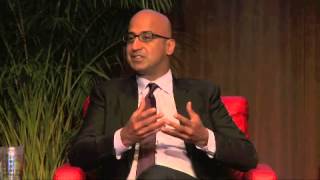
Beatrice Louissaint moderates a panel on small businesses entering large supply chains, featuring executives from Office Depot and Ryder alongside founder Marek Rosner of urbio. Small businesses need operational readiness in manufacturing and logistics, plus certification, a clear value proposition, and patience. SBA and SCORE offer concrete support.
Chapters
Today, if you could please make your way back to your seat. All right, welcome back. Ready to continue this conversation? You feeling good about it? Let's hear a round of applause. Let us know you're feeling good about it. One of the most important topics of today for small business supply chain corporations, it's really corporations need small business contractors and small businesses to pretty much to be the bread and butter of their organizations. Many of them may not know how to get their foot in the door. They may not know where to go for access to capital contracting or counseling opportunities. And so it's really hard enough for most businesses to find their way around, just find a way just to sleep well at night because they're thinking about running their business the next morning. Well, we're going to hear from some of the sources and some of the champions who are helping to make their lives a little bit better and allow them to sleep a little bit longer at night. We're going to learn how to become the small businesses that big businesses need. I first would like to introduce to you the Moderator for today, Ms. Beatrice Louis Sant, CEO of the South Florida Minority Supplier Development Council. We had an opportunity to meet a couple years ago when she had her event in South Florida. I was very glad to come back home to the state of Florida to participate in her annual event. Actually deeply appreciative to have all of the entrepreneurs here today, the resource partners, the small business development centers. If you have worked with a small business development center or worked with some of our women business centers, let's see a show of hands right quick. If you've ever worked with them, that's great. Give them a round of applause. Thank you so much for what you're doing. Ms. Louise Saint immigrated from Miami to Haiti from haiti at age five. In 1970, her father founded Miami's first Haitian church, which put a young miss Louise Saint at the cross current of the Haitian Diaspora Development, Political, Economic and cultural center. In 1984, she became the youngest person hired by Dade County Public Schools Project Hope and was a founding member of its drug prevention program. Later, as a staff member of the Haitian American association, she helped Haitians immigration immigrate from the transition from working in trades into increasingly diverse communities. She founded the Haitian American Women's Correlation and she also became the first executive director of the Black business association. In 2000, she took leadership as president and CEO of the Southern Florida Minority Supplier Development Council, whose membership includes 60% of the Fortune 500 and 3500 corporate members nationwide. Under her watch, the smart the SFM SDC, try saying that fast three times. Has linked minority firms to 5 billion in corporate procurement sales at its annual Business Expo, the largest minority trade show in the Southeast. And we really want to make sure that you give her a warm South Floridian welcome to Miss Louise Saint. Let's give her a round of applause as she makes her way to the stage. As she's sitting down, I want to would be remiss if I did not mention she's a graduate of Barry University and is currently completing an MBA at the Wayne Heisinger School of Business at Nova Southeastern University. Thank you so much for what you're doing for this community. One more round of applause.
I am so pleased to be here today. Thank you Cassius Butts for that wonderful introduction. You know what they say at the end, Only the best things happen at the very end of a program. I'm so glad that all of you stayed today to hear about Supply Chain. We have a wonderful panel for you and you'll be hearing a little bit about them as I introduce them. I wanted to first share what is supply chain? According to Wikipedia, Supply Chain is a system of organizations, people, activities, information, resources involved in moving products or services from suppliers to customers. Supply chain activities involve the transformation that is of natural resources, raw materials and components into a finished product that is delivered to the end customer and and to share their knowledge and expertise and years of experience. In the world of Supply Chain is first Yamez Siddiqui. He is Office Depot's Senior Director of Environmental and Supplier Diversity Strategy. He has led global environmental strategy at Office Depot since 2006. Under his leadership, Office Depot was ranked America's number one greenest large retailer in 2010, 2011 and 2012 by Newsweek magazine. In 2014, Yalmez took over responsibility for supplier diversity strategy and in this role is helping define the company's go forward approach to growing diverse spend and sales, including how to integrate diversity oriented thinking into buying and selling functions. At Office Depot. Yalmez Next is John Gleason. He is the Head of Sales for Ryder's Fleet Management and Solution Business Segment Rider is a leading transportation and logistics company that operates behind the scenes managing critical fleet and supply functions for more than 50,000 customers, many of which make the products that consumers use every day. John's team works with thousands of small businesses to help them better understand the cost of their operations and how to leverage their transportation function and as a competitive advantage so that they can grow. John, please come on up next is Shari Francis, a Great friend of the council. She's a seasoned award winning diversity professional with over 15 years of experience in diversity and almost 20 years of experience in retail. She serves on several not for profit boards who are focused on advancing business opportunities between Fortune 1000 corporations and small and diverse businesses including the Women's Business Enterprise National Council, the Canadian Aboriginal and many of the NMSCC affiliates Minority Supplier Development Councils around the United States. Shari. Finally, our small business representative on this panel, we is here Marek Rosner, who is the CEO of urbio, an award winning design and manufacturing company that creates well designed organizational solutions for small space living. Marek has a decade of office supply and organizational products experience ranging from his first B2B sales job right here at Office Depot to building pop in brand a new and now leading Urbio. Today his products are sold at Office Depot, the Container Store, Target and Amazon, as well as various retailers across the United States. Please help me welcome Marek Rosner. Okay, I've given the Wikipedia that is, you know, English is a second language for me. As Cassius shared the Wikipedia definition of supply chain. I want to first start by asking our panelists, how has supply chain changed over the last five to seven years? Why don't we start with John?
So that's, it's a great question. What we've seen is there's less capacity in the supply supply chain. The costs have gone up from transportation, driving the complexity with warehousing, the electronics. So in general there's been a tightening of the supply chain and a complexity brought on by technology. So, so companies are really looking at how they can maximize and optimize those, those costs.
Okay, what would you like to add to that? How has supply chain changed?
I'd say there's a number of contradictory things that are happening. In one respect, it's become more international as it has over the last number of years, but now there's a movement to more local. So both international and local are happening at the same time. I'd agree with John in that it's more complex, technology enabled complexity. But equally there is new partners and technologies arriving that make it easier in some respects, in that some partners can take away complexity when you engage with them. And I think I'll stop there.
Okay, awesome. Shari, in your role as a supplier diversity professional, what are you seeing in terms of supply chain? I mean, you've been at Office Depot for some time and I know you're on the cutting edge of a lot of things. What are you seeing in terms of the marketplace?
I'm going to piggyback a little bit on what Yomiz said about the international piece. I see a lot of it going global, a lot of products being sourced globally and by local businesses. I think the technology landscape has allowed more local businesses to interact globally and be able to compete in a local marketplace. So that's pretty much the trend that I've seen happening.
Marek, as a small business, what have you seen in terms of supply chain?
I think the most important thing that would be helpful today and talking about is how a small business operates in the larger supply chain. And as those pieces are changing on the side of someone like an Office Depot, how we need to learn to react and respond to those and surround ourselves with the expertise to help us facilitate that process better. So it is changing. It's changing rapidly. We have to continue to educate ourselves and get smarter and faster and more efficient. I think that's what we've noticed over the last few years.
Okay, thank you. Shari, how does a small business learn about opportunities within an organization like Office Depot or other large corporations?
A lot of it is luck, to be honest.
Okay.
I say that because it's almost like you have to be in the right place at the right time, know the right people, know the right information. And earlier there was a panel that said you got to know what you don't know. So if you know what you don't know, you go and seek out that information so you can get to know it. So there's a piece of it that's luck, but it's literally being in the right place at the right time. So if you're in a specific industry, showing up at those industry events because there are buyers there that are looking for products and services and what's the next new best thing. And there's also, from the small business perspective, there are small business events that are targeted on bringing these organizations together, buying organizations. So that's not necessarily an industry, but. But more of a small business focus. So you need to be present and aware of these events, attend them, and be proactive in going after meeting the right people.
Can I build on.
Sure.
Events in this definition of an event like this, where people show up? There's a concept that Jim Collins, the great business writer, has created called the luck event. And the point he wants to make when he expresses luck eventually is that luck events will arrive through your life. And they may arise at NMSDC event, they may arise here, they may arise in SBA office or during a school discussion. And the important thing is to be ready to be ready for that luck event and ensure your return on luck is high. So as you're ready for the luck event, whenever it arrives for you, make sure you're ready.
Okay, well, urbio has had success with companies like Office Depot, the Container Store, Amazon. What did you do to get ready? How did you find out about the opportunities?
Yeah, we have a. We have a pretty unique and interesting story. I think a lot of people know that things like Kickstarter and Indiegogo, Shark Tank, there are these opportunities out there, social media in general, that you can leverage to get your name out there and to tell, tell your story, your brand story, about why you're unique, why you're different, why you're solving a problem in the marketplace. And we've been very, very fortunate. We started off on Kickstarter back in 2011, then we had a wonderful appearance and successful appearance on shark tank in 2013, at which point we presented our first PO from a major retailer, which was the Container Store. And I think that exposure really put us in the spotlight. And from that comes a lot of organic and natural press and buzz around your company. And then if you can leverage that through the likes of social media and continue to tell your story in a unique way, I think people are really, really receptive to that.
That's a great story. So you did well on Shark Tank.
We did awesome.
John, how is Ryder, who's such a major player, based right here in South Florida? How are you all changing supply chain and working with small companies?
You know, one of the things, and I had talked to Marek earlier, is helping companies when they hear about the luck moment becoming successful. So we'll help smaller companies that may need to respond to an RFP from somebody like Office Depot. So one of the questions that will be contained is how are you going to deliver the goods on a timely basis? What kind of warehousing capability, fuel efficient specs, a variety of technical things in terms of moving the goods to either the end customer or to the distribution centers. So we're behind the scenes helping those companies gain recognition that they are prepared for the luck moment and that they can fulfill the obligations that they're making. That's a way they can differentiate themselves from others who are not quite so prepared. Also, reducing the capital requirements is a big thing as well.
Okay, Yalm, as you're talking about the luck moment, what are you seeing in terms of some of the mistakes that some small businesses are making when they have that opportunity and they get it? I mean, you know, sometimes we're not as prepared and sometimes as small businesses, we don't necessarily want to admit what are you seeing some of the mistakes firms are making?
I'd probably start by saying the main one is assuming that the idea is enough and compelling ideas are great, they're very, very important. But what needs to follow the idea is the preparation to execute against that idea. And that means recognizing that, you know, while a supply chain may be complex, in order to be able to sell to Office Depot and, and have inventory available for 1700 stores, you need to prepare a lot on this complexity. But you can partner with rider or other similar supply chain support entities to take the idea and expand on it significantly. So that's maybe number one, making sure you've got a very robust plan in terms of turning your idea into reality. And lastly, secondly, assuming that as you try and break into a large business, that the primary differentiator can be that you're a small business. For the set aside credits. We see that quite a lot and large business like us do have set aside credits and federal government has set aside credits. But you also need to deliver value from the standpoint of what problem is your product and service solving that the buyer hasn't currently got solved. So how are you solving that problem specifically and being very clear and having a plan for that is a really important way to go forward.
Marek, I'd like you to talk about, I know you've had success, but what are some of the mistakes that you made?
I don't.
Because we can learn a lot from failure. Okay, we can learn a lot from failure.
Yes, absolutely. So I learned pretty early in my career, fail fast and fail forward. I think it's really important to test things out, to try different things, to ask a lot of questions and really surround yourselves with people that are smarter than you. Having the self recognition of, I'm not a logistics expert, I'm not a marketing expert, but I know how to piece these things together and I know how to identify what our needs are and then building a team of support who can help you answer those, those various questions. So we're making mistakes right now. So we're about to launch in 1400 office depots across the country and we got caught up in the Westport, the west, west coast port delays that through, through our launch back and then we finally get the product here and then getting it to where it needs to go to the different distribution centers for Office Depot is always a challenge. So I think, I think it's okay to fail. I think it's, I Think it's great to fail, in fact, as long as you learn from it and don't do it again. And I think it's also important to have that conversation early and often with your partner and partners. When partners like 3 PL and logistics like Ryder, or if it's your merchant or retail partner, having those conversations early, having that dialogue and helping each other out because they've been there before, they've had other vendors go through the same things you're going through. And it's a learning process.
And I wanted to just piggyback a little bit on this conversation because you asked about mistakes. So one of the other big mistakes that I see in the marketplace is a small business not really knowing who to target first, where to spend your time that's going to yield the best ROI on that time. A lot of times people don't realize There are only 1440 minutes in a day. How you split that up among sleep, drive time, family time, and then you still have to squeeze in work now and then is critical. So I really want to make this point that you have to target the right audience. Not every product is meant for Office Depot, not every product is meant for a rider if you're going to sell to Ryder. So you have to really know who's the audience that's best going to utilize your product, your service and go after that first. Think of it as low hanging fruit because that would be a better use of your time and investment. And guess what? Once you've proven proven that your product or service can be successful there, you can take it and go to the next list. So you have almost like an A list, a B list, a C list and move down the line.
Yeah. Just to piggyback on that time is your greatest resource as an entrepreneur and a small business owner or leader. You have to have focus, you have to set your priorities and it's okay to say no. It's great to be in a position where you could tell somebody, no, I'm not going to do that right now. And kind of figuring out to your point, who is that low hanging fruit? Who's the most important customer to me right now and how do I focus on them? When I came over this business about a year ago, we were doing some international distribution, mom and pop retail selling to some mid to major retailers. And we're attending a lot of trade shows. Trade shows are time sensitive, they're cost prohibitive and you're going to get this, you're going to get lots of traffic. But is it the traffic you really want? Is it what you're really concentrating on? So what we did was we nailed down to your point the A and B list. We had the top 10 retailers that we wanted to do business with and we spent all of our time focusing on that. So our time, our resources, our cash was directed towards get to the buyer who you want to meet in that retailer. And then when we got our first three yeses, that was enough. Close up shop. Go execute.
Awesome. John, talking about getting ready and evaluating whether you're ready, how do you know that a small business you're working with has the capacity, has the manufacturing, has identified the right partners and they're going to be more successful in the marketplace? What do you see? What are the things that they have? What are the characteristics of and qualities you're looking for?
Well, one of the things that was mentioned in the earlier session was the business plan, understanding how the different pieces were coming together. You know, Merrick's company is growing very rapidly and all of the pieces are largely outsourced. Manufacturing, distribution, warehousing, transportation, marketing. It's fascinating me, a small business that has elected to partner with a variety of people to be highly successful so he and his firm can focus on what they do well and have partners across the supply chain and others across other disciplines to fill those niches and serve somebody as successful as Office Depot. And so having those partners is critical.
So focusing on your strength, in obo's example, the strength is design, I think design and solving a creative problem. And then so you're focusing on that strength and in some ways you're outsourcing your, for want of a better word, outsourcing your weaknesses to whoever's expert in that thing, whether it's supply chain or, or marketing or whatever else it might be. Recognizing who you are and what you're good at.
Self awareness. I know that we design amazing products. I know that we're great storytellers, but we're not logistics experts, we're not marketing experts. And I don't have the funds to support surrounding myself full time with those experts. So the alternative to that is to find partners like Ryder. Social media, pr, online advertising, you name it, we can find those partners at a more cost effective way. And they're there as a resource, they're supporting us all the way, but they're not on my payroll. And that's a really nice thing as a small business. Not have to worry about that, but still get the job done.
Can you also share about the fact that urbio's initial Founders were industrial designers and they recognized they had a phenomenal product, but they needed a different skill set. And then you arrived or you are that skill set.
Yeah. So I think what you find a lot now, especially if you're spending a lot of time watching Shark Tank, following projects on Kickstarter and Indiegogo, you see a lot of amazing products, solutions and services. But the people that are coming up with a great idea don't necessarily have the wherewithal or expertise to scale that business. What they do have is amazing ability to create great products. And in our case, we had two industrial designers who were with the same design firm, out of which came the urbio product. And they did a fantastic job of getting it to market and getting into a major retailer, container store, and then they weren't sure what to do next. And we serendipitously happened upon each other through my other company because we were looking at doing a potential joint marketing opportunity. And my business acumen and expertise and salesmanship and ability to work with large retailers was very complementary to their skill set of designing amazing products. So when we get they had the self awareness in that case to say, okay, let's bring in someone who can build the business. How do we get over the million dollar hump? And then how do I get it over the $10 million hump? And then how do we get it over the $100 million hump? You know, I may have to have an opportunity in five years where we want to go global or do something I haven't done before and have that same self awareness to sit back and say, you know what, I'm not the right guy. And that might happen at some point, but it's really been again, just people saying, I'm great at this, but I need help here and asking for that help.
Shar, can you share with us some success stories of small and particularly minority businesses that have had success with Office Depot supply chain working with Office Depot?
Sure. I have one vendor in particular. She happens to run the gamut of certification. So for those of you who may not know, there is small business, but there's also women owned businesses, minority owned businesses, and a plethora of other types of ownership class businesses. And this particular individual fits all three. She did business with us in the writing area, but had several other products that she wanted to introduce to the organization. And so from her perspective, she was gleaned as this writing person. That's what she did. She made pencils for a living. And to broach over into another category was Very difficult for her. So we took time, patience on her behalf. It literally took about two years to finally get a yes from a merchant. And now today in our major catalog and online, and it's available everywhere, we have this foldable cart that's beautifully constructed, it's very lightweight, can fold down and slip under your bed if you wanted to. You can carry it, but it holds up to like 300 pounds of stuff. And to see an amazing product like that, I mean, she took the time, the patience, the understanding to help educate through the changes. Part of the reason for the time gap was we went through several merchants in that category. So it's just like you had to now reintroduce and begin talking about that product again and saying how great it would be. And if you ever had that instance where you're dealing with a new merchant, they need time to ramp up. So you have to allow that time, reintroduce and allow that time to happen where they're like, okay, here's where we're going to transition our categories. And so she was patient, she was understanding, and she knew her product, she knew her cost point. She came in with a very good value for our organization with something that we didn't have already. And so Point International is the name of that company.
Okay. You know, as an organization that certifies companies, I think many times small and minority women owned companies think I have my certification, where is my contract? You know, she said, patience, identifying the right opportunity, talking to the right person. And many times we're not finding, we want it to happen right away. So Yalmaz, I want you to just sort of expand on that. Working with a larger company, how do you get noticed? How do you get a champion like Shari on your side? How do you get your product or service noticed?
Sure. I think in some ways, for the supply diversity functions, having certification is table stakes. It sort of gets you in the door. You start with that. But in order for us to be able to sell your product and services internally, you need to have a very concrete proposition, value proposition. What's the thing that makes you different beyond the minority, small or women owned designation? Is it design? Is it that your solve your product is unique and it's solving some problem that people didn't even know they had. Is it that you have a unique service model or that you have a really innovative cost structure or you're nimble? What is it that makes you different? And to the point about merchants, different people. Large companies are still made up of individuals. And when Shari mentioned merchant merchants are the buyers within Office Depot and other large retailers that make decisions on what will go on the shelf or online or in our catalogs for resale to other people. So recognizing that different merchants have different focus areas and different needs in terms of what they're trying to achieve, that's one important thing to understand and become knowledgeable about. What is the category merchant in this area most likely to be interested in? That's merchandising. The other part of supply chain that I think is worth mentioning is, is indirect procurement. That means the product and services Office Depot and other companies need to run their operations, not sold to other customers, but to run our own operations. And that again is what is the key question is what is the value proposition? How are you helping the company do what they need to do in order to sell more effectively?
Right.
So if you're efficient, if you've got a solution that's green, and if you're global, being nimble, all of those things are important. But there has to be a need for your product or service. And many times, as you said, Char, there's not a targeted approach to who that customer is. So I've won the contract. Right. And how do I ensure, John, that I can deliver that the company that I've won the opportunity with is going to help me grow and expand?
You know, that's something that there's oftentimes so much focus on the contract that it's, oh my goodness, we won. Now what do we do? The moment of truth, so to speak. So I think it's understanding the unique value proposition that you may have promised in terms of winning. Is it overnight Delivery, is it 1800 stores, is it the E Commerce application? So understanding fully what, what it is that you need to do to get your products and services to meet the, the, the customer expectations and having a partner, whether it's someone like Ryder or others, that can provide the expertise, whether it's fuel efficient specs, ability to warehousing that's in close proximity to the end customer. One of the things that will help customers do is buy transportation from other companies at the lowest rate to help them do that. So it's partnering in a variety of ways, the supply chain to help ultimately the company, the small business, deliver on a promise that they made to somebody like Office Depot.
Okay, so I just want to jump in a little bit.
Sure.
Because yom, as you mentioned about the individuals and I think it's, and I mentioned about patience and I want to make this point that as a Small business, you might have a fuse that might snap sometimes because you've been run in, running in circles for a little while. But it's critical that you maintain your composure and your, your professionalism because you don't know who's going to be making a decision today or the next day. And you don't want to ruin any bridges, you don't want to burn any bridges while you're going through this process. It's really a key point to make. Each of these people are individuals that are running their particular business, whatever category it is, whether it be indirect procurement or on the merchandising side. And they are, they prefer to do business with people that they're comfortable with, that they can trust, and that even if the product is the greatest product since Life Bread, if you've burned the bridge, the trust is broken. So how do, do they feel like you're going to continue to deliver, that you're going to burn other bridges and then in turn burn them in the long run. So those are the things I want to reiterate about the patients. It's critical. Keep your composure, be very professional, always know your value proposition so that you can, can sell it at any point and make other people look good as well, meaning the merchants, the buyers in the process.
Mary, would you like to add to that in terms of what Erbio is doing?
Yeah, I completely agree. And it's really a lot to do with relationship building, earning that trust over time. You can take baby steps along the process, but when you create a real relationship with someone, even though you're giving and taking, buying and selling products, if they take the time to understand your business, your business objectives, what you're doing with your brand, and if you do the same in turn, I think that leads to so many more opportunities down the road. With Office Depot, for example, we may be starting on the shelf in retail, but my ultimate goal may also be to sell into the B2B channel, have a prominent position online in order to get those opportunities, to earn those opportunities, I need to have that, that trust and rapport built with my, my initial buyer. And then something that you had said earlier about the business owner who had pivoted to another product and wanted to get that, I think it's really, really important as a small business owner from the onset to pick a lane, pick a lane, know the product, know the buyer, understand exactly what, what it takes to, to sell into that channel. And then once you earn that, that trust and that rapport, you gain an opportunity to sell beyond that and bring your next best product to the table because they know that you can execute, they trust you, they believe in you, and they want to be part of your story.
And Merrick, you said something earlier when we were talking in prep that sometimes it's not. Your product is not right for that retailer. And that's okay. It might not be. And accepting that may allow you to focus on the places where it is right.
And yeah, completely agree. As much as you need to be a phenomenal storyteller as a business owner or entrepreneur, you also need to be a tremendous listener. And if someone's telling you no, they're probably telling you no for a reason. That doesn't mean stand down and don't fight for what you think is right. You absolutely should. But understanding the why to their no, I think is really, really important. And it could be timing, it could be price point. You may just have the wrong buyer or your product might just not be a good fit. And your time, as we've stated a few times, is your. Is your number one resource. That is your capital. And if you're chasing down somebody or hounding somebody, that that is going to give you repeated, repeated nos, that may not be the best use of your time. So really listening, understanding that and then using that to your advantage when you go into the next conversation is really, really important.
Okay, well, we want to get the audience involved in this discussion about supply chain. So we're going to take some questions from our audience members. If you have a question, if you can tell us who your question is for and ask a question. I see a young lady you're moving. Do you have a question? Yes, go ahead, please stand up if you can and project, please.
Actually saw him on Shark and I watch him pretty much every Friday because I learned great tips.
So you want to know what programs he took advantage of? Okay, we got a microphone coming. Okay, go ahead.
Wanted to know what opportunities and programs did you take advantage of as a small business owner like through the sba? Because in terms of marketing, that's not a strength of mine. Public relations, because while you have your business plan, you also need to be able to network and make meaningful connections that can make your business possibly a success later.
Yeah, it's a great, great question and thank you for that. I was actually not the guy on Shark Tank. Our two co founders, Bo and Jared, were the ones that were on the show. They did a tremendous, tremendous job. The business that I was with before this was venture funded. And our business, Erbia, originally was funded through friends and family. So we actually have not leveraged the financials, financial support from the SBA just yet. One of the issues being is that we're not profitable. And that's, you know, a lot of folks today have talked about build your business plan and execute against it and completely agree with that. It's not in our business plan in the first couple years to be profitable and therefore we're not eligible for sbo SBA backed loan. But to, I've actually learned here in the last, the last day or so a bunch of other programs that actually might be really, really compelling for us. So when you look at local and regional folks that can help support. What we were really fortunate to do when we started or in the last year or so at urbia was to surround ourselves with an advisory board. So what we did was we identified places in our business where we had weaknesses and then went into our network through many years of working in the industry and surrounded ourselves with experts in each of those fields. And what I'm hearing today is that that same opportunity is available through the sba. So if you don't have a network or don't feel like you do yet to surround yourselves with those experts, it sounds like if you go to your local SCORE or SBA location that they can supply you with that ammo, which I really think is important. So those things that you say you're not an expert at, don't be afraid of them and go ask for help because someone will absolutely help you.
And there are a lot of resources in our community and, and the SBA's website has a wealth of information. Office Depot has a small business club that has samples of information, pamphlets, there's web presentations that you could utilize. The SBA also has their new emerging small business program, which is a training opportunity where you serve as each other's board of directors. So SCORE is another organization, the retired senior executives that provide training information that will help you with your business plan throughout the week. There's something, particularly in South Florida, happening specifically for small businesses. And it's a matter of what is right for you. As Shari said, time is limited. What makes sense, what are the areas that you're weak in that you really want to focus on strengthening? Other questions from the audience.
Good afternoon. My name is Carmen Baker. I am the CEO of Process Design and Development. And I have a question for, for Merrick. You mentioned that when you are pursuing contracts and if you keep getting a no, you know to think about utilizing your time better or going after another contract.
But Where.
How do you identify that magic moment of when to give up a client you're pursuing? Especially when they don't say no, they just keep dragging you along.
The slow maybe, yeah, it can be painful. And I think as you're identifying what your time is worth and how to best spend it, you need to figure out, how long can I actually stay engaged in this process? I ask a lot of questions. I always have to, somewhat to my detriment, but it's also helped me a bunch in my career. And I would just ask, what's the expectation for how long this process is going to last? What are the things that you're evaluating? Where am I falling short are the things I should be working on proactively throughout this process? Don't be afraid to ask questions. And you can ask a lot of them. The only thing they can tell you that you don't already know is no. And I think that's okay. So as Yamaz had said earlier, they're getting up and coming, going to work and raising a family and doing the same things that you're doing every day. They're just people trying to build their career and serve some purpose for their organization. And they will understand that your time is limited and they don't want to waste your time either. So I think it's really important just to ask. Just ask.
Thank you.
Yeah. But as a small business, you never know when you're giving up too soon. So if you have a tickler, if it's every other month, once, you know, every six months, just touching base again. If you do have those type of resources and also try to find a way to uniquely get in front of the customer. So many people are getting, you know, we're inundated with emails. So if you could send something by mail, snail mail still works. Or if you could send something to them urgent in a FedEx package, if you know where they've got to sign for it. So you know how that whatever message you want to send to that customer, it actually got to them. Try to come up with something that you know will get their attention. Sometimes it can be a little gimmicky.
Pick up the phone. You don't understand the amount of buyers that tell me, listen, you can email me. It's going to take me 48, 96 hours to get back to you. Just call me. I'm probably at my desk. I'll pick up the phone. So many people have gone away from calling to email. That, that, that is. It's become the flip of what it used to be. And I think it's also, if you do start that rapport, ask how they prefer to be contacted, how often, by what means, and is there something you want me to put in the subject line or in the first two sentences that help you identify that it's me? You get a lot of lot of carrots of information that way.
Great response in terms of picking up the phone and early and late. Also work. You're probably the only one calling at the time. Other questions to the audience.
Thank you. My name is Danila Richards. I'm with Large Yacht Services and I own this business that is a bit global. My yachts go all over the world. It's 100 foot to 300 foot yachts. And my supply chain question to you is, in today's E commerce and global selling, do you offer through your SBA program at Office Depot what the different categories might be and what the pitfalls might be in that international processing of an order?
Wow.
Can you explain a little bit more? Are you trying to get your products product noticed more or how are you buying your yachts, for example? Can be a little bit more clearer.
I sometimes have to ship supply chain ship either software charts or specialty food items to my yachts around the world and it's getting increasingly difficult to figure out VAT and different taxes and when do I tax and when do I not tax? So supply chain delivery question to you would be, is there a go to place that you have that has the magic, okay, if you're going to this country, this is, this is the law in that country. If you're doing E commerce over there, this is what you need to do. Because as a small business owner, there are questions in certain countries and I don't know exactly, you know, what I need to do to fulfill some of that.
So that's my question, John, that's definitely a question for you.
I can't answer on behalf of the sba what resources they may have, but I, our logistics business handles those kinds of questions for lots of companies, both large and small. So one of the things I would encourage you to do, at least answer this question is I can give you some contact information and while I'm not the right person, I can get you the right people that would be able to say, here are, here's. As we do this on behalf of other companies, what are the applicable laws, regulations, tariffs, etc. Etc. Outside of us, I'm not sure. Other public information sources. So I'm not sure I could be helpful there. But Certainly we would have people within our organization that could help you out.
Thank you so much.
The contact info is appreciated.
Let me make a couple of recommendations. Enterprise Florida, which is our Department of Commerce for the state of Florida, they have a office in Coral Gables that focuses on supply chain and logistics. The contact there is Luis Perez Kadena. Also the department, the U.S. department of Commerce has international offices here. Locally, they have several services that help US Companies that are exporting around the world. They have a program called the Gold Key Service, or let's say you're going to a country that you've never worked in before, they can meet you there, they can schedule the appointments and so forth. And that's with the U.S. department of Commerce. So there are several international, you know, free services right here in our local market.
Thank you, Madam Speaker.
Thank you.
Hi, good afternoon. My name is Jenny Chakran. I'm an SBA lender with SunTrust Bank. And I just wanted to make a couple of comments from some of the feedback that was heard back and forth. One thing is that small businesses don't have to be historically profitable to qualify for an SBA loan the same way a startup can get an SBA loan. In many cases, a small business could get an SBA loan with solid projections, especially if you've been in business and you've been able to prove out a model, even if you haven't realized profitability yet. So I just wanted to start with that. And, and then the second thing I wanted to say is that a lot of the resources, and I guess this is a little bit of a plug for South Florida and sba, but a lot of the resources that you need are readily available through a phone call to the SBA office and by asking them to put you in touch with the right types of either lenders or counselors. And then the last thing is, I know that we have the Twitter thing up there, but I don't know if anyone realizes how much social media beyond the SBA website there is around SBA, including an SBA channel on YouTube. So I just wanted to mention those things. Thank you.
Thank you for sharing that. Other questions from the audience, Other questions.
Could I just build on that social media point by asking our friend Merrick again to share some tricks and techniques that you've used through social media to elevate the buzz around your brand?
Yeah, so most people are aware of social media and they know that there's lots of different channels that you can use. YouTube, Twitter, Facebook, Instagram, Pinterest. I think it's really important to understand why are you using it. We have made a conscious decision not to sell through social media right now. What we're trying to do is build a community so, you know, and also identifying who our target demographic is. If you're trying to sell to a younger demographic, Facebook's probably not the place to go. But if you're looking at something that's very visual and you want people to be able to share and engage with your visual product, you want to look at places like Instagram and Pinterest. I think they're both very, very solid. And again, it's about understanding what the purpose is of social media, who you're trying to get to, what's the audience and then what is the product or service that you're positioning or the story that you're trying to tell and what's the best means for it. If you want to follow urBio, it's yerbio and my u R B I O. And when we do go on shelves at Office Depot, because we will be in 1400 stores soon, it'll be Neatspaces.
Thank you.
I just want to piggyback real quick. As you're using these social media platforms, think about it as an opportunity to embrace and provide valuable content to the audience that you're trying to project, to not just sell. It's not really a selling medium per se. It's more of here, some. So for urbio, they create great spaces in limited spaces. So providing content to help people beautify their intensely tiny spaces, it's an opportunity for them to talk about that and maybe showcase the way something else looked beforehand and the post picture and talk about how others can do that. And if you choose to use an Erbil product in the process, happy days. Because it will be highly featured in that picture, the post picture. But I just want to make sure you understand that it's like using the content to drive great information so that people will feel like they're building a relationship with their company and come back around to buy from your company.
And two really important things to remember when you do break into a larger supply chain, which is the reason for this conversation, Then all of a sudden you have a partner. And then also you also have scale. So the scale allows you to leverage, get better pricing from different vendors and pricing with your manufacturer and things of that nature. But then the partner allows you to break into a much, much larger audience. So when we partnered with 3M and their command strips on our new product line, then all of a sudden 3M and command strips are also tweeting and Instagramming about our product. And when you start selling through a retailer like Office Depot or the Container Store and they start to share your story on social media, it's a tremendous incremental lift that you couldn't or that would take you a very, very long time to get to as a small business. So that's just some of the, some of the other great things about breaking into the supply chain.
Okay, well, I wanted to start with Yamas, give our panelists just some closing statements because I see Mr. Butz there, so he's going to close out the afternoon. But I wanted to start and just end with Marek. Any closing thoughts about supply chain? Any additional recommendations that you make to our audience?
Sure. Thank you, BeatRice. So our CEO Roland Smith mentioned passion and perseverance as the critical elements of success for a small business. In general, I'd say when you're trying to break into a large supply chain like Office Depot or any other large enterprise, patience is a watchword. You can be hungry, but be patient in your hunger because it is complicated. It is complicated and it can be frustrating. But the way to channel your frustration is not to get angry at a potential buyer or procurement executive. It's to work out. The job is to work out how to get in or to decide to not go for it with that player. So patience is an important additional word to passion and perseverance.
Okay, John, and I'm going to add one more P word and that's partners. You know, I think Americ is testament in his organization to a rapidly growing firm. And in his case, he's done it a few times by choosing the right partners, being self aware of what they're really, really good at. In his case, currently designed and then surrounding other needs to be fulfilled with partners. So be aware of what you're great at as a small business and then find partners regardless of the field endeavor to help you be successful quickly.
Thank you. Sharp. I want to say don't discount a wholesaler. They can be a wonderful partner to help you get into these other large mass retailers. So think about wholesalers. There's SP Richards, United. There are a lot on the Ingram Micro. Just depending on what industry you're in, they can help you just get over that hump of getting into the retailer. And then once you're in, you can prove your sales, prove your worth, prove your value and grow from there.
Awesome. Well, Merrick, you have the last word.
Great doesn't happen often. Set your priorities, stay focused and partner I completely agree. You need to surround yourselves with experts. You do what you do and do it tremendously well. Let them do what they do. Let them do it tremendously well, and together you'll. Together, you'll succeed.
Thank you.
Please join me in giving our panelists a round of applause. Great information. Thank you.
All right. Thank you so much. Wasn't that great? Ms. Louis saying thank you so much. One more round of applause as they're exiting the stage. Thank you. I'm going to ask for Ms. Kim Printer, who is our lender relations specialist of my staff here in South Florida. Join me in the office on stage here today. It's been a long day. It feels like the office. Let's give Kim a round of applause as she makes her way up. You can clap for her. There you go. We just want to say this has been a very fulfilling day. We have had a lot of opportunity to talk about the small business community, to talk about what we do at SB8 and why we do what we do, and we don't do it alone. The week to celebrate this all is just something that I always look forward to. Dream small Biz is our hashtag this week. And I just wanted to thank you very much for your time and attention and to let you know that if you have any questions or you'd like to have further information about SBA and our recognition of this week, you can go to sba.gov of course, we also tweet BA Southeast, but make certain that you're following us in, keeping up with the latest trends and making certain that you're playing a big part of this small business ecosystem. And as I take my step back, one more round of applause for Ms. Kim Printer. Thanks, Kim.
Thank you, Cassius.
Everyone. Thank you. Thank you very much for showing up today. It's been a fantastic event. We got some terrific information as far as our supply chain. And for all of you that stuck around, obviously you're interested in the supply of supply chain. If you haven't already started. If you haven't started, you got some great information today, but I want to follow up with what Jenny said. Thank you, Jenny, for giving that additional information for us, but I want to follow up with what she said. She's absolutely right. We here at the SBA are all about resources. So if you're thinking about that supply chain, but you're still not sure where to go with it, you've got plenty of resources. Not just with the panel that was up here, but with the SBA as well. Well, we're here. I'm a lender relations specialist. It's my job to help you find the right lender, as Jenny had said. So I'm going to get you matched up with that right lender. But we have a whole other department, and they deal specifically with the supply chain and helping you get those contracts with the federal government. So make sure you're taking advantage of that. We want you to grow big. That's what we're here for. So thank you for taking this opportunity. I'm thrilled to be in the company of Roland Smith and Maria Contrera.
Sweet.
I apologize for that. I'm making her nervous.
I'm just standing by here. I'm making her nervous.
Well, he mentioned coming in the office. You know, that's like going to the principal's office. It makes you scared.
Oh, no. But this has been great. We would be also remiss if we did not thank the South Florida district office led by Pancho Moretto and also Janelle Hein and the entire SBA staff. Staff. If they're not here, can we. Can we clap for them? Let them. Thank you very much. Great job today. Great job. And I think this is it, right?
Absolutely.
Thank you very much for your time and attention, and we look forward to continuing to support you and your small business initiatives.
Thanks.
Thank you. All right.
Good job.
It.
More from Your







President Donald J. Trump and First Lady Melania Trump Visit Grieving Texas After Deadly Floods

💪 Thinking of starting a #biz? Go for it! — Kerry Boyle, Vermont #SmallBiz Person of the Year

President Trump Participates in a Bilateral Meeting with the Prime Minister of Canada, May 6, 2025

