Cup of Joe with Veteran and Military Spouse Business Owners
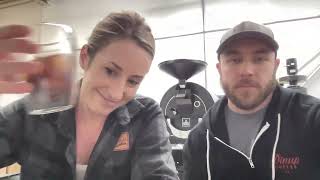
Roundtable (YouTube) hosted by Laura Wages on Dec 14, 2022 featuring SBA Office of Veterans Business Development deputy Tim Green and three veteran/military-spouse business owners: Steph & Bryce Wine (Pinup Coffee, Norfolk/VA Beach), Kate Ryman (sustainable/compostable beach toys, Hawaii), and Mike Stacks (Bold Mariner Brewing, Norfolk). Panelists recount their entrepreneurial journeys, use of SBA/VBOC/SCORE/Boots-to-Business, operational challenges (hiring timing, financing, supply-chain and COVID delays), community engagement, and plans to grow/scale (roastery expansion, manufacturing molds, brewery production facility).
Chapters
Good afternoon everyone and thank you for joining us today for a cup of Joe with veterans and military spouse business owners. To get us started, I'd like to introduce Tim Green. Tim is the Deputy Associate Administrator at the Office of Veterans Business Development at the Small Business Administration. Tim, welcome.
Thank you, Laura. It's really my honor to kick off today's event again, my name's Tim Green. I'm the deputy here at the Office of Veterans Business Development and I do have, I have about a 28 year career in the United States Air Force, so very proud of that. And now I've been at the federal government for the last few years as sba. We're really proud to host this event and the timing is really perfect as we close out November. November, many of you know, is National Veterans and Military Families Month where we celebrate veterans and the accomplishments there in our office. We also have National Veterans Small Business Week, which is the first week of November that we hosted many events and very successful week long National Veterans Small Business Week as well. So I'm not going to spend long. I just want to. As we, as we look and you listen today to the outstanding panelists that we have, I want you to take away a couple things and one of those is entrepreneurship really is a team sport. I heard that from one of our staff. And we at SBA have a vast network of resources to help you start and grow your small businesses. So listen to some of the resources that these entrepreneurs have used and see how they could fit into your game plan as well. The other resource I want to highlight is more specific to our office that we manage is the Veteran Business Outreach Centers. They're really your one stop shop for training, counseling, referrals. They can connect you to the district offices, Women Business centers, Small Business Development centers, SCORE mentors, and a host of other resources. So keep those in the back of your mind as you hear the great stories from our panelists today and please enjoy the roundtable discussion. You know, get your joe ready, I got my coffee ready. And with that said, I'll turn it over to the moderator, Laura Wages. And thank you for attending today's roundtable.
Thank you, Tim, for kicking off our event today. As Tim mentioned, we do have some great panelists that you will get to meet throughout our afternoon. And we picked businesses for a very specific reason. We picked a business that has just recently started. We picked one that's been in business for a couple of years and then we picked one that's been in business for a few more years and is ready to grow. And so we're very excited about having them, and we're going to introduce you to them individually. They're going to talk a little bit about their journey, about what motivated them to start a business, and some of the lessons they've learned along the way. So the first group of panelists that I would like to introduce are Steph and Bryce Wine. They are the owners of Pinup Coffee. It is located in Norfolk, Virginia. Welcome.
Hi.
Thank you. And so we'd love to hear about your journey. We'd love to hear about how you got started. Steph, we know that you are still in the Navy, and we know that, Bryce, you recently left the Navy, so you are now a Navy veteran. But we'd love to hear about your journey and what made you decide to become entrepreneurs.
Well, I wanted to do this since I was 15 years old, of course. Tasted my first sugary Starbucks Frappuccino. And of course, that's nothing like the coffee we do now. But ever since I had that sip, I had this dream. And oddly enough, with the same name, Pinup Coffee. So I, like you said, I'm still in the Navy. I have about six months left, but I was on deployment a couple years ago, and just thinking about what I wanted to do afterwards, and I kind of had this tucked away for a long, long time and talked to him and said, hey, how would you feel about doing this? And he said, let's do it. So the original idea was this was going to be my job. It has now turned into both of our jobs and other people's jobs, which is awesome. Um, but I started by. We built out a little. Little roastery in at home, little 1kg roaster. And so we were a cottage law operation. So that means that we could only do local sales, we could only do in person farmers markets. And that just. Just boomed. And it got to the point where I was roasting 14 hours every Sunday and every spare chance I had during the week, and we were packaging late into the night, and it was just. It was awesome. So. So. But we did run into the bottleneck of just not having the time, really, especially with still being active duty. So that started last year, actually, in October of 21 is kind of when we got everything going there. And then we have recently expanded to our roasting shop here, which is over in Virginia beach, right next to Oceana. And you can see our 12 kilogram.
Machine in the back.
And now we have an online store. And some of our favorite stuff is just. Is being involved in the Community and really embracing the love of craft, everything, things that are made locally, craft beer, craft coffee, and just the community and how it brings people together is something that really drives me.
That's great. I understand that you took the Boots to Business course and that is a course that is offered to transitioning service members. Can you tell me what your biggest takeaway was from that?
I'll take that one. Since I'm the one who actually took the course. I'd say the biggest thing that I took from boosted business was that there's just ample resources out there and all you have to do is reach out and ask for help. Which is kind of a. It's pervasive in the small business and startup business kind of world. Like there are just resources everywhere. All you have to do is put your pride aside and ask for, ask for help, ask for the resources and everyone's more than willing to help.
That's great. Were there other resources that you used once you attended Boots to business?
So I love the vboc. That is one of my favorite resources to use. There's just so much networking that can be done and any question you have, like Bryce was talking about, you really have to just ask questions. Like we come from this place where we're used to being so self sufficient and mission driven and just busy, busy, get the job done. But had to kind of transition to. I wonder about this. Let me ask Don at the vboc. Let me ask whoever. And so the networking through the VBOC is fantastic. I had a SCORE mentor as well and that was awesome for like financial documents and projections and all of the not as fun stuff that you have to do as a business owner. SCORE is fantastic for that. And then the industry, the industry is huge. Is. I love being involved in the industry. So for me that's the Specialty Coffee association and the Coffee Roasters Guild. And that's for a lot more than just education. I mean you can at this point, I have other coffee roasters all around the country that I can just shoot an email and just being involved in using those resources in your same industry or close. Close industries. Parallel industries.
That's great. So knowing what you know now, what would you do differently?
Probably it would probably be my answer that would be around hiring and the timing of hiring because we, we held out as long as we possibly could before hiring someone. You know, it went from like, like Steph said, it went from she was doing the work and then she needed help and then we were doing it. You know, we were, we were Doing the work together. And then we looked at each other. Wait, now we need help? And we waited a little bit too long to where the, you know, we were really just taxing ourselves. And like she said, we were just really, really working the grindstone pretty hard. And picking up an employee earlier would have taken a lot off of both of our plates in the way of allowing us to expand in the ways that we wanted to, rather than focusing on like the little things. But now that we have hired, we're able to do that. So, you know, hopefully we can help somebody through this webinar with that.
Yeah, and it's.
I mean, you want to be financially responsible and not hire someone until you really need to, but then you have to remember and it hit me hard that you have to have the time to train them. And so if you wait too long, you don't really have time to train them. So it just keeps your days super long. And so we bootstrapped everything for the business until we got here to our bigger roastery. So one of the things that I maybe would have done differently is look into financing earlier rather than later, because we weren't even, I mean, necessarily thinking about it in the early stages, but like, starting to build business credit as soon as entirely possible, no matter how great your credit is, you know, like, be prepared and be prepared earlier than. Than you need it. I think that was. That was a big thing for me.
No, thank you. I know that for a lot of veterans, the name Pinup resonates with them, but why did you pick that name.
So originally, and we still kind of work this in when I was 15 years old. That was a long time ago now. That was kind of when tattoos were starting to become more normal. And I just loved the American traditional pin up girl style tattoos. And I just had envisioned this brand, right. And then I joined the Navy and I'm an air crewman and we were both air crewmen, so we fly and was able to tie that in with aircraft. Aircraft nose art. So actually all of our coffee blends are named after pin up art on actual World War II bombers. So that's why they kind of have funky names. Slightly Dangerous Tailwind. Those are all actual pinup art. And for me, it kind of resonates in just the vibrance of that era. Granted, World War II was not the happiest time for everyone, but what people looked forward to was the happiness and the freedom that was back home. So we kind of equate that to coffee too. We've got the good Stuff waiting at home.
Yeah, that seems like a great tribute. Well, thank you very much. Thank you. So next we are going to talk to Kate, and Kate Ryman is out in very sunny Hawaii. And, Kate, thank you for joining us today. Kate, I'm going to let you talk about your business. Hey.
Okay. Yep. Sorry.
Absolutely.
We can hear you having a little trouble unmuting. Thank you so much. Thanks for inviting me to participate. I'm Kate Ryman, Air Force spouse. My husband retired last year after almost 25 years of service in the Air Force. We were stationed in Hawaii and made this our last stop. We loved it so much. But prior to this, we were in the D.C. area. He was stationed at the Pentagon, and I was actually in Virginia beach to sort of tie this all up. And I noticed my kids, my kids, my husband and I were all at the beach and we had a bunch of plastic, conventional beach toys. And a wave came in while my kids were playing and took all of their plastic toys sort of out to sea. And I was really aware of the plastic pollution problem that we face. And so I was like, not on my watch, not letting these toys escape out into the ocean. So I jumped in the ocean and I was like, pulling out all these toys like a crazy person. And then I got back on the beach and was kind of looking around at all of the materials that we use for these ventures that we take to the beach. And I thought, like, what are we doing? There's such a disconnect in the materials that we use and the places that we use them and the products that we're using them for. And that was in 2016. I sort of started this journey of like, I have to make this better. I don't know how. I was a writer by trade and had no experience in the materials economy and production, anything like that. But I spent a lot of time just pumping my network, which was pretty slim at the time, sometimes sending out some cold emails to people in different industries and trying to figure out how to get started started. And that's really. That's really where the journey began. And then, as fate would have it, we were transferred to Hawaii in the summer of 2017. And I have to say, when I was in the D.C. area, explaining to people that I had suddenly become very passionate about creating a compostable beach toy, people were like, okay, you do you. That's great. But when I got to Hawaii, the response was overwhelming. It was like the connection was. Was made instantaneously because we see here on the beaches the plastic pollution. You know of decades previously, washing on shore in the form of these tiny little microplastics that actually, you can see some of those up there, and we just get inundated. We live on the east side of the island, so we, we get dumped on quite frequently, especially in the winter. So anyways, when I, when I arrived here, any doubt that I had that this was a worthwhile venture and that consumers would respond was erased because it was really well received. But then I had to actually start putting the pedal to the metal and I started another, kind of like Stefan and Bryce, you know, started another company to bootstrap my business and pay for the things that I needed. Prototyping. I bought a 3D printer. So I was doing some communications work with another business that I started and funding all of that myself. And then we finally got to the point where I had picked out the design that I liked, the color scheme, the logo, had tried out different materials, you know, did my, my own R and D on that. And then, then we needed funding, like big time funding for the molds for manufacturing. And so that was when I started a Kickstarter campaign. And had I been tapped into Beboc sooner, I think I, I actually would have made the goal. But I had like, big dreams, big ambitions, thought for sure I could make $400,000 on my Kickstarter campaign because I was going for all of it. I was going to make a bucket, I was going to make all different kinds of molds. And towards the end of the campaign, it was pretty clear that that was not going to happen. I was falling way short. But one of my friends introduced me to vboc and I had a meeting with Dennis here on island, who works at vboc and just dramatically changed the accessibility of capital for me and the trajectory of the business by really reining me in and trying to figure out how I could secure funding, you know, in a more practical manner. And so through, through him, I was able to secure, secure a loan, which then, you know, moved us on a little bit, a little bit more. I realize I'm talking a lot, so I'm gonna pause here.
No, no, you're fine. So right now your business is up and running and you have a website and you have toys available.
We have pre orders. So this has been a really difficult journey. And I was able to secure funding. It was an SBA backed loan, but it was in March of 2020 that I secured the funding. And it was like right in the, at the end of March. So a lot of things happened Then. So then I had to. They put a hold on the loan, on the disbursement of funds because everybody was panicked. And so I had to, you know, fill out more paperwork. Then we. The funds were finally released, but now my mold manufacturer was closed due to Covid. And really, that's just been a series of events ever since. I remember I got an email or a phone call from one of my vendors saying that the material that I use for the product, which was like our holdup at the time, it couldn't be produced. It had been produced, but during the shipping process, it had been contaminated because they had to use a recycled box. And the recycled box had some carbon material in it that rendered my material useless. And I'm like, what load of garbage are they feeding me? Box shortage. What are you talking about? But then, sure enough, like the next day in the newspaper, the headlines like, cardboard box shortage. And this was just like the, you know, the story of the business and continues to be driver shortages, supply chain issues, ports being backed up. So we have. It's like a good place to be. We have a lot of interest, especially from hotel chains all over the world. But we're still working on the fulfillment issue because we keep facing these really unexpected and really bizarre challenges in the business.
Understand, and we definitely know that the pandemic was devastating to small businesses, especially those who relied on those deliveries right on time. As a military spouse, what advice would you give to other military spouses who are looking at starting a business?
I mean, I would say keep going, right? I would say I'm going to talk, like, to myself right now in this environment, you know, there's so many unknowns for my business at least still, we're kind of coming out of it now, and I feel confident that we'll have product and in the spring of 2023. But had I not been really firm in my mission and the reason behind why I began this business, I think I had many opportunities to exit this business for valid reasons and still do. But the problem persists. The plastic pollution problem persists, and that is my driver. And I have to be very intentional about zooming out, right? Because it's easy for all of us to get caught up in the small details of the daily grind of the business. But I have to really zoom out and remind myself, what am I trying to do? Why am I doing this? Who am I doing it for? So if I, you know, if I can keep reminding myself of my why, then I have the fortitude to continue and, you know, as we said in a previous conversation, I think that military veterans and spouses are uniquely positioned to run their own business because we are oftentimes thrown into situations that we were not expecting or had little control over and we have to make the most of it. And I think that there's a strong parallel between that and being an entrepreneur and sort of playing the hand that you're dealt with. So for military spouses and veterans, I would say keep the mission front and center and keep going. And then to echo what Bryce said, there are services available to you as a military spouse as well as a veteran that are unique to you in your situation. And I think VBOC is definitely asset. And I have relied heavily on the expertise of Dennis, who's worked with me at VBOC in the Pacific.
That's great. Are there other SBA resources that you have used?
Really, the VBOC was the most and I received the SBA loan. I didn't qualify for a lot of the relief services just due to the nature of this business, but the SBA loan was huge in getting the business from prototype phase to manufacturing phase.
Thank you. I know that Stephen Brights also mentioned giving back to the community, and we see that a lot with military spouse and veteran owned businesses that wanting to connect with the community. And so we see that with your business as well. Where do you see your business going from here?
Well, I mean, I have big, big goals for the business. It's really not so much about beach toys as it is about introducing the concept of a better material to market and a viable alternative to petroleum based plastics. So really I like to think of the beach toys as a proof of concept that consumers are ready and willing to spend more money on a better material. And we're sort of kicking the door open with beach toys, but then leveraging that to get this material out far and wide, reducing the price point so that other companies that want to make a plastic based product have a viable alternative. You know, right now the price point is so high that I think it's cost prohibitive for a lot of startups. And so really that's the goal, is to try to bring the price point down, flood the market with this alternative, and just change the way we think about the products that we make.
I know the pandemic really affected your business, but what would you do differently? If you could go back, what would you do differently?
I think I mentioned this earlier. I wish I had worked with VBOC at the outset because if I had worked with vboc, I could have achieved the Kickstarter campaign goal, which would have accelerated the trajectory of the business and I might have gotten in front of the pandemic with the production. I feel like, you know, right now our production is sort of caught in this cycle where we fix one problem, but then there's another issue that arises. And I think had I, had I known about VBOC earlier, I might have had product earlier and I would have been in a much stronger position to withstand and get through the pandemic.
Thank you, Kate, and thank you very much for joining us today. We are going to transition to our last business owner and he is representing a established business that is now getting ready to grow. I'd like to introduce Mike Stacks and his wife is not able to join us today, but we, we, we know that she does work with you. Mike is the owner of Bold Mariner Brewing. And Mike, I'll let you tell us about your business.
Hey, thank you. Am I unmuted? Can you guys. All right, we can hear you.
No, we can hear you.
So thank you. We opened Bold Mariner seven years ago, so also while I was on active duty, I just retired last year. I ended up doing a little bit more active duty time than originally planned with my business plan in transition, which worked out great for the business, but it was also difficult for running a business and being in the military and a family both. So I do like the idea of starting your business business plan and engaging with those resources prior to retiring, but I don't think I'd recommend taking it, stringing it out quite as long as I did. But similar to the other two businesses used a lot of the same resources. The VBOC was probably the center of gravity that I did most of my networking, engaging and even finding other resources through. So I worked with them. Score one big one for me. And the type of business that I'm in was I worked with the city of Norfolk Business Development program and as we look to expand and create a second, you know, potentially third location production facility, we are currently working with all of the different business development departments here in the seven cities to one try to find the, the right location for us as we expand and take advantage of any resources that are out there. City owned properties, grants that are available, tax incentives, different locations can offer you different, different types of monies and different, different opportunity zones that you could find available, different breaks for employees, other things. So we're really, we're in a stage where we're kind of back to the drawing board with seeing what Resources are out there and doing it all over again. We really tried to get as much as we could. We also had a small Kickstarter fund that we were fortunate enough to be successful with, which did help us out with some of that initial startup funds, because one of our biggest barriers to entry was the capital it took to get a business started. And have found that, you know, everybody's willing to give you money when you don't need it from them, but when you need it, you. They want you to have money in the first place. So it's like you come to, you know, get asked for a loan. I need this much money. And they're like, well, great. Well, you know, do you have this much money to give us before we give you the money? I'm like, well, if I had that, I would only be asking for this much money. So it's kind of. It's a funny paradigm that entrepreneurs find themselves in when you're, you know, you're bootstrapping that business. I guess I'll pause and see if there's any questions or any direction you wanted me to go with, with talking about the business and how we started up or where we're currently at.
Sure. So why a brewery? Why?
That was my original plan when I was living in Michigan. So back in the 90s, I grew up home brewing. My father, my grandfather were home brewers. And so it was something that I grew up helping out as a kid, watching them brew. I'd go down and my. My dad would brew in a big garbage can, and I would stir this. This wort with the liquids called wort when you're early in the process. And it was. For me as a kid, it was like, really hard to stir. And then he would let me put the, you know, the sugar pills into his bottles, which carbonated the bottles. So I kind of was already interested in the process as a young child. And then when I got into college, I had a trip out to Kalamazoo and I found Bell's Brewing Company, and I saw that there was this tiny little brew pub called Bell's, and they had a little home brew system like I had, and they were actually making beer for people and sharing it. And I thought, wow, they're, you know, taking this same similar hobby passion, and they're actually sharing it with people and customers, and we're able to monetize it. And I looked at everything, I said, why, you know, I can do the same thing. So I talked to my brother, thought, you know, he may be interested in starting a brewery with me, which he was. So back in the 90s, we kind of started looking into everything about what it would take to start a small brewery. But at the same time, I wanted to see if I could become a Navy Seal. And I figured I could only do that while I was young. And in the 90s, there wasn't as many craft breweries out there as there are now. So I thought, I'll just always be able to come back and open a brewery. I was going to use the GI Bill to go to UC Davis and get my brewmaster's degree. So the original plan was four years in the Navy, go to UC Davis, come back to Michigan, start a brewery, and I joined the Navy. And it was kind of like becoming, like becoming Peter Pan. I was. Couldn't believe that they paid me to do the things that I got to do. And I, like, blinked. And next thing you know, it was, you know, 15 years in and I started to think about getting out. And at the same time, they passed the law in Virginia, which allowed breweries to have their own on premise tasting rooms. When that happened, a bunch of breweries started to open up. So that's when few guys are familiar with the area. That's when o' Connor's opened Reaver beach. Oconnors actually opened right down the street from where I lived. So I went in and volunteered and just said, hey, I'm a home brewer. I plan on opening a brewery when I get out of the Navy. Do you mind if I help? And they brought me on as a volunteer. So I used to volunteer at oconnors before work. And then there was another brewery that opened shortly after in Virginia Beach. Young veterans that I stopped in said the same thing. So I used to go to Oconnors before work, go to work at the Navy, go to Young Vets after work and volunteer, and then come home to just start to really learn the professional side of brewing from the home homebrew side. And at that point I started hearing about other breweries in the area in planning and figured, if I'm going to do mine, I have to, I have to open it now, otherwise I would miss the wave. I would be so late to market, nobody would really care about the brand or notice it. So that was when we decided to go ahead and try to start the brewery prior to getting out of the military.
So I understand that you also attended Boots to Business. What was your biggest takeaway from that?
I did. I did the process a little bit backwards, so I took Boots to Business as the brewery was opening, it may have actually been just after we opened the doors. It was still helpful, but I had almost done the program with the VBOC prior to. But I didn't, I didn't get the full boots to business experience. So I had had a week available and I took the boots to business course. My key takeaway from there was how the, the program really gave you all in. Just in that one week block. It gave you the. It doesn't give you all the answers and it doesn't really. It doesn't take you through everything you need to know, but it gives you those entry points to every one of those vectors of resources that you needed. So the, the key takeaway there was if there was a direction you needed to go, they gave you a starting point and a point of contact and they could help you along that path.
Absolutely. And we definitely know that bootsto business is designed to be exactly that. It's an introductory course to entrepreneurship to kind of let you look at all the things that you should consider when you are thinking of starting a business. How has the pandemic affected you?
Oh, it changed lots and lots of stuff. Three years ago, a little more than three years ago, we bought the current building that we're in. Originally, that was going to be a second location, and we decided to turn it into a move. So we actually packed up the brewery from one location, moved it on flatbed tow trucks over to the new location, and we pretty much got the doors open. About the month before COVID hit, we were already established and we had product and we had a very good first month. But then everything went all stop and we, you know, for a while were not able to and, or the state regulations, they would tell you you could open and, or you couldn't open week to week, which has huge ramifications when you have employees and stock and inventory and overhead, especially with perishable stuff. You can't just, you know, buy stuff, throw it on the shelf. So all those decisions that were being made, you know, telling people, open your doors, close your doors, had huge impacts on businesses, I think, especially in the, you know, service industries. But we had supply chain issues. Everything went to cans. The big beverage manufacturers had bought up all the cans. We had to start to try to source cans from other breweries that they weren't going to use cans anymore. So we actually had a whole batch of cans with another breweries, like brand painted on the cans that we had to put stickers over the top of and actually had customers like sending US videos trying to accuse us of, like, selling somebody else's beer. It was just, like, a very bizarre time. But we went to having to not be open and just sat on the front porch with cases of beer inside, and people would pull up in cars, they would call in orders, and I would just have beer waiting. So we were fortunate that we had loyal local customers that were willing to come over and do what they could to keep us going. And then it seemed like the dynamic and the problems just changed from week to week and month to month until we were finally able to open up. And the lesson there was just being flexible. You know, don't be so tied to that business model that you had, like, be willing to make changes, see what's working, what's not working. And, you know, we operate currently, you know, differently than we did or would have prior to Covid hitting. And I think, you know, we're much more efficient in how we operate. And, you know, being a company that was able to weather the storm, I think, you know, it just makes us that much more resilient for other events in the future.
Absolutely. And we know that veterans and military spouses are certainly resilient and adapt very well. Were there other SBA resources that you used other than the VBOC and attending boots to business?
Oh, my gosh. The list of resources is we asked for help from anybody and everybody. I guess you guys had asked advice before, and that would have been mine was I tried to do too much on my own too early. So when I started using resources, that was really what helped me out the most. So one asking for help, getting help. We have. We were. We were given a grant from the. For exporting. And again, the timing of that was kind of unfortunate because Covid hit and there was shipping shortfalls and everything. So we. Although we haven't been able to fulfill and. Or finish everything that we set out to do with the exporting, we've learned a whole lot about shipping overseas, working with exporters, importers, shipping companies, laws with importing, exporting, labeling, labeling in different countries, all kinds of. It's. It's a lot of. A lot of stuff, but there's a lot of potential for business growth with. With exporting. So that program was one of them that we benefited from, and then SBA programs during COVID So some of the loans that were available to help get through Covid as well.
That's great. You kind of mentioned that you're expanding. Want to tell us about that?
Yeah, gladly. The building that we're currently in, we are about maxed out on the amount of equipment that we can put in. So our production capacity, in our capability, on our canning line, everything. We're just can't really make any more beer than we currently are since we. We've been very fortunate that we are constantly backordered and have more demand than we're making. So, you know, that's a great problem to have, but it's not still a problem. And when you look at the cost of equipment and the size of equipment that it takes to tackle some of the expansion we're doing, it's. It's one of those problems that, you know, you don't want to get over leveraged. You know, especially right now with where interest rates are. It's pretty scary to think, you know, okay, hey, I'm going to. I need about $500,000 worth of equipment, and I need to find a building to put it in, and I need to, you know, get, you know, get this to the next level. But right now, that's the stage that we're at. So we are currently looking for locations to put a. One, we need to create a production facility. But two, in that search, we've had offers that are in great locations for other tasting rooms. So, you know, in our process of looking for a production facility, we, you know, and then trying to look at cost and how you put that together, we may end up doing a combination of different solutions for that. Either, you know, like multiple satellite, smaller production facilities that all combined, we can create enough product and. Or a combination of a production facility and other satellite facilities as well.
Thank you. So I don't have any more questions specifically for Mike, but for all of our panelists, and I think. So I would just like to ask, and then whoever wants to answer first, what is one characteristic that you see in veterans and military spouses that translates well into successful entrepreneurship? If you had to say, you know, what characteristic or what. What one characteristic do you think helps you be successful? Mike, do you want to start since you're on camera?
Sure. Let me see if I can get unmuted here.
You're unmuted.
Okay, so. Well, I would say the character trait would be grit and the, you know, willingness to, you know, day after day, just kind of grind things out. I feel like for, you know, military and how we work, being organized, coming up with plans, executing plans helps. And with military spouses, my wife, she's not here, but she's out doing exactly what she's been doing, right. Like juggling life. So she's coaching track 4 kids making it happen a lot of times when your spouse isn't there. I started this business and I would say 90% of the time my wife runs this business. So again, just like the, you know, our life that, you know, and that grit that she has and drive and just, you know, like determination to succeed and, or just to get the job done, you know, day after day.
Thank you. Kate, would you like to answer?
Yeah, I think we touched on this already. That the ability to adapt or like the favorite word of 2020, pivot. Right. I think you see that in military lives. Like you think your life is going this way, you think your next stop is going to be a certain place and, and then the military has other plans for you or your family. Same thing in your business journey. You know, you have a plan, but there are lots of other avenues that the plan takes without your direction. And you have to adapt, adapt yourself, adapt the plan. So I think like I said before, we are uniquely positioned to run businesses because we've had to, to adapt multiple times throughout the military life.
Absolutely. Steph and Bryce.
I'll probably end up just kind of parroting what the other two have said a little bit. But yeah, just that task oriented mindset. I think in today's world, people think because of social media and whatnot, that business is glamorous and you know, it's all about the flashy things. But kind of like the two Kate and Mike already said, like it's, it's not glamorous. It's taking on a task and getting it done. And so, you know, both military, you know, both, both vets already understand. Sorry, we got F18s flying over. I don't know if you can hear them, they're really loud. You know, vets already knowing that you show up and you do the work and then when the work's done, you get to go home sort of thing. And then spouses the same way, they just, you know, everybody's got a job to do and you get the job done and then you can relax or then you can move on to the next, next task. It's kind of an uncommon thing these days, unfortunately. But I think it's pretty pervasive in what we're talking about.
Absolutely. So I have a second question for everyone and we'll start with Stephen Bryce. What has been the most rewarding part of being a business owner?
So I'll take this one and I think he probably agrees. And we have another jet, so we'll try to speak loudly Coming from the military, you. You conform to a lot of things and you, you take orders and you do as you're told. And for me, I really missed me. I missed Stephanie. So I missed my creativity and just having the freedom to do what you want. I mean, you can't necessarily do whatever you want with a business because there's all kinds of licenses and legal stuff. And if people are going to get into being, a business owner will quickly learn all of that. But just for example, we. I wanted to make a Father's Day blend last year. Called it Papa Java, just because, you know, I was like, I think I want to do this. And I think I have a really good idea and I have some really great coffees and let's try this. And it ended up being one of our best sellers and our most loved coffees of all time. But that, for me, for me, it was that it brings that creativity back and just anything from, like, design to new coffees, to bring in and sample roasting coffees to see the potential of each one. And I just, I absolutely love it.
And then I'll add on to that, actually, because that might be hers, but mine. Mine is like the stoked nature of when you see someone. We have a heavy presence, like farmers markets and stuff like that. That's kind of one of the pillars of our business is the community involvement. And just seeing people like their faces when they taste our coffee, when they figure out that they enjoy it, and when they start to come back time after time after time for more and more and more, and you see that it's like impacting their day in a positive way. And they're just so stoked on it. I don't know. And creating those relationships with those return customers is just. It's so nice, so fun.
That's great. So, Mike, I'm going to ask you the same question. What has been the most rewarding about being a business owner?
I would have to say looking at, like, what it was that we created, the community involvement. But, you know, when I'm in the new location and we have an event, being there with my wife, my family, you know, friends, colleagues, like our employees, and everybody that's been there with us from the beginning and looking around and just seeing everybody and then taking a look at it and being like, wow, like we, we made this is. Is the, the best part of it. And the community involvement. If I ever see somebody, you know, wearing a shirt or a sticker on their car, I still get like, crazy excited and start smiling and I'LL even, like, try to secretly, like, snap a picture with my phone. And I text everybody, everybody. I'm like, oh, look at this person's wearing our shirt. Like, I love it. I don't even know who this guy is. But. And those, you know, those little moments are. Are probably the, you know, the best, the most treasured ones. That's. That's it for me.
Oh, that's great.
And Kate, now we've got some air traffic. Sorry. So I think what Steph said at the beginning about having freedom, I think that the flip side of that is you are responsible for all things that have to do with the business, which can be extremely challenging and tedious. But I think the, you know, the benefit of that is you are limited only by your creativity and your energy, you know, and your time. And then specifically to my business, what's been so rewarding is, you know, there's. My business feels like a complete disaster. But, like, when I zoom out, I have customers who have been waiting for just about two years now on their pre order for a beach toy. It's a beach toy, right? So they're hanging around not because they need a beach toy, but because they believe in the vision and the mission of the business. And to me, that is incredibly rewarding. I felt, and still do, really guilty about holding onto these pre orders, and I tried to release them, actually, about nine months ago. I tried to give everybody to their money back and cancel the pre orders, and people wouldn't let me because they. They really wanted to. They wanted me to see it through. And it's.
It's.
That is so satisfying as a business owner to know that, you know, these people really have your back. And, you know, it's. It's been a really difficult year, personally and professionally, but I. And I haven't. Because of that, I haven't done any marketing. I've really, like, taken my foot off the gas on marketing. I have a very quiet social media presence this year, which is a whole 180 from how we used to operate. But because I didn't want any more pre orders, I didn't want to be responsible for this when it looked like really dire and bleak. But I still get inquiries from. Like I said, I had an inquiry the other day from a hotel in the Maldives that's a sustainable resort, and they would like to carry our children's toys. Sports Basement, which is a sporting goods chain in the San Francisco area, would like to carry our toys. This is all without any marketing whatsoever. So to know that people are Looking and are finding me as an option to a more sustainable choice for plastic and at play is incredibly rewarding. And I have to, like, really cling to that, you know, as we move through the, you know, challenge after challenge after challenge. So I'm just. I'm really lucky that. That our customers have. Have wholeheartedly supported the business and really will not let me. They won't let me give up.
Absolutely. And. And we're certainly glad you did not give up. I'm going to quickly check to see if we have any questions in the. Before I turn it over to Tim, but definitely would like to thank you. Thank you for taking the time to be on here. Thank you for sharing your stories. Thank you for your service. And I don't see any other questions. And so with that, I am going to turn it back over to Tim.
Trying to get my camera to work. Thank you very much. I feel a lot of passion on our panelists. I know entrepreneurship is a tough, tough business. I think everybody that came out loud and clear, you guys are really working hard to be successful, and we do appreciate that. We do have resources. I know a lot of you have reached out to, but don't stop there. Continue to reach out to our resource network and our veteran business outreach centers. We appreciate that. And SBA overall appreciates your contributions to the health of the economy. And we hope now that hopefully the pandemic's a little bit behind us, you're very successful going forward. That's good for all of us. So thank you very much for your participation. Thanks for joining the webinar and cup of Joe today. And we just can't thank you enough for your service to the economy and to this country. And we truly do appreciate it. So thank you very much. Laura, if there's nothing else, I'll let you close it out.
Okay, so if anybody would like a list of the resources or a link to the VBoCS, we'd be more than happy to provide that to you. Just so you know, there are 22 veteran business outreach centers across the United States that are ready to support you on your entrepreneurship journey. Please reach out to us. And again, thank you for joining us.
Thank you.
Thank you.
More from Your







President Donald J. Trump and First Lady Melania Trump Visit Grieving Texas After Deadly Floods

💪 Thinking of starting a #biz? Go for it! — Kerry Boyle, Vermont #SmallBiz Person of the Year

President Trump Participates in a Bilateral Meeting with the Prime Minister of Canada, May 6, 2025

