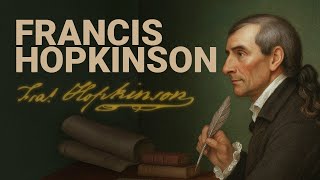
Francis Hopkinson, composer and satirist, describes how he used music and mockery as weapons against British tyranny during the Revolution. He served in Congress, on the Navy board, and as a federal judge, but believed his real power lay in songs and satire that made people laugh at their oppressors.
Chapters
Permit me a verse or a jest or a signature. I am Francis Hopkinson. Composer, poet, satirist, literal lawyer, metaphorical architect and occasional troublemaker. Born in Philadelphia, educated at the College of Philadelphia. First class, naturally, law came first, but I preferred music, wit and allegory. I played the harpsichord, painted a bit and sent up the British crown with pin and parody. In 1776, I resigned my royal posts and joined Congress for New Jersey. I voted for independence, signed the Declaration and served on the Navy board. But I also made people laugh at tyranny. We fought tyranny with muskets and satire, and I was well armed. In the new Republic, I served as judge of admiralty and I was later appointed by President Washington as a federal judge. Still, I am best remembered not for verdicts, but for verses. Some remember me for my days have been so wondrous Free, a fine melody Others for the Temple of Minerva, our first homegrown opera. If our revolution had a soundtrack, I tried to write it. Not all patriots charged Some composed, some rhymed. So if you would defend liberty don't forget to laugh and don't forget to sing.








