Honey Baked Ham's Rosa Ramirez | Winning Business: Resilient Stories of U.S. Small Business Owners
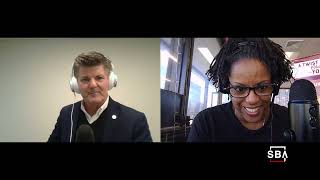
Rosa Ramirez, a retired military officer, opened the first Honey Baked Ham franchise in White Plains, New York. About 80% of her revenue comes from three holidays: Thanksgiving, Christmas, and Easter. She credits SCORE and Syracuse University's veteran business program with helping her navigate franchise operations and marketing.
Chapters
Hello and welcome, everyone. I'm Jack bianco of the U.S. small Business Administration. My guest is Rosa Ramirez of Honey Baked Ham of White Plains, New York. Welcome, Rosa. If I can, like we do with a lot of our entrepreneurs that go through our mentoring programs for the audience, can I ask you to do a little bit of your elevator pitch who you are, your business, and where you're located?
I'm Rosa. I am a daughter, a mother, and an entrepreneur to a lot of people. Two kids, 10 brothers and sisters, and a gazillion friends. Because I was in the military for 30 years and after retirement I decided to give my hand or give a try to entrepreneurship. And I opened a the first and only franchise in New York State, a Honey Bay ham.
Let me say, first and foremost, thank you for your service. Can you talk a little bit? And you just hinted at this. You were, you were in the service, but then thinking about life after or what your next big challenge might be. So where was your mindset? Was this something you had a family history in entrepreneurship you wanted to be yet another groundbreaking experience in your family? Walk me a little bit through that period of time on how you decided to jump into the exciting world of entrepreneurship.
So I've been the first of many things in my family. Parents are illiterate, so I was the first one to graduate or even have above a 6th grade education. 30 years in the military was a combination of enlisted and officer time. So I did get the opportunity to go to college. The military has a robust history of educating us at every echelon. And so when I was facing retirement right around the 25 year mark, I couldn't decide to retire because I didn't know what I wanted to do. I knew one thing. I knew that I did not want to go work for anybody else because I retired as an officer. And for me, starting at the bottom, having people that are younger than me or maybe less qualified than me, telling me what to do when I came from a world where I was pretty much autonomous on a lot of things that I did just didn't sit well. So I sat around for about a couple of years and then I encounter a friend of mine and we were in Afghanistan. Well, we started off discussing. The discussion started in Korea, South Korea. And all our lunchtime was spent discussing retirement and what we were going to do. And one of the things that popped up in one of those conversations was opening a coffee shop near a college institution so that we can sit, drink coffee and watch the students go through some of the things that we went through when we was in college. Something quick and simple. So then I deployed to Afghanistan and the thought was still in the back of my mind. So I started to do research on that thought when I stumbled upon Honey Baked Ham. Now what I like about honey baked ham is that it's pretty much a seasonable business. It's not something that um, it's not a business where I have to get up at 5 in the morning to be here to make the coffee. I don't have to be here till 9, 10 o' clock at night to service a customer. The meals come prepared, ready to eat and we stay open, you know, year round with lunch and catering. Another thing that I liked about the, the this particular franchise was the multiple streams of income and possibilities of making that while it's still a seasonable business. And outside of talking to them, I also talked to some of the advisors score. And that's one of the things that they emphasized greatly. You don't want a business that only relies on one stream of income. You need a business that relies on multiple streams of income because if one doesn't make it, the other one can make it. And that, that's where you're going to have survival until you build that business, you know, in your community. So that's how I stumbled upon honey bake time. And from the, from there it was like history. I called them. Well, I sent an email because I was down range in Afghanistan, in Kabul. So just imagine I sent an email, you know, a fact finding email. They were interesting. And while I was in R and R, well rest and relaxation is what we call it. Mid tour, instead of coming home and visiting my family, I went straight to the headquarters of Honey Baked Ham. I went to Walmart, bought an outfit, took a shower at a local gym, threw my clothing that I just finished traveling, you know, 20 hours with in the back of my rent a vehicle and went to my appointment to my fact finding appointment. Loved everything I said and they were gracious enough to wait until one, I came back from deployment and two, that I formally retired. So it was like a three year process from the day that I spoke to them and to the day that I actually signed a franchise agreement.
Let me ask, the franchisee journey is often unique to people. Everybody's exposed to a franchise or franchisees but they often don't sort of do the due diligence that you did. Pick up the phone, go to the website, look at the details, do a visit and other issues. Did you also happen to see with your Franchise relationship or others. Maybe military incentives, maybe on the finance side or reduced fees with some franchise organizations because these are not the cheapest options in the world. So, you know, incentives, especially for our military community is very important. Did that weigh heavily in your decision?
So Honey Bake Ham Corporation does have a lot of military incentives. Some. Most of our leaders are prior military or in the military. There was a full bird colonel in the National Guard. He walked me through it. He works for Honey Bay time. That's his full time job being in the National Guard. So I felt at home when it came to the military support that I got from them. And of course their incentives for military personnel, it's just bar none. You just, it's really good. They help you, they walk you through the, through the process and what they can give you and what they can't give you and the reasons why. I think it's one of the friendlier organizations that I saw out there that work with the military when it comes to helping you get started.
You mentioned earlier, this has surprised me. There's not a lot of these franchisees in your geography.
So in New York there's none. No franchises. I'm the only one. Unless one is in the works and I'm not aware of. But as of today, I am still the only franchisee in New York. In the state of New York, there's two corporate store. One of them used to be formerly heavenly ham that honey baked ham purchased in Levittown, Long Island. And then there's one in Albany, New York. But franchisee, I'm the only one.
Okay. And I asked that because sometimes if folks are exploring this, they'll wander into their local shopping plaza, walk around, look around or if the franchise franchisee, your local one will chat with you a little bit, they'll get a little feedback compared to what the corporate university or the corporate voice is sharing. So you leaned more heavily on the corporate voice and some exposure because you didn't.
Actually I didn't. I was. Remember, I was still in the military. I was exposed to honey baked ham 30 years ago at Fort Bragg, North Carolina. Throughout my military career, Honey baked ham has strategically had a store near a military installation. So I've never been without. So when I found out that I'm from New York and they didn't have a honey baked ham, I felt it my mission to bring honey baked ham to New York because it's like one of the best hams that anybody has ever tasted. It's so addictive. So then that said, when I did make the decision once again. I was in Afghanistan when I came and I did the fact finding. It just so happened that I was in Virginia, stationed in the Pentagon. So on my free time during weekends and stuff like that or in the evenings, I would stop by these stores and talk to the manager, you know, the manager, or found out who the owner is. And I asked my set of questions to make sure that it was going to be a good fit. I actually worked in a couple of stores for free, you know. No, no, just to learn and to see what an average day looks like. And it was. And then once I did sign and I was on board, they did send me to school. And it's a school, you know, a training store. I went down to Atlanta, the headquarters is in Atlanta, in Alpharetta actually. And we did training there. Then I did training with a, with a store in Maryland. And then they actually came here and trained with me even more before I opened. And for the last five years, you know, we have what's called a, a franchise business leader. And this person is somebody that you can call. I know my business leader gets tired of me because I call him at, you know, it could be 7:00 in the morning, as soon as I wake up, hey, I got this issue, I got that issue. Or late at night I send an email and he responded. So once again, that's what I was looking for in a franchise support. Because I've heard horror stories of not getting any kind of support. Once you're in, you're pretty much on your own. So that, that was like, you know, very important to me.
For our audience that are grappling with seasonality, I assume it's eyes wide open on the front end. If you really, your books are going to be heavily influenced by that, but by that. But what other tips for businesses that are really impacted by that flow throughout the year that isn't always linear.
So, yes. So honey baked ham, you do you make about 80% of your revenue during the three times of the year, Thanksgiving, Christmas and Easter. That's where almost 80% of your revenue comes. On the other all the smaller holidays you can or you will make money because you make money year round, but that's where the bulk of the money is in. And so for me, this, during this time, for example, my focus is on catering and lunch because that's what people are going to get. They're not going to get the big meals, they're not going to get, you know, that the big holiday ham with all the sides and Trimmings and that kind of stuff. They're going to get, you know, some of our ribs, they'll get some of our pulled pork. For any, a barbecue. The rest of the time I'm working on doctor's offices and colleges or things like that for our catering box lunches, office office meetings, bereavements. That's what keeps us going throughout the year. Your inventory, how you're going to run logistics, everything is impacted by these seasons. So when I say seasonal, that's what I mean. I'm not going to shop, you know, and, and put 20, $30,000 worth of inventory during this time frame when I know I'm not going to sell it and I have health requirements that say if something is expired, I got to throw it out. That's like throwing money out the door. But come September, October, November, that inventory, that those logistics dollars are going to go up. Marketing is going to go up. Because now I want my marketing dollars to be spent on print, television, you know, digital marketing, all that stuff. But during this time I can pull back and say, well, I'm just going to focus on the local, you know, local advertising. Here in New York, this is, I think it's, it's nationwide. But here in New York, I use next door quite often for my local, you know, four or five mile radius. If I have a quick sale going on, I'll advertise in the college, in the college books for their programming for the summertime, you know, so that's what I do. And what I'm advertising is not necessarily ham, but, or the big meals. I'm advertising smaller quantities, sandwiches. I'm advertising, you know, box lunches, I'm advertising slices. So when I talking about seasonality in this particular franchise, that's what we're, we're referring to because the season does drive the dollars that come in and come out.
So, so you did leverage, as you mentioned before, one of our very trusted partners, score, and one of our very trusted partners, the Syracuse University, hosted IVMF for you. Was it a scary proposition? Oh, no. They're going to look at all my plans and critique me or. You sound like you're a very confident person, not willing to shy away from challenges for our audience. Coming directly from your experience, what would you share?
So for me, like I said, it was a conversation turned into research that turned into action. My very first encounter with SCORE was in Virginia, Northern Virginia. And I went just to ask, where do I begin? I'm interested in this. I'm interested in this. I've Already spoke to them and they're telling me that I need, they asked me something as basic as where is your franchise agreement? You know, what does it say? They're asking me for a plan, business plan. Oh my God, what is that? And so I went to, you know, just by happenstance to ask, where do I go? What website? Where do I go? And then at the time, her name was Lisa. I'm never going to forget her. She told me, no, we can help you with all that. And from there, remember, I was still on active duty. So in the evenings, on the weekends, I would spend my time with SCORE or Score Advisor putting these products together. You know, okay, in my mind I'm thinking, I have a bank account. That's good enough. No, it's not. You know, you need to separate your business dollars from your personal dollars. I would have never known that till somebody told me in score, you know, oh God, you need to get into human resources law because unlike the military that has a S1 has a personnel department. I was logistics. I didn't know about pay and medical and disability and unemployment and all these different taxes that I needed to know and know how to set up to get. My score advisor told me about it, tell me where to get the resources and that kind of stuff. So all my initial learning, even though I am highly educated because the military has done so, I was zero educated in business practices because having an MBA does not mean that you know about business practices. And that's where I was at. Yes, I do have the mba, you know, and I'm, and I have a Master's in management, etc. But I didn't know business practices. And that's the biggest thing that I tell anybody. If you don't do anything, learn business practices, what is the day to day responsibility? If you don't get the answers, you're going to, you're going to make a lot of costly mistakes. Which leads me to Syracuse in the ivmf. One of the biggest thing, everybody is out here trying to make money, you know, so you got a marketing degree. You want marketing. Everybody that comes in through the, through the front door, I call a snake salesman because you never know. So I have all kinds of marketing people. Oh, they're promising me the world. And you should be more visible and you should be here and you should be doing this. And initially because you're desperate to grow your franchise or you grow your business or grow your brand, you're signing up for everything. And then at the end of the month, you're holding all these bills. So I started to hold back and hold back. So one guy, Syracuse University has a partnership with Iona College here. Iona College has a Gael Institute. The Gael Institute director calls me or the one of the young lady that works there calls me and tells me, you know, about all these services that Syracuse has. Once again, in the back of my mind I'm thinking snake oil salesman. No, I, I'm like, no, thank you, I'm not interested. But she was persistent. She calls me again and she, she explains the program to me and she tells me, is that a no cost? Was like, I'm not interested. Then the third time, once again calls again and I said, you know what? She says, it's free, so it's not costing me anything to go find out what this is about. So I made an appointment so she would stop calling me to go to Iona to go see her and this. And when I went, I found out about all the resources from Syracuse. And one of the things that they offered, you know, that was I was lacking or I wasn't good at was marketing and bookkeeping. And, and when they offered me all of this, I was like, oh, I'm taking it. And I'm telling you the I own IVMF program. Since then I've, I've done Bunker labs with them. I'm certified with the Bunker labs. I just finished doing one on entrepreneurship. I'm about to do another program with them. They've invited me up to Syracuse a couple of times. So I got the opportunity to talk to the Biden administration administrator or director of the sba. All these opportunities were open to me because of the Syracuse program.
Sure. Thank you so much for being so transparent. I'll just sort of big shout out to Mark because I think you met Mark Madrid at Syracuse University. Marks, our associate administrator that helps us support entrepreneurship across our network. Ivmf, we promised not to use acronyms, so we're going to tell them it's the Syracuse University Institute for Veterans and Military Families. Did I get that correct, Rosa?
Yes, sir.
They're part of our community Navigators and year round services that we do to help military communities and entrepreneurs. They have a broad network. It's not solely housed in upstate New York and Syracuse. They've got a robust network throughout the nation. We've got our boots to business, which I referenced earlier, so transitional military can get access to that early on or when you come back stateside or just settle back in so you can get a workshop, a prolonged series. We've got our awesome. You're our top spokesperson for all these programs. Our Veterans Business Opportunity Centers located quite often aligned with military hubs or communities in the United States. Again, they'll provide workshops, one on one counseling, expose you to some certifications that are military entrepreneurs are eligible for. We've got a lot online training, refresher courses. Rosa, we've covered a lot. I know you need to hustle back there. I'm going to scoot up there to get some honey baked ham. Kudos for all your entrepreneurial success there and being on our podcast. I'll let you close us out as we conclude this episode.
The only thing that I would advise anybody is professional development. I'm big on professional development. Again, I'm a study of the military and professional development is one of the biggest thing that we as soldiers always emphasize. And now as an entrepreneur I find out that that is also the case. Nothing is constant. It keeps moving, it keeps shifting. And so learning, especially from all the resources that are out there and free is better. So all the resources that are out there is the best thing that you can do for yourself and your business and success.
Thank you again, Rosa so much for so much sharing. Hope to see you soon and thanks again.
Sure. Thank you.
Thank you to my guest on today's episode, Rosa Ramirez of Honey Bay Camp of White Plains, New York. For more information on SBA resources, please visit SBA.gov for free mentoring, coaching or office locations in your local community. Thanks so much for tuning in.
More from Your







President Donald J. Trump and First Lady Melania Trump Visit Grieving Texas After Deadly Floods

💪 Thinking of starting a #biz? Go for it! — Kerry Boyle, Vermont #SmallBiz Person of the Year

President Trump Participates in a Bilateral Meeting with the Prime Minister of Canada, May 6, 2025

