How Social Media Can Help Your Business, presented by Hootsuite
Hootsuite and the SBA walk through why small businesses need social media and how to use it. Pick your platforms, balance organic and paid posts, schedule content, measure results, and build a plan your team can actually run.
Chapters
I would now like to turn the conference over to Natalie Gorill from the sba. Please, go ahead. Great. Hi, everyone. Thanks, Stephanie. My name is Natalie Goreal, and I'm the online media coordinator for the U.S. small Business Administration. And I'd like to welcome you to today's webinar. This webinar is made possible through a public private partnership with hootsuite. These partnerships allow the government and the private sector to come together in support of the small business community. It also allows us to hold free webinars like this one on a var of business topics. In just a moment, I will turn it over to Dawn Barron from hootsuite. Before I do that, I want to say a little bit about why SBA is so excited about this partnership. We know that as small business owners and entrepreneurs, you need more of two things. Time and money. Our mission at the SBA is to provide the nation's 28 million small businesses with the support they need in a world where time and money are both short. We do this through what we call the three Cs. First, SBA provides capital to small businesses in the form of guaranteed loans to start, expand, export, or recover after a disaster. Second, we help small businesses with government contracts, which is a $100 billion market. And finally, what brings us here today is that SBA provides counseling services, often at no cost. Many of you might be familiar with the SBA Resource Partner Network, including Small Business Development Centers, Core Mentors, Women's Business Centers, Veterans Business Centers, and our SBA field offices. I encourage you to visit SBA.gov to learn more about what services and events you can find in our Research Partner Network. In addition to the SBA Resource Partner Network, we work with private companies to bring in expertise in high priority areas like social media management. As you know, social media is becoming an increasingly important communication channel for small businesses. However, knowing where to start is perhaps the number one obstacle holding many small business owners back. That's why SBA has teamed up with hootsuite for today's webinar about how social media can help your small business succeed. And so, through this partnership with hootsuite, we will offer you some social media tips and best practices to help you succeed. So let's get started. I'd like to turn it over to dawn from hootsuite.
Thank you. Natali, can you hear me okay?
Yes.
Great. Now, I'm going to just share my deck real quick here. Sorry about this. I'm just going to get this up and running. Thank you so much. Natalie, for setting this up. And can everybody see my screen?
Yes.
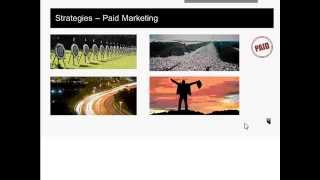
Okay, great. Thank you, Natalie. So, again, thank you so much, Natali, for inviting us to present with the SBA on social media. And we are really honored to be here and we are really honored that all of you have come to spend your time with us, to spend an hour of your very busy day and to take away from your normal daily operations to come and learn more about social media. As Natalia mentioned, my name is John Barron and I work on business development for small and medium sized businesses at hootsuite, looking at public private partnerships like the one we have with the SBA to really empower small businesses to be successful in social media. If you'd like to follow me or talk to me later after the webinar, you can reach me at donjbarron. That is my Twitter handle. Feel free to follow me and ask me any questions you have about this presentation or about social media or about hootsuite in general. So let's go ahead and get started. Today we're going to talk about a variety of topics and we're going to go quickly through a lot of different topics. But basically what I'd like everyone to keep in mind is that social media management is complex and tactically it can be very challenging and can take a lot of time, and that is well known. However, what I really want everyone to focus on is the business value of social media to a small business today. I don't want you worrying too much about how am I going to be able to execute this plan, how am I going to find the time to be successful with this strategy, given the fact that I'm running my business and spending 80 hours a week doing so? What I'd rather you have taken away from this is the fact that social media can help you grow your business. And whether you execute that plan or whether it's someone in your marketing team or whether it's a consultant or an agency, that there might be something in it for you. So we're going to talk about why social media is important. We're going to talk about the different networks out there, some strategy and tactics around marketing, mostly about marketing. We'll talk very briefly about sales and support. But this conversation we're having today is going to be primarily around marketing, and then we're going to get into some execution plans to help you so that you can walk away sort of understanding what it is that you need to do to get started. So what is social media? So there's a lot of different definitions for social media. There's a lot of different networks out there. I don't even know what this one in the lower right hand corner means. But there's a ton of different networks out there to get involved in. And social media networks are essentially places where people get together and share common experiences. Whether it's personal, professional, whatever it is, they are getting on there, they are engaging one another, they are engaging companies, and they are really combining to really provide a lot of feedback and a lot of engagement to one another. Now this can be overwhelming because to a small business, you see, there is all these different social networks. Oh my gosh, where do I start? And the truth of the matter is that you don't do all of them at once. You pick a couple that make sense. We are going to talk about which makes sense for you and you have to choose on your own, obviously, but you have to think about which ones make sense for you and engage on those networks. It can be a little bit confusing as a business owner because the experiences we have as consumers of social media don't feel like business experiences. When I am on social media as a person, I see this, here is a picture of me with a giant fish that I caught and I like to show this picture to everybody and people can like it or write a comment. And this is how we as consumers spend our time or as human beings spend our time on social media. We spend our time engaging one another, posting pictures, pictures of our grandkids, pictures of our friends at parties, weddings, et cetera. And it might not be obvious to us as small business owners how this translates into a business experience. Well, the truth of the matter is a business user sees a much different view of social media than a consumer. So here is what a typical business owner might see or a Facebook ads user might see. It's a very marketing heavy experience. It's not really about sharing at the small level. It's about how the content that I share with my followers, with people who like my page, how is that performing, how does that work as a marketer, what makes sense for me to publish. And there's a lot of strategies and there's a lot of tools and we really want to focus not so much on how to use this particular tool or that particular tool, or even like specifics about how to engage at each particular network, but just why, why you want to do this in the first place and then go into some of the tactics around that. So in terms of learning about the value of social media, again, there's A very low barrier to entry, which is a good and a bad thing. The good news is that everyone, it's easy to get a webpage or a Facebook page or a Twitter page about your brand. That's a very easy thing to do. You go online and you sign up, and there you go, you have a page. What you don't have is a strategy, and you don't really have necessarily a path forward that requires a little bit more work. What kind of content do you want to deliver to that page? How do you want to drive more audience to that page? How do you move people from looking at your page to moving to your webpage where they can actually purchase something or they can actually give you their email address to contribute to a newsletter? So it's easy to start, but it's not easy to necessarily do the work, to kind of keep it going, or at least it's not obvious and trivial. But that's also a good thing, because when you think about advertising on social media, think about it as just another channel of advertising. It's a great channel. And let's talk about why it's such a great channel to advertise or to be active on social media, whether you're paying for it or not paying for it. So I consider social media just another way to engage audiences wherever they are. In this case, they happen to be on this electronic medium. But let's consider the farthest version of that, which is a billboard. So consider the advertising value of a billboard. Here you go. You have to spend a lot of money to put your logo on a piece of advertising that millions of cars drive by. What do you know really about your audience? You know that they have a car, they know how to drive, and they're old enough to drive, and they know how to drive. That's basically all you know about your audience. You don't know their gender, you don't know their age, you don't know anything specific about them at all. It's a very blunt instrument, and it is an expensive, blunt instrument. And radio and TV ads and print all the same. Maybe you get a little more demographic information, but not a whole lot. Certainly not the pinpoint targeting. So with social, what you get is the ability to really highlight the people that matter to you. You know your customers, you've been in business for however long you've been in business, you know who buys from you or you know who you want to buy from you. So being able to target those people very specifically, demographic information, buying behavior, location, all of those things. Are ways that you can target people through paid advertising on Facebook, for example, and Twitter. And the beauty of it is that you have this channel and rather than the billboard, which has this sort of step function in terms of cost, it's extremely incremental. If you sign up through Facebook today, they'll give you $100, or Twitter today, they'll give you $100 in ads to get started. $100 isn't going to get you a lot in terms of a billboard. It's not going to get you a lot in terms of radio or TV or print. But it will get you somewhere in social media. And think about the type of experience you're providing to people. You're giving them the opportunity to see a piece of content that's relevant to them and it's completely actionable. So unlike the billboard, I never understood the billboard that has a phone number on it. Am I supposed to stop the car and start dialing? Clearly dialing and driving is not a good idea. So I never quite understood that. But in social media, it's completely actionable. People are in front of their computers, they're on their phones, all they have to do is press a button, click something, and all of a sudden they're in your world, in your web page, where they can actually do something and get more deeper understanding of your product. Completely actionable. And it's completely incremental as this slide shows. So let's just review really briefly. Again, just think of social media as another channel where people are hanging out. A channel which is affordable and allows for effective targeting of people. Actionable. You have the opportunity to give them something, to click on, something to engage with your content so they can go to your webpage. Built in Azure application. So we didn't talk about that application will come up during this conversation. It's essentially the ability for people who like something on your brand to actually retweet it or follow it or tell their friends about it. Back in the day, it was just word of mouth and it was constrained to the number of people you knew. But now on social media, it's constrained to how big your following is, which for certain people is a pretty big following. So the bigger the following, the bigger the megaphone. And we'll talk about followings as well. This is a casual medium, so again, a certain etiquette applies, just as it does in life. Don't say something to people that you wouldn't say to their faces. I would say as the golden rule. But it's casual and you have A voice, and you are a human being and you are selling as part of a business. But people want to buy from people they like. They want to buy from people they know. You can create that character as part of your social media presence and be casual. And finally, this is ubiquitous and we know that billions of people are all over social media. And just for some indication, here is a list of social media networks. Now, one of the main strategies I'm going to talk about during this talk that's going to come up over and over again is understanding who your customers are and where they are on social media. Because if you are talking to a consumer, you want to be on Facebook. And by the way, I'm just going to highlight some of the characteristics of these different networks. On the bottom here, you can see are actual numbers of the number of people in the network. And right in the middle is Facebook. If you sell to human beings, as opposed to businesses, not as opposed to pets. If you sell to people, not businesses, you want to be on Facebook. Because Facebook has the largest audience. They have great tools for small businesses to have incremental value to their advertising. It is where everybody spends their time and it's really easy to get on there and have a presence. So if you sell to people, not businesses, I would say start with Facebook. If you're selling to businesses, and many of you are, I would definitely look at LinkedIn. LinkedIn is a professional network where you should have a profile if you're a business, any business really. And if you're selling to businesses, you can go ahead and actually network with them and engage people that might help you either in a purchase or work in a LinkedIn group, in which case you can talk about your brand. A lot of social media is building your brand not through necessarily talking about it. It's just building a brand where you seem to have some sort of cache in the industry you're in. That's very important, especially in B2B. And there are other networks here as well. So Twitter is great, especially if you're in technology or if you're in services or if you're in entertainment, you. And if you were looking at thought leadership, Twitter is where thought leaders and industries go to share content. It's a very important network for that. If you want to build a huge following, that's a good place to go. The other networks, I would say, are kind of secondary, but also important. Instagram has gotten a lot of favor recently, especially if you are a brand. So hootsuite has a customer that's done a lot with Instagram. They're an apparel brand. They've run a lot of campaigns in Instagram where they've had people on top of mountains with their apparel. Just basically campaigns that build the brand. Things that are visual. That's really great for Instagram, especially for a younger demographic. Pinterest is a network that's very popular. People always highlight the fact that women are more likely to use Pinterest than males, usually 2 to 1. And that's a commonly cited fact. But really, anytime there's something visual, you can have a Pinterest experience of your brand. You can share pins and allow people to have a more visual experience of your brand. That's a good place to go too. But I think for simplicity, certainly for introductory work, start with sort of like the bread and butter of social networks. And that's social media. That's Facebook and Twitter and LinkedIn. And just for some more data behind one of the comments I made about B2C versus B2B, this is a survey done this year asking marketers where they are planning on spending their effort. And you can see that B2C companies are spending by a wide margin most of their resources on Facebook. And for B2B, there is still quite a big chunk of money going to Facebook and a lot of it is going to LinkedIn as well. This is effort in meaning time and money. So this is probably why Facebook stock has been doing really well. But the reality is that there's been a lot of good return on investment on a lot of Facebook advertising and they've gotten some mixed press, but it's been working pretty well. And the same is true for companies like LinkedIn and Twitter. But just to give you an idea of how you sort of think about this, so my sister is starting an elder care consulting firm. She's just getting this off the ground. She is a social worker currently at a hospital and she's thinking about doing an elder care. And we are going to start building a webpage. That is the first strategy always. And we will talk about that. We got the webpage off the ground. The next step is we are going to get her on Facebook. And with Facebook ads, she can target people in the right age group where their parents are going to be needing certain care, certain systems, certain services. And she can target them directly through that. And she can target the right people. And if they click and get on their webpage and are interested in that topic, they'll be able to reach out to her directly, either by phone or by email. Similarly, she's going to be working with doctors, healthcare providers, et cetera, on LinkedIn. I'm going to ask her to kind of stoke that as well because they're going to be driving business to her as well and offering her different patients that might need some help. So there's an example of it's a service, but there's a channel, a sell through channel through the healthcare providers. That's, that's an option. So we do the Facebook ads as well as the LinkedIn activity to be successful. Here are some more numbers. I won't go through these, but basically more information, more data telling us that buyers are using social media as part of their decision when they are buying stuff. Very useful to know. This is stuff that if you have a boss that needs convincing about social media spend, this type of information can be very helpful in getting that. All right, now we're getting into the meat of this. We're going to get into strategies, we're going to talk about marketing strategies and as one chunk, probably 85%, we're going to talk about marketing and then we're also going to talk about sales and support. We're going to split those two out. And again, a couple things before we get started. We're going to talk about a lot of stuff here. So do not freak out that you have to learn all this. You don't. I just want you to be aware, understand what is good, what makes sense, what I might want to pick up as a small business owner. And then after that you can make decisions about whether you want to do it yourself or do it through a partner or through an agency. But to try to get the ideas down, I think that's what I'm really trying to get everyone to walk away with. In terms of marketing, there are two kinds of marketing. There's paid and organic. So just to be clear, organic is all your followers there on Facebook and Twitter. When you put out content, they see that that's an organic activity. It doesn't mean it doesn't cost anything. Obviously you have resources required to make content. You've got to spend money to work on, have a marketing team. There are costs associated with it. But in paid, you are actually paying the social networks directly for audience that you don't have today. So if I know that I'm really good at this demographic, 18 to 34 men or whatever, I want to target that I will pay Facebook to get me in front of more of those people. That's a page ad strategy. Whereas organic is, I want to Continue to build my following, add more content, etc. Etc. So, first strategy, as I mentioned before, choose networks wisely. Again, when all else fails, start with Facebook, because that's where all the action is. And I don't mean to be overly simplistic about it, but it's a good place to start. But if you're an insurance broker, if you work with insurance agents, you might want to go to LinkedIn. If you're an insurance agent and you work with people, you want to go to Facebook, probably. So figure out where your customers live, who they are, where they spend time, and understand how you can market to them in an impactful way. And we will go through some strategies to figure out what's impactful in a moment or some tactics. Another strategy, create a following. Following equals amplification. The bigger you are following, the more people see your ad. So imagine that, what we sometimes would call earned media. Imagine that megaphone just got bigger and bigger and bigger. And maybe your following already bought something from you. Maybe they just like you as a brand. Maybe they are going to be more likely to retweet. You are going to have more people retweeting. It just increases your reach. Following is like the oxygen. Having a bigger following is like the oxygen of social media. Getting more people to follow your brand and to engage around your brand is critical. And this will just snowball factor and snowball factor and this will help you grow online and help you grow on social. So we'll talk about ways of creating a following, but it's an important thing to. When you think about what it is I want to do, I want to grow a following. That's an important business goal. This is a strategy and a tactic, but basically in terms of amplification of your success. So you have customers that love you, you've done great by them. You spend your time trying to delight them through amazing service, great products. Take the time to capture their feedback and put it somewhere and share that with the world. You deserve that because you put hard work into that. You might need to get their permission. You might want to throw them a gift or something. But it's not bribery. You've done good by them and you want to thank them for publicizing that. That's very common. Basically, you want to help to get that message out. So find your success stories and pump those out as much as you can. People will really appreciate seeing how other people like them have been benefited by your brand, how you've made their lives better. And finally, most importantly, maybe you might Hear me say this is the most important thing like six times. I have a tendency of doing that. But you want to drive traffic to your website. So I think this is what people don't really understand sometimes and it certainly took me a while to actually wrap my head around it. But basically social media is just another way to drive traffic to your website. Where real business is conducted. On your website, you can collect email addresses, you can build a newsletter, you can conduct email marketing campaigns are effective. You can bring people into sales. If you have an e commerce engine, you bring them into your e commerce experience. As of today, you cannot transact easily on Twitter or Facebook. Maybe down the road you can, but typically you will use an e commerce platform of your own where you are going to be selling your services. Send people there, make sure that you understand, bring people to your blog, get people on your website. Because on your website that is where things go from interesting social media behavior to leads, to prospects, to customers. You want to get that flow going. So consider every activity you are doing as intentionally trying to drive people to your website, try to get their email address, try to get them into your funnel as quickly as possible. Just a very important strategy to remember that if you just have people engaging your brand and talking about your brand online, that's fine, that's good, that's activity. This is how you convert that into business. All right, so those were four organic strategies that we talked about and now we are going to talk about a couple paid strategies. And when you talk about paid strategies, this isn't mutually exclusive. You do both of these. You do organic and paid. You try to grow your following, you try to put good content out there and you try to drive people to your webpage. The only difference with paid is you want to be a little bit more careful around what you are putting out there. You want to be a little more deliberate about how you are measuring and that sort of thing. Because now you are spending real dollars to get in front of other people. So first of all, be realistic about your spend. At first, you might not know how much you want to spend. You might want to try out a few ad campaigns, try to understand how much these leads are actually costing you. And there are tools out there to help you understand them. Figure out how much is this costing me? There's a term called cost of customer acquisition and I can't tell you what a good number is for that. Let's say if your cost of customer acquisition is $10 and you're selling something for $1, it's not a good return on investment. If you're selling something for $100, I'd say keep spending those $10. So it's really important to keep that in mind. You have to be realistic about what you can spend, how well your campaigns are performing, and go from there. The nice thing, again, about these tools is that it's very incremental and you can test and you can see what's been working and what isn't. And if you have a marketing team, they can parse through some of this. If you're working with an agency, they can parse through this as well. All right, picking your best content. Now, this is really important for paid, because now you're actually paying money to get in front of people. You better make the content you're using right, and you better make it something that's interesting for them to click on. So you'll know from your organic activity what's been working for you. You'll see that. This one got me a ton of followers. This one got a lot of engagement. This was able to drive a lot of traffic to my website. All very important. And when you are paying for it, it's even more important because when they click on it, they are going to be going to your website. You want them to actually see something on the other side there that's compelling and that actually gets them to give you an email address or somehow make that ad worth it, that you can convert them to actual customers, pick your best content that you find from organic and go long on that. That's an important strategy for paid advertising. And then finally, again, clear path to conversion. You're paying now for traffic to your website, not unlike you would do with AdWords or SEO. You're paying for people to drive to your website, make sure that once they're there, they can do something. You don't want them just being like, what's this? I don't know what this is. You want them to be like, oh, this is really cool. I want to learn more about this. Here's my email address. Oh, this is really cool. Or this is really funny. I want to read more about this stuff. This guy seems to be an interesting guy. I want to follow here. I'm going to follow him on Twitter or maybe I'll follow or sign up for his newsletter or, hey, these products are cool. I didn't know you could do that. And people don't generally go buy something right away, but it's definitely an option. You want to give them as many opportunities and clear opportunities to Convert as possible. Conversion optimization is a whole separate field. If you have bigger marketing teams, you have somebody that does that or you work with an agency that does that to make your website great. Just keep that in mind when you drive people off of social to your website. Those are some strategies. Let's go into some tactics. All right, first tactic creating an online presence. Easy to do on paper, not so easy to execute on, but still very important. First, start with your webpage. As we mentioned, that's where business happens. Most of you hopefully already have a web page. That's great. And then go get onto social media and make your brand lively and fun. Have it be a reflection of who you are. Certainly certain industries should be less fun. I can think of a couple that you probably don't want to joke around with. But most brands allow you to have a cultural presence and a voice and people just want to see that they can work and do business with you and they can like you, really. And that's important. And that's the beauty of social media. You're not bound by certain rules. You can do whatever you want and just talk to people like you want to talk to them. So here are some tips from that. Start with the webpage. Use your voice. Make sure you have a way for people to engage with you. So make sure that if you're clear about what it is you want to do. If you're trying to sell stuff there on this Twitter handle, find out more about our product here. If it's a support Twitter handle or a support Facebook page, say. If you have any questions, make it clear about what the goal is of your social media strategy so that you encourage the right behavior to your audience. Rich content so some of you may recognize this gentleman. He is a Korean pop sensation. So his video Gangnam Style was viewed over 1 billion times, which there are roughly 7 billion people on this earth. I think that is pretty good penetration. The cool thing about content marketing is there are a lot of cool things. First of all, you don't want to focus just on selling stuff. You want to focus on things that your buyers find interesting. That could be a joke, that could be a video, that could be anything that someone else posted that you thought might be interesting. Basically, you are trying to make your customers lives more fulfilled through your content. And I know that sounds kind of hokey, but we have all been there with brands that do that. We have seen content from other brands that isn't about selling their stuff, but we continue to follow them because we find their stuff interesting or Funny or whatever. So rich content is really important. It can be borrowed, it can be created and it doesn't need to be you selling stuff. It gets even better is if you can encourage customers to create content through contests or things like that. You can use hashtags to attach to trends. For example the Ice Bucket Talent, the ALS fundraising viral campaign. There is an example of creating content, attaching it to an existing trend and going from there. Marketing tactics, scheduling and streamlining. We have a tool at hootsuite. We have an ability to publish from one to many different networks. You want to get on some kind of tool. I'm not going to promote hootsuite only we happen to do this as well. But there are other tools that do this. Essentially you create a dashboard, you pick the networks you want to publish to. You pick them and then you can publish to many to one. Or you can also schedule or create content calendars, which is even better. Imagine going away on vacation and scheduling a calendar and then having that all published while you are gone. That is a super powerful thing for a small business owner because you guys don't have the time to sit there constantly adding content. Spend an hour a week and you can pump out a lot of different content through the scheduling tools don't have to be there when it posts. And you can also use things like shorten links to track how well your actual content does. So that's a more advanced topic. But I guess the thing to take away is that there are ways to shorten links and measure their results of that content and track them through how many people clicked or re clicked that sort of thing. Influencers. Great way to grow a following. Target your influencers. Find out who the influencers are in your industry. They are out there regardless of what industry you are in. It could just be small business. There are influencers out there that have tons of followers that people listen to, talk to them, follow them, engage them, see if they will retweet something that you put. Again, it has to be interesting because otherwise they won't because they are getting a lot of pressure to do that from everyone. But see if you can engage them in such a way to get their attention. That is a great way to begin growing your following and it is a great way to also learn about how someone else is doing that, how someone else is actually growing their social media footprint. Twitter lists are a good way to do that. You can create a list of a number of different Twitter users and follow them. By the way, the whole influencer thought leadership Thing is really strong on Twitter. That's almost specifically Twitter and to some extent LinkedIn as well. Actually, LinkedIn has a good thought leadership program as well. So between those two networks, not so much on Facebook, but yeah, and keep track of what they're doing and try to emulate them. And then this is another tactic to listen smartly. Basically, you can set up multiple streams to again, you don't have to go into each individual network to post. You don't have to go into each individual network to listen to. In this case, this is another screenshot of hootsuite. You can create different streams where you can stream just the things that are interesting to you. You can look at buying terms, you can look at your brand, you can look at competitors, all of that side by side. That's pretty powerful. This isn't a great example because I'm showing only Twitter, but you can imagine Twitter, Facebook, LinkedIn all side by side. It's a smart way to manage your social media and it's a great way to get and you can create lists to target specific users. And the other thing you can do to listen smartly is sign up for these mobile tools. Hootsuite has a mobile tool as well, an app, I should say, where you can basically sign up for notifications when people engage you. So you don't have to be sitting in front of your computer to know that someone has just tweeted at you or mentioned you. The native app, either the native network app or an app like hootsuite can let you know that's very important. All right, back to the Benjamins paid media tactic. Again, very specific about your target demographic. Now you're spending money, get in front of the right people, make sure you know who it is that's buying your stuff. And Twitter and Facebook both have really nice tools to help you pinpoint the right content or the right users and tell you which content is working, which one isn't. Reuse the content. That's worked great for your organic reach. Use some analytics tools to help you optimize performance. Again, these tools get really complicated really fast, but they're out there. And if you want to do funnel analysis, you can actually track using Google Analytics, using Facebook ads analytics, how well an ad does from the time it reaches a person to the time you click goes to your website converts whether that's an email address or buying something, that's really important. And retargeting technologies are also an advanced topic. But you know when you're looking for shoes online and then you don't buy your shoes and then you go to Facebook and then Zappos is on the right hand side. That's a retargeting strategy. And there are companies like Adroll and others out there that allow you to tie into those networks. And I'm not sure, I'm not super familiar with those networks in terms of pricing, but I know that they do have some pretty low entry cost structure for small businesses as well. All right, real quick about sales and support because I do want to get to the strategy or to the takeaways from this. Sales and support are really two sides of the same coin. What you're doing is you're listening to people, you're engaging them, you're answering their questions. It's different than what I described on the marketing side because on the marketing side we're trying to grow our following. We're putting out content, we're listening to people. We're not doing as much listening as we're doing as much talking. And that's the reality of it here. We're doing listening. This is all about hardcore listening, creating a brand page. And I think I mentioned earlier, tell them what you're here for. Are you here for support? Are you here for sales? And listen for the keywords that indicate buying decisions. This is more for Twitter where the keyword searches are relevant. But figure out, are people trying to buy? Are people trying to support? Are you trying to help them through their buying cycle? Are you trying to help them support them on a product they've already bought? What are they looking to do? Understand what they want and connect your systems of record is very important. If you're using a CRM system, tools like Hootsuite and others, we'll connect to a CRM system. If you're in sales, we'll connect to a ticketing system like Zendesk. If you're supporting people. So have those conversations recorded as part of your regular business flow. That's also to keep in mind. And finally commit. You don't want to start feeling like, hey, we're here to answer your questions and then you just go silent. You don't have to answer right away. Certain industries require certain response times. Certainly if you're an airline. And if you are an airline, you are probably not on this call. You have a very quick response time expected of you. But if you are like a corner store or whatever, if you sell siding somewhere, it might not be as important to have that hourly response time. I want to finish off on some execution plans that you can walk away with. Again, don't think that you are the ones at executing these necessarily because again, this is what I want to be very clear about is that there is a whole big world out there. There are people that spend their lives learning about social media, their young lives typically, and we don't expect that from you, but we do expect, if you could, to understand what it would take to get some of this stuff going. So there is some stuff you can do up front. So I broke that up into some research and startup and then some recurring options. So if you want to go light or if you want to go involved and this is really like a broad interpretation of all this, but still could be interesting for you guys to look at and think about research, spend a few hours researching. So map your customers. Again, like I said, understand who your customers are. You should understand that already. Take a look at the chart I gave you earlier about the network. Think about Facebook versus LinkedIn. Figure out where you want to spend your time and then find businesses like yours that are successful. Learn what they are doing. Find businesses that are not successful and figure out what we shouldn't be doing. Understand what's out there right now in the market. Determine the mix of marketing. Are you trying to grow your business through marketing? If so, you should take more of the marketing strategies. Are you trying to help people through their buying cycle because they are having trouble and that is an important thing to you. Position yourself that way. Are you trying to help people with support because you don't offer a support line and people are just going to Twitter by default? That happens quite a bit. Again, make it clear about what strategies you are interested in doing and determine the mix that you are ready to support. Talk to an expert. There are thousands of people out there. I know at hootsuite we have a hootsuite university where we've certified people. There are thousands of those people out there. There are thousands of agencies out there. There are people out there that will gladly help you and you could probably get a free hour of consultation. You could even take this deck with you and talk to them and be like, hey, this is kind of interesting. And this is interesting to me. How do I get these things done? At least this could help you with some of the vocabulary for some of that experience. But talk to an expert and see what they say. And finally, be realistic. I work at a social media company, platform business. Basically I would love for every single one of you to buy our product and be on it all day. That is not a realistic Goal because you are experts at running your business and that is what you should be focusing on. And someone should be focusing on marketing and somebody should be focusing on social. Be realistic about where it is that you want to grow and how much potential you think you have in each one of those sections and go from there. And I think an agency can help you also kind of think that through sometimes as well as the SBA and the local development centers and some of the score classes out there. There's a lot of resources both public and help you there. And then okay, moving on to the one time startup effort. So here's where you actually start getting your hands dirty. Done your research, you've done your homework, let's boot up, let's get going. Create a rich social profile on your networks. I want to do a Twitter profile. I want to do a LinkedIn profile. I want to do a Facebook profile. Spend the time, use your website. Art pictures on your website, get those on the profile page. Fill out your contact information. Make sure people can reach you can get to your web page. Make sure people know who you are or even some of your voice if that's possible and get that going. Create a landing page to collect email addresses. So this is on your webpage. Make sure you are prepared for your webpage to actually collect the traffic that you are going to drive to it through Social. Very important. If that traffic has nowhere to go and nothing to do once it gets there, it is not going to be effective as a marketing tactic. Sign up for a productivity tool, mobile as well. So again we sell one or we have a free and a pro version of our product. And for marketing professionals, there are other things out there as well. We definitely encourage you to sign up and try out our tool, but there are other tools out there to start getting going and start understanding how it is that you can interact with more than one network at a time. How you can be productive in social media. One thing I think I definitely recommend is just start following three influencers in your field on Twitter. Find three customers and find three competitors and just either follow them or track them. Understand what's happening out there so that next time you sit down in front of whether it's Twitter or one of these dashboards, you see all the information that's interesting to you at once and I think that's a great place to start. Finally, fill out your first content calendar. Spend an hour just going through and saying I'm going to fill out a week of content. Remember, it doesn't have to be Your own content. You could just be keeping track of blogs that you like, keep track of blogs that you like, keep track of videos, photos you like, put them in and start sending them out onto your calendar and have people engage with them. And all it is is an hour investment, especially if you're using the scheduling tools. It's very powerful. Okay, here's a little template for ongoing work for under five hours. And again, pick which one of these you want to do. Spend an hour, let's say an hour for each of these. Spend an hour researching what's new this week. Is there a new policy change in your industry? Do you sell automobile windshield? And there's a giant hailstorm that happens like things change and it changes from a micro to a macro level. Try to follow what's happening. Try to follow what's happening and adjust your social media posts accordingly. I think people will like that because social media is a fact based environment that's pretty much about the now. So you want to make sure that you're keeping up with what's going on out there. Fill out your content calendar for the week. Now we're talking about doing this every week. Spent an hour doing this and this time. And this is kind of tough. The three original pieces can be tough, but it can also be easy. I would recommend three original pieces and the rest you can fill with other people's content. The original piece can just be a tweet, it could be a blog post. You could take a photo of you on the job, you could take a photo of your team. You could encourage someone to make a video. Content is so easy to make. It's not that it's not good. Content isn't necessarily easy to make. But just getting little bits of content out there can be pretty easy and can be pretty fun. And that's what this should be about. So do that. Fill out the content calendar. Try to get three pieces in there that are yours. And again every week, engage three customers and three influencers. Try to get on the influencer's radar, see what they're trying to do, what they're doing in social and how they can help you grow as a business. On social, finally, engage with three customers. Again, figure out what your customers are saying about you online, if they're saying anything. This is good practice regardless. Listen to your customers. But on social, that brings another sort of dimension to it. And finally, now we're talking about spending 10 or 15 minutes a day scanning. So spend like five or 10 minutes in the morning, five or 10 minutes in the afternoon. And that's just scanning for people who have come to you in social and are looking for an answer to something. Make sure that you're giving them the time of day, make sure you're spending some time with them to answer their questions, et cetera. And this is the final slide. Ongoing work, five hours or more. Now at this point you're going to want to check whether you want to really commit to doing this in house or doing something through an agency. There are people. A really good friend of mine is marketing. He's a one man marketing consultant, shop tech savvy, loves social, doesn't do his own social, it's just the reality. He wants to focus on writing, he wants to focus on closing business. He has someone that he found Olance or Edesk to help him with his social and actually using the HootSuite tool to help them do that. But he is not an actual user of the tool. He is just a business owner. And that might be a good strategy. Figure out what is the right strategy. Content. As you spend more time, I would really like people to think more about content. Really like thinking more about ways they can make their customers, their social followers, interested. New ways of driving people to your website. Very important. Drive people to your website. Drive people to your website. Drive people to your website. Developing a paid advertising strategy. Not something that can be taken lightly. So this is why it's in the more ongoing work section. Figuring out your spend, analyzing your spend, understanding what's good and what's working. And we didn't talk a lot about contests, but contests are an excellent way to drive social engagement. You can really grow your followers. So that's one thing. There are contents that will help you grow your followers and their tools. And I think hootsuite actually has a couple tools that let you do that and other brands out there as well. You can basically create followers, more followers by offering them something to like your brand or to follow you on Twitter. Also for email addresses and we've all been part of this, win two free tickets to go see this band or something and people love that. And that's a really good strategy of getting more email addresses. Spend an hour engaging, split it up morning afternoons, an hour a day, 30 minutes in the morning, 30 minutes in the afternoon. And again, you can scale this at hootsuite, there's a dozen people that do this all day, but that's our business. It kind of depends on how much you want to commit. And finally measure success. Once you're starting to Spend this much time and money on your social media strategy, really, you're going to want to measure success. You're going to want to work with a marketing professional, probably unless you're very marketing savvy and you can use tools out there to help you understand are your tactics successful. And that will be a great. And that's really important as you start committing more and more resources to this. So we talked about a lot of stuff. Again, walk away, trying to understand hopefully the value of social media, not necessarily how to get my hands dirty and be an expert. And in case that wasn't enough information, here's kind of an insanely long reading list that I put together. But it's again, there won't be a test on this. Feel free to just read this as much as you can, as much as is interesting to you and get in there and try to see which one of these topics is interesting. Feel free to walk away with this. And we'll be distributing these slides through SlideShare. You'll be able to put them in these. And that is it for me. So I will open up the floor. I think we have some questions coming in. I believe we have one of my colleagues, Jordan Eng, is on the line and I think he's going to help me bring some questions in. Yeah. Hi guys. Thanks, Don. We have a few questions here. A really good one from Jim Martinez. What are some metrics I can use to measure the effectiveness of my social media campaign? Yeah, that's a great question. I mean, there's a couple different metrics and again, your metrics are going to be dependent on your goals. So are you trying to sell something with this link? If so, you can usually track that. How many people clicked on this link, how many people shared it? Share and like are always good metrics and those are really measurements of engagement and growth of following. But you can do metrics that will actually share all the way from the link through the activity on your webpage. So you can measure all the way down to customer acquisition or conversion. So those are all good metrics to measure. But yeah, number of likes on Facebook, that's a good one. Obviously the number of retweets on Twitter and the number of shares on LinkedIn, all of those are good metrics to measure. Okay, great. So another one here from Samuel, kind of as a follow up to that one, are there apps or websites that you can use to one list the keywords and I guess also tying into the metric that you just spoke of? Yeah, I mean, obviously tools like hootsuite let you search on different keywords that are happening in social media, showing streams. I'm not sure if that's the existing. If that's the question, but there are products out there, there are platforms out there that basically let you look at all the different social media activity that's happening as well as the stuff that you've posted. And then following that with analytics tools built into the product to help you understand. I mentioned the shortened links earlier. So things like Bit Ly and hootsuite has its own called Owley. Those links can include tracking codes. And when you put the tracking codes in, that's when you're sort of measuring the effectiveness of the social campaign. Those are good advanced topics, though. Those are things that we didn't really cover so much in this one. But maybe if we're lucky to get invited back, maybe we'll do another one that's a little bit more detailed on the metrics. Sounds like there's some interest in that. Sounds good. Okay, cool. We have another one here from Karen Thomas. When you say know who your customers are, what are some ways that you can actually determine that? Yeah, I mean, that's really kind of. It's very much up to you in your own business. It depends on how you sell. If you sell completely online, you probably have a sense of the type of user you have. Obviously, if you meet a lot of people in person, you'll know that they are who they are, basically what kind of age group they're in, their demographic. I mean, it's a question that's independent of social media. And it's just a very basic kind of like it's a thing we all have to figure out when we're starting our business or running our business is like, who is the kind of person that typically buys from me? And if you're lucky enough to get demographic information about your audience, then that can be very helpful. Or if you just know them personally, you know who has a tendency to buy your stuff. The thing is, if you have 10 customers and you know that they are all soccer players, or maybe you sell soccer supplies and you have a store somewhere and you can target couples with kids and families that live in a certain geography around you. You can be very specific like that. So now that's kind of a roundabout answer to the question. Okay, cool. So we have one here from Inda. Well, I mean, is a web page the same as a website? And I think she's talking more about landing pages and how can she go about creating One without technical expertise. Great question. Yeah. So when I say webpage I do mean website. And part of it, your website is contained as many webpages. So a website is just like www.hootsuite.com. that is the website. And on that website there are many landing pages which sort of. When we say landing pages, the reason we call that is because people come in from other places and land there. And when they land there, we want to make sure that they can do something whether give us an email address or convert. So there are website building tools out there like wix. Wix, they are a very popular one. Godaddy, we've probably all heard of that one. They sell domains and websites. Frankly, you can do it without technical expertise, but it always helps to. Which I'd say is the easiest one to use without technical expertise. I would check that out first. But it might be worth just talking to someone in your area to help you get off the ground. Just because your time is money and you might save a whole lot of time by spending a little bit of money with someone locally that can walk you through it. And there's no shame or anything like that in not knowing this stuff. I mean again, we don't expect you to be technologists. So yeah, there's definitely ways to get help if needed. Gotcha. And I guess related to that one. And we have time, I believe for a couple more questions. Here we have one. I believe this is from Maria. Is there still value for having a webpage in addition to Facebook? You've seen businesses use Facebook and Louisville website. What would be the value today of still going ahead with having both a website and a social media presence? Yeah, it's kind of a lot of the stuff that I discussed earlier. It's just that I personally would not build a business around access to Facebook webpage. And one of the reasons you can see evidence of this, because if the opposite were true, if we were really, if it were really a good idea to do it, you'd see a lot of businesses using that and you don't. You still see a lot of web pages. Facebook is constrictive. They have very specific rules about what you can show, how you can show it. They own a lot of data and you can't set up an email marketing campaign on Facebook which is for many people the number one marketing strategy they have. So for that alone I would say. And all that might change down the road. For now, I would say the flexibility of running your business the way you want to run it, using the tools you want to use and the strategies you want to use. The website is the open book for that. Facebook is a nice place to start and it's like a nice storefront in a nice mall, but really all the activity and all the action happens somewhere else. Got you. Okay, so we've hit the 12pm Mark here, PST. So I guess last question from Ivan. You know, how do you find thought leaders on Twitter and LinkedIn? How do you recognize these thought leaders? Yeah, I mean, it's a good question. I would just search around, start looking at keywords of people in your industry or keywords that are relevant to your industry. LinkedIn and Twitter both have good search algorithms that allow you to. That will bubble up the people that are most important to the top. That's important. One thing is just to look at the number of followers they have. They have a million followers. They're basically talking to a reasonable sized city. Find the number of followers that they have and find other. And the influencers will have other influencer friends. So you just have to think about. And you can text me, by the way, all of you feel free to just shoot me a note on my Twitter handle. But basically, depending on your industry, you just have to dig a little bit and hopefully find people that seem to know what they're talking about and have a lot of followers behind them. Gotcha. So that's all the time we have today. I believe they're done. Did you want to take one or two more questions or is that all for today? I mean, I'm open to it, but I'll ask the hosts if they're open to asking if having more questions.
Yeah, let's take one more.
Sure.
We started a little late, so we.
Have one from Kusan Klein. What are your opinions on cross posting? I guess suggested strategies. Would it be best to send one message across all the networks? Yeah, I mean, now you're talking our language. Because that's what we do at hootsuite. We have cross posting as a main strategy. The answer is maybe. I mean, there are certainly things that can be posted across the different networks, but some networks are more visual than other networks, for example. So the type of content you might want to put on Instagram will be different than the type of content you might want to put on Twitter or Facebook. Some of it just might be far too casual. Although I would say that even on LinkedIn you are starting to see a lot more casual activity. But again, I think it is dependent a little bit on the type of content in general. I think it's okay for starters, but you might want to if something feels kind of inappropriate. The other thing is Facebook can be pretty casual, so you might want to figure out, make sure that if you're aiming towards Facebook, you don't over casualize the content and put it in. But it's worth giving it a shot and trying it out.
Hey guys, it's Natalie. I'm going to jump in, Dawn. We keep getting a question about Instagram. So one of the questions is, does hootsuite post to Instagram? And then someone else had a question, Michael, about how to link Instagram to other social media outlets.
At hootsuite, we do support Instagram through an app. So in other words, it's not one of our native networks. So you can actually look through your Instagram statistics. But basically Instagram itself limits who can post to it. And right now it's only the Instagram app itself through your mobile device for the most part. So we don't, we can't post from hootsuite to Instagram, but you can track Instagram behavior. So that's the first question. And yeah, to the second question, basically Instagram is sort of limited to where it can post to. For example, Twitter doesn't show Instagram links. It will show an Instagram link. It won't show like a photo. So I don't know. Can you repeat that second part, Natalia? I just want to make sure I'm handling it correctly.
Like how they can incorporate Instagram to other social media outlets. Like for example, with Facebook, when you post, you can also post to Instagram. So I think that's the nature of this type of question.
Yeah, so the advantage there is that Facebook actually owns Instagram, so they have a very tight technical connection there, so that they allow you to cross post there pretty easily. On Twitter, you can include a link to an Instagram post, but a lot of those things are limited by sort of what the commercial goals are of each individual network and how they play nicely or not so nicely with others. Twitter and Instagram. Instagram and Facebook. Excuse me. Those two are going to be always going to be good together because they're part of the same company.
Great. Well, I think that concludes our webinar. We're at 12:05 here Pacific Time. So thank you so much for joining our webinar. Dawn, big thanks, you and Jordan for the presentation and Q and A. Again, just a reminder that this webinar has been recorded and we will email you a link to the recording as well as a link to the actual PowerPoint presentation. So thank you again for joining. Dawn, do you have anything else to add before we end?
No, I'd just like to thank you, Natalia, and the SBA for having us, and to all of you for making time today. And we welcome any questions after this. If you want to reach out to me on Twitter, I'd be more than happy to chat.
And what's your handle? Dawn?
Yeah, my handle is onjbaron and you should have it was on the presentation and you'll see it when we share the deck and the recording. Soron Great.
Thank you so much. And thanks again everyone for joining our webinar today.
More from Your







President Donald J. Trump and First Lady Melania Trump Visit Grieving Texas After Deadly Floods

💪 Thinking of starting a #biz? Go for it! — Kerry Boyle, Vermont #SmallBiz Person of the Year

President Trump Participates in a Bilateral Meeting with the Prime Minister of Canada, May 6, 2025

