How to Take Your Women Owned Small Business Global
Webinar presented (Mar 30, 2015) for women business owners on exporting. Erin Andrew opens with statistics showing the growth advantage of exporters and stark revenue differences for women-owned firms that export (average revenues $14.2M vs $1.1M for women-owned firms with employees). Toni Corsini (SBA Senior Trade Finance Specialist) outlines the National Export Initiative background and details SBA export finance products (Export Express, Export Working Capital Program, International Trade Loan), program uses, eligibility (typical 12-month in-business requirement), guarantee rates, and complementary federal resources (US Export Assistance Centers, EX-IM Bank, Dept. of Commerce Commercial Service, STEP grants). The session ends with audience Q&A about eligibility, grants, and services.
Questions this video answers
Approximately 28 million businesses.
98% of U.S. exporters are small businesses; only 1% of U.S. businesses export.
7.8 million women-owned businesses; 88% have no employees.
Women-owned businesses with employees: average revenue $1.1 million; women-owned exporters with employees: average revenue $14.2 million.
Created by executive order in 2010 (under President Obama).
Chapters
Thank you so much and welcome, everyone. My name is Erin Andrew and I'm the Assistant Administrator for the Office of Women's Business Ownership here at sva. And we are celebrating Women's History Month this month in March and are really excited to provide the opportunity to talk about women in exporting and the importance of exporting. I wanted to just start with a couple of statistics before I hand it over to our speaker. We all know that America's 28 million businesses are the backbone of the US economy and the primary engines of growth and innovation. They're the primary source for jobs for American workers and have accounted for nearly two thirds of net new private sector jobs in recent decades. And we know that small businesses that export to foreign markets grow faster, create more jobs and pay higher wages than small businesses that serve purely just domestic. So it's an important thing for small businesses to look at. And while 98% of U.S. exporters are small businesses, only 1% of U.S. businesses export. Which is why we want to talk to you today about the importance of exporting. And I want to leave you with one final stat because I think it's really important for women specifically to think about exporting as an option. We know that there are 7.8 million women owned businesses in this country and 88% of them do not have employees. So 12% that do have employees have the opportunity to grow. And of those 12%, their average revenues are 1.1 million. So women owned businesses that have employees, average revenues are 1.1 million. Those women owned businesses though, that export and have employees, their average revenues are 14.2 million. That's 14.2 million. So I leave you with that because I think it's important for women to really think about exporting as an option. No matter what the product is, it is something to look at as an option to understand the markets and understand the opportunity that that exporting can have not only for your business, but for the US Economy. So with that, we're very lucky to have Toni Corsini with us today. She is a senior Trade Finance Specialist at New York, New Jersey Regional Manager representing the SBA Office of International Trade at the US Export Assistance center in downtown New York City. And Tony's going to walk through what you need to do and what you need to know before you export as a business. But before Tony was in the role she's in today, she was vice President and manager of Trade services, marketing and Communication for North America at a large global financial institution. She is well known in the business and Banking communities, having spent many years in trade finance as a VP for commercial banks in both New York and New Jersey, and as an export manager in the manufacturing sector. She has conducted international trade finance classes and courses for many years for high profile corporations and educational institutions in New York and New Jersey. So she has a lot of expertise in this field and we're very lucky to have her today to present our on how to get more women to export and what you need to know. So with that, Tony, let me hand it to you.
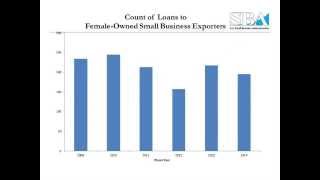
Thank you so much, Erin. And I'm really pleased to be here this afternoon and to be able to impart some information which I hope your audience will find valuable. So all of you should see the PowerPoint deck and we're going to go through not just the SBA programs, but some additional information. It's going to be a little bit of an overload on some information. So certainly if you have questions, don't be shy, please present them at the end of the vocal presentation. Next slide please. Okay, while we're waiting for the slide to come up, Hopefully what we'll be seeing will be the title slide. There we go, the title slide for the National Export Initiative. Some of you may or may not have heard about the National Export Initiative. I'm just going to give you a little bit of information to kind of define it for you so that you know basically what it is and when it started. Next slide please. So again, while we're waiting for the slide to appear, the National Export Initiative actually was created by executive order in 2010 by President Obama when he came into office with the emphasis on doubling exports for the next five years. And you can see the statistics on the slide that basically exports have been going up significantly. We have the data from 2013 which is highlighted here indicating a 79.5% increase. And the bottom line is basically increase exports to hopefully sustain and create new jobs in the US Economy and also get more small businesses to engage in exports. Next slide please. Now that we're into what we would call the second phase of the National Export Initiative or nei next. As it is recognized, and you'll see this as soon as the PowerPoint slide is up. It's basically the second tier, second level of the same initiative, not diminished, but just changed. So that going forward we continue the emphasis on getting small businesses of all types in every industry sector to understand that export activity is basically a way to sustain their business and to grow into other markets. And along with the jobs focus and the small business sustainability, there is Also the coordination between US Federal agencies that have either as a focus or, or as an element export in their activity towards the economy. So there is a cooperative effort. You'll see in this slide that the sba, Export Import bank and other government agencies are mentioned. A little bit of this will become clear as we go forward and talk about the roles that some of these agencies play in the export of Goods from the U.S. next slide, please. Just a few statistics and I promise you we won't spend too much time on them, but I think they're a little revealing. Next slide please. So the graph you're going to see coming up will give you a visual of the value of loans to female owned small business exporters going from 2009 to 2014. And this is of course in the millions of dollars. So you can see there's definitely a good spike going up in 2014, 2010, 2011. Very close. A little bit of a blip for 2012, but then 2013 and 2014, really some nice advanced numbers showing there. Next slide, please. The next graph should show you again female owned small businesses, exporters. This would be the units, the counts of loans. So the graph shows a little bit of a downslide in 2014, but again balanced against the slide we just saw previously. Perhaps the number of loans might be a little less, but the amount of the loans would be higher. Next slide please. I promise you're going to find this one interesting. Of course there's comparison. And what are we comparing? We're comparing the female owned businesses, exporters to the male owned. I think it's fairly obvious we have a little bit of work to do here. Blue is for the girls and red is for the guys. So just another indication that we really need, we as women, and certainly women owners, business owners, need to really look at our business model and look for other alternative ways to grow that business. And certainly foreign markets and exports are a good vehicle for that. Next slide please. Just following the comparison. This is the value in millions of dollars. And again, it's striking when you see the comparison of the female owned versus the male owned. But not to discourage anyone, just to give us a bar that we need to get to. Next slide, please. One of the questions that comes up frequently is what the definition of small or small business is. And the SBA sets a standard for that. The other federal agencies use the SBA standards to define whether or not the companies that they're dealing with can be defined as. So the next slide will give those definitions and we'll just go over them briefly. Next slide, please. So, for sba, the definition of a small business relative to a manufacturing enterprise is usually less than 500 employees, although it can go higher. As you can see by the notes here, it can be as high as 1,500. The NACIS code is really the code and the schedule that can help define that, and that's readily available either through the SBA website or through the Internet. Additionally, wholesalers, including export trading companies, usually have less than 100 employees to be classified as a, quote, small business. But again, the same coding is used, and then service companies are eligible based on their annual sales. And you see here, it's $7 million to $35.5 million. The alternate size standard is an alternate size standard that came into effect in recent times. I believe it was about a year or two ago, under the SBA umbrella. And here the size standard is really based on net income for the enterprise for the past two years and the net worth, which is less than 15 million. It can be a little confusing, but quite frankly, once you categorize the company appropriately, then it's. And by that I mean under the NACIS code, then certainly whether or not the company is defined as small given the SBA standards is relatively clear. And just to repeat, the other agencies that deal with export borders certainly use the SBA standards to define small. Next slide, please. So we're going to talk about international trade, finance, and obviously there's a lot of information that you can look to or you can resource for yourself. The purpose of the presentation today is to kind of give you some somewhat of a guideline as to some of the elements of all of this, and certainly to open up some vistas so that perhaps you'll think in terms of your own business and go forward. Next slide, please. So if I'm a small business and I'm thinking of exporting, what am I thinking? Well, most likely I'm thinking, how am I going to get paid? What about the payment risk? How am I going to deal with that? And what about working capital? How do I finance these transactions? Where is the funding going to come to help me to grow this business? If I have orders from a foreign market? If I'm looking to get into exporting my expansion, how is this all going to work for my expansion? So there are tools for your toolbox for you to be able to do this, and hopefully we'll be able to present some of those for you. Next slide, please. Now, there are certain recognized international methods of payment. Some of you may have heard of some of these, obviously, cash in advance is relatively clear. You're an exporter and you get an order from someone from a foreign country, a foreign order, usually cash in advance is the optimum or at least the first way to handle this. You can do some business with cash in advance. However, if it becomes repetitive business and the orders grow in size, most of the buyers will not be able or will be turned off by a cash in advance terms. So there are these other tools, documentary or commercial letters of credit. I read an article a few years ago where they referred to letters of credit as one more item in an international transaction that causes all parties involved to become irrational and desperate people. I don't believe that that's so. It always brings a smile to my face. I know quite a bit about letters of credit and they can be an issue if there's a misunderstanding, but they are that's used around the world and continue to be the tool. So basically a letter of credit is really where the issuing bank takes on the role of assuring the seller, the exporter, that they have done a credit check and a credit evaluation on the foreign buyer and that the buyer is in fact good for the money, if you will, because the letter of credit is being issued and then on the exporter side, or the beneficiary side, one and the same exporter beneficiary on the exporter side, the exporter needs to follow the letter of credit, letter for letter, so that when the shipment is actually made and the appropriate documentation is presented via the banks, that those documents will in fact be honored for payment. We could do an entire webinar on letters of credit, but that's not what we're here for. So from an exporter's perspective, understand that it is a method of payment. It is somewhat of a guarantee of payment if the exporter follows all the terms and conditions. It does involve the banks, both the bank for the buyer and the bank for the seller. And there is a certain degree of understanding that an exporter should have. If they're not clear on it, they should go to their lending institution and try to get the information or reach out to those resources, whether they be government resources or counselors, to get a little bit of background before they proceed. If they're uncertain. The documentary collections which are mentioned on this slide are another vehicle for payment. Unlike the letters of credit, the documentary collections do not provide the border with the guarantee that the buyer has been preapproved before the shipment is made. So there's a certain degree of relationship that needs to be in place and a certain degree of sale and payment history on the part of the exporter. If the exporter is going to be comfortable with using documentary collections as a vehicle for payment for the export sale, again, the banks are involved. And the reason why. There's two points listed on here, documents against payment and documents against acceptance. That refers to the terms of sale. The documents against payment would mean that the payment is due to the exporter on the immediate presentation of documents or the arrival of those documents at the bank representing the buyer. Documents against acceptance means that the exporter has in fact been willing to provide the buyer with some time. So it would be like issuing an invoice. Net 30, net 60, net 90. The documents are released to the buyer. The buyer has the 30, 60, 90 days, whatever the term is, to make the payment. The banks continue to be involved until the payment is made. But again, there is no structure or there is no force to force the foreign buyer to make the payment at the time that it's due. So if the buyer has a shortfall in cash flow and can't make the payment on the time at the maturity date, then the only thing that the bank can do is continue to request the payment and then keep the bank of the seller and by extension the seller, keep them aware that the attempt is being made, but that the item remains unpaid. So just highlighting again that the documentary collections require a relationship and a history of sale and payment in order to be used effectively. And then of course, the last bullet point is open account terms, which are fairly obvious. They're marked as being insured. We'll talk a little bit about credit insurance in some later slides. But open account, similar to cash in advance is self explanatory. Presumably there's been enough history between the buyer and the seller where the exporter is confident enough to just honor the purchase order when it comes in, send the merchandise on its way, and then issue the invoice directly to the buyer and expect the buyer to pay. Next slide, please. So, for SBA specifically, we have export programs that offer guarantees to the lenders and the SBA Express programs, three of which exist and are highlighted here in this slide, mechanically work the same as the domestic SBA programs in that they have to be delivered to the borrower, to the applicant via an approved SBA lender, the guarantee is provided to that lender from the government to mitigate the credit risk that the lender might be taking on. So specific to exports, as you can see by this slide, we're talking about Working capital or fixed asset based financing. We're talking about financing exports for the growth of the business or development activities, financing the export orders and transactions as a transactional arrangement, and then of course, long term financing, depending on what the expansion is of the company, presumably for exports. The three programs we're going to be discussing are the Export Express, the Export Working Capital and the International Trade Loan. Next slide, please. Okay. Export Express. Now this is. This loan goes. This can be either a loan or a line, just to qualify. By line, I mean a revolving line of credit or a loan for a specific amount. The maximum amount under this program is 500,000. The first 350,000 provide a lender with a 90% guarantee. If the Export Express is used for the full amount up to 500,000, then the lender receives a 75% government guarantee. The domestic SBA Express is kind of the basis for the elements of Export Express as far as guidelines. However, the domestic SBA Express program only provides a lender with a 50% guarantee. The Express element or title in this program or in the domestic SBA Express program really defines that the lender can use their own forms. There's an expedited process between SBA and the lender for approvals. That's where the quote express comes in. This can be used for working capital, as I said, it can be a line of credit, revolving line of credit. The term can go as high as seven years, again following the SBA Express guidelines. And then for fixed assets, it can go up to 25 years. One of the key criteria for eligibility is that the company be in business. The company that intends to, to do the exporting, the enterprise be in business at least 12 months. You're going to find that that's a criteria for the next two programs as well. Next slide, please. With Export Express, the use of proceeds is quite extensive. We'll highlight just a few in the next slide and discuss them briefly. With respect to the Export Express, the proceeds can be used for export development. As a matter of fact, this is the program that usually when we are discussing the SBA export financing vehicles and we're talking in terms of some other agencies that offer export services similar to the the U.S. department of Commerce Commercial Service, which we'll talk about briefly in another slide. But just to add emphasis to the slide that you're looking at now, foreign trade shows or translation services, those are usually things that the commercial service can certainly assist the company with, or if the company is in a particular industry sector and they have a trade show that they want to participate in, they can certainly approach the approved lender, Foreign Export Express and the use of proceeds can be used for that both, you know, for attending, for traveling, things of that nature. Additionally, if the exports are going to be handled with respect to confirmed purchase orders or foreign receivables, that certainly is a key use of proceeds for this program. And standby letters of credit. Credit, again, standby letters of credit differing from commercial letters of credit in that many times a company in the United States that is exporting to a foreign buyer, the company may be asked for a standby letter of credit by the buyer to either support an advance deposit or perhaps the exporter has to bid in order to win a contract. So these are some of the reasons that a standby letter of credit might be issued. So that in this case with standbys, the exporter would have to apply through the bank for the standby letter of credit to be issued so that the lender, the bank can use the Export Express as the support to use for the credit balance to issue the standby letter of credit. And then again, Export Express can be used to purchase fixed assets, equipment or real estate in order to advance the export activities. Next slide, please. Our next slide should show us the next program that SBA offers through its lenders, which is the Export Working Capital Program. Now this program can go as high as 5 million. And usually this program, most often the lenders structure this as a revolving line of credit for an initial 12 month period and then at the end of that 12 month period, it's usually reanalyzed and usually renewed. So you see here by the slide, pre and post shipment financing is indicated. So this program can be used as pre shipment when the exporter is in a business where basically they receive confirmed purchase orders and need working capital to either prepare or to buy the material, the source material to create a product or to increase staffing in order to deal with the increased order, the export order. So where the working capital is needed, quote up front, that would be pre shipment, post shipment. This program can be used as an asset based shipment where the shipment has occurred and now there are foreign receivables and there is working capital given to the exporter by way of value being given to the foreign receivables as a borrowing base or an advance rate credit structure. This program can also be for just a one off, one single transaction. As far as the guarantee, the guarantee here to the lender is 90%. And just a quick example, if you approach the lender, let's just say for $100,000 borrowing and the lender used the export working capital program, their exposure on $100,000 would only be $10,000. That's the 90% advantage for this type of program and for the government guarantee to the lender. And of course, similar to the Export Express, this program as well can be used for the standby letters of credit as we defined in our previous slide. Next slide, please. We're just going to have a little bit more detail on the export Working Capital program and we're really just going to be looking at the possibility of what the advance rates might be. The advance rates obviously being those rates that would allow for working capital to the borrower from the lender via the program. So 75% against inventory, that would be export inventory or work in process, and up to 90% advance rate on insured foreign receivables. Just as a footnote, US Banks normally in traditional lines of credit, do not include foreign receivables in a borrowing base. So what that means in plain English is that if Your business is 80% foreign sales and 20% domestic sales, and you approach a lender and the lender is only willing to give you a line of credit without any additional support for your business, they're only going to be giving value to the 20% of your business, which is domestic. So you would be not getting any Support for the 80% of your business. With a program like the SBA Export Working Capital, the lender can in fact give value to those foreign receivables, put them into a borrowing base arrangement with you, and that value equals working capital that you now have to keep your business going or to expand your business. You'll see a point here where we indicate that there's no U.S. content requirements and no prohibition on military sales. The reason why we mention this is that there are other agencies that interface with exposure borders and provide services and provide programs. But there is a requirement in dealing with those agencies, and we'll have a couple slides further on that will identify those agencies. But those other agencies require that the product that's being exported be at least or have at least 51% U.S. content. And there are those agencies that are not permitted to support exporters who might be shipping to either military type product or shipping to other governmental military entities like a Defense Department or things of that nature. With the SBA programs, neither one of those two conditions exist, so we don't have those requirements or those challenges. Our program programs are for small businesses, as we said, defined as a small business Maximum, as we said earlier, $5 million on this. And as far as fees, now I'm always asked what on a line of credit, even lines of credit under these programs, what would be the interest percentage that the bank would charge that's negotiated between the bank and the borrower? As far as fees due to SBA by the borrower, it's a quarter of a percent on the guaranteed amount for those loans or lines of credit that go on for 12 months or less. So if the line of credit goes on for 12 months, the borrower, the exporter, pays a quarter of a percent on the guaranteed amount for those 12 months. And then if it's renewed again for another 12 months, there's another quarter of a percent. The term can go to three years. But then if it goes past that 12 month period, the percentage due to SBA does escalate along the lines of the 7A program. Next slide, please. Our next slide should give us some information on our next program, our third program, which is the International Trade Loan Program. And unlike the previous two programs, we discussed the. Excuse, excuse me, pardon me, I neglected to put this in my own slides. Indirect exports. Let me just explain. Indirect exports, I think, is really a great feature. You can see by the description in the slides, it's really talking about a domestic sale. I find it's always easier to give an example. So the example would be, and I'm in New York City, so I'm going to use New York as an example example. If I'm an exporter in New York and I'm selling to someone in California, and that entity in California is taking the product that they're buying from me and they're incorporating it into their shipment, and they are the shipper of record. They're exporting from the United States out to a foreign market, let's say to Australia or New Zealand, with my condition here in New York as the. To my California customer, even though I'm not the shipper of record, I would still be eligible as an exporter, if you will, under the SBA programs. So indirect exports means that the person who is selling to the domestic entity is not necessarily the exporter of records shipping out of the country, but that ultimately the shipment does get out of the country and the shipment is done by that domestic customer. So the only thing that would be required would be that the US or in my example, the New York exporter would have to identify who they're selling to in California, and then that California company would certify that they are, in fact buying from New York and that they are in fact the exporter of record shipping to Australia or so again, indirect exports. From a lender's perspective, this is really a positive because basically the sale is a domestic sale. So the fear of a foreign receivable is not structured within the request and the needs of the borrower. Next slide, please. I think our next slide should bring us to our International Trade Loan, which it does. And what I started to say previously was that the other two programs, the Export Express and the Export Working Capital, can both be either revolving lines of credit or loans. With the International Trade Loan, it is a term loan, meaning that if it is established, the borrower receives the full principal at once and then begins paying against interest and principal. And usually the International Term loan trade loan is used for fixed assets. Again, an example, if you're in a company and you're thinking of either buying more or another piece of equipment to be able to get into exporting or increase your exporting, you would use an International Trade loan as the tool in order to purchase that machine because ultimately that would create the situation where you could be developing or enhancing your export activities. It goes up to $5 million, as we can see by our slide here. And again offers the lender a 90% guarantee. Next slide, please. We're still going to be discussing the International Trade Loan and just a couple points additional to this. As I said, it's usually used to acquire or construct or renovate. You can see the points listed on here. This is the use of proceeds. The second point with respect to adverse import competition. You know, you may have a company that perhaps you can't keep your price point and your domestic sales in line because there are foreign imports that are undercutting your price point. But that doesn't mean that your product would not sell well overseas. And there you could could expand and you could develop those markets. So certainly this term loan, the International Trade Loan, the proceeds of which could be used to assist you to do that. You can see by the term indicated here, 10 years would be maximum for working capital, 25 years if it's used for real estate. And the point about onshoring is the opposite of outsourcing. We all know that a lot of manufacturing manufacturing jobs have moved offshore over the past number of years. This is the kind of program that would help a company in the United States bring manufacturing Back to the U.S. next slide, please. So the next slide should give you a grid or a matrix. Just a quick reference. I think it's an excellent slide. Even If I do say so myself. That has our three programs, the SBA programs indicated and breaks down in some bullet points in this matrix, kind of the distinct elements of each one of the programs. And to the bottom you'll see there's a notation with fiscal 2014 and fiscal 2015. The SBA does not decided to eliminate all fees fees to the borrower and fees to the lender for any loans of 150,000 or less. And there are other incentives too that are not represented in this particular slide. But I would recommend that you go to the SBA website which is www.sba.gov. we have initiatives for veteran owned businesses and businesses are owned by spouses of veterans, in addition to our initiatives for women owned businesses as well. Next slide please. So the US Export Assistance Centers sometimes are a little confusing to some people. They are across the United States and they are meant to be just that. They're meant to be centers where one or more federal agency is represented and that agency is either specifically for export information counseling and or financing or they touch on exports, they're part of a larger agency and their unit touches on exports. So usually the Export Assistance Centers combine one, two or three of the agencies represented. Sba, Department of Commerce or EX IM Export Import Bank. My office in New York City, I'm in a US Export Assistance center or the acronym usiac and there are three agencies. All three mentioned in this slide are represented in my office, which is a little rare because many times it might be just one agency, it could be two. But to have all three is really quite comprehensive. So you can see by the slide, as far as the SBA representation, there's 20 locations. So there are 20 individuals such as myself across the country that do what I do. And it's indicated here we do underwrite the export Working Capital Program loans. We deal directly with the lenders. And I will tell you that out of the 20 locations, I am only one of three women that do what we do. So hopefully we will get some more along the way. But it's always a challenge. So the U.S. export Assistance Centers are here to counsel these small businesses, to help them. We work in conjunction with each other. We're sister agencies, co located and certainly are working towards the same National Export Initiative goals that we talked about earlier. Next slide please. The next slide is just again a little bit of definition. There are those individuals in the SBA District offices which have a designation of District International Trade Officers or Dittos. And they are assigned a kind of an export counseling function because Individuals, my peers, people in my team, many of them have multiple states to cover. I only have two states, but I have colleagues that have four or five states. So it is impossible for obviously for one person to be able to cover that kind of territory. And the District International Trade officers are the initial contact. They certainly are there to be the local faith and support. And then of course, they work in conjunction with the regional managers, such as myself, again in partnership. As far as their selection, they are selected by the SBA District directors, and it's not their full duty. They do have other duties to the District, but certainly have the export counseling as part of their performance requirements. Next slide, please. So the next slides are really going to be about the STEP program or the state trade and Export Promotion program that you may or may not have heard about. Next slide, please. I'm going to run through these a little bit quickly because I want to leave some time for questions at the end. But specifically, this is a grant program that was established about three, almost four years now ago as a pilot. Part of the incentive here was to provide through the states, through the 50 states, grant money that would be earmarked specifically to be used for export activity. And move to the next slide. I'll just speak in general terms about that. So the process is one where all the states have the ability to prepare a grant proposal and submit it to a designated group of individuals in the SBA Washington headquarters office who will review the grant proposals and deem whether or not they are deserving of some of the federal money under the STEP program. There is a matching element, as you can see by this slide, where monies received by the state at a particular percentage are meant to be met by state funds as well. And it is the grant that the states propose and how they intend to use the money that obviously is approved by the federal STEP program. And then that works its way down to presumably the exporters that will benefit by that. Next slide, please. Just quickly, these are some purposes of how the STEP proceeds can be used and how they have been used. Next slide. Next slide, please. Again, the next slide will just be talking a little bit about how the responsibilities are divided. So at a national level, the SBA as an agency, is managing through the states, and then at a state level, obviously the states are managing and interfacing directly with the exporters. Next slide, please. So there will just be some statistics about the STEP program. You'll see by the years and the dollar value awarded, it's been successful. There is some talk in Congress as to Possibly making it a permanent element. I know the states that I cover, both New York and New Jersey have both been active in whatever they've received under this program and have assisted a good number of companies. So hopefully there will be this will continue and perhaps might be made permanent. Next slide please. So, u.s. export import bank. Next slide please. What is it? Well number one, it's not a bank. It's actually the official export credit agency of the US Government. It's a little confusing with the label, but certainly it is another federal agency. As I say, it's one of the states sister agencies that's co located in the US Export Assistance Centers. It supports exports, it has financing programs and it has credit insurance programs. Most likely the credit insurance program is what people are going to be familiar with. You may have been reading articles in recent months about the Ex IM bank and it being reauthorized through Congress. Unlike some of the other agencies, they have a different process to permit them to exist if you will. But it's been around a long time and I doubt whether anything is going to occur change that. But just quickly they can offer export financing as we're saying and the export credit insurance, the credit insurance being that insurance that an exporter would purchase purchase to cover foreign receivables against non payment. This is the agency, one of the agencies that has the requirement of 51% U.S. content in any products that they're dealing with for export. And this agency is not permitted to support either military products or sales of defense type or to defense or military type entities. The country limitation schedule is on their website, which you can see is www.exim.gov and that is the country limitation schedule that the other agencies including SBA refers to to see whether or not a country is open for business. Certainly an exporter should use that as a guideline if they receive a request to do business from a country that they're not familiar with from an entity that they're not familiar with. So I suggest you go to the website. The Ex IM website, similar to the SBA website has a lot of information but certainly the country limitation schedule is quite important. Next slide please. The U.S. department of Commerce Commercial Service, that's another agency again one that we're co located with. Next slide please. Quickly defined the commercial service as part of the Department of Commerce. The Department of Commerce is a huge agency that covers a lot of different things, but specifically for the exports we're looking at the commercial service and they can offer exporters and awful lot of support. There is no financing element under the commercial service. But they can identify markets, they can help in matchmaking with respect to US Exporters that are looking for serious buyers, true buyers in foreign markets. They can assist with the discovery of whether or not a particular company is. By that I mean they can do credit reports, if you will, at a nominal cost, unlike a costly report that you might get from dnb. There's just so much that they can do and we all do work in conjunction with each other. So again I suggest you go to their website, www.port.gov. there are statistics there, there's information on export licenses, there's many, many services that they can provide at no cost. But I just recommend that you go to the website and navigate through Next slide please. So the next slide and we can go to the next slide please. The next slide is just going to be an indication of the SBA trade finance specialists such as myself and where we are located. So this is for reference purposes and you can see under New York City, that would be my location. And if we go to the next slide, The next slide will have my direct contact information. That's my thank you slide. But the next slide. The next slide has my email and my phone number and my name. So that ends my presentation. I don't know if I don't see any written questions, so I think we have some time if we want to open it up to any verbal questions.
We do actually have some written questions, I just wasn't able to send them all to you.
So if you want a couple of.
Those, we can do that. Also, if you'd like to ask a question verbally, you can dial star1 on your phone or use the raised hand icon to be placed into the question queue. You will receive a notification when your line is unmuted, at which point please state your name and or some of the written questions we received. Why was there a dip in 2012 in terms of loans to women owned businesses?
Well, again, that's hard for me to say. I mean we would have to analyze the information. There wasn't anything specific. So unfortunately I don't have a specific answer for you. However, if you feel it's something that would be relevant to your progress and your advancement of your business, please email me. My email, if you still have it on your computer screen is tonytoni c o r s I n I.gov please email me and I'll try to dig a little bit deeper into the source of that data and see if there's some specifics that caused that dip. Next question.
Okay, next question. Business sizing models exclude startups.
Yes, startups are not normally financed by these programs. As we mentioned, each program, each of the SBA programs, and quite frankly even the EXA programs require that a company be in business at least 12 months. Now let me just give you an example. If a person has been working in an industry sector for many years, obviously has a network in that sector, is a known person in that sector, and then they decide at some point that they want to strike off on their own, but stay within the same industry sector, that can not eliminate the criteria, but address the 12 month criteria. But if you don't have that background and you're truly a startup, you would have to look for alternate financing initially. Or perhaps you can contact, I don't know, depending on the state you're in, you can contact your state government to see if some step money might be available. Remember, the grants are grants, they are not loans, so they don't have to be repaid. But having a business model in advance as to what you feel you want to achieve, how you want to get there. Not just a business plan, but you can also have an export business plan. SBA put a really good tool in place on the Internet which is free and available to everyone. You just have to go to www.sba.gov. And you can go through this as many times as you like. At the end of going through the. It's almost like a tutorial. By the time you've reached the conclusion, you will have your own personal export business plan. But if you're a startup, you really have to start your business in order to get traditional or what would be lender financing? So alternate financing means would have to be your source for that. Next question.
Okay, next question. Are businesses with less than the alternate size under 5 million in sales considered micro enterprises?
Are we?
I am smaller than small. Encouraged to export too.
Anybody can export. I mean if you feel you need financing, then yeah, you have to identify where you fit in. Now if you're small, small meaning micro, certainly there are microlenders that you can deal with. But what I would recommend you do is really just look at your gross sales and look at your revenue. How long have you been in business? And presumably everyone who is in business should have a business checking account with a lender. You can ask just a generic question of that lender and ask your current lender where they profile what size business and that would give you a good clue as to whether or not you should be approaching additional lender like A bank, or if the status of your company now really would require that you go to a microlender. Next question.
Take a couple of verbal questions. Caller, your line is unmuted.
Hello, my name is Zee Helting. Hello. Yes. Can you hear me? Please ask your question. Okay. Yes, my name is Dee Kelting. And my question has to do with a Small Business Development Center. What is their role in getting us to be able to export? Okay. The Small Business Development Centers across the country are certainly very valuable, and we do refer companies to them. Their main role is counseling. Their services are all free. And with respect specifically to exporting, the use of the Small Business Development center would be for that company where they've been in business, let's say, for a year, they have either attempted exporting or are thinking of starting to go into exporting. And they have a few questions, and they also want to prepare before they approach a lender. There are counselors at the Small Business Development Centers that have gone through some training with respect to exporting and international activities so that they have some information and kind of like an inventory of knowledge that they can use to address questions that a company might have. And the Small Business Development Centers are under the umbrella of the sba. So as an example, I'm the regional manager for trade finance for the SBA programs. But there are Small Business Development Centers that know who I am and where I am, so that if they have a client that comes to them, where they are counseling that client, and perhaps the needs of the client or the questions are a little bit more involved or they're beyond the reservoir of information that the SBDC counselor has, they know to call me. So my counterparts in the other states operate with their Small Business Development Centers in the same fashion. You can certainly go to the Small Business Development Centers at any time that's convenient for you. Just make certain, if you want to discuss exports, that you make that clear before you make the appointment so that you're linked with the appropriate counselor that has that background of information. Thank you. That was very helpful. Thank you. Thank you.
All right, let's go to our next question. Take another verbal question. Caller, your line is unmuted.
Hi, I want a little bit more information on how to obtain the grant. Okay. For that, you would have to go to your individual state. What state are you in? New Jersey. Okay, so you need to contact. Hold on a moment. You need to contact the Office of International Business Development and Protocol, which is down in Trenton, and you can go to the New Jersey state website and you can put the Office of International Business Development and Protocol in your search box and that should bring up the contact individuals. So remember, the STEP program is grant money given from the federal government to the state and then the states administer them down to the exporters. Do you know if there's a time frame or can I apply for the grant at any time? Well, there is a time frame as to when the grants will be approved from the STEP Management Group in Washington to the states, but you need to have your dialogue with the state state as soon as you feel you're ready and you have a proposal because they'll be able to tell you from the state level into the federal what that time frame is. So I would recommend you call the state now, actually. Okay. And does. Is there anyone who would be assist. Who would be able to assist with the grant writing or the proposal write in or is that something I would have. You don't write the proposal. Yeah, you don't write the proposal. If you're the exporter, then you're going to the state. The state has to write the proposal. And the state's proposal is what goes into Washington. So you're not writing the proposal. The state is writing the proposal. The grant proposal. Okay.
Okay.
Thank you. You're welcome.
Do we have time for one more question?
I do. I don't know what our schedule is for the webinar, but I'm here.
Okay, let's go to the next question. Caller, your line is unmuted.
Hi, it sounds like. Thank you for all this information. Can you hear me? Yes, I can. So thank you for all of this information. It sounds like one of the resources for someone who is at the startup or ideation stage is going to export.gov and is that correct? And would one expect that all of.
The services are free or the supports.
Are free or some are free in terms of ideation, market research, things like that? Okay. For startups, I would have to answer that question in two phases. Number one, if the startup is looking for financing, export.gov is not the start site to go to. The financing has to be separate, a separate issue. So let's put the financing aside for a moment. Let's just say I'm a startup. I'm in the process of registering my company in the state where I am to do business. I have a generic business plan. I might go into the SBA tool to create my export plan. And now I want to get a little bit more into it in that I think I know the person product I want to export. I just don't know where I want to export into. That would be where export.gov and the people in the commercial service, the US Department of Commerce commercial service could assist in identifying the markets for the product. And if you get to the point where you know the market, you have the product the commercial service can actually sell, set up under their Gold key program which does cost, there's a nominal fee, I think it's like, I don't know, 700 or something like that, dollars where they will actually prepare for you a schedule of appointments in the foreign market with key people, warm leads where you actually will go to the foreign country, you will meet with these people, presumably walk away with orders. But these are warm leads. So that's a tremendous advantage for someone looking to break into a market. But I caution you, a startup really needs to be in business for a little while. I don't mean to depress the vision, but you do have to understand that most small businesses come across difficult times in the first three years of operation. So if you're looking for funding, the funding for a startup would have to come outside of a traditional lender, traditional being like a bank. So you would have to look for, I mean there's all kinds of new types of funding. Someone mentioned crowdfunding to me one day, that's fine. I mean if you can find placement in these new types of arrangements, that's fine. But understand there's always a cost for everything. I saw an example of a non traditional funding for potential startups and I think the interest rate was going to be something like, I don't know, anywhere from 20 to 28%. I mean, you know, so you have to really get a good handle on, you know, what you're thinking of doing, have your general business plan. And I have to mention someone indicated the small, small Business Development Centers, they're certainly there. But SCORE S C O R E which is the acronym SCORE services are all free. And these are retired executives that have either been in the type of business you're thinking of going into or have knowledge. You can make appointments with the counselors and sit down with them and help you perhaps put a little bit more definition to your startup. So you have to start, start somewhere. And I respect that it's not going to be easy, but that doesn't mean it cannot be done. I mean, understand that companies like FedEx and others were really started on SBA loans. So things do happen. And I want to leave you with one. Yeah, I want to leave everyone with one thought that I Try to mention I was at a recent event and I and one of the speakers made a comment and I told him I was going to stay, steal that from him and use it going forward. If you're a company in the United States and you're a small business, you're a small business. But when you're selling to a foreign market, you're a US Business, your brand is US. You don't have to spend millions of dollars to brand because you are a U.S. company. And the service, the quality, the reputation that U.S. companies have, that's the brand and that's what we have worldwide. So never lose sight of that. Any other questions?
We do have a couple more verbal questions. Caller, your line is unmuted.
Hello?
Next question. Caller, your line is unmuted. Hello?
Hello, can you hear me? Yes, I can. Please ask your question. Okay. We are a minority woman owned company, but we provide IT services and we want to provide the services international. Also, are we qualified to provide the units for that particular grant? For the grant? Again, for the grant, you need to speak with your particular state. But overall, the SBA export programs can help finance not just the sale of products, but also the delivery of services. So it all depends on the structure of your company and what you are actually quote, exporting when it comes to a service. And you have to be clear, if you're going to be speaking with a lender for financing or even if you're speaking to someone about a grant, you have to be clear, what exactly is the element of your service that you're going to be exporting? So if your question is, can you get grant money to export services? The answer would be yes, depending on what your state is using the grant money for. So you have to go to the state. And then as a footnote, the SBA export programs do in fact support the export of services through approved SBA lenders. I think we'll go for one more question and then I think we can wrap it up.
Okay, let's go to the next text question that we received. Hi, my female partner owner and I are seeking exporting regulations as it relates to prescription drugs and device wholesaling. Is there a link available?
Regulations for prescription drugs? Is that what I heard?
Yes.
Okay, Right. Well, I would suggest going to www.port.gov, but if we're talking prescription drugs, the question would have to be what kind of drugs? I really don't know the regulations, but if we're talking about something that's like narcotics or anything like that used in the medical field, that's a whole specialty. But I would suggest going to www.port.gov. and when you go to that site, you can click into the button that says locations and then locate your nearest U.S. export Assistance center and contact the commercial service representatives in that center and they'll be able to help you a little bit further.
More from Your







President Donald J. Trump and First Lady Melania Trump Visit Grieving Texas After Deadly Floods

💪 Thinking of starting a #biz? Go for it! — Kerry Boyle, Vermont #SmallBiz Person of the Year

President Trump Participates in a Bilateral Meeting with the Prime Minister of Canada, May 6, 2025

