InnovateHer Finals
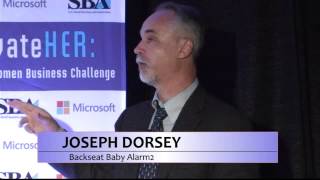
Fifteen women entrepreneurs pitched their startups at the SBA's InnovateHER Finals. Leah Diagnostics won first place and $15,000, followed by Shower Shirt Company and Trust Lingerie. The products ranged from safety apps to medical diagnostics to consumer goods for women and families.
Questions this video answers
First place $15,000; second place $10,000; third place $5,000.
First: Leah Diagnostics (Bethany Edwards) — $15,000. Second: Shower Shirt Company (Lisa Kreitz) — $10,000. Third: Trust Lingerie (Sophia Berman) — $5,000.
Chapters
Hi, my name is Erin Andrew, and I head our Office of Women's Business ownership at the U.S. small Business Administration. And we're really excited to be here for the inaugural innovate, her final championship competition. Very excited to have all the contestants, our finalists here from all over the country, and all of you to kind of share in these pitches and to also support them. This is the first time we've done this, and I have to say, we have gotten so much enthusiasm about it and around it. It's been a surprise to us the amount of folks who've kind of picked up on it nationally. So thank you for being a part of it today. I'd like to also thank our host, the Washington Post Live. This is a great venue. Thank you for having us here and our co sponsor, Microsoft, for providing the prize money for the InnovateHER final competition. Our workforce looks very different than it did decades ago. We have more women now in the workforce now than ever before. And this competition kind of came about because we were trying to identify ways to innovate for women, make their lives easier as they're taking on more responsibilities. But also talk about the investment piece. We need more women investors as well. And the administrator will talk a little bit about this. But we know that 93% of venture capital, those decisions are made by men, so only 3% are made by women. So when you look at the purchasing power that women have, women have over 80% purchasing power in the products we buy in this country. It's really important to identify products that are making women's lives better. So that's what we're here today to do. This provides an opportunity for the entrepreneurs that are here to pitch their products in front of judges that will be looking for the goal of making women's and families lives better. The challenge kicked off in early March 2015. We did a call to Action2 organizations. Our women's business centers, small business development centers, score clusters, accelerators, incubators across the country to hold hackathons or business competitions focused on the very goal of products, services, technologies that make women's lives better. I'm an optimist, and I thought we'd only get 10 because we had a really short timeline and we had over 100. So great enthusiasm about it and I think a lot of support for this very thing. So today we're here to celebrate the 15 finalists and then select the top three. And Microsoft has provided prize money. First place at $15,000, second place at $10,000, and third place at $5,000. So we're really excited to get started. You'll have a chance. It's going to be pretty quick, and we're going to stick to timing as much as we can. As folks give their pitches, I want to introduce our distinguished panel of judges. Please stand as you are introduced. Wendy Gillispiece, acting president and CEO of the Kaufman Foundation. Maria martinez, CEO and founder of respira inc. Diane Primo, founder and CEO of Intralink Global. And JJ Ramberg, host, host of MSNBC's yous Business and co founder of Good Shot. I'd also like to recognize our special guest, Antonella Pianalto, the acting executive director of the association of Women's Business Centers. And they partnered with us on this as well. And now I have the pleasure of introducing the administrator of the sba, my boss, and she does an amazing job as a leader of our agency. She was sworn in as a member of the president's cabinet last April. So she just had her year anniversary and has done so, so much in that one year to really help women and empower women. She's been an ardent advocate for small business growth and access to capital. She is a banker, an entrepreneur, and a former corporate executive. So I just am so thankful because she made this happen. It was her leadership at the top that really drove this forward. So you have her to thank for the opportunity to hear all these wonderful pitches and to those that are pitching to be here today to share with us. And at sva, she's been a huge advocate for women. So with that, I'm going to hand it over to her to do opening remarks. I love the energy in this room. Everybody had a cupcake, so now you're going to have a sugar high. Okay, So I know what's going on. I had the chocolate ganache. That was very, very good. Let me just thank once again, Erin Andrews. You know, we have so many important offices at sba, but I have to tell you that everybody, everybody across the organization celebrates the work that Erin Andrews is doing every day on behalf of women. So thank you for leading our Office of Women's Affairs. Thank you so much. Thank you. And I know our concomitant, we have an independent body also within the agency that's called the National Women's Business Council. And I believe that I also saw Amanda Brown, who heads that organization. But they're really a powerful organization made up of distinguished women across the country who advise the sba, the White House, and the Congress on initiatives that we should consider on behalf of women. Is Amanda Brown in the room. Thank you for being here. Amanda. Thank you so much. Thank you. There's so many people to thank. And, you know, I feel like this is not the Academy Awards. So let me just acknowledge, however, the generosity that we've been receiving across the country from the Washington Post and for hosting us here today, for providing us a wonderful forum to be able to discuss the issues that women face and. And that press them every day and to help spur innovation. So we want to thank the Washington Post. We want to thank Microsoft for being partners in helping us get this streaming out so that women who could not be here with you today have the ability to connect with us from across the country. And so Microsoft helped us stream as well as they gave us the prize money. So thank you to Cynthia, to Cindy, to Allison, and Steve, too, in the room. A big hand to Microsoft. Again, to our expert judges who are here with us. Erin did a very nice job of acknowledging all of them. And so we're grateful to each and every one of you and again, acknowledge the tremendous successes that you've each had across the country. I just want to do a special shout out for the Kauffman foundation because I did something that was the very first in our nation's history, and that is that I convened a global entrepreneurship summit in Milan, and the Kauffman helped to host that event. And I wanted to meet with all of the other cabinet ministerials around the world so we could learn more about what the rules are of engagement as you enter into international commerce. And again, it was the Coffman that came forward. And finally, I want to say for the Coffman that the president launched a very special campaign to help more women connect with women around the world. And. And it is called the Spark Global Initiative, and it's our commitment to global commerce and entrepreneurship, and we've committed to raising a billion dollars. That's a big bogey. But the Kauffman stepped up and seeded the program with $100 million. Thank you so much. Thank you. It's nice when a woman can write that check. I want to say thank you. Anyway, this is a really important hallmark for us today, because as we thought about entrepreneurship at the sba, we wanted to take a week out to make sure that we celebrated what's taking place around the world. And so we got together and we decided to pick the first week in May. And so going forward, we're now going to be celebrating global and national entrepreneurship the first week in May. And we picked it because we knew that everybody would be getting ready to shop for Mother's Day and that women might be shopping for Father's Day, because we know we have to do that shopping for our kids. And then, of course, our graduation ceremonies that are forthcoming. And so we call it shopping for moms, dads, and grads. And we hope that, number one, that people across the country will take this week to celebrate the generous contributions that entrepreneurs make every day, the sacrifices they make, the courageous and bold moves that they take to make sure that they can provide for their family and create jobs in our community. And this morning, we just put out the new jobs numbers. And I have been boasting these numbers for the last year since I've been on board. And Today marks the 62nd month of consecutive job growth. And. And while always, yes, while always at cabinet, our secretary of labor likes to talk about this job growth. I get to stand up on behalf of small businesses and say, But, Mr. President, two thirds of that growth is coming from small businesses. And today, small businesses employ half of America's workforce. So this is, first and foremost, a week, a time where we celebrate and renew our promise to small businesses. And second, it is a reminder to make sure that each of you goes out in this week and supports and honors a small business by shopping local, shopping small, because we know that when we shop small, we're creating local jobs and keeping the money in our local communities. So thank you for doing that. On behalf of small businesses, let me just say that in order to launch and amplify the message, we've gotten so, so much support from across the country that I wanted to get out and thank the people who are doing so much. So I started darting out on Sunday down to meet with people in Miami, and it was very exciting to see thousands of entrepreneurs convene there for what they call Emerge Conference. And in this Emerge, they had people from all of the Americas come together to see how they could come together as teams and begin to disrupt and hack and invest in each other's business and just build strong relationships that would inure to them future prosperity and success. So it's very exciting to be there. And then in the morning, we actually launched officially the National Small Business Week there in Miami. Right after that, we darted out across the country to head over to Los Angeles, where Los Angeles has had a tradition of celebrating what they call World Trade Week, because they have the first and second most important ports in our nation that bring to us all of the goods that we enjoy year round. And so we were there to launch World Trade Week. And we were able to talk to them about the wonderful programs that we have at our Office of International Trade in Miami. We talked about innovation and all of the wonderful programs that we have in our SBIR program, which is our Office of Investment and Innovation. And so I hope that you will all learn more about these programs because they're really powerful tools to help you to success. On Wednesday, I went to San Antonio to meet with all of our lending partners. It's called the NAGEL Conference, the National association of Government Guarantee Lenders. And they're all the banks across the country that actually put out the SBA loans. We talk about SBA loans. We're not a direct lender. We are actually a guarantor with the banks. And so we guarantee, on average, about 75% of your loan. So a bank is more likely to get to. Yes with you. So thank you to those people in San Antonio where we launched the first ever SBA bilingual website. And so we are now in English and in Spanish for those people who are coming online. Thank you. And now, of course, it gives me great pleasure to be here, to be here with all of you to celebrate what we call, of course, our women's office and all of the contributions that women are making across the country. And tonight, our finale is where we bring in all of our nationally nominated winners, our finalists, and we launch and we identify who the national business winner is at the White House. So it's a very exciting week for us. And again, we want to thank all of the partners across the country who were there with us, from The Wikipedia folks, LinkedIn, Microsoft, Washington Post, all of you, Inc. Magazine, everybody's been lifting us. And I hope that you all take the time also to go take a look at the Facebook site, because I thought that Sheryl Sandberg really delivered it for us yesterday. So please look up that tube as well. Anyway, so here we are and we're very excited. As Erin said, We had 100 competitions across the country. We, we love this name, innovator. I just wanted you to know that our Office of Innovation and Investment had a very special competition because we know that you know about our Small Business Development centers, our counseling network, our women business centers that we have across the country. We know that you know that we're there waiting for you. But some of you have naturally gone to these other places called innovation hubs or Growth excitement accelerators, or they have different names, incubators in some communities, but they're fresh places where young people are going to just have organic experiences. And team up with other people who want to invent and advance their business. And so we wanted to learn more about them, and we put on a different competition around growth accelerators. Anyway, along that way, we met one of the winners who was from La Jolla. It was a phenomenal woman there, and she's a scientist at the University of San Diego. She went to see a movie. It's called the Social Network, and it's loosely based on the story, as you know, of Facebook. And she enjoyed the movie, but she was lamenting that most of the people who were having success at creating this company, that all of the players were men. And so she decided to start a new growth accelerator, a place where she would encourage women to invent and to disrupt and to hack. And so she calls it my startup, XX for the female chromosome. And so we were so taken in, we gave her a prize and met her and we said, we agree. How can we help more women create inventions to solve women issues and their families? And so there you go. We gave life to Innovator. And we really think that this is going to be such a winner for the sbi. We think it's going to be an enduring event. We're going to hear today about a special company that's got a unique crib bumper. We're going to hear about a video robot gaming platform that teaches young girls computer programming. We're going to hear from environmentally friendly pregnancy test. And we're going to hear two special products that help women after mastectomies. Innovator has been finding a way to empower innovators with unique ideas to empower women and their families. Our workforce looks so different than it did 50 years ago. Women now make up nearly half of the labor force and play a critical role in our nation's prosperity. Most children today live in households where both parents work. Our population, as it changes, families are increasingly caring for aging parents while balancing the needs of our work and home. The demands of women and families are growing. The the need for products, services, and technologies that address our unique challenges increases. I know that if any of us in this room would have invented the machine to have a mammogram, it would be very different. So that's why the Innovator challenge was launched. Women, we want more women in precision medicine, in cybersecurity. We want more women to help us develop robots so we don't have to deploy so many men and women abroad to protect our country. And so we're trying to do everything that we can in that regard. And so you'll see that the number of women venture capital partners continues to drop. It is now down to 6% compared to 10% in 1999. We have a lot of work to do together. Only about 7% of venture capital funding is in the US goes to women. The only way we can address this problem is to help more women scale their companies. And so for any of you that are interested in launching your own private equity or mezzanine or early stage fund, if you raise an amount of money to have a fund to invest in other women and you get an SBIC license, we have the ability to match you two to one. So say that you raised $50 million with an SBI license, you have the capacity to have $150 million to invest in small businesses. So come to sba.gov to learn more about how you can take advantage of what we're doing. Because we know that women have huge purchasing power and make 80% of the consumer purchase decisions. In homes across the country, women provide a unique perspective about what consumer products and services that enhance their lives every day. We want them to have an equal opportunity to participate in the startup industry so that the problems that they have will be addressed by they themselves. That's why we've selected women judges here and are respecting the role of the role that women are playing every day in their households to balance the needs and the demands of work and home. So this is about inventions that run the gamut from online babysitting services to breast pumps. And yes, we can talk about that publicly. We're women. We're comfortable with that. So without further ado, let me just say to you that we are here to make sure that we are advancing women in every sector. I'll close with my favorite quote. For those of you who follow Oprah. You know she had a very special movie that she just put out around six, and in it she featured Martin Luther King, who delivered my favorite quote. And he said, what good is it to be able to sit at an integrated counter if we can't afford to buy the hamburger? They understood that as women and people of color in disadvantaged communities were advancing on civil rights, so too must we empower them with economic rights, market rights, social mobility, and upward mobility. And so, ladies and gentlemen, together, we're not going to go back to buy that doggone hamburger. We're going to go back to buy the restaurant. We're going to build ownership in America. God bless you and thank you so much. Success. Wonderful. Well, thank you, administrator. That was absolutely wonderful. And how's everyone feeling? Good. We're getting closer. We're about to get started. So thank you so much for being here. We're working on the temperature. I know it's a little hot, so thank you for staying with us. We're working on cooling it a little bit, but I wanted to kind of outline the rules of pitch right now. Perfect. Just so you all know, kind of the rules that we're going to be playing by for this pitch competition. Each individual has been assigned to pitch in alphabetical order. Each will come up to the stage once I call the individual's name today. And the finalists will introduce themselves and begin. Julie Varatti from sva, who's over here, will keep time and each individual will have two minutes to pitch with a 10 second warning from Julie the. They also have a clock up here. Contestants are allowed one single PowerPoint slide which will be displayed on the screen behind me and also double as a handout for the judges. They are also allowed to display a prototype of their product, service or other physical depiction. Apart from the slide and prototype, no other props or other visuals are allowed. Pitches will be evaluated based on satisfaction of competition criteria and ideas that present the greatest potential for success. So the competition criteria, number one, products or services that have a measurable impact on the lives of women and families, that's 30%. Number two, have the potential for commercialization, that's 40%. And number three, fill a need in the marketplace and that's 30%. And those are the same rules that were used by the organizations on the ground as well. We ask that you please refrain from comments during the pitches and hold your applause until the question and answer part of, you know, for each finalist is completed. So the judges, they're going to pitch. The judges are going to talk, so just please be respectful. They're all really excited to be here. We want to give them the full time to make sure they can give the best pitch possible. And now it's my pleasure in getting ready to announce the first finalist. But before I do that, I want to kind of put some hashtags out there for folks just so you can tweet during this whole thing. The administrator handle is CS4, the number four biz. So CS4 biz. We're in the middle of National Small Business Week that she mentioned, so hashtag DreamSmallBiz B I Z. Hashtag DreamSmallBiz is our national Small Business Week hashtag. So you guys can use that throughout and then innovatehere. I know a lot of folks have been using that and then Bagov. Those are just some. We'll get them up there so you guys can see them. But I wanted to throw them out there so you can tweet throughout this whole thing. I think it's. We're live streaming it so people can see it across the country, but we also want to make sure, you know, we're talking about it on social media so folks can get excited about all of these pitches as well. So now it's my pleasure to introduce the first finalist who will be pitching today, Heather Badal from Loe Apps, Drive Control. So with that, I'm going to hand it over to Heather. Did you know that one in four accidents caused each year are due to cell phone distractions? People driving with their cell phone and 9,000 people die each year because somebody's texting and driving. 3,000 of those people are teenagers. What if there was an app that could solve those problems? My daughter came to me with an idea for this app about eight months ago. She's 16 years old. She's sitting over there. I thought it was a great idea. I went to a friend of ours, Niles Chavez, who's a programmer. He started coding it with his friend. They spent the last eight months coding and coding. We released a beta version on the Android Store and it's in beta testing right now. We're hoped to release an Apple in the next few weeks. So here's how it works. You're driving, you have it activated. It knows that you're traveling above 10 miles an hour. It will hold your cell phone, texts and emails. When you stop and deactivate it, it will release them. There are some features that are unique to us that set us aside from our competition. One of them is that they can be remotely activated. So in my situation of being a mother, when rhythm's in the car and she starts to drive, I get a notification if it's activated. If it's not activated, I can activate it remotely from where I am, whether I'm in D.C. or New Mexico. We have three plans. One of them is the individual plan. It's free. We want to save lives. There's a 99 cent renewal fee that happens each year. There are about 195 million people that could take advantage of that. We have a family plan that's 499, that's about the same cost of a latte that has some unique features like the tracking. We also have a small business plan. And that small business plan is kind of the opportunity for that is about 3.5 million people where they have drivers. So what if we could save those 9,000 people? We have other features we'd like to talk to you about. Thank you so much. I'll take your questions. How do you attempt to market it? Sounds like a great product. How are you going to get it out there? That's a great idea. Or a great question. So for the family plan, we know that there are 8,000 driving schools. We know that there are 900,000 students that start driving on the road each year. We plan to partner with those driving schools. They'll get a percentage of the subscription, and they're motivated in some ways. They get a little bit of money, but they want to save these teens who they send about 100 texts a day. That's how they communicate. That's one aspect with the small business. We're right now piloting it in New Mexico with about three businesses to kind of learn how the interface is. But right now, the other option is gps. They put these GPS trackers. That still doesn't stop the texting and driving. So we're hoping to partner with small businesses, but that's one of the things when we start to touch that small business market, we're still kind of trying to work out we're going after the family plan first. How much did you say? I didn't. It's 1999, and that will cover up to 10 drivers per month. Yeah. And most GPS, they charge about $100. Anywhere from 50 to 100 per month. Yeah. So we have been working with families, and like I said, we just have it in the beta testing right now, but families want it. I mean, right now, teenagers, it could impact their lives for the rest of their lives. And so there are parents who say, hey, when is it going to come out? When is it going to come out? So we've gotten validation there, but our primary customer initially to build our cash flow will be families that have new teenage drivers. And then eventually we'd like to take that to insurance companies so that there's some motivation of, hey, your kids being safe by not texting and driving. One of the larger issues with apps is you can put them out there and people don't use them. There's no adaption there. So you're going after a parent. They have teenagers. They probably are a little bit out of the digital generation. So how are you going to drive adoption? Do I answer just quickly? Yeah. Okay. Most of. I mean, I don't. So I'm 46. I use my cell phone all the time, and about 90% of Americans have cell phones. We're trying to be really strict with the time. We've got a tight schedule. Thank you so, so much. All right, our next contestant is Sophia Berman from Trust Ling. Hi, good morning. Oh, should I start? Time didn't go yet. Good morning. My company is building a better bra for larger busted women. Why bras? Because a bra is something a woman wears every single day of her life. And for larger busted women, this is typically a necessary evil she can't escape. Large breasts are heavy, they hurt, they create a much more sedentary lifestyle. And for many women, breast reduction surgeries are not an option. Now, There are over 50 million women in the US today who are above the median bra size of a 36 DD. Highly underserved, in fact, the number one bra supplier in the US who holds over 40% of the US market today. The 13 billion dollar lingerie industry does not cater to this demographic. Currently, as bras increase in size, they're scaled to fit, not engineered to support. The lingerie industry is still using the same underwire technology that was developed over 100 years ago. Breasts are changing and growing and products are not keeping up. There is nothing on the market today that adequately addresses the issue of weight from an engineering standpoint. Our team of larger busted designers and engineers from Carnegie Mellon University has developed a patent pending truss system that supports the weight of your bust from underneath your breast, reducing the need for shoulder straps. It reduces severe physical discomfort such as back pain, shoulder pain, and digging underwires by supporting up to 80% of breast weight from underneath the bust. Products on the market today don't do this. And we have a product that women really want. We launched a Kickstarter over two weeks ago and reached our goal in five days. And we have raised almost $50,000 and counting. We still have about 14 days left in our campaign, so we've raised $50,000 to help us move forward to production. We have three products in our first line that we'll be shipping early 2016. And our goal as a company is to provide impactful products for women to enhance their quality of life through engineering design. At Trust, we are supporting your favorite assets. Thanks. How are you going to sell it? Well, post Kickstarter, we'll launch pre orders on our site and then we'll sell through E Commerce initially. And we've had many requests and partnerships with different organizations, both mass retail and also independent boutiques to sell. How are you going to drive conversion? Through a targeted SEO Campaign through targeted regional events and through outreach from our customers. A lot of it. Both from a large scale and both from just ground up. Is there someone on your team from the fashion industry? We have advisors from the fashion industry, both from Under Armour and Aerie as well. And modcloth. Yeah. So there are many products out there that cater to larger bus sizes, but nothing has innovated at all. They're all using an underwire system, and nothing is addressing the issue of weight. So while there are a lot of products out there, no one is really satisfied with what's out there for support. What is your price point? Our target price point is $100. That's our first product. And then our second is 110. Our third is 130. Nice job. Than. We're going to give the judges time to put in their scores. Okay, I think we're ready for our next pitcher. Alexandra Bradbury from the Sparkle Bar. When you feel confident, you feel powerful. When you feel powerful, the possibilities are endless. The Sparkle Bar is a makeup application studio dedicated to making women feel beautiful by offering simple, affordable glam to the everyday woman. We provide a service that has measurable impact on women and their families by enabling them and empowering them to feel good about what they're doing. Because we all know that when you feel good, you present an image that makes you feel powerful and confident. Our ability to demonstrate opportunity for commercialization is that there's a proven business model. We've all heard of the dry bars that have taken the beauty industry by storm. And we similarly plan to launch in a similar fashion by disrupting the market. Our growth has gone from zero to over 15,000 followers in one year. Our ability to execute has enabled us to build our business on our passion and continue to drive doing whatever we need to do to ensure that we're successful. In fact, before we could even start our business, we had to pass a legislative bill, SB 1320, in Arizona. That's not even just impacted us, but also every single makeup artist in the state of Arizona makeup has huge profit margins. In fact, 82% is what we're looking at right now based on price per application. And this model can be replicated because the growth that we're seeing and the demand that we've shown based on our numbers and following, support that information based on a proven concept. Leah and I have 30 years combined experience in beauty and business and have use that shared passion to build our brand. So I want to leave you with this. When you feel powerful and you feel confident, you're able to do anything, the possibilities are endless and how that impacts your family in ways that are potentially immeasurable. And we want to be there to support all the women and anybody who wants to be a Sparkle clientele, because we are for everybody. Thank you. Thank you very much. What legislation was it that you supported? SB 1320? So there's kind of a quirk in the cosmetology law. It's a very gray area with how makeup artists are defined, because currently, if you're a makeup artist and using your skill for the purpose of sale in, like, the department stores, it's allowed. But the second that you step out of that environment and charge for your service, there's kind of an issue. So what we did is we worked with the sponsoring center senator out of Arizona to have this bill passed, and it was passed by our governor Jussy in February. So now it's. It's law. What is your rollout model? So to introduce ourselves to the market, we are going to be holding special events in and around our area called Sparkle Bombs, where we will attract different demographics. Like I said, this is for everyone. So from the teen who's learning to apply makeup to the woman who wants to freshen up her routine, and that's how we intend to introduce ourselves. We also have a very strong following on social media, which we've been using to make sure that people know who we are and what we do. I love the name Sparkle Bomb. Thank you. You know, when you think about manicures, right, it was something that was very exciting to do. You did once in a while. Now you do it all the time. And Dry Bar and others like it have been able to do it with hair. It's not quite there for makeup yet. So you actually. How are you going to change the mindset around going to pay to get your makeup done? Sure. So right now, if you want to get your makeup done, your only options are to either hire a makeup artist, which is very expensive, or go to a department store where you're required to use. Use that line from that counter, regardless of whether it fits your skin tone or not. But there are people who are actually doing it. Blushington, for example, is one of our competitors. They're based out of Dallas and California, have four locations. So we're not first to market. Clearly, there's a demand because there's competition out there. But to put it in perspective, they have 4,000 followers, and we're at over 15 in our Facebook page. So people know what we do and who we are and make us a billion dollar business. Where do you want to be in five years Playing off that we would like to be across the country and have locations in all major metropolitan cities. We're going to start in Phoenix, Arizona, Scottsdale specifically. Thank you. Wonderful. Thank you. All right, now we're ready for Lisa Kreitz, the shower shirt company. Give us one second. Give us one second. It'll cut off us. We're going to wait two seconds. Well, more like 10 seconds. I'm overly optimistic with time sometimes. I'm sorry. Judges. All right, we ready? Yeah. Wonderful. Okay, we are ready for Lisa. Did you know more than 300,000 women are diagnosed with breast cancer each year with more than half undergoing mastectomy surgery. Did you know before the advent of this product, those breast surgery patients were showering in plastic trash bags to keep their surgical drain sites dry? I was one such breast cancer patient and why I created the shower shirt. Mastectomy patients have post surgical drains. They penetrate the skin, creating an avenue for waterborne bacteria to enter the surgery sites, often leading to infections. Physicians tell patients to avoid showering to keep these drain sites dry. Now, the patented product is made of waterproof material, elastic perimeters, internal pockets to host the weight of the drains. Though created by a breast cancer survivor to support future breast cancer patients, the product is also being used by dialysis patients to protect catheters, ostomy patients, rotator cuff patients, even cardiothoracic patients. It's important to note in a short period of time, this product has become proven and accepted by multiple patient populations and the medical community. Now this product fills a huge need in the marketplace. It's the first and and only water resistant garment for surgery patients. Our goal in this product was to provide an option for women to shower safely. An option that I did not have. The shower shirt company is home based, though somewhat commercialized as we've sold a few thousand shower shirts via the Internet. In making the product more available, we are working on legislation to attain Medicare coverage. I hope to make the shower shirt available and affordable to all patients who've been touched by breast cancer surgery. Thank you. What's your distribution strategy? Actually, we've been on the market since spring 2011. We have hospitals that buy it, hospital gift shops, hospital based HMEs and DMEs. We we're about in 60 mastectomy boutiques across the US. Walmart.com picked us up. Yay. And then we also have Amazon. We go to a lot of medical device conventions and conferences. Of course, medical is a unique animal within itself, which is why we're working on getting Medicare coverage to get all the other commercials to pay. Commercial payers to pay. First of all, I want to congratulate you because I broke my wrist and I have a bag. I used a Ziploc bag for a bit and then I actually got a bag from the doctor. Yes. So I assume that an oncologist would be a primary target for you. An oncologist, the reconstructive surgeons, the GIs, because they do a lot of general, of course, the orthopedics, pretty much. It's amazing that since this is the first product for those chest surgery patients, any surgeon that cuts from here up, it's absolutely a target. What is your price point? Price point retail is anywhere between $78 and $85. You know, it's amazing. I have little kids, so I see this a lot in baby products world. But to see somebody who's been through something and discovers a need and creates is where inventors come from. You know, for me, I again had breast cancer within a couple weeks. Had gone through a bilateral mastectomy and my doctor said, you can't shower. And you know, telling a doctor when a doctor says you can't shower, you're going to shower. It's a psychological, physical need. You are. And I was standing in the shower going, women have been going through mastectomies for 75 years in this country. Why isn't there a product to protect me? My first thought is a bunch of men running the mastectomy garment companies. Sorry. But I kept thinking there's got to be a product. And so after research, I found that there was nothing. So I'm so happy to say it's patented and it's the first and only water resistant garment for surgery patients. Thank you. I just wanted to remind folks, so hashtag dream small biz and hashtag innovateher and bagov. Just, just in terms of social media as well. And we've got women in small biz up there too. All right, I think we're ready. So next is Wendy Davis from Just Vision Inc. Good morning. Thank you to the sba. I'm very excited to be here. I am Wendy Davis, founder and CEO of Just Vision. We are a biotech start startup company commercializing novel Yale technology with the only accurate diagnostic for preeclampsia. Preeclampsia killed Lady Sybil in Downton Abbey. And today in the United States, every 10 minutes a mom to be almost dies because we haven't changed the diagnostic for preeclampsia in over 100 years. The we look for symptoms of rising blood pressure protein in the urine, but symptoms that can mean a variety of diseases, not just preeclampsia, leading to an unsure diagnosis of preeclampsia. Its cause remains unknown, but we know it leads to seizures, organ failure and death. Since the cure is to deliver the baby, often prematurely. This uncertainty is a very big problem and we spend over $35 billion each year in the care of preeclampsia and premature infants, not including the lifelong complications that they will face at JustVision. We have the solution. It is based on novel research identifying unique proteins only in the urine of women with preeclampsia. It is a simple diagnostic product designed to be run in the doctor's office providing rapid results and a remarkable 85% accuracy rate. We estimate that the US market is about a $1.4 billion market to solve this problem and it is of international concern and an international commercial opportunity. We are just vision. We intend to bring this product to market. Lower health care costs help doctors in diagnosing preeclampsia and most importantly save the lives of women and babies. Thank you, thank you and thank you for addressing this issue. I don't know much about this world but do you need FDA approval for something? Yes we do. Is that something you already have? We are working on that now. We are targeting a pre submission meeting with the FDA by early summer. Summer and it's a 510 process. We have the samples in hand to test and can file our application at the end of this year. How long does that take? The application will take until the end of this year to prepare and then it's about a 60 to 90 day window. At the FDA they may ask questions, there may be follow up things we have to submit but this could be on the market as early as the end of first quarter 2000. As far as reimbursables, have you had the discussions with the insurance providers in reference to that? Right. There is a reimbursement code currently available that is applicable to this product. Is your goal to sell directly to doctors medical practices or do you hope to sell to a large pharmaceutical company? No, we hope to sell this to the obgyns that are caring for pregnant patients today. They're the ones in the office facing the question of whether or not a woman has preeclampsia and needs something to be able to tell quickly at that prenatal checkup what's our status? Is this patient okay or do we need to intervene. So those are the doctors that are really asking, that's the market that are really asking for this product. Is there someone on your team who understands the sales process into OBGYNs? We have a partner who is in the growth markets in this field and we are looking to partner with a probably a med device diagnostics company that has a sales force targeting the ob gyns and we are in those discussions already. I too don't understand this world as well, but I do understand that getting through the FDA is quite a process and you need lots of support to do that. Follow up later. Thank you. Thank you. Just another reminder. Hashtag dreamsmallbiz and bagov. Sorry, repetition helps, I've heard, so I'm just gonna keep mentioning it. Great. All right, we are ready for our next picture. Helen Denise from Helen Life Products Inc. Hi, I'm Helen, inventor of November's saliva fertility monitor. Actually years ago I must die from unplanned ectopic pregnancy and intensive studies researches. And I learned that actually we women all different from month to month cycles different, from woman to woman cycles different. But the most important nature gave us the answer. And nature gave the answer. An answer in your own saliva. When is the best time to have a baby? Clinical study we performed in US yesterday. They were published Women Health care journal. Our product, 98% accurate. We compare our product with ultrasound test which is actually gold standard to check the ovulation. Our product, 100% safe, natural, it's non invasive, it's reusable forever, I mean for years. And also the most important, it works with any kind of supplements or fertility drugs. If you look at this slide, you can see 7.3 million women in US only and infertility. They have a problem to consider. But do you know that 5 million of them absolutely healthy and they're paying for the price of ovulation. It's so important to pinpoint the right day when you're ovulating. Actually our product available already in cvs. It's our big victory. Also it's available at some other retailers. The most important available for 15 million women in childbearing age and to global women globally. No one gives you a chance to empower yourself to understand your body cycles. And actually it's access to the family planning. So now you have app application where you just pinpoint what picture you had and app application monitor your cycle. Also we have educational components cd we actually launched also a book called welcome to Eva's world which we are talking about life, about sex about pregnancy, fertility. Helen, can you tell me how it works? How it works? It's a small microscope which allows us to check your saliva daily. It depends what period in your cycle you can see kind of picture, only three pictures and what you need to do. You download your own app application with a unique number in the package and you just click what picture you had and software monitor and give you alerts when it's best time for you to conceive or not. Helen, brilliant. Thank you. Very brilliant. I have one question for you. Awareness. This is a global product. Yes, US is an obviously important market, but how do you intend to build awareness? Actually what we have right now is social media. It's a good tool for us. It's digital advertising. Also we have access to some events forums. We have access to launch products through ob, gyn, doctors. Also we have PR support and we plan to join any conference where we can reach as many women as we can. Because my goal to share what I know for years and almost die. Now you have access to that and this is the first device we have more devices in line. So that's why we try to expand now. You know when, when you have a problem to conceive, go to Dr. When it's better to conceive or when your body cycle. Click, click, click. You need to expedite your family. I mean baby naturally. What's going on with the sales at cvs? How long have you been in there? Actually we on the shelves should be already today. We ship first purchase order. We have reorders but it's available super value. It's a big supermarket. They have nine chains. It's already available. Also it's available cvs.com? i think she's asking about the how is it doing from a turn standpoint and from a sales standpoint, how successful is it in the sales? Yeah, actually with CVS we just only put product actually I mean even check some pharmacy don't have yet product. We cannot tell exactly how it's going on. But the point that we have reorders from Super Value and Celia stood already. Thank you. Hashtag dream small biz and Vagov. I'm going to keep doing it and hashtag innovateher as well. Okay, great. So. So we're now ready for Joseph dorsey Backseat Baby Alarm 2. Okay. Just wanted to give it a test. Hi. So my innovation is the backseat Baby Alarm 2. It's a patent pending production ready device to prevent children from being forgotten in the backseat of a hot car. Because when I look at this map, my heart breaks. This is just last year alone, 20 children died after they were forgotten by their parents in the backseat of a hot car. And I just can't stand the idea of children being harmed in any way. So that's why I invented this. So I want to show you how it works. It's very simple. It's all automatic. It works with either one piece or two piece car seats. You simply place the child in the car car seat that turns it on. You come around as a parent, you get in, You get in and turn it on. And then you get in and you hear a little confirmation tone to let you know it's on and working. You can drive away now and then. This is where the accident happens. The child falls asleep, they're not making a sound, parent's mind begins to wander and they go straight to work. And when they open up the door like these parents did last year, nothing happened. But if they open up the door with a car seat like this one, they're going to get a reminder chime just like they forgot their keys in the car. Why don't we have something for that for children, when we have something to remind us of our lights being turned off or our battery is going to die or something like that. So that's how it works. So just to answer the three criteria that we're going to be judged upon, the need. There's nothing that's been deemed reliable by the nhtsa, so there's no product right now. That's a fantastic pitch and thank you. There's so much stuff for when you have a baby right now. Right. And so I think most people think I'm not going to leave my child in the car, which clearly is not always the case. But how are you going to bring this up when you're at bye bye baby or what have you. I need this and this and oh, maybe I will leave my child. I understand what you're saying. Indeed, there's psychological resistance to the idea that you could harm your child. So the way I think I'm going to try to market this and overcome that at the same time is to license it directly to the car seat manufacturers. So it's built in. Okay. So they're going to be looking at the shop and say, well, for an extra 12 bucks, I mean, that's really what it will add to the retail cost. I mean, it's just a little simple electronic box made in Taiwan. And remember, grandparents are buying these, brothers and sisters are buying these for the extra Little bit of money. Grandma's going to buy it, you can be sure. So that's how I'm going to just build it right in. Do you have any interest from any car manufacturer, any seat manufacturers now? Right. So they have very strict policies about submissions from outside inventors, and their requirements is that your patent be published. My patent was filed last August. It'll be published no later than March of next year. It could be published tomorrow. Once that has been published, they are able to go on the USPTO website, look it up and evaluate it. But they're very strict. You have to put in your publication number on their website and they contact you if they like what you see. What's your price point? So it's going to be built into the car seat because I want to get it out there as soon as possible. Even though I could sell it on my own as a independent production piece, it's $12 to add to the car seat. If I sell it on my own as a own piece, it would be like probably $24. I mean, it's very reasonable. It's very simple technology I'm using here. It's based upon a magnet, basically. That's it. Time. Okay, We're halfway through, so. All right, next. Bethany Edwards, Leah Diagnostics. I took the pregnancy test in a public restroom because I was so afraid that someone would find it. This is just one of the many stories that women have shared with us, expressing their dissatisfaction with current pregnancy tests. By solving privacy issues and unmet needs, the Leah team is revolutionizing the $730 million pregnancy test market. Currently, the industry is antiquated, consisting of three industry giants who own 75% of the market. And they've been producing the same, same exact stiff plastic product design with a small sample collection area for 30 years. And what little they've done to innovate has been focused around adding waste and expensive digital components. Leah is changing this. Leah is the next generation pregnancy test, and we are a test that has been designed by women for women with the woman's unique needs in mind. Leah's use of innovative materials allows our test to be cheaper, more sustainable, and easier to use. Leah's flexible form also allows us to fold to the size of a credit card and fit in your pocket, allowing us to also ship flat in an envelope. And we can pack 10 times more tests per standard box than any of our competitors. We feature a wider collection area that's two to three times wider. And best of all, Leah ensures that no one will find your test in the trash. And that is because Leah is completely flushable. Privacy and empowerment have been two of the biggest roadblocks in women's health. Leah will finally allow women the freedom to control the pregnancy test experience on their terms. Thank you. Thank you very much. You have a patent? Yes, we do. We actually filed the utility yesterday. Yep. Right. For Mother's Day is actually when we initially filed the provisional on the 11th, believe it or not. I have a question about the product. Sure. Which is. I agree with you. Those pregnancy tests they have now are just annoying and the disposal of it. But mostly I feel like there is a group of people who are checking because they don't want to be pregnant and then there's a group of people who are checking because they do. Yes. And what I find many people looking for is just speed. So the digital stuff, they're adding that because people want. Yeah. So that's actually really interesting. The material that we're using, it's innovative and actually wicks really fast. So we have the potential to actually claim a faster test than current tests. So as far as the results that you get, it's the same as you'd get pregnancy test. Now, it's just better design. Yes. So it's using the same exact reagents, but actually what we're doing is we are eliminating all nitrocellulose so there's no plastic backing. Our reagents are applied right to the material and that allows it to actually run a little bit faster. It's a combination between lateral flow tests that exist now and microfluidic channel design that have been built into the actual test. And we're also dealing with usability issues, with interpretation. So we're, we're working with a different readout as well. So not just the faint lines. We're really working on developing other ways to deal with that with the use of microfluid. 30 seconds, judges. How much is it and how do you sell it? Yeah, so it is $8 and that's very competitively priced. Tests right now range from 5 all the way to $23 and then we'll have different SKUs depending on PAT packaging, 1, 3 and then many per test, which actually references the hopeful positive and then the hopeful negative as well. Her second question, how are you going to sell it? I think I'm going to run out of time. But direct to consumers first and bulk partner channel sales. It. Great. Next we have rosalind goodwin from gabby. Meet Gabby, my 8 year old daughter, the co inventor and self proclaimed president and CEO of Gabby Bowes one of 20 million girls in the US women with a grooming problem. The same problem I had and my mom had as a girl until now. Gabrielle and I saw the age old problem of disappearing girls hair barrettes by inventing the double face double snap barrette by Gabby. Gabby bows won't slip out of girls hair so they secure girls hairstyles and mom's peace of mind. Gabby bows are engineered with two faces so the adorable design is always visible even when the hair moves with a triple hole of the two faces, strategically placed teeth and craters and a center strip to sandwich and trap the hair in place. We have never lost a bow and we have saved families in 32 states and five countries time, money and frustration reducing some of their barrette bills by 75%. Online sales for Gabby Bows began in February 2014. In just six months Gabby earned a Walgreens sales pilot with 40 stores. We sold more than 1,000 units in just four months and this week we're launching in 51 bio stores across the state of South Carolina. We've moved nearly 3,400 units in just 15 months of operations. Our innovation will change the way most barrettes are made as we sell licenses to other companies to produce similar barrettes in the 676 million dollar industry. Gabby was just five when she started daily insisting that we create a barrette that works. That broken record in pigtails and her dream to see her barrettes in stores pushed me into entrepreneurship when I didn't think I had the skills or the time. But that's the power of Gabby. Inspiring confidence and youthful creativity. One barrette at a time. So you do have a patent for this? We do. Our design and utility patents are pending. Our design patent we do. Just got noticed that we have substantive approval and we expect a notice of approval of the design patent within the next few weeks. Our utility patent was filed in November and of course that takes a little longer. Where is it manufactured? It is manufactured right now in China. We tried to find some plastic molding injection manufacturers in the US but they were quoting US prices of about $6 a pack. We can only sell them and we're only selling them for $4.99 a pack. And some of our retailers are doing deals like 3 for 10 so it was cost prohibitive until we get our volume up to a place so we can possibly move it back to the US and entertain some cost effective manufacturing in the states. Where's Gabby? Gabby's back there. Good for you Gabby. Congratulations. That's exciting. What, are you in talks with any other national store? We are. We're in some really great talks with some major national retailers. We're also looking to scale. Walgreens right now is evaluating a four state expansion for 450 stores. We're also in talks with some other major retailers like Walmart and Sally and some others. If you look at your sales, what percentage goes through the retailers and what percentage is direct? Do you sell direct? We do sell direct online. @gabbybowes.com we're probably at about 60% online. And like I said, most of the out of country and across the states, that has been done online. 30 seconds, judges. So about 60% online, 40% in our retailers. You said selling licenses is your other part of your plan. Yes, we do plan to do that because we really do think we'll revolutionize the way no one will buy a barrette that won't work anymore. Once they realize that this one is the one that works, they won't have to send their children to school and pick them up with their hair all out of place and barrette's missing. You should see how I sent my daughter to school. We're solving that problem. And Gabby Bowes with that. Our Gabby Bowes, a classic hair accessory meets modern functionality and style. Thank you. All right, you all ready? Okay, great. We're a little strict with this, but we want to give everyone the right amount of time, so it's a fair operation. So I think we're ready for Cherie Matthews from Heal and Comfort. Hello, my name is Sherry Matthews. I'm from Austin, Texas. I am a 15 year breast cancer survivor and I am the founder and the CEO of Heal and Comfort. I am a WBE, an LLC and 100% owner. I discovered the hard way that women do not have post operative equipment. I was offered things like my husband's dress shirt and old man pajamas. And this is after losing your breasts. This is not okay. So I just said, well, that's not going to work for me. So this is the crazy thing. The nurse actually got mad at me for bringing what I brought. And I said, why are you mad at me? And why don't you provide something? And she says, well, women have always just, you know, suffered in silence. Oh, wrong words to me because one, I'm going to fix that and two, cancer just picked on the wrong girl. So I vowed to fix this for my sisters that are coming along. Breast cancer not only affects the patient, but the families and the friends. So when a sprained elbow gets More equipment than a mastectomy patient. Something needs to change. So I wasn't about to go home without my breasts and in a man's shirt and drain tubes attached and welcome my children home. Okay. So I've created this and patented it. A man would never be sent home in his wife's skirt after losing his man parts. Right. Special features are it is feather soft on the skin, moisture wicking material, and four internal pockets to hold the surgical drains there so you don't have to see them on the outside. And velcro openings so when it's difficult to have movement, it's easy to get on and off. It is patented innovative product that is literally changing the experience for women coming back from post surgeries all over the United States. Proof of concept. We went after about 250 organic finds. We've now helped 5,000 patients. They're finding us. They're looking for the product. Manufacturing. Ooh, Damon John. Damon John Academy manufacturing. Why don't you speak to manufacturing? Manufacturing is currently in the United States and soon to be with the Daymond John Academy overseas and unlimited supplies with a 90% profit margin. Are you marketing to patients or to hospitals or both? All of the above. I'm marketing to families, to patients, to specialty shops, into hospitals. This is wonderful. Thank you. Is this like the only of its kind? Is it? I have the patent. The whole concept is very unique to the medical industry, which is just amazing. I'm just honored to be able to be the person that's bringing it. Well, thank you for spending the time on this. I have a question again about the target market. So if you're going after everyone, sometimes. Sometimes it's hard because you're just bred thin. Where are you starting? Yeah, I'm starting with breast cancer surgery patients, and I'm actually helping organ transplant, heart surgery, shoulder surgery, elder care, and even hospice. How are you finding them? Oh, they're finding me right this time. And that's before we've opened our mouth in marketing. But the Daymond John Academy and their marketing power is going to just. We're going to do a snuggie campaign. Boom, we're in the market. Great. Thank you. Thank you, thank you. Okay, And hashtag dreamsmallbiz and bagov repetition. All right, I think we're ready for our 11th pitcher. Adriana Muscatelli Play Works studio. Let me tell you about a problem. Back in the 80s, we had almost 40% women in computer science. Fast forward to today and we have 20%. What happened? How did we lose the women in computer science and engineering, my colleagues. I grew up playing legos. When legos didn't have a gender, we could build anything we imagined. Today we tell our young girls that all they should care about is princesses. But we know the research conclusively shows that if we expose young girls to STEM early on, we can make a difference. That's why we started playwork Studio. We designed science games for girls and boys. Our first game is a robot based game that teaches computer programming to girls and boys 6 to 10. It teaches spatial, logical and probabilistic reason reasoning to children 6 to 10. And what's most important is that the girls love the characters and the storylines and the positive feedback. We have an amazing team of people who have shipped games, built hardware and software, designed business plans for consumer products and marketing plans and we have been running research with boys and girls for two years play testing our products. We have a grant from the National Science Foundation, Department of Education. We have been working with the Institute for Learning and Brain Sciences. We know our games are fun, we know they are educational. Now we need to get them to the market. We're going to target both the education and the consumer market, addressing a $250 million segment of the $22 billion industry into the toys and games. We have multiple revenue streams with base core sets and collectible items that have higher margins time. I mean as the mother of a little girl, this is a great idea and you know there's some things that have come up like Goldie blocks. Correct. A little bit different, but still the idea of stem but the toy industry is so hard right to. It is. That's where I come from. Well, that's fantastic. Is it out in the market right now and if so, how many of you sold? We haven't put it in the market yet. We are working through our grants and we'll be running a Kickstarter campaign in the next half of the year. We believe that that's the best way of targeting our customers. And we have seen a lot of interest from both the educational and the consumer market already. I am the proud grandmother of a single six year old grandson who just loves Legos and building. And he's into the Minecraft and all that. Yes, he fixes my computer. So as a grandmother, for instance, wanting to buy something like this, what would your price point be? Price point is going to be around 120, which is well below the core sets. Lego Mindstorm, for example, retails at 350 and there are similar products that are not gaming platforms like ours is a collectible gaming platform and they're not targeted to girls over 200. The expansion packs will be at around 40 to 20 price range. Who is your primary competition and how do you distinguish yourself? Competition in the robotics space is Lego Mindstorms and similar products. Ours is the platform of gaming, not a tool to learn computer programming. It's a platform and it is targeted to girls and boys. Do you have time for one more penetration market? Penetration? How are you going to penetrate this toy market? Because it is a tough market to get into. Yep. I am a former employee of Wizards of Coast which is a subsidiary of Hasbro. We have lots of contacts in that industry. We have wonderful advisors, some of which are involved with the National Girls Collaborative First Robotics competition competitions which run the competitions with girls and boys. And I just want to say we are so honored to have the judges here. So as we are trying to be very strict just with the timing, we are the federal government so we're trying to be as fair as possible to everyone. But we're going to give the judges some time at the end just to get, you know, hear from them about their thoughts about some of the things they saw and hear some advice maybe that they have for the contestants as a whole or individually. So we're going to allow for you to have that time. Thank you all for being good sports. This is our first time doing it. All right, so next we have Seaborn Reeves from Bitsy Baby. For women and families, there is nothing more important than providing your children with the safest possible sleeping environment. As new parents, my wife and I discovered that traditional pillow like crib bumpers on the market could trap and pull an infant CO2, leading to suffocation risks. The greatest fear for families are not the 10,000 annual crib related injuries in the US but waking up to this sound. My name is Seaborn Reeves. I and my wife Whitney, whom had high risk pregnancies and was an elementary teacher for 10 years, are co founders of Bit Z Baby. The Bit Zee bumper is the crib bumper solution that we invented which has been scientifically and independently tested and proved to have 30 times less suffocation risk and 10 times less CO2 rebreathing risk than the industry standard for safe infant sleeping. This is the innovation. We have a utility patent issued in the US where annual birth rates exceed 4 million. And we've successfully commercialized to great acclaim across the country on e commerce platforms such as Wayfair.com throughout the world. We have a utility patent issued in Japan and over 30 international patents pending in countries where annual birth rates exceed 21 million. And I'm thrilled to announce that this week we found out we were selected for a highly competitive Tufts University graduate student consulting project to launch into these markets from our passion to make a measurable impact on the lives of women, family and children. We have served for the past four years as thought leaders and change agents on the ASTM International Infant Bedding Subcommittee where we've partnered with industry and health organizations to rewrite and create new product testing standards. So please join us in helping to revolutionize and make safer infant sleeping environments, because we all begin bdsi. Thank you for your pitch. So much about your crib is about decor when somebody has a baby. And so how do you address that? Well, my wife, who's in the audience is extremely innovative and is always looking at trends forward thinking and on trend styles. So we have a microfiber shell that we've developed. We're going to roll out an organic line next. So we always as parents are very in tune with the industry. What is your price point? Price point is $118.95. We're selling right now and the cost to manufacture is a little around $40. So we're at about a 65% gross margin, about a 35% net margin. And I can share that. In terms of licensing, we've looked at licensing in the industry. We actually have a license that we have already gone through that process with a company out of Brooklyn, New York. So we're looking to get into the market as well with our own brand as well as through licensing. How are you going to really get the word out to move people off of this is a fashion accessory and protection for your child versus a serious need. Believe it or not, parents go through this process where when they're looking at traditional bumpers, they're researching a lot of the parents that we're targeting. Our target market, which is the 1.4 million of the 4 million lives a year in a certain demographic. They are proactively looking for a safer solution because they see the risks of traditional pillow like bumpers and they've been finding our company. 30 seconds, please. They're believing in this innovation because of its scientifically tested, breathable nature. Maybe I took the bumpers out. Is that what a lot of people do? Yeah, we actually it's recommended that you remove the bumpers after the child can sit up unaided. So we've actually designed it in a way that encourages parents to actually remove it to encourage safe infant sleeping. Because that. That's really what we're all about, is creating the safest possible sleeping environment. That's why we serve on ASTM and have partnered with other organizations to create safer standards. Time. Okay, we have two left. It's almost there. Next, I'm going to call to the stage CJ Scarlet from Tiger Eye Sensor, Inc. Here's a sad fact. 1 in 3 women and girls will be abused or assaulted in their lifetime. One in five will be raped. I'm CJ Scarlet, and when I was a freshman in college, I was raped. And for a decade, I grappled with the trauma. Then I took my power back and became an advocate for others who'd been victimized. But after 20 years in the criminal justice field, I grew tired of dealing with crime after it happened. So I invented the Tiger Eye Security Sensor, the only voice activated, wearable personal security device designed to actually prevent crime. Disguised as trendy jewelry, TESS activates when you call out for help in an emergency. TESS then connects you with a live operator who summons police and tells the perpetrator to leave the scene. At the same time, test photographs and audio records the perpetrator and sends the data to the cloud where it could be used to help identify and prosecute the criminal. This is so important. By capturing evidence at the scene, tests will lead more women and girls to report their assaults, knowing they will be believed. This will have a measurable impact not only on their lives, but on the lives of others who would have become victims of those same perpetrators had they not been taken off the street streets. So how do we make money? Tess is a B2B company that sells devices wholesale to home alarm companies who will sell them to consumers. We take a portion of the monitoring fees they charge each month, and we collect license fees for interchangeable jewelry covers for the test device. We expect to generate $20 million or $10 million in revenues in the first 20 months of business. I'm president and founder of Tiger Eye. I hold a master's degree in human violence, and I helped hundreds of victims while working for the North Carolina Attorney General. My team and I know business and technology and crime and the victim's perspective from every angle. I'm CJ Scarlett at Better the Tiger Eye Security Sensor. Thank you, cj. I think this is fantastic. Thank you. And I think it really does fulfill a need, sort of tipping my hat a little bit. My question for you is, have you secured contracts with the security companies that you refer to the monitoring companies? We are in negotiations with three monitoring companies. And we just got a signed loi this week from a new alarm company up in Canada from the CEO who used to be the gentleman who used to be CEO of the largest alarm company in the North American region and the back office, so to speak, of this product, meaning the, you know, where the information goes. I think it goes to the cloud, calling the police, et cetera, and having them respond. Tell me about how you actually are doing that. Is that proven? Are you partnering with someone? Yes, that's very important. It has to work. Yes, it does have to work. This is critically important. And the reason we put the date in the cloud is so that you can't have a fight with your boyfriend and put post it on Facebook or something like that. The back end is we're going to be working with a company that actually has the cloud computing that captures this data and makes it immediately available to the monitoring company so they can even describe to the police what the perpetrator looks like. And the quality of the photographs we take is remarkably good. So they'll be able to. It's not going to be that grainy video photos that you generally see. It's quality color photographs. This is quite innovative and congratulations. Thank you. I'm very sorry for all that you've done but turned it into such an empowering 30 second stretches. Just a quick question. Other than the so other than the alarm company, what other did you think of any other means other than going through those? Yes, we're looking at cellular companies as well. There's a company called Bright Star that actually markets a and distributes everything for Sprint and a number of other cellular companies. And we are in conversations with them about how they take on Tiger Eye as one of their products to market. You know, how do you get people to wear it? It seems incredibly important and yet I'd love to talk with you about that later. Thank you very much. Thank you. It. Okay, so we're ready for our final pitch. I'd like to call up Candice Sparks from S P A R K llc. Necessity is the mother of invention. After birthing my son Kate, my cesarean, I had trouble reaching the nightstand to retrieve my baby products. I said to myself, why haven't they invented something on the side of the bed that you're able to house your baby products? Then the light bulb went off in my head and the Lord gave me the idea. Baby bedside. Hi, my name is Candice Sparks and I'm a retired Air Force veteran. Hoorah entrepreneur. Air Force spouse Helen from South Mississippi. But most importantly, I'm a mother and I understand how motherhood can be. Parents can become easily inundated with the market today. We soon find out that less is more. I mean, how many products do you really need for a baby? Well, this is why Baby Bedside is so unique. Because Baby bedside is a 3 in 1 changing station designed to be placed between a mattress and box spring of an adult bed without slippage. You simply slide the patent pending flap in between the mattress and box spring. Then you add all your baby products. Baby Bedside is designed to house a full package of diapers. It has pockets for powder wipes, lotion, tweezers and clippers. It's insulated on the side for late night feedings for bottles. And we also labeled Baby Bedside for dads so they know where the products go. Baby Bedside also doubles as a diaper bag. You simply add the strap and go. And when you're out and about and the baby needs to be changed and you know you're in an inconvenient spot and the baby needs to be changed, well, Baby Bedside triples as an on the go changing station. Simply add the patent pending elongated flap with your changing pad and voila, you have an on the go changing station, complete with everything needed and accessible to you at your fingertips. So as you can see, Baby Bedside is three different products in one. This is why we pride ourselves in making motherhood easy one product at a time. Thank you. I love the idea of less is more when you have babies. That's really smart. Have you sold any now? How are they being distributed? We sell with duly.com and Amazon.com wholesale. What are your sales like right now they're moderate because right now we're trying to procure funding so we can go do a bigger scale. We would like to launch a direct response television campaign. We have an infomercial on our website and once they see the commercial, it instantly sells. Who's your main competition? We really don't have a main competition because of the innovation. I would say maybe like a diaper stacker which kind of clutters your nightstand, but we really don't have anything that is in this genre. And how much does this fabulous piece of motherhood necessity cost? The price points are between 40 and 60. We wholesale for 25 to 30 and manufacturing. Tell us a little bit about how you were producing it. Well, I made the first one myself on a little raggedy sewing machine in Japan. And then after that we got it. My husband actually went to Korea and got some made and so I'm on my fifth prototype, sixth prototype, and this currently gets marketed. Manufactured in China. And cost. Cost. What'd you say, man? The cost, price, margins. What do you. The cost of goods sold for the products is about $7.30. That depends on the numbers that you're doing. So 30 seconds, judges. Have you sold at any retail stores? Have you gone door to door in any boutiques? Yes, we've sold to local boutiques, baby shops. We actually are selling in Saudi Arabia, and I've had talks with major retailers such as Babies R Us. And how are those going? They want to see margins, but we need funding, so. Got it. Got it. All right, one more question. Thank you. All right, thank you. So, like I said, we were really strict with time, so everyone had a fair opportunity, but we want to give our judges the opportunity. We're very efficient with taxpayers dollars. Right. Like, we like to get things done, and we've cram packed a lot into this, but we want to give our judges an opportunity to kind of talk a little bit about what they heard and then maybe to give some feedback, some additional feedback in general to some of the. You know, the contestants of this would love to hear from you. We know it's been go, go, go, go, go. So thank you for your time, and I think we're going to kind of just move to that, and I'll just kind of go down and feel free to just have some open dialogue. So, jj, do you want to start? Sure. I have to tell all of you pictures. I was incredibly impressed. I see pictures on my show every week on msnbc, and you guys are some of the best that I have seen. So congratulations to all of you. They were well rehearsed. They were great products. It's so inspirational to see people who have been through particularly tough times or have just seen a need from them, their own lives, and actually did something about it. And so that's great. When it comes to feedback, some of you were really good about this, and some of you, I think, could think about it. Something that gets people interested right away is the success that you've had. So explaining the product is really important, but getting right in there to say, this is how many customers I've had, or some sort of traction. Traction. Whether you're doing B2B or B2C is interesting because it immediately makes people think, oh, someone else is interested in it. I better pique my interest as well and learn more. I think you guys did a really great job. I share that point of view. Really fantastic. Job in terms of innovation off the charts, having the need and actually recognizing and seeing it and discovering it. Just very, very positive feedback on my part to you. My advice for you is regardless of what happens here, do not give up. Each of you. You're all entrepreneurs in the room. This is not easy. It is not easy. And what it takes is sheer determination. Okay, two points I want to make before I close off. One, I don't think anyone in the room spent enough time in helping us calculate the numbers around commercialization. How exactly are you going to market this product? Who are you selling it to, and how are you going to make those numbers in the long term? Because at the end of the day, what every investor is going to be looking for is the return on the bottom line. And I don't think anyone did a strong enough job at really sort of nailing that. So please look at your business models. Think of it. Second point. There are a few products up here that were global products, clearly global products. The US is 5% of the population of the world now. We've got 7.2 billion people in the world. We are 5% of that population. Those of you with global markets that may get stuck in the US You've got other opportunities. Start thinking about if something goes awry here, what that business model can potentially look like. Don't stretch yourself where it's impossible, but know, but the market is much better, bigger than the US that have global market products. Thank you. And I applaud all of you because it takes a lot of courage and just clear vision to be honest with you. And I was one of you, and I am one of you. And out of need is what my company started, Respira. And we see what my family went through when my father was dying of COPD and asbestosis exposure. But what I wanted to say was I want to give a shout out to the sba. I'm a product of a women's business center and I'm very proud of that. And I couldn't have done it without the sba. And also in Baltimore, where Women Entrepreneurs of Baltimore, where I started many years ago. And I too have my own story to tell, which what I want to say with that is that your experiences have brought you here and the SBA has so many wonderful, innovative programs. And I, and I still, I mean, I'm a, you know, a little over 10 million dollar company and I use them and they're still there to support me and to help me. So one of the things I just want to leave you with is please keep learning, keep, keep open to all of the wonderful opportunities within your state. Within the sba, they've launched a lot of innovative programs virtually that makes it so easy for us entrepreneurs who don't have time but are up at 3 in the morning that we can go online. So I just want to say I applaud you. Thank you very much for giving your time to us today and for invigorating this 52 year old young lady who greatly appreciated the time, time that we were able to spend with you today. So thank you. It's hard to go last with this group of esteemed judges and add something, but I was inspired today. The diversity of products and companies and people was so encouraging. I sit at a foundation that works to advance entrepreneurship. We're a philanthropic foundation and we also, as part of that, we study entrepreneurship and trends. And the actual rate of startup companies have been going down for quite a while in this country and it's discouraging. But I come here today and I see what I see and I hear this and it's. I think we have every reason to be optimistic. So congratulations to you all. In terms of advice, I'll echo some of what my fellow judges said. Telling a story is key. If you can tell a story, a personal story story or something that can connect with people, it gets them drawn in right away. I'd also say I'd echo that. I wanted to hear more about the marketing, how this was going to be distributed. That's really key. Other than that, I know how hard this is to do in two minutes. I don't envy you getting up there and doing that. So congratulations to you all and best of luck. Well, thank you so much, Wendy, Maria, Diane, and jj and also thank you to all the finalists for taking the time for practicing so you got it into that shorter time period. Really appreciate all that you're doing and what you're doing in your communities to really make an impact. So with that, I want to thank all of you. I know the judges are going to go to the back room and have tally up the scores. So sit tight. We have a program, like I said, we've got a lot in a small amount of time. We've got a continued program and then at the end of that program, we have an investor panel. We're going to hear from Cindy Bates from Microsoft, and then we're going to hear the results from the InnovateHER competition. So sit tight. So it's now my pleasure to introduce Cindy Bates, vice president of Microsoft's U.S. small and mid Sized Business and Distribution Cindy leads the team at Microsoft whose mission is to help the millions of small and medium sized businesses in the US Start grow and thrive leveraging today's powerful and affordable technologies. She has been with Microsoft for over 15 years and has built Microsoft's US Small Business Group from the ground up, leading the team responsible for for online and offline marketing, customer relationship management, business development and small business partner engagement. Widely quoted in SMB and channel press, she is also a contributing columnist to entrepreneur.com, and authors a blog on Microsoft Business Hub. Cindy is also active in talking a lot and really supporting American entrepreneurship and the virtues of cloud technology. She's been awarded for her work with SMBs, including being named Small Business Influencer, championed by Small biz trends for three years running, and was named the National Diversity Council's honor roll as a 2014 Top 50 Most Powerful Women in Technology. She's here today and I have to say we wouldn't have prize money if it wasn't for Cindy. So those of you participating, we are very excited to have her here and speak to all of you. I'd like to welcome Cindy up. Ladies and gentlemen, administrator and amazing finalists. It is such a pleasure to spend this morning with you and celebrate the first inaugural and hopefully one of many, many, many to come innovate her challenges. The judges have their work cut out for them clearly. That was amazing. The innovation, the passion, the creativity that we just saw. We've heard throughout the morning that small businesses continue to be the lifeblood of the American economy, pulling us out of our economic downturn, building our future and helping us continue compete globally. And I really want to thank the administrator and the Small Business Administration for all that they do across our country. It's amazing to watch. It's an honor to partner with them in our joint efforts to help small businesses start grow and thrive. And at Microsoft, we look forward every year to the National Small Business Week where we get to celebrate America's 28 million small businesses. Personally, I come from a family of small business owners. My grandmother owned a dress store and an accounting firm and my father an architectural engineering consulting firm. And I'm just, I feel so lucky in my current job to be in the company of the passion that America's entrepreneurs display. And I particularly am energized by this unique moment in time that we have this intersection of modern technology and entrepreneurship, the cloud and mobility. What we really call a small business technology revolution is going on now and it's this democratization of it with solutions that a few years ago really were available only to the very largest companies, now available to the smallest. And for women entrepreneurs in particular, I think it breaks down barriers, it lowers the cost of entry, it provides opportunity for more flexible work styles, for really the cost of a few cups of coffee a month. An entrepreneur can get really all of the technology you need to start your business, from productivity software, to video conferencing to email to business intelligence to customer relationship management software and all of the latest security. And I love the stories that are coming out about women and how they're leveraging technology. One of my favorites is a woman, Allison o' Kelly in Atlanta. She was an executive at a Fortune 500 company and she wanted some more flexibility in her life. So she became a freelance finance professional. And from that grew a company called Mom Core, which actually leveraging technology, in this case Microsoft's Office365, enabled her to set up entirely remotely a company, Mom Core, that now has over 100,000 professional moms that are providing services to companies across the country. So whether it's a home based business that's able to access the global market, as the judges called out as a great opportunity, or a company like Mom Corps, women are up to big things and technology is helping them achieve their goals. But the story of women entrepreneurship is not without its challenges. And we heard earlier that only 7% of all venture capital funding goes towards women's owned companies. And that has to change. I've recently read a book called Innovators by Walter Isaacson, and there's some great stories there about innovators and entrepreneurs throughout history. There's one in particular, a woman named Ada Lovelace, that is not really a name that most of us are familiar with, but she actually, 100 years ago, 100 years before the digital revolution, was a mathematician who was creating the concepts that, that actually led to many of our innovations in computer science today. And the interesting thing about her, she actually approached another gentleman, another inventor and mathematician, someone named Charles Babbage, who you may have heard of, got a little bit more name tread. And she approached him wanting to do a joint entrepreneurial venture, and he declined. And you just think, oh my goodness, like what could have happened if the two of them had gotten together then? But it's interesting because even with some of these challenges, you know, in some ways the determination and the drive of women comes out. So, you know, in the past when women had access to credit less than they needed, what did they do? They actually, they would start on a shoestring budget, and it would teach them really to know how to build economical business models. When women were shut out of business networks, when the social norm was that business was a man's game, very powerful networks of women were developed, many of which are still with us today, like Nabo and others. So these stories really tell us that we need innovative thinking about how to help continue to take away some of the challenges that women entrepreneurs face. And I love what the administrator called out earlier this morning. The new link tool that the SBA has put in place to connect in a very seamless fashion. Entrepreneurship lenders, really leveraging technology to bring efficiency and eliminate gender barriers is exactly what we need. And I am sure there are going to be some tremendous success stories coming out of that venture from the sba. So in closing, I want to thank again the SBA and administrator Contreras Suite for all that they do. It's really amazing. And, you know, I feel so patriotic when I come to events like this. And I see really the power, power of America and American entrepreneurship. And my words to all of the entrepreneurs in the audience are words of encouragement. Think big, dream big, and make sure that you're leveraging all of the resources that are out there. Everyone wants you to succeed. Microsoft, the sba, and we are rooting there with you for you to achieve your dreams. Thank you. And I think it is now my pleasure to introduce Carol Roth. Or. Okay, so Erin will come back and introduce Carol Roth. Thank you. Wonderful. All right, Thank you so much. Thank you so much, Cindy. That was wonderful. And we really appreciate Microsoft's support of this important initiative. It is now my pleasure. We're going to turn to a second portion of the program while the judges are still looking at the scores. But it is now my pleasure to introduce Carol Roth, the moderator for our investor panel. Carol is a CNBC contributor, New York Times best selling author, and billion dollar deal maker. So I'd like to welcome her to the stage. She's got some great questions for our panelists, and I think she's going to go ahead and introduce our panelists, Daphne Dufresne, Dana Grayson, and Alicia Charette. So with that, take it away. Thank you, Erin. How's everyone doing today? How's everyone doing today? This is an amazing event. There we go. Now we'll get along very well. I am so excited to be here because I have spent two decades in. In finance. Yes, I'm only 25, too, so it's pretty amazing that that happens. And I've been involved with more than a billion dollars in capital raises as an investor, as an entrepreneur and as an advisor. So I know how challenging this can be. And I also know that there are some very unique challenges that women face. But we're going to take care of that today with my amazing panel. But before I introduce them, I always like to get, get to know the audience a little bit. So just quick show of hands. How many of you have raised equity capital like VC or angel for your business previously? Okay, a few. And how many of you have raised debt capital for your business? Okay, a few. How many of you are planning to raise capital in say, the next 12 to 18 months? Okay, a lot more. How many of you have no idea where you are? You just wandered in here, you saw a bunch of people and some snacks. There's always, there's like a couple people on the back there. Well, don't worry. It doesn't matter how you got here. We're going to have some really fantastic insights because I have this amazing panel with me today and I want to quickly introduce them. First up, we have Dana Grayson. Wave Dana, partner at nea. And you're going to want to know her because she has money. She does a lot around early stage investing as well as some pre funding consulting. And she focuses on business services and consumer services with a history in media and software, so lots of different industries of note. And has also been an entrepreneur in residence at Harvard Business School. Next up is Daphne Dufresne. And Daphne is someone you're going to want to know because she understands investing at every single state stage of a company's life cycle. She's currently a managing director of RLJ Equity Partners and she's been a venture partner with Parrish Capital and a principal with Weston Presidio, which is a multi billion dollar private equity firm. And I will also point out first of all that she has fantastic shoes. Something you want to know about her as well. Really, really good on the shoes. One of three of us on the panel, panel that went to Penn Undergrad and one of two on the panel that went to Harvard Business School. So there are definitely some institutions out there supporting women in finance. And last but certainly not least, we have Alicia Surret. And Alicia is founder and CEO at Pentagreon Capital. And again, somebody you're going to want to know because she does angel early stage equity investing. She's been one of the 25 angel investors in New York that you need to know. So you're going to get that opportunity which is amazing. And she's also been involved on the board of a lot of companies you might have heard of. Like he Texted the Pitch Deck and Willa. And you see her on TV all the time, including on my home at cnbc. So I'm thrilled to be part of this amazing group. And I just want to jump right into things and talk a little bit about some of the roadblocks that women face when it comes to raising capital. And it's been my experience that one of those key roadblocks happens to be the types of businesses that women tend to focus on. There are certain industries that seem less fundable or at least less attractive to angels and VCs, particularly at the urban earliest stages. So, Dana, why don't we kick it off with you? What do you think is a fundable business at an early stage by industry? Well, historically, venture capital as a whole has tended to invest more in tech businesses, some life sciences. And unpacking that a little bit as to why, it's because tech businesses tend to have really high gross margins, like 80 plus percent. You make the software once you sell it a million times. So the margins are really, really high. Over the past, I'd say decade, actually since the Internet bubble of 15 years ago, we've seen every other type of industry try to be disrupted and be brought online with technology from grocery delivery. As we see time and time again now, with Instacart being the most recent to. I even have a business here based in D started by a female entrepreneur called framebridge that does custom picture framing. Who thought you could bring that online? I think the trend that you guys should all think about if you want to raise capital or if you don't, or if you just, you know, in building your business, frankly, margins are great regardless of whether you want to raise capital or not. Traditional retail, restaurants, et cetera, they can have margins as thin as 3 to 5% down at the operating level. Gross margins are really great things. So that's the most important thing, whether it's technology or not, just to really focus on how am I going to scale this business and get the most leverage as it does scale. And regardless of whether it's tech or tech enabled or even not tech, we could find a way to make it tech if it has margins like that. So, Daphne, does that mean if you've got a sock puppet company, you're now Uber for sock puppet? You know, I agree with Dana. I think that historically, a lot of times people were looking for businesses that were very difficult to replicate and Very easy to scale. So that just fit enterprise software. You know, you can build it. It's hard to replicate if you come up with something that's very difficult. But then there's a gazillion enterprises and particularly large fortune for that you could sell it to. And to your point, the gross margins are really high. So a lot of where VCs were historically looking to put money were often enterprise software, cybersecurity, big data, things like that. And those are still areas that are very hot. But I would say last five, last 10 years, the revolution of how retail is changing has really opened it up to a lot of areas that women, I think, shine and thrive. And so you're looking at so many businesses now that are just making our lives just more efficient, more just easier. Things like Uber, things like, you know, Jet that you guys funded, which is like an online Costco, basically. I mean, there's just so many opportunities to just make life easier. And I think women are in particular are finding a lot of these business models. So I think the notion of, you know, where then investors are going are non women type businesses. I think that's changing a lot lately. People are lazy. That is a good investment theme if you're thinking about reorganizing your business. Alicia, I want to go to you and talk about if you have a VC fundable business. We want to make sure that an entrepreneur is as successful as possible. So from your perspective, what are some of the mistakes that entrepreneurs and professional, particularly women entrepreneurs, make when they're going out for funding? Whether it's the business plan, whether it's the pitching or otherwise. Sure. So I think that there are two things that I would talk about. One is probably from the qualitative front and I. So I should say in my portfolio I've invested in half women entrepreneurs. And so I work a lot with women and I think that they constantly undersell themselves. I'll give you an example. I invested in the company, company Willa, and I was looking over the pitch deck from the CEO and she didn't even have her own background in there. And this is like she's this amazing woman who used to be a very successful film producer and went to Georgetown and very bright and very articulate and it just like for some reason didn't occur for her to market herself in her own pitch deck. And I think that there's probably that comfort level of women just being like a little more confident about saying, like, here's why I'm the person to do this and here's my big vision of what I think I can build this company into. And being very comfortable doing that because keep in mind that the other people who are going after money are doing that. And so you're really doing yourself a disservice if you don't. The other thing that I would say too is just being very diligent about covering all the main areas that really should be in a pitch deck. Just as a side note, on my website, I recorded a 15 minute tutorial of what should be in there. But just really focusing on things that are attractive to investors. So to highlight some of the things that Daphne said is making sure that the business is scalable. So that's the difference between building a corner restaurant or creating a software that could go into all restaurants. Making sure that you're going after a very big market so that your consumer base isn't just like 100 people or 1,000 people that you could potentially sell it to. Is this something that could be national? Could it be international? Also really understanding what your competitive advantage is. You know, it is true that a lot of women go into consumer areas like fashion or consumer goods. I wouldn't discourage you from doing that at all. As long as you really understand that you're going after a very big market, you understand your competitive differentiation and you understand how the business is going to really scale. So really highlighting your own background, how strong you are, understanding that if someone's putting money in the company that they eventually want to get money out of the company. So understanding it from their perspective, what that potential exit might be for them, and then also really being able to clearly articulate what kind of milestones you've hit and the traction that you've had in your business. It's a very thorough response. Dana, do you have anything to add to that? I think for us, it's always markets and size first. Exactly. As you kind of highlighted, like the bigger the market size and we think in billions of billions of dollars, I would add just to sort of how, you know, thinking about how many people in that market can use it, I would couple that with how are you going to get to them. So again, another beauty of tech businesses is you can put it up online and people can find it there. There's still nuance in how are you going to advertise, how are you going to bring them to your website, how are you going to acquire them, what is the cost of that acquisition going to be? So then bringing it down a level to what are sort of the economics of the business not in terms of just the gross margin, what I was talking about, but the unit economics of how much is it going to cost me to get that customer and how long can I monetize them? What is their customer acquisition cost to lifetime value? So as you get a layer deeper kind of getting into those numbers, I want to transition the conversation to talk a little bit about networking. Because. Because obviously, if you have an introduction to a VC or an angel, that's going to move you to the top of the pile, make them pay a little bit more attention when they have to get back to someone and say, oh, did you get back to the person that I sent you the business plan for? So, Daphne, what kind of networking is the most effective and what tips do you have for women entrepreneurs? Raising capital is not easy. And even as someone who, who provides capital to entrepreneurs, I still have to raise money for my limited partners. And so you kiss a lot of frogs in order to finally get that prince to get that. Yes. And so you just got to be comfortable putting yourself out there and meeting as many people that can get you into the right circles. And so, you know, it's like, what was that guy who said, you know, you know, they asked him, why'd you rob all the. Why did you always rob banks? And he goes, well, that's where the money. You know, that's where the money is. You know, it's kind of the same sort of concept in the sense that, you know, think about if you're going after retail or if you're going after enterprise software or hr, whatever category you're looking to focus on, go to the industry conferences. You know, investors are always hanging out there. You know, go to conferences where investors are, but just get out there and find ways to network with the people who have the capital. Because it's always helpful if you can meet people in a social setting and then transition the conversation. So I would say that's number one. Number two is all of you probably have amazing Rolodexes right at your disposal, but you may not be thinking about it that way. And so really sitting down and mapping out, you know, list, you know, Brainstorm and list 50 people that you know and then think about where they work and the different people that they may know and create this diagram on how the people that are right in your own network that, you know, could be helpful to your business. Maybe not directly, but multiple layers. And LinkedIn's a perfect example of a way to do that. You know, google your. I mean, go on LinkedIn and look at your friends and say, you know, who in their network can be helpful, that could be an investor. To me, that they could make a warm introduction, because those warm introductions are really, really helpful. Alicia, what about from your perspective? Are there any secrets to success when it comes to networking, particularly as it relates to capital? Yeah. So I would say, first of all, Daphne, spot on. Is that you absolutely want to go to the conferences. Competitions, I think, are a great way to get the word out. You want to do your diligence and make sure that. I feel like a lot of times people see a big investor name and they're like, I've just got to get to that investor without really doing the diligence. Do they even invest in my space? Do I know what size checks that they write? So really kind of mapping that out and then getting the warm introductions. And then I would also add to that, advisory boards can be incredibly helpful. Helpful in this. So think really strategically about whatever voids you might have in your business and then adding members of the advisory board and using them also to make those introductions, because not only can they help you with fundraising, but they can also help you with credibility when you do finally meet those investors. And then I would also say, and I'm picking this up from Barbara Corcoran, who I really respect, one of her big tenants is become a thought leader. So. So when she was first launching the Corcoran Group, she would put out what she called the Corcoran survey, and it was like 12 data points. But because she published that, press would quote her, people would come to her. I have a portfolio company that launched a conference just around the whole energy space, and they are branded as the thought leaders, and the White House named them an innovator of the year, and the government wrote letters of support. And so thinking about ways that maybe there are ways that you can put out content or brand yourself as a thought leader, I think that certainly helps you in terms of the introductions and networking, too, and getting earned press. And then some of the investors come to you, which is an extra bonus. Exactly. Through competitions and things of that nature. Yeah. So, you know, it's interesting. We spend a lot of time talking about venture capital and angel funding, but it really does only fund about a fraction of a percent of all the businesses. Businesses out there. So I want to transition our conversation to other forms of capital. And, Dana, I'll kick things off with you. Where else should a woman entrepreneur be looking when it comes to capital outside of angel and vc? Well, as Daphne said, you look wherever the Money is. Maybe it's banks, but under rocks, that's fine, too. No, I think it is important not to validate your business based on whether you raise money from venture capital. Like I said, we have a very specific model, and a lot of times that does overlap in whole with tech. And so if you're not creating a tech business, there's a ton of other ways, both from angels, wealthy individuals, family offices, really mining your network on LinkedIn and thinking about other ways. Oftentimes, entrepreneurs come in and they've raised a couple hundred thousand dollars from friends and family that are wealthy individuals in their hometowns or, like I said, family offices. I know Alicia has also talked about small business loans that some of her companies have raised. I personally haven't had experience with that, but there are, you know, I just see it in the D.C. area, a number of creative ways to get capital into businesses. Daphne, what about from your perspective? Where should somebody be looking outside of the usual equity suspects? Sure. I mean, to Dana's point, not every business is suited for venture capital. Many of the companies in my portfolio would never get venture capital funding. We've got trucking companies. We've got a vinegar company. We've got a company that helps school librarians select books. So these are not the types of businesses that would get Dana excited. That being said, they're all really great companies. And so how did they get funded? Well, a lot of times for those types of business models, you don't need millions of dollars in order to execute your business plan. You don't need millions of dollars in order to scale and just start to get your first initial customers. And so that's where you know, your networks, again, can be very helpful. And if you, like myself, you may not come from a family that you can just go to mom and dad or cousins or uncles and raise money from. That's okay. You still may have people within your network that have capital that would be interested. If you think about it, right now, you put money in the bank, you're getting nothing. You know, people are struggling to figure out, where can I get some yield? Where can I get some alpha? You can easily put together a syndicate of people that, you know. If you need $100,000, try to find, you know, 10 people with $10,000 each, put together a structure that gives them a 10% return, help them feel comfortable that you're credible, and there you've got your $100,000 to get started. So there are lots of creative ways. Hello, the SBA. We're in D.C. they're a great opportunity. There's lots of programs, lots of things that are innovative, that are targeting startups. You know, please look at the SBA website. That's another area of opportunity. But there's just lots of different ways high net worth investors. There's so many people now that have made a ton of money, whether it's family offices or it's just individuals. So I mean, there's a plethora of funding options for businesses that really weren't there historically. Alicia, can you talk a little bit about your experience with some of your portfolio companies in SBA lending? Sure, absolutely. So the company I mentioned earlier, Willa, had actually taken out a $750,000 loan from the SBA and that was certainly integral to their growth. And then they used that to grow their company and then subsequently raised a million dollars throughout crowdfunding platform called Circle Up. And I would highly recommend if you have the opportunity to, if it makes sense for your business to take on debt, I think that that's a great option. There's other options too, which I think are probably worth mentioning. There's a term called revenue based financing which if you're generating a lot of revenue, there are companies that will loan you money and then take a percentage of your revenue for you, paying them back. There's certainly competitions like, like this where you could potentially win money and put that towards your business. There are government grants which are certainly non dilutive funding. And then also I think we chatted about this earlier that there's a professor at London Business School named John Mullins that wrote a whole book on other ways that you can raise funding for your business. And it's all really about advanced payments. Right. So maybe you're getting advanced payments from your customer or prepayments and, and then using that to fund your business without taking in outside equity or giving up control of your company. Alicia, I actually wanted to go a little deeper on that because I think that fits in very well with the whole concept of crowdfunding. The Kickstarters, the GoFundMes, a lot of that is really selling to your customer first and then going out and making the product. Can you give some feedback on how viable you think that is and some best practices? Sure. So I have another portfolio company, another woman run company called Sise Trading Company. They're a food company that prides itself on full transparency in the supply chain. They had a successful Kickstarter campaign and so that's rewards based financing. And then also had companies raised through Circle up. As I Mentioned, which is equity based financing. I'm a huge fan of it for certain situations. I think consumer focused businesses are especially great candidates for crowdfunding because I think that the campaign itself is essentially marketing. So you're really getting out there and reaching your consumers and you're also getting a lot of insights back from them. So I'm a huge fan of it in those situations. The caveat that I would say though is that it is a hell of a lot of work. And with CSAY trading, I know when they ran their Kickstarter campaign, she was literally contacting everyone on her wedding registry and making sure that they bought the product, product on the campaign. I mean you really, it's not that you put your product on the site and it goes viral and that the site makes sure that you get all the orders, you have to do the hard work. And it's really important that you have a successful campaign because if you're using that to then raise funds later, an outside investor is going to want to see a successful campaign. So I would just keep that in mind before making that decision. And that is so important. I think such a great take takeaway is that whether it's Kickstarter, whether it's some other form, is that you have to put in the work just like anything else with entrepreneurship, it's not easy. There is no magic bullet. So you have to prepare to work and to work hard. And Dana, how long does it take usually when you're going out on a capital raise, what's the expectation other than three times longer than you think it should? That is definitely true for our companies and these are ones we're already invested in. They have to go on and raise subsequent capital too. So keep in mind a CEO and a founder of a company is always raising money literally from the day you start it until even if you take the company public, ideally five, ten years from now, you'll always be raising money and it's a key part of your job. So with that said, if you actually have a capital need, we recommend our companies, they allot at least two to three months. And that again is with capital already in the company and other investors around the table. So to start out sometimes six months, I think the higher qualified the search you have for the money, the easier it will be. So if you spend a lot of time talking to people you know, who are not right, who would never invest in your business based on what they're actually looking for, based on their profile, based on, on their expertise, you're going to Waste some time. So really try to narrow your search. Ask and meet people. When you don't have a specific ask so you can qualify that list down. So when you are ready to raise capital, these people already know you. They know your business. You already know they're suited for the business. They may still say no for other reasons. So have a list, you know, three or four times longer than what you need, but pre qualify before you actually need the capital. All right, we are very short on time here, so just a few seconds left. Daphne, if you had one thing to leave a woman entrepreneur, whether she's a founder or on a management team, one piece of advice, Wrap it up for us. What would that be? It would be to never give up. I work with entrepreneurs all the time, across all spectrums, and I will say the thing that is in common with all of them is that they just stuck with it. They persevered. So whether it took them if they were lucky and raised money in two to three months or. Or if it took them five years, I mean, I know some people who have had businesses that have been under a million dollars for like 10 years, and then all of a sudden, year 11, they get 5 million of revenue, and then by year 15, they're at 50 million of revenue. So that inflection point can come a long way down the road. But if you can figure out a way to stay in the game and just persevere and never give up, you'll get your business off the ground, it'll be successful, and you'll be a successful entrepreneur. Getting Entrepreneur of the Year Awards. Wiser words were never spoken before I hand it back to Andrew. Over to Aaron. Andrew, I just want to thank the SBA and Microsoft for putting this on at the Washington Post today. They are two organizations that not only focus on helping entrepreneurs, but really have a passion for female entrepreneurs. So a big thanks to them and. And of course, a round of huge applause for our fantastic panel, Dana Grayson, Daphne Dufresne, and Alicia Surret. And now I will hand things back over to Erin. Andrew, thank you so much. Great job. And thank you so much. Such an important and critical part of the conversation is investment. So that was a great conversation. Okay, we're moving the chairs too, and a wonderful dialogue. So thank you to everyone. We are getting ready to make the announcement of the top three winners. I want to take this opportunity to ask administrator Contrera Sweet and Cindy Bates to please come to the stage. They're going to hand out the prize checks to the three winners and before we do that again, I just wanted to thank the panel or the finalists, excuse me, for making your way to Washington, D.C. for taking the time to really prepare your pitch, for, you know, being confident with the pitch and for taking that risk. I think it's really important we at SBA are going to continue to work with you. We have a suite of services, our counseling, our capital, and our contracting programs. And we look forward to. To working with you along with our sbir SBIC programs to identify opportunities and to ensure that you have the support you need to take your business to the next level. So I think we're going to. The administrator's coming, and we have Cindy, and we're getting ready for the final opportunity. And just thank you, everyone, for being here today. I know it's been a long, very packed program, but we appreciate you staying to the very end. I know the best kind of is at the end when you hear about the announcement, so that always helps. But thank you for staying with us throughout this entire time. And again, don't forget to tweet throughout the rest of the day. Dream small, Biz. It is National Small Business week, so hashtag DreamSmallBiz and Vagov, as well as Innovateher, and we want to continue the conversation with InnovateHER, so please feel free to continue tweeting, innovate her as well, throughout the year. So, yeah, if you want to come on up, we're going to. Make the announcements. Good. All right, so I'm pleased to announce that third place winner of the first ever Innovate her challenge is Sophia Berman from Tres Lingerie. Thank you, Sophia. And I'm pleased to announce the second place winner for $10,000 is Lisa Kreitz from the shower shirt company Sam. Before Erin announces the winner, I just want to say on behalf of all of us, I know it sounds cliche when you hear judges say it was really hard to judge, but indeed, it was incredibly hard. We had a good, healthy debate back there, and. And even the ones that weren't in the top three, you have some customers up here because we were talking about how we wanted to buy some of the products. So I just want to let you all know, again, thank you so much. We so enjoyed getting to do this and that it was a very tough decision. Can I add one thing? And asked if Microsoft had any more money they'd like to donate? Well, we're going to be back for another contest. Great. All right, anything else from the judges before we announce the final winner? Okay. And with that the first place prize goes to Bethany Edwards. Leah Diagnostics for 15,000. And I think we're going to bring all three winners up for a final photo op, and then we're just going to ask that everyone stay seated for a little bit. We're going to do a photo op with the judges as well. Okay. And before we. Before I give final remarks, I want to see any final comments from anyone on stage or the judges before we kind of move to the end. Inspire. Great. Okay. All right, well, I think that is a wrap, folks. But I want to just first go ahead and let. Folks, if you want to come off the stage. Great, we'll go ahead. And if the finalists want to stay there, we're going to kind of do photo ops. Sorry, we've got really big checks. They kind of. It's hard to get around sometimes. I just want to. Erin, just take a moment to echo what the judges said. I think it's so important. What we really want to do is elevate all of you, because each of you came here with your family who supported you, and we know the sacrifices people make to innovate and to come up with something that advances our lives and simplifies our journeys. And so we want to congratulate each and every one of you and know that as a finalist, you can leave proudly, knowing that we recognize the contributions that your product makes, and we want to continue to help you lift, and we hope that you will come to SBA to seek out our resources so that we can be a part of your journey. In any case, thank you so much. Congratulations to everybody here today. Thank you. All right, thank you so much, administrator. And just hold off just a little bit. We're going to do some more photo ops, so I'll be quick. My thank yous. We just wanted to make sure we got all our thank yous in. I wanted to first thank the administrator for your leadership and support. This wouldn't have happened without you as well as Microsoft. Cindy, thank you so much. Steve and Allison, we really appreciate your continued support on the SBA staff. We have a lot of SBA folks in the room. Could you just stand really quickly? Because I know we have small business owners, and if you want to find an SBA person, they're all over. So ask a question. And I wanted to specifically thank a couple of folks who've worked really hard on this. Meredith Olafson, Jessica Wager, Julie Verratti, Sela Rhodes, Bruce Purdy, and the entire Office of Women's Business Ownership. This would not have been possible without your dedication. So thank you and thank you to the Post for hosting us. I think this is a wonderful opportunity. You all came out and we really appreciate your time. And and we're here today because this country is in real need of continuing this conversation. So if you go to womenbusinessba.gov, womenbusinessba.gov, that's an email address we have. If you have feedback about the competition or ideas. We look forward to your continued input and continue to tweet about innovatehernovateher with just ideas and talking about the wonderful finalists we have here. We have so many great initiatives at sba. We look forward to working with all of you and making sure you have access to all of them. And I think we've really done a lot to help women entrepreneurs as well. But we continue to push the limits with the administrators sort of at the lead and identify ways to move beyond a better breast pump above the glass ceiling and into the future where women are supported as they enter more boardrooms. Cool. Create more goods and services, provide a better life for their families, and get paid the same as men. So thank you to all of you for being a part of this and let's continue to innovate her. Thank you.
More from Your







President Donald J. Trump and First Lady Melania Trump Visit Grieving Texas After Deadly Floods

💪 Thinking of starting a #biz? Go for it! — Kerry Boyle, Vermont #SmallBiz Person of the Year

President Trump Participates in a Bilateral Meeting with the Prime Minister of Canada, May 6, 2025

