Innovus Consulting’s Catalina Valenzuela | Winning Business: Resilient Stories of Business Owners
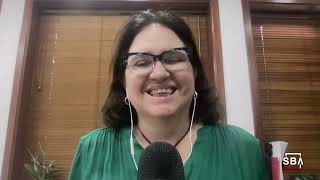
A recorded conversation (YouTube) between Jack Bianco (U.S. Small Business Administration) and Catalina Valenzuela (CEO, Innovus/Innovus Consulting) about Catalina’s path to founding her consultancy during the COVID-19 pandemic, early signals that launched the business (blogging, small gigs, work as a consultant), practical steps she took to formalize the business (registered an LLC via Sunbiz in about two hours), and lessons learned from SCORE mentors on operations, pricing, and a disciplined sales routine. Catalina is US-based (Miami) with frequent travel to Bogota and clients across Latin America (Colombia, Peru, Panama). Concrete advice includes prioritizing sales (e.g., ~75% of time), target activity levels (roughly 10 calls/week, ~4 discovery meetings/week, ~2 proposals/week), and seeking mentors and family support. The interview references programs like SCORE, SBA local resources, and Goldman Sachs 10,000 Small Businesses entrepreneurship training.
Questions this video answers
July 19, 2024
She said she opened her company in about two hours using Sunbiz (Florida's portal).
She is based in Miami and said she was sitting in Bogota during the interview.
She reported dedicating about 75% of her day to sales activity, aiming for roughly 10 calls per week, ~4 discovery meetings per week, and ~2 proposals sent per week.
Chapters
Hello and welcome everyone. My name is Jack bianco of the U.S. small Business Administration. My guest today is Catalina Venezuela of Innovis Consulting. Catalina works with public, private and nonprofit organizations both domestically and abroad. Welcome Catalina. I'm so excited about the discussion. I know, I know a little bit of the backstory, but for our audience, let me toss it over to you to do self introduction about yourself and your business.
Well, I'm Catalina Valenzuela. I'm the CEO in OS Consulting. In OS Consulting provides solutions to help organizations build their capabilities and reach their goals.
Why don't we talk or unpackage a little bit of the story more? As I understand it, you decided to start your consulting business actually during sort of the pandemic period where there are so many economic changes going on in different countries. So I'm going to ask you about the in a second, but first, where tell the, the audience here where you're based out of. Where are you on your side of this podcast sitting at right now?
Well, I'm sitting down right now in Bogota on my sister's desk and she's, she's away. I come to where I grew up at about every five to six weeks. I have a couple of clients here, so I come to visit and I make the most of seeing my friends and my mom and my family. I'm based in Miami and it's becoming very hot over there.
That's exciting. Just great areas that you're sort of based out of and we're going to talk about that. Let's talk about the sort of ideation and the foundation of your business. A few years ago, what were you doing prior to starting your business and what was the decision then to take that next step into entrepreneurship?
Well, I arrived in Miami in 2010 with two young children and I became a mom by default. It wasn't my plan to be a full time mom. I sent see resumes but I was dealing with young children. I mean the story is kind of the same story of any professional women kind of changing settings basically. And I was a bit frustrated and I start kind of speaking with friends and I was invited to write on a blog. In 2000, probably it was 2004, I started writing about technology and education and a little bit about women in technology. And that kept me busy. And for one reason or the other, people start kind of calling me and saying, can we do this little gig? Can you help us rewrite this curriculum or create this teaching resources in Spanish? And the whole thing started there. And then one of My friends from college, he used to be a teacher assistant in one of my classes. He got a new job and he invited me to help him do some work inside that job. I was a consultant for them for four years. I traveled the whole southwest. We implemented lean manufacturing. I mean, I learned a lot. And then the IRS came and said, well, self employed, you are taxed by this amount of money. And I was like, what? So my accountant very kindly said, well, you should set up an llc. And I was like, why didn't you tell me me this two years ago? No, to make the story short, it was the middle of the pandemic. I've been advocating through my social media, through lots of presentations, through my blog about women empowerment and economic empowerment and the need to be financially sound and they need to kind of have their own professional interests. At that point, some statistics were saying that about 25% of professional employed women were about to go to resign from their jobs because of the pandemic, because they were doing 24, seven jobs. They were doing their job, but they were taking care of the children or they were taking care of adults and dealing with what it means. Particularly there were women with younger children, with children that really needed to help, turning on the computer, setting up their headphones, doing the whole thing that was happening at that point. So very quickly I realized that I could open my own company. I opened my company in two hours. I just went into the sunbees, which is the platform for Floria. I opened my company, and here we are.
Awesome. So much of that sounds familiar from friends or clients and other folks that we interact with through SBA and some of our partners like score, which we're going to talk about in just a couple minutes. But fair enough to say you were. You were leveraging some skills, some passions and other talents you had. You probably knew about many of them. But there's nothing like getting that verification or follow up from folks saying, can we utilize you more? Can you work more with us? And those tend to be the early signals for entrepreneurs that are like, wow, I'm pretty good at something, but I'm really. This is in demand, right? I'm staying busier. I may need to build a team. And just like you said, sometimes it's a tax accountant or the lawyer or the lawyer friend that says, hey, maybe time now to start shifting to a model and sort of exposing you to LLCs or other models there. You obviously use the state website. It sounded like, what was your awareness at that point of what other resources you might be able to tap into, even if you weren't expert in those resources.
Well, I'm very active on LinkedIn, so I start kind of looking around and seeing and speaking with friends, and I start kind of doing a little bit of work with the program that SBA has at the FIU for Laurier International University in Miami. There's another. Another small foundation that has. That has business, that have programs for small, very small businesses. And a score, at that point that was going fully digital, has asked for volunteers to do webinar hosting. And that's how I say, well, that sounds great. I would love to do it. I want to help my community. Many of those webinars were in Spanish, so I got the. The job at the host of the webinars, particularly the ones in Spanish for Miami, for the Miami area, for score. So that's how I became kind of. Well, yes, I start kind of introducing the people that were talking, asking the questions, and all of a sudden I said, well, why would I look for one of these mentors? I mean, they're all so smart. And this place, I mean, this is amazing. So that's when I start working with a mentor from Score.
Awesome. Awesome. And for the audience, Score, which is one of SBA's most trusted partners, has over 10,000 mentors and business coaches distributed throughout the United States. A lot of excellent online resources, and you do have the availability to meet locally with a score. But as Catalina was just mentioning, SCORE has an immense amount of digital resources, including the opportunity to connect remotely or do digital training. When you got involved with SCORE, and you're providing training, but now you're getting exposed to other folks that might tighten up things. Your marketing plan or your accounting. What did that look like?
Well, it was very interesting because first, I work with Ricardo, which is one of the leads, the leaders in Miami. And Ricardo helped me kind of setting up my business in terms of, okay, you need to have these systems. And it was very basic systems, like a budget, like a cash flow kind of thing, and how you will work with your bank account. And he makes sure that I have a proper business bank account. You know, he helped me kind of set up those basics. Do you have an accountant? I mean. I mean, those basics. And he helped me out kind of figure out the pricing model. I mean, you need to. I mean, you need to think about your overhead, your administration courses, how much the hour. I mean, those kind of things that. I didn't have a clue about those. But what was more interesting is that after a few months, Ricardo, I moved to another. And that mentor is a person that used to be a partner on one of the big five consultancy firms. And he brought of course, all that knowledge about running a consultancy business and about kind of how the business model of consultancy business work. Because I was sure that I didn't want to be a consultant. I wanted to have a company. I mean, I'm not looking into have 100 employees or 10 or not even 10, but I wanted to have a company. I mean something that was not me is in Novus Consulting is providing you this service. And I'm the leader of that group because I wanted to bring all the talent and all the people that I know to different projects. So Andy, my new, my new mentor brought to me and helped me out building a consultancy business. Basically he explained to me how consultancy business make money, how I need to set up my selling strategy and I mean it's been amazing. And that's, that's what I can say.
You're unique in so many ways. You've got clients in different hemispheres in different areas. So you're US based, but you have clients abroad. Tell us a little bit about that. You've got some family, you know, in these different areas. But what do entrepreneurs need to know a little bit about having clients in different areas and that stuff. Is it so dissimilar from having clients right down the street? Are there different kind of without making, you know, be a lawyer on this, Are different regulations, I assume, or some other things you need to be aware of when you go into that type of relationship? Right?
Yes. When I came to live in the U.S. they said to me, there's two things that will happen when you live in the U.S. you pay taxes and you die. No, I was coming from Europe and there the taxing system works differently. So that was the first thing. How much money can I make abroad before I'm being taxed in the US So when you have that number, you kind of run freely. And why Colombia? Well, it was my natural market. I mean, I grew up here. As I said to you earlier. I went to college here. Many of my friends and my former colleagues, I mean I worked here for a few years are here and the chances just came, just one by one, you know, here and then I work a little bit in Peru and I work in the US and now I have a big project in Panama. So my idea is being US based but working in Latin America because that's what I want to do. I want to kind of build, I mean, build capacities in Latin America. Help, help. The, the US alone send around $600 million to Colombia in aid via USAID. And I want to kind of leverage on that. You know, I mean, I'm here, I speak the language, I know the cultural, the culture. I, I know the people. I know people. And you know, so, so, so it's a bit, it's a bit that. And I think as an entrepreneur, you tap your natural markets first, you know, and then, and then you move on and then you start kind of doing more, kind of ambitious marketing and more, kind of more aggressive marketing, I would say. But first you go and you check on your friends, you check on your colleagues, you know, you. So that's what I'm trying to do. I mean, to be US Based, I'm, I mean, I don't need to say this to anyone hearing this podcast, but doing business in the US Is very easy. I mean, I open my business in two hours. I can't. I mean, every time that I try to open my business here in Colombia, it's like 10 steps and a lot of money. And I'm like, no, this is not going to happen.
You know, our mentors can sort of guide you where to do some research, how to check on, you mentioned excellent things, taxation. There's some employment laws that are sort of different in different countries. If you have employees overseas protecting, you know, your product, your intellectual product property, our mentors can sort of guide you through that.
Exactly.
I think your, your feedback for our audience is, is critically important. Did you underestimate somehow the element of marketing and sales, sales engagement with clients? You had this deep expertise in the, the consulting. But, but I, I think you, you had learned how to better engage clients or how to balance your time with the sales component of your job. Talk me through that again, that lesson.
I think when you have your company set up, the next thing is set up your sales strategy. That would be my tip number one. Set up your sales strategy. I mean, you need to figure out where the revenue is coming. And I didn't have that and my mentoring score when I said, well, he asked me how much revenue is coming next month, and I'm like, what? No, I don't have any revenue. I was like, oh my God, this is crazy. I mean, I just realized how obvious it was that I needed to kind of generate new revenue and how kind of, oh my God, what I'm going to do. And that's a good thing about having a mentor and particularly score mentors who are very highly experienced people. You know, they've been through everything there's nothing that I'm going to say to my mentors that they have not either doing themselves, someone in here, their team doing it, you know, I mean they know, they know the thing. And so he was really quick and he said, well from now onwards you're going to dedicate 75% of your day and your time to sales activity and you're going to do a list of sales activities and you're going to figure out and we are going to say that you need to do. I don't remember the number but it end up on 10 calls per week, four discovery meetings per week. Sometimes I jumped from discord to calls and two proposals sent per week. So with those numbers I kind of understood that I needed to kind of sell. That's one thing. And then for marketing I'm being very unambitious because I've been able to do that. But at this point today I just finished the 10,000 entrepreneurship program with Goldman Sachs and today I'm ready to kind of be more aggressive with my marketing, more aggressive with my sales. But still I'm not a consultant, I'm the CEO of my company. So I need to be, I will be the face of the selling for at least a few more years and I'm there. And this building is built on trust and reputation. So it's me and it's going to be me. And sometimes I say well but how I'm going to sell and be talking with my clients. And I mean you need to find a way and you find it. I mean it's not, I'm not saying anything particularly new to any, anyone listening to this but, but yes, and I think, and I think the, the sales strategy has been working and I'm being, and I think I've been kind of listening, you know, to, listening very carefully to what my mentors have to say.
Awesome. Awesome. Yeah, you know, things evolve. We all have many gifts. Sometimes our mentors want to push you on a certain area they know you're heading towards, you know, so, so they're going to give you honest feedback which is great. Whether it's our small business development Cent Business centers, our veteran business opportunity centers or as you just mentioned, score and also sort of engagement and mentoring where you're at kind of at that mid growth stage. We've got our Thrive program which puts you much like the 10K program with colleagues that are at that same element. But if I limited you to the top two sort of quick tips for entrepreneurs that are either entrepreneurial people that haven't made that jump yet.
Or.
Or people that are early and struggling. What are your top two tips? Whether they're confidence builders or just, you know, technical items, I'll leave it up to your discretion, Catalina.
Okay, the first one is, as I said, know where your revenue is coming and how it will come to your bank account. That's the first one. Second one, look, for a mentor. I mean, really, you need someone who knows more than you. You don't know everything. And thirdly, engage the people you love and you like in this. And I've been supported by my family. I mean, you know, when they say that you're doing these stages of capital raising, that you have friends and family. Well, I have those. I have those. I have friends and family who support me financially, who support me emotionally, who support me, clap, who gave me a shoulder. So those are my three tips. First, where is your revenue coming from and how are you going to acquire revenue? Secondly, get a mentor Score is a great place to get a mentor. They know a lot, much more than you know. And three, get your loved ones involved. I mean, in the journey.
Thank you so much for joining us today, and I hope to visit you in the near future as well. Congratulations on the education front. You help nonprofit organizations. You volunteer a ton. Just applaud you in everything you do.
Thank you very much.
Thank you to my guest on today's episode, Catalina Venezuela of Inovos Consulting. For more information on SBA resources in your community or online, please Visit us@sba.gov Thanks again for joining us.
More from Your







President Donald J. Trump and First Lady Melania Trump Visit Grieving Texas After Deadly Floods

💪 Thinking of starting a #biz? Go for it! — Kerry Boyle, Vermont #SmallBiz Person of the Year

President Trump Participates in a Bilateral Meeting with the Prime Minister of Canada, May 6, 2025

