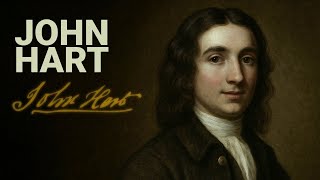
John Hart, a New Jersey farmer and signer of the Declaration of Independence, recounts his life from his 1739 marriage through the Revolution. He served as a judge and colonial representative, signed the Declaration in 1776, and hid from British forces until Washington's victories at Trenton and Princeton. Hart offered his 193-acre farm to shelter Washington and 12,000 soldiers.
Chapters
I am John Hart. Some call me Honest John, and I spent my life trying to earn it. History may have forgotten when and where I was born, but what is clear is that I called New Jersey home for most of my life. In 1739, I married Deborah Scudder, and the following year I bought my first farm, 193 acres in Hopewell, where we have 13 children together. I was a judge, a justice of the peace, and a representative in the colonial legislature. A man of the soil and of service. When Parliament marched redcoats through our homes, I stood against tyranny. In June 1776, I was sent to the Continental Congress, representing New Jersey. I signed the Declaration of Independence before I had to hurry home to hold my dear wife's hand as she passed. But revolution does not suffer a broken heart. That winter, the British invaded Hopewell, and I was forced to flee, hiding in woods, barns and caves. Only after the victories at Trenton and Princeton could I return. And when I did, I was re elected speaker of the Assembly, a post I held until 1778. That June, I offered my farm to General Washington and 12,000 soldiers. They camped on my fields during the growing season and refreshed themselves with water for my spring before marching on to victory. I died not long after, leaving behind no riches, no memoirs, just a name, a signature in a field where liberty once slept. Sa.








