National Small Business Week: Expanding Access and Opportunity for Small Disadvantaged Businesses
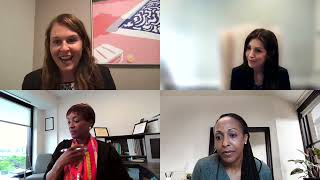
A fireside chat (National Small Business Week) featuring Catherine Branch, Bailey Devries, Tiffany Townsend, and Meg Vorland discussing initiatives to expand equity and access for small disadvantaged businesses in federal procurement and private investment. Speakers describe recent Biden administration procurement reforms (December 2021), goals to increase contracting with small disadvantaged businesses to 15% by 2025, new transparency via disaggregated contracting data, efforts to track SBIR awards and SBIC investment flows (~$34B in managed assets), and practical guidance for small firms entering government contracting (technical assistance, partner networks, SBIR, SBIC, PTACs, SBDCs, and manufacturing-focused initiatives).
Chapters
Hello and welcome to today's Fireside Chat celebrating National Small Business Week with three incredible guests working both at SBA and in the private industry to invest in and uplift small businesses here in the United States. Today we are joined by Bailey Devries, Tiffany Townsend and Megan Vorland. We are excited to have the three of you with us here today during National Small Business Week to discuss the work that each of you and your offices are doing to expand access and opportunity for small disadvantaged business owners to increase equity both in the Federal government and in the private marketplace. We hope to shed more light on what we are currently doing and what more we can do to invest in firms around the country. But before we begin, a little background on each of our speakers. Mr. Vries as the Associate Administrator in SBA's Office of Investment and Innovation. In the role she served as a Senior Executive providing guidance and leadership for programs that provide the high growth small business community with access to financial capital and R and D funds to support innovation. Mr. Vries is an experienced private markets, institutional asset management and government contracting executive with over 17 years of combined experience in business strategy, asset management, government contracting and investments. She is also an advocate for Women in Private Equity, serving under Private Equity Women Investors Network Foundation Leadership Task Force. And then we have Ms. Tiffany Townsend. Ms. Townsend joined the United States Small Business Administration in July 2021 as a senior Advisor in the Office of Government Contracting and Business Development. In this role, Ms. Townsend leads programs and projects to expand participation of small businesses and in government contracting, advanced support for small manufacturers, and ensures that small businesses are leveraged in efforts to support or to ensure America's supply chain resiliency in the broader economy. And we have Ms. Meg Vorland. Ms. Vorlan is the Co Founder and Chief Strategy Officer at D Code where she oversees core business functions, strategy and expansion into new markets, ensuring that operations and products are ready to scale. She is also a Managing Partner of investment network dcode Capital. Meg joined DCOLD as part of the following as part of the founding team in 2016 and brings a strong focus on business leadership and growth. Meg has an MBA from Darden and previously served in the Obama Administration as a Senior Advisor at the United States Small Business Administration, a Washington Business Journal 40 under 40 honoree. Meg's valuable experience working at tech startups has shaped decode's accelerator and she has been working in the Federal technology space for most of her career. Thank you all for joining us this afternoon for Small Business Week. National Small Business Week what we'd like to do is Start off with just a few questions and we'll proceed with our fireside chat. The first question that I have for you ladies is given President Biden's commitment last year to increasing equity for small disadvantaged business businesses across the federal government and the economy, what are some of the new programs or initiatives that you and your teams have undertaken to make the federal and private marketplace more open and accessible for newly form small businesses across all communities and geographies?
Tiffany, do you want to take that to start to talk? I mean, your office has led such phenomenal work around aggregated data that I think it would be wonderful to highlight since knowledge and transparency are key too.
Absolutely, I'd be happy to. So I mean, I think since day one, the Biden administration has been very committed to equity and that has really led since, you know, since even before my joining the administration. One of the first projects actually jumped into when I got here was a process around executing on the President's order around equity and procurement. And so that was really a months long process where the SBA was very much at the table, partnering very closely with the White House and a number of agencies across all government to enact a number of major policy reforms that were designed to really uplift and strengthen small business contractors and really empower and ensure that our socioeconomic firms, women owned small business, small service disabled, veteran owned businesses, excuse me, and other firms have the ability to get access to contracts and to compete in the federal marketplace and also bring new entrants into that, into the industrial marketplace. And so what we were, what the result of that was is this past December, December of 2021, there were a number of reforms announced in which we have, are now, I would say two quarters into those, those reforms being implemented. And we're really looking at, looking forward to seeing what the results of those are. And that includes one, as sort of mentioned alluded to, was tracking new entrants into the Fed, into the system. And we want to ensure that we're bringing new types of businesses, a broad range of businesses into the industrial base. We know that the federal government as the largest purchaser of goods and services in the world, wants to do business with small business. And we have goals around that. So we want to bring in new businesses into the federal marketplace. The President also last year announced a new goal to increase contracting with small disadvantaged businesses. And so we're increasing that goal to 15% by 2025. And so that's going to bring tens of billions of dollars of spending and contracting to small businesses across the country Also, accountability is incredibly, incredibly important. And we want to make sure that those who are in, in contracting across all of government that this is part of their performance. And so now their, their activity and their contract spend with, with small businesses is going to be in the performance plans of the senior executive officials who are overseeing these programs. And, and then we want to leverage just expanding the playing field. And so what we've done now is also this will touch more than 30,000 socioeconomic firms is bumping them up into tier two, into category management. Now I'm sure most people who are listening to this are not familiar at all with category management, as I was not. But that really in short, is just the federal government's buying strategy around how it contracts. And so we want to make sure that small businesses are doing, doing, doing business with small business is emphasized and bumping them up into Tier 2 allows contracting officers to do just that. And then finally transparency, and this is a little bit of what Bailey just alluded to is the, for the first time in history, the government actually released disaggregated data. So now we finally know, and I will say this is a huge step that the government is taking the lead as opposed to the private sector, that we're taking a huge step and saying this is where the dollars are being spent. And we know that for example with black owned businesses it was less than 2%. And so it really gives us a benchmark of where do we go from here. We know that there is room for improvement, but this really gives us, I think, a very good sound foundation in order that we can kind of build, continue to build upon and act upon. And so that kind of encompasses the major reforms around equity that we've been focusing on really promoting. And I think that kind of underpins all of the other work that we're doing in government contracting business development. Because overall what we're really focused on, as I mentioned, is that we want to make sure that, you know, women owned small businesses, economically disadvantaged women owned small businesses, small disadvantages in business in general, have access to those contracting opportunities. And our certification programs, our 7J program, our 8 business development program are all designed to do just that.
Thank you for that. Any other have a comment on that question?
Yeah, definitely. I think, you know, I applaud the Small Business Administration and the Biden administration for that. That just brilliant transparency around some of, around the data and being able to. The private sector is always looking for more data to be released and many businesses build businesses on top of that data. And in the New entrance into the market. I know decode. We look at companies that are across the country that are looking at the federal market and seeing, you know, dollar signs. But it is a really hard market to break into and it continues to be a hard market to break into and the entrance of not just folks, you know, who have, who have set up shop in the beltway, but across the country. So and predominantly we're working with software service companies, so SaaS companies. So you see a lot in regional tech hubs. But it is more important than ever for those companies to be able to break into the market and be able to really have, be able to solve some really tough challenges. And I would say that the onus is not just on the company. The, there is a huge learning curve, but the onus is also on the market. So I love hearing that there are, it is being written into performance plans for senior executives. I honestly hadn't heard that before and I love it. These kinds of procurement reforms are needed so that the government is able to, you know, take on some risk, take on, be able to do more on piloting different types of technology and working with small businesses to be able to get them some of that past performance that we all know is so, so important in future contracts. So I love what I'm hearing from that side as the, as sitting in the private sector. And those were a few key points that really, really resonated with me.
Wonderful, wonderful. Let's talk more a little bit about investment. One of the questions is what do you think about the opportunities and challenges related to investments in Govcon Bailey? How about you start us off?
That's a good transition, particularly with the comments that Meg shared and Tiffany because then I often think about it as how do we triangulate from here if there is pent up demand for, from founders of small businesses looking to get into government contracting.
Right.
But trying to navigate and understand how to get in. And if there are a lot of women and black and brown individuals and other underserved groups that are saying look, how do I move into government contracting? And you know, I am hearing that there are program specifically to be supportive of increasing equity within certain demographic groups and then how do they do it? Right. And so what Tiffany has mentioned, right. Is kind of that making it easier and also, you know, aligning expectations on the federal government side to make sure that there's more efficiencies and opportunities in those procurements.
Right.
But then how do we get those businesses ready and then also how do we ensure that they've got the capital, so that way they can pursue those opportunities. So actually, before I talk about the investment in capital, I will say within our organization, I have the privilege of serving and leading two programs. One that is very focused on our innovation efforts across the country and the other one on the investment side, I think that they go hand in hand in many ways. But what I would say is that I love what our team. I want to say that these are the efforts and ideas of the broader team to provide more transparency and ask the questions about the groups that are being served when we provide prizes and grants to organizations that are focused on the assistance and support to accelerate innovation. And so we're very focused on that and making sure that those services and support that we provide through those resource partnerships are going to build capacity in different communities across the country. So thrilled about that. And then also just heightened attention to track and monitor across sbir. So Small Business Innovation Research America's seed fund awards and where those awards are going and the demographics of the founders of those companies, which is phenomenal. Right. So I think transparency, transparency, transparency so important. But then on the capital side with the Small Business Investment Company program, so the SBIC program, so we often say that, you know, maybe we're the largest fund of funds in the, in the federal government. You know, we manage a pool of over $34 billion of assets with federal money and private capital that come and match together. So there's capital at risk along with federal dollars to invest in small businesses. Both the creation of those small businesses, the growth of those small businesses, the sustainability, and also sometimes the transactions when the founders of the small businesses are looking to move on from that particular endeavor. So what we are doing there is also seeking to increase transparency around the allocators of capital. So the fund managers and also the demographics of the owners and founders and CEOs of the small businesses that they invest in. Right. So we have to meet the investment community where it is, I often say. So, you know, we have to seek to understand where we are and then what opportunities we have to create more awareness of opportunities to provide investment in different parts of the market. There are so many compelling opportunities for SBIc's with aligned strategies to certain segments of GovCon to invest in those businesses. Because SBIc they have a special provision where if they invest in a small business, they are not considered affiliated to the small business. So any small businesses in government contracting, they can maintain their small business status while still accepting equity investment from an sbic. So really a lot of Great opportunities and synergies there. And the last point I'll just bring up is that the SBIC program has always been very well aligned for funds that are seeking to provide loans to small businesses. Equity and loans we are hearing of just an increasing trend of what they might call revenue based investing or revenue based loans or income sharing agreements. These are opportunities for private investment funds to provide capital to a small business based on the current and projected future revenue of the business. And it's often something that banks won't do, but private funds can do. And why it's a really good fit for government contracting is oftentimes when you win a big government contract, well, maybe we're not the fastest to pay, maybe the federal government is not the fastest to pay. So you might be waiting to get that first check from the federal government, but you have a contract with the federal government and in many ways that can serve as a sort of guarantee of future revenue which is easier for those funds to underwrite. So I'll stop there, but there's my data dump for everybody.
If I could quickly double click on the SBIC affiliate portion and why. So we've worked with over 140 tech companies over the past few years that all are looking at the federal government as a portion of their future revenue. That is what they want to do. And the reason the SBA SBIC affiliate rule is so important is because they are able to actually, while you would look at these companies and in every which way, say they're startups, they're small, but if they take funding from non SBICs they could not be able to participate in some of these set aside programs. It has the potential, I'm not a lawyer, but it has the potential to size them out of some of these programs that are specifically built to try and get the foot in the door, get that past performance, build off that past performance, show the government that you can deliver and that you understand and know the mission need. And so hopefully more to come in SBIC and hopefully more on emerging managers in sbic. Fingers crossed as an emerging manager.
Well that's a very good point. And when we speak about government contracting, I would like to ask the question, what can you three share that would help businesses enter into government contracting for the first time?
Yeah, I can start on that one since this is my all day, every day and I know.
I like to hear it from the other, from the other side as well.
And Tiffany, it's not totally different than some of the things you said. So at Decode we Really want to make sure first and foremost that these companies are solving a real problem that the government has. So we work with a lot of software as a service companies on what are they doing in the private sector that is working, what actual problems are they solving and then helping them to find those places, those programs, those departments, the agencies across DoD, FedSivity, the intelligence community on where are they facing similar types of challenges. So an example would be, you know, a data company that is, that's doing data analytics for Tesla, you know, fast forward, hey, the Census Bureau or nga. There are a lot of places that have very, very similar data, data needs, whether that's cleansing, whether that's data lakes, etc. And really trying to make sure that companies are understanding the problems that government is facing. They're understanding that government isn't always running on the very brand new operating system. And therefore you might have to be on prem versus in the cloud, but you can push to the cloud in places. And so I would say first and foremost we really try and work with folks on building that understanding of the different departments, agencies and that it's not one big old buyer, it's not one big old check that just gets rolled in together as the, you know, Fortune 1. And then, and then we have a lot, you know, then there's a lot of checkboxes along the way. You know, do you go after something like sbir, do you, can you leverage that? But there are a lot of checkboxes on the front end I think that are, that are small barriers to entry. But you need a partner in this to know how to go forward. Especially when you're not just producing for the government. You're looking at some great private sector technology that's been invested like Bailey was talking about by, by not just sbic, but venture capital across the board. And those, those types of companies are looking to get in and there are plenty of, plenty of hurdles. But finding that partner to start and help you navigate what solution are you really bringing to the table that's going to help solve the mission challenges across the board?
And I'll jump in. I would want to say, I think, Meg, your points are so, so important and so well taken. And I think that where SBA then comes in in terms of supporting small businesses is really what our government contracting team does in partnership with our resource partners, small business development centers, procurement technical assistance centers, and really working with the businesses to move them along in that process. Right. And so I think that I will actually, I'll go back to saying One, we recognize that often the idea of going into contracting, you know, that that's an opportunity for your business, but it can often seem intimidating. And what we want to do is simplify that process, demystify that process and make it feel as though it's an, it's an engaging opportunity that you really want to, you know, move forward with and try to take for your business as a way to diversify your revenue. So we're, you know, again, we're really looking at how do we, how do we make, how do we make that accessible? It is through our certification programs. It is through a lot of that technical assistance. And that is some of where that handholding kind of comes in for those businesses. And to your point, making sure that they properly assess their business so that they know that what they, the problem that they're solving, the product that they're offering is something is going to be a match for the challenges that government is tackling. And so that is where that's where we come in. And that's again where research partners come in to really do that, do that matchmaking and kind of, and grow the opportunities from there.
And we're hearing on our side the diversification of revenue, how important it is, you know, who knows what is looming. I think lots of people think that we're going into a down economy. And the diversification and the specifically the diversification into government has been a hot topic on. And I know many companies minds when the private sector stops funding, the government typically doesn't. And while they may, like Bailey said, be that the check may be in the mail for, for quite a long time, they do pay. So those are some of the things that we're hearing both on from the companies that we're working with, but also in my role as a GP for Decode Capital, a lot of the limited partners that we're talking to are really interested in how they can diversify their investments and make sure that their investment portfolio contains some government and government contracting and government resources. And so I think that's really going to be important, especially going into Q3, Q4 this year.
That's an excellent point that you were bringing up at the end also about how limited partners, so how the investors, and particularly institutional investors are thinking about the exposures that they're going to have. As, you know, we go into a changed rate environment. So one of the, you know, the things that I would just highlight right is there, there will be a significant number of procurement opportunities that are coming out of the infrastructure bill and with that, you know, it is not just, you know, thinking of the materials and the construction and the building of that, but think about all the other wraparound services and support that come with those types of projects. And so, you know, across the board we are anticipating a significant number of opportunities and dollars that are going to be invested, both coming from the federal level and from the states in the weeks and months and years ahead.
Well, and hold their feet to the fire around like, make sure that like you all are already thinking about this, but that small businesses are represented, but also that you have access to commercial sector technology. I've, I've talked about this a couple of times, but you know, as you have these large scale procurements, many times they go to shops that can, that can handle them and can respond to that big old rfp. And so where possible pushing in, you know, the commercial sector technology that has been invested in by the venture community and is continuing to be invested in by the venture community so that we're not building from scratch and that we're leveraging some of the best minds in data, AI, et cetera, that are already out there and rolling. So I know you all are doing that already, but there's my plug.
You know, I know that we are excited and inspired by what you all are saying to help our national small business, we small business owner to appreciate things that they can do more, that they can understand on how to break into the government contracting market. But we are living in unprecedented times. We're coming out of COVID at this time. I would like to ask the question, in this unique moment of recovery, what role can we play in driving economic resiliency and preparing communities to take advantage of future economic growth? What would be your thoughts on that?
I'll give a stab at it and share that. So there's been a lot that has happened from a policy standpoint that is going to lead to lots of opportunities for procurement. However, there are other things that don't involve government funding that are also incredibly important. Right. So how do we think about the changes in the business environment and the macro and what that means in terms of how we create those networks of support for new small business owners and existing small business owners that are seeking to get into government contracting and actually beyond government contracting, but they might be certified as eight or through other programs as well. And what can we do through policy and regulation? So that way the founders of these companies can invite individuals onto their boards, can provide them with equity in the company. So that way it's not just one founder Pulling and pushing to succeed, but they've got a network of support around them that is introducing them to potential customers and other investors and helping them to manage and grow their business. What do we always say? It's like teams are so much stronger than individuals. And so when you have good alignment of incentives and board of great people around you, you're positioning that company to be so much more successful. We've had a leg legacy view that was very much, you know, a founder owned and operated view, you know, very American in many ways, right. Like we want to have the founders of these companies build equity, but oftentimes, right, in order to go farther, you know, you need to do it together. You can't do it alone. You go alone to go fast, go farther, go together. How do we evolve our thinking and our policies and our regulations to make that possible? So individuals of underserved communities who have been shut out of equity have the opportunity to build equity and build networks.
And if I can, Bailey, just build on what you just said. It makes me think about the Office of Manufacturing that we are also in the process of standing up here under the government contracting team. And this was something that the president also announced last year, last summer. And we've been continuing to build out. And it really, the focus of the office is really designed at supporting manufacturers to compete for federal contracts as well. And so thinking about what we know about the manufacturing space and most companies are also very, very small companies with just a handful rather than hundreds of employees. And so thinking about what those opportunities are there to, to scale is very important. And I think that combining the, just the renewed focus on manufacturing, but also renewed focus in a different direction because I think when we often thought of manufacturing, we thought of dusty, dirty jobs. And I think it's. We're now finally turning our focus into really realizing that this is a new age of manufacturing, of clean technology, green technology. And there's just so much, there's much, so there's so much out there in terms of manufacturing, so many opportunities. So I think it's a combination of looking, looking ahead and seeing what the next generation of manufacturing looks like, building that next generation from a workforce perspective and then sort of aligning it back with what in supporting it with the existing policies that we're trying to develop now, essentially.
And if I could jump into, one thing that really resonated with me was if we want to make sure that we have access to capital and across the board getting the, getting access at that GP level, so at the general partner level, of funds, decode capital is three women, which is insane. And so we're working at the intersection of government, venture capital and tech. So three very, very male dominated industries. And you know, it's not a. If you build it, they will come. But I will say that we do, we generally just get access and we get, we get more women founders that come and ask us questions. We build our network in a slightly different way because we come from a different background. And I think that that has been really important in how we see growth of our business, of, of our venture firm, et cetera, as we go and it will continue to be important as we go forward.
Thank you. Thank you all for that. We are running out of time, but I am so inspired by hearing what you three are saying. I just want to ask one last question and that is what inspired you to get into this line of work of public service investment and entrepreneurship? If you three wouldn't mind sharing briefly just what inspired you? Let's go with you, Tiffany.
Okay, sure. I think for me stepping into this role was really building on my previous work. I think I'll say just on a very personal level. My very first job was actually with the federal government at the Department of State. And so I like to factor. Call myself a recovering public servant. So I think I've always had that as a part of a core value in terms of what I wanted, wanted my career to look like. And so I think when this opportunity come, you know, was presented to me being able to bring the work that I have been doing with small business manufacturers from the nonprofit sector and bring it into, bring that work and that expertise into, into the government sector and trying to work on marrying the two, that was what was exciting to me.
Thank you.
Meg, what about you?
Not too different from Tiffany. This mission has been a core belief in what I knew I wanted to pursue. And then I was able to find the few points of entry right. So not just the government, but the, the tech side and marry those together. I spent time in the government, as you said in my bio, but really understood that I was going to be able to move the needle and do my best work from the outside in. So love all of my wonderful public servant public servants and partners in the government, but really thought that I could really help, especially these small businesses from the outside in.
I love listening to everyone's calling and reason often. You know, some people will talk about finding a calling and I often think about it as you cultivate one and most of the time you don't even realize that you're cultivating it. And then it's a heart meets head moment when you realize that all these things come together and you know how your values and principles line up. And then it becomes a strong itch that you can't get away from. Yes. So you know that that's what brings me here. I wake up excited every single morning for the opportunity to serve the investment community and to serve entrepreneurs and to try and make things a little bit better. Right. Because even some small tweaks and adjustments can have massive ripple effects. And we have an opportunity and a responsibility to open things up for so many people who have been left out. Not maliciously, but things just haven't worked. And we have a real chance right now at this moment to make things make things a lot better.
Well, thank you all so much. That's going to end our fireside chat for National Small Business Week celebration of events. I am Catherine Branch. I'm the special advisor for Government Contracting Business Development. And if you ladies have any last comment, I'm happy to take them. But if not, let's wish these small businesses a national Small Business Week of fun, exciting, inspirational events. Thank you all so much for joining.
Thank you.
Thank you.
More from Your







President Donald J. Trump and First Lady Melania Trump Visit Grieving Texas After Deadly Floods

💪 Thinking of starting a #biz? Go for it! — Kerry Boyle, Vermont #SmallBiz Person of the Year

President Trump Participates in a Bilateral Meeting with the Prime Minister of Canada, May 6, 2025

