Oak Barn Beef's Hannah Klitz | Winning Business: Resilient Stories of U.S. Small Business Owners
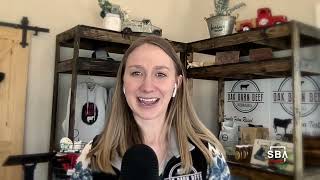
Hannah Klitz started Oak Barn Beef as a college sophomore in Nebraska and built it into a farm-to-table business shipping beef to customers in all 50 states. She credits university entrepreneurship programs and local mentors for helping her navigate high shipping costs and other operational challenges while scaling the direct-to-consumer model.
Questions this video answers
West Point, Nebraska.
Fifth-generation cattle producer.
She started the business when she was a sophomore in college.
Since 2020 (each year since 2020).
She worked with them in 2018 and again in 2022.
Chapters
Hi, I'm Jack bianco of the U.S. small Business Administration. Today I'm talking to Hannah Klitz, owner and operator of Oak Barn Beef located in Nebraska. Hannah is a fifth generation cattle producer. She started her direct to consumer beef business when she was a sophomore in college, and since then she's built up a national customer base. Welcome, Hannah. I know we've chatted a little bit, but for the sake of our audience, please, in your words, tell me a little bit about Oak Barn Beef.
Well, I'm excited to be on Jack, so thank you for the opportunity. Oak Barn Beef is a farm to table beef company. So my family raises cattle and throughout the last six years we've been growing and selling online as well as adding in a retail storefront in our rural community of West Point, Nebraska.
Oh, wonderful. I look forward to eventually visiting. Although you just mentioned you got online ordering too, so I don't have to wait that long in case I don't get to Nebraska soon. When did the business start? Was it tied to the family and you're the next generation or did you start it? And when?
When I was a sophomore in college, I had the opportunity to be the Nebraska Beef ambassador. So with that role, I traveled across the state and country to talk to concerned consumers about cattle raising practices and also teach youth about where beef comes from. And through that role, I just realized the huge educational disconnect between producers and consumers and started thinking through how can my role on our family farm and working with my family develop that side of things. So I thought, what better way than selling our beef directly to people and creating that direct connection is there that that's the best way to educate Right there. So eventually I work in partnership with my parents and their family farm and now my in laws on their family farm too. But Oak Farm Beef is its own entity, so technically I'm the owner of that, but work closely with my family's operations.
Oh, wonderful. Were you one of those kids that it sounds like, you know, passion for farm, agricultural, rural economy issues, but were you also one of those kids that always wanted to be an entrepreneur? You knew you had an entrepreneurial skill set in that, or was your passion for, you know, farm living, agricultural issues and animals the motivation to get into entrepreneurship?
You know, looking back, I think I was always an entrepreneur at heart, but it took me until college and an involvement in an entrepreneurship program to realize that. But both of my parents were entrepreneurs. They owned a concrete company and poured concrete, but different story, but just through our small involvement on our family farm and as we started growing that side of things, I was really involved with the agriculture side as well.
Entrepreneurship in rural America in Nebraska, significantly different or not so much different from maybe non rural areas and other commodities or products. What would you say out there? Many people just sort of live in an area for a prolonged period of time and may not see different parts of our national existence. But I'm always intrigued by folks that have grown up around entrepreneurs or in different parts of our country.
There are challenges with being in a rural community, but at the same time, I think that rural communities are a lot of times the original entrepreneurs. A lot of our parents were farmers and farmers are the original entrepreneurs. When you look back in history too. And just blue collar businesses sometimes are more popular in rural communities, but those are entrepreneurship in itself. There is. We have a strong entrepreneurial community in Lincoln, in Omaha, and they're only about an hour, hour and a half away from West Point. So I do frequent in Lincoln and Omaha to some of their entrepreneurial events too.
Explain that for our audience. Kind of. Who are you competing with? Keeping up with, although you really strike me as somebody has come up with some unique approaches. But on the competitive landscape, you know who you're tracking or monitoring. Because competition is part of entrepreneurship.
Yes. People always assume that our direct competitors would be other people selling beef directly to consumers from their family farms. So small family farms. But I like to look at it more as our competition is the grocery store where it's the convenience of grabbing a piece of meat off the shelf and putting it in your cart. Or larger corporations that do mail order beef, some located in Nebraska. But when we think of it, we're not competing against each other as the small family farm selling direct to consumer. We have such a small part of the market that we're really competing against those, those big guys there and just trying to get people to buy more direct and help that farm to table movement, which we've seen a huge increase in the last three to four years because of the pandemic and people just wanting to get back to where their food comes from.
Yeah, it seems like a large trend. I know our family's paying more attention to that and a lot of our immediate network and my social life. In your entrepreneurial journey, I understand that you've really tapped into or not been shy about sort of engaging with mentors or coaches. Was that an early experience you mentioned doing your ambassador work. Was that something you got exposed through your family, the ambassador work, maybe internships? And how have mentors shaped you or why do you have this positive sort of approach? But some people are intimidated by mentors or think that, you know, it's a deficit model as opposed to tapping into wisdom and diversity of thought. Walk me through that a little bit, if you would.
The University of Nebraska Lincoln is really fortunate to have a very good entrepreneurship program. So I was a part of the Angler Agribusiness Entrepreneurship Program, which was founded by Paul Angler, who's a cattle feeder in Texas. But he grew up in Nebraska and left an endowment to the university to create this very hands on program to encourage young people to create businesses and then move to rural communities, whether that's their hometown or just another rural community too. That easily changed my life. And Oak Barn Beef would not be here without such a good entrepreneurship program. But we didn't just sit in classes and learn about how to write business plans or just businesses in general. They really pushed us to go out and learn from failure. And I think that's what makes the biggest difference with the results they're seeing and student entrepreneurs actually doing these businesses. An example of that would be in our freshman business class. They gave us $50 and said, all right, go start a business and tell us where you failed and what you learned by the end of the semest that created that entrepreneurial mindset. And then when I actually did launch Oak Barn Beef, they were there as advisors and mentors and somebody to go to to ask those questions. So that, that really just helped get started on the right foot and have the right mindset with that.
And you got used to these exchanges and you know, that sort of a. It's give and take. I suspect some of the coaches or teachers or colleagues that you've worked with have equally learned from you, because I did notice you've put a lot of effort into and I think leverage. But I want you to walk me through it. The area of sort of your digital footprint and your social media, to some people that would say, hey, wait, you know, wrong podcast. Why are we talking to somebody that sells Beef and does some other unique products, has leveraged those type of platforms. But tell our audience, was that something you were used to, something you found critically important, and how did you get up to speed? Again, an area some people probably underestimate or sometimes are intimidated by. You seem to be doing a good job. So talk to me about it.
When I think back to the start of Oak Barn Beef, I had reached out to the Nebraska Business Development center, who's part of the sba, and I met with A mentor there who had a lot of experience in digital marketing and I had no clue even where to start. And she really pushed me to think about how I can learn about this and learn how to market without emptying my pockets. And so most of the marketing I learned is just from audiobooks and podcasts, but that's because of that one mentor pushing me to do that. Since then, I've developed our marketing a lot and have learned a lot of in that arena, but it's helped us reach customers across the United States. And now every year since 2020, we sh to like all 50 states. So for the past four years we've had customers in every state, which is just cool to think about our beef, our cattle that we're raising here, getting to touch that many families lives.
Oh, wonderful. So you also gave a shout out to our dear friends at the Small Business Development center, national network of some awesome men and women that help people develop that idea into a business plan, into a business or, you know, current business owners delve into operations, maybe exporting a whole gamut of services out there. How did you initially find them? Had you heard about them, you ran across them and then tell people about those first couple days? I suspect they sat down with you, maybe did a little assessment to see where you're at. But tell us about that early courtship of an entrepreneur and a potential mentor or business coach.
It's hard to remember how we exactly got connected, but I think it was through the entrepreneurship program that they had laid a lot of that early groundwork with me. But just to have outside mentors and new perspectives was the most powerful there. So that was back in 2018 and just again in 2022, I believe. I was applying for a grant and got to work with the Nebraska Business Development center again and they were exceptionally helpful. I had a business plan that I had built in college, but not had touched for about three years. And so they really helped me dive in and make sure that we met their criteria in order to apply for that grant. So it was really helpful from that perspective too.
Super. For anybody looking for a mentor, if you run across one of these programs, great. If not, or you need to discover a little bit our SBA.gov website based on your zip code or other sort of opportunities to learn online or meet somebody in your local community to get these mentoring benefits out there, want to pivot a little bit. Although you've been doing the sharing the wealth of your wisdom and experience, one thing we've talked to a number of entrepreneurs about is the fear of failure. But that failure is natural. There's a learning experience with it. And there's something about entrepreneurs on how they apply failure, or the mindset not to fail, but to learning from it. I remember in some of my research, you had some unique experiences, if you will share a little bit of lessons that you tried, maybe didn't go as planned, but what you came out of it from and why that sort of built you into the company that you are today.
I think I fail every day, whether that's just like a customer interaction that's not as good as I think it should be, or something along those lines. But what I've learned is the way you look at it is how you can turn those failures into successes. But one of the biggest failures in my early days, and I'm still a little embarrassed to tell this story, but we had the opportunity to partner with a cigar company, and we were doing steaks and cigars with them and then directly shipping the beef to them. Just perishable products. There's a lot of logistics there. And so I had quoted this cigar company for that partnership. I was so excited about it. And when the first order came through, I had the realization that I forgot to factor in the shipping cost for each of these boxes into that price that I quoted the cigar company. So big dollar amount mistake there. But I had, luckily, a good mentor who I ran to crying, by the way. But I had talked to them. What do I do? Can I charge the company more money? What's the best way here? And he just told me to take care of our customers. That's the best thing we can do is just make sure that they have a good experience with our company, and then hopefully they'll return customers and we can make that dollar amount back. And that's really a mindset that I've kept throughout the years, too, is take care of our customers first. But lots of learning opportunities throughout the years.
That product packaging or deal, was that something you thought of or you saw a trend out in the industry that's a unique sort of attractive deal? Beef and cigars, two popular topics out there. Was that something you came up with, your mentor came up with? I'm wondering. I know it did not go exactly as you planned. And again, thanks for sharing that. But where'd that idea come from?
I had a meeting at a cigar bar one time, actually. And then just through that meeting, we got to talking about this possible pairing. And first the idea was to do a cigar and beef dinner at that cigar club. And do kind of like a farm to table dinner, but really focus more on the cigar pairing there. That actually didn't happen, just things didn't go the correct way. So I reached out to another company to see if we could keep the ball rolling.
What are your current sort of business biggest challenges and how are you sort of planning to tackle them? Is it maintaining that customer loyalty that sounds like you invested early time into? Is it the operation side? What would you sort of, you know, what would you share with the audience on biggest challenges and what a leader like you is kind of laying out to address them?
Our biggest challenge right now, and it has been for the past few years, is that our input costs are just very high. So when we are actually raising the animals and have to factor in commodity prices, feed prices, the butchering costs as well as like UPS costs, dry ice things, just there's a lot to the supply chain that cuts down at our bottom dollar. So this has been something we've really focused on trying to increase our margins over the past few years by lowering our expenses. So we've done a lot of research with our shipping boxes, how to get those like the cheapest we possibly can and keep our overhead low in some different things. But just when you're dealing with commodity markets, you're at the subject of those commodity markets for some things as well.
Off top your head, you know, your, your top two things. If you went back in time and you talked to a younger you when you're starting out or, or somebody just starting out now that you wish you knew then, that you knew now what, what type of sort of cheat codes or sort of tips would, would you give somebody just starting the journey that you think we don't communicate enough or, or they need to know because it'll make their life a little easier. They've got a lot of work ahead of them, obviously building a company. But what top two tips would you share?
I think the hardest part is just starting. And as soon as you take that first step, whether that's building a website or for us, it would be like planning the cattle that are going to go into Oak Bar and Beef's program and different things like that, that's the hardest thing is to pull that trigger. So even if you're not 100% ready, I would say just start. You learn as you go and you're never going to learn that before you start. Those lessons come in as you are doing it. The second thing, let me think here. Once you put in the hard work, it will pay off. So a lot of times those late nights and early mornings and things, you just have to really just think about your end goal and the purpose of why you are starting this business, and that really helps push you through, too.
I think those are very insightful. I'll add a third. Watching a podcast like this from actual entrepreneurs that have gone through the journey, you learn a. A lot. You learn. Everything's not. Not perfect, but it's worth it. You know, your dedication, your openness to feedback, mentoring, relationships, you know, understanding of your industry, some innovation, you know, marketing. Marketing. Marketing is always important. So with that being said, my final question for you is, so. So what's next, you know, for. For the company? Not tomorrow, but maybe next year or something you're building towards. I don't want you to share any secrets that you're not willing to right now, but where are you moving more in a certain direction? Diversification of product line or what's next on the leadership journey for the company?
Yeah, you hit it on the head. Actually. Diversification is probably what's down the road. I eventually would like to add other meats into our program. So right now we just sell beef, but hopefully one day down the road, we'll be able to raise some pigs and turkeys and different animals as well. Cattle. And just adding in some different products like beef sticks and jerky, and starting a wholesale line with that as well. So that one's a little closer. That's probably something we're working on currently, but I look forward to when we can add the animals in, too. But overall, our why we started this business is, you know, to connect those producers and consumers, and that comes with that farm side. But on a personal note, it's such a good business to raise a family around, and I have two little girls right now that I. I know that they'll just love getting to go out every morning and feeding all the animals and counting the beef that we put in the boxes. And it's. It's just a good learning opportunity. And as somebody who grew up with parents, as entrepreneurs, I want to give my kids that same opportunity, too. So we look at all aspects of it, but that's. That's kind of the goal I keep in the back of my head on those hard days.
Got it. Can you promise me maybe there'll be my next set of podcast interviews? Can they give me an exclusive? I have no doubt that you're going to pass on that gene or pass the torch of entrepreneurship. So we wish the entire family well and thank you again. For joining us. Thanks again for highlighting the partnership you built with multiple organizations, including our Small Business Development Centers out there. We're so proud of the work they do, which is really collectively powered by the passion and the clients that we serve. You know, you, your colleagues out there in industry, all your awesome statewide residents in Nebraska and other areas. But thank you so much. Look for my online order coming soon.
Thank you for having me on.
Thank you to my guest, Hannah Klitz, owner and operator of Oak Barn Beef, for joining us on this edition of SBA's podcast. For more educational resources to grow your business, please visit our online learning platform@sba.gov thank you so much for tuning in.
More from Your







President Donald J. Trump and First Lady Melania Trump Visit Grieving Texas After Deadly Floods

💪 Thinking of starting a #biz? Go for it! — Kerry Boyle, Vermont #SmallBiz Person of the Year

President Trump Participates in a Bilateral Meeting with the Prime Minister of Canada, May 6, 2025

