President Trump Participates in a Signing Ceremony, Dec. 11, 2025
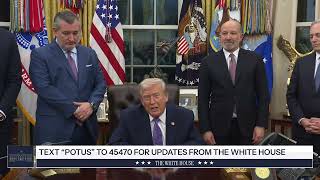
This is a transcript of a December 11, 2025 White House signing ceremony where President Trump signs an executive order to centralize AI regulation under a single federal approval process. The administration (represented by Will and advisor David Sacks) argues the EO is meant to prevent a patchwork of state rules that could cripple AI investment and construction of data centers, preserve U.S. leadership over China, and protect national security. Remarks and Q&A range beyond AI to tariffs and economic performance, relations with China and Iran (including claims about an Iran nuclear site being "obliterated"), Ukraine and Gaza stabilization, and domestic political matters (nominations, redistricting). The transcript includes many speaker-attributed numeric claims (e.g., counts of state bills, economic statistics, and enforcement figures).
Chapters
Well, thank you very much. We have a big signing right now and we have a tremendous industry where we're leading by a lot. It's the AI, artificial intelligence. I always thought it should be si, supreme intelligence. But I guess somewhere along the line they decided on the word artificial. And that's okay with me. That's up to them. It's a massive industry. We're leading China, we're leading everybody by a tremendous amount of where the electricity is being built by them. In every plant they're building the electricity, we're getting them rapid approvals, but they're spending trillions of dollars and they can't. Basically this has a couple of other things that are less important, but one of the things that it has is you have to have a central source of approval. When they need approvals on things, they have to come to one source. They can't go to California, New York and various other places like Illinois with Pritzker, who's, you know, a totally unreasonable person. And they have to have, you know, they're putting all this money in. It's a big part of the economy. And there's only going to be, I think, one winner here. I don't know if anybody agrees with that. I think most people agree, but there's only going to be one winner here and that's probably going to be the US or China. And right now we're winning by a lot. China has a central source of approval. I don't think they have any approval. They just go and build. But people want to be in the United States and they want to do it here and we have the big investment coming. But if they had to get 50 different approvals from 50 different states, you could forget it because it's not possible to do. Especially if you have some hostile. All you need is one hostile actor and you wouldn't be able to do it. So it doesn't make sense. I didn't have to be briefed on this, by the way. This is real easy business. I mean, this is simple. We're taking in trillions of dollars. We're taking in tremendous amounts of countries jobs. Everything's coming in now just to get off AI for a second. Auto plants are being built at levels that we've just about never seen before. We had. Our auto industry was decimated. 56% of our auto industry left our country over the years. It was at one point, 100%. And then it got shriveled down and really we lost a lot. And now because of tariffs, which have been so Incredible. We've taken in hundreds of billions of dollars and we're bringing back our factories, we're bringing back everything. It's, we've never been in a position like this. Our stock market today was, well, I saw it a few hours ago, but a few hours ago was way up and we hit a new high for the 52nd time in 10 months. We have an all time high stock market. And it's all reasons. A big reason was the election November 5th. And another big reason, and maybe the biggest reason, but maybe not because without the election this wouldn't have been done because people don't know how to do it. The second reason is the tariffs we're charging. Countries that were really hurting us badly were really decimating us. Hence we have 38 trillion in debt, which will start paying off pretty soon with the tariff money coming in. But countries that were really decimating us used tariffs against us. Now we're using tariffs. All we want is fair. All we want is national security. It's given us great national security. I settled eight wars and numerous of them was because of trade and because of tariffs. So we're very happy with that. But this is about something a little bit different. We want to have one central source of approval and we have, I think great Republican support. I think we probably have Democrat support too, because it's common sense. I mean, you can't go to every time you make a change and it could be a very reasonable change, you still won't get it approved if you have to go to 50 states. So this centralizes it. And it's something which the people behind me, the very distinguished people all, but Tim Cook just left of Apple and spoke to all of the big companies, great companies, and they won't be able to do this. This will not be successful unless they have one source of approval or disapproval. Frankly, you could have disapproval too, but it's got to be one source. They can't go to 50 different sources. So I just want to thank everybody for being here. And Will, what would you like to add to that?
Sure. Mr. President, as you said, in keeping with your commitment to grow the American economy, create potentially millions of new American jobs and maintain America's technological and military superiority in the years ahead. This is an executive order that orders aspects of your administration to take decisive action to ensure that AI can operate within a single national framework in this country. That as opposed to being subject to state level regulation that could potentially cripple the industry. David Sacks, your AI and crypto czar, has been one of the key players and key authors behind the CEO. He can give you more of the granular detail. But the big picture is that we're taking steps to ensure that AI operates under a single national standard so that we can reap the benefits that will come from it in terms of economic growth and job development, national security and technological ed.
And it's really the biggest industry that anybody has seen. I mean, it's. It's taking off. And again, I believe there'll only be one country that really benefits, and it should be the United States. And it will be. If we do this, if we're unified, we have to be unified. China is unified because they have one vote. That's President Xi. He says, do it, and that's the end of that. You know, we have a different system and. But we have a system that's good. But we only have a system that's good if it's smart. David Sacks, could you say a few words, please?
Yes, sir. So, as you pointed out, we have over 1,000 bills going through state legislatures right now to regulate AI. Over 100 of them have already passed. 25% of them are in California, New York, and Illinois. You've got 50 states running in 50 different directions. It just doesn't make sense. We're creating a confusing patchwork of regulation. And what we need is a single federal standard. And that's what the CEO says, sir, is it basically states that the policy of our administration is to create that federal framework. We're going to work with Congress, like the chairman here of Commerce Committee, Senator Cruz, and other members of Congress to define that framework. In the meantime, this EO gives your administration tools to push back on the most onerous and excessive state regulations. We're not going to push back on all of them. For example, kid safety, we're going to protect. We're not pushing back on that, but we're going to push back on the most onerous examples of state regulation. Sir.
So I spoke with other Republican senators, and we have great approval. I think I spoke to anybody that even had any question and seemed to have gotten approval. Ted Cruz has been a very strong advocate of common. This is common sense. I mean, I think it's nothing more than common sense.
Please, Ted, listen, this is the single most important economic question in the country and in the world. Who wins the race for AI? You look back to the 1990s, there was a similar inflection point with the beginning of the Internet, the dawn of the Internet. And Bill Clinton was president at the time. He signed an executive order, just like you're doing that, put into law a light touch regulatory approach to the Internet. And the result was incredible economic growth and jobs in the United States. At the same time, the European Union took a very heavy handed regulatory approach. Here's an amazing statistic, Mr. President. In 1993, the US economy's and Europe's economy were virtually identical in size. Today, America's economy is more than 50% larger than Europe's. And the two drivers of that are tech and the shale revolution. It transformed this country. And AI is the same thing. It's a race. And if China wins the race, whoever wins, the values of that country will affect all of AI. We don't want China's values of, of surveillance and centralized control by the communist government governing AI. We want American values of free speech, of individual liberty, of respecting the individual. So this executive order I believe is tremendously important. Thank you for your leadership.
Well, thank you very much. And Scott, please. Yes, sir.
This is pass fail as you said. This is the biggest technological innovation in our country's history. We've seen the canals, we've seen the railroads, we've seen the utilities, we've seen the build out of the Internet and the fiber. And now it's AI and it is pass bill versus China. We have the lead, we've got to maintain it. And it is also going to be the single biggest source of economic growth. But everything else we do with our defense. There's no use in having a golden dome if China's AI can get around it. There's no use in spending all this money on defense. And the US will remain the leader in this under President Trump's leadership. He is the accelerated the growth. We're actually going to move ahead further. We are seeing building everywhere, construction jobs. There are going to be jobs at the AI data centers. And most importantly, President Trump had the incredible idea to allow the companies to create their own power. And we are going to see soon that communities near AI facilities will have the same power or lower electric costs than other communities, which is a great innovation. So this is an important document today.
Do you have any questions on this subject?
President Trump, are you more worried about the US winning the race for AI dominance with China or about AI's potential threat to humanity?
Both. We're looking at that very strongly. We have a lot of threats in the opposite way if we don't do it. You know, you look at the medical and medical research already, the things that come have come out of AI in terms of medical and Cancer research and things. We're way ahead of what we ever thought we'd be just from the infancy of AI. So really both and we want to be very careful with, with it. We also know that a big part of our economy, it could be 50, 60% of our economy going forward for a period of time at least, especially during the startup, is AI and AI based. We have trillions of dollars of construction going on and that construction would stop or it would certainly be a lot of it would be halted. So look, we're leading China, we're leading China by a lot. China knows that. And not doing this would be the greatest gift to China and other countries. But China in particular that China has ever received.
And with Venezuela, is the. Now that we've seized this tanker, is the campaign against Venezuela still just about drugs or is it now also about oil?
Well, it's about a lot of things, but one of the things it's about is the fact that they've allowed millions of people to come into our country from their prisons, from gangs, from drug dealers and from mental institutions, probably proportionately more than anybody else. They came in from many countries. We're getting them out. We had 11,888 murderers come into our country. Many of them are from Venezuela. We had thousands of trend. Aragua, the gang come in from which they say is the most violent gang. I don't know, Ms. 13 is pretty bad. But trend they say is the most violent gang that comes out of from the prisons of Venezuela. Came out of the prisons of Venezuela. So it has to do with a lot of things. They've treated us badly and I guess now we're not treating them so good. If you look at the drug traffic, drug traffic by sea is down 92% and nobody can figure out who the 8% is because I have no idea. Anybody getting involved in that right now is not doing well. And we'll start that on land too. It's going to be starting on land pretty soon. Thank you, Peter. Mr. President, in Indiana just a few moments ago, the Senate there rejected the congressional maps to redistrict in that state. A number of Republicans voted against that redistricting effort. You have spent a lot of time talking about this. The vice president traveled to Indiana. What's your reaction? Well, we won every other state. That's the only state. It's funny because I won the. I won Indiana all three times by a landslide. And I wasn't working on it very hard. Would have been nice. I think we would have picked up two seats. If we did that. You had one gentleman, the head of the Senate, I guess, Bray, whatever his name is. I heard he was against it. He'd probably lose his next primary, whenever that is. I hope he does, but because he's done a tremendous disservice. I mean, think of it. It's a great place. I love the people there. They love me. We won in a landslide all three times. Got tremendous votes. Record. I got record votes. And then you. There's no reason for doing that. And the Democrats do it to us, so I can't imagine that they do it, but I wasn't very much involved. But there's a man named Bray as a, I guess, head of the Senate. Was that Bray? Is that the name, Ray? And I mean, he'll. I'm sure that whenever his primary is, it's, I think in two years, but I'm sure he'll go down. He'll go down. I'll certainly support anybody that wants to go against him. Mr. Fernando, if I could ask you.
Briefly about AI and a question on Ukraine. On the AI side, the flip side of what you've done today is what kind of agreements you can get with China, particularly on the national security threats posed by AI. During the Biden administration, there was a vague agreement on not using AI in the nuclear weapons complex. Tell us what you envision and what conversations you've had, if any, with President Xi on that topic.
Well, relative to AI Yes, I speak to him a lot about it. I speak to him a lot, actually. I have a very good relationship with him, as you know. If you had another president, you would have had a big rare earth problem, and it turned out not to be a problem. They're purchasing tremendous amounts of the soybeans and our agricultural products now. We're getting along with them very well. No, we talk about AI quite a bit. We talk about everything quite a bit.
Well, do you have specific guardrails you're trying to put together with them?
One of the things I talk to China about is the denuclearization of weapons. We'd like to see if we could stop that. I've spoken to. I'm talking about nuclear weapons. I've spoken to China about that. I've spoken to Russia about that, and I think it would be something that we would want to do and they would like to do, and I think Russia would like to do.
They said they won't join New Start or a follow on to New Start.
Well, that's what they've told you, but, you know what they tell you is different than what they tell you. And I frame.
Mr. President, just briefly, you made a commitment to the Europeans back in July, if I remember right, to participate in some kind of, of a peacekeeping force. Should there be a peace agreement? You mentioned, I think, air support, intelligence and so forth. Does that commitment still stand? Is the US Ready to go contribute.
To this, the security agreement, basically, that. They call it the security agreement. Yeah, we would help, we would help with security because it's, I think, a necessary factor in getting it done. I thought that we were very close with Russia to having a deal. I thought we were very close with Ukraine to having a deal. In fact, other than President Zelensky, his people loved the concept of the deal. You know, we threw something out.
Is this the four part deal that you.
Well, that's four or five different parts. It's, you know, a little bit complicated because you're cutting up land in a certain way. It's not the easiest thing. It's sort of like a complex real estate deal times a thousand. Right. But it's a deal that would have stopped the killing of thousands of lives every month. Thousands and thousands of lives, mostly soldiers. But as you know, there are some.
Bombers of a Korea like ceasefire there, where you don't resolve.
Well, there's a meeting on Saturday. We'll see whether or not we attend the meeting. We said we'll attend the meeting. If you think there's a good chance. They want me to attend, they want us to attend, and we'll be attending the meeting on Saturday in Europe if we think there's a good chance and we don't want to waste a lot of time. We think it's negative. We, you know, we, we want it to get settled. We want to save a lot of lives. As you know, in the past we spent could be $300, $350 billion giving it to Ukraine. You know, we got nothing in return, but we gave it to Ukraine. I ended up getting rare earth in return even though I didn't spend money. And we, we are now selling weapons to NATO. We're not selling it to Ukraine. We're selling weapons at full price to, to NATO. As you know, they distribute those weapons probably to Ukraine for the most part. They're probably doing it to others also. But we're not involved in the war other than the fact that we are involved in a negotiation because people want us there. Ukraine wants us involved very much. Europe is, Europe wants us involved. I have a great relationship with the countries of Europe. As you Know, I took a. I took gdp, you know, I took what they're spending as a percentage of GDP, but it was at 2, and they weren't paying. And now it's at 5. And everybody's amazed. But that 5% is a lot of. It's coming back to the United States. With that being said, I'd like to see the killings stop. 25,000 people died last month. Soldiers, mostly soldiers, but some people also where bombs were dropped. But for the most part, 25,000 soldiers died last month. I would love to see it stop. And we're working very hard. It doesn't really affect the United States unless it got out of control. You know, a thing like that, as you probably know, because you are a professional, a real professional, which is something I don't say about a lot of other people, but you are a great professional. Things like this end up in Third world wars. And I told that the other day. I said, you know, everybody keeps playing games like this, you'll end up in a third world war. And we don't want to see that happen. Thank you, Mr. President, can you confirm that you have appointed a general to lead the stabilization forces in Gaza? What will be its mission, and how soon do you want to see? Well, we're working very strongly on Gaza. Yeah, we're working very much on Gaza. We actually do have a real peace in the Middle east. We have 59 countries supporting it, which has, you know, never happened before. We have countries that want to come in and take care of Hamas as an example. We have countries that want to come in and take care of Hezbollah in Lebanon as an example. And I say right now, you don't have to do that. You may have to do that. But we have countries that are volunteering to come in and literally take care of the whole thing. We have a great peace in the Middle East. It's never happened before, and I think it's very strong, actually. And with Prime Minister Netanyahu, you're supposed to meet him end of this month. What's on that? Well, we get along with him very well. He's been a wartime prime minister, certainly. We did a big thing when we. When we went in with this very plane right here, this beautiful plane. We went in with those B2s and we. And now I can use the word because it's been confirmed by the Atomic Energy Commission. We obliterated their nuclear capability, their potential. And their nuclear capability would have been there in about two months, I think. It looked like it was, some people say, two weeks I don't know if it's two weeks, a very short period of time. They were very close to having massive nuclear weapons. And these guys went in and they did a job and that made peace possible because everybody was afraid of Iran, and now they're not afraid of Iran anymore. And Iran would like to make a deal with us.
Your own national security strategy does not say obliterated, sir. It says set them back.
Your intro does. Well, the Atomic Energy Commission said obliterated, and the people that have seen the site said obliterated. And frankly, Iran said it was obliterated. And to show you how accurate it was. And, you know, I fight for the pilots because the pilots and those people went in there at great risk and they hit every single target on every single bomb and they did a lot of damage. And for them to be given anything less than 100% of the credit is unfair. So I will tell you, the Atomic Energy Commission said it's like gonzo. It's. One person actually used the term obliterated. But Iran actually said that they probably can never go there again. They can probably never start there again. If they ever started, they'd probably choose a new site. But regardless, we took out the Iran nuclear site with great talent. No other country could have done that. No other country has weapons like we do, but no other country could have done that. We have the best weapons in the world. We have the best military in the world. And when we took out Iran, that allowed for peace. There's no way that. And I really have great respect for the king of Saudi Arabia, for the emir. I'm friendly, uae. These are great people. These are actually great people and great leaders. There's no way they could have done a deal if Iran was not really nullified to a large extent. Iran is not the same country. Iran was a country that was feared by everybody. Now it's a country that's been very much downgraded. I'm sure they'll try and come back, and they're very capable people. Maybe they will, maybe they won't.
They are reconstituting their missile program quite quickly.
Well, you know, they can try, but it's going to take them a long time to come back. But if they do want to come back and they want to come back without a deal, then we're going to obliterate that one, too. You know, we can knock out their missiles very quickly. We have great power and we helped Israel a lot. We were shooting down the drones. We were doing a lot of things for Israel, we did a good job for Israel, but Israel did a good job. They fought and they all fought bravely. Look, that's a war. That's a vicious war. They're all vicious wars. When you write, hey, you covered a lot of wars. They're all vicious. We never saw a nice one. Right? They're all vicious. But that was a, that was a big fight. But the big thing was the knockout of the possible nuclear capability, and it was a complete knockout of nuclear capability. That doesn't mean that over the next two years or three years, they're not going to come back or not going to try. I think they got hit so hard. They may talk about trying, but I don't think they want to try. And I can tell you that they would love to be able to make a deal with me. They would love to be able to make a deal with me, and I'd love to make a deal with them if we could. You know, we were not close, but not so close, but we were reasonably there for a deal with Iran before the bombing. And they would have been much better off if they made a deal. They could have had a deal. They could have had a deal where they would have been much better off. Look at what we've done. I mean, their place is blown up. Forget about the nuclear. The nuclear is gone. But look at the damage they've suffered, the death that they've suffered, they could have had to deal with. Nobody would have died. No buildings would have been down. Nothing would have happened. We would have. We would have blown up their nuclear. That would have been it. They could have had a great deal, but they missed that opportunity. But they would like to make a deal right now. Iran would like to make a deal with me? Yes, please.
Thank you.
Mr. President, do you think the Senate should confirm your nominee for religious freedom Ambassador Mark Walker, in time for Christmas, as a Christmas gift to Christians around the world? Well, I don't know. I mean, I've heard good things about Mark. Why does something come up that I don't know about? Well, he was nominated in April and he still hasn't received even. Well, I'd like to see him. I mean, I'm hearing very good things about him. So I thought by asking that question, you know, something new came up. You know, there's breaking news about Mark Walker. No. Yeah, I'd like to see him. Look, I've always found him to be a high quality person, frankly. Yeah, I'd like to see that happen. I will say John Thune, though, has done A good job. He's approved. He's gotten hundreds of people approved. You know, we have a roadblock with the Democrats and just obstructionists. That's all, that's all they're good at is obstructing. They're not good at creating. They're only good at obstructing and wanting open borders and men and women, sports and transgender for all things that, transgender for everybody. All things that people don't want. And they're obstructionists. You know, they're doing that with health care. We have a great health care proposal where we pay all of the hundreds of billions of dollars that the insurance companies have been making. You know, their Stock is up 1,700%. And by the way, the stock market today hit another high 52 times. We hit a high in a 10 month period. That's during my second presidency. And it's been amazing. Nobody has seen anything like it. You know, we had the greatest economy in history in my first term. I think we're blowing it away right now. I think we're blowing it away. And again, prices were the highest they ever were. Inflation was the highest in 48 years or I think ever. They say 48 years. The press is 48 years. I'll accept that. But I think it was the highest inflation we've ever had under the past administration with the highest prices. We have high inflation. You have high prices. Prices are coming way down. Energy is coming way down. Gasoline is hitting now $1.99 in a couple of states and it's way down. Gasoline is way down. And when gasoline and energy comes down, everything follows, but prices are coming down. And we have an unbelievable economy. 401ks are setting a record. 401ks that's owned by a lot of people because they're based on the stock market. And the stock market for 52nd, this 52nd time has just hit a brand new high. So it's, it's amazing what's happening. And I will say this. Our country is respected again. I think we're respected like never before. The United States is respected again. We have a country that was a dead country one year ago. Dead. And now it's the hottest country anywhere in the world. Thank you very much, everybody. Thank you, press. Thank you. Thank you, press. Thank you. You can call me. Thank you, press. Let's go. Let's go. Let me know. Thank you. Tell you.
Thank you.
Thank you, guys. Thank you. Thank you, everybody. Thank. Let's get a good picture. Pullit surprise. This is going to be a Pulitzer Prize picture. Let's give him the Pulitzer Prize. He's in that. Do you like this guy? Oh, yeah. Albert. Everybody likes Albert, right? Yeah. No auto pen necessary. That's a whole big deal, isn't it? What's that all about? Okay, who am I giving this pen to, David? Who am I giving it to?
How about serial?
You?
Right.
Thank you for the job he's done. That's a good choice. Thank you very much. I almost gave it to Howard. Thank you, everybody, very.
More from Your







President Donald J. Trump and First Lady Melania Trump Visit Grieving Texas After Deadly Floods

💪 Thinking of starting a #biz? Go for it! — Kerry Boyle, Vermont #SmallBiz Person of the Year

President Trump Participates in a Bilateral Meeting with the Prime Minister of Canada, May 6, 2025

