Q&A: Hurricane Preparedness for Small Businesses
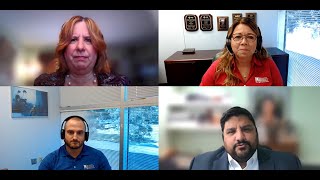
Alex Contreras from the SBA leads experts from IBHS and the Insurance Information Institute through hurricane prep for small businesses. Key steps: assess your specific hazards using county mitigation plans, back up records to the cloud, elevate hard copies, maintain your building, and review insurance coverage including flood and business interruption. SBA disaster loans and IBHS Fortified Commercial standards can help with rebuilding.
Chapters
Hi, my name is Alex contreras with the U.S. small Business Administration's Office of Disaster Assistance. I'm here today with some really great strategic partners that SBA has at IBHS and III. Part of SBA's mission is to help small businesses start, grow and expand, but also recover from disasters. So today's discussion is going to be about hurricane preparedness. And as many of you know, we are now in hurricane season. Hurricane season is entering one of the peak parts of the season. Historically, one of the most active months is September. So today's discussion is going to focus on preparedness and how you can prepare for hurricanes. According to NOAA, the US experienced a record breaking 30 named storms last year. Twelve made landfall and seven of those 12 became billion dollar disasters. Also a new record. NOAA predicts another above normal hurricane season this year. Parts of the US got hit by ELSA just last week and more storms are expected to come this summer. So one thing we should note about hurricane activity and predictions is that regardless of whether the season is predicted to be above normal, normal or below normal, it really only takes one storm to devastate an area. So which is why we stress preparedness. Hurricane preparedness can help your business recover faster after storms strike, saving you time and money. I'd like to introduce our guests First, I'll start with Gail Morton at ibhs.
Thanks Alex. So ibhs our full name is the Insurance Institute for Business and Home Safety. We are an independent nonprofit scientific research and communications organization and we are supported solely by property insurers and reinsurers. So IBHS building safety research leads to real world solutions for both home and business owners.
And.
And we do this by building stronger, more disaster resistant buildings, developing business continuity and recovery programs and making individuals, businesses and communities more resilient in the event of loss. So, as Alex stated, my name is Gail Moritan. I joined IBHS in 2011 as the business Resiliency Manager. In this role, I oversee the Open for Business Easy program which is a business continuity planning tool and the Easy Prep program which is a severe weather emergency preparedness and response planning guide. I educate and encourage small business community the importance of business continuity planning. Chris, you want to introduce yourself?
Hi, my name is Chris Chaffee. I am a commercial lines engineer here at ibhs. I work closely with our research team at our lab where we do full scale testing on commercial property commercial sized buildings. I also run the daily operations of our fortified commercial program which we'll talk about bit later.
Great, thank you. And I'd also like to Introduce Loretta Waters with the Insurance Information Institute.
Loretta hi Alex. My name is Loretta Waters. I'm Vice President of Media Relations for the Insurance Information Institute, also known as the Triple I. We have been existence for more than 60 years. We have been a trusted source of unique data driven insights on insurance to inform and empower consumers. We serve consumers, including small businesses, the media and professionals seeking advice about insurance, what it is and how it works. You know, the importance here with our partners at the SBA and the IBHS is the whole issue of resilience and mitigation and a component of that is insurance. So I look forward to the conversation.
Thank you. So as you can see, we have a great panel of subject matter experts here on disaster preparedness. I'd like to kick off the conversation by asking the group when preparing for natural disasters such as a hurricane, please share with us how businesses can conduct a risk assessment to identify potential hazards.
I'll take that Alex. A good place to start is your county's hazard analysis or mitigation plan, and you can find that by searching your Internet browser. The plan will usually include both historical and past disasters in your area and geographical threats, so such as hazards related to your proximity to floodplains, major airports, dams or ports. Also, businesses should consider hazards related to their own type of business, their internal threats. So these are the risks or threats that stem from the nature of their type of business that they conduct. And this can be from anything from an illness to a death of a key employee, specific risk from the type of equipment they use, even their IT risk or the type of building. And then there are also some other risks that they need to consider external risks. So these are ones that are maybe beyond their control, such as a protest at a nearby business or government building, maybe a major road construction project or a special event like the Super Bowl. So knowing these types of risks that they're exposed to, that will help them in their preparedness. Planning and then to help businesses with this planning, IBHS has two free easy tools which I mentioned earlier, OFB EZ and EZ Prep. Both are designed to help small businesses focus on planning for any type of disruption so that they can reopen quickly and resume operations following a disaster. It's an easy to use tool that does not require any previous experience with business continuity planning. The toolkit is available in fillable forms both in PDF and Word formats, and it can be downloaded@the disastersafety.org website.
Hey Gail, you know what else? It's also available in Spanish too, to make it more Available.
Thanks for reminding me. Yes. So for our Hispanic owned small businesses, there is also a Spanish translation guide available.
That's great information. And we always remind folks that, you know, it's really not a matter of if a disaster or maybe even just some type of a hazard might affect your business. It's more a matter of when. So it's always best to prepare now while you can. So another question. So what type of disaster preparedness training should business owners offer to their employees?
Well, first, once their plan is created, they need to share it with all of their employees. They need to review it together, know it, and then once they've had that chance to review it, conduct an exercise with them. It's pretty easy. You could sit around a conference table, everybody have their plan in their hand. Our OFB Easy toolkit actually offers a power added scenario where you can sit around, like I said, a conference table and go through the steps that'll help find any gaps in your plan and maybe make some changes. Also, they should encourage their employees to have a personal preparedness plan for their households. Maybe remind them to sign up for their county's alerts, know their own evacuation zones and routes, and have a red a weather radio to get alerts just like the one I have right back there on my credenza. So those are things that they can do to help their employees prepare.
Yeah, that's great advice. We always recommend people sign up for local emergency management alerts. And we've really seen some great advancements in, in disaster alerts and just monitoring of events, which is part of the reason why we've got such great forecasting on hurricanes right now. So another question, what are some tips for protecting important business records and customer data?
Well, digital copies are important documents, reports, financial records, those should all be stored in the cloud to offer more protection for small businesses. There may be reports that are only available in hard copy. So those should be stored at least three feet above the ground in the event the business floods. And then better yet, start to scan those hard copies and save those in the cloud as well. But businesses can find more information on protecting important documents in our OFPEZ toolkit. So I encourage them to, to look at that.
Yeah, I started working in disaster assistance in 2005 and back then common recommendation was for businesses to store their important documents, you know, a certain number of miles away from their physical location. But now with the advancements we have, it's, you know, the best recommendation is to make sure that they've got digital copies and that they're accessible to them in the event that they need them after. After something happens. So another question. What. What can you do ahead of a hurricane to prepare the buildings your business is in? So imagine, you know, we're in hurricane season now. You know, we've got this great monitoring technology, and we're starting to watch these storms develop and, and track through the Atlantic, maybe through the Gulf. What can a business do if it looks like that they might be in, you know, the scope of something?
So, Alex, I'll take this one. Building maintenance. Building maintenance is very key. Start now. You know, doing it now will prevent damage down the road. So there's some key items that we really want to look at. First. The roof is your main protection from the elements. So what we want to do is if it's safe now, fall protection is available. If not, you're going to hire a licensed contractor, licensed and insured contractor to come do this building maintenance. But some key, easy building maintenance that you can do is go up on your roof, see if there's anything that looks out of place. Is there debris? Look at your gutters. Are there any, you know, leaves, dirt, buildup, remove them, get that off your roof. That could build up water on your roof and create excessive loads. So I'll start there. Look at your roof cover, see if you have any cracks, any alligatoring. If it doesn't look right, it's probably not correct. So you want to call a licensed contractor to come and get that fixed. You also want to make sure that you have a plan. You know, the hours that takes for storm to come. You want to make sure you're preparing for it. Bring any merchandise that you have inside from outdoors. If you have patio furniture, seating out there, remove it, bring it back in trash cans. Make sure they're stored properly. Those can become projectiles. So, you know, we talk about maintenance. You want to make sure that you're prepared for it. We also have a guide at IBM. We put together Easy Prep, which Gail mentioned earlier. This will help you outline what you need to do, the hours and moments leading up to a storm. And then it also tells you what you need to do as a recovery.
That's great. So, you know, we. We focus a lot on the physical damages and how businesses can, you know, work on preparing themselves for those effects. But another part of disaster preparedness is insurance and focusing on how you can best position yourself for an economic recovery. I'd like to ask, what should businesses look for when reviewing their insurance policies?
I'll take that, Alex, and thank you. Gail pointed this out. It's all about the risks, right? We need to assess those risks. Businesses need to think about what kind of accidents, natural disasters, or even lawsuits could damage their business. The type of business they have, where it's located and other factors determine what their risks are and the type and amount of insurance they will need. You know, for example, a dry cleaner in Cleveland, Ohio, you know, they're going to have very different risks and needs from a waterfront cafe in the Florida Keys, right? So, you know, we need to look about, look at not just the physical risks, which are very real and very important, the whole mitigation aspect, but we also need to look at from an insurance perspective, what the potential risks are. Look at all the overall risks to your business. If you are business in a hurricane prone area of the country, you really need to look at what the potential losses could be if you're out of business for a while. So, you know, we'll get into that later, but it's an important thing to think about.
Great. So what types of insurance does a business need in order to protect itself from a hurricane?
Well, there are several coverages businesses need. Property damage, for one. You know, Chris talks about the physical damages. The physical damage is an important part. You want to protect your structure, your equipment and your inventory from wind damage. Another part that we want to think about is flood insurance. Damage from flooding by hurricane generated storm surge typically is not covered under a standard commercial policy or a business owner's policy, also known as a bop to many business owners. Flood insurance is available from the federal government's National Flood insurance program, the NFIP. There is a cap, however, of 500,000 on the contents and 500,000 on the structure. So businesses might also want to consider what's called an all risk commercial policy that has higher limits.
So here's a question that we get often. Is there insurance coverage that replaces loss of income and pays for extra expenses when a business is affected by a hurricane? At sba, we provide disaster loans not just for physical damages and to make those repairs, but also for working capital needs. So, you know, a working capital loan can help with lost revenue, but what kind of insurance coverage might be able to help with that?
That's a great question, Alex. You know, business interruption insurance and extra expense insurance covers the loss of income resulting from a hurricane or other disaster that disrupts your business operations during what they term the period of restoration. So it's the time when you're rebuilding your business. Hurricane Sandy, for example, caused an estimated 30 billion in lost Businesses or profits a huge amount of money. And businesses, you know, so many businesses were lost because of that. So you know, you want to sure that you have business interruption insurance, which includes flood and damage, by the way. Another thing is utility interruption could damage your building or personal property. It could also force your business to shut down, causing it to lose income or incur extra expenses. So you want to protect your business against those losses by purchasing what's called utility interruption insurance. You know, after Sandy, Hurricane Sandy, a lot of people did not have that coverage. And it's really important. So if you're, your electric goes out and it's out for a few days or weeks, you're not going to be able to recover that loss. So it's important to get that coverage. And finally consider what's called civil authority, which provides coverage for business income losses suffered even if the business didn't sustain physical damage. But if the business was inaccessible, you know, let's say there was an evacuation order, you know, and people can't get into your area. So you need to have that kind of coverage. And there's certainly a lot more to consider, Alex. So businesses can access the III's website at www.iiiii.org for more information.
Yeah, thank you for bringing that point up about accessibility because that's another issue that we see often with businesses. If they're lucky enough to avoid, you know, major damages from the hurricane itself, they might suffer from a loss of power in the area, just the area being inaccessible due to road closures or things like that. So having that type of insurance could be really a lifesaver for the business. So I want to, we're getting up on our last question here, but I wanted to kind of shift the focus to, you know, recovery and after a disaster. So SBA provides low interest disaster loans for homeowners, renters, businesses and nonprofits following a disaster. We provide money to help repair and replace physical damages and also money for economic injury or working capital needs. But another part of our program is for mitigation, which is, you know, basically for that property owner to do protective measures. So use the low interest SBA disaster loan to help pay for improvements to the property, to help make it more resilient, to help protect it against a future disaster, really to just, you know, build back stronger that property. But I like to ask ibhs, you know, when rebuilding after a disaster, how do you think a business can protect their properties from future disasters?
This is a great question, Alex. And we have a program called Fortified Commercial. It is a set of building resiliency standards for hurricane prone regions, high wind and hail as well. And it focuses on three different levels. We have fortified roof, fortified Silver and fortified gold. So roof focuses on the roof mainly. We want to make sure that's right, keep the roof on and keep the water out. We also want to make sure that our roof mounted equipments are all attached properly. So we want to really get that right. Then we go a little bit further with silver, we require backup power connections as well as wind impact resistant windows and doors in hurricane prone regions. So as Loretta was saying earlier, you know that backup power is a big part of it, business continuity. So when we look at fortified commercial, it starts baking into the levels. When we get to fortified Gold, that's where we have backup power on site and that's where we really focus on business continuity. Because as you said, you know, you can be days without power and the backup power could save inventory. Say you're a restaurant, you're going to lose out on that inventory if you don't have the power. You can also get back up right after the storm and, you know, start serving people. We have a project in Gulf Shores, Alabama. It went through Hurricane Sally. So Hurricane Sally was a slow moving storm. It rapid intensified and it moved about three to four miles per hour, walked and crawled across Alabama, dumped a ton of water, ton of rain, wind and Gulf shores. The Gulf State park was located right on the beach and Gulf Shores, the next day they were serving breakfast, minimal damage. So it just shows that mitigation works. And using these SBA disaster loans can really help not just build you back fast, but you want to get back and be stronger than before.
Yes, exactly. That's the whole goal of the SBA disaster loans is to make sure that disaster survivors, whether you know, you're a homeowner, a renter, a business or nonprofit, is that you have access to this capital. And it's typically not a, you know, one program solution. It's going to be a combination of things. So, you know, we see a lot of our borrowers have insurance, but maybe, you know, there's additional expenses that they might have. And the SBA is a disaster loan is a great way to help supplement that. Or if they, if they don't have insurance for the loss, that's fine too. They could still qualify for the SBA disaster loan, but the important thing is that they keep this mitigation and protective improvements in mind when they build back. Because, you know, investing in your business and making sure you take advantage of the low interest SBA disaster loan to do that is just really a smart way to rebuild. So I just want to close out today's discussion by thanking Gail and Chris at IBHS and Loretta at III for participating. And let all of you know you can find more information and preparedness resources for small businesses@ibhs.org iii.org and@sba.gov prepare so thank you all and please have a safe summer and watch out for those hurricanes. And reminder to sign up for your local alert so that way you're up to date on any hazards that might be coming your way. Thank you.
More from Your







President Donald J. Trump and First Lady Melania Trump Visit Grieving Texas After Deadly Floods

💪 Thinking of starting a #biz? Go for it! — Kerry Boyle, Vermont #SmallBiz Person of the Year

President Trump Participates in a Bilateral Meeting with the Prime Minister of Canada, May 6, 2025

