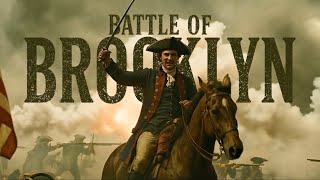
Narrated segment recounts the Battle of Brooklyn (the first major engagement after the Declaration of Independence), describing British strategy to seize New York, the American defensive positions on Brooklyn Heights, and the surprise flanking that led to American encirclement. It focuses on Washington's decision to withdraw the main army across the East River to save the cause, and highlights the sacrificial rear-guard action by the Maryland regiment (the "Maryland 400") that enabled the evacuation.
Chapters
The first great test came here, weeks after we declared ourselves free. If they took New York and shattered our army, the declaration would read like a rumor. The British meant to command the harbour in the Hudson, to split the colonies and end us early. Ours was simpler. Hold if we could but a above all, keep the army alive. The first battle after independence, General Washington's reputation stood on the field with us. Our enemy moved in the dark columns without a word. We held a ridge of farms and woods, the ground between them and our stronghold in Brooklyn Heights. Our plan was stern and spare. The army divided half to Manhattan's works, half to these heights. If we could not throw them back, we must at least not be destroyed. This army was a patchwork. Real soldiers having yourself alongside untrained farmers, shopkeeps and old men. Even those who had drilled like the Maryland 400 were practically boys who had yet tasted battle. We expected a frontal assault, but the British pulled a hammer and anvil, keeping our front engaged while a brigade slipped undetected around us. The Hessians, German led mercenaries, drilled hard and feared for their cold work with the bayonet came from behind. Before we knew it, we were surrounded. Face above rear. Make ready. Come on. D. Fire. To the left flank. Move. Morain the squad. Move up. They run our front and our back. Units buckled, prisoners taken in by trenches from the heights. Our commander judged the truth. This field must be lost to save the cause. Washington's command is clear. The main body must withdraw back across the east river to New York. I'll move with the 1st Maryland Regiment and hold the line here. Retreat to the woods. The Marylanders charge forward again and again into a wall of bayonets and musket fire so that we could reach safety. Crossing the creek, I felt sure we were finished. Our only chance of escape would be from an act of God. Every craft we could find came out of hiding, all shipped and ready. We wrapped the wheels to quiet the Creeks. As we moved the counters behind us, the rear guards fed the decoy fires to fool the enemy's eyes. Providence met discipline in the fog. We kept the eye. What I remember most is not the miracle that saved us, but this. The line of young Marylanders who fought like Spartans holding their ground, muskets leveled, charging to their certain deaths so that we could live. Brooklyn taught me that liberty would not be won in a single volley, but in living to fight a game.