SBA and Paypal Webinar: How to Export Online
The SBA and PayPal explain why small businesses should export online, covering market opportunities like Singles Day and cross-border corridors. PayPal's Global Shipping Program and Passport data site help sellers reach international customers. The SBA offers Export Express loans, working capital financing, and an Export Readiness assessment to get started.
Chapters
Welcome to the webinar. Today, SBA and PayPal present how to Export Online. I would now like to turn the conference over to Danielle Wilsey, analyst. Please go ahead.
Hello, everyone. My name is Danielle Wilsey, and I am an analyst for the U.S. small Business Administration's Office of International Trade. I would like to welcome you to today's webinar. This webinar is made possible through a public private partnership with PayPal. We are really excited to work with organizations like this because private partnerships allow the government and the private sector to come together in support of the small business community. It allows us to hold free webinars like this one on a variety of business topics. In just a moment, I'll turn it over to Melissa O' Malley from PayPal. But before I do that, I'd like to say a little bit about why SBA is so excited about this partnership. We know that as a small business owner and entrepreneur, you need more of two things, time and money. Our mission at SBA is to provide the nation's 28 million small businesses with what they need in a world where time and money are both short. We do this through what we call the three Cs. First, SBA provides capital to small businesses in the form of guaranteed loans to start, expand, export, or recover after a disaster. Second, we help small businesses with government contracts, which is a $100 billion market. And finally, SBA provides counseling services, often at no cost. Many of you might be familiar with the SBA resource partner network, including small business development centers, SCORE ment, women's business centers, veterans business centers, US export assistance centers, and our SBA field offices. I encourage you to visit sba.gov to learn more about what services and events you can find in your Resource Partner Network. In addition to the SBA Resource Partner Network, we work with private companies to bring in expertise in high priority areas like exporting. Once you start your business, you may be asking yourself, how do I get more customers? Well, did you know that nearly 96% of all consumers live outside the U.S. also, 2/3 of the world's purchasing power resides in foreign countries. So go where the customers are. By reducing dependency on the domestic market and also stabilizing against seasonal fluctuations, there is significant opportunity for small business owners to profit through exporting. And so, through this partnership with PayPal, we will offer you some exporting tips and strategies to help you succeed. So let's get started. I'd like to now turn it over to Melissa from PayPal.
Thank you very much. Hi, everyone. My name is Melissa o' Malley and I'm the director of Global Merchant and cross border trade initiatives at PayPal. And what that means is I really focus on helping businesses find opportunities outside their borders to sell and make more sales internationally. So I'm delighted to be here to.
Have a chance to speak to you.
About global trade with the sba. Before I get started, I want to ask everybody a question and just think about this. I want to find out if any of you have heard of Singles Day. So what if I told you that the sales projection for Singles Day, which is happening next week on November 11, is $10 billion for 2014. So that's six times more the sales volume of Black Friday, which is a holiday retail holiday I'm sure you're all familiar with. So when you look at the sales opportunities that even one day like that overseas offers a business, that's a compelling argument to look at selling into overseas markets. If you could go to the next slide, please. So here's some recent McKinsey numbers just.
To give you an idea of the.
Scale that we're looking at on a global basis. And a lot of this is having to do because the Internet is becoming quite pervasive and it's creating a lot of consumer demand. If you look at that top number, 1.8 billion people are going to be entering the consuming class. Those are people who aren't currently shopping on the Internet. That's a lot of potential new shoppers for your business. And that's going to bring the total consuming class to 4.2 billion people in 2025. And emerging markets are going to be really a large part of that. They're going to be spending 30 trillion annually and they're going to account for nearly 50% of the world's total and that's up 32% from 2010. So as we look at everybody being able to connect to the Internet, whether it's with a mobile phone, which two thirds of the world has, there's more ways to shop than ever before. So I want to talk a little specifically about cross border trade numbers on the next slide. So here's the specific numbers that we did within PayPal. So we did some studies around global trade in the US Germany, Brazil, uk, China and Australia. And you can look at the numbers from today, just out to 2018 in terms of growth. You're looking at the total global trade in these markets alone, just six markets, tripling to 307 billion by 2018 and 192% increase in the number of cross border shoppers But I really want you to look at the last part on this slide, and that's the number of mobile shoppers. So mobile is a huge opportunity and it's going to grow to 72 million consumers in 2018. But what's important for you to think about is when you're looking at opening your retail store, your online store to a market outside of the United States, you're going to have a lot of people that are shopping on their phone. So when you look at your product offerings, your photos, how easy it is to navigate your website, be really thinking about is your site and is your offering mobile optimized? Because there are a lot of people outside who would be great opportunities for your business to capitalize from a shopping experience. But a lot of them don't own laptops or desktops or tablets. So really be thinking about being able to capture that mobile market as you look to doing more overseas selling. Next slide, please. So this slide is a building slide and it's going to show you a little bit about where people are buying and selling from. Operator, if you can push the slide through to show the arrows on this slide, please. To help you understand the magnitude of the selling opportunity that we've got here, what we did is we mapped out the biggest and the fastest growing export corridors for US Sellers. So the size of the circles that you see on here indicates the numbers of buyers that US Businesses are selling into in each of these markets. There you go. And you might be wondering what's really driving this? So why are people buying cross border? Well, 80% of the people that we've spoken to say that they are buying items from overseas merchants to save money. But interestingly enough, 79% are also saying that they purchase cross border to find more variety that can't be found domestically. So it's not really one reason or another, but it's almost even in terms of the driving behavior for people to shop outside their borders. Let me just give you a little idea on the slide in terms of numbers that we're looking at. So when we're looking at UK to US UK merchants are selling to 16.7 million US buyers, US to China, US merchants selling to 15.1 million Chinese buyers. China to US they're selling to 13.3 million US buyers and so on and so forth, all the way to US merchants selling to Brazilian buyers at a rate of 4.1 million buyers. There's a lot of opportunity here. If we go to the next slide, we're going to talk about what people are buying. So these are the top cross border shopping categories. So be thinking about if your offerings fall into these spaces. Clothing, shoes and accessories are by far the biggest shopping category for global buyers and that's followed by health and beauty products, personal electronics and computer hardware, jewelry, games and watches, and home electronics. These types of items are easy to buy and sell online and are really driven by customer choice and customer value.
Next slide please.
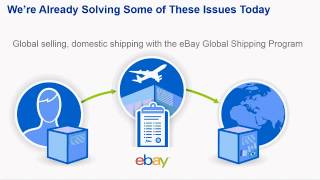
This slide is showing which top 10 cities are selling the most cross border. This is based on PayPal, actual PayPal data. So if you look at the San Francisco, Redwood City, Palo Alto area, the top industry for exports cross border in gaming. Some of these might be something you'd assume New York City being fashion, Los Angeles being fashion. I personally was surprised that Miami was the top for auto, Columbus is number eight for fashion. So there are some surprises on here. And categories that are really thriving are auto parts, fashion, sports equipment and website services and software. So keep this in mind when you're looking at where people in the US are already selling cross border and the types of products that they have that are selling quite well. Next slide. So talk about Singles Day at the top. And as I mentioned, this is happening next week. So it's the world's biggest annual shopping holiday and it started off just a few years ago in China as sort of the anti Valentine's Day. Singles Day is November 11th, so 1111 if you look at it on a calendar. And while it started off as a reason for people to celebrate and buying things for themselves, it's really become quite a holiday where anybody will shop to buy something for themselves. No longer just singles, it was primarily a domestic holiday in China in terms of retail sales. But now you are seeing a lot of foreign merchants now taking advantages of opportunities for Singles day. Just in 2013 the sales for singles day grew 83% over 2012. And if you look at the numbers in terms of the size that we are talking about in comparison to something like Cyber Monday or Black Friday, it's pretty impressive. So it's something to really keep in mind when you're looking at opportunities outside of your markets. You don't have to go out and invent something. There are plenty of other foreign market opportunities where you would be able to tap into existing needs that are being driven by local customs or local holidays. So I'll give you another example on the next slide. So here's another example. This is Boxing day in the UK, Australia and Canada. 9.8 million people shopping. If you could add 9.8 million people shopping on your website the day after Christmas, it would be a fantastic opportunity. This is a 15% year on year increase. It's the biggest online shopping day in the uk. And conversely, we also see a lot of consumers from outside the US wanting to tap into Cyber Monday and Black Friday opportunities here in the us so not only looking at the opportunities that you have for domestic shoppers, but also looking at how you can attract shoppers from outside the US that can take advantage of some of the offerings that you have for Cyber Monday and Black Friday. Next slide, please. So Cross Border is a huge opportunity. I've given you some examples in terms of global numbers, some examples in terms of what's selling well, Cross Border, and some specific examples of opportunities outside the US that you can look into tapping into. But you know, it can be intimidating if you've never sold Cross Border. So a lot of people want to know how to get started if you go to the next slide. You know, when we looked at building out a program for Cross Border, we asked our customers. We have 157 million customers. We've got 157 million active accounts and 203 markets and we operate in 26 currencies. So we actually went out and talked to a lot of our customers when we looked at reasons to help people do more Cross Border trade and why they weren't doing that. So when we decided to go out and talk to them, we wanted to know what were the biggest challenges that they were doing. So we decided to use a real case example here. This is Sarah, Sarah Davis. She runs Fashionphiles. She is the largest reseller of luxury handbags in the United States to $15 million in sales. And she started off selling as a hobby and she sells very expensive designer handbags. So she branched out in 2006 and international sales are about 20% of their business. But she's got some challenges and I'll give you a specific example. One day she woke up and she had her website was completely down. And so her brother was her website IT manager. And she said, what happened? He said, we were overwhelmed, our servers were overwhelmed. Last night from Brazil. She said, we don't even sell to Brazil. There's a lot of challenges in selling into Brazil from a customs perspective. So she said, well, what do we do? So they found out there was a Brazilian blogger who had been in the United States and bought one of her handbags and gone back to Brazil, Brazil and blogged about it. And her extensive fan base had overloaded the website. So all of A sudden, Sarah has this huge opportunity to sell in the Brazilian market, yet she has no clue how to get these extremely expensive handbags safely into that market. So when we talked to her, she was talking about this amazing opportunity that she had, but she couldn't overcome things like shipping and tracking and customs and how is she going to. So there are a couple options that we look at. There are companies such as freight forwarders like Border Free or myus, if you go to the next slide. If you do sell on ebay, we also have a solution for this that tries to make it easier for people. It's called a global shipping program. So essentially what happens is when your item sells, you ship it to a U.S. shipping center in Kentucky and the ship to address is provided automatically and then the program takes it from there. So we complete the customs forms, we remit import charges prepaid to you by your buyer, and we ship the item on to the buyer, complete with international tracking. So you're covered under seller protection. Your buyer is covered under buyer protection. So it's one of the ways that we've looked at working with our customers to try and make that be easier in terms of, of wanting to sell overseas. We go to the next slide. Here's some information that we've also developed to help small medium businesses. It's called Passport and you can see the URL down there below. And essentially what we've done when we did all these interviews with a lot of our merchants is we tried to create an aggregated source for people to go and find out information on selling crops. So we've aggregated things like seasonal sales peaks, so holidays and events. If you go under the tools section, you'll find pull down menus. And by the end of this year it will be up for 30 countries on cultural customs and taboos and trends. We also have a module on there for shipping and distribution and we have a currency exchange module as well. So that's a tool that we have. We now have it in four languages, become very popular. So it's in Portuguese and Chinese and we just launched it in Spanish two weeks ago. You go to the next slide. I'll just explain one piece of the website. And this is at the very top of the website. We haven't enabled it for mobile, so don't look at it on your phone because it's too complicated. But if you're on a desktop or a laptop, this gives you a little bit of an idea on the opportunity. And below this slide, which you can't see here, there is a timeline. You can actually go from January to December. And we've got PayPal data on here that shows you whether it's by trade corridor or transactions, what's shipping, where who's buying and who's selling. And then you'll see here on this slide there's a pop up for White Day. So where there's a holiday, it's generally in hot pink. It'll show you opportunities for selling cross border. For example here is light day and where it's observed and the types of things that people buy. And you can see just down below that we've got a box there for Taiwan in terms of imports and exports. So it gives you a good idea. There's a lot being export at that time, not as much being imported. So the goal is really for people to be able to target sort of the peaks and troughs outside of their own sales opportunities. So if you're selling skis at the end of the season in the United States, it would be a great time for you to be selling these things full price as the season is kicking off in Australia or New Zealand. So it's really a way to help you target additional opportunities. We've tried to put it all in one place. If you could go to the next slide. One thing that you do have to be a PayPal customer for in the Passport site, you don't have to register, you don't have to log in and it's free, so you don't have to do anything to look at all that data. And on the right hand side of most of the pull downs, you'll also see an arrow with a folder. So everything is downloadable as well. That's easier for you read instead of reading it online. One of the things that we found after we kicked off this program is we still had a lot of customers that had a lot of questions which you can understand. Going cross borders is, is it's nerve wracking for a lot of people. So what we did is we worked with our consultants in house. We have a merchant optimization team and what they do is they work with our sort of on a one on one basis. So via phone call, about a 30 minute phone call. And they traditionally provided domestic selling recommendations, but they've now expanded this to include cross border transactions for small and medium businesses. So what they'll do if you're a PayPal merchant is they'll conduct a detailed analysis of your business, the business that you've had so far with PayPal, and they'll develop some data driven recommendations. So for example, they'll look at the best selling corridors for your vertical, so from the US to the UK or US to Canada, they'll also provide you insights into businesses within your vertical and they'll be able to tell you how you're performing against your peers. So if you're in the clothing, shoes and accessories vertical, they'll be able to comparables and as I mentioned, these are provided through a one on one consultation which can also cover the first step.
We recommend is to complete the free Export Readiness Self Assessment located on the New Business USA Government website. It's a one stop platform to make it easier than ever for businesses to access US Government services to help them grow. This tool provides feedback to help you assess your export readiness and advice on how to strengthen your export potential. Next, depending on your assessment score, you'll be redirected to online and local counselors who can help you design a counseling program that will effectively match your specific needs to available training opportunities. From there, Creating an export business plan is important for defining your company's present status, internal goals and commitment. You learn how to develop an export plan by assembling facts, identifying constraints and setting specific goals and objectives as milestones to success. Then conduct market research and find buyers. Learn your product's potential in a given market where the best prospects exist for success and common business practices. Finally, familiarize yourself with US Government financing, insurance and grant programs available to help you and your small business facilitate its international transactions and assist in your export operations. The Small Business Administration offers three core loans to exporters Export Express, Export Working Capital and the International Trade Loan. Export Express is a streamlined option designed for quick approval on loans up to $500,000. Funds can be used for any purpose that will increase a company's ability to export. The Export Working Capital Program meets short term loan needs of small businesses exporters. Up to 5 million funds can be used for working capital, to support sales or to provide foreign receivable financing. Finally, the International Trade Loan provides long term financing on loans up to $5 million. It is designed for company expansion and modernization due to growing export sales or adverse impact by foreign competition. So the full details of these financing options and more are located on SBA's website. I encourage you to visit it as well as those of our key federal agency partners. I've also included my contact information, so please feel free to reach out with specific questions after the conclusion of the webinar and I'll be happy to answer them or point you in the right direction. So with that, I'D like to open it up for Q and A for either Melissa or myself. Thank you very much.
And once again, if you have a question, you can send a note to all moderators using the notes tab on the right hand side of your screen. Hi there.
This is Natalie Goreal from the SBA and I will be helping facilitate some of the questions coming in. And our first question here is one second. They're coming in pretty fast. Alyssa, this question is for you. So how is the market for selling music to customers purchasing via PayPal?
So we do protect on selling digital goods. So I'm not certain if you're talking about downloadable music or physical music music, but we do protect against both in certain markets. For example, in the US and the UK it's easy to do depending upon where you're purchasing. If you're purchasing on ebay, for example, that's something that we facilitate. And in terms of music numbers, I would have to go look at that because I don't know off the top of my head, but it is something that we do support.
Great, thank you. Let's see here.
A lot of questions, a lot of.
Questions are coming in pretty fast. So here's another one. So if I market my invention internationally, do I need a patent in every country to sell it? So I guess the question is if you've got a product, you need a patent when selling it to a country outside the U.S.
I think the SBA or the Department of Commerce would probably be better to answer that than PayPal.
Yes, to answer your question, that would.
Be the best idea.
We have a section on our website that is written in conjunction with the Patent and Trademark Office and it outlines all the information that you need to know about patents, trademarks and copyrights and the differences between the two.
Great, thank you. The next question is how does one go about finding stats for the sale of a particular product or service in the global market?
We would recommend utilizing large scale information centers like census or trade.gov that amalgamate the information on a very high level.
Great, thank you. Another question is.
What are the beginning.
Costs associated to start to begin to export?
So beginning to export is very different for each small business and so it's really hard to provide a blanket answer for that question. I recommend going just right to sba.gov and to find your local resources. A tab on the main page and you can speak with a person located in your specific state or region, get some one on one counseling and then they'll probably be able to provide the best answer and Accurate estimation on that.
Great, thank you. Danielle, another one for you. So, Danielle, what is the role of the Export Import bank and how does that differ from a local bank?
The role of the Export Import bank in relation to SBA is they provide a great tool called export and Credit insurance. So that protects the buyer and the shipper from any sort of trade or export programs falling through. So they're a federal partner as well. We work with them very closely. We're trying to combine all of our services together into a new platform called Global Business Solutions. And they also help us to guarantee loans through lenders at a higher percentage than would have been otherwise offered if you're just going through private sector banking institutions.
Great.
Thanks so much, Danielle. Let's see here.
Okay.
Sorry guys, these questions are just coming in fast.
There seem to be a number of questions about specific product areas. And I don't know if the SBA has something that's editable just in terms of looking at the market potential for certain, but I've seen things for rugs and food and other questions like that that seems to be popular and popping up.
For specific products, we would recommend going through the Export Readiness Planner. It will take you through those questions and answer them more specifically.
So we have another question.
So, Danielle, I think this one's for you. So is there a list of countries that we cannot export to?
Yes, there is a list of just a few countries that we have trade embargoes with. It's updated, I believe, by the State Department, but feel free to follow up with me and I can get you a more specific link because I don't know that off the top of my head.
Okay, so we have a question about a general question about how to get a loan to start exporting. And Danielle, do you mind going over the different loan programs that are available through the government again?
Sure. So I can speak specifically to the three core loan programs to exporters that the SBA offers. They're designed to fit your small business at different points of creation and expansion. If you're just beginning to look into the international marketplace and you need some money to start up, we would recommend the Export Express Loan. It's a streamlined option. We try to get you a response within 36 to 48 hours based on your eligibility requirements. And it's up to $500,000. So the proceeds from the loan can go to any sort of export related activity that will increase your company's ability to get your goods or services abroad. Once you've established yourself a little bit and you need some working capital to finance ongoing purchases abroad. We have what's called the Export Working Capital program that meets the short term needs of small businesses. This is a much higher cap at $5 million and the SBA guarantees it up to 90%, which is like I said earlier, it's a lot higher than our private lending partners alone. And the working capital funds can be used to support the sales and provide foreign receivable financing. And then our third core loan program is called International Trade Loans. So this is also a cap of $5 million with the same guarantee percentage. And it's designed for companies that really want to expand further modernize their plants and services. And also it's designed for companies that have been adversely impacted by foreign competition.
Great, thank you, Danielle. We've got another question here for Melissa from PayPal. So Melissa, so the question is, does PayPal have a service that ensures payment in advance to cross border businesses for business transactions?
So we don't do payments in advance, but our role in this is we are between the buyer and the seller. So when the buyer sends out the item, we hold the funds until the the buyer gets it and the seller sends it and when the buyer receives it and then we receive it. Because if there's a matter of a dispute, say the buyer does not receive the item, then we can go back to the seller and say, do you have your tracking information? Do you have all the information needed? If the seller can provide that, then they're covered under seller protection and they will be paid. But that's a big reason why a lot of people choose to work with PayPal is because if you are buying something from someone overseas and you've never worked with that company, there are a lot of people that are quite concerned about security and their credit card information being compromised or having difficulties in getting a refund if their item does not arrive. And that is why we've been really a great partner both on the buyer and on the seller side in cross border, because we are a known trusted brand in 203 markets.
Great, thank you. Another question, are there grants available to start exporting?
So specifically from the sba, we have a great program called the STEP Grant program. It's the State Trade and Export Promotion program. The way it works is that we as an agency give grant money to the states themselves and they can award monies with matching funds to small businesses. So it's not directly to the small businesses, but it is through your state. I recommend again going on to SBA.gov step S T E P to find out where the funds are located and how to apply for them.
Great, thank you. So another question here is how do you find out what is needed overseas so you can start from providing the right products and services. So is there any data available where.
One can go and see what is.
Needed in specific countries.
In terms of the products that people are looking for or in terms of the regulations that they need to be.
Aware of the products?
Well, I think if we look at the Passport site, that's definitely telling you the types of things that are being bought and sold for and sort of propensity for people to buy and the ways that they want to buy. And I think the holiday information will also tell you some things around there. The site just launched in June and it's primarily focused around the clothing, shoes and accessories market because it was sort of a test and learn for us. But we are going to be expanding it to some of those other sort of key cross border markets. So you'll see additional information about consumer electronics and health and beauty and things of that nature. But part of that is also feedback on webinars like this and working with the government to find out what are the real needs that people have to help make them more comfortable to sell cross border. So when there are we start to hear a lot of pockets. Maybe it's about digital goods or it's about another vertical that we should really be highlighting the market opportunity for. Those are things that we take into consideration as we build out the site and its capabilities.
Great, thank you. Another question, Danielle, I think this one is for you. So does Ex IM bank have any programs that are designed for startups that are looking to export?
All of our federal agency partners work together to basically work towards getting the small businesses in the US to export. However, I would recommend that if you fit the small business size standards as.
Designated by the SBA that you look.
At our programs just because we have the ability to tailor it down to the small business need that the Export Import bank may not have.
Great, thank you. Another question. So is there any organization that offers one on one coaching for someone who's looking to begin to export?
So for counseling and training and coaching.
We at the SBA have a large.
Resource partner network in the field. We've got different areas for specific types of people looking to start or grow their businesses. For example, we have Women's Business Centers, Veterans Business Centers, Score mentors which are for retired small business owners looking to do an encore performance. They're located around the country and are available for one on one, oftentimes no cost counseling and training sessions. So you can go to SBA.gov and put in your local zip code and find the resource that's located closest to you most appropriate.
Okay, great.
Melissa, this one's for you. So does PayPal have a program that links exporters to actual buyers?
We don't, unless you count ebay. I mean ebay is, you know, we're part of the same company in ebay Inc. And ebay is actually one of the easiest ways to get you start selling. Cross border with a minimal investment we have, you can put your items on there to sell. But then we also, for example, translation services. So if you're interested in selling your goods to China, rather than having to develop an entirely separate website for China, you could select that you want to have your goods to appear on the ebay China website or in French on the ebay France website. And there are translation services that extend to your products, but then also to customer service inquiries and things like that. So that's probably the closest way that we would offer that to people within the ebay Inc. Family.
Great, thank you.
We have another question.
This one's interesting. So are there opportunities to sell a.
Service.
Internationally rather than a product? So for example, if you're providing consulting services.
Absolutely. I would say that exporting services and.
Goods are both equally important.
They both equally contribute to the presence national export initiative and we'd be happy to provide more information on both.
Great, thank you, Danielle. Looks like the questions are slowing down here a bit. Give folks a minute here. If you have any other questions, please.
Go ahead and type them in.
And we've been receiving a lot of questions about the slides. Seeing if the slides are going to be available. Yes, we will send an email early next week with the link to the slides as well as a recording of the webinar. Oh, this is a good one. So what are some resources available to small businesses in dealing with.
Outside internationally.
And the issues of language? So understanding one who doesn't speak English.
I'm sorry, I think you cut out for a little bit for me. I missed the middle portion of the question.
Sure, just a second here. So the question is, what are some resources or services that small business owners can use when dealing with language barriers while exporting?
Well, we authorize the use of some of the loans here at SBA to go towards translation services of the website. So you can definitely finance that through the sba. Great. See here.
So there are some questions about.
The.
Fees that are what fees are paid for PayPal. Can you, Melissa, take that question?
Sure. It's a pretty easy explanation on the PayPal website in terms of what the fees are outlined. The fees do vary from domestic to cross border and they also vary by country. But if that person needs to, I can also include that in the presentations when we send it out so people can see an easy link to that. But fairly straightforward. There's just a little bit higher fee for cross border just because of the increased risk. But yeah, it's a fairly straightforward fee.
Great, thank you. We're getting some good questions in here. So we have a question, Melissa, this is for you about the specific role of PayPal in exporting.
Can you talk about that please? Our role in exporting. So we aren't exporting, we're simply facilitating payments between buyers and sellers. But PayPal, similar to eBay, we are partners with merchants. We don't compete against them. So on ebay, merchants are using our platform to sell, we aren't selling for merchants. So we are really just the facilitator to make sure that people can safely and securely get paid to help facilitate export.
Great, thank you. Okay, it looks like we're getting a lot of the same types of questions here.
So with that I think we will.
Covered a lot of this information.
We've got.
Yeah, a lot of these questions are coming in that are similar to what we've already discussed.
So with that I think we're going.
To go ahead and conclude this webinar again. We will follow up with an email with a link to the slides and a recording of this webinar.
Fantastic. Thank you so much.
Great, thank you.
More from Your







President Donald J. Trump and First Lady Melania Trump Visit Grieving Texas After Deadly Floods

💪 Thinking of starting a #biz? Go for it! — Kerry Boyle, Vermont #SmallBiz Person of the Year

President Trump Participates in a Bilateral Meeting with the Prime Minister of Canada, May 6, 2025

