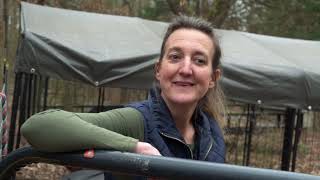
This YouTube video (SBA Success Story: Project Victory Gardens — April 26, 2024) profiles Matthew and Kara Rutter and their nonprofit Project Victory Gardens, which helps transitioning service members and veterans enter agriculture. The Rutters describe their farm near Lake Hartwell (~75 acres, with 5–7 acres used for agriculture), their use of SBA programs (Boots to Business, Small Business Development Centers, SCORE, VBOC), DOD Skillbridge internships, and USDA funding to run farmer boot camps and train veteran farmers. Tim (a VBOC business developer) and interns provide supporting testimony about mentoring, business planning, and the value of veteran networks.
Questions this video answers
April 26, 2024.
Just under 75 acres total; about 5–7 acres devoted to the farm/ag portion.
Boots to Business (TAP), Veterans Business Outreach Center (VBOC), Small Business Development Centers, SCORE, DOD Skillbridge, and USDA veterans agricultural funding.
Chapters
My name is Matthew Rutter. I am co owner of Rutter's Ranch and the executive director of a non profit organization, Project Victory Gardens. My wife and I are passionate about veterans. We're both passionate about farming. And so Project Victory Gardens was a idea that my wife and I had when we were retiring from the military.
Farmers are getting older, we need younger farmers, we need new farmers and people excited about agriculture. And veterans, as far as Matt and I are concerned, are that population. So with Project Victory Gardens, we're really focused on helping transitioning service members and veterans get into agriculture. So this property is amazing. We have just under 75 acres here right on Lake Hartwell in the beautiful upstate of South Carolina. And then we took five to seven acres of the property and that's what we're really focusing on, the ag portion, you know, the farm portion of the property. What we found is with veterans, they can typically kind of hit that 5 to 10 acre point using their VA home loan guarantee. And so we really want to show people that you can do a lot with just a few acres.
So about 18 months before we retired, Karen and I took the Boots to business class through the Transition Assistance Program. And there we met Tim.
One of the things that we helped Matt and Carol do is to formalize their business plan. They had an idea of what they wanted to do. They actually had written down some things on paper that they wanted to do. And so through the teaching of the course, we actually helped them to put together a more concrete business plan.
When we went through the Boots to Business program with Tim, it was probably the single most kind of life changing thing that we did during our transition. It really opened our eyes to a lot of things that we didn't think about and great resources under the Small Business Administration Umbrell, whether it's the Small Business Development Centers or getting a SCORE mentor or we have our own as veterans in the Veterans Business Outreach center or your local vboc. Well, hello. Good to see you. Good to see you. We've gotten great support from Tim throughout everything and so that's always comforting to have that support there. And when I have a question, I know who to go to.
The VBOC assists veterans, active duty, transitioning military, National Guard reservists and their spouses start, grow, expand or purchase a business. And one of the greatest things about helping them start businesses is the fact that we get to see them and engage with them and participate and join them in their journey. And so along the way we want to touch base with them at Certain touch points and make sure they're doing well. Coming out and walking the farm, seeing the animals. It gives me, as a veteran, as a veteran business developer, joy to see that I actually had the privilege of helping a veteran start and expand their business.
So we've tried a number of different programs and initiatives, and now we are really lucky to be funded under a USDA branch for enhancing agricultural opportunities for military veterans.
As part of that, we run farmer boot camps, and those are just a crash course to allow veterans to come out and experience farming and just jump in and see if this is what they want to do.
Matt and Carol also come to our Booster Business class and Booster Business reboots that focus specifically on agriculture and speak about their agriculture ventures. That gives others the idea and the wherewithal, hey, if they start it, I can do it too.
I think we're going to try to do it.
And then we have a DOD Skillbridge internship program. So the Department of Defense allows service members that are transitioning to spend part of their last six months out in the civilian world trying to kind of learn what they want to be when they grow up.
I really wanted to learn about farming and find out what type of farming I'm good at. So being able to come right into an internship and immediately start farming has been really great for me.
Mr. Matt and Ms. Kara themselves, they are my most valuable resource when it comes to the internship and transition phase, as they experienced a lot of this already, and so they have been a great help. And having just veterans in general who've gone through it gives me kind of a platform to stand on going forward.
We get asked this question all the time about what do you grow on the farm? Well, we grow farmers, and we grow farmer veterans is what we try to grow the most of. And we think we're doing a pretty good job at it. And so I think that veteran community is essential in all of this. The camaraderie that you develop while you're in the military, it doesn't go away when you get out of the military. And so I go out of my way to go to a veteran organization or a veteran small business.
It's very important to get veterans involved. It's very important, especially young veterans, because we have a lot of the young farmers that aren't carrying on with the family farms. What Matt and Cara are doing is are bringing new bodies in to help with this, and they're doing a great job out there, and any help I can give them. We try not only as a small business but as veterans also.
Veterans help veterans. You don't have to do this alone. You may be going into business for yourself, but you're not in business by yourself. It takes a team to be successful in business.
You need someone in your corner that has the experience experience that has the knowledge, that has the connections to be able to really help you succeed. So don't recreate the wheel. Stop at the SBA first.