SBW 2014 - Town Hall with PayPal
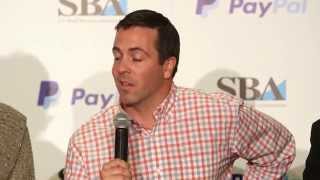
Gene Marks moderates a panel on small business e-commerce with PayPal and SBA officials. They discuss how free Google traffic has dried up, forcing sellers to paid search and marketplaces, and why mobile commerce and analytics matter more than ever. The SBA operates 67 district offices offering contracting help, counseling, and capital.
Chapters
Hi, I'm Maria Contrera Sweet, administrator of the U.S. small Business Administration. At SBA, we're dedicated to helping small business owners and those who would like to be a small business owner start, grow and succeed in their business ventures. Every large business started as a small company and we've helped some of the most recognizable brands along their journey to success. FedEx, Apple, Under Armour, AOL, Ben and Jerry's, Dogfish Head, Stonyfield Farm, Toms of Maine, Nike, JetBlue Airways, Chobani, just to name a few. For people throughout the United States and all our territories and SBA is here to help at any stage of your business. From writing a business plan to securing working capital to exporting your products overseas, SBA has district offices across the country. These offices help entrepreneurs with what we call three Cs and A contracting, counseling, capital and disaster Assistance. Government contracting can be a critical tool for growing your small business. The government has many categories of contract opportunities set aside exclusively for small businesses. These help level the playing field for women, for veterans and the socially and the economically disadvantaged. SBA also offers participation in matchmaking events and the Mentor Protege Program to help small businesses compete more successfully for federal government contracts. Through our District offices and extensive network of resource partners, SBA offers hands on training, mentoring and expert advice tailored to your needs. Our online learning center is also available around the clock so you can explore take training courses at your convenience. Many entrepreneurs need financial resources to start or expand a small business and they must combine what they have with other sources of financing. While SBA doesn't loan money directly to small business owners, we can help facilitate a loan with a third party lender such as a bank or credit union by guaranteeing that a certain portion of the loan will be repaid. SBA guaranteed loans can be used for various business needs including replenishing seasonal inventory, building, expansion or renovation, purchasing equipment and working capital. Finally, when a natural disaster is declared, such as a flood, a wildfire, a hurricane, a tornado or an earthquake, SBA is there to help business owners, homeowners and renters pick up the pieces and get on their feet. We offer low interest long term disaster assistance for loans for physical and economic damage caused by a declared disaster. So are you ready to start or grow your small business? Visit SBA.gov to learn more about how we can help and to find the location of your nearest SBA District office or resource partner. We're the US Small Business Administration, your small business resource.
Ramon that was awesome. Everybody welcome. And like we said, when we are sort of Meeting just previously. Welcome to National Small Business Week. This is the week where we are commemorating and celebrating small businesses. And thank you to the Small Business Administration for sponsoring this national small business. There is a week long agenda of events. You can get all the information from SBA.gov, that's where you can find what's going on for small business. The whole idea is, is not only to commemorate and celebrate small business, but for small business owners like ourselves to get some education as to how we can do our businesses better. So welcome all of you guys here to this roundtable today. My name is Gene Marks. I run a company called the Marks Group PC. We're located outside of Philadelphia. I do a lot of writing in the morning and I put it aside and I run my company during the day. So I am a small business owner and I am joined here by a panel of experts from different areas of E commerce mobile, from the government as well the sba. They're going to help us. I have a lot of questions for these guys and I know all of you out here in the audience have some questions as well that you might want to share with us as well. I am joined by Ramon Ray, who is like hiding over there in the corner, but he's going to be asking some questions and joining in on the conversation as we go as well. So Ramon, hopefully you've got a microphone or something that you can. All right, that's very good to hear. So let's get started. What I'm going to do is I'm going to first of all ask our panelists to introduce themselves, a little bit of background, who you are, and then that way we can find out who we've got here that's going to get some information from. So, Alex, let me start with you. Go ahead.
Hi, my name is Alex Schwarzman and I run Kings Games, which is a game store in Brooklyn, New York. We sell both online and physically in the store and we've been engaged in this E commerce adventure for, for a couple of years now. And I hope to share some of those experiences with you guys today.
That is great. Alex is also a writer of science fiction short stories and an editor of science fiction short stories as well. So very, very, very used to doing these kinds of panels, but on science fiction, so this will be a new experience, I guess. Right, Dan, Go ahead.
Hi, everybody, I'm Dan Lieberman. I am vice president and general manager of PayPal's North American SMB business, small and medium business. I joined PayPal just recently from McKinsey where I helped lead our digital payments and E commerce practice. I don't write any science fiction, but I'm a mediocre guitar player.
Go ahead, John.
So every panel needs an old dude and that appears to be me today. Every panel needs a woman and that appears to be me today. And I suspect every panel needs somebody from Alabama and that might be me as well. So I am chief of operations for a company called Vortex. You may not know our company name, which is Vortex, but you'll almost certainly know some of the e commerce products and services that we sell. We look after about 20,000 E commerce merchants around the world. We put them online, we design their stores, we service their stores, we help them sell more. So I've been there for nine and a half years and I know a bit about E commerce.
Joe is located in Southern Oregon, which is where people go to start up e commerce and technology companies. Of course.
Javier hi, my name is Javier Sade. I'm associate administrator of the Small Business Administration. Thank you for having us. This wouldn't be happening with folks like PayPal and some of our other partners in the nation, across the nation. I recently joined the administration six months ago. Since spent my entire career in the private sector. Did some time in McKinsey as well. I was an investor, several venture capital firms, started a couple companies. I've been a manager. So I've been in a lot of different shoes and a lot of different perspectives. I used to buy companies in the states, I used to buy companies in emerging markets. I try to start stuff overseas. Some things didn't work, some things didn't, some things did. But happy to be here and it's a very exciting week for the agency. This is our flagship event and this is going to be an exciting panel. So thanks for having us.
That's great. We're glad that you're here. So, Joe, I'm going to pick on you first because you're the woman here from Oregon. I have to say you've been in the world of e commerce and setting up websites for a number of years now. What's changed over the past 10 years or so?
You know, not a lot changed until May of 2012. May 2012 was a really key time for us all. And what changed then was a company called Google. Google decided that they weren't going to support E commerce Free anymore. And that was an amazing time of change for our industry. We'll have passed many of you by because it took months and months and months for them to be begin to Remove free traffic and shift everybody to what was once frugal and then became Google based and then became Google Product Search and is now called Google Shopping. But huge difference. We're all now most of us, I'm not sure Alex will hear from you, but most of us are paying for clicks. Everybody freaked out. The e commerce merchants online, our merchants completely freaked out we're not going to get free traffic anymore. And then they started to pay and they realized that what they were paying for was much more targeted traffic that they were getting the right people coming to their stores.
Now.
Now one of the differences that we're still, that I believe merchants are still coming to terms with is that means that people don't land on your homepage anymore. They don't wander around your store anymore. They make the shopping decision somewhere else. At Amazon and at Google, typically the industry believes that something like 60% of people make a decision somewhere else and then land on your store and start shopping.
Very interesting. I mean Alex, have you seen, have you had the same experience with your site? How long has your site been up and running?
Well, we actually just recently switched a couple of months ago to a proper, robust e commerce site.
So what are you selling on it exactly?
We're selling trading card games, miniatures, collectibles, so more, more of a high end entertainment items for the most part. So with the average ticket being about $90.
Right. And has that, I mean, as far as the development of your site itself, I mean, is most of your traffic coming from Google or other search engines?
It is not. We actually have a very different model and we've decided, you know, we have tried that method, we've tried advertising with, you know, with Google, with Facebook and we found that because our product line is so niche and our customer base is generally very knowledgeable about what they're buying already, it wasn't a very effective form of advertising for us. So what we've done instead is we've concentrated on seller portals like ebay, like Amazon, like other seller portals unique to our industry like tcgplayer.com and others, to create a relationship with the customer through those portals. So we're relying on their large customer bases to make an initial sale to them there at a very low profit margin. But we're also relying on our customer service and the quality of our product to convince them to then come and shop with us after we had the virtual handshake happen in that other marketplace.
That's interesting. I mean, do you agree with that approach, Joe? I mean, I have to ask you Only just because you're nodding away.
Well, the secret is all about acquisition. We all have to do whatever we can to get people to our websites. Once upon a time, Google Free did that for. For all of us. And now we've all got to find whether it's social for our product set. Really, the key now is to think more about what happens when they get there. Alex is absolutely right. If he's got a niche market, get them to his store, probably with lost leaders. You know, many of us are using lost leaders to get people to the store, because then what you've got to do is focus on customer service and get them coming back time and time again. Repeat business is such cheap business.
Right, right, I understand. How does that. I mean, is that the trend that you're seeing, Dan, as far as your customers?
It's a good question. So framing it as part of the larger question of what's changed, I would say that one of the biggest changes I observed, especially as an external advisor, was small businesses led the charge in the early days of E commerce. And it took a while for large merchants to catch up. They've leapfrogged small businesses. And the tools that large businesses are using to drive online traffic, including the channels, this is the tie to the marketing channel question, are more sophisticated, they're more diverse, and they track the cost of acquisition, just like you're saying, in a way that I think reflects one degree greater nuance in understanding, really, their customers. And so I think this is an opportunity small businesses have to catch up a bit. And it's not that big of a gap, it's not insurmountable, but there's some great tools out there to understand the cost of different channels and tie it to, really the lifetime value of a customer. And we're starting to see some of the larger small businesses that employ these tools as a part of their normal course of business.
Right. I mean, Javier, I mean, the SBA works with businesses on all different types of industries. I mean, do you see many companies that have E commerce websites, do you see them suffering the same types of issues?
Well, I mean, it's a fascinating discussion. And when you think about what technology has done to business, specifically small business, it's that it's democratized access to capital. PayPal seems to be trying to do something in that regard. We can argue all here that banks are sort of frozen. There was a consolidation. One of the things we're very focused on at SBA is having providing businesses of all sorts at the 28 million small businesses around the country with access to capital. But regardless of how technology has democratized the process of access to capital, how you reach customers, how you sell, how you make decisions, how you hire, I mean, we all have computers in our pockets, right? Or pocketbooks. But at the end of the day, the fundamentals of a business have not changed. And the fundamentals of the business is for you to sell something for a dollar that cost you less than a dollar, or that for every dollar you invest, you make more than a dollar. Right? So when you think about it that way, then the question then becomes how do you use all these tools to make you smarter, faster, better than the competition? And technology does that. E commerce is obviously a channel to do that, but overall, business is business.
Alex, I gotta ask you, so on your site itself, are you, do you host it with somebody else, your E commerce site, or do you host it yourself?
We actually host it with a company called Wix.com. i have no knowledge of programming websites and I really don't have the resources as a very small business, I don't have the resources to invest into a large scale development. So what we've done is we've partnered with three companies. PayPal being our credit card processor, Wix being the website that provides the hosting services and actually allows somebody like me to design the website with no computing knowledge whatsoever. I mean, it's literally a drag and drop. And it's a very sophisticated site that allows animation and all sorts of other gadgets that normally would cost thousands of dollars to implement. And the third service being ecwid, which is a shopping cart processing company, which allows us to also, you know, you integrate a shopping cart seamlessly and again without any kind of computing knowledge and connect that with Wix and PayPal for an overall solution that for businesses like mine was, you know, took literally just a few days to set up properly. And we're very happy so far. It's been a few months since we switched to that from our previous provider and we've been very, very happy with that confluence of these three companies.
Did you do most of that work yourself or did you have a consultant help you? I mean, what kind of input did you get from others?
I had some help and advice from these companies, but I did learn how to do all the updates on my own so that I would be able to continue to update the site going forward. And I have already taught some of my staff to do that. And again, it's something that we looked into several years ago and at the time the technology just Wasn't there. I mean, you could not do this with such ease. And I think it's really important for anybody who hasn't looked at it since maybe 2011 or 2012 to look at it again and see that even if they don't have the programming, know how they would actually be able to have a professional looking site for e commerce.
Dan, you know, I mean, this interests me and I know you had something you wanted to add, but I have to ask you, somebody from PayPal, an expert in the industry, I mean Alex is talking about, he's at three different places he's got to go to, right? He's got the website hoster, he's got the e commerce platform, he's got the payment right. So you know, as a business owner, it's your resources are limited. I mean, do you see like a trend that those kinds of services are going to be combined by like one company to just do it all? Do you think PayPal will ever do that?
It's a great question. The short answer is I think a company like PayPal that is in a sense a brand. Small businesses know we become a first destination for them to ask these questions. I think we have a responsibility to help them find the right service providers. Do I think we will end up being a website builder? I don't know. We as part of ebay have a relationship with our e commerce platform businesses and we Magento and gsi, all under the ebay enterprise brand. So we certainly have an interest in providing those kinds of services. But I think we're in the process of figuring out how can we partner with companies like wix, how can we partner with others such that the questions don't have to be so hard for small businesses when they ask them this themselves. And I was talking with someone earlier about how challenging it can be to go and find a developer for the first time. I mean, Google developer. Yeah, you get a whole 800,000 hits. It's very tough for small businesses to make those informed choices about who's a good service provider and who's not. We think we can play a role in curating that choice, whether or not it's our products that they end up with or not.
But what does a small business do? I mean, like in your case, Alex, you set all this up yourself. I mean, you took it upon yourself to do it and you know, I mean, you had some base of knowledge. Not that you're like a computer genius, but you had some base of knowledge to do this. But you know, don't you think that, you know, a lot of small businesses are looking for sort of one place, one person to like talk to that can walk them through the entire process. The website hosting, the E commerce, you know, I mean, Joe, do you find most of your clients come to you and say, we need you to do it, set it all up for us. We just can't, you know, we don't have that level of technical knowledge.
Yeah, isn't this fascinating thing is I think that the market is becoming more fragmented and for really good reason. I think that, yeah, sure, people come to us and we do 80% of what a really sophisticated online seller might need. But we're never going to be a payment processor, not ever. We're never going to take over FedEx. So there are always going to be shipping services and there are always going to be payment services and there are always going to be power reviews and online all sorts of things. And I think the advent of the cloud and cloud apps, wix is a great, great, really great example of a great cloud app that people can use. And as the world begins to tie all of the different cloud apps together, then what will arise? Fascinated to see that PayPal are here today acting as consultants, consulting with small businesses. And that's what most of us need is really great experts, especially if those experts are out there in the cloud, very accessible, and then one consultant who can tell us about different, different ones to use at different times.
Got it, Got it. Javier. I mean, does the SBA in any way can they provide a role to help small business owners make those decisions and engage them with some of these technology providers?
So the way the punchy way in which we think about the reason for our agency's existence and we've been around since 53 and our sole purpose in life is to advocate help and advance the causes of small business. Three Cs in a D capital contracting, counseling and disaster. Disaster sounds kind of bad and it is bad. You don't want disasters. But when a disaster hits, Sandy was very recent. It obliterated parts of New York and some of the people that had a lot of trouble getting back happened to be small businesses that were in Rockaway Beach. So we see our purpose as one example as helping businesses get some of the help they need when typical loan lending source won't give them the loan because there's no more sales now, there's no receivables to factor. For example, on the counseling side, we do have a network of not only owned and operated offices, the district offices of the SBA, there's 67 around the country. But we also partner with, I think it's a couple hundred resource partners which provide counseling to small businesses on everything from the four P's of our marketing plan to. And one of which could be channel. Actually that's not a P, but English is my second language, so still not a P. But the panoply of services involves typically more than technology use and how you use technology to reach customers. Now, the reality of technology, and it's a double edged sword, right, because it makes you a lot more competitive if you use it. Right. But there's 28 million small businesses in the country that are also trying to do the same thing. So the question is not am I, am I going to use it? I think it's a fair accompli that you are supposed to use it. The question is, how do you use it to your advantage? And that's one of the things we help small businesses think about day in and day out.
One of the other things I know the SBA can do is facilitate doing work overseas. Right. So before have you talked about that? I got. I'm going to pick on you because you asked previously when we were just starting, what was your question again about, you know, about reaching, you know, overseas markets?
Is PayPal actively involved in helping merchants sell and have that trust and the risk, protection selling overseas as much as.
You know.
With such an effort that they're trying to provide the merchants that come shop for PayPal, you know, I hope that it's the same way it comes, you know, sell overseas. Because you say you set PayPal, you know, all the, the shipping, different carriers and all the other things that end up having customers that want to pay duty on, on packages that they committed.
Sure.
Turns into a message, right.
And more complicated. And you need somebody who's versed in, Which is a wonderful question. So I mean, for all of you watching at home, the big question really is how does PayPal as a merchant facilitate your overseas transactions? What can they do to make it easier for customers and where they stand? And I just don't want to talk about just PayPal. Although I am going to pick on you, Dan, first because I do want to hear what PayPal would do, but I need to get some other insights on doing work overseas because it's a huge opportunity for, for all of us. And I'd like to hear some of those sort of best practices, including what the SBA can do. But Dan, let me start with you. I mean, so. Okay. And by the way, As a layman, when I consider doing transaction processing, I want to, and particularly I'm nervous enough if I'm going to do business in China or India or anywhere else, I want to go with somebody that's got that experience and PayPal does have that brand. So what do you tell your customers that want to do work with, you know, with other countries?
It's a great question. So. And I can talk about the PayPal piece as well as kind of the larger questions about what we think it means to be successful in selling cross border. I think the most critical piece is scale. So a company like PayPal, especially within eBay, has the scale to be able to help you actually target particular customers you might want to find. We know things about them, about those customers that helps you manage risk, such that it's not just a brand new customer and we may actually, for example, decline the transaction if we think there's an issue with that buyer. So there's lots of policy approaches that a scale player like us that has that insight about different consumers and different sellers all over the world that we can add to make it a better experience for both the seller and the buyer.
I have to ask as well, not to interrupt. And this is not, I'm not trying to, this is not supposed to be like an advertisement for PayPal, but I do want. Does PayPal operate in every country in the world? I mean, are there countries that you do not do business in?
There are countries we do not do business in, but not many. And I do think that there's a second piece of this equation on top of just scale to manage risk. There's the scale to be able to integrate the services around this such that it's more of a single ecosystem that you as a seller have to deal with. So one example is shipping. You mentioned shipping as a challenge. Well, how do I prove that I've shipped it? And that then creates an additional measurement risk that sometimes PayPal will hold your funds for. Well, we're working on solutions that will help solve that, such that we see it all within an ecosystem and can then get you your funds as quickly as possible and make sure that the buyer also has a good experience as well, where the seller is giving what was promised.
One of the biggest issues that, you know, people selling online, particularly other countries, is having returns or, you know, people don't make payments. So. And again, I'm just picking on you. I mean, what, what does a payment processor like yourself do to help your customers deal with that issue?
Yeah, so overseas returns is A complicated issue, especially as it relates relates to who pays for those returns. So I can't speak specifically as to our plans on overseas returns, but the payments piece alone is actually a critical thing that we help merchants deal with where you only get the payment settled when we know that everything is good on both sides. And so I look at that as actually the critical risk management piece. Shipping on its own. There's lots of logistics challenges. I think you'd find even the largest scale companies have challenges with this. But we're working on various global shipping type offers that attempt to overcome this. But it really requires a lot of testing and learning.
And guys, just so for here in the crowd, as we're talking about shipping overseas or doing work overseas, now's your chance. So if you're having an issue or a question, please.
Her company has successfully integrated websites, not marketable websites, cross border trade.
So the question is. So complicated when you're selling overseas because of cross border agreements, taxation levies and tariffs and all that. So the question is, does your company support, have you set up websites that do support that cross border transactions? Are you seeing more of that? And even a third part to that is if you're thinking of doing that kind of stuff, what would you recommend to these people here? What have you seen? Work and what have you seen? Not work. And we'll leave you talk for an hour.
Okay, I could, I really could and I'm really, really happy that Dan went first because he was able to take away from me the burden of paying. And he very smartly also put further along the line the burden of shipping. To me the issue is why is any of that worth it if you're not getting volume sales? So really it's all about selling successfully has to come first. And what we've discovered, yes, about 28% of our market of our users sell cross border. They're either overseas and selling into America or they're in America and selling overseas and doing it really successfully. And what we've learned over really the last three years when it's been more and more dominant, what we've learned is that those websites that we all visit that have a little thing up at the top in the header where you can drop down and choose a different flag, that just doesn't work. You know, culturally people buy from a store that makes them feel familiar and at home it is no good point. Putting out an American website and expecting a Chinese person to drop down a flag and buy, it's got to be in their language. It's Got to represent their culture. It's got to, you know, if as is true in some nations, people don't read from left to right and it's important that the image is placed in the right place.
So what are you saying? Are you saying that if I want to sell overseas and I want to, you know, I have to have how many countries are there in this world? Right? I mean you have to have a website for every single country that you want to sell into if you want.
To be successful in a nation. So of course most of us would go, I'm probably likely to get three sales out of Luxembourg so I probably won't bother very soon. So we'd all target the nation where we expect to do best and then make it worthwhile. What we sell is a multi store technology so that you can only manage your products once in the middle and then you can represent them on as many, many different national sites as you like. Really very easily.
Does a company like yours, and I don't want to pick on you, but does a company like yours have the expertise to deal with? I mean it's the cross border agreements, you know, the tariffs, tax, I mean it's pretty complicated stuff. Is that something that like the E commerce company takes responsibility?
I go right back to expertise. So typically our clients have been using Bongo. Bongo International is a, there's a really big cross border shipper. We're delighted to have heard recently that, that PayPal is moving more and more into cross border shipping and that'll be great too. But no, we try and make sure that our expertise is where we're really good at it.
In again when you say a cross border shipper like a Bongo. So now we're adding a fourth party, right. We have the website hoster, the E commerce provider, the payment processor and now we've got a cross border shipper that's involved in this. Right. And what's their role in all of this?
Well, anybody use Bongo at all? Anybody? You do. Great.
What's their role in your company? What do they do for you? I hate to interrupt you if you could speak into the microphone because there are people watching online.
Oh, okay, that's fine.
So you let the customer deal with that which I so I mean that raises. So does the customer know?
Originally we, we had Bongo logo on our site on the checkout page under an international box.
People weren't using it at all.
So now what we do is if people email me first about an order and we check stock for them, we Email them back and say, please use Bongo. Or if we get an international order.
Especially for Russia, let's say, where it's.
Very difficult to ship there, we'll say, here, use Bongo. This is the sales tax you need.
To pay, et cetera. And will they. Do you normally have your customer pay for that? Oh, absolutely, you do. And just out of curiosity, what does Bongo cost for a transaction for a customer to use?
You know, it might cost, we ship to Australia a lot and let's say it costs $100. It probably costs about $45 bongo.
Right.
It's very affordable. And one of the great things that Bongo does is so they have warehouses. The lady will just have shipped to the Bongo warehouse, there are many around the world. And then Bongo will email the client and let them know if you want to do any more international shipping to your home address, go do some more and we'll rebox it all, we'll pack it in tightly and we'll ship it to you all in one go. So they put a five day delay, an optional five day delay on while people can go and do other shopping and then consolidate their shipping. And that in itself. So that's great. The service that the lady describes is just one of many. You know, you can go all the way to having a Bongo checkout.
Let me just ask you, do you have any idea why customers would not have gone right to Bongo when we had it very clearly labeled on our site? Originally, we got nothing from that, whereas now we do and we're pretty insistent on it. It's just easier.
Do you want to go ahead? So yes, I mean, I would say ask PayPal too. They'll tell you people don't like going somewhere unfamiliar. Bongo. You know, I saw you nodding when I mentioned Bongo, but most people didn't nod. Most people wouldn't know it is a brand and it's really hard to drive people to an unfamiliar name.
Whereas if we recommend it to them and they hear from me, then they feel more comfortable.
Or if Bongo was a national name, a household name, then it would make a difference.
And I would just add to that. It gets to your point about knowing what you're good at as a company and deciding to partner to deliver those things that you aren't necessarily having as a core competency. PayPal's in that position where we are that brand you trust. And so this is one of the kinds of opportunities for you're looking at is a partner delivered service. But branded PayPal, because that's what's going to drive conversion on the site. And so it's those kinds of things that we want to examine without ourselves becoming a global shipper, because that would be very much outside of our.
Alex, go ahead.
I would also like to add that for those of you who sell on ebay, we used to sell a lot of international orders and we had very similar types of pains that some of you have mentioned until we started using the. Their service, which is ebay global. And it doesn't ship to every single country, but it ships to a lot of them and they completely take that pain away. And it's very similar to what Dan is talking about implementing for PayPal and already exists for your ebay transactions. We've switched over to that. We only do international orders on ebay through that. We've never looked back and we've never had a problem with it. Certainly the volume has gone slightly down because not everybody's willing to pay the priority mail shipping fees for it. But considering the number of bad transactions that we've had before, we're making more money on international sales now than we did previously, even even with a slightly lower transaction rate.
It amazes me that it's 2014 and it's still so complex to like, you know, order something from France, you know, I mean, so. So go ahead.
Yeah, I just wanted to give some feedback to the lady over there. Bongo is just one of the freight forward out there. I'm in the business of. I'm in the business of facilitating online shopping in America. So I'm very familiar with the name Bongo, but not every international shopper is. So if you are, if you have been shopping in America for years and you're using another company, for example Myus, you might not want to use that Freight forwarder. Yes. So I think it would be a matter of making it clear to the customer that we accept freight forwarding addresses. I think that's probably one of the key words to use also to this gentleman over here. The international shopper knows how to shop internationally. So I, I can offline give you some advice. I have shipped internationally also and I've had very good experiences with PayPal, the seller protection program that they have. Basically as long as you use the same shipping address as they use in their transaction and it has been delivered, I mean, you're protected.
So your business is. You're as a consultant. Right. I guess you facilitate people, people that want to sell online, is that correct?
I'm not. I could be a consultant by now, but I'm not. I actually offer. I'm also in a niche market. I offer a prepaid debit card, which is especially catering to the online shopper who is not in America but wants to shop here.
I see. All right, that's great. Thank you very much. Any other questions? Yeah, please go ahead. And let's get a. Get a microphone over to you as well. Hi, Arthur from the aesc. Shipping issues aside, we're kind of facing the dilemma of when it's appropriate to offer alternate currencies and how to handle.
That from the PayPal end, especially whether.
We should sit there and try to play the currency market a bit or if we should just be translating it right into our ust. That is a great question. So poor Dan, he's been here six weeks on the job. He's like, oh, my God, I don't know if I have all these. Let's give it a shot.
It's a great question. So the easy answer is it depends on the sheer scale of the number of countries you're talking about. If you're in a business, and I say it intentionally, that this probably isn't most small businesses, if you're in a business where you are having customers that are in 25 different countries, that's when starting to deal with the complexities of accepting multiple currencies starts to become worth it. PayPal is a company that can certainly help overcome that challenge. But I would say for most small businesses that are only doing business in a few countries, it's not typically going to be worth that extra layer of complexity in basically managing currency risk. And in fact, I think a lot of small businesses aren't quite aware of the risk, real risk, that's inherent in transacting in multiple currencies.
Please.
Can I just add one thing? I think the only time that I would enlarge on what Dan says and say small businesses should be concerned if they're dealing with B2B. If they're dealing with businesses and those businesses transacting large values, then it wouldn't matter. If you were only shipping into one other country, you've still got to be concerned. So it could be slightly small volume but high value, particularly in the B2B world. And still, again, PayPal is always the simplest answer. So if the demographic group of your customers is accepting of PayPal, then I'd go that way first.
So call me crazy, but I mean, doing business overseas not only is complex, but there's opportunities there as well. And it seems like an area that the Small Business Administration could help. Because if, I mean really, if I'm looking to do this, we're talking about all the different moving parts and pieces that are there. Is that something that you know that the SBA does and don't take this. Is the SBA qualified to do this? Do you have qualified people that can actually consult and give me good advice? Is there plans to do that? I mean, it seems like a real need and it's not. It's an international thing. So there's, you know, the US Government is involved, so what can the SBA do?
So it is a very complex thing. From the issue of hedging, you know, we were talking about hedging currency risk and is it worth it to buy a forward contract if what you're selling is three units? Maybe not to taxes, cross border taxes. To do I need a presence in the other country so that I can, so that I can sell? Do I need to hire in other places? So there's all these questions. Payments, the cash to cash cycle. So you're buying stuff from overseas, you're creating the services here, it goes over there. So you got 100. So besides the size of the transaction, it's also the time in which a world event may wipe you out because some currency goes down. Now the interesting thing about the US right now after the problems we have with the financial crisis is that we become very cost competitive. And the flip side of that is we are still also the most juicy market around the world. Most people actually want to sell to us, right? Why? Well, because we're 25% of the world economy, it's stable, so on and so forth. But back to your question. The SBA does have a division, international trade, which is a great place to start with the very basic questions. I mean, there are some things that, that depending on your industry, if you're a small chemicals producer, I don't know what it may be, but you know, different industries require different things and there's a lot of regulatory aspects to them. But if you're dipping your toe in the water for a small business, the SBA is a good place to start. There's no question about it. There's a lot of, a lot of questions. What we're seeing also besides the exporting of services and products by small businesses is that a lot of small businesses want to sell to small businesses. So we're seeing kind of a lot of those cross border transactions. And you know, for people that are counting every penny, you want to make sure that you have all the options available, so SBA very much involved in that front.
That's great. That's great. All right, so, Alex, gotta ask you, I don't know if you're tracking this or not, but waiting for this question. Do you get many sales from mobile devices? Do you. Do your customers buy from, you know, from their phones, from.
Unfortunately, that's not something that we've been tracking. It's not something I hate to admit. No, I really wouldn't know.
I mean, do you see your clients, Joe, like. Like demanding more of a mobile presence? And is that a different consideration when people have to sell? I mean, is there. Should we be thinking of anything differently with our e commerce sites because our customers are now buying from their iPhones versus five years ago, people were buying from MacBooks and PCs.
Oh, my goodness. I'm actually doing two sessions this afternoon, two breakout sessions, where for some reason, for some reason, I, who am culturally and linguistically incapable of saying the word mobile, I have to say mobile.
So just.
So forgive me, but where are you from originally? Alabama.
Alabama?
Yeah, Alabama. England.
England.
So I think it's phenomenal. The growth in mobile requirements is just staggering. And just like Alex, most people, most small businesses aren't yet really tracking it and knowing just how much business they are losing by not being mobile friendly.
See that, Alex? You see?
Really find out.
I agree with you.
Yeah, it's stunning. Absolutely stunning. So please, please come and attend the sessions and let me tell you what you can do because it's critically important. Right?
That's fine, Dan, go ahead.
I was just gonna add one.
Let me interrupt you for a second because we do have a question. Go ahead.
Yeah, I will definitely be there at that mobile session, but I'm Justin Joseph from E.J.
Bloom'S, and to be honest, we do.
Have a website and for the most.
Part, we don't have a lot of.
E commerce coming to that. It's more for informational purposes because it's a flower company and usually it's to inspire designs and things like that.
However.
Once you mentioned mobile, that is kind of where we're heading our business towards is to be able to create designs online via apps.
Right.
And then being able to do a checkout process via an app. So is that something that maybe PayPal is working on either now in the future? And as you're talking about mobile for us, we figured we'd gamble and invest.
More time and effort and money into.
Mobile devices and mobile commerce rather than traditional websites. So just curious to see what you Guys all thought about.
It's a great question and we don't want to give too much away in your session as well. I realize that. But I am interested in in the trends and what considerations we have to make. So first, Dan, let's talk about PayPal and mobile. I mean how is this changing how PayPal is interacting with your customers?
It's a huge deal. I would say industry is not even the right term, just commerce. Universe wide mobile is the fastest growing channel for any merchant. Now I would break it down a bit further and say there are certain categories of sellers where it is rapidly replacing online or rapidly replacing physical store. And that's not all categories, that's certain kinds of merchants where there's something more inherently mobile, not in the cell phone but in the consumer's life that is about food and flowers could be another good example for those merchants. It is critical for them to solve this right away because otherwise they will be out competed by the competitor competitor next door if they're slow on the mobile piece. There's other categories where mobile is an additive channel. They're not going to lose their point of sale business Grocery is a great example, but mobile can be a useful marketing tool. It can have an E commerce capability. I would say the urgency there is not quite as great, but there's a perception by consumers that we see around the relevance of a brand. Even if it doesn't matter that they would use mobile as a way to check out, they want to see that there is a way for them to engage on their phones that's mobile optimized. And if you go and you're in a store, in a grocery store and you're using a non mobile optimized website to look at the other products they may have in a different store, it's a bad experience. And so it's more of a customer experience story in those other categories where it's additive and more of a transformational story in those where it's starting to replace.
Go ahead, Ramon.
Yeah, Just one question. I don't know who can answer Gene, but I think it's interesting to ask. How can small businesses understand which category they're in? Should the flower business focus on mobile or traditional desktops? You know, should a business here focus on mobile? So I think that's what comes to mind for me. How do I know if I'm in the one category that I must have mobile or not? Because I know. Alex said he didn't know. So I'm not putting you in the spot. But I Think that's something that as a representative of all small businesses, how do we know? So that's my question.
You answer that. Take that one on, please.
There's a simple answer which is blink and it'll change anyway. You know, for all of those industries, and Dan's right, some industries today can wait a beat, but don't wait till Christmas. You know, really, it is changing so dramatically and so quickly. Let's ask ourselves, we've just had Mother's Day over here. How many of us wouldn't have if we knew it was easy and available? How many of us wouldn't have reached for our iPhone, have Googled flowers particularly? We haven't talked about local, but we should be doing flowers in New York, find a bouquet, press a button, see a PayPal badge, press a button and you're done. How many of us don't want that experience, for heaven's sake, do we really want to go and get out our laptop and start doing all of the old traditional stuff? So even where you're not doing it now, you will be, you really will be really quickly.
That's great. I actually want to get back to that, but we have a question. Go ahead. It's actually more of a comment. I mean, how many folks are using Google Analytics for their data? I mean, it's a free service. You're able to tell what platform your visitors are using. You're able to get demographic information. You know, is there any reason why that shouldn't be as ubiquitous as you using PayPal for your checkout? Yeah, I couldn't agree with you more in the comment on Google Analytics. I think we all agree that not only the metrics that it gives you and it's expanding all of the time and it will change in a mobile based world. Were you going to say something?
Yeah, I was just going to say you're absolutely right. The challenge is a merchant who hasn't yet set up a mobile optimized experience. They're going to look at Google Analytics and see they're not getting a lot of iOS or Android volume. The lesson should not be that it then doesn't matter. So I agree with you that once you've built the capability, you need to use tools like that and there's others out there to understand how much of your volume is coming through one or the other so that you invest properly over time.
Totally.
Do you have a question, just a.
Small question to Dan. How has ebay now fit into this? You said only a certain couple of categories are really important to Go mobile now. How does ebay now, which is cross platform, every seller on the platform fitting into that picture.
Ebay now is, I think of it as a test in certain markets where we're trying to figure out how we can help merchants sell more in a local way. And you're absolutely right that there's a lot of different categories of goods on ebay. Now, I will confess I'm not an expert on ebay now, but I think it represents the exact right kind of thinking of let's get out there and try and help our merchants learn what categories really matter. Really, it's more same day delivery rather than mobile necessarily. But we're kind of using things like that to learn and to help our merchants learn about where growth is really coming from in local markets and with mobile.
I have to ask Alex, after hearing all of this, I mean, are you thinking to yourself like I should be doing more on the mobile side or not?
Well, let me redeem myself by saying that one. We wix.com, again, trilling for them a little bit because I really do like the service. There is an option for optimizing your site for mobile and it is something that is on our docket to do it. Again. That wix site is very new for us. It's only been in operation for a couple of months, so we literally just haven't gotten to it. But now I experience the public shame and I will prioritize that in the very near future.
We have a question in the back.
Yes.
Also a question for Dan regarding the checkout with PayPal on the mobile sites. Personally, I experience when I go on my phone instead of my computer that my password is not saved. Do you have a solution anywhere in the future? Or maybe I'm overlooking something that when people want to check out through PayPal on their phone that they forgot their passwords. How can that be made smooth?
Yeah, it's a great question. So I don't know the technical answer, but I do know that it's a security measure much in the way that having a PIN for a debit card would be an extra layer to ensure that it is in fact you purchasing something from your phone, not allowing the, you know, password key in your phone to memorize that is something, something that I believe PayPal, I'm speaking a little out of school because I'm not certain this is what's going on, but I believe they've disabled that ability to save the password as part of that. Now it leads to another question about what's another way that PayPal can help you authenticate so that you don't have to punch in on the little keypad. We're working on lots of different ways to do that, including working with Samsung to have the biometric authentication. That could be very exciting, but there's lots of complexity as to how to actually execute that. And there's several other ways you can examine using SMS as another authentication form. So we've got a lot of different stuff we're working on. But the most important thing is that we never want to compromise somebody's financial information. We want to avoid fraudulent transactions in almost every instance.
That's great. We had a question here. Yeah, hi. Question for or Javier, please. It's a little bit switching gears, but where do you think the market, the online sales tax, what do you think is ultimately going to happen? And specifically for the sba, how do you.
What's the rationale of the exemption being.
$1 million for a small business definition? When a loan of the SBA is given to a small business under 30 million. You talking about that?
I can't quite comment on the online tax specific question. Now, what was the other point of your comment? I'm sorry, it was what's the limit on what's a small business?
Yeah, there's a small business exemption in the Marketplace Fairness act, which defines a small business as under $1 million, which is a definition which I couldn't find anywhere else. As a matter of fact, according to the sba, you, you can qualify for a loan as a small business under $30 million of sales.
You're talking.
Because most of us, I think, feel that $1 million line is ridiculous. So the question is, I mean, it's the inconsistent definition of a small business. Will there be anything done to address that? Are you aware of the issue?
We're always grappling with that because by industry, for example, a small merchant can be a lemonade stand. Right? It's $2,000 a year. Whatever. A kid with a lemonade stand. In the auto dealing industry, you only have one dealership and you may be selling $20 million worth of cars. So there's a complexity of how do you define small businesses? Not all small businesses are created equal. So one of the things we think about in the agency is how do you bucket those businesses? And one easy way to bucket them is Main street businesses and high growth businesses. And by high growth businesses, all I'm saying is stuff that can scale. Now, the interesting part about that is that now Main street businesses, because of all the Tools you're listening to can scale. So that definition we've been using for years about Main street businesses versus high growth businesses is not necessarily quite right because now he can be selling his. He can double his sales next month if he hits the nerve. Right, so I'm not answering your question properly, but it is a complex issue as to where do you draw, where do you draw the line? But there comes a point where you're no longer a small business and that's definitely in the tens of millions.
Fair enough. All right, so we only have a few minutes left. I actually kind of want to ask each of you guys individually a question. I want to kind of look towards the future because we're trying to figure out what's coming down the line and what we should know about. So of course, Joe, I'm going to start with you as a person who really develops hosts, maintains e commerce sites and provides that services to your customers. Where do you see this going five years from now? If I've got an e commerce site now, what should I be thinking of now to make sure that as profitable as possible five years from now in the world of e commerce, where are the changes coming? Coming from that specifically?
Yeah, for me that's really easy. I would be pretty sure that if I did a survey of the people in the room and you're just buyers, just as the people who are your customers are buyers. I'm pretty sure that if I asked you how many of us spent a lot of money at Amazon, Not Amazon, Amazon last year, you'll all have spent plenty of dollars with Amazon last year.
By the way, if you need to use the loo afterwards, there's two of them that are right outside the room.
But I of course would call it the John because I come from Alabama. So what I think, one thing I think we've all got to recognize is that the e commerce industry, the Internet itself, this glorious thing called the Internet, is making it much easier for shoppers to buy and they go to certain places, they no longer have to go to Google and search on red football socks and get pages and pages of results and go to a store and come back and go to another store.
Store.
We don't have to do that anymore as buyers. We can go to Amazon, we can go to Google shopping, we can go to shopping.com, we can go to ebay commerce network, we can go to places and we can find everything we want lined up next to each other with all the images, with all the prices. Those of us who Sell online, have got to know that that's where people are going to go.
So it sounds like you've really got to consolidate your efforts to making sure you're being listed there and being found on those major sites. Because when people get to your site, the trend is they're not spending much time on your site anymore. If that's what they're spending, they're coming to your site to buy.
Exactly.
You got to make it as easy.
Get them there and then keep them. Be really nice to them. Keep them there forever.
Fair enough. Wait. Unfortunately, I don't. I'm not going to have any time for any more questions right now. But maybe we will. We'll see. But I got an out turn again in the next few years, so. Dan. So payment processing, right? So I'm a PayPal customer right now. I mean, I've got payment processing on my site, but where's that going? Where do you see from PayPal's perspective, what's your business going to be like five, six, seven years from now?
The payment processing piece of it alone is not going to change that much. And that's an important insight for businesses and for us. So it's about what does payment processing enable? That is a real pain point for merchants today.
Please tell me about financing.
Well, that's part of it, right? So there's a couple of different things. When you research thousands of small businesses and you ask them if you're trying to grow your business, what are your biggest challenges in doing that? First thing that comes up is credit. I need credit to grow my business, either to build inventory or to finance a marketing effort. Next on the list is I need help finding customers. And we think that PayPal selfishly, obviously is in a position to be able to help with both the credit products that we'll be taking testing this year and bringing to market are a better product for small businesses to borrow to grow their business. Similarly, the demand gen getting new customers piece, we have a network of 148 million consumers around the world. That's a way to help you find new customers in other markets you've never sold into to find new customers in your home markets today. So I think really this is the long way of promoting PayPal's change to be payments acceptance is table sticks. The rest of these solutions are going to be what really changes and I think helps businesses grow.
So that takeaway is really financing and making payments themselves. And processing is. That's easy, right? And will be matter of fact, but it is really financing your business and providing that sort of liquidity, it's one piece of it.
Now. We still will always hold ourselves to be the gold standard, best payments processor out there. So that becomes the permission that we have to earn the trust of merchants and consumers to do these other things, the growth in our business. I think the way we can help merchants grow over time is not by doing something magically new with payments processing on its own. It's what else that enables. That really is a pain point for me.
That's great stuff, Javier. So we're looking ahead five, six, seven years from now. So by then you're chief of the sba. You're, you're sitting around the big Oval Office table, right, With President Clinton or whoever's. Right, Christie. But anyway, so you're, and you're making, you're running the agency. What do you think the agency is going to be doing to help businesses from an E commerce online standpoint? What do you think your role is going to be?
Look, and I said this at a panel we had earlier, that the more things change, the more they stay the same. And what I mean by that is that the challenges of business and small business being really the engine of our economy, since they create two out of three net new jobs, is that the challenges don't really change. Maybe you have more competitors that get at you faster. Maybe the speed at which you may lose a customer is microseconds instead of. It used to take you two months to really piss them off. It used to take you four months to sit in front of a banker to get a loan to finance your working capital. And now all of a sudden, a PayPal or an SBA or somebody's willing to actually guarantee a loan or give you a working credit line, and that takes three minutes. So what I think is happening here is that we shouldn't lose side of the fundamentals. And that is that given that small businesses are indeed the engine of our economy, not only commercially, but innovatively. And one of the things we also do that we also need to keep our heads around or our minds wrapped around is that, you know, last century, the main engines of innovation resided within very large corporations. And nothing against large corporations, because every small business, once a week, I'm a large corporation, let's make it clear. But innovation happened in these very big companies. And in the 70s and 80s, that got atomized, right? Venture capitalists and angels and funding sources got away from banks. Innovators started making companies on their own. And all of a sudden you have this democratized system. So we as the sba, what I see us doing is evolving with this with more speed, but the services are the same. You're talking about capital, you're talking about counseling, and you're talking about access to customers.
That's great. So it's fundamentals, but faster fundamentals. Right?
I love that.
Fair enough. So, Alex, I'm going to kind of wrap up with you. So my big question is, will we finally put a man on Mars five, six years from now?
Okay, so I'll, I'll put my science fiction writer hat on and I will say that while five years from now we probably will not put a man on Mars, there is another fundamental change coming to E Commerce and it'll probably come in the next five to 10 years and that's 3D printing. So it's going to change the way the products are manufactured, it's going to change the way the products are shipped. You're going to have a lot shorter shipping time because people are going to be able to produce many of the things that we're now importing from other countries locally.
That would solve a lot of those cross border problems as well, right?
Yes, it will. And I think we're going to use see that change E Commerce as much as almost anything that we have in this past decade. And I think that it's really closer than most people probably think. I think five years from now you will definitely see this have a real effect already.
That's great. Thank you. Very, very good. Ramon, I want to put you on the spot for just one minute. What is your takeaway? Give me two takeaways from the session in 30 seconds.
Sure. Ironic. You said that I wrote down 12 but my two takeaways, Gene. I really, I did. So, so we'll do it after the session's over here. But I think one is to use best first in class partners. I think that's point one, first in class partners, as you talked about Joe a lot, I think the other thing that's interesting, I think is mobility. I think all small business owners, I think if you're not leveraging mobility or if you don't know how to do it, I think it's time to get in that game. So those are my two takeaways from this awesome, awesome panel.
That is great. Everyone, if I can give a round of applause to our panel. Fantastic. Thank you very much. I want to again thank the SBA for sponsoring this SBA.gov, all the week events going on for National Small Business Week. It's a wonderful, wonderful week. And thanks to PayPal as well for hosting us. And what a great event. So, everybody, thank you very much.
And I think, Gene, I think the live stream is over. So what I wanted to do just while the panel is here, I just want to recap work.
More from Your







President Donald J. Trump and First Lady Melania Trump Visit Grieving Texas After Deadly Floods

💪 Thinking of starting a #biz? Go for it! — Kerry Boyle, Vermont #SmallBiz Person of the Year

President Trump Participates in a Bilateral Meeting with the Prime Minister of Canada, May 6, 2025

