Selling to Panama Insights & Resources for Women-Owned Businesses
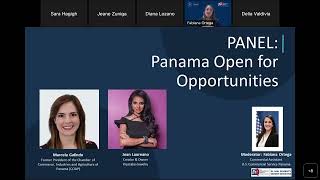
U.S. government webinar on exporting to Panama for women-owned businesses. Covers market opportunities in services, agriculture, logistics, and nearshoring, plus practical advice on local partnerships and trade missions. Features embassy staff, the U.S. Ambassador, and resources like STEP grants and MBDA export assistance.
Questions this video answers
October 31, 2012.
STEP-supported products/services must contain at least 51% U.S. content.
Approximately $614.5 million (U.S. exports to Panama, 2022).
May 5, 2024.
September 17–19 (year referenced in webinar).
Chapters
Good afternoon everyone and thank you for joining today's webinar jointly brought to you by the U.S. department of Commerce, the International Trade Administration Commercial Service Panama and the U.S. small Business Administration. Our topic this afternoon is Selling to Panama Insights and Resources for Women Owned Business. May is World Trade Month, so it's opportune that we are focusing on Panama, a country with many advantages including a free trade agreement with the United States. The International Trade administration and the U.S. small Business Administration are partnering on a webinar series with a focus on assisting more women small business grow their businesses in overseas markets. Assisting women business, rural, minority and other underrepresented communities is a priority of the Biden Harris Administration. We plan to co host additional webinars supporting U.S. women small business later in the year and are hopeful that we'll be able to highlight Brazil and Mexico for the fall of 2023. My name is Sarah Hagee. I'm a Senior International Trade Specialist in the Office of the Western Hemisphere at the Commerce Department, International Trade Administration. I know that's a long title. I will be monitoring today's webinar. Your microphones are currently muted, however, we will have a question and answer session following all of the presentations. Please also feel free to type questions at any time during the presentation in the Q and A box which is located at the right lower corner of your screens. We will address as many questions as time permits and we'll follow up after the webinar to address those questions that we were unable to answer during the presentations. I want you to also know that we plan to email all the presentations, a recording of this webinar and all other useful information in a few days. We have a very full agenda today and it's dynamic and exciting, so let's get rolling and I would like to introduce remarks by the US Ambassador to Panama, Marie Carmen Aponte, who is a dynamo, I can tell from personal experience and she's a real leader for women business. A few words from Ambassador Aponte.
Good afternoon everyone. I am Maricarmenga Ponte, the United States Ambassador in Panama. It is a pleasure to participate today and I welcome you to this webinar selling to Panama insights and resources for women owned businesses. I am sure it will be great for you and your business, especially because you are going to receive invaluable information from from key people in the market. Panama is a great place to do business not only because of its stable government, its dollar based economy and the commercial potential the canal affords, but because its location makes it perfect for you to expand your exports and easily reach numerous other markets in the region. The Panama Canal can connect your company to the world like no other commercial tool can and provide you the ability to reach the markets you may not have thought of exporting to. It is a well run tool with amazing infrastructure and logistics. Agriculture is a big part of our trade with Panama. We have a free trade agreement that provides benefits to American companies in the form of low or even zero tariffs on products coming from the US we will get a chance to hear from our agriculture colleagues today. You will also be hearing from our US Commercial Service section of our embassy. And with their help and that of the Agriculture Service and sba, your business could move beyond your expectations and into Panama. I want to thank the US Department of Commerce, the Small Business Administration, the US Department of Agriculture and the US Commercial Service Panama for organizing this event. And of course thanks to you the most important component for participating. I hope you'll find businesses in Panama welcome and enjoy the webinar.
Well, thank you. Recorded remarks but nonetheless exciting. Ambassador Aponte is wonderful. I encourage if you ever go to Panama to connect with her if at all possible. Thank you for that. And we're going to have Our first presenter is Jean Zuniga. Jean Zuniga is our Senior Commercial Specialist at the US Embassy in Panama. Garner. Jean, you may begin.
Thank you. Good afternoon. My name is Jean Suniga. I'm the Senior Commercial Specialist for the US Commercial Service in Panama City, Panama and I'm delighted to be here to talk to you about doing business in Panama. To start, I'd like to mention that we are the trade promotion arm at the US Department of Commerce and we are here to help US Companies looking to export international. So how does it work? We are a network of trade and investment professionals located in 77 countries and in 106 U.S. locations. Our trade experts are invaluable resource for getting the right answer you need. We have four experts in our office and I'm happy to help you connect to the right person. So Panama Panama is the home of the Panama Canal with ports on both oceans and known as the hub of the Americas. It's one of the world's most connected countries by air and by sea. It's around the same size as South Carolina, but carries the shape more similar to Indiana. It's about 130 times smaller than the United States States. Panama has low inflation and zero foreign exchange risk. General elections are done every five years and next ones are scheduled to be next May 5, 2024. So Panama's economy Panama is a market oriented economy with high leading standards. Panama's economy is largely based on on the services sector which includes of course the Panama Canal, COPA airline hub, banking and mining. Panama is also home for several free trade zones that have become increasingly important to the country's economic success. Of course, as already mentioned, we have a Panama Trade Promotion Agreement with the United States that went into effect in October 2012. It offers us good competitive advantage in the market. So the Panamanian market business practices in Panama are similar to those in the United States. Businesses tend to be direct and straightforward. On average, Panama city accounts for 65% of total national sales of consumer goods. The remaining 35% is distributed among the rest of the country. As a rule of thumb, you should conduct market research to provide you with information about three critical areas before exporting. This includes industry information, consumer profile and an overview of your competition. So how do I find buyers? After doing your market research, our services can help you find buyers. There are also trade shows that you can take advantage in the country like Expo Commerce or organized by the Panama Chamber of Commerce. So if you are considering doing business in Panama, I just want to point out a few. In a lot of ways Panamanians have a unique culture and preferences. There is never a bad meeting in Panama but extensive follow up is very important and usually they don't answer emails if they don't know the person. Although time management is considered essential, meetings tend to last longer than schedule. Hierarchy is rather important and that the decision making process follows from top to down approach. Maintaining a strong business network through personal and professional contact is very important when doing business in Panama. Personal contacts provide an edge in business over competition as most of the companies are family owned and relationship driven. If you are considering using a distributor with one distributor is enough for the entire country and you have to think From Panama you can reach other markets like Colombia, Costa Rica, the whole Central America and Caribbean region. We do also recommend having a local presence for solid business development. Productive month for doing business here in Panama is between March and October. November we have a lot of holidays and from December to February is the summer season and people travel a lot. So these are but a few of the things that you have to consider thank before doing business in Panama or selling to Panama. Contact myself or one of my colleagues and we'll be happy to help you. Thank you for listening. And now I will introduce my colleague Fabiana Ortega or Panel Coordinator for Women in Business to bring us the next portion of today event.
Thank you.
Thank you Jean and hi everyone. So for this panel I would like to welcome and join Marcela Galindo. She is the first female president of the Chamber of Commerce, Industries and Agriculture of Panama. And Joanne Laurianos, president and founder of Cristalos, which is a Puerto Rican company that came to Panama and is selling in Panama thanks to the STEP funds. So welcome you both. And I would like to start with very essential question, so why Panama is a country open for opportunities. I would like to start with Marcela and then I'll go with you, Joanne.
Thank you, Fabiana. And welcome to everyone. Thank you so much for being here today and you know, for just wanting to learn more about Panama. This is very important for us. I'm going to go through some of the things that are that have already been mentioned, but you know, just to go over them again. First of all, I think it's very important to start saying that Panama is a stable democracy. This is very important thing to mention when you consider everything that's been going on around the Latin American region. Also, we work with a free market economy and we've already mentioned that we are a dollarized economy. But and it's not that we have been a dollarized economy for 10, 20 or 30 years. We've been a dollarized economy since 1904. That's basically a year after we became an independent country. So it's important to mention that the US Is our main trade partner. So we are very open to promote doing business and we're very familiarized to doing business with US companies and with people from the US just to give you a ballpark figure, in 20, Panama exported $522 million to the US while the US exported more than $12 billion of made in America goods to Panama. So we have been historically a country that is open for trade, that is open for commerce. And an example of this are the 23 trade agreements that we have with different countries, including the one that we have with the U.S. the Panama trade Promotion Agreement. So in a nutshell, these 23 trade represent access to 59 countries which that is a market of roughly 1.6 billion people that you can be in touch from Panama. So also we've developed a world class logistics center. We're ranked number one in Latin America when it comes to logistics infrastructure. And of course the Panama Canal is at the heart of that. But we've complemented that with the Trans Isbian Railway, with several ports facilities in the Pacific and the Caribbean, with the Cologne Free trade Zone, the Panama Pacifico Special Economic Area and also the Americas hub through Takuman Airport. Also, we have a very successful international banking system. We have investment grade. We have 68 national banks, and we also have 22 international banks. And they all have all the representatives of his licenses. So when you combine all these factors, when you combine the commercial factor, the banking infrastructure and the logistics facilities, you can say that Panama can serve as your gateway to access all of Latin America and even Europe, Asia and Africa. We're very conscious that we're a small economy. We've already mentioned that we're roughly 4.4, 4.5 million people here in Panama. So sometimes that might not seem, you know, as attractive, depending on the size of your company. But we have that plus that you can come to Panama or do business here in Panama. Through Panama, you can reach all these other places. So, you know, these are just a couple of little points to, let's say, open up your curiosity about Panama, of.
Course, and really important ones. And as Jean mentioned and you mentioned, it's not that, yeah, we are a small country, but you can go from here to anywhere you want. So, Joanne, why is for you that Panama is a country for opportunities that you've been selling quite a few years to Panama? So what is it for you?
Hi, can you hear me?
Yes, perfectly.
Excellent. Awesome. So, hi, how are you? My name is John Loriano and I'm the owner of the Cristalos brand of fashion accessories. I want to talk a little bit about my brand so that you can understand how it ties to the Panamanian culture. I'm in the fashion business. I have a brand of secular accessories. But our big star worldwide, it's Devotion by Cristalos, which is a brand of Catholic products. It's a brand of rosary bracelets and chaplets that tell the stories of different saints and Christian devotions. Like this is, for example, one of our products, and it tells the story of the saints through the colors, the textures and the shapes of the stones. They have the booklet that tells the story. This one is in Spanish and English, but we have it in several languages because now we're in 13 countries worldwide and Panama was an excellent starting point for us. And I would say, I would say that it's a great country to start if you have never exported. Because like Marcella said before, since they use the US Dollar, you don't have to worry about currency exchange. You use the dollar to. You use the. They use the dollar to pay, and it's one to one. The relationship is one to one. So you don't have to worry about losing money when exchanging currency like it happens in other countries. They are very friendly to US Products because the Panama history has been extremely and closely tied to the United States because of the history of the Canal. Puerto Ricans are also really closely tied to the United States because of course, we are a US Territory. But the beautiful thing that we share Puerto Ricans and Panamanians is this mix between the Hispanic and US Cultures. We both understand each other. Actually. It was very funny. But because when we go to other countries, Puerto Ricans tend to speak in both English and Spanish. It's called like kind of Spanglish. So when I want, when I go to other countries of Latin America, they find that very weird, the fact that I speak half English and half Spanish. But in Panama it's more common because like I said, historically they have been closely tied to the United States. So they speak English and Spanish as well. So if you don't speak Spanish, you don't have to worry that much because Panamanians are also very familiarized with the English language. That's a great thing. And another great thing that I have found about Panama is that you can from there you can start expanding to other countries of Latin America. It's more difficult, for example, if you go starting from Mexico because there's a problem right now in the border of Mexico in which you have many drug smugglers that are getting drugs inside of shipments. And when they get to the border, they get detained and you can lose the shipment. So when you enter through Panama, it's very secure to expand from there to other countries like Colombia, like Costa Rica, like Guatemala, like, for example, thanks to the Gold Key service of the U.S. commercial Service, I was able to enter one of the biggest chains of Catholic bookstores in the world, which is Liberia, San Pablo. And I entered through Panama. I entered through Panama and they told me we're going to start with Panama, but then from there we're going to expand through to Colombia, to Costa Rica and to other countries because for us it's more secure to start in Panama. So as you can see, Panama is a very secure environment to do business. People trust getting their products through Panama to then move them to other countries of Latin America. So I love Panama. I've gone to Panama countless times. I also recommend you go at least once to study the market by yourself because write this website down, trade.gov that's a monster of a website in which you will have a lot of mark, you will get a lot of marketing intelligence from many countries. Panama is one of them. But there are certain things that you will learn only by getting there. So I recommend that you go at least once to Panama. You will love it. You will love it. Trust me. I even bought property in Panama. I became in love with Panama. So go at least once, go to shopping malls, compare how your product behaves in comparison with others that are already in the market over there, and speak to people. Whenever I go to travel, I speak to everybody. I want to know the culture. I want to know how they behave. And bring some samples with you wherever you go. Whenever I go on travel, like two weeks ago I was in the Dominican Republic and three days ago I was in Washington. I always bring products with me because you never know what opportunities may come. But there's a warning. I suggest that you go through the US Commercial service first because they, when they, when they do business with you, when they, when they do some kind of like for example, the Gold Key service. I have my folder with the Gold Key service that I did in Panama, they screen every customer, every potential customer to make sure that they are secure to do business with. Because when you go to another country, you don't know if the person you're doing business with is safe to do business with, if they are going to pay you. Because what happens if you sell them products, you send them everything and they don't pay you back. The US Commercial service screens each and every business that they contact to make business with you so that you can be sure that you are doing business with somebody that's real, with somebody that's not going to be a fraud. That's why whenever I go to Panama, I always go through the US Commercial service. And Fabiana, if you want me, I can speak about the Gold Key service of the U.S. commercial Service, which has been awesome for me in my process of getting into the Panamanian market.
Well, I think one of my colleagues is going to speak about it, but I thank you so much because, yes, as Joanne is saying, I mean, if you want to come to Panama, this is a webinar that you're looking for just to learn how is the market. And we in all industries, we specialize in several industries, so we can help you to get to the market, as Joanne was telling us. But, and I will stand out something that Joanne said. The Panama is a great country to start. And I think that that's, that's the message that you want to get from here. So, Marcela, where do you see there is more potential for U.S. companies to export to Panama?
Well, it's if we start with the basics or what is the trade that we have going on right now and you look at U.S. exports to Panama, you're going to find, and you can do an easy web search and you can find all the information, you know, so you have mineral fuels, of course, where we don't have a, we don't have gas here in Panama or other types of fuels. So we import all of that. And the US exports a lot of those products here to Panama. We have a machinery, we have beverage, they call it beverages, I call it spirits because basically there's a big industry when it comes to spirits, you know, exporting them to Panama, electrical machinery. Also the ambassador mentioned in her presentation or in her introduction all the agricultural products. You know, Panama has, let's say, a basic primary sector. You know, we have different types of people in the primary sector. We have companies that are bigger and more established. We have people that do it more, you know, in a smaller scale. But we import a lot of the products that we consume here in the supermarkets. So we import a lot of corn, soybean, dairy products, prepared foods, and also pork and pork related products. Also services. You have travel, things related to travel, things related to transport and financial service sectors. However, there are also what we consider to be big opportunities when it comes to it and technology. And if you want to take it a step further, you know, one thing is being in the US and exporting to Panama and another thing is, you know, trying to, trying to see if you want to come to Panama and you know, set up shop here in Panama. You don't have to leave the US but you can have like a secondary office here in Panama. And there are several opportunities when it comes to that. First of all, in the energy sector, we like to say, or Panama is one of the three carbon negative countries in the world. The local government has established an energy transition agenda where we want to go more and more into greener types of energy. So this is very important. We have been our, our energy nowadays. It's, it's, it has a very big, you know, a greener, clean component because it's mostly hydro produced. But the solar system, the solar panels and the wind systems have been growing exponentially here in Panama. So there's a big opportunity also when it comes to energy, especially energy transition. And also, you know, in the agriculture and agro industries, we have big opportunities there. Like I said, we have our basic agricultural or primary sector. But there are a lot of opportunities in adding value, transforming those agricultural products and being able to sell that from Panama to other countries. Of course, if you have that type of know how, if you currently have that type of know how in the U.S. then you know, you can come here, you can bring that know how and you can start those, those businesses and those industries here. We have a lot of opportunity also in tourism if any of your countries are in the tourism sector and you know, we would love to have you doing business here in Panama. We have opportunities when it comes, you know, not only developing further hotel infrastructure, but also there are a lot of opportunities for developing tourist tourism products. So if you have that experience, then you can come here and you can explore the market and see where you can find, you know, a niche there. Also, again, because of our, of our geographical position, there are a lot of opportunities or let's say that Panama becomes a, has a competitive advantage when it comes to nearshoring. And this is, this is something that we have been working a lot with the US Always trying to have better control over different processes and reducing transportation costs. And finally we have different laws that help people from other countries that want to come to Panama and set up shop here in Panama. We have a law for multinational headquarters, we have a city of knowledge law, we have a law for free trade zones, special regimes for manufacturing, and we have a special law for agro parts, you know, establishing in an agricultural part, you know, specialized agriculture and several others more. One of the recommendations, I'm going to jump ahead because we're talking about this. I was going to mention it in the recommendations, but also there's an agency here in Panama called PRO Panama. I believe the website is propanema.gov pa they have a lot of information. You can go into the website and you can even find different opportunities in different parts of the country. They have an explorer where you can go and then you say, okay, I'm interested in doing business in Panama City. So you click Panama City and you can just keep on drilling down and you're going to find different opportunities in different sectors. You're going to find local contacts. So that is also very helpful when trying to get to know the local market. But as John mentioned, there's nothing like coming here to Panama, touching ground, talking to people and experiencing the different opportunities for yourself.
Thank you Marcela. And I think it's right. That's the best thing you can do when you're going to enter a market and just to get to know it firsthand. Joanne so how would you describe your experience using the STEP funds? And also I know this is related with the Gold Key Service. So if you can do both, if you can explain to us and to all the women connected in the webinar.
Well, the experience with STEP Funds has been so varied. You know, the STEP Funds is it's a series of grants given to many of the states of the United States to cover several costs of going to another country. Like for example, I have presented my products in Expo Comer, which is Latin America's biggest trade show, and it's held in Panama. And I've gone there twice and expenses. The first time I went through the Puerto Rico Department of Economic Development, which worked closely with the US Commercial Service and they used the STEP Fund. So they selected a group of entrepreneurs to present their products in a pavilion in the Puerto Rican Pavilion that they that they put together for Expo Commerce. And the STEP Funds paid for my expenses to present in Expo Comer. They paid for my travel expenses and they paid also for the lodging. They also they can also be used to fund the Gold Key Service. Why do I specifically talk about the question Gold Key Service? Maybe you will talk about the Gold Key Service later. But that one has been key to my success in Panama. I'm going to show you the this is the real report that I got from Panama. As you can see, it says Panama right there. I'm showing you the evidence that I have done this. So this is the report that you get once you get into Panama from the US Commercial Service is a full report that they give you about the economy there. For example, I work in the jewelry market, so they give you a full report about the jewelry market in Panama. So they give you this full report talking to you about your specific market. And actually they can give it to you also before you get there. So they so that you can study it. In my case, they gave it to me much earlier and then when I got there, I got it to they give you the full list of people interested in your products and the agenda when you get to Panama, you don't have to do anything. They, they put together the meetings, they call everyone, they screen the people that you are going to meet with to make sure that they are real people, that they are that they, that you can trust in them, that you can be safe doing business with them. And they even give you a report of the people that are interested in in your product. But for some reason they couldn't make it. Like for example there this is a company right here that were very interested in my products. But due to COVID 19 the buyer could not see me because the person was sick with COVID 19 by that time. And this other person, which is from Liberia, San Pablo was not in the country. But later I was able to meet with this person and now I'm with them. This is the chain of bookstores that I was telling you about that it's one of the biggest ones in the world. And they have a huge presence in Panama. So as you can see from this report, you get all the contact information, the specific people that they talked to, present your product to, and they take you there. They. They set up a driver to get you to those specific places. It's not like they give you Google Maps, Google Maps pointers, and they tell you, no, you. You go there by yourself. No, no, they, they even hire a driver to get you there so that. To make sure that you get on time. Because one thing about Panama is traffic. You know that, right?
Yes, it's really bad.
Yeah.
Wanting.
Important thing that you have to know about Panama is that traffic is crazy. So that means that having a driver is the big plus to get to your meetings on time. So the. And also the driver makes sure that you don't get lost, that you're safe all the time. And they get, listen, you don't have to do anything. They set up the meetings, they tell you at what time you're going to meet with this person. They give you the websites of, of those persons so that you can do your own study of your potential customer before you go there. That's one thing that I always recommend. Make sure that you study your potential customer before going there to make sure that your product is a good fit for that store. For example, I sell both to Catholic businesses and to secular businesses. My Catholic brand, because they are secular businesses that don't specifically work with a religion, but they want to have a presence of Catholic products. I cannot talk to them the same way I talk to the Catholic businesses. Bookstores, parishes, cathedrals, etc. So when you have the information of your potential customer beforehand, like the US Commercial service gives you, you have the advantage that you can study your potential customer that is already interested in your products. Because the U.S. commercial Service did all this work before you came to the country. That way you can figure out which way are you going to approach the customer and present your products. This is extremely important. And the Golke service has a cost, but that cost can be covered through the Step grants. So you see, you know, the step grants can be used in so many ways. And a great thing about the gold key service is that although it does have a cost, it's very little compared to going by yourself and knocking on doors by yourself and trying to present your product to people that may not be a good fit to your. To your product that may not be good paying for the orders that they make. It's much safer to do it through the U.S. commercial Service. And for me, it has been very successful. We are in Liberia, San Pablo in Panama. We are in Florida. We are in Magnificat in Panama. We are in Serias Luna in Panama. We are in many stores in Panama. Thanks to the Lord and also thanks to the US Commercial Service because of the Goal Key Service and the help that we have got through the STEP grants.
Thank you so much, Joanne. And thank you, Marcela. We're running out of time and I think that my last question was going to be like if you could give some recommendations, but I think you have already provided to all of our participants all the recommendations they might need to come to Panama. So I will thank you both of you for participating and for sharing your experience and your knowledge with all of us. Thank you both. Sara, back to you.
That was terrific. Thank you, Fabiana. And thank you so much to Marcela Galindo and Joan Loriano for sharing your experiences on doing business in Canada. I have to say I find these panel discussions where we have women leaders both from the US Talking about the STEP grant and from the country here in Panama to be some of the most vibrant parts of these webinars. And I really hope our participants benefited. And I have never heard the gold keys compared to a gift from the Lord. But thank you for promoting the Gold Key Services. They are a very, very useful resource. As this is step, let's turn it over now. We also heard about how important agricultural exports were to Panama. And we're going to learn about agricultural excellence from Erica Sanchez, marketing specialist for the U.S. department of Agriculture's Foreign Agricultural Service in Panama City. Erica, the floor is yours.
Hi, good afternoon. My name is Erica Sanchez. I'm with the Foreign Agricultural Service. I would like to start with a quick video. We call this video Eyes on Panama. And it's for those who are looking to introduce any food and beverages into the market. Please play the video. Beautiful. Panama. Small. It's a small country, very hectic, very active. Can we go to the next slide, please? I believe that we can see the next slide, right?
Yes, the slide is shown.
Okay, perfect. So we are the eyes and ears of US exporters and cooperators with a presence of 180 plus offices around the world. These are our four pillars. This is what we do. We do market promotions through a USDA brand which is called Savor usa. We work along with US Cooperators. We do have funds to promote all your products that are exported into the market through this digital platform that is called Sabor usa. We do market intelligence when you are looking to enter into the market. We have several free reports that you can find in the system that is called gain, the Global Agricultural Information Network. You will be able to find retail reports, food processing reports and information on what is going on in the market in terms of food and beverages. We also provide market access services in regards of all the trade policies, trade agreement access, condition and stock shipments at customs. We also have funds to promote everything that is under capacity building. We have some fellowship programs and we work along with some other programs that are provided from our cooperators. Next Slide so these are our top competitors in the region. Panama is the 24th largest market for US consumer oriented products exports and US exports were value last year at around 614.5 million in 2022. As you can see, the United States has the largest market share followed by Brazil and Argentina in regards of the U.S. panama Free Trade Agreement. This entered into force on October 31, 2012 and nearly 56% of U.S. agricultural export became duty free upon entry into force, with most of the remaining tariffs are phased out over 15 years. We also have that information available in one of the the reports on the gains system and at the end of the presentation I will provide my information and we will be able to share all the reports that you might need. Next slide this is a quick view of the primary agricultural products that are traded between Panama and the US Dairy products, prepared food, pork and pork products among some others. Next slide. These are the top five US consumer oriented products export to Panama in 2022 starting with dairy products and all the way to food preparations. The following slide will show the top five U.S. imports of agricultural products from pan fresh bananas, rocking sugar, distilled spirits, especially rum as Marcella mentioned a few minutes ago, vegetable oils and coffee. Panamanians on this next slide that will show you some of the trends. Panamanians are consuming more convenient foods and more functional food that offers health benefits beyond their nutritional value. These trends have improved prospects for U.S. food exports and created import demand in the following categories which are low fat, low sodium, gluten free, sugar free, plant based. So we continue to be up to date among those trends and here comes the fun part. So we are promoting as I mentioned, all those products that are exported into the market through Savor usa, we are building on the next slide. We are building up a community of end consumers. We have created this digital platform that it's a combination of a web block and also several social media accounts, Instagram, Facebook, Twitter and we also have Pinterest and YouTube. I invite you to follow the account to get all the content that we're promoting. How are we creating the content? We celebrate the historical ties between us and Panama around the gastronomy. We do some post on holiday celebration, let's say Thanksgiving, Halloween, Mother's Day, Independence Day, among others. Also we promote food festivals here in Panama, food pairing and always using US And Panamanian ingredients. On the business side, if you visit the website and if you go to the Importadores or Buyers section, we are connecting Panamanian buyers with US Exporters in this side of the blog. We promote all those trade shows in the United States and we usually register for free for all those buyers that qualify to attend. We promote the National Restaurant association show, the Summer Fancy Food show, the Seafood Export in Boston, Natural Product Expo in Anaheim, among many other trade shows. My name is Erica Sanchez. One more time and I work for the Foreign Agricultural Service. Thank you very much for your time and if you have any question, I'm available.
Thank you very much Erica. Thank you for sharing your knowledge about ag exports and its vital role in the Panamanian economy. Our next presenter is Shaditra Robinson. Shaditra Robinson is the Director of the State Trade expansion program or STEP program at the U.S. small Business Administration's Office, Office of International Trade. Shaditra, you may begin.
Good afternoon. Thank you, Sarah. Hi everyone. Thank you all for joining and I thank you all for allowing me this platform to provide information on the STEP Program within the Office of International Trade with the Small Business Administration. So the STEP program is the State Trade Expansion Program. And I'm so happy that Joan expressed how well the program has worked for her and the program, the State Trade Expansion Program, affectionately known as STEP, has been in existence since 2011. It came out of the Jobs Act Bill of 2010. And so the first two years was a pilot program. But of course we were able to see how well the program worked for small businesses in the States. And so the program is specifically designed to provide grant funding to the States and the state then works with small businesses to become export ready trained those that are already in the market assist them with expanding. So that's the design of the program. At this time we are in our 10th year. So we have what we consider step 10 of the program. And this is actually one of the largest years of states and territories being in the program. So before I dive in a little bit more about the STEP Program, just want to give you some insight into the Small Business Administration Office of International Trade and the other two divisions that we have. And so within our division we have our export finance managers who assist small businesses with capital. And it's a loan product. So that particular program works with small businesses to provide them with a linkage to banks that assist them on how to have that counseling, get that to receive loans and provide them with the security of having those loans and looking to export their products. So that's one of our resources that we also have within the Office of International Trade. The second is working with our trade policy. So we have a hotline and through that hotline we work with it assists small businesses that call in that are looking for resources. We connect them. There's also free resources with our Women's Business center that assist the small businesses with counseling and you know, very little to low, minimal cost if there are any associated. We also encourage small businesses to work with our district offices and utilize one of our other grant programs, which is the SBDC program, which is also viable and can be utilized through the STEP program. As well as noted with the STEP Program we work with the small businesses. We work with the states and the states work with the small businesses to find them eligible for the services. So if you go to the next slide. So here with the Small Business Administration STEP Program we have what we call allowable fees. We work with, as Joan even mentioned, you know, we work with Gold Keys, which is also a Department of Commerce service. So we the STEP program will support that. We also support foreign trade missions and trade shows. We I've seen myself that it can be very expensive to take take advantage of going to a trade show or participating in a trade mission. So what we what the program is designed to do is help offset those costs. We also work with small businesses to take advantage of translating their website into the language that they're looking to target. Of course with market research that can assist and let you know where your product is more valuable. So having that opportunity that then will assist you with translating your website into that language. Also the design of marketing media or even trade show exposition exhibits. The STEP program is very unique and in some always willing to help those small businesses, especially at this time working on equity for small businesses and small businesses of women and diversity. So we're really targeting and working with the states so that they can target a lot more small businesses that are focusing on women owned businesses as well as diversity. We want to be able to see the program continue to keep growing and flourishing. And with that, we know with the pandemic, a lot of businesses were put into place. And so having the use of the STEP program and all the services that we're able to provide, we're really trying to target those small businesses so that they can continue to expand as well. One other, you know, there's so many other caveats and advantages of the STEP Program participating in trade show, I mean training workshops because of course, as I noted, we have a lot of small businesses that came into existence during COVID but now that a lot more businesses and where, you know, the economy is looking to rev up, those small businesses can take advantage of getting the training, getting the support so that they can be what we consider new to export, to be able to take advantage of that. And even if we have some businesses that have been around for a while, but they're still looking to expand into another market, we have the support for that as well. So just wanted to give that caveat of how the STEP program works, what our target is, and that is to work with more small businesses specifically targeting women and diversity. The next slide please. Oh, so at the bottom you can see how you can contact us as noted before. Or we have the Step Directory, it's on our website, it's step.comstep.gov I'm sorry. And so on that website you'll be able to see all of the 52 states and territories that are participating in the STEP program as it is right now. So when you go across to the state that you live in or the territory, you can find all of the contact information. So the website is made available to you as well as the director's name and their contact information. It's best to contact them directly. They'll work with you on getting the application together and being able to see if you are found eligible for the services and be able to start taking part in the STEP program. As I noted before, this is our 10th year, which we consider step 10. We had 20 million that was provided to the states and territories, all 52 that did apply. So just wanted to make sure that you all are aware that that program is out there as well as taking advantage of our other resources with our hotline. And that information is listed below here on the slide. And if there's any other questions, I'll stick around and I'll be more than happy to answer. I'll turn it back over to you.
Sarah.
Thank you so much, Shaditra, for providing the valuable information on the STEP program which has supported so many US Small businesses, including women owned small businesses. Our next presenters come from the Commerce Department's Minority Business Development Administration, Joy Starkey and Maria Zabila. Joy Starkey is the director of MBDA's Florida Export center and Maria Zavila is the Senior Export development specialist at MBDA's Florida Export Center. Joy and Maria, thank you for joining us today. You may begin.
Good afternoon everyone. Thank you, Sarah and thank you to this wonderful panel of dynamic speakers and to all of you that took time to join us today. This is a fabulous webinar, very informative. We won't be before you long. We would like to share just some critical information that we believe would be helpful to women who are seeking to export to Panama, south of Panama. So as we see here, we just progress to the next slide. This is the Florida MBDA Export center funded by, as you heard, the US Department of Commerce's MBDA and operated by Gil and Associates Inc. Company that has been been around, a minority owned company has been around for over 30 years and actively engaged in federal contracting for 23 of those years. Now our programs are designed to help minority owned, ethnic minority owned businesses, women owned businesses, veteran owned businesses to grow, to generate, increase their financing contracting opportunities and also to expand, expand into global markets. Many of our partnerships that we have is why we're able to leverage the services that we provide, all at no cost to our clients. Some of those strategic resources and partnerships include, as you see, the U.S. commercial Service and the Local Use act centers here in South Florida and also the US Virgin Islands. Ex IM bank, we're regional export promotion partners with Ex IM Bank. We also have very strong relationships and an mou, in fact with OWIT Nigeria, that's the Organization of Women in International Trade in Nigeria, but also here in South Florida. And we partner with Enterprise Florida, Miami Dade County's International Trade Consortium and additional local, state and international export resources, as you see. And before I move on to the next slide, I just want to highlight that the work that we do has been so influential and so critical in supporting not just minority but women owned businesses across the country. And to give you a snapshot of that or to crystallize that a bit, I just want to highlight some of our numbers. This export center because there are four in the nation and over 80 centers throughout the country, but four export centers. So our export center we have facilitated over $921 million in contracting opportunities for our clients and over 247 million in financing. We've served nearly 3,000 clients and we've helped to create and retain old over 6,000 U.S. jobs. And so we are very proud of the work that we've done and that we continue to do in supporting minority businesses, women owned businesses and you know, to scale and to grow and so talk more about the services that we provide, as you can see here, export ready services, export marketing plan development and we don't write the those plans, we leverage. So we connect with organizations and agencies of course like the US Commercial Service and the local sbdc. But we help to kind of navigate that process because we all want to make this streamlined and simple for businesses. We understand it can at times be a little cumbersome trying to navigate and find out where to go and which resource to connect with when. And so we believe that we with our support in helping women owned and minority businesses to understand that process, it can become much easier to achieve. We help with business planning achievement. We facilitate and we assist with the facilitation of inbound and outbound trade missions which you will hear more about briefly from my colleague, Ms. Maria Zavala. Trade shows assistance as you can see, I won't go through the entire list here but export financing and bonding and boots on the ground connections with global markets. Again because we leverage the relationship and the partnerships that we have with agencies such as the US Commercial Service, the ITA or International Trade Administration, Enterprise Florida and many others that are stationed to support the growth and viability or vitality loyalty of U.S. businesses. And so I just want to go over to access to capital. So many of the ways that we support our clients to gain access to capital is through referral services. Again, we don't provide funds but we work with many different lenders such as EX IM bank, local banks, community banks, community development financial institutions and other organizations EX works that can help with you getting access to the capital that you need. Now one thing I want to point out before I let this go because I'm very passionate about this, as I'm sure you can see. One thing we like to stress is before you look at exporting your services, it is very important that you understand that your business must be sound, you must have a strong foundation here domestically, you must be able to, you must be already doing business and doing business well here in the US before you think about expanding your business overseas. And we believe in providing that type of technical assistance and support that while you're looking to export overseas and you're looking at different markets to where there is a demand for what you sell or the service that you provide, we're also helping you here at home so that you strengthen your foundation and you have the capital that you may need in order to inject in this expansion. And so we do factoring, we work with factoring and purchase order financing companies. We identify private equity, venture capital investors and many others. And then we have access to, access to markets. And so I know that's a lot, I won't go through all of those bullets there. But just to highlight a few, we really work strongly with again, local agencies. We're a small team. We don't, it's six of us on our team, so we don't have the bandwidth to do all of it. And we don't have to because we have wonderful agencies like the US Commercial service like Enterprise Florida. And I know I keep mentioning those names like the sba, like the sbdc, that we all work together holistically to help you achieve your ultimate goals. And so I just want to bring in my colleague here, but before I do that, I almost forgot there was something that I wanted to also share with you that I think is so fitting, especially for the reason that we're here today. So our operator, M. Gill and Associates has also created a wonderful organization called the M. Gill Her Foundation. It's a nonprofit organization that we use in partnership with our MBDA programs to help empower and educate and provide funding support to businesses owned by women, women of color, and this again minority businesses, helping them to succeed and to to scale in global markets. This foundation seeks to provide and enhance those tools by providing scholarships to businesses by giving you access to resources, other partners, potential customers and clients through different events, whether it be B2B networking events or one on one matchmaker facilitation that we help to put together on your behalf. So I just wanted to highlight that, that we are all things minority business. Yes, but we're all things women owned businesses because the company, the organization that operates these programs is a woman owned business as well. And our entire team, you know, I don't mean to, you know, I hate to say this but put any shade on anyone, but our entire team is led by women. So we're excited and we all are experts in our fields. We know what we're doing, we're passionate about what we're doing and we're here to serve you. So I'm going to bring in my colleague, Ms. Maria Zavala to talk about the trade missions that she has helped to facilitate for our programs over the years. Maria.
Thank you. Ms. Jai, good afternoon. A pleasure to be here.
I'm the senior Export Development Specialist for the Florida export center with MBDA. I want to in addition that Ms.
Joyce just said, I want to talk.
About our experience in connecting companies with international sales in country, distributors, buyers and also we promote trade shows, as she said, and in and out trade missions. For example, last year we led a trade mission to Guatemala and we promote women owners to come here to sell their products.
We have a successful end with them.
And as a result of that we have an MOU and we are helping small businesses and specializes in women owned businesses. Also I want to highlight the importance of acknowledging the culture of doing business with Latin America and Caribbean.
Then we can help you with that.
Because it's so important to do businesses in the way they want to do it.
Also we have a dedicated team to.
Provide to provide personalized support throughout the whole export process. Then we look forward to hear from you and thank you so much.
Thank you, Maria, so much. I'm going to yield back to you. Sarah. Thank you.
Thank you for that excellent presentation. I know we have a very full agenda. Thank you, Joy and Maria. MBDA is a part of commerce with ITA and we're commercial service and we're very much looking forward to continuing to partner to support small business exporters, including women. And last but certainly not least, we will hear about future events to support your business in Panama. I would like to introduce Diana Lozano. Diana is a commercial specialist with the U.S. commercial Service in Panama. Diana, over to you.
Thanks Sarah. And good afternoon everyone. I'm going to briefly mention our office future events. We're going to start with the Puerto Rico Trade Mission to Panama on August 8th from the 11th. Following the Central Florida Hispanic Chamber of Commerce Trade Mission to Panama and Colombia on August 21st to the 25th. And then we'll go with the US Destination Showcase the Americas on August 28th and September 1st. And finally with the Business Opportunities in the Americas conference in Washington D.C. in September 17th to the 19th. Next slide. Okay. If you need further information, you can see our contact info. We are here to help you and feel free to contact us if you need further information on all of our services. Thank you.
Thank you very much. Diana. Yeah, thank you so much. We are at a point where we'd like to open this up for question and answer. Here's Some more slides here. Basically on this slide we have information and a link to the upcoming Diana mentioned several of them, but one of them is Business Opportunities in the Americas in Washington. What's important to know about that is it's three days in Washington. We're bringing the commercial specialists from all of our embassies and posts in Western Hemisphere. So in one room or two rooms you will have an opportunity to meet all our senior commercial officers. Following the trip to Washington, there will be a trade mission to Canada and Mexico. So you will have the choice later in that week, September 19th, 20th and 21st to go to Canada and Mexico. And there will be links to all of this as well. The contacts and everybody. I just want you to know here's another one you are going to be getting these slides. So all the wonderful information about STEPS state trade expansion program that SBA runs, it's all available here, sba.gov international there's a registration link here to the Business Opportunities in the Americas conference that I just mentioned in dc. Following that, if you want to sign up to join that, you can also participate in a trip to Canada and Mexico. I know we're here to talk about Panama, which is a terrific market. Canada is our number one trade country, trade market, export market, and Mexico is the second largest export market right on our northern and southern borders. So these are all and many, many other opportunities coming up. The link here also has a list of your local trade specialists around the country. Clicking here. So I want to turn in the time remaining to see if we have some questions. I believe we do. Someone asked about whether there are opportunities for providing services to pharmaceutical and medical device companies. Services such as consulting, audits, trainings, you know, quality systems consulting. This is a question I hope the person who asked is still on the call. I used to work in our services office. Most people don't know that services are as big a part of our trade as our agricultural exports or auto exports. And the answer is yes, there are absolutely opportunities for providing services both to a U.S. goods exporter or to foreign producers who are looking to sell in this country. Our primary focus, ita is on equity exporting and providing access, market access for exports. But we also have a sister agency or a sister office rather called Select USA that helps promote foreign direct investment into this country. We can get you some additional information about the services to pharmaceutical and medical device companies. Because the answer is yes, services count just as much as our agricultural exports. We have another question asks is the Florida MBDA only open to Florida residents and I'd like to pass that over to our MBDA colleagues, Joy or Maria, because I think the answer is no, but I'm going to let you answer that.
Thank you, Sarah. No, that is, you're correct. Our services are available to anyone nationwide and in the territories and, and briefly. In fact, we serve Puerto Rico and the US Virgin Islands as well. So wherever you are, give us a call.
Getting to that unmute button. Thank you so much. Joy. We do have. Aha. Someone also followed up. To qualify for a step fund, a step grant, does your product need to have 51% US content? Shaditra, can we turn that over to you or can.
Yes, it does have to have 51% US content. That is one of the requirements.
Perfect. We had another question. I don't know if the person's still on, but someone said they took a leap of faith and opened an office in Panama City. Good for you. Doesn't sound like it's such a huge leap of faith, but. But good for you. Anyway, our primary business is doing business with the US Federal government as a hub zone. I think it's a women owned small business and I'm not sure what SDVOSB is. It doesn't matter. Your question is are there programs here in Panama to help do more work with not only the government in Panama, but with the U.S. embassy? I'd like to kick that Kurai to our colleagues from the commercial service in Panama. So a US Company registered in Panama doing business with the US Federal government and could they do programs or how could they get assistance from the embassy in Panama? Fabiana or Jean, do you have any thoughts on that? I'm not hearing any. But we can get this question forwarded also to our senior commercial officer and others on his team.
Yeah, please do so.
We will. Yeah. I mean traditionally again our focus is on getting US Companies to promote their business experts exports in Panama. But we'll get back to you on that. I'm not certain. Have a couple more questions here. The question being is there a significant market for high end luxury beauty products in Panama and surrounding countries, specifically at luxury spas, luxury resorts, airport duty free lounges and boutique luxury goods? Is Latin America, is the Latin American population open to US Beauty products? Can I turn that to maybe Marcella, I don't know. Or others or also to Joan?
I'm here, I'm here. Okay, let me see how I can answer that.
Yeah.
Overall, Panama is very friendly to US Products. And as Hispanics, we US Ladies are very, we are very worried about our image and about our self care. Something very important about Panama is that like Marcela said before, there is a huge international business community going back and forth through Panama. You have business people from Colombia, business people from Europe, business people from Turkey because of the Panama Canal. There's a lot of business going on because of the presence of the Panama Canal. That means that when you have a lot of entrepreneurs and business people doing business or using Panama as a country of transit to do the business business, you will have a lot of entrepreneurs that you can target to that you can target with like for example, the airport duty free lounges and the spas, for example. So the beautiful thing about Panama is that you can target not only the locals, but the people, the business people that go to Panama to do business. Because there's a lot of people from many places around the world that go to Panama for business. And I think that's one of the very few things that you figure out only by going to Panama. I learned that from going myself in person to Panama because I was able to see people from so many countries. There are many international businesses that set up offices in Panama. IBM, Hewlett, Paca are those multinationals that set up their companies in Panama because of the presence of the Panama Canal. Wherever you have a big logistics community, you will have many multinationals surrounding that community. And that means that you not only have the locals to target, but also those people from other countries that have commercial presence in Panama and have to visit many times. I am an example of that. I have to go to Panama several times a year. So yeah, I hope that answers your question somehow.
Thank you very much, Joan. It does sound like there's a market for high end spas, so that's good. We have another question, and that is, does anyone provide help in securing payments when dealing with changes? I suppose I'm reading this. When the Panamanian government and the government switches parties. I have to say that I'm not sure how, unless it's a government owned business, how that would be a problem in securing payment. But it's a broad question and so maybe I'll pass it to our colleagues in the embassy, basically. Is it or. Or just maybe Marcela Galindo, I don't know. Help in securing payment. It just says when dealing with changes in government. I'm not certain that I'm relaying this question clearly, but that's what I'm reading.
We're talking about getting payments from doing business with government agencies or with the government. Yes, yeah, yes, we have a lot. Well, My company personally has a lot of experience with that.
We.
We do a lot of business with the government. You have to be very on top of everything and you have to have a lot of contact with your counterparts in the government because sometimes things can move slowly. The government usually pays within 90 to 120 days. So not everyone is used to, used to having that long time for an account receivable. So I mean, you need to have financial backing in order to make sure that your company can work with those times. And you have to be very on top of following up, making sure that if you received your purchase order and you delivered your product, just making sure that, that they go over that the product, that they put it into their system, that they generate the invoice. And then after the invoice is generated, you have to keep calling and making sure that everything is just moving through the system. Sometimes when there's a government change, there might be a little delay in payments as well, but it's just again a matter of just following up on your different accounts.
Yeah. I will also add that of course the embassy. We do help some companies that have difficulty getting their payment from the government. So we are here to help you.
Thank you, Marcella and Jean for that helpful assistance. I got a note from Joy at the Minority Business Development Agency who wanted to offer some additional comments. Joy?
Thank you, Sarah. Yes, I just wanted to mention our Florida MBDA Export Academy that is also available. It is a free online repository of trade statistics and resources that we created in, in partnership with our local UC center and also Miami Dade County, Enterprise Florida and many other trade organizations. This program, it's on Demand. It's a 12 module certificate course that's available to businesses that are either new to export or new to market. So you've been exporting and you're looking to expand to other global markets. And so what you can expect to receive is export, export ready training, the development of export marketing plans, global market identification and penetration, deal making and sourcing exporting opportunities, and B2B and B2G global matchmaking with the Caribbean, Canada, the Americas, Europe, Asia and various other countries around the world. So I just wanted to share that with you, Sarah, if you don't mind, I can share the flyer with you because it is a free service and I think it would be of value to those who may be interested in participating. Thank you.
Thank you, Joy. Of course, this is why we do these webinars. I've had a long career at the Commerce Department. I wish more people knew all of These resources that are so extensive and they're free because they're for US taxpayers, from whether it's MBDA's research, SBA STEP grants, and so many other programs in the commercial service. So we need to toot our horns more than we do. The last question we had was, will we be sharing the speakers, contacts, info when we send the recording of the program? Yes, we will. We have all of the names of the presenters and their websites, or their websites, their email addresses, and we will absolutely be sharing those. It's getting to be time, but, you know, I have one last question that I'm going to ask, because in the other webinar, I found it the most interesting one, and it was for those who are still on the phone or listening. If our presenters could share one piece of advice with the small businesses participating in today's webinar, what would you do differently? What was the most important thing you learned? What would it be? I open that to anyone. Marcella, go right ahead. And anybody else, thank you.
The most important piece of advice that I would offer anyone who wants to come to Panama and who wants to start doing business in Panama, first of all, you need to have your business plan or your business program. You have to sort of give it some shape. And then once you start giving it shape, I would recommend always seeking expert help, that is, contacting a local law firm or contacting a local financial firm or going through the embassy. But, you know, always come hand in hand with someone that knows the country, that knows the market, that can give you all the information on all the laws, the regulations, the processes that you have to go through, because, you know, that way you can just navigate everything more, you know, easily, and you don't have to waste any time in the back and forth of just getting to know the, the system or getting to know the country by yourself.
Excellent advice, Marcella. And I know there's a lot of other pieces of advice. I don't know if anybody else wants to share anything.
Yes, hi, this is Joy. One piece of advice that I would give is make sure that you know your customer, understand really who your customer is. Many times when we work with businesses, small businesses, small exporters, they want to sell overseas, and they have a market that they've been looking at, but they don't really understand that market. They don't really understand the culture. They just know that there is a. There is a demand there for what they sell and that they could possibly, you know, make a profit, which is great, but it's also very important that you know your customers so that you can really give them what you want and be competitive with those who are already there. And one last thing I want to say is just believe in yourself. For those who are new to exports, you know, believe, especially the women owned businesses. Sometimes we don't give ourselves enough credit. We can support everyone else, but when it's time to, for us to just take that leap of faith, sometimes fear gets in the way. So believe that you can do it and know that you have to access, access to all of these resources. And we're here to support you. Do it. Even if you have to do it. Scared. Just do it.
I love it. Just do it. Thank you, everybody. I think unless we have any other questions, we've gone over time, but that's okay. We will be sending the recording this presentation. And please, we do have your names. We'd like to continue to invite you to further of these webinars that are free. As I said, we'll be doing Brazil and Mexico later in the year. I'm thinking sometime in September for Brazil, but we haven't finalized that yet. These are an hour out of your day to learn how to export to some terrific markets, including Panama. I learned something today about Panama and I hope you will as well. And for that I say thank you for joining. It was a pleasure. And I hope you learned something. We'll be in touch with you with, with these presentations and, and the, and the recording. And I would like to thank all of our speakers and our panelists today. Thank you for joining us and I hope you have a great rest of your afternoon. Thank you so much. Bye Bye.
More from Your







President Donald J. Trump and First Lady Melania Trump Visit Grieving Texas After Deadly Floods

💪 Thinking of starting a #biz? Go for it! — Kerry Boyle, Vermont #SmallBiz Person of the Year

President Trump Participates in a Bilateral Meeting with the Prime Minister of Canada, May 6, 2025

