Small Business and Social Security: What You Need to Know
SBA and Social Security speakers cover small business loans, contracts, and counseling services, plus Social Security benefits for self-employed workers. Learn about W-2 filing, spousal benefits, and self-employment taxes, with updates on file-and-suspend rules.
Questions this video answers
February 2, 2016
Over $28 billion
At least 23%
Over $88 billion
Up to 50 W2s at a time
Chapters
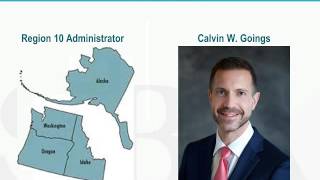
Hello everybody and thank you for joining us today for our small business and Social Security what yout need to Know webinar. With that, I would like to begin today's conference and turn the call over to Calvin Goen from the sba.
Well, thank you very much, Tony. I really appreciate the chance to be here with the Social Security Administration today. You know, our focus at the Small Business Administration is to help small businesses start, grow and succeed. And I'm optimistic that you will all learn a little bit about some new useful tools today as we all work together to strengthen and grow our economy. Well, no surprise to anybody on the phone about how important small businesses are to America today. About 50% of all working Americans work for a small business. About two thirds of all new net jobs over the past 15 years have been in small business. So small businesses truly are the drivers of innovation and competitiveness and they're the key to the long term growth and sustainability of our economy. I want to discuss two main areas with everyone today. First, an overview of SBA's core services and programs, and secondly, a brief overview of several newer national initiatives that are having positive local impacts across the US and then we will all be happy to take your questions at the end of both presentations. So let's start with a brief overview of SBA's programs that work arm in arm with Main street small businesses to grow and create jobs and frankly, in the process, strengthen our local communities. Well, to accomplish that core mission, the SBA focuses on what we like to call the three Cs, and that's access to capital, access to contracts, and access to counseling. With that first C, access to capital. SBA guarantees the small business loans that banks, credit unions, community development corporations and microlenders make in order to support the startup, growth and expansion of small businesses. Now, as challenging as it can still be today to get a loan, I think we forget about what things were like during the depths of the recession. Think back for a moment to what it was like in February of 2009. Our economy was in a free fall and shedding over 700,000 jobs a month. The credit market had completely frozen up and many Americans were worried about another Great Depression. Then, thanks to the American Recovery act and the Small Business Jobs act that President Obama signed into law, we at the SBA received some new critical tools like raising our government guarantees and waiving our loan processing fees in order to put credit in the hands of good, viable small businesses, even in the worst lending environment since the 1930s. Well, working together, we've come A long way. In fact, due to those incentives and others, we have seen record lending years here at the SBA since the very worst of the recession. And during this past fiscal year, SBA and our lending partners took supported over $28 billion in loans nationwide. Those are loans that are helping local small businesses in your neighborhoods keep their shelves stocked, keep their employees paid and keep their doors open. A great example of a small company that's used SBA's guaranteed loans to grow their business is plumbistro, owned by McKinney Howell and her family. This enterprise utilized a 7A loan to support the growth of their vegan focused restaurant to now also include plumbing, Plum Cafe, Plum Pantry and Plum Burger and employing approximately 30 people. Another great firm that SBA financing helped to expand and grow is Mud Bay Pet Foods led by Marissa Wolf and her family. With the support of two SBA loans, the company has grown to over 30 stores and is now the 14th largest pet retailer in the United States. Now with that second C contracts, SBA works with federal agencies and entrepreneurs to ensure that at least 23% of of all federal procurement contracts go to small businesses. As you may know, the Federal government is the largest purchaser of goods and services in the world. From paperclips to Boeing refueling tankers and everything in between, we describe this opportunity as a win win. Federal procurement contracts are the oxygen that small businesses need to build their top line and drive revenues. And the federal government in exchange gets to work with some of the most innovative, nimble and responsive companies, often with a direct line to the CEO. Last year alone, over $88 billion in contract action nationwide were made to small businesses. An example of a business that actively works to leverage federal government contracts to grow their business is the Hughes Group, owned by Patrick Hughes. Since joining SBA's eight program, the Hughes Group has become a preferred logistics and supply chain expediter for the federal government and has grown to over $5 million in revenue and a team of over 75. Another firm that utilized government procurement contracts to expand is XL Tech, owned by Santosh Krevila. By offering innovative engineering solutions to government agencies, this firm has grown over $6 million in revenues and a staff of over 50. Now with our third C counseling. Through our extensive network of resource partners such as our Women's Business Centers, Small Business Development Centers, Veterans Business Business Outreach Centers, Procurement Technical Assistance Centers and SCORE Counselors, the SBA offers an extensive and inclusive series of seminars, conferences and workshops to help get an idea for a new service or product off the ground. Or take an existing enterprise to the next level. You know, we always tell small businesses that if you don't have an SBA counselor, you should. Our data shows that when entrepreneurs have a long term counseling relationship with sba, they achieve stronger sales, higher profits and more hires than their competition. Last year, working with our partners, nearly a million individual entrepreneurs nationwide were counseled at our 1500 locations. You know, we're also working to incorporate information about the Affordable Care act into our counseling centers. These neighborhood based offices will be an excellent place to learn about the small business tax credits of up to 50% towards a firm's health care premiums or the market based purchasing exchanges that allow small businesses to pool and stretch their purchasing power. Another example of a small company that used SBA's free counseling services to grow their company is Kookarooza Popcorn, owned by Grant Jones and his family. With the support of SBA's Small Business Development center and Export Readiness Centers, this business has grown to over a dozen locations including stores in the Middle east and in Asia. Another example of a small business putting SBA's free mentoring resources to work for them is Fuerte Fitness owned by Adriana Medina. Thanks to advice from SBA SCORE counselors and with the help of our Women's Business Opportunity Center, Fuerte Fitness has become an award winning business with a strong record of civic involvement. Entrepreneurs like those I've just cited understand how a solid business plan, an aggressive marketing plan and resources and support from SBA can literally transform and grow a business. So what's been the result of all of their hard work? People like you on the phone and entrepreneurs across the U.S. well, we have now had 70 months in a row of month after month of positive job growth. Over 14 million private sector jobs. In fact, we've added the most private sector jobs since the early 2000s. And American manufacturing, in part because of difficult but ultimately correct restructuring of the auto industry by the administration is created new net jobs for the first time since the 1990s. So that's a brief overview of SBA's core services and programs. Now for the second portion of my remarks, I want to focus on those national initiatives that are having positive local impacts across the U.S. now that the economy has been stabilized and we're seeing continued signs of a steady recovery. A growing part of our focus moving forward at the SBA is to ensure that America's small businesses out innovate, out build and out compete their global competition. So I want to start first with what we are doing to help small Businesses out innovate the Rest of the world it is really key that entrepreneurs have access to the latest skills, trends, and technology. So I want to talk briefly about the nation's premier R and D investment programs, specifically the Small Business Innovation Research SBIR and the Small Business Technology Transfer STTR initiatives. And no, there won't be a quiz on these acronyms at the very end. So SBIR is a highly competitive program that encourages small businesses to explore their technological potential and provides the incentive to profit from its commercialization. Every federal agency with an external R and D budget of over $100 million participates in this program by reserving a percentage of federal research and development dollars for small businesses, and SBIR helps these entrepreneurs compete with larger companies to offer innovative new ideas and technology to federal agencies. STTR is similar to SBIR except that businesses in this program profit with nonprofit research institutions, helping to transfer technologies and products from the laboratory to the marketplace. About 25% of RD magazine's top 100 annual innovations came from companies receiving SBIR awards. Last fiscal year alone, over $25 billion in research and innovation grants nationwide were made to these great programs. An example of a small firm that has leveraged these programs to expand their business is Measurement Technology Northwest, owned by Tim o'. Neill. With the support of several SBIR awards, this cutting edge instrumentation company received a breakthrough contract with Boeing and now has clients in more than 20 countries. So if you or a client or a friend or a relative has an idea for a new technology or device that a federal agency might be interest in, the SBA can play a role with the feasibility, concept, prototype and commercialization stages through these really important programs. Now, in order for America to out build the rest of the world, it is key that we support small businesses as they manufacture. That is why I want to talk briefly about our critical role we play in Innovation clusters and our 504 loan program. Cluster networks support entrepreneurs by fostering an array of businesses, economic development organizations, stakeholders and investors that work to develop and grow a particular industry or related set of industries. To support these efforts, SBA created a program to foster small business participation in regional economies across the country to ensure small business connections in key industry supply chains. This included Advanced Technology Clusters and Regional Innovation Clusters. An example of one of these unique federal partnerships is the Interactive Media accelerator. With a $1.2 million grant, this exciting project will ensure that the US continues to be a cutting edge leader in interactive media by ensuring small business participation in the supply chains to larger firms that we're all familiar with. Now let's turn our attention to SBA's 504 Loan Program, which also supports small business growth by providing long term fixed rate financing for the purchase of major assets such as land, buildings, machinery and equipment. An example of a small business that successfully leveraged SBA's 504 loan program to support the expansion of their products is Cupcake Royale, owned by Jody Hall. In order to keep up with growing customer demand, an SBA504 loan was used to finance the critical physical expansion, eventually leading to seven local stores. Finally, today I want to talk about what we are doing at the SBA to help America's small businesses out compete the rest of the world. Specifically, what we're doing by helping small firms export. Now, in working to promote exports, the President set a very bold goal for SBA as part of the National Export Initiative, which was to double our exports. In the first year alone, we helped over 5,500 US companies enter additional export markets or export their goods for the very first time. And over 85% of these companies were small and medium sized businesses. You know, it just makes good business sense to consider exporting. Consider that over 96% of the world's population lives outside the US representing some 2 thirds of the world's combined purchasing power. That's why SBA and our partners offer an extensive package of loan products, training programs and mentorship initiatives that specifically help exporters. In fact, last year, SBA supported over $300 million in export loans nationwide. So as you can see, if you have a product or a service that you want to export, the SBA is here to help. A closing example today of a small business from my hometown that with the assistance of sba, has been successful in exporting their products is Seattle Safety, owned by Byron Cogan and Tom Whitman. With the assistance of two SBA export loans, Seattle Safety has grown to nearly 50 employees and exports their vehicle safety restraint testing systems to automakers across Asia and us. That's a crash test dummy if you can see it there on the screen. So, ladies and gentlemen, working together and building upon the success of SBA's core programs, with access to capital, access to contracts and access to counseling, we can help you and others find success as we all work together to accelerate our recovery by out innovating, outbuilding and out competing the rest of the world. I'll now turn it over to our friends at the Social Security Administration. Thank you.
Thank you, Calvin.
Hello.
It's great to be with you all today. My name is J. Gioni Palmer I'm Social Security's Associate Commissioner for External affairs, and I'm also joined today by my colleague in the Office of External Affairs, Alfredo Padilla. And after our formal presentation, we will be working together to answer any questions that you have might have The Office.
Of External affairs is the part of.
Social Security that works with national organizations to educate the public about our programs and services. Before I begin, I want to thank Small Business Administration for partnering with us on this event. People tend to associate Social Security with benefits, but a big part of what we do is keep track of people's earnings so we can pay benefits accurately. That's where the business community comes in. If you're a small business owner, what's the first thing that comes to mind when you hear Social Security? Well, after taxes, that is W2?
S right.
So the first thing I'll be going over Today is our W2 online service, developed specifically with small employers in mind. Registered employers can go to our website, enter their W2 information or right there and submit it when they're ready. I also want to tell you about our other online services for businesses, like verifying employee Social Security numbers. Then I'll cover some basic facts about Social Security and tell you about three outstanding resources that can help your employees think smart about saving and investing for the future. Next Slide Before I get started, I want you to know that one of Social Security's mandates is reaching out to small and disadvantaged businesses about contracting opportunities at our agency. This applies to both prime contractors and subcontractors. You can find information about contracting opportunities and our ongoing commitment to small and disadvantaged businesses by going to socialsecurity.gov and selecting small Business from the Business and Government tab. Next slide I mentioned W2 online this as you will see on the next slide, this is the part of our Business Services Online suite of Internet applications. To get to the Business Services online, go to socialsecurity.gov and select Employers from the Business and Government tab. Or go right to socialsecurity.gov employer. This page includes a prominent link to Business Services Online as well as a wealth of other resources for employers. For security reasons, you will need to register to take advantage of W2 Online and our other Business Services Online capabilities. The system will ask for some personal information including your name, date of birth and Social Security number. As you'll see on the next slide, W2 Online offers a perfect alternative to paper filing for small employers. This easy to use service lets you create and submit up to 50 W2's at a time using simple online forms. You can Even save your W2 on our site until you are ready to submit them. If you prefer, Business Services Online also allows you to upload a format for file containing W2 data. You will find format specifications on the employer page I just mentioned, as well as our accuwage software to check your file for errors before uploading it. Filing electronically not only saves time, but it also improves accuracy. This is true whether you enter your information using W2 online or upload a data file. You can also use both of these methods to submit W2 corrections. We encourage all employers to file electronically. If you need to file 250 or more W2s, you must file electronically. Employers can also use Business Services Online to verify the names and and Social Security numbers of current and former employees for wage reporting purposes. This Service prevents serious W2 errors that can keep your employees from receiving the credits they've earned towards Social Security and Medicare benefits. You can verify up to 10 names and Social Security numbers at a time and and receive immediate results including the date of birth is optional. If you have a large number of records to check, you can also upload them as an electronic file. If you choose this message this method, you'll normally get the results back the next business day. We'll let you know whether the submitted names and Social Security numbers match our records. If they don't match, we'll tell you why. For example, if the name and number match but the date of birth doesn't, we'll also tell you if our records show that the Social Security number belongs to someone who is deceased. The employer website includes instructions for how to proceed when an employee name and Social Security number fail verification. In many cases it may be due to a typographical error or a discrepancy the employee can easily correct by visiting a Social Security office. So far I've been talking about our online services for employers. These services are all free for a fee. We also offer content based Social Security number verification for businesses that provide banking and mortgage services, process credit checks, conduct background checks, satisfy licensing requirements, and so on. This service is available either using a web browser or via machine to machine transmission. Participating businesses pay an additional enrollment fee of $5000 plus transaction fees. Businesses also get signed consent for from the person whose information they wish to verify. Now I'll talk for a few minutes about Social Security which on the next slide you will see. All workers should have a basic understanding of their benefits. When you work and pay Social Security and Medicare taxes, you earn Social Security credits. Credits can count toward retirement benefits and can qualify you and your family for disability and survivor insurance. Social Security's benefit packages include retirement benefits paid to workers as early as age 62 disability benefits paid to workers of all ages who have a severe disability family benefits to the spouse and children of retired or or disabled workers survivors benefits paid to the widow or widower and children of a deceased worker Medicare, which helps all with hospital bills and provides limited coverage for skilled nursing, facility stays and hospice care. Medicare can also cover doctor services and prescription drugs. Social Security's commissioner Carolyn Colvin, likes to tell this story. A colleague's teenage daughter came home bursting with excitement after receiving her very first paycheck. But she had one question about her earnings statements. Well, dad, she wanted to know, who is this fica? Most people don't need to know what FICA stands for, but in case you're curious, it's the Federal Insurance Contributions Act. But every worker should understand that workers and employers pay FICA taxes towards workers, Social Security and Medicare coverage. Last year, Social Security turned 80 years old. This is the most successful domestic government program in our nation's history, and it touches the lives of nearly every American. Although we usually don't like to think about it, Americans need to be financially prepared not only for a distant tomorrow, but also for what could happen to any of us today. The unfortunate reality is that we can expect one in eight of today's 20 year olds who are covered under Social Security to die before reaching age 67 and 1 in 4 to become disabled. So Social Security keeps 22 million Americans out of poverty, including more than 1 million children, 15 seniors and nearly 6 million adults under age 65. As you'll see on the next slide, about 168 million workers pay towards Social Security coverage through taxes on their earnings, and almost 60 million people receive monthly Social Security benefits. But many workers paying into Social Security do not know much about how the system works or what they need to do on their own to be ready for retirement. For the average worker, Social Security replaces only about 40% of pre retirement incomes. I like to say 40% is a great place to start, but it's not necessarily the best place to finish. Financial experts say Most retirees need 70 to 80% of pre retirement earnings to live comfortably. Yet more than a third of American workers have no savings at all set aside specifically retirement. I'm talking about nothing. And about half have no private pension coverage. Sadly, more than one in five elderly married couples who receive Social Security rely on it for 90% or more of their income. For unmarried Elderly people almost have to. Thanks to Social Security, these older Americans.
Are keeping their heads above water, if.
Only barely because they or their spouse worked and paid into the system. But most of us want to do more than just get by when the time comes to stop working. Whether they earn $100,000 a year or or $30,000 a year, careful planning can help ensure that workers have more waiting for them when they retire than their modest monthly Social Security payment, which on average is roughly $1,200 a month today. Together, Social Security's retirement survivors and disability programs provide a vital safety net for the nation's workforce. But as critical as Social Security is, workers should think of it as a foundation to enjoy a secure retirement. They'll also need other sources of income, like pensions, savings and investments. Today's workers need to be more hands on than ever about savings. One of the main reasons is that fewer employers are offering to find benefit retirement plans. It's not like our parents generations, where more workers could count on a generous fixed employer pension to take care of them. According to the Bureau of Labor Statistics, the number of private sector workers covered by defined benefit pensions has dropped by half in only two decades, from 35% in the early 1990s to just 18% in 2011. Today, most workers need to invest in their own Future through 401k plans and other forms of savings and investments. But many people just aren't doing it. Even those who can afford to. According to the National Institute on Retirement Security, the typical working age household has $2,500 in a retirement account. Let me repeat that. The typical working age household has $2,500.
In a retirement account.
For those nearing a retirement, that figure is only $14,500. Imagine if you had to survive on $14,500 for your retirement. I'm not sure I can make it through half a year on that amount. And many people vastly overestimate how much help they'll get from Social Security. I called Social Security a safety net before. A safety net is a thing that catches you before you hit the floor. Workers need to set their sights much higher than the floor by helping our employees understand what they can realistically expect from Social Security. You can encourage them to get serious by putting money away for the future. I promised to tell you about three great resources for workers. Well, as you'll see on the next slide, the first is my Social Security. This is a free, secure account for anyone with a Social Security number who is at least 18 years old. To create an account, you and Your employees can go to socialsecurity.gov and select my Social Security or go right to socialsecurity.gov myaccount workers with a my Social Security account have instant access to their personalized Social Security statements. This gives them estimates of their future Social Security benefits and lets them verify the earnings information we have for them in our records. This is important because we calculate Social Security benefits based on earnings. People who have already received Social Security or Medicare can use their My Social Security account to conduct important business with us concerning their benefits. As you'll see on the next slide, we are in the process of adding a new My Social Security feature. Account Holders account who live in certain areas of the country can now request a replacement Social Security card online if they have a valid driver's license from that jurisdiction. So Calvin, I know you're out in Seattle. I'm pleased to say that Washington State is one of the first states where this option is available. In addition to Washington State, the District of Columbia, Michigan, Nebraska, New Mexico and Wisconsin are where the service is currently available and we plan to roll out more states in the future. And that information was on the next slide. Skipping past that to the second resource for workers I want to bring to your attention. On the next slide is our Benefits Planner site@SocialSecurity.gov planners. This information is on the next slide. You can go to socialsecurity.gov scroll down and select Benefits Planner. This page is packed with interactive tools to help workers understand their Social Security protections and get estimates of their retirement and disability or survivor's benefits for any hypothetical situation. This is an excellent way for anyone to find out how financially prepared they are or are not, and how much more they and their families will need in retirement or if misfortune strikes. And finally on the next slide, if you aren't able to provide a workplace retirement plan for your employees, please be sure to tell them about the President's Myra Investment option@myra.gov For anyone who doesn't know about Myra, this is a new savings instrument that lets workers invest after tax dollars in government savings bonds. This option lets workers grow their money faster than they can with more traditional savings accounts and there's no risk since it's not tied to a particular employer. Workers can hold onto their Myra account when they move from one job to another and live in different jurisdictions. I enjoyed talking with you and on the next slide you'll see a wrap up that Social Security is Online services for businesses why it is so important for workers to understand their benefits and the three online resources I mentioned for small business owners and their employees. I thank you for the time and.
I look forward to your questions.
All right guys, wonderful. And a reminder for all of our guests joining in. You can still submit note questions to us by using the Notes chat function on the right hand side of your screen. We ask that you please address all of these notes questions to presenters or all moderators located in the to drop down box. Once again, that is the Notes chat function on the right hand side of your screen. And then please address all of your note questions to presenters or all moderators. And guys, the first question I did have coming through, and I know we get this one on most of our presentations, is will both of the presentations be made available for our guests joining?
Yes, it will be posted, I believe.
On a particular link right for YouTube? Yes, we'll make them available.
All right, wonderful guys. Some of the next questions that I see coming through, the first one is asking I want to start a new business.
Where do I start? Well Tony, for those who have always had an idea for an enterprise of their own or businesses that have been in existence for some time, I always suggest folks start with their local neighborhood SBA counseling offices and you can go to SBA.gov, there is a drop down for local resources. Put your zip code in and the local and closest centers will come up with their hours of operation, phone number, etc. All you have to do is call and make an appointment or stop in if you'd like to. But I always tell entrepreneurs it's always good to have a fresh set of eyes, look over your business plan, look over your PL statements, etc. Typically existing entrepreneurs, for example, when they need financing, it's because something either really great is about ready to happen or something bad is happening. And as a recovering banker, I will tell you that's the worst time to be putting together a business plan. So for those in business already, come visit one of our centers. If you haven't written a business plan, as many micro entrepreneurs have their business plan in their head but haven't translated it to writing, we can help do that at our counseling centers. To your question specifically about prospective entrepreneurs, we have a great relationship with score. It is a volunteer organization with chapters all over the us Many of them co located with your local SBA office in most metro areas. But often these are folks who have been in business for some time themselves and really can help entrepreneurs or prospective entrepreneurs avoid some of the pitfalls that they experienced. They also have a great national network where they are able to match you up with a mentor in a like industry. So if you are starting a restaurant, they will be able to put you together with someone who has or is running their own restaurant again to really make that one on one mentoring even more impactful. So whether you've been in business or whether you're thinking about going into business, make an appointment, come visit one of our counseling centers. There are over 1,500 locations across the US and most of those services are absolutely free or very, very low cost.
All right, excellent. Thank you, Calvin. And we would like to thank all of our guests that have submitted notes through at this point. The next note I see coming through our questions is asking, is there a fee for using Myra and does that occur? Interest?
There is no fee for Myra. You can contribute any amount you choose. And yes, it does accrue interest. It's invested in U.S. savings bonds.
All right, thank you, guys. And the next question I see coming through is asking, do homemakers qualify for any Social Security benefits?
Can we get a clarification? When we say homemakers, are we talking about spouses?
And Charlene, I know you had sent that note through. If you can just give us a clarification on that question, we'll come back and address the question. And actually, we did just get a confirmation saying yes, yes, that's correct.
If you're a married spouse, you are eligible for benefits from the working spouse as long as they have 40 credits of coverage. And we would assist you with that with no problem online or in person at one of our local offices or even our 800 number. We have a specific publication, our SSA.gov website, where you can type in spouse's benefits. And it will give you kind of an overview of what you're eligible for and even touches on benefits for divorced spouses that may have been homemakers.
Thank you for that question.
And divorced spouses, in order to qualify, would need to have been married for.
At least 10 years. That's correct.
All right, excellent. Thank you, guys. Another question that just came through our notes is asking if we have filed W2 by mail, can we also file online or should we wait until next year to file online?
If it, if it's already been sent and submitted to not cause any confusion, I would look into preparing to file it online starting the next season. In the meantime, what I would recommend is, as Jodi had mentioned earlier, is visiting our business suite of services online at our website. And we have a contact, we have an email link there where you can contact and talk to our folks. We even have our own email address, which is oea.net.possa.gov and we can even put you in contact with the component that's tasked with that. So I'll repeat that again. It's oea.net.postssa.gov and with that we can take your inquiry and connect you with the actual office that directly deals and works with small businesses regarding W2 reporting to prep you for the next season and any other information or questions you may have as well.
All right, wonderful. And actually, guys, this ties into the next question we just received asking how do I file W2s, W2Cs and W3s for my employees?
Employers and third parties can file wage reports with the Social Security Administration electronically or by paper. There are some limitations apply. Register at Business Services online to file W2s and W2Cs online. Social Security accepts laser printed forms, W2s and W3s, as well as standard red dropout forms.
All right, guys, excellent. Another question for the filing online for W2s coming through asking, is there a fee for filing electronically the W2s like there is for filing 1099?
There is no, to my understanding, there is no fee regarding that. So there wouldn't be an issue. As Far as with 1099s, we provide 1099s for free, so there is no fee associated with that.
So I hope that clarifies that question.
All right, wonderful. Thank you, guys. The next question I'm seeing coming through is asking if you could please explain restricted application for spousal benefits for those individuals who are currently 66 years old.
Okay.
So to clarify, though, it's not restricted, it's actually called, what's been known now is known as the over the years as the file and suspend strategy, which, you know, one aspect can be looked at as a restricted application. So you have two spouses, both age 66. I come in the office, I file a claim, I suspend my benefits so that way my spouse can come collect 50% of my benefits as the number holder of the record. And then at age 70, I would come in, file for benefits to get the extra delayed retirement credits. And then my spouse would file on his or her own record to also get that delayed retirement credit. I do want to note you may have seen some information out there already. Inquiries are coming in. There is legislation on the budget that was passed just recently. We're still waiting for additional guidance, but the file and suspend strategy may be soon ending after April of this year. So I would recommend that you sign up for go on our website socialsecurity.gov under the Office of Legislation and Congressional affairs or at our Social Security Update sign up newsletter that we have so that we can keep abreast of what's coming up as far as that restricted application and information related to that. So I hope that answers your question.
Excellent. Thank you guys. And we would like to thank all of our guests that are submitting notes through. We have received a good number of notes coming in. Just a reminder for everyone that is joining, if you would like to submit a question through for our presenters, you can do so by using the notes chat function on the right hand side of your screen. Then please address all these questions to presenters or all moderators. Guys, the next question I'm seeing coming through is asking can an independent contractor file and record their taxes for a short term job?
Can you repeat the question please?
Of course, that's not a problem. The question is asking can an independent contractor file, file and record their taxes for a short term job?
I think from the Social Security side, and I don't want to speak for Small Business Administration, but from the Social Security side the business suite of services is going to be looking at reporting from an employer, not from I guess from self employment. I guess all depends on how that's structured. We would have to look into that further for you just to provide that clarification. So I would recommend go on, send us an email so that way we can verify for you if you need that.
Yeah, feel free to send us an email. But without fully understanding the question it sounds like this might be more appropriate for the irs. And if that's the case we can certainly steered you in the.
All right guys, wonderful. Thank you. The next question coming through is asking can you repeat the web address for businesses to verify Social Security numbers and prior employment for employees?
It's Social Security.
Employer.
But you can also go to our website which is socialsecurity.gov and you can select employers and we have a fairly robust search function which would also get you there as well. But specifically it's socialsecurity.gov employer.
All right, thank you guys. The next question coming through is actually just a clarification from an earlier question saying that we did have to pay a $14.99 fee to file electronic 1099 forms for one subcontractor. The question is then asking if we file through Social Security office, is there not a fee?
Well we'd have to look in to see how that fee was assessed and the process that that took. So I would recommend that we assist you offline after the call. So if you can email us that question so we can make sure we provide the appropriate answer and why we provided the information like we did. It's oea.net.postsa.gov and we are the office. And the speakers heard today from the Social Security side are the folks that manage the email box. So as soon as you send that email, we'll make sure we take appropriate action and get you an answer quickly.
All right guys, thank you very much. The next question coming through is actually saying wow, great webinar. Thank you guys so much. Can you repeat what FICA means?
Joni had said it was the federal income.
No, it's the Federal Insurance Contributions act, which is on there. Another on some people's pay stubs if you still get those. I know we actually don't get those. We have to file online at Social Security to get our own pay stubs here. But on some pay stubs it will show up as oasdi, which stands for Old Age Survivors and Disability Insurance. So it's sort of a. It could be one or the other is usually how it should. So Federal Insurance Contributions act.
Excellent guys. Thank you very much. And once again we do thank all of our guests for submitting through a large number of questions. The next question guys that I see coming through is asking how is a small business owner to pay themselves Social Security.
If they file under, I believe under the schedule C, I guess as their own self employment, they would pay the percentage. In this case since they're self employed, they'd be paying the employee and the employer percentage to include the full percentage for coverage. We actually have more information on that on our website. But if you send us an email to our oa.net.postssa.gov, we'll share with you the IRS publication that we work with Iris on. And also on our we have a self employment and also employers fact sheet that we'll share those links with you. So feel free to shoot us an email on that@oea.net.possa.gov and we'll get that information for you.
All right guys, wonderful. The next question I'm seeing coming through the notes is asking some contract companies are giving per diem to pay workers on a contract basis. If you are more than 50 miles from home, how do they do this? And then the second question that's in this is asking I also provide.
Oops, sorry.
We did just get another note in the second part of the question is asking. I also provide contract services to other airlines, but I don't know how to make that work.
I don't think that's necessarily a Social Security question. The first part sounded a little bit more IRS oriented to me and I don't know if the last part was directed to SBA or whatnot.
All right, guys, and we would like to remind all of our guests that we are capturing all the note questions that come through. So if we do not have the answers for you today, all of these questions will be collected in a Word document for all of our presenters and we will be able to reach out after the webinar on a one on one basis to answer these questions. So moving on guys, to the next question we got through. I'm seeing it say where is the link to process the W2 on the EDD employer services online.
Like we mentioned before, the socialsecurity.gov employer or you can type in the search link online services, business Online services. That will take you to the link where you would create an account and then that would guide you through how to do that. There's also, once you get to the page where it says business Services Online, if I remember correctly, there is actual, it's like a fact sheet, more like an instructional guide. And it walks you through the steps of how to do that reporting as well.
All right, guys, thank you very much. The next question I'm seeing coming through is asking this is a scenario at age 66, wife filed and suspended. Can a 65 year old husband file restricted application at his full retirement age and receive 50% of the spouse's benefit while allowing his future benefits to earn additional credit until he is age 70.
Yes.
So you know what we're looking at is an individual can come in, file and suspend at 66, but in order for one of the other spouses to utilize that game plan, the other individual will have to be 66 in order to collect that 50% of the spouse's benefits due. If you're under the full retirement age at the time of filing or the spouse is trying to utilize that scenario by law, in our policy, we would ask the individual, if they have earnings on the records, to file for benefits off of their own record before we can check if they have benefits payable on the other individual's record. And just keep in mind, like I said earlier with the file and suspend strategy, there's changes coming down. We haven't received guidance yet, but the legislation is indicating for an April implementation date. But I would recommend you touch base with us, check on our website, sign up for our newsletter that comes out every month. Check our Facebook and Twitter accounts to see the latest news on that. At our socialsecurity.gov website, we have the Office of Legislation Congressional affairs that will have more details about that coming up shortly. So recommend to really look at that and not plan too much ahead about the file and suspend strategy.
All right, wonderful guys. And I know that we're coming up to a hard stop at the top.
Of the hour here.
We had received a few more questions just asking if you guys can repeat again if this webinar will be made available for all of our guests and other folks to review after it's over along with the questions that have been asked and answered.
Yes, that's correct. Not only will individuals be able to see it, it's also going to be posted on YouTube and as well as we've shared the email for the Social Security questions, which is oea.net.post. so anything that's related to Social Security we'd be more than happy to assist you with. Regarding Small Business Administration questions, they will inform on how they would channel questions or probably recommend. So I'll leave it to Calvin how he wants to address that part. So thank you again.
Yes.
And I think, again, I think the thing I would really recommend to entrepreneurs, existing entrepreneurs or prospective entrepreneurs that might be listening today or listening later online, is to go to sba.gov, select local services, and then find out the center, the counseling center that is closest to you and make an appointment. Whether you have questions about our government contracting programs, our Export loans, our 504 capital improvement loans, or any other part of the great suite of services we offer at sba. Visit your local counselor. They are in your neighborhood. They understand the local economy. They are great experts. And it's a great place to start to get that information that can help your small business start, grow and expand.
This is Joni from Social Security, Calvin, and thank you and particularly Star here in your DC Office. We are appreciative for the opportunity for the collaboration and we hope that we can continue to work together to bring important information to the American people.
Absolutely. We at the Small Business Administration really do appreciate the chance to work together with the Social Security Administration and other federal partners to really make sure that our shared consumers, our customers, get the information they need in a timely, useful manner. So we appreciate being part of this today. And Tony, thank you for moderating. I know that's not an easy job, but we do really appreciate being part of today and look forward to opportunities in the future to collaborate even more. Thank you.
More from Your







President Donald J. Trump and First Lady Melania Trump Visit Grieving Texas After Deadly Floods

💪 Thinking of starting a #biz? Go for it! — Kerry Boyle, Vermont #SmallBiz Person of the Year

President Trump Participates in a Bilateral Meeting with the Prime Minister of Canada, May 6, 2025

