Small Business Travel: Strategic Ways to Increase Your Return on Travel with Marriott and Visa
Candice Dinette and Rhonda Abrams show small-business owners how to treat travel as an investment, not an expense. Stack multiple meetings into one trip, use cloud tools to stay productive, and maximize Marriott and Visa loyalty rewards. The webinar includes worksheets and answers questions on visit frequency and travel budgets.
Questions this video answers
1964.
Over 10 million people.
Since 2009: helped over 200,000 businesses start; helped more than 230,000 businesses increase revenue; helped create over 250,000 jobs.
An average return of $9.50 for every dollar spent on business travel.
May 17, 2014.
Chapters
At this time, I would like to formally begin today's webinar and introduce Candice Dinette.
Thanks, Eddie.
As Eddie mentioned, we've got a great presentation today by Marriott and Visa on small business travel.
But before we begin, I'd like to.
Chat with you about how you can get free advice on business travel or any other small business topic or challenge. Next slide please. SCORE is America's Small Business Resource.
We offer free advice to those that.
Want to start, grow, or even exit their small business. We also offer free and low cost workshops online and in communities across the nation.
Next.
Score was formed in 1964 as a resource partner of the Small Business Administration. Since then, We've helped over 10 million people in pursuit of their business goals. We're proud to join the SBA in celebrating the success of entrepreneurs across America in this year's Small Business Week. And we're also celebrating our 50th anniversary. That's 50 years of helping aspiring and entre. I'm sorry, that's 50 years of helping aspiring and existing small businesses succeed. Since 2009 alone, we've helped over 200,000 businesses start, helped more than 230,000 businesses increase revenue, and helped create over 250,000 jobs. That's success that we're certainly proud of. And our small business owners should be proud of it too, because it helps strengthen our economy.
Next.
But how do we achieve this success?
SCORE offers over 320 chapters with over 11,000 volunteers stretched across the nation providing free mentoring and local educational workshops. We also offer free mentoring and a.
Variety of business tools on score.org Next please.
So how does SCORE help you? If you have a question about writing a business plan, developing a social media strategy, analyzing financial ratios, and making the.
Most of your small business travel, our mentors are here to help.
Our volunteers are successful business owners or executives that have walked in your shoes and are willing to share their knowledge to help you avoid common pitfalls and achieve your goals. And it's all for free.
Next.
Again, we have a variety of services available to help you grow and start a small business. You can get free face to face or online mentoring. You can take part in an educational workshop online@score.org or in your local chapter. You can participate in our Small Business Roundtables that are available in a chapter near you. Those are facilitated peer sessions discussing critical business topics. And we've got thousands of free templates, tools, articles, blogs, videos and other resources that can help educate you on topics affecting the small business landscape.
Next slide.
The biggest benefit of SCORE mentoring and resources is that you don't have to go it alone. In addition to providing all of our free tools online, you do have experts that you can call on whenever you need to provide objective, sound advice.
Next.
As you're listening to today's presentation, I encourage you to jot down a few questions, then visit score.org to connect with a mentor that can help you apply the ideas presented to your business. Thank you so much for your attention today from SCORE and the sba. Thanks for all that you do for the American economy and I'll turn things.
Over to to Eddie.
Thank you, Candice. Our presenter for today is Rhonda Abrams. Rhonda writes a small business column every week for USA Today called Strategies. She is the author of 19 books, all focused on business planning and small business. Her books are used all over the world and in more than 1,000 colleges and universities, and she is a small business owner herself. Her company is called Planning Shop and they create and publish content to help people start, run and grow companies. Rhonda, please go ahead.
Thank you Evie and thank you, Candice. That's a great resource with score and I hope people will check that out. Hello to all of you who are participating in the webinar today and you check it out later as it's archived and Happy National Small Business Week to all of you. Today is the first day of this week that celebrates the contributions that small businesses make to America. Before we begin, I think I'll tell you one other thing that's not in my bio that people on this webinar should know, which is that it's really important for you to know that I'm a frequent business traveler myself. In fact, I'm on the road virtually every month of the year. I'm out there meeting with customers such as universities that use our books or attending trade shows. I'm meeting with vendors who can help me as a publisher navigate the transition to digital delivery and respond to changing conditions. And I'm also out there giving speeches or making public appearances. So I'm a frequent traveler, and I know that many of you participating today are frequent travelers too. So today we're going to be talking about travel and how to increase the value of travel for your small business. It's what I call increasing your return on travel. The purpose of this webinar is to help you gain greater benefits for the travel you're already doing and to also broaden the way you think about travel so that you can use travel as a tool. And because travel really is a business tool. We don't often think of travel that way, but it's an important business tool in any owner's toolkit on how to sustain and grow your business. So even if your focus is primarily on maintaining your business rather than growing it, it's worth remembering that the reality is if you're not growing your business, you're shrinking. Customers or clients move away, their needs change, contracts end. That's all part of the business cycle, as you know. So it's important to always be looking for new opportunities and as importantly, or even more importantly, to deepen relationships with existing clients to maintain business at existing levels. So today, let's talk about the benefits of small business travel, but more importantly, how to get more out of the dollars you spend on your business travel. First of all, it's important to understand that you do get bang for your business travel buck. Experts who have studied this have shown that you get an average return of $9.50 for every dollar spend on business travel. And there's not many places in your business that you can get that kind of return. But with a little bit of preparation and strategic planning, you can absolutely increase your return on travel for every trip you take. Now, one of the things I like to tell businesses that I counsel is that people do business with other people. When customers make purchasing decisions, they prefer to work with people they can relate to, work with, easily understand, and research supports that nothing is more effective than meeting someone in person. In person interactions make sales and deepen relationships. The opposite is also true in my own business. Unfortunately, I've seen the reverse of this. A few years ago, we lost a significant college, a large customer who had been using our products for many, many years. And when I asked them why they stopped doing business with us, they said, because we hadn't seen you in a while and your competitors kept coming to us. It was a very costly lesson for me to learn. So it's important to get out there. And from my own experience and in meeting with and talking to small business owners all across the country, it's my own conclusion that most small business owners don't travel nearly enough. And that's because they don't understand the power of travel. So why is that? When I talk to small business owners, these are the reasons they most often tell me for not traveling more. First, they feel like they need to be on premise to run their business. Second, they haven't figured out where to go that will have a positive impact on their business. And finally, they mention cost. They think of travel only as a cost and not as an investment. We're talking today about why those excuses really shouldn't be barriers for you anymore, because these factors just aren't as true today as they once might have been. To get over these common concerns, the most important thing is to reframe how you view your travel and to see it as an investment in growing your business and maintaining your customer base. And like all investments, you want to maximize your return. Just like increasing your ROI or return on investment in other areas of your business, you want to increase your return on travel. And I'm going to show you some of the ways to increase the value you get out of every business trip. We're going to talk about each of the things you see on the screen here in greater depth. Okay, so let's talk about how to turn one trip into multiple wins for your business. And first of all, it's important to recognize that with just a little bit of advanced planning, you can really increase your return. Now, I absolutely know the reality of getting ready for a trip. You're usually so busy just making arrangements and taking care of things before you leave the office that you may be forgetting to carve out even just a little bit of time to think about the ways of increasing the value of your trip. But as soon as you think about a trip, I want you to also start thinking about ways to broaden your view of that trip. That's the way you'll get a greater return. So this is about thoughtful traveling and just a little bit of planning. It doesn't have to be hard, and it doesn't have to take a lot of time. It's just a matter of changing how you think. Now, I have three specific tools for you. First, understand that there's a difference between the purpose of your trip and how you define a win for your trip. For example, the purpose of your trip might be to exhibit at a trade show and stay visible in your industry. But a win for you would be to meet with a specific prospect or get a certain number of new leads or generate a certain amount of sales. Right now, for instance, I'm getting ready for a trip myself. I'm going to the big annual book industry trade show in New York at the end of this month. And yes, for those of you who are wondering, there is still a big, viable and vibrant book industry, of which I'm glad to be part. Now, the main purpose or primary objective of my trip is to connect with a few people I haven't seen in a while and to promote the newest edition of my book Successful Business Plan. But I've been asking myself, what would I really consider a win? What do I want to get out of the trade show that will make it really worth my while? It may be to have one on one meetings with foreign publishers to license my international rights. It might be to see if I can make a deal for a new channel to distribute my content. It might be to find a solution to some of our digital issues. I'm pushing myself to examine all the opportunities I have at just this one event, not just the obvious ones. So ask yourself what do I want to get out of your what do you want to get out of your upcoming trips? What's a win with this customer? This trade show, this conference? Be conscious of it. And later I'm going to give you a worksheet so you can put your specific goals for your wins on paper. Now, even if this trip is something you have to do, like call on a specific customer or service a particular account, it's important to think how you can turn even an obligation or a routine event into an opportunity. And at the end of this webinar, we'll give you the websites where you can download this worksheet and other worksheets and apply this planning to your own trips. Another thing you can be doing in advance of your trip is to get to know more about the people you're meeting with and the place you're going. Start, of course, with looking at your customer data. When was the last time you saw them? What have you talked to them about before? What have they ordered before? Has there been a change in their purchasing patterns? You might also want to call to the company or person you're meeting with on social media and definitely refresh yourself about them by looking at their LinkedIn profile before you go. Now, all of this may seem obvious, but in the rush to get out the door, we often forget to do some of the basic background work we do. Remember, knowledge is power, especially in business. Now, understanding the location where you're going is important, especially if you serve that market or want to serve that market. There's lots of free information from the Census Bureau and elsewhere that can help you know more about your markets. Knowing things like the median income and demographic makeup helps you get a better sense of the place you're visiting or want to do business with. And frankly, I think it can be fun too. After all, you're traveling to a new place or a place that interests you and you're learning at the same time. So I want to Spend some time on this slide, because in many ways this is the most important slide in the webinar because this is the way you need to start thinking about every business trip you take. What are the other things you can do in addition to your primary purpose that can increase your return on travel? Now, this requires a little bit of thinking on your part because you're rightly focused on the primary purpose of your trip. But in most cases, there's something else you can do at the location. There's more you can do and more you can accomplish on virtually every trip you take. For example, at a very basic level, one goal might be to expand your contacts at your clients or customer's office. The reality is that most of us work with one or two people at a customer's office. But things happen. As I said before, people change jobs, they change positions, and if that happens, we often lose our contact, our champion, and possibly our customer. And I've seen that happen in my own business. So spend some time to get to know other potential decision makers in your customer's company. Ideally, make some time to socialize with a number of contacts that will really deepen your relationships. Now here's something you probably haven't thought about doing. Check out a competitor while you're on the road. If you're like me, you're probably a little hesitant to check out local competitors, but more comfortable checking out a competitor in another city. You never know, you might be able to learn something, go to see what they're doing right. Something you might be able to emulate when you get back home. Do you need a new contractor or additional sales rep? Perhaps you've not been able to find or afford them locally. One idea is to advertise local job posting sites ahead of time so you can interview candidates at your destination. And this is particularly true if your business is in a small market. You may be able to find other contractors to help you build that website, do your graphic design, deal with some of the other kinds of issues you have that you might not be able to find locally. But most importantly, let's go back again to your customer database. Who else is there locally? Current, past, or prospective customers who might be a source of referrals to other prospects. Remember, nothing beats the power of face to face when it comes to building relationships. The fact that you are there to meet with them in person often can close a deal that's been in the works for years. So for every one of the additional opportunities you add onto your trip, you have the potential to increase the return on your travel investment significantly. For example, let's say you spent $2,000 on a trip and sign a $5,000 contract while you're there. That's clearly a win for your business. But what if, with a little advanced planning, you line up another person to meet with you? Stay another day, Your costs only go up a small amount. Let's say $300. And now you land an additional $3,000 deal. Well, you've just increased your return on travel considerably. And remember, that new customer could purchase over and over again for years, so there's an even higher return. Even if you're only laying the groundwork for a future deal, or you're finding a new marketing idea by checking out the competition, or you're discovering an operational efficiency by meeting with an industry colleague, you've significantly increased the value of your trip. So what we're getting at here is to start thinking about each trip slightly more expansively. Remember that trip I'm taking at the end of this month to New York? I've been asking myself, who are some other prospects that I can meet with while I'm there, even if it means extending my trip for a day or two. When it comes to business travel, it pays to focus more on the opportunity than on the cost. All right. As I said at the beginning, one of the other reasons small business owners say they don't travel is that they need to be back at the office to manage their business. But today, that's really less true than ever. But how do you actually get yourself out of the office? It's really tough. But it's a 20th century Last entry concept that there's life at the office and life away from the office. Now, you already know this. You're checking email at the kid's soccer game. You're finishing a project at home. Today's business owner is truly mobile. It's empowering. It gives you the ability to take advantage of opportunities to grow your business, which often means being out of your office. But it means that you can still be conducted and productive while you're on the road. So what makes a truly mobile entrepreneur? Some of the things that you see on the screen here. So let's talk about them. All right. Whether you're local or traveling, you want to be able to run your business wherever you are. That is absolutely true today. Fortunately, one way that this has become truly feasible for small business is what's referred to as the cloud. Now, this is a hot term right now, but it basically means that business applications in the cloud are hosted over the Internet as opposed to being installed on your business computer or server. So even though it might sound technical and intimidating, moving to the cloud is easy and it can really simplify your business processes going forward. Once you're in the cloud, you don't have to be tied to your premises to do the work. In fact, the opposite business term for the cloud is on premises. When your applications aren't in the cloud, you as well as them have to be on premise. Once you're in the cloud, you can be anywhere. So in my own company, we made 2012 the year of the cloud. We made it our goal to move our key business processes to the cloud. And most of the processes you see listed here on the right hand side of this slide, we've moved to the cloud. In my own company, for example, we previously had our accounting and payroll software installed on two or three of the desktop computers at the office, so my office manager and I could access the information. But now, using online solutions for the same functions, we can be anywhere, which means that my office manager can and has run payroll from her bed and I can check customer billing status from the airport. And another example of how we manage our customer data, we switch to salesforce.com, a cloud based solution, and we can be in a trade show or industry conference and check on the history of a specific customer right there. With cloud apps, our trade show reps can actually do shipping right from the trade show floor and have done so. All of this makes it much more available to be out of the office. That gives me the freedom to work wherever I am. And part of the freedom is that you can be out there growing your business. So we're talking about mobile, but money is always at the heart of your business. And just like other aspects of business, money management is now more mobile than ever. With today's mobile cash flow capabilities, you have more knowledge about your money, when money moves in and out of your accounts, more insight into profitability, more options for getting money when and where you need it. And that means you have more control, which is something we all want. Mobile access to your financial information also gives you the flexibility to check in when it works for you, such as from your hotel room at night. And this slide lists some ways you can be more mobile and get more power with your cash flow management. For example, right as you're making an expense, particularly when you're traveling, you can get it categorized and into your accounting program. And this keeps both you and the team at home informed and on top of Cash management. And on top of that, it simplifies your processes and minimizes your paperwork, which reduces cost. So talk about insight. Something you may not realize is that many card issuers have a variety of alerts that you can set up. So you receive text messages or email alerts on card usage. For example, you may receive alerts when your card balance reaches a specific level or when it's utilized for transactions set above a certain amount. That definitely keeps you better informed and gives you more peace of mind. One thing that's really important to talk about is accepting payment on the go. With tools such as Square, you can get paid wherever you are, right on the spot. And so one of the things I want you to start thinking about is how can you get paid on the spot for a wider variety of things that you would normally go back to the office and create an invoice for? Why wait 30 days or more for payment on site? Payment acceptance saves you time, you get money faster and you avoid collections, particularly if you're in a service business, even a professional service business, or selling a product. I want you to think about ways that you can accept payment for a broader variety of transactions on the spot. Some credit cards also provide additional benefits in savings that you should certainly make yourself aware of. For example, when you enroll in Visa Savings Edge, you get discounts from a whole variety of merchants, including many travel related services such as car rental services, gas, airport shuttles. And once you enroll, you don't have to keep looking for coupons or anything. You get an automatic credit on your Visa statement. So mobile productivity isn't just about operations. It's also about communicating with and managing your team while you're growing your business on the road. Here again, a little bit of advanced planning pays off. Set up team briefings before, during, and after your trip. Schedule a virtual staff meeting from the road. And when it's appropriate. I really want you to start thinking about bringing some of your team members with you. It helps them to understand your business better. Hopefully they help you with the work you're doing while you're on the road, and it definitely increases cohesiveness and retention. And when I travel with my team, we make it a point to also do some fun things. Last time we were in New Orleans, we went on a ghost block tour in San Diego. We treated the team and several key clients to a progress game. After all, we often talk about deepening relationships with our clients, but we certainly need to deepen relationships with our own team. Part of productivity is expanding the way you think about and use your hotel as your base of operations as you travel. Smarter hotels are making it easier than ever to stay productive on the road today. They've responded to meet the needs of the different ways that people actually work today. And you're going to find that your hotel is not just for breakfast in the morning and a bed at night any longer. Take advantage of it. After all, the more you can center your life at the hotel, the less time you spend in transit and traffic, and that gives you more time to be productive. For example, smarter hotels are providing flexible, comfortable workspaces to meet the needs of small business owners, whether you're working alone or in large groups. So when you're traveling on your own, you may enjoy the buzz of working in the lobby like I do. And hotels today recognize that appeal of working alone together. So they make sure that they're comfortable workspaces with decent lighting and good wi fi. And that's a boon. And if you need space to meet with your clients or prospects, definitely check with your hotel. You may be able to reserve a conference room and even plan to have food delivered. Marriott I know, is particularly focused on creating space for the new generation of travelers that's built to suit their mobile and collaborative work style. They even have a mobile app so you can check in from your taxi. And they have a website where you can book conference rooms and even small meeting spaces. And it's a totally online and easy process. And Marriott's told me that even if you don't have to be staying at the hotel to use the hotels, they're saying come in, work in our lobbies and use our Wi fi. So if you're traveling and you're between appointments and you have that odd hour or a few hours, find a nearby Marriott and go use their space to get some work done and keep being productive. Keep this in mind. Also, even if you're not traveling, your local hotel can be another business resource for you. You can use it to hold an off site team planning meeting or for a pitch presentation to a prospective client or investor. Well, I also want to talk about loyalty, because frequent business travelers usually choose a loyalty program and a provider and then they stick with them. That's because there's so many benefits, both tangible and intangible, to sticking to providers you get to know and you need to maximize your productivity on the road. And when you choose the same provider over and over again, you know you will have fewer surprises. You know what to expect. You get at the front of the line for boarding, you know the process for picking up your car. You know what the quality of the bed will be at your hotel. You earn free nights or upgrades by being loyal. You don't have to spend time adjusting or being unhappy when you are on the road. And I'm a little bit of a picky traveler myself, so I like to know, get a sense of what it's going to be like when I arrive at that hotel room. One of the benefits of choosing a provider and sticking with them and knowing that they're competitively priced is you can spend your time being productive instead of searching the web trying to shave a few bucks off of your spend. Some hotels like Marriott, promise that you'll get the best rate when you book directly on their website. So one of the benefits of loyalty is you get more time to work on your own work because it's one and done. But I also want you to start thinking about the benefits that your credit card offers and make yourself aware of them, especially when you travel. For example, with the Visa Signature card you get car rental, collision damage waiver, additional lost luggage reimbursement, travel accident insurance and more. And they also have offers such as limolink and Clear Membership or concierge services which also help you with your travel experience. So you want to know about those benefits and take advantage of them. There's also some travel peace of mind that can come with some of the features of your credit card, such as the Visa Purchase security and extended protection, which protects many of the retail purchases that you make with your eligible Visa business card. And I'm guessing you probably don't know that you have some of these benefits already. For example, my sister Janice bought an iPad right before she took a trip to Italy and I was very concerned about it getting lost or stolen, but she wasn't because she bought it with her Marriott Visa Premier rewards card and that gave her a 90 day protection against any loss or damage. And that was a lot of peace of mind. Most cardholders are unaware that they have such benefits. So check your card benefits to find out the valuable benefits you should know about when you're traveling. Make sure you're enrolled in travel and card reward programs to build points and get benefits which can be used to further build your business. And there are applications out there to help you track all of your reward programs like Reward Wallet, Reward Wallet where you can safely store all of your account numbers and card info and track your points. Okay, now I want to talk about one of the other great, often unmentioned benefits of travel. And that's because one of the most important assets any business owner has in their small business is you. Your creativity, your vision, your ideas, your drive and your ambition. Travel can be absolutely one of the best ways to recharge all of those significant business assets, to come up with new ideas, to spark your creativity, to re engage your ambition, to invest in the business asset that is you. So be sure to allow it to do so. It's one of the added great benefits and one of the key ways you increase your return on travel. And it doesn't have to be a big effort. It can be a half an hour that you carve out to take a walk and just think about your business. Try to spark a conversation as you travel so you meet new people and get new perspectives. Travel helps you think about what you want to do, not just what you have to do. I know that I am almost always more excited about my own business when I get back from a trip than I was when I left, because travel sparks new ideas for me. I recharge my own batteries and it's one of the bigger business benefits I get from travel. Now, if you're a business owner, you know what I mean? You have to keep up your energy, your ambition, your ideas are coming and going and you want to stay fresh. And travel is one of the best ways to do that. You need to get out from behind your desk and out of your office to recharge your batteries. Okay? So here's your chance to put some of this advice to work for you. Right now, we're going to talk about how you can develop your own return on travel plan. All right, let's talk about your travel plan. For the next three months, I want you to stop and think about the travel you're thinking about doing or could be doing. And we're going to talk about this first. As you think about either planned or potential trips over the next three months, I want you to think about differentiating between those that are responsive and those that are proactive. And by responsive, I mean trips that are in response to a client need or request. These are often about maintaining your business. Perhaps there's a customer that you need to sell and renew your contract with that you do every time this year. Perhaps it's a client that you need to go out and service. Responsive trips are ones where somebody else initiates it and there's a clear need. But proactive trips are all about growing your business. I'd like you to look at your upcoming travel schedule and challenge yourself to take more proactive trips. How can you get out there and really build your business or deepen relationships that will benefit your business in the long run? So I have some questions to ask you and for you to ask yourself and your sales staff. And these will help you start sparking ideas for ways to grow your business through travel. So first, and this is probably the most important one, is There a top 25 customer you've never met or haven't seen in at least two years? If so, those need to go right at the top of your travel list. You have to get that in your travel plan right away. I don't want to have happen to you what happened to me. And I lost a very significant customer because I just hadn't seen them in too long. They were definitely a top 25 customer, too. All right. Another question to ask yourself. Is there an important vendor that you've never dealt with face to face? Now, I significantly improved my relationship with my printer, including getting better terms and making sure that my rush projects went to the top of their queue by meeting them in person. That saved me so much money over the years that the cost of a trip was insignificant. So think about vendors as well as customers. Now, if you have important clients, but only have one or two contacts or champions, as I mentioned before, you need to broaden that base. You're just too vulnerable to staff changes. So with your sales team, your service team, ask yourself not just who your customers are, but who your contacts are at that customer and, and see if there's ways to broaden it and especially to see about whether you can socialize, even taking people out to lunch or dinner. All right, now let's talk about prospects. Not just non customers, but current customers who could be buying more, who have the capacity and the need to buy more of whatever you're selling. I want you to start thinking about making them more of a top target. And those should absolutely start making it as part of your travel plan. Think about industry conferences and trade shows. I'm a big believer in these because you've got a high concentration of potential customers, referral sources, vendors and consultants all in one place and often ready to buy or ready to sell if you're buying. As I said, we're a publisher and we sell both in retail stores, but also academic customers, universities and colleges. And that whole channel was developed by attending academic conferences and trade shows. And it's been a big part of my company. So consider not only attending, but exhibiting at trade shows and also, if you can, presenting, because that's a great way to get in front of prospects. And in some industries, such as technology, it's a great way to get your company known, not only to customers, but potential investors or strategic partners. There's a lot more that you can be doing if you're out there. So I want you to look at this slide and start asking yourself, what are these? Asking yourself all of these questions to challenge yourself to see where you should be traveling. And that's one of the reasons that I said earlier that most small businesses just do not travel enough. If they were asking themselves these questions, they would probably see that they have many more trips that could add to their bottom line, and that would be worth them taking. So when you think of travel as an investment, you're more likely to plan the strategic trips that will have a big return for your business. Now, at the end of this webinar, we're going to give you links to download worksheets. This particular worksheet that you're looking at now can help you evaluate the potential upside for the trips that you're planning or should plan and make the most of your travel in the next few months. And this will help you rate and evaluate to help you choose where you should be going and what you can be doing with your travel plans. So I think right now we're going to open it up for questions. I see there are quite a number of questions that are in the queue. But just quickly, before we do that and we open it up to questions, I want to let you know that both Marriott and Visa have posted the webinar worksheets on their websites. And these are fillable PDF files so you can take notes on them, do some trips planning, save them, print them out. They're meant for you to be building your own travel plan, and that's what we want to help you do. We hope you'll download them and find them very helpful and most importantly, help you increase your return on travel from now on. All right, so let's open it up for questions now and see what question we have coming up.
That sounds good. Thank you very much, Rhonda. Just a quick reminder to all of our participants, if you would like to submit a question, you may use the send note icon at the top of your screen or the chat box and address your questions to all moderators or presenters. Before we proceed to our question and answer session, there have been a lot of questions about whether the recording for the webinar will be made available, and the answer is yes. The SBA will be making the recording of today's Webinar available on their YouTube channel at the conclusion of Small Business Week along all of the other webinars from this week. I will now proceed to read the questions as they come in. Again, if you would like to submit a question, you may use the Send note icon at the top of your screen or the chat box and address your questions to all moderators or presenters. The first question how often should I visit a customer if my company isn't working on a statistic specific or ongoing project?
Hi Eddie, that's a great question. I think a lot of small businesses feel like if they're not being called by a customer that they shouldn't be bothering them. But one of the things is that if you're not thinking about them, they're not thinking about you. So I would suggest that any of your customers that are distant, you probably should be seeing at least once a year. But if you're working on them, they're very important. It might be once a quarter. I think small business owners often feel like they are bothering customers, but remember they're busy and they need you to remind them of the solutions that you're offering them. So being out there and reaching out to people often is a service rather than bothering anyone. So I would say a good guideline is at least once a year and up to once a quarter if they're a very important client or with ongoing needs.
Perfect.
The next question I am in the.
Heating and air conditioning business and was wondering how travel can be beneficial in my industry.
Well, that's a wonderful question because I think a lot of people who serve mostly a local market don't recognize that travel can actually help them grow significantly. And there's lots of ways to think about it once you start thinking creatively. First of all, there may be ways to partner with other people in your same industry and create some kind of marketing alliance, strategic partnerships, expand your customer base and so that you might be able to market together and do some combined marketing. You might be able to get an alliance with them for purchasing because you're purchasing more together. And also it helps to have somebody who you can even talk to for some difficult challenges. And I know that there are some because I'm having heater problems myself right now. So he could use my heating guy has been talking to others. And the other thing is you might look for branch locations. There may be a way that you can actually service another market by lining up somebody who might be able to do some work for you there and therefore you can actually have a new location you might be able to work with providers or suppliers and negotiate better terms or prices. And also, as I said before, you can learn from what others are doing. I think as you travel, if there are people who are known for being very good in your industry, go visit them, see what they're doing, learn what they're doing on social media, what they're doing on marketing, look at how they're servicing the customers. There's a lot to learn out there. And then, of course, there are definitely, definitely trade shows.
All right, the next question. What one thing can we do right now to increase the return on our business travel?
There are a couple, but the first thing I would think of, and this is going to seem very counterintuitive, but it is to stay longer. So let's say you're taking a trip like I am. This is a perfect example. And I challenge myself and say, I'm going to stay an extra day, so what am I going to do on that extra day? And by the way, I'm doing a lot of travel this summer. And I have been asking myself even exactly that question. If I stayed an extra day when I'm in Chicago or Miami or Austin, what could I accomplish? Because that starts me thinking. So add on opportunities. It makes me start doing the research that I might not otherwise be doing. And it's a really good way. First thing to say is, how do I stay? What would happen if I stayed longer? Who would I see? How could I make more money? What could I learn? So that's the first thing you could do. But I'm going to take advantage of that question. Also. Say the second thing that you can do to increase your return on travel is absolutely travel more. I definitely see this in my own company. I would challenge you to, if you have certain sales reps who are working for you, get them out there traveling more. Ask them who they could be calling on people working in the office. You only have so much vision as to what you can be doing. So I would say one other thing besides travel, staying longer, is ask yourself the question, if I could add an additional business trip in the next quarter, where could I go and what could I accomplish? And I think you're going to be surprised that you're going to find that there's probably somebody who always said, well, one day I might go call on them, or here is some place that we might be a partner with or there's a potential investor. And that kind of challenge to yourself is also the second thing I think you could do to increase your Return on travel. Next question. Eddie. Perfect.
The next question that we have here. When you identify an add on opportunity, like calling on a prospect and they haven't called you for an appointment, how do you set it up to make it happen?
Well, this is also where I think most small business owners are just too shy, if I can use that word. The fact that you are traveling gives you a built in excuse and you can use that excuse to set up a meeting with someone that might have not spend time with you on the phone or do an online conference call. For instance, you can say, I'm going to be in Chicago the first week of June and I'd love to take that opportunity to meet with you. And people often think, well, they're going to be in my neck of the woods. I wouldn't otherwise have this chance. And so the very fact that you're right there in their backyard becomes an opening for you. And once again, I would say just don't be hesitant to do this. I know it, it feels like cold calling, but you now have it becomes a warm call because you are right there and you have something in common. You're both going to be in Chicago on those days. So use the very travel as a hook for you to be able to start meeting with other folks and reach out to other prospects. And keep in mind referral sources too. There may be people in a location where they may not be a customer, but they might be a source of referrals to you as well. And think about them as you travel.
Perfect. The next question. I am going to training. How can I use this to my benefit?
Oh, that's a great question. So you're going out and you are being sent somewhere or you're choosing to go do some training. We didn't really talk about that much in this webinar, so I thank you for bringing that up because that is an excellent reason to be traveling is to increase your own skills by going to training. Now there are so many things you can get out of training. One of the first things I would say is you need to network with the other people who are there because they're probably similar to you. They're probably industry colleagues, people who are sharing some of the same concerns that you have dealing with some of that. So the worst thing you can do with training is plan to arrive first thing that morning and leave as soon as the last minute of training is over because you're losing the socialization opportunities, the networking opportunities from the other people. You're going to be in a room of people who have very shared concerns as you do. And that's where having a drink, having dinner, spending time together really helps you learn. So broaden your view of training from just the hours in the training session to the people who are also in the room. And if you know some of them in advance, contact some of them and say, let's set up a dinner for half a dozen of us so we can be sharing our concerns. And then in addition to going someplace for training, once again, this is back to that one trip, multiple wins. You already have a reason for going to that city. Once again, start thinking about what else can you be doing in that destination? Are there other prospects? Are there clients, customers you haven't seen? Are there others who are doing. And there may be people who are local who are coming in for training, who you could go back to their office the next day and maybe learn from them on some of the things they're doing. Because even though you're in that training and people are industry colleagues, they're at different levels of sophistication. You may be a little more sophisticated, they may be a little more sophisticated, and it's a really safe and comfortable environment to share. And so I'm really glad you brought this up. That is truly another reason more people should be out there, particularly small business owners out there traveling, is to attend training. And remember, also build your LinkedIn network. As you're meeting with all those other folks in the training session, make sure you're building your network and that LinkedIn and getting those cards and operating with them so that you're building a network of people you can turn to, because we all. One thing that I really see is that I have built my business and learned a lot from people who might be considered competitors because they're in the same industry, but we all share common concerns and people are more willing to help than you often think. Thanks, Eddie. Next.
Perfect. The next question, how much of your overall budget should you be spending on travel? How do you know when you're spending too much or too little?
Well, that's an interesting and challenging question, and it's one that I get in various different forms all the time. So, for instance, it's along the line of how much should I be spending on marketing? Is a question that I get. And I think small business owners think that there should be a hard and fast rule that you should be spending 10%, 20%, 30%. And of course, everybody's needs are different and the fact of your business is different. What kind of business that you have. What I would say is that you are almost certainly spending too little of a percentage of your business marketing dollars on travel. When I look at my marketing budget, I realize that probably my overall marketing budget a is too little. But of my overall marketing budget, probably 50% is on travel or travel related marketing and at least that much. And that's because it's been so effective for me. And truthfully, even with that percentage, I'm probably spending too little of my marketing. I'm definitely spending too few marketing dollars like most small businesses, I should say. But also I'm probably spending too little of my marketing dollars on travel. And one of the reasons is that not only is it effective, but travel is sort of a combination marketing and sales and growth. There's very few things that you can do that combine so many benefits at once. So let's compare this. Some of the other things that I spend money on is I have marketing people who are doing social media and newsletters and email. We're doing all of that. And that is brand building. And it's important, but I don't actually see a return on investment on that. The sales are very little and I'm definitely not learning much on that. If I took those same dollars and I was calling on people that a is a chance I could be making a sale or increasing a sale, I would be building my brand with them in a way that would be so much stronger than getting a newsletter and there would be a chance for me to be learning at the same time. Now, I'm not saying do an either or because you have to do all of these things. And it's one of the great challenges of running a small business is how do you make decisions among your marketing activities. But the reality is when you're thinking about marketing, travel is really one of the top things on your marketing budget. And I should say that it was probably the first thing. There was a time when we were probably doing almost 90% of our marketing budget was travel. Between exhibiting at trade shows and going to meetings and one on one customer kinds of calls because it's so effective. And now as I spent more money on other kinds of brand building marketing, it's eaten into it. But I think as a result of this question, I'm probably going to go back and take a look and say I need to bump up my own percentage on travel because it truly accomplishes so much, including me learning how to run my business better and absolutely being more jazzed about my company when I come back. Every time you can sit there at your office and all the day to day stuff just can overwhelm you. You need that perspective of stepping back. And as I said with the fresh perspectives portion of the webinar, I think it's overlooked. But you know, it is something. You know it's not necessarily a vacation. But in some ways it can also serve that sense of recreation in the sense of recreating you and you get to be recreated and refreshed in a way through travel. Teddy Perfect. Thank you.
Rhonda, I have a question here from your namesake Rhonda. She says, I am headed to two states next week for personal travel. I would like to include some business stop ins to local natural grocery stores and gift shops. My products are currently in a major retailer locally and I want to expand my locations. Any idea on how I approach them? Should I take samples, do cold calls, etc. I'll be in the area of my berth and rearing. Not sure if that makes any difference.
Great. Well first of all, I love the idea and thank you for pointing out that travel doesn't have to be either just business or just pleasure. That combining them, you're combining a pleasure trip to make it also business. But you can also travel expand business trips to make it pleasurable. So I think that's a broader way to be thinking about travel and we can talk a little bit more about that in a second. But to address your specific question, why not make some sales appointments in advance since you know you're going to be there, why not call and say, you know, as I said earlier, call and say I don't know what city you're with, but let's say you're in Nashville and say I'm going to be in Nashville. I don't usually come down that way. My family's there. I'm a local, I have local connections and our product is sold elsewhere but really great fit for your store. So when is a good time Monday through Wednesday for me to come down and chat with you and definitely bring samples. Even if you're bringing another suitcase along with you or shipping it ahead of time. Everybody likes samples and if you're selling into stores, bring some products. Once again, advanced planning, trying to make calls. I would also look, you probably are thinking of one or two places that you can sell into. But here's where doing a little local research can help you. There's probably a number of places you could be calling on, probably more than the two or three that you're already thinking about. So start looking up what Other stores might be in the area or nearby areas. Is there another city or town that you might be able to drive to and spend another day or two and reach out to them too so you can use that location as the base of your sales trip. And I know you're using this for family and pleasure, but always think about small business owners. We always know you're always trying to think about how to grow your business and spending an extra day or two and even renting a car and driving a little bit, there's probably a little bit more that you can do with it and turn that purely pleasurable trip into something that you come back with a little bit more money in your checking account. So that's really good.
Terrific. And I got a follow up note there from Rhonda. She says she'll be staying in a Marriott hotel on both ends of her trip and she loves Marriott. So I'm sure the Marriott even will be pleased to hear that.
I'm sure they are. And when I go to New York, I'm staying in a Marriott as well. So we're all taking advantage of the many benefits that Marriott has and the many really nice business comfortable places to do business, one on one or two on one or three on one really do check out even if you're not, even if you're local. Check out the Marriott hotel lobbies or Courtyard some of the other ones. I stayed in the Courtyard a few months ago when I was going to Disneyland and I was just so pleasantly surprised with how comfortable it was and how much I just wanted to sit in the lobby and have a drink because it was, you know, when it came back it was a nice place to be. So thanks for that plug, Rhonda. And I don't know which Rhonda it is, but thanks for the spot on for Marriott.
We'll have time for one more question here. I know we're coming up on the end of our webinar, so I'll go ahead and read the last question that we have here in the queue. I work from home as an account manager in a different state from my employer. Based on what you have said, is it expedient for either one of us to fly to periodically visit our customers and new potential customers?
First of all, absolutely. And I hope you are meeting with your employer regularly, get on a plane and fly to them. I have done business with people in other states before and the importance of face to face, working with people who work for you and with you I cannot emphasize enough. I had a contractor who became an employer who worked in Oregon and I was in California, and I made it an absolute requirement that at least every two months we were meeting face to face. And if this person is your employer, make it your job to meet with them at least once a quarter if you want to keep them as an employer, even if you don't think you need to meet with them. There's so much that happens, so much in terms of sparking ideas, of just generating work interactions. So definitely do that and then definitely get out there and be calling on prospects and customers as well. But don't overlook the importance of you meeting face to face with the people you work with and contract with.
I think that was the last of our questions in the queue, given the time constraints there.
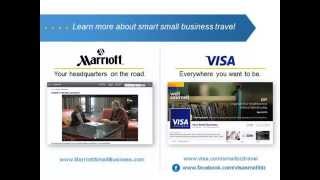
Eddie I just want to remind people that there are travel planning worksheets that people can get here from those websites that they see on the. On the screen there. There's downloadable worksheets for them to help them do their own travel planning and I think they'll find them very useful. So go to one or both of these websites and follow both Marriott and Visa to learn more about smart small business travel. Coming forward, going forward.
More from Your







President Donald J. Trump and First Lady Melania Trump Visit Grieving Texas After Deadly Floods

💪 Thinking of starting a #biz? Go for it! — Kerry Boyle, Vermont #SmallBiz Person of the Year

President Trump Participates in a Bilateral Meeting with the Prime Minister of Canada, May 6, 2025

