Small Business Week Conversation with Jack Dorsey
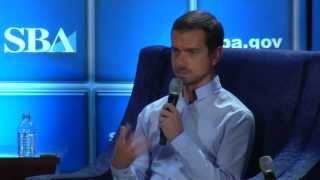
Jack Dorsey joins SBA officials and small business owners to discuss how technology like Square and Twitter can help smaller companies compete. Topics include getting SBA loans, using social media for customer acquisition, and building a strong team.
Questions this video answers
May 1986.
27 years.
2.75%.
7,000 U.S. stores.
$13,000.
Chapters
Good evening, everyone. Come on in and please take a seat. We're going to get started here in just a minute. I think we have a few folks still outside, so we'll wait just another minute or so, and then we'll go ahead and get started with tonight's events. All right, so why don't we go ahead and get started? My name is Michael Chodas. I am the Associate Administrator for Entrepreneurial Development at the sba. I wanted to welcome everyone to tonight's events and the kickoff of the Small Business Week events in Washington, D.C. during the course of the week, we have had a series of truly remarkable events across the country, and it has been an incredible opportunity to celebrate all of the things being done by small business across the country, to provide counseling, mentoring, matchmaking opportunities, information about how to expand and grow and create jobs. And it's been just a remarkable way to participate in all of the ways around the country that small businesses connect with the Small Business Administration. So with that, I wanted to say welcome, everyone, this evening. It is an honor to be here and to be helping along as we move things forward tonight. I want to say, first of all, I urge you to spend the rest of the evening networking and having a good time. To start off our evening, I'd like to welcome our sponsor of the evening, Patrick Girard, Staples regional vice president for sales and operations. And please help me welcome Patrick.
Good evening. How y' all doing?
Great.
Well, welcome. As Michael said, I'm Pat Gerard. I'm the regional vice president for Staples, and I'm based here out of the D.C. market. Here, actually live about an hour south of here in Fredericksburg, Virginia. And is that good a hand for Fredericksburg?
All right.
I'm actually from New England, though, so no booing. I'm a Red Sox fan, a Patriots fan, a Bruins fan, a Celtics fan. All right. And I'm not a Heat fan.
All right.
I've proudly worked for Staples for the last 16 years. And, you know, I want to thank you and welcome you to the National Small Business Week. The list of businesses being honored this week illustrates the dynamic and innovative nature of small businesses in the United States. Everything from a helicopter pilot school to a pet resort to a tool and die company are being honored. So congratulations to all of you. Staples is proud to be a sponsor of National Small Business Week. We have a deep appreciation for small businesses, and we understand the vital role that small businesses play in our communities and our economy. More than 50% of the Americans own or work for small businesses. Small businesses are the Key to driving economic growth, creating two out of three jobs in the United States each year. At Staples, our history gives us a unique perspective on the drive, innovation, entrepreneurship and challenges behind small businesses. It wasn't that long ago that we at Staples were a small business ourselves. Our company is only 27 years old, and we were founded on the same spirit that drives many of the people in this room tonight. In fact, our founder, Tom Stemberg, invented the office supply business on a rainy night in July when he couldn't find printer ribbon for his typewriter. So that takes you back a while. Our first store was opened in May of 1986 just outside of Boston in a town called Brighton, Massachusetts. Today, 27 years later, we're a global company with 88,000 employees. And we've grown into the second world's largest Internet retailer. Even though we're no longer a small business, we're still driven by the need to innovate and adapt the changing world, just as many of you are. We've transformed our company over the years from a cash and carry retailer to a company with a contract unit that supports 2/3 of the Fortune 100. We went from a bricks and mortar retailer to a true multi channel player that lets customers shop in our store, online and on your mobile devices. Most recently, we launched our reinvention that is transforming our business. We're going from a company focused on office supplies to a company that's going to offer more than 1 million items. And we put small businesses at the center of our efforts as we fulfill our vision of providing every product your business needs to succeed. We haven't forgotten what's got us to where we are. We owe a large part of our success to the support of small businesses. Just like you folks in this room and everywhere around the country every day, we're inspired by the stories we hear from customers. Stories of entrepreneurs pursuing their passions. Stories of success fueled by hard work and innovation. Once again, I'm proud and it's a privilege to be here on behalf of Staples as we celebrate the best of small business in the United States. Thanks.
Thank you, Patrick. Now I'd like to really, I have the special honor of introducing and saying a special thank you to the administrator of the sba, Karen Mills. Karen Mills has been traveling around the country this week, as I said, meeting small businesses in Seattle, Dallas, Pittsburgh and St. Louis and engaging with them about the things that matter to them most and highlighting the things that we can do to help them start and grow. I am also going to be introducing Jack Dorsey CEO and co founder of Square. Perhaps we can have Administrator Mills and Mr. Dorsey come on up and take their seats. I also have the privilege tonight of introducing three small business owners who are going to participate in the panel discussion with Administrator Mills and Mr. Dorsey. First, Doug Povich of Red Hook Lobster Pound dc. Founded in New York by husband and wife Ralph Gorham and Susan Povich. Excuse me. The pound was in the first wave of food vendors at the Brooklyn Flea. In 2010, the Pound's Food truck, Big Red hit the streets. Thanks to Doug, Washington D.C. now has two of its own beloved lobster trucks. They are SBA favorites, by the way. I'd also like to introduce Brian Sikora of Pleasant Pops. Pleasant Pops was born in 2009 when co founders Brian and Roger couldn't find their favorite traditional Mexican ice pops called paletas here in DC. They now have over 100 flavors, all of which are original recipes made from locally sourced produce, herbs and dairy. With the help of SBA assistants along the way, you can now find pleasant pops at DC's farmers markets in their truck, Big Papa, and their first brick and mortar store, which opened in September 2012. And our third small business participant this evening is Mark Warmuth of Swing Coffee. Swings began in 1916 under the watch of Michael Edwards Swing, and over the decades, the company has continued to grow and thrive. In 2005, Michael's granddaughter decided it was time at the age of 87 to relinquish control of the company. And Swing's Coffee passed into the very capable hands of owner Mark Warmuth in 2006. So with that, please welcome Administrator Mills, Jack Dorsey, and these three impressive small business owners to the stage.
Well, thank you very much and happy Small Business Week to everyone. I want to welcome you all and I particularly want to welcome our small business winners from all around the country, most of whom raise your hand, who are here. Welcome, welcome, and congratulations. We're going to be honoring you tomorrow. So I have been traveling this week. Usually we have National Small Business Week here in Washington, but this year we decided to take the show on the road. So Monday was Seattle. Tuesday was Dallas, Wednesday, St. Louis. Today we were in Pittsburgh, and tonight and tomorrow we're here in Washington, dc. And why did we do that? We did it because it was time to be on the ground with America's small business owners. And we did it because small business is really fueling our economy. And tomorrow you're going to see President Obama's video. But from day one, he has known that if we are going to create jobs in this country. It's going to be because of our entrepreneurs and small business owners. So we are delighted to be able to celebrate. But we also said we want to be able to provide the tips and the tools that small businesses need because their time is valuable. Another thing we did is we decided to use more technology this year. Good idea, right? And we decided that if people couldn't come to those cities, we would make sure they could still see some of the tips and tools by live streaming. And we have had literally thousands and thousands of people with us all week over the live streaming. So we're going to continue that tonight. So hello to everybody who is with us virtually as well. And I want to talk a little bit for a minute about technology. One of the things that we noticed when we started the week in Seattle, we were on the Microsoft campus, and one of the subjects was how technology is leveling the playing field. Small businesses now have opportunity in two areas, and we've got some great examples of all of that here tonight. The first example is people who use technology and to develop a whole new business. They're entrepreneurs like Jack, who is a serial entrepreneur, and they find a way to use technology to create a whole new product or service that changes our world. And that's really what he has done with Square. But also, as you all know, he's the founder of Twitter, co founder of Twitter. Well, there's another way that small business really uses technology and it levels the playing field, which is even if you're making coffee or ice pops or lobster rolls, being from the great state of Maine, you can tell where my preferences lie. You can also expand your business using technology, and it levels the playing field. In fact, we've had people, people start export businesses, right, that they never could 20 years ago because they can market on the web. There are so many opportunities to use technology, and we thought we would sort of celebrate that this evening by hearing some stories. So I want to start with Jack because everybody's dying to hear his story, even though a lot of people know it. Tell us about becoming a serial entrepreneur. How did you decide that you were an entrepreneur? How did you start this business? And how did you start so many successful businesses kind of in sequence?
Well, first of all, thanks for having us. This is going to be a fun conversation. I guess I never really thought about being an entrepreneur. I never thought about building a business. I, in fact, never wanted to be a programmer when I was growing up. But I had some ideas. I really fell in love with cities because of my parents. My parents lived in the city of St. Louis, Missouri. And they stuck by the city as people were moving out of it to the suburbs. And I developed this fascination with how the city worked. And I just wanted to see it. I wanted to see what was happening in every part of the city. And in order to do that, I needed to learn how to program, because I got this computer when I was eight years old. It was a Macintosh. We got an IBM PC junior a few years after that. And I did whatever it took to make what I wanted to see work. And that involved programming, that involved learning math, that involved learning about graphics. And little by little, I could see more of my work. And I think I've found that's a common thread in all entrepreneurs, it's a common thread in all businesses, is that it doesn't start by you waking up and saying, I want to start a business. It starts by you waking up and saying, I'm really passionate about this thing, and I'm going to do whatever it takes to make it work. And if you look at the definition of entrepreneurship, it's really, you take significant risk in order to do something, and it usually takes significant financial risk in order to do something. And some of this I learned from my parents. My father, when he was 19 years old. This a good story, and then I'll move on, but my father, when he was 19 years old, started a pizza restaurant with his best friend. And they called the pizza restaurant Two Nice Guys. And it started doing really well in St. Louis, Missouri, and they needed to hire some wait staff. And they made one rule between the two best friends to make sure that the friendship stuck. And also the business would thrive. And the rule was that they would not date any of the waitstaff they. They would hire. So the first person they hired was my mother. And my father fell in love with her and went to his best friend a week later and said, I broke the rule. I fell in love with Marcia. The business is yours. And I was born 10 months after that. So started from an entrepreneurship story, and I guess that's always influenced me as well.
I knew there would be some good stories on that. Let's turn to our panel, and let me start with Doug. Lobster rolls. I understand that you're a lawyer.
Unfortunately.
You also have a food truck. Now, how do you divide your time between being a lawyer and the food truck and. And which career is winning?
That's an obvious answer. I've been a lawyer for over 25 years, and right about at the 25 year mark, which was two and a half years ago, my cousin Susan called me and said, do you have any interest in expanding our business down to D.C. and I said, well, I'm a full time lawyer. How am I going to do that? And she goes, I don't know. You figure it out. So. So I had a friend who was in the food service business. I said, I don't really want to start a restaurant, but this food truck idea seems really cool. And so, lo and behold, he left his good, well paying job and said, sure, I'm happy to help you out with this. And we opened in August of 2010 at Farragut Square here in town with literally 300 people in line at lunch for lobster rolls. And at that point, I think I said, this law thing is not long lived.
Exactly. Now, let's talk a little bit about the SBA for a second. I know that several of you started with an SBA loan. So, Brian, I think you've got one going. Tell. Tell us how that fits in. And Jack, you might jump in because I think you have some SBA history as well.
Yeah. So when Pleasant Pops started three years ago, we didn't have really any capital. We had both just graduated college a couple years before, and we bootstrapped it from the beginning. Our first popsicle cart was about $2,000, and our first popsicle molds, we bought off Amazon for $150 or so. And we thought we were big time. We thought we had really made the investment we needed to build this business. And then fast forward a couple years later, seven farmers markets later, a food truck later, we needed to open a store, and we realized, wow, that's a lot more than a popsicle cart and a couple molds. And that's where the SBA was really helpful and instrumental in opening the store because it involves a lot of equipment, construction, things we had never done before. So I think along the way, with the startup capital, you can bootstrap it for a few years. We also did a Kickstarter campaign which was extraordinarily successful. We raised $13,000 on day one. So that, in combination with the SBA loan that we received, allowed us to open our store this past September.
That's great. And Jack, you said that you had some SBA history as well.
Well, I've always been interested in the interface between starting something, an organization, starting a company, and the government. And I think what we need more and more of, like, it's just so hard to start anything, anything. And, you know, you have a bunch of people. Not only is it hard to start, but you have people telling you no constantly. And the SBA represents a simple interface into government, which enables you to navigate more and to really go through some of those hurdles and some of those barriers. I think what we all need to do, though, is make sure that we're constantly giving feedback in terms of, well, there's actually some friction here, and this doesn't really make sense. And we need to improve this because it actually improves it for everyone. Right. As well. So I think the more we can focus on simple interfaces into our government, we can move faster and we can do more impactful things in the world.
Mark, tell us about your business and also your SBA history. Now you've got one of the oldest businesses, but you've just taken it over.
Yeah. I'm the owner of the ME Swing Coffee Company. Swings has been around for 97 years. And prior to my purchase of Swings in 2006, I owned a commercial bakery. I bought a small bakery, and that was my initial foray into entrepreneurship when I bought the business, the first business, the bakery. My father was also an entrepreneur as well, and it at his urging, he suggested I take out an SBA loan. It's an easy entry into financing a business, and the benefit of having that type of a credit rating or building your credit score as you go is extremely beneficial. One of the hardest things for a small business owner to do is to obtain capital to finance your business. And so as you go, if you can build a credit rating and pay the loan off on time, it's much easier to obtain additional funding down the road, which helped me with the purchase of Swings several years later, after selling the bakery business having a higher credit score than previously because you paid back.
That SBA loan right on time.
Yes.
Yeah, it was good. Well, all of you, I believe, are using some kind of technology. Jack, do you want to talk a little bit about. Do you all use Square? All right. Well, food trucks, definitely. Taxi drivers. Where else have you seen Square? Just about everywhere. Talk a little bit about Square, and then maybe you guys can talk about Square and other technology that you use in your businesses.
So our mission at Square is pretty simple, which is to make commerce easy. And there's a lot of payment companies out there, and there's a lot of people focus on payments. But it turns out that no one really wants to pay, Right? No one wants to think about paying. They want to think about commerce. And commerce is the definition of the word is the activity between buyers and sellers. And it's very similar to conversation. It's very similar to communication. But somewhere along the line, commerce became more abstract. It became harder, more friction, harder to understand. Whereas communication always gets easier, frictionless, and more people can participate into it. So we asked the very simple question of why can't commerce be as free and easy as communication? Because it is a social thing. And all these businesses you see before you are making a very, very social interaction. Every single transaction is a conversation. It just happens to have another form of value, which is a monetary value instead of an information value you find typically in communication, conversation. So that's the basis of what we do. We started by recognizing the fact that no one is carrying cash anymore, checkbooks, and they're all paying with plastic cards and they want to use them everywhere. Yet a lot of small businesses and individuals were left out of processing credit cards because it was just way too hard. You had to go and get a credit check to accept credit cards, which doesn't make sense to anyone because people are giving me money. Why do I need to get a credit check? I'm not spending the money, they're giving me money. So we looked at that and we said, how can we make that simple and how can we make it easy and turn a one week process into a two minute download and a signup where we give you a free credit card reader and we also charge a simple rate which is 2.75% and the money goes in your bank account the very next bill. Business morning. So that was revolutionary because a lot of businesses even today have to face this interchange where they pay anywhere from 1.79 to 10% to accept a credit card, depending on the card that the payer uses. Right. And most merchants don't even know that they're doing this. They're told they're going to pay 1.79%. And then there's an asterisk there. And the asterisk says for qualified cards only. So we simplified the pricing, we simplified the application, we simplified what it meant to actually accept payments. And that resonated with people. And we just saw it flourish around the United States, from people selling on Craigslist for the garage sale, to coffee carts, to food trucks, to actual small business. And the thing I'm most proud of is we've validated that we're with a partnership with Starbucks, and Starbucks is using square in 7,000 of their stores in the United States. And it's the exact same tool that our individuals are using. So technology truly does level the playing field in this case. And it means that you can compete on merit of idea and merit of product instead of access to technology, because everyone has access to the same technology. So it's just a question of what, how much your passion drives you and your motivation. And that's a beautiful thing to me.
So let's hear from some of the users. How does it work?
Frankly, I always say that my business would not be in business were it not for two things. Twitter and Square. And this gentleman's responsible for both of them.
And the lobster, right?
And lobster. So. So when I'm looking to start my business, I realize at our price point, we need to be able to accept credit cards. So you look at how are you going to accept credit cards? And the companies try to sell you a literally five to $10,000 point of sale system to put in a truck. And I'm saying, no, that's not going to work. There's got to be a better way. This was the same time that the iPad was coming out, and I said, so something has to facilitate this. So lo and behold, come across Square, and it was a godsend. We, for literally the cost of an iPad, were able to get up and running without the need to do all of the merchant accounts and all the complication of what it takes to accept credit cards. And I think that because of that, we are where we are.
Do the rest of you tweet about your business as well? Do you tweet when the coffee's up?
We do. We will pick strategic points during the course of the day to tweet when we know that people are paying attention to their Twitter feed. And we try to post not just information about us, like, look at me, this is what I'm doing. But we try to engage our customers, customers and make sure that we're acknowledging our wholesale customers what they're doing with their businesses. Because it's important to build a community between your customers and yourselves. And not just focus the attention on my business, but how can I expand my business by focusing on the successes of my customers. And periodically, we'll just engage in conversation with those customers. They come in for a cup of coffee and they flash a picture about the latte, artwork of the latte they received or the good cup of coffee they had.
So your customers are tweeting about the latte.
That's the point, is to engage in conversation to get them to do more talking about it than us. One thing I might say about Square, though, is that a year ago, the folks from Square came out and paid us a visit at our shop on the corner of 17th and G. It's a very busy coffee shop near the White House, and we had just invested in one of those $5,000 point of sale systems and weren't ready to switch over to Square. Most recently, a month ago, we opened a coffee bar and a new roastery in Alexandria and we gave Square a shot. And within a few more months, I'm going to be switching over to Square in my shop downtown because it's really pretty amazing what it can do. And what's really exciting about it is the customers that walk in and the feedback you get when they see the iPad on a stand. And it's a very engaging way to get money from customers, which is kind of fun. They like it a lot.
I can say at the farmer's markets, the old credit card terminals were really prevalent three or four years ago when we got started, and you'd have to plug them in. Where do you plug in a credit card terminal at a farmer's market? So they were constantly running out of batteries, people running around, finding an outlet, borrowing it. So three years being in business, I've seen pretty much everyone adopt Scrap Square at the farmers markets we Visit. It's probably 80 or 90% in those markets. And from opening a brick and mortar store, we also looked into the $10,000 point of sale system. We got fliers every single day, sales reps from very large point of sale companies coming in the door. We said, well, we have an iPad that we're going to reuse about $300, and a little wooden box that it sits in. Well, every time a customer comes in the door, they're wowed by, how do you have a wooden cash register that accepts credit cards? It's pretty phenomenal to watch the reaction. I don't know about any other business, but I've never seen someone get so excited about buying a popsicle.
It's an exciting thing. So top of mind for any business, small, medium and large is always acquiring new customers and getting new customers and also keeping the ones that you have and establishing loyalty. How do you all think about new customers and driving more people to your businesses?
So from our perspective, it's all word of mouth. Twitter is a fantastic tool. Especially when we got started being at one market and open for business four hours a week, communication tools like Twitter were critical to get us started to at least tell people where we were going to be when, if we opened a new market. How do we communicate that? But since opening the store, you realize how Local and kind of community focused, your business becomes as a retail operation. Roger, my business partner, spent some time doing political organizing. So about a month in, we saw our customer numbers plateau. And so he said, well, why don't we just go out and knock on doors? I said, that sounds crazy, but sure, why not? And so we took a map, drew a circle about a three block radius around the store, and we knocked on every door. And it worked because we were kind of off the beaten path a little bit. So even with great technology tools, there's also something to be said for just going to meet your neighbor and say, hey, we're here.
Yeah. So from our perspective, we have a very limited amount of time to engage with our customer at the food truck. You have literally seconds to do it to make an impression and make the sale. And so our goal is to have the sale behind the scenes, have our cashiers engaging with the customers, making sure that they come back. And Twitter and Facebook are also our main vehicles for engaging customers in D.C. the way the rules were, literally, we would not be able to stop our truck unless we had a line already formed. It's called the ice cream truck rule. And that's why ice cream trucks have bells. So they can attract people and they stop. Well, we had Twitter, and so we tweeted where we're going to be at the location. Lo and behold, we pull up 50 people standing there waiting for us, saving a spot for us. And that type of engagement with your customer. We've had people, you know, early on, you know, come up to the window and literally faint because they were so excited they finally got to the lobster truck. So we absolutely use social media to engage our customers on a regular basis.
That's great.
Well, for us as a coffee roaster, and we're certainly not the size or magnitude of the big green serpent Starbucks. No offense. Our focus has always been to you work a little harder and you aim a little higher with regard to the quality and craftsmanship of the work you do. We don't advertise, and for that reason, we're probably one of the oldest coffee companies that nobody's ever heard of. But there's always a line from the register winding around our store to the front entrance because our baristas are very well schooled and very well trained in how to make a drink. And our coffee is fresh roasted daily. So there's something very positive about a local company that does really solid work. So to that point, our business is very successful and we don't advertise, but as of late, our focus has been how do we extend the brand of me swing company beyond the people that live within a four or five block radius of our coffee shop and are close to our roastery. So we are now heavily focused on a social media campaign utilizing Facebook and Twitter to again engage with our customers and make people aware of, oh yeah, there's this really cool coffee company that's been around forever and you've never heard of them, but go on by because the drinks are really good. So that's going to be for us going forward. How do we create this awareness of swings that has been around forever? I think sometimes if you've been around too long, you kind of blend into the background. So we're trying to reinvent the company in a way that makes this almost a start up within the shell of a hundred year old company.
Well, Jack, I'm going to come to you for a question, but first I want to tell everybody we're going to have a treat here, which is in a few minutes we're going to ask you to ask some of the questions. So think about your question while I ask Jack for a second. You know, lots of folks out there want some advice from you. You've clearly been a successful entrepreneur several times over. Kind of the dream of many small businesses and entrepreneurs. But give your advice in this context. So tell them about the biggest mistake you ever made or a mistake you might have made and what advice you can give them from that.
I think the biggest realization I've had over my life is how important the. And you know, you hear this a lot, but it's so true and so simple, but how important the team is and the people that you work with are. And you know, we kind of see this directly. And the way I've been thinking about it most recently is if you have an issue in your company, if you have two divisions who are not talking together, if you have two people who just can't get along, that friction will manifest in the product itself. Right? Your customers will see that friction and that means you're putting your company's issues, your issues, before your customers, which is just rude and selfish. And I don't want to be rude or selfish. So we make sure that we design and engineer the company and the organization as much as we do the product and the service that we build. And this has come true again and again and again. In the early, early days of Twitter, we are growing very quickly, but we were also going down all the time. We had a lot of service issues and the real cause of that is because our engineering staff wasn't talking to our operations staff enough and in the right way. It became a communications issue, which was funny because we were building a communications company, right. But we weren't communicating effectively. And that actually manifested in downtime, that manifested in failure, and it's the worst feeling possible. So as we were down, we felt terrible about it, and it didn't, you know, it inspired us to get back up, but at the same time, it was really hard to do. So simple communication definitely helps. And the thing that helps simple communication is just having an understanding of how your business is doing. Right. I've been keeping a journal since I was 14 years old, and that was probably the best thing that I've ever done in my life, because I can see motion. And we do the same thing for the business. You want to record everything. You want to have a sense of how things are doing very simply. How many cappuccinos are you selling today? How many lobster rolls are you selling today? Very simple data that allows you to make decisions and allows you to make the choice whether you want to stay more of a lifestyle. My mom had a coffee store when I was young, and she wanted three employees, and that was it. She loved it. Or you want to go around the world, and it's all dependent on the data and the team and the people that you're working with, and then your ambition and your drive. So that was probably the biggest mistake, is not focusing on the team enough.
And I imagine all of you have some growth plans in mind. Do you each have a mentor or somebody that you work with on your business plan and your growth plan on a regular basis? Because if you don't, I've got an opportunity for you.
I do not. And this will go back to the biggest mistake that I probably made as a business owner is taking for granted what goes into making that really good cup of coffee. You go to your coffee shop in the morning, if it's really good, you don't appreciate the craftsmanship that the barista puts into every drink. And there's a lot of skill and training that goes into teaching that barista how to make that drink. The coffee is going to taste a certain way because the person who's doing the roasting has spent years on the roaster working his craft and learning how to do it the right way. The supply chain goes back to sourcing quality green coffee. And somebody has to know the difference between good coffee and bad coffee. And so from for me, buying the business, I Loved coffee before I bought the business, which is why I bought it. But you don't always know what you don't know until years passed. So if you can find that mentor, highly suggest it. A lot of times you don't know those mentors until you're a few years in. But I think I'd still be in the same position now, but would have gotten there a little quicker had I had a few more people on my team that had helped me out along the way.
Well, this is something that we hear quite a bit. And all of those who are here from the sba, do me a favor and raise your hands. Well, if you do not have a mentor or advisor that you see on a regular basis, and you are a small business owner out there, you need to see one of our SBA folks before you leave here tonight, because you should. Many, many small businesses have told us that they would be. The advice has saved them a year and a half or saved them from making a mistake that another entrepreneur would make because you're so busy running your business, you don't know what you don't know. And one of the things that we do is collect a lot of data on this. And. And we know that small businesses that have mentors and advisors get more sales, more profit, hire more people. They have more longevity. So go to sba.gov if you are watching us on the live feed, and you can put in your zip code, and you can get the names and numbers of the SBA folks near you. The best news about it, it's free, so there's no excuse. Now we have some hands getting ready, and I think you might want to. Doug, just answer that question. I saw you had a few things to say, and then I want some questions from the audience, if we have any.
Now, I've had some very awesome mentors in my legal career. When I started the food truck business, it was new, and nobody, I felt, really knew the food truck business because it was so new. And what I found is that my fellow food truck operators were my best mentors. We literally formed an association. We sat around the table, we said, what's working? What's not working? And it has been kind of mentor by committee, if you will, and it's worked really well.
It's like a small business cluster. This is something we've started at the sba, and we find that small businesses, when they cluster together, they actually have more power, and they do end up sharing best practices and mentoring each other. Well, does anyone in the audience have a question Right down here in front and then a couple in the back afterwards.
I think you guys can hear me.
Actually, I have two questions. I'm going to let you do that, and then we'll repeat the question for the live feed.
Okay, two questions.
How did you advertise to get 300.
People there your first day?
And then what was your Kickstart program?
So how'd you get 300 people there the first day? And what was the Kickstart program?
Right, so we've never advertised at all, informal print media or anything like that. We approached the food bloggers in the area. We got them interested in our opening, our grand opening. It was delayed, not for strategic reasons, just for mechanical reasons. And by the time we opened, there was such a buzz about our business that they showed up. Simple as that.
So something that we realized a couple years ago was it's very hard to ask friends and family for money to get your business started. And Kickstarter is a tool that allows you to do that. And instead of equity, it's rewards based. So when we were thinking about our Kickstarter campaign, we thought, what are some things that people will get excited about? And so our most popular level for our Kickstarter campaign was actually very small. It was about $25, and people would give $25 and they would receive an invite to our grand opening. So a preview to the opening of the store. And Kickstarter is an online tool. You can set the duration of the campaign. So if you want it to last a week or six weeks, we chose 30 days. We raised over half of our goal in day one because it built so much excitement. And the great thing about Kickstarter is if you don't reach your goal, you don't get anything. So it's a way to test your idea, too. I would have been very worried had we launched our Kickstarter campaign and not been able to get close to the goal. So it was really twofold. One was a way to ask friends, family, a lot of people we didn't know, people we'd met five years ago chipped in. But two, it's really a way to kind of build excitement and validate your idea.
That's great. Question there in the back. The one with the microphone, then the one standing up. Oh, okay. Yes, Stand up, Stand up. Tell us who you are. Oh, dear. Okay. I'm Andrea York. I'm a lawyer. I still like law. I don't think I'm going to be opening any food trucks soon, but I am interested in the Kickstarter campaign again? And was there a relationship between your ability to generate funding through Kickstarter and your ability to get the SBA loan? And if not, then, you know, what kind of collateral or criteria were you able to use to qualify for the SBA loan?
That's a great question. Kickstarter came first. We actually announced our Kickstarter campaign on the same day we made it public that we were opening a store. So that generated a fair amount of media attention. And all those people we didn't know chipped in five, 10, some as much as $500. But that was also a way for us to go to our local credit union and by extension, the Small Business Administration and say, we have 425 people who think this is a good idea and have put money behind it. So it's not just having the capital, but also convincing our landlord that it was a good idea to sign a lease with a popsicle business.
Gentleman back there. Thank you. I'm Arnold King, King Consulting Solutions. And my question is to you all is how you all determine the. How do you determine yours when the.
Plain things such as SWOT analysis, observation and technology?
Because the majority of time, operation is about 89% of business planning. So let's understand your question. Again, it's about operations and technology, operating technology, and SWOT analysis.
Strength, weakened opportunities.
SWOT analysis. Have you ever used a SWOT analysis? How do you plan for your operations, and how do you make sure you don't end up with no lobsters one day?
Yeah, it's trial and error, basically. You try to plan everything. I knew about small business said you need to plan and think about this, and all of that was kind of out the window after the first day. So you do trial and error. You try to collect data, as Jack was saying, and know what you're doing right based on that. But the production piece of it is critically important. We have a very valuable product inventory. If it's fresh, it has a short shelf life. If we don't manage it very well, you know, we can be out of business pretty quickly. Like I said, it is art and science, mostly art at this point because of all the variables involved. We do try to track those, but don't always get it right.
Where do you keep all the lobsters that are in your working capital inventory? Are they like in the.
No, the lobsters are alive up in Maine. When they get to us, they've already been cooked.
Couple other questions. Do we have one on this side of the room?
Hello. Hi.
One back here. And Then one over here. I have a question I would like to know. Tell us who you are.
Oh, I'm sorry, Meredith.
Meredith and I have a non profit organization. I would like to know what are your everyday rules? Something that you do every day that benefits your business. So what are your everyday rules? Something that you do every day that benefits your business. And Jack, you probably have this because you have a big, an important culture in your firm and you probably have a lot of everyday rules around, around that culture. And maybe you guys also want to chime in.
Well, for me, the first thing I do is brew a cup of coffee and make sure that it tastes a certain way.
But.
I am pretty tight with my team at my roasting facility and we will get together every morning and we discuss all elements of the business. Whether it's social media related, whether it's wholesale customer related, whether it is complaints. You're going to get complaints as a business owner as well. And how you address the issues that your customers may have will kind of set the path for you as well as far as the type of business owner that you are. So we try to make sure that we're doing things right across the board. We'll also address there's a social component to your business as well. What can you do from a social level to make sure that you're giving something back to the community? That's things that we address on a regular basis to make sure that we're doing things the right way and we don't get calls from angry customers or people knocking on our door with issues. And it seems to be working fairly well for us right now.
We ask our employees every morning to set a personal intention and so that they have a purpose when they go out that day. We think that the business on purpose is really important. For example, our grill person might say her intention is not to burn any buns today. The cashier might say, I'm going to try to make 10 people smile when I interact with them. The expediter might say, I'm going to get our roll per minute count up to three. And it has a really profound effect, I think, on not only our business, but also on our employees.
One of the things that's been most successful for us is we have a very, very transparent culture and very transparent company. And one of the things that we do every day is every single meeting that we have in the company, someone takes notes and those notes are sent to the entire company. So in Square's case, it's 550 people and they all have access to the same information that everyone has, which works to keep everyone on the same page. But also we get all these new diverse perspectives and it makes people think in different ways and that creates a lot more creativity in the organization. So keeping people on the same page, keeping people on the same purpose, and just making sure that everyone sees that has been the most transformative for us.
After making coffee and checking the temperature of the freezers, become an amateur mechanic in the process, making sure our pops don't melt. But I'm a big believer in quick standing meetings. It's a way we spend a lot of time on our feet making pops, but it's also a great way to meet. No one gets too comfortable and I think it's a good way to keep things keep checking in with the team throughout the day.
That's good to know. We also at the sba have stand up every morning in my office because if they stand up, it's 15 minutes. If they sit down, it's half an hour. Right. I think what I'm going to do is ask the panel for any last thoughts for our small businesses and entrepreneurs out there as we come to the end of Small Business Week. Word of advice, Quick word of advice.
Quick word of advice is that there are opportunities everywhere. I would say most of our best opportunities have just come from talking to folks at the farmers market, finding out what they do or why they're interested in what we do.
For me, I would say you learn a lot about yourself and you learn to do a lot of different things. Maybe not so well, but you learn how to do a lot of different things. Because as a business owner, it can be very lonely at times because you can't always tell somebody else to do it or you can't find, you know, delegate it to somebody else. If something's broken, you have to fix it. Otherwise your business fails or it doesn't work that day. So whatever you can do to engage in some type of connection with other food truck owners or other people of like type businesses, it will help you because you do need a support structure. Maybe not so much within your business, but in the same type of business, it will help you out a lot.
I would say the best thing to do is to at all steps in your business simplify. Keeping things simple is key in my view. We do one thing, we do it really well and we stay focused on that. A corollary to that is obviously your customer is supreme and 100% focused on what they want and keeping them happy.
Yeah, I definitely agree with the simplified point. The best tool I found is a very simple one, which is asking the question why? It's the easiest question to ask. It's the hardest question to answer, but it always gets you to something that's more essential and much, much deeper. It enriches, engages your business, engages you as well. So, you know, why can't people accept credit cards from their phones? Why can't people communicate wherever they are with their phones? That gets you to a really solid answer that I think can move you forward very quickly.
Well, what a great way to kick off the Washington portion of National Small Business Week. I look forward to everyone joining us tomorrow for celebrating our winners for tools and tips. Also, join us online and and@sba.gov anytime in the future. Please join me in thanking some terrific, fabulous entrepreneurs who took time to be with us today. Thank you.
More from Your







President Donald J. Trump and First Lady Melania Trump Visit Grieving Texas After Deadly Floods

💪 Thinking of starting a #biz? Go for it! — Kerry Boyle, Vermont #SmallBiz Person of the Year

President Trump Participates in a Bilateral Meeting with the Prime Minister of Canada, May 6, 2025

