The Five Pillars of Business Security presented by ADT and SBA
Luis Orvigoso from ADT walks through five pillars of business security: Priorities, Policy, Place, People, Performance. He covers access control, cameras, monitored systems, device policies, background checks, and inventory controls, with practical advice on balancing trust with verification.
Chapters
Hi, everyone. My name is Natalie Goriel, and I'm the online media coordinator for the U.S. small Business Administration. I'd like to welcome you to today's webinar. This webinar is made possible through a public private partnership with adt. These partnerships allow the government and the private sector to come together in support of the small business community. It allows us to hold free webinars like this on a variety of business topics. In just a moment, I will turn it over to Luis Orbegoza from adt. But before I do that, I want to say a little bit about why SBA is so excited about this partnership. We know that as small business owners and entrepreneurs, you need more of two time and money. Our mission at the SBA is to provide the nation's 28 million small businesses with the support they need in a world where time and money are both short. We do this through what we call the three Cs. First, SBA provides capital to small businesses in the form of guaranteed loans to start, expand, export, or recover after a disaster. Second, we help small businesses with government contracts, which is a $100 billion market. And finally, what brings us here today is that SBA provides counseling services, often at no cost. Many of you might be familiar with the SBA resource partner network, including small business development centers, SCORE mentors, women's business centers, veterans business centers, and our SBA field offices. I encourage you to visit SBA.gov to learn more about what services and events you can find in our Resource Partner Network. In addition to the SBA Resource Partner Network, we work with private companies to bring in expertise in high priority areas like business security. As you know, business security is essential in keeping your employees, data, properties, and investments safe. However, knowing where to start can be challenging. That's why SBA has teamed up with ADT for today's webinar about the five pillars of business security. And so, through this partnership with adt, we will offer you with some security strategies to help keep your business safe. So with that, let's get started. I'd like to now turn it over to Luis.
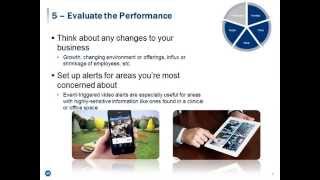
Thank you so much, Natalie, and good morning and good afternoon. Depending on what part of the US you're in. My name is Luis Orvigoso, and I'm the President of ADT Business. Now, here at adt, we understand the value as well as the necessity of securing small businesses at the core. And some of you may know, ADT has been in the security business for over 140 years. Our team has helped nearly half a million small businesses across the US and Canada secure their locations, which adds up to a lot of hands on experience. Now, through the stories and teachings of my colleagues and through my own personal experience, I understand the specific needs of small business in a variety of vertical industries. The security needs of a pizza parlor, for example, are not the same needs at a dentist's office. And we have secured businesses of all kinds. So I will pepper some examples as we go through this presentation to make sure that I bring some real life examples to the presentation. Now I will tell you this. I love working with small business owners because they are such passionate people. You invest so much in your business, from the amount of time that you put in each week to the physical capital that you invest to start it up. And at aet, we're committed to ensuring that you as a business owner are able to protect those investments no matter the circumstances. So today I'm going to talk you through why security is so important to small business and how you can go through and set up your own security program. Many of the areas I will cover today may seem like common sense, and a lot of them are. But it is critical to think about the big picture when securing your business. And you would be amazed at how many times we lose that visibility to things that we may think are common sense. And I'll give you some examples around that as well. So as I mentioned, small business owners invest so much in their business just to get a business off the ground. We know that you can be investing anywhere from a few thousand to $80,000 of your own money. And on top of time and money, you invest in your physical space, your employees, your marketing, and many other things. And we also understand that as small business owners, you really are a jack of all trades. Now you're probably more than aware of the number of risks small businesses face. A recent study showed that in the past year, retail losses from shrink, which includes shoplifting, employee or supplier fraud and administrative errors, cost retailers more than 42 billion. And this is just retailers, by the way. It doesn't include other small business verticals as well. Now, with that in mind, additional losses from break ins, vandalisms or theft can make a huge negative impact on the bottom line. And it is imperative to address these things from the first day. Now really, at its core, security gives you a sense of stability in the risky world of business. It helps standardize procedures, it helps you prepare for a huge number of possibilities and it narrows the available risks. Now, getting started on creating a new or revamping a current Security plan can be very, very overwhelming and there's a lot to think about. So we've made things a little bit more streamlined by organizing the five pillars of business security. And these five pillars are priority, policy and place, people and performance. And don't worry, I'm going to go through each and every one of these in detail. Now, the good things about these five pillars is that they're easy to remember because they all start with a P and they're all part of a cyclical process. Some of the things that I'll be talking about seem like common sense as I mentioned earlier. But with how busy small business owners are, I'm sure that you'll see some things that are obvious that you didn't necessarily considered before. So let's get started. The first thing that you should do when devising your security plan is to sit down and determine your priorities as a business owner. And the best way to do this is to ask yourself some questions, right? So what's important to you? What are you most concerned about? Are you interested in securing inventory or is client information important? What about cash? Do you have certain high value items or regulated items like pharmaceuticals that can get you in trouble if you're not able to audit or monitor? Or is it data? Are you worried about employee theft? Are you worried about customers identity theft? These are all things that you really need to think about. You should also think about the type of relationship you want to have with your employees as well as you implement these programs, because it will require some planning in terms of the message that you send to your employees. So first think about the type of environment you want to create for you and your employees. As I mentioned earlier, you'll need to find a balance between being secure and having your employees feel like they aren't trusted or that Big Brother is looking over them. Too many video cameras or searches, your employees may feel like, as I mentioned, like someone is watching them all the time. It's probably not an environment that's too conducive to collaboration. But my favorite saying is that you've got to trust but verify. So make sure that you put the elements in place to create an environment that breeds confidence and collaboration in your business. But always verify that things are happening the way that they should. Now, the New York Times recently published a story about a study that found that monitoring software in restaurants increased the revenue by an average of 7% each week just by installing a monitor type of software. And the impact, which is what the researchers say came not from firing workers engaged in Theft, but mostly from their changed behavior. Knowing they were being monitored, the employees not only pulled back on any unethical practices, but also channeled their efforts into good customer service, such as prompting customers to have that dessert or a second beer, raising revenue for the restaurants, and tips for themselves. There's other studies that show that just simply having a video camera in a conspicuous place can deter shoplifting by a large amount. So again, it's all about the environment that you create and the perceptions that you create. Now think a little bit more about your employees themselves. How much trust do you want to put in them? Do you want to have a small workforce that works more hours and have more responsibility, or would you rather have a larger group of employees with the responsibility spread out more? Don't forget to take into account the type of business you have. A larger, less involved staff at an ice cream parlor, for example, is a much better idea than a large, less invested staff at a dentist office. It's all about the type of services that you want to deliver, the reputation that you want to build for your business, the brand that you want to generate. And that's going to determine how you plan out your security. Each type of small business may have many different priorities. A clinical or lawyer's office may be more concerned with protecting client information. You know, kind of information is highly regulated. But a retail location or restaurant may be more concerned with protecting the cash on premises. So the type of solutions are going to be different for each. Think about what is most important for you to secure, what is at the most risk, and what is your top priority to protect. Now, time management is a very important priority, and this can be very hard for small business owners. You have a lot of responsibility and the success of the business rides on your shoulders. But you do need to figure out just how much time you're willing to commit to your business. I was actually very surprised that in a recent survey, over 20% of small business owners admitted to never or rarely taking a vacation because they don't trust that when they leave, their business is going to be taken care of. And if you want more than one location, this time management can be even harder. So whether this is the case, or if you have one location but are away from there quite often, you may want a way to check in while you're out. And later in the presentation, I will touch on specific examples on certain technologies that allow you to check in while you are away. Another way to manage time is to delegate to a few trusted employees. It's cultivating that tight Knit trustworthy group a priority. Should it be a priority? All things that you have to think about. So I'm sure that growing your business will always be a priority. I mean, growth is kind of like if you're not growing, you're done. So I know that most, if not every single one of you are focused on growth. But think about how you'd like to grow that business. And specifically, what would you like to grow? Are you interested in growing volume revenues or are you interested in growing total profits? Right. If you're interested in growing profits, there are ways that you can do that. That is by reducing shoplifting or theft that doesn't entail higher revenue. So again, it's important that you prioritize what it is you need to do. By the same token, if you're interested in growing your volume, you may put yourself up for more risk for shop listing. So the security solution may need to be customized for that scenario versus the previous. So now let's talk about policy. Once you have worked out your priorities, you may find that this list is a bit long. And that's okay. This is normal. But you can sit down and establish, you know, what the policy should be around this. You want to create a handbook outlining your entire policy and have each employee agree to it. This is important because it shows a commitment from the employee. It's clear, it's in writing and they have to sign it. And again, there's research that proves that when people acknowledge something in writing, they are apt to make sure that they meet the commitments that they're signing up to make sure everyone has a copy of the policy and encourage their employees to read it all the way through. Keep additional few copies in the office so people can access it. I mean, this information has got to be present and everyone should know what it is. What exactly should be in this policy? You may be asking yourself. And you know, this includes a lot of things, everything from say, employee hiring emergency preparedness to how to deal with a shoplifter. So how should your employees react if they find someone stealing and items in your store? It's very important that there's a process in place so that you reduce the risk to the employee and the risk to your business, but that you also have an environment that promotes security. Now I'm going to walk you through some examples that should be included in this policy and some of the details that you should add. Your employee hiring policy should be very clearly outlined in your handbook. Make sure that you actually call references. You can find out a lot about an employee from how their past colleagues or managers talk about them. I mean, think about it. When you're interviewing someone for a job, an hour interview is so subjective. I mean, you can't really expect to get a good appreciation for whether that employee is going to be a good, honest employee by just interviewing him or her. For now, as I mentioned earlier, trust but verify. Trust what they're telling you, but make sure that you verify that the data is accurate. And I would place special emphasis on relying on the opinions of people that have actually worked with these candidates that are applying to your jobs. Background checks are an absolute must. Just because these candidates have positive references and a great resume doesn't mean that there aren't warning signs in our background. And you should definitely look out for this. And while you may have to pay for these background checks, believe me, they can save you a lot of money and headaches in the future. Also, make sure that you outline the security training that a new employee must take. Whether it is as simple as signing an acknowledgment form. Like I mentioned earlier around the security policy, or a full course of security training sessions, it's important that your policy also spell out how you're protecting your inventory. I mean, shrinkage, as I mentioned earlier, accounts for inventory. Shrinkage accounts for a large amount of the losses that small business owners face on a yearly basis. Do you take a monthly inventory of all the products in your location? Do you have, I mean, are you leveraging technology like video monitoring of your storage? You know, you can have event triggered alerts every time that someone accesses certain things or an alert if someone is in a certain location of the store where they shouldn't be. Right. Do you have a point of sale system that closely tracks exactly what is going on in your store? It's also important to make sure that you clearly outline how you deal with employee theft. Now, I'm going to throw out a statistic that may surprise you. Nearly one third of all employees commit some degree of employee theft. And this is according to the Department of justice, that's 33%, one in every three. Now, in all fairness, a lot of that theft is small things like office supplies, paper, things like that, right? But some of that theft is very large and ongoing. I would recommend a zero tolerance policy for employee theft so employees understand that you are very serious. You know, there should not be a gray line for ethical behavior in your store, especially as it relates to your livelihood. Be sure to clearly outline the consequences for theft. Also make sure that you outline how Employees can report suspicions of fellow employees. And this requires some thinking. You know, I mean, there's two ways to go about it. You can have, you know, you can create a mechanism whereby your employees can anonymously report possible theft, or you can have a reward system in place that would obviously take that anonymity out. I'll learn exactly who has access to sensitive information and any procedures they must take to access it. Access control of some sort. And access control is like card readers. You know, when you swipe a card, as opposed to using a key to get into a door. Access control is very, very flexible. And access control, you could use it via card or via password, so on and so forth. But the nice thing about access control is that now you can document who access what location or who. Basically you can have a running tally of who did what. Opening and closing procedures in your store is something that should probably be referenced in your policy as well. In fact, I recommend having a checklist in a common place that's very conspicuous, like by the register or by the printer. So those who are closing or opening the store at any given time have make sure they are adhering to the procedures that you've outlined. And I also highly recommend that you have a minimum of two people closed at all times, especially if you have cash in your location or valuables that can walk away, if you will. Now, speaking of cash, it's also important that you outline your cash on premises policy. Always drop large bills immediately and publicize this via sign in either at the front by the register to discourage potential robbers. Again, just like the camera deterrence robber, a robber may be thinking twice if they know that you only have small bills in the cash register and that your large bills are actually in a drop box or removed from the store. To that point, I recommend utilizing a safe drop mechanism that lets you make periodic drops throughout the day and also make sure to outline who can handle the money once it leaves the register. Is it only managers? Can certain employees do it? You know, what are the specific needs that people have to handle your cash and make sure that you think this thoroughly. A device policy is also particularly important for those places that house a lot of information, like offices, for example, law offices, medical offices, and so on and so forth. Bring your own device is a policy that a lot of small businesses are adopting. But this can be risky because when people bring their own device, you don't have as much control or any control, if you will, over many of the firewalls that they have in their phones. And another statistic that may surprise you is the fact that according to McAfee, phone hacking has actually almost caught up with PC hacking. So a lot of people don't think about securing their phones. There's research that indicates that in just a couple of years, there will be more phone hacks than there are PC hacks. And as a matter of fact, there are more phone tablet sales, portable devices sales today than there are PCs as well. So this is a shift and you need to be prepared for that shift. It's also important that you outline any security checks that you plan on conducting. Whether it's checking employees personal belongings as they leave each day, which again, I wouldn't necessarily recommend all the time, or surprise drug tests. Having it all in writing and having your employees agree to it can prevent unpleasant backlashes in the future. Time of year is also important, and you'd be surprised to know that crime tends to jump up in warmer months, especially in colder cities and cities that see a lot of tourism. Now, you may want to add additional security measures, such as more frequent cash drops or more staff. So again, it's important that you be sensitive to your environment, what's going on around you, and that you adjust your security policies accordingly. Now, as much as we don't believe it will happen to us, definitely include an emergency preparedness plan, work with your building, your landlord, as they may already have something in place that you can build upon. And finally, workplace violence is another thing that we hope does not happen, but it often does. Outline the reporting procedure for employees who feel threatened or who have not seen warning signs. So making sure that you train them on what to watch out for, making sure that you have regular discussions with them so that they understand how they should act, so that there's a consistent policy in place. And again, it's always important that you always think about the safety of your employees first. Now, there are many more policies that you'll need to outline, and some may be specific to your industry. Just make sure that you've thought everything through, that things are pretty clearly outlined and organized and in a way that can be easily referenced. So now let's talk about place. This is the part that most people think about when they think about security, right? Securing your place. Securing your place of business. So first and foremost, work with an expert who focuses solely on security and understand exactly what businesses need. There is no excuse for you not at least asking for a consultation from a security company. There are many good security companies out there that will come to your premise with the necessary expertise to give you Some advice, and it's free. There's no commitment associated with it. So even if you elect not to go with these companies, you lose nothing by asking for that consultation. So I strongly encourage you to do that now. Important too that you think through what the priorities of your business are before you call this security consultant, right? Because your priorities will in turn determine the configuration that you will need. There is no one size fits all security solution. I mean, that's the one thing that I've learned having been in this business. Every single store is different, every single location is different, every single industry. So again, it's why it's so important to make sure that you get someone that is a security expert to help you assess what your possible vulnerabilities may be. This chart outlines just a few things that we found that are unique to vertical industries. As an example, a restaurant would need to monitor fridge and freezer temperatures, right? To make sure that they don't poison their customers or that their food doesn't perish and cost them a lot of money. Whereas a business owner of an auto body shop could care less about having visibility to temperature. But they're very important or they're very concerned about protecting themselves against unsafe employee behavior and false lip and fall lawsuits. So the solution sets are completely different for each, right? On one you have integration into devices, which many companies, including adt, do, and the other one is some type of video analytics. And again, all these technologies are available for you. Now there are many more industries and many things particular to those environments, which is why I can't stress enough the importance of working with a professional to help you. Now that I've stressed that point many times, let's talk about some things that everyone can do to secure their place. I would start with the outside of your building, which is something that a lot of people don't talk about. I'll give an example about how we helped secure an animal hospital, a vet clinic near Phoenix, Arizona, in an area that had seen a lot of vandalism and break ins. What was happening is that there were people that were breaking into this vet hospital in order to steal the prescription drugs. Ketamine was something that they were particularly interested in, which appalls me why someone would be interested in a horse tranquilizer. But they have had multiple repeated break ins in this veterinary clinic because this is what these people were asking for. So one night, a man attempted to break into the office by throwing a river rock through the front window. Because the office had window sensors and outside cameras, our call center was immediately alerted and contacted the police and the business owner. So not only did the alert stop the break in from going any further, but the police were able to apprehend the criminal and word got around pretty quickly. So since then they haven't really experienced any of these types of break ins. Now, beyond outdoor cameras and sensors, something as simple as secure lighting can prevent a lot of break inside. Exterior lighting should illuminate dark areas around your building and parking lots and also make sure to use permanent fixtures that are difficult to reach or tamper with, setting them up high in a location where again, people can't disable them. Also make sure that you post the security signs from your security provider at all points of entry. Just like the example I gave you around having a video camera that deterring theft, having the sign of a security company or a sticker on your windows or your premises has shown to deter theft as well. Now, hedges are a great first line of defense. And you know, I chuckled when I read about the break in at the White House because they were talking about how they were going to increase the hedge size. But again, something as simple as having a hedge could help you. And the key thing about hedges is that hedges should be wide rather than high because you want to be able to see what happens between beyond that hedge. You don't want people hiding behind it. And by the same token, if you decide to put a fence, make sure that you can see through that fence. It's also important that you identify all access points from windows to loading docks and make sure that they're secured. I mean, window locks should be strategically positioned so that they cannot be reached if someone breaks a glass and insert or should include a temple. Always lock overhead and receiving doors with high quality padlocks. I also recommend entry protection alarms to detect the breaking of windows and the openings of doors that can be armed and disarmed by your employees. So no matter what type of business you're in, you're likely to have one sort of restricted area. This could be confidential case files, this could be cash registers, medicine, storage, high valuables, so on and so forth. And again, as I mentioned, there's a lot of technology out there that can help you. Event triggered video cameras are a great way to detect when someone has accessed any of these points. Also highly recommend using access cards instead of keys. And I alluded to this earlier, I mean access control cards at first may seem like an unnecessary expense, but they are harder to duplicate than keys. If someone leaves, you don't have to worry about Changing the locks, you can just reprogram the card. And usually the initial expense is greater than keys, but the ongoing maintenance of that expense is many times less. It's also important that you light the business interior so you can see anyone in the business from the outside. This is especially important if you are open very early or very late hours. Oh, and one last thing that I'll add about access control is the fact that not only does it allow you to change the security codes of people, but you can also pick and choose who has access to what, and you can make those changes instantaneously without changing keys. And more importantly, you can also have a report of who went in where. So now with all these technologies, if you're missing something in a certain part of your store, you could see who accessed that area of the store. And if you have video, you could have a video of that area. And all of a sudden you can bring all this information together to make sure that you making the right decisions and holding the right people accountable. Now, beyond your own alerts, monitor security is vitally important. Especially after hours, monitor security ensures that not only will the appropriate authorities be contacted immediately, but you will as well. And you'd be surprised at the fact that there's about 7 million small businesses and only 50% of those have monitored security, which is pretty appalling when you think about it because the amount of valuables that you keep in your system, this is your whole livelihood. And the support that you get from a monitored system is significant. So once you have your place secure, put your security system to work for you. Remote access and automation can make your life so much easier and possibly save you money. Now, even if you have one location, the ability to check in on your employees or make sure that a delivery was received, or even turn off small appliances from home will give you peace of mind. And again, this is technology that already exists. We at ADT have had our pulse technology for about four years now, and roughly about 50 to 60% of all of our sales now, of all of our new sales are with this type of automated technology. So I alluded earlier how a lot of small business owners do not want to take vacation, cannot afford to take any time off, because they don't trust what's going on in their business. I would encourage you to take a look at what technology is out there because there's a lot of options that you have. And more importantly too, with these options, they may sound expensive, they're pretty affordable. I mean, you can get some pretty good systems at A pretty good price. Automation can not only give you the peace of mind that I talked about, but it can actually help you save money, especially if you control your thermostat remotely or program it to lower or rise when the business is not in use. So I'll give you a specific example that talks this. We have a customer with a stand, like a stand alone kiosk in Grand Central Terminal in New York City. And this customer was getting hit with high fees for the store not opening or closing on time, despite his employee's assurance that the store was adhering to Grand Central's hours of operation. Well, the customer set up cameras and remote alerts that were triggered when the store was open and closed, and he found out that his employees were being lax in his duties. Now, because of these alerts, the owner was able to remedy the situation and just by having these capabilities, was able to save money. As a matter of fact, I think that these savings covered a lot of his monitoring costs. So again, there's a lot of opportunities out there for you to save money and leverage services that are available to you. Now, your digital systems are part of your business environment as well, and it's very important that you take the necessary steps to protect them. This is one of the areas where I am completely floored at the fact that so many of our customers place so much emphasis on securing their physical assets. They'll shut their doors, they'll have an alarm system, but they'll leave their wi fi unsecured. I mean, this is crazy when you think about it, because the ability for people to hack your information is becoming easier and easier and easier. I'm sure that you all heard the stories about Home Depot. You all heard what happened with Target. And these security breaches cost businesses a lot of money. But more importantly, it also hurts your reputation. Imagine if you build a reputation that you don't secure credit card information safely or that people can hack whatever customer information you have. Those people would probably not show up in your store anymore. And again, this is the one area that I see small businesses being the most lax. Take the time, take the time to create strong passwords. Take the time to secure your devices. Make sure that you communicate often with your employees, and give them some best practices in terms of how they should secure their devices, their passwords, and so on and so forth. Now, I know that it can be painful to have complex passwords as opposed to simple passwords, but I cannot emphasize how important it is for you to guard your data. Data today is very easily monetized I would argue many times it's easier to monetize data than it is many other physical assets. Now, I'm sure you've heard the saying, one man's trash is another man's treasure. And there is no truer saying than that when it comes to digital information and digital security. So when you throw out an old hard drive, make absolutely sure that that hard drive is wiped clean. There's a host of information that resides on all those things. I would go as far as maybe shabbling the hard drive, because in many occasions you can even recover deleted information out of a hard drive. So again, keep all of those things in mind. Now, I know that a lot of small businesses are using new apps and tools like Square to check customers out. You're relying, we're all relying more and more on tablets and cell phones, which is great because it increases our productivity. But be sure to lock them up when they're not in use. Even during business hours. Think of how easy it is to pick up a tablet and walk out. So now let's talk about people. Your employees are a huge part of your business. So please make sure to take the time to hire people you trust. Nothing is more important, as I mentioned earlier, than taking the time to really find out the background of the people that you're interviewing. Making sure that you bring people in that you trust into your business. This is your livelihood. Background checks are hugely important. I know that I've mentioned that before. I'm mentioning it again. Employee theft and fraud can affect businesses of any size. But I'm going to throw another statistic at you that may surprise you. On average, small business loss from employee theft and fraud is about $160,000. $160,000. I mean, that can make or break many, many small businesses. So think about the fact that although you are going through these extra steps to secure your information, to make sure that you invest in background. Checking your employees to get as many references as possible may seem like a tedious process, but it can save the your business. Now, the key thing to remember, however, is that your employees should be your allies, not your enemies. They are your first line of defense. So making sure that you spend, you create a collaborative environment that's very clear and that you hire people that you trust is very, very, very important. It's also important to make sure that your employees feel safe, especially if your area or business has experienced security issues. Think about dark parking lots or employees opening and closing early or late hours. Involve them in the security process. Ask them for feedback, advice, make sure that they're all involved in helping you deploy these types of policies, because then they'll feel ownership for it as well. Now, beyond having employees sign the policy when they are hired, make sure that you hold training sessions to run through it quarterly, encouraging them to ask questions. Again, you don't have to take a whole day to run them through your security policies. These may just be reminders that you do once a quarter for a couple hours to make sure that the information is fresh in everyone's mind, especially if you've hired new employees or you've got employees that haven't been with you for a while. And the most important thing is to help them understand that the policy is not only to protect you, your bottom line, but to protect them from harm as well. And obviously, if you protect your bottom line, they protect their livelihood because if the business goes under, they end up without a job as well. Now educate your employees on the signs of theft. What should they watch out for, you know, in terms of fraud, potential violence or harassment? It's important that they understand the signs and the signals so that they are in part to identify and report their suspicions to you. Also, make sure that you're accessible and make sure that they trust you. If an employee has suspicions but doesn't feel like they can talk to you in confidence or raise them up, then that really helps no one. So now we're going to talk about the last pillar, which is performance. And this is the moment where you step back, you look at the process as a whole, and you determine whether it's working for you. Are there any issues? Are you happy with it? Is your security system impeding your business in any way, or is it helping you? Are there any best practices that you can implement? I recommend looking back about once a month to analyze the security threats as well as any theft in your business or in the neighborhood. If many other businesses in your neighborhood are being broken into or facing vandalism, but yours hasn't, then it likely means that your security policy is doing its job. It could also mean that you've just been lucky. So again, it's very important that you take this seriously. And it's very important that you also don't get lags. Just because your business hasn't been broken into doesn't mean that it won't be at some time in the future. Try keeping the log book throughout the year to help identify trends. Are you seeing a slow increase in shoplifting over certain months, or are there more deliveries going missing? Did something else happen when these trends started to occur? For example, did you hire new employees when the inventory started disappearing? Did you put different policies or processes in place? As you take a look at your video footage, did you see more people ordering around your location? And so on and so forth. And it's also important to think of any changes to your business, whether that be growth in your business, an employee hiring freeze, shifting your offerings, basically any other changes. If you see any issues, set up new alerts for areas that you're most concerned about. And again, there's a lot of very affordable solutions out there that can provide you real time information on many, many things that are happening in your place of business. So with all of this information at your disposal, all the video footage you reviewed, the state of your business, your growth, your loss statistics, take a look back at your priorities and determine if they still fit your current business strategy. If there are any differences or any trends of false alarms, vandalism, theft, or basically anything else, consider starting the cycle again, this shouldn't be a static process. I mean, this should be a dynamic process, a dynamic policy, because again, you know, things change. And as I mentioned earlier, if you live in an area that is frequented by tourists, you know, in certain places, like in Florida, many towns double the size of the residents during the summer months or during the winter months. So the dynamics are going to be a lot different, the risks are going to be a lot different. Make sure that you understand what those patterns are so that you're well prepared for them. And once you have a solid security plan in place, this process should take less and less time. And I highly encourage you to revisit it. As I mentioned before, even if it's only once a year, to make sure that it's fresh, that your employees understand why you're doing it, and make sure that you keep your investment secure. So that's my presentation for today. I would like to thank you so much for taking the time to tune in. I'm sure all of your schedules are pretty busy running your own businesses. If I could leave you with one lesson though, it would be to proactively address the security of your business. Many business owners wait until an incident occurs to evaluate their security and it's too late by then. When you think about it, when you think about the risk to your reputation, when you think about the risk, the risk to your livelihood, the risk to your assets, and the losses may be too large to recoup. I talked about how on average employee theft could be up to $160,000. There's not many businesses that can survive that don't fall into that pattern of thinking that everything is okay and think about the success and the additional success that you can achieve with the proper procedures in place. So now I'd love to open up to answer any questions you have on our presentation today. I believe they're submitting them here via the webcast. So we will start reading some of those ups.
Yes.
Thank you, everyone.
And just a reminder to submit your questions through the webcast. And we'll be reading them aloud here for Luis Church.
Answer.
The first question is what is one thing I can do right away to secure my business?
Okay, so the first thing that I would think about, and there's pretty inexpensive options out there that can help you deter breakings by preventing fees from reaching windows and frightening them off. So I talked a little bit about spiky hedges, for example, outdoor lights. But I can't stress enough the importance of a holistic security program. Now, I mentioned earlier that there's a lot of companies out there. Most companies will offer you a free security consultation. I would call up a reputable security company and just ask them to come and take a look at your premises. This is free advice. It's available basically anywhere in the US and they'll give you a customized outline of the things that you should watch out for. But I would encourage you to write out the priorities of your business first so that you're aligned as to what the solution is being offered to you and what you're trying to achieve in your business. Great.
The next question is, I have a business with a lot of cash transactions. How do I ensure people aren't stealing money?
Okay. Well, there's many different things that you can do. First and foremost, you can put a camera above the cash register, and this camera can record you every time that there is a transaction or an activity. This is called point of sale, point of sale integration. There's many companies that offer this. As a matter of fact, this technology allows you not only to take a video clip of when a cash register is open, but it also many times matches up what the cash register transactions were. So, for example, if your transaction shows up as an iPad, but your video doesn't show an iPad, then that would be a discrepancy.
Great. The next question is on cameras, should cameras be color or is black and white acceptable?
Well, it depends on the type of resolution that you need. If you're just interested in seeing whether a person is going through your property or you're not in need of high level of detail, they could probably get away with a black and white camera. However, technology has advanced so quickly and is so affordable now that you can buy a good high quality network camera for what you used to spend in a simple black and white camera just a couple years ago. So although you can get away with black and white, I think that there are many options available today that you can may want to take it.
Great. The next question is from a customer. Actually we currently have ADT and had set different shifts and time slots for employees. Is it possible to have different arm codes for each person that arms disarms? And is a log available from ADT for all actions and times of arming disarming?
Yes, there are many capabilities that you have to program your system. It depends on what specific panel we have installed in your location. However, there are many options available to you. What I would recommend that you do is that you call either your sales representative or the ADC number and we will actually we have a substantial amount of people in six monitoring centers that can actually walk you through that process.
The next question, do you have any recommendations of software to use in securing your phone and computer?
Sure. There are many very good companies out there. We have actually been very impressed with McAfee and as a matter of fact, and McAfee, as you may know, is an intel company. But they're a very, very reputable antivirus anti software, anti security vehicle security company. And we actually just announced a partnership with McAfee at the Consumer Electronics show last year where we actually have offerings that merge digital and physical security. But I would definitely, definitely make sure that you have some type of antivirus software. Again, McAfee is a great company. Other companies like Norton, I mean there's a lot of really, really good companies out there and they're not that expensive. Oh, and by the way, something that's very important is that McAfee has introduced antivirus anti hacking software for portable devices as well. So now you have the ability not only to secure your PC but to secure your phones, your digital phones, your tablets, your phablets, all within one ecosystem.
Great.
Well, the next question is what is the best way to secure patient information in a home based healthcare agency?
A couple of things, right? First and foremost, if this patient information is in an area that is easily accessible, first thing I would do is if at all possible, I would secure that location. Something as simple as a lock. The other thing to consider is some type of access control. Again, I mentioned that access control is very affordable nowadays. You could put a very simple access control system that allows you to monitor who went in where. I would also couple that with a video camera. So there are many different options. Like the most robust would be access control, video camera, motion detectors and sensors on file cabinets, for example. But that may be overkill. You may only need one of those components, and you could probably do that for a very affordable cost.
Does ADT have a camera system that can record and transfer video to email or cell phone?
Yes, as a matter of fact, this is standard in our systems. Whenever an event happens or is triggered, you could set up your ADT system to send you the clip directly to whatever you want. You can configure to send you a text message. So, for example, I've seen many business owners program their system to alert them when the store was opened, if someone closed the store early, and to take a video if a certain store is open while another action happens, or during a certain time of day, so on and so forth. So these are things that are very, very easy to program. You can program almost anything. Like if the front door is open and the back door is open and it's after six, send me a clip. So you can customize these things to your heart's content.
Is there a template for businesses to take an inventory of their business equipment?
Sure. So I would use some of the best practices I've outlined today as a guide and also search online for, for good guidelines. I mean, there are many different processes. The simplest one would be to take an inventory, do an inventory check on a periodic basis. Right. But there are other methodologies that you can use that you can use as well.
What types of security cameras do you recommend for businesses?
Again, it depends on the business you have. So some businesses, for example, are just concerned about making sure that they just want to detect whether a person or an animal is crossing a certain threshold or a certain part of their premises. Others may be looking for much, much more level of detail. Right. So it's all about what priorities you have. If your priority is to protect equipment against vandalism, then I would recommend a higher level of a higher resolution camera. And the way that you evaluate cameras is by its resolution. How many megapixels can you get out of that camera? When you zoom in, is the image pixelated or is the image clear? Right. Are you more concerned with having a wide angle view of your premise, or are you more concerned in viewing a very, very specific area of your business? And again, this is where a security consultant can provide you a lot of Value and a lot of insights.
Do you have any specific recommendations for home based businesses?
Sure. If you have a home based business, you actually have a lot of flexibility today because there's a lot of similarities between the automation that you use for securing your home to securing your business as well. There's a lot of synergies between home security and home based business security. Many times, most times your security in your home or the security in your home business can serve as a security of your home as well. So it could actually be even more affordable and you could be killing two birds with one stone. Securing your home as well as securing your business.
Okay, how can I check and prevent losses at a gas station?
A couple of things that we talked about earlier. Video is important. Checking for shop listing, for example, something as simple as a belt on the door, alerting if someone walks in. Making sure that your gas station is served by multiple people at a time. In particular for gas stations, gas stations are interesting because gas stations are an intersection of two of the verticals that I talked about. One is retail. Because there's almost always a retail element in a gas station, the fact that gas stations many times have a mini store in there. Right. But there's also the hazard issue, you know, protecting against slip and falls and liabilities. So for gas stations I usually recommend a heavy video component both outside and inside, as well as some type of motion detecting and video monitoring.
How should you write an access control policy into a third party provider service level agreement?
Well, a couple of things. It is very important that you. This is your livelihood. So if you're dealing with third parties and these third parties are going to have access to your location in your store, it's very important that you lay out the policy with these third party providers just like you would with your own employees. So many times what I've seen, which is a big mistake, is many small business owners that work with suppliers will not hold the suppliers as accountable as they hold their own teams accountable for security. Make sure that you ask what the security policies are for your suppliers and make sure that they are aligned with the security policies and priorities that you set for your business.
Can you talk about opening procedures and what I can do to signal that it is safe for other employees to come in?
Okay, I guess I'll answer this question in general in terms of that I need to understand a little bit more of what do you mean by safe? By safe you mean if there is a concern that someone is in your store and that may pose a danger to your employees Something as simple as a motion detector inside the store or zigotam inside the store. I mean, you can set alerts with motion detectors, for example, that send you a text message if there's any movement in the store from, I don't know, 9pm to 6am so therefore, before your employee opens the store, if they see that there's been an alert or there's been movement throughout the night, then this may be a trigger to have them now access video or just be a lot more cautious about how they, you know, whether they open that store or not.
And we have time for just one more question. So the last question is, do you recommend more than one camera on critical areas like cash registers?
It depends on the layout of your store. Right. And it depends how your cash registers are laid out. Many times what we found is that typically one camera per cash register is appropriate because you want high detail, you want visibility, and you also want to put this camera in a conspicuous place. I mean, you want your employees to know that the camera is there because that will deter them. So again, it depends on the specific layout of your store. But typically what I've seen is one camera per bank of cash registers. If they're very close together is appropriate. If they're separate, making sure that you have a camera in that vicinity would be important as well.
All right, I think that's all the questions. I'm going to turn it back over to you, Natalie. Great.
Thank you so much for that really informative presentation, Luis.
Just a reminder, participants, that we will.
Email you a link to the PowerPoint presentation as well as a webinar recording next week. So, again, thank you so much for.
Participating on our webinar today.
Have a great day, everyone.
Thank you.
More from Your







President Donald J. Trump and First Lady Melania Trump Visit Grieving Texas After Deadly Floods

💪 Thinking of starting a #biz? Go for it! — Kerry Boyle, Vermont #SmallBiz Person of the Year

President Trump Participates in a Bilateral Meeting with the Prime Minister of Canada, May 6, 2025

