The Secrets to Crafting a Digital Footprint
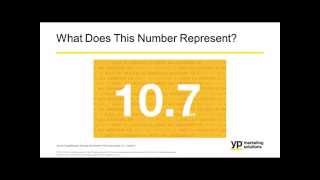
Steve Strauss moderates a 2015 webinar with Jeff Beisman and Bridget from SCORE on building a digital presence for small businesses. Customers check 10.7 resources before buying. The session covers mobile optimization, accurate business listings, reputation management, and which platforms matter most.
Questions this video answers
May 8, 2015
10.7 resources (up from 5.3 about five years earlier)
They spend about 23% more
Almost twice as likely
90% of consumers
Chapters
Hello everybody and thank you for joining us today.
My name is Tony and I will.
Be moderating today's session and I would.
Like to begin today's conference and turn.
The call over to Bridget from SCORE for opening remarks.
Tony, thank you so much. We are thrilled to be here. I know that all of you attendees are in for a great treat with Jeff from YP and Steve Strauss. They are going to give you some phenomenal information. But I I just wanted to take this opportunity to thank you all for what you do for our economy as small business owners and to share with you a little bit about who Score is as one of the SBA's resource partners to helping you for the life of your business. SCORE provides free training, mentoring and resources for entrepreneurs and small business owners. This mentoring is one on one in person and online and we also provide workshops, seminars and events in your community as well as online similar to this event that you're attending now. We have hundreds of business tools, templates and other resources@www.score.org. and if you didn't catch me the first time, I did say that SCORE provides free mentoring. Yes, it's free and confidential. We want to help you achieve your.
Goals of small business success.
Success. We've helped people such as Jelly Belly and Vera Bradley and for 50 years we have been serving entrepreneurs like yourself and have helped over 10 million succeed.
And reach their goals.
This year alone we've helped over 350,000. As I mentioned, we are a nonprofit resource partner of the U.S. small Business Administration and like the Small Business Development Centers and the Women Business Centers, we are located across the country to provide you with the sounding board, advice and guidance that you may need along your path to success in Your Small Business. Score has over 300 chapters across the country and they are comprised of volunteers who give their time and expertise to helping you and providing you with that.
Advice that helps your business.
There are now over 10,000 volunteers across the country providing this online mentoring and supporting you with the resources you need. So how do we help? What is this experienced advice? We provide everything from sound business planning, product and service review, resource planning, marketing assistance, financial insights and much much more. Again, it depends on what your business needs. The mentoring is available across the country and online at www.score.org. we have educational workshops on a myriad of topics ranging from marketing to financing and business planning. We also have roundtable discussions with facilitated peer sessions discussing critical business topics with like minded individuals like yourselves. We are here for you and you do not have to go it alone. The U.S. small Business Administration has shown that mentoring provides improved chances for startup and success through one on one business coaching. With at least three hours of one on one mentoring, you are five times more likely to succeed and the online resources we have can be your playbook to providing that step by step outline for your small business strategies that can supplement the mentoring that you receive. So with that, get started today. Don't wait. Visit us at www.score.org to start or grow your business or even become a SCORE volunteer. You can connect with us if you text SCORE mentors to 22828 to start receiving our newsletters. With that I know you are going to have a fantastic presentation today from Jeff and Steve and so Tony, I'll turn it back to you.
All right, thank you very much Bridget.
And now we will be going into.
Our presentation from YP with both Jeff and Steve.
All right, perfect. And and we would like to welcome.
Everyone to the Secrets to Crafting a.
Digital Footprint with YP Marketing Solutions.
We do want to make sure that.
Everyone'S sound is on and they are connected. You may connect with the phone lines or via voiceover computer. We do also have the ability to live event tweet ypforbusiness and that can.
Be seen on your screen.
Currently, to submit note questions again you may use the Send Note button at the top of your screen and please.
Address all of these note questions to presenters.
And we also will be having the webinar running live on demand at www.marketingsolutions.yp.com.
Webinars and we would like to go.
Now to our introductions of our speakers. Steve Schoss is the Senior USA Today Small Business Columnist and a regular contributor to the Huffington Post, ABC News, Yahoo, and many other outlets. He is a best selling author of.
17 books including the Small Business Bible.
And is also an attorney who regularly.
Speaks around the country and the world.
About small business strategies and global trends in business. His latest venture is web startup the self employed.com Jeff Beizman is the former President and CMO in Small Business E Commerce Verticals. Jeff has over 22 years of total marketing experience including startups, financial services, entertainment and consumer goods.
In 2014, Jeff became VP of Customer.
Marketing for YP and I would like to begin today and turn it over to Steve Strauss. Great. Thank you Tony and great to be here everybody. Thank you to Bridget from SCORE and our friends at the SBA and Happy Small Business Week everybody. Today is the first day of Small Business Week and Small Business Week has been going on since when 1963. It's a long standing tradition. So Jeff and I are happy to be here with you today and really excited about what we're going to be talking about because even though Small Business Week has been going on for over 50 years, one thing we know is that business always changes. And so we are fortunate to be speaking with Jeff Beisman today. Jeff, as Tony just mentioned, has a great background in marketing and in digital marketing and we are going to be talking about that topic. Digital marketing. How do you create a great digital presence? Well, let's find out. Jeff, why don't you tell us a little bit about yp, who YP is because I think a lot of people don't really quite realize who you are. Yeah. Thank you, Steve.
And first of all, I'm equally honored to be sitting next to you as small business champion in beautiful Portland, Oregon today to do this webinar.
So, yp, many of you may know.
Us as the former Yellowface, which is a more than 130 year old company. We've always been in the business of helping small businesses grow and we still do that today. We started as in fact the world's first search engine, if you really think.
About it, which was the Yellow Pages.
And we've evolved to becoming not only.
A business that has a print book.
And we still do, and it's a very vibrant piece of our business, but a very strong digital marketing expertise. We are in fact, one of the nation's largest marketing agencies serving small business owners.
We have helped more than a half.
A million of them. And if you think about it alone, we have done about 400,000 search engine marketing campaigns. So why is that really important? Because we've got this national scale and power along with local market expertise in.
A lot of our, our marketing consultants.
Live and shop in the same markets that our small businesses are in, so they really get to know those markets and so they put all that together and really create custom marketing solutions that work for each individual business. So that's why we're successful today.
Well, I love YP and the old Yellow Pages because if it wasn't for you, I wouldn't be sitting here today. When I started my first business, it was a law firm. As you know, I came to my senses long ago. I don't practice anymore. But how did I open my business? Well, it was an ad in an old Yellow Pages big book. Fantastic. What's so interesting is YP is like a lot of people listening today, which is you had to figure out how to reinvent yourself as a digital company. And I think that's true for a lot of small businesses today. We're having to figure out this digital revolution and how to reinvent our marketing. Yeah. And it really does keep you on.
Your toes as a small business owner because it's an ever evolving landscape. And I think a lot of what we're going to talk about today is how do you do that? What's going on?
One of the things I want to ask you up front, Jeff, is one of the things we're going to talk about is customer engagement. And we all hear a lot about customer engagement, especially when we're in the online space, that we have to be engaged with our customers before we drill down into the presentation today. Can you just tell me what you think of as customer engagement and what a small business should be thinking about when we talk about you need to be engaged?
Yeah.
So it's really pretty simple. What do you do as a small business to communicate and relate not only to prospects, but to your current customers? And like I said earlier today, it's become increasingly complex with the proliferation of digital and social media and everything like that. So we're going to spend a lot of time today talking about that engagement model. How do you get out there and engage? And we'll get into that a little bit deeper in just a bit.
All right, so given that, I have a question for you, Jeff, and that is this.
Okay.
I don't know the answer. 10.7. You tell me. I saw this deck previously.
I saw this.
10.7. Okay. What the heck is that? What does this represent?
So that number is really a fascinating number. This is the number of resources, digital resources, that a consumer will access before they make a decision to patronize. Visit a small business, something like that. 10.7.
Are you talking about online resources? So if somebody is online and they are searching around and they want to go buy a pair of shoes, whatever, you're telling me they're going to go to 10.7 sites or whatever before they make a decision. That's right.
So the amount of places that somebody goes, that a consumer goes, has proliferated. In fact, what's interesting about that is that's up from 5.3 sources just about five years ago.
So if you think about it, it.
Becomes increasingly complex and you really have to spend a lot of time not only creating an engagement model, but creating one that's consistent.
That's kind of an astonishing number, I would not have thought, let alone offline sources.
Right.
I'm going to Go buy something and talk to my wife or a buddy or I go drive by a store or whatever it is. But you're saying online it's almost 11. Why do you think it's so many? That's a fairly high number. Yeah. So I think it's probably three or four things.
The first is the number of sites has just increased. Second is social media. And if you think about it, it's not just Facebook. And I know we'll talk a lot about that later, but there are so many different social media sites that are out there today. Three is mobile.
Right.
So the proliferation of mobile and the way that we. We sort of think about or engage with our mobile devices today, it's changed the dynamics. And then last but not least is think about all the review sites that have popped up that are out there. So there's lots of them.
Yeah. So that makes a lot of sense. If I'm a small business owner, I have to think about this. I have to think, oh, I need reviews, because people are going to be reading reviews if I'm selling whatever it is I'm selling. Boy, people are going to be doing some searching online for me before they ever step foot into my store. So I better have a great online presence.
I think that.
Not more than just a website.
Yeah, I think that's exactly right. And it's really changed the dynamic. And we'll talk about why all of this stuff counts in greater detail as we go through the presentation.
So I guess what it feels like to me is that we're not talking just about engagement, but what we're really talking about is, is consistent engagement. Right. I mean, we're being fully engaged. That's what we mentioned here on this slide. Yeah, exactly.
There's this strong link, and it's pretty intuitive between highly engaged customers and your success as a small business. So just some brief stats.
So they're more loyal and more profitable.
That's the headline. But behind that is really engaged customers. They spend 23% more in terms of share a wallet with you, and they're almost twice as likely to patronize you again. So they visit you more often than disengaged or less engaged customers.
And again, it comes down to having.
A really strong digital presence to have a strong engagement model in today's environment.
So this is an interesting idea, this idea of being fully engaged. I guess fully engaged means that someone becomes. Seth Godin calls it creating a tribe. It's kind of like that, I think. Right, exactly right. Do that. That is the question that we're looking at today.
How do you do that?
How do you create a band of loyal tribalists who love your brand and love what you do and are going to share what they think of your business with others? Part of it is engaging with them online. Not just throwing up a banner ad someplace, but interact with people. So I'll give you an example. I know you're from Los Angeles. I notice there's these things called the Koji food trucks. The Koji food trucks. Every day, I think this is right. It's hard to find out where they are. They tweet out their different locations every day. So if you want to go eat some great Koji Korean barbecue, you have to go on their Twitter account or follow them up with your phone and then follow their tweets and then you find out that's what we're talking about. Being fully engaged.
Yeah, it's a great example. And I see more and more of that today. That's a great example of like, hey, follow us on Twitter to sort of.
Know where we're at.
But a great marketing microphone for those businesses. Exactly right.
So I guess what Jeff's saying and what I'm saying is that, yes, and you guys, anyone who's listening today knows this, Your online presence matters. But I think it's more than that. People want to see that you don't just have an online presence, but they want to be impressed by your online presence. I think that's really one of the key takeaways today. You can't just have a digital marketing philosophy or idea, but you have to. You've got to strut your stuff a little bit out there because there's a lot of competition. There is.
And what's interesting is there's some recent research that shows that if you think about it, almost 3/4 of all consumers, they expect, if you're a leading business, leading brand, leading small business, that you're going to be, as an example, at the top of the search engine results.
Page.
About a third, actually more than a third. And it's getting. The number is actually increasing every year. They associate your placements on a search engine and your presence with your prominence.
Yeah, I do respect that. It's almost table stakes to. It is almost simple stakes. And I think if any of us think that you do a search and how often do we really go past the first page? Or as you just said, look at this stat. How often do you go past the top three here? 71% of consumers expect the leading brand to be at the Top of the page. So that then leads us to the question, is it all search engine optimization, SEO? Because that's sometimes easier said than done that you're going to show up at the top of the page. Is that what you think people have to do? Is it SEO? Is it more than that? Yeah. How do I do it if I am not an SEO expert?
SEO is extremely important, and it's become increasingly important today. But every good SEO strategy really needs to have a complimentary search engine marketing.
Or paid search fems. Yeah, if you really think about it.
You can bid for that top placement and you can get there. And really, search engine marketing today for a small business becomes a great equalizer. So competing with those top brands, if you're the mom and pop pizzeria and you want to compete head to head with the big brand, search engine marketing essentially allows you to level the playing field.
You know what? I really do want to underscore that I often say that this is the greatest time ever to be in business for yourself, to be a small business. And why is that? Well, because there are so many tools available. One of them is this idea of paid search offline. If you're a small business, you're a small business, and you look small, that's okay. We love small business. But what's fantastic is online, you can look every bit as big as your biggest competitor and you can be found just as easily. So maybe you're not a search SEO wiz. I mean, maybe you have your site and you do your WordPress and you put in your key terms. That doesn't really, as we know, Jeff, guarantee you're going to get at the.
Top of the search results. That's exactly right.
But you can buy it. You can actually pay using SEM to be listed on the front page, and then all of a sudden, you're part of that 71%. That's exactly right.
So that's why this strategy really matters.
I would say, like, let's say you're.
A shoe store in Denver.
If I'm a shoe store in Denver and I want to show up at the top of a search result because I want to, I'm going to have a hard time with SEO because there's a lot of competition with big players in the shoe world. But using SEM, Shoe store, Denver, type in those keywords, pay for great placement, and bang, there I am at the top. Yeah, that's. That's right.
It's got some complexity to it, but it certainly is a really great strategy. If you're trying to drive new business.
All right. Have I beat that yet? Horse enough? I am for a reason. Because it really is important. Really a great equalizer, as you said. Absolutely. But the question then is how do people search today?
So what's fascinating today with the advent of mobile devices is the amount of cross device search behavior that we see going on. And so the stats are pretty astounding. First of all, 90% of consumers will use multiple screens sequentially to accomplish a task over time. So if you really think about it, I may start on a desktop, narrow.
Down my results, get out, get going.
Trying to find, let's say, the shoe store in Denver or the forest or.
The plumber or wherever I need to.
Go or be, and I continue my work on my mobile device. In fact, 98%, nearly everybody moves between devices within that same day. So you're seeing a lot more cross device behavior.
And what this really means is not.
Only do you have to have a mobile presence in addition to your desktop presence and sort of other ways that you present yourself is a business, but.
It has to be consistent. And we're going to talk about this in a second, but I've got to bring it up here. This idea that people do go between devices and they start out on a desktop or on a tablet and eventually they're going to end up on their mobile. This just shows you how important a mobile strategy has to become for a small business. If you don't have a mobile strategy, the next slide is going to tell you why you have to have a mobile strategy. Is that right?
Yeah, that's exactly right.
All right, well, let's see here. Let's see. Look at these numbers, you guys. This is really incredible, I think. Yeah.
So mobile has in many ways changed consumer buying behavior. There's a very old marketing model. Back when I was in school, it was taught, which was there were several moments of truth and ultimately a consumer made a decision, usually in a store. So if you had a retail location, they figure out what product to buy in the store.
Today that's very different.
So we call it the power hour. So when somebody is searching for a business or a product or service on mobile, they are taking action really within 60 minutes or less. So more than half of them are calling on that business, making a purchase, visiting that business, visiting that business as well, website. So it's almost predetermined. And what is interesting about that, if you think about it, is oftentimes you don't even know the customers you might be losing if you don't have a strong mobile presence because they've already made up their mind before they've made a decision. They're no longer going into three stores and comparing or calling three electricians and comparing. They've already made up their mind.
I think what's amazing about these numbers here is just how often someone on a mobile device uses that mobile device to make a shopping decision. That's kind of amazing. This is really revolutionary. It's really new and it's kind of in the last couple years this has happened. But if you think about anyone who's listening, you, me, Jeff, you're out and about, you're doing something, you're going to use your mobile device to do a search. But then the important thing for us as small business people to realize is that not only are I going to use it to find a place, but I'm going to use it actually to make a purchase more than half the time. Absolutely.
It's really astounding today, Steve.
And so the upshot of that is we have to have a mobile. We have to have a mobile optimized website. We have to maybe do some mobile marketing. Do you think?
Absolutely. And in fact, if we go to the next slide, there is even more sort of fodder for why mobile is important.
All right, let's do that. All right, so you see here, a mobile responsive site will support your success for sure. What is that 57% number?
So it really goes beyond being found and having a really good presence. It's your reputation. So almost 60% of users say they won't recommend a business if they don't have a well designed mobile site. So it's not even about having a mobile site today, it's about having a really well designed one. And further, Google is taking action too. They're always changing their algorithm.
Oh right. They just change it last week or the week before.
That's exactly right. So if you don't have what's called a responsibly designed mobile site today, you.
Are going to take a penalty with.
Google search and optimization results. So every business today really needs to be thinking mobile first in terms of design.
So to me then what I see is that there's really two advantages to being mobile ready, mobile optimized, whatever you want to call it. One is based on this side. We are in the sharing economy. We all share, maybe too much these days, but it is a world where people share, whether it is the review sites you mentioned or comments on a website or Yelp or on a blog or via email or whatever. People do share their ideas and they share with their friends, sites and businesses that they like. So number one, if you want to get people to recommend you, if we're going to be part of this sharing economy, then, and this is really not how sharing economy works, but what the heck, I'm going with it anyway. If you want people to share you, then you're going to have to have a mobile optimized website. Secondly, and that is this idea of the Google algorithm, if you don't have a mobile optimized site, and a lot of people listening today don't, in fact, I'm going to speak for myself. My site isn't as mobile optimized as it should. So if you go to my site, self employed.com, yeah, we created it a couple years ago, it was a nice site and it shows up on a mobile device. So it wasn't created specifically with mobile in mind. So now I'm in the middle actually at the very end of a big site redesign. And one of the main driving factors for me to create a new site to redesign my site is what we're talking about today. Knowing that this Google algorithm is changing and knowing that mobile is going to be increasingly important for everybody. We're creating a mobile friendly site. So it's something we all have to do. You just have to think if you don't have one, if you created a website three years ago or your cousin created for you five years ago, it's not going to cut it anymore.
I think that's right. It really is a good time as a small business owner to do an audit and make sure that your site is not just mobile friendly, but really well designed for mobile.
So, okay, we're talking about engagement. Do you have any other tips to create positive customer engagement using mobile or just generally? Yeah, I do.
In fact, you mentioned share buttons and that's a really good example of a way to get people to spread the word and encourage them to obviously share rich content like video and photos that allow you to sort of showcase your business. Extremely important.
Well, content is not dupe and content is not prints. Right? What is content? Content is king content. Right. Content is king for a reason. You have to have great content because that's what everyone looks for.
And then last but not least is accuracy. So the accuracy of your business listings is incredibly important. And what we found is that almost half of of all small businesses today have some inaccurate, incomplete or non existent listings. So it's important that you go out today and you ensure that you've got that strong accuracy.
Yp, Yelp, Google, all sort of the.
Places that would list your business.
Hold on. So you're saying half of people who do have a website, who have a listing of some sort have long range marked information on there?
That is correct, yeah. So it could be an incomplete business name, wrong phone number, your business hours.
Might not be right, they may be.
Missing no address, wrong address, things like that. It's amazing.
So how am I going to recommend a site if I go or even find a site if there is wrong information? That's exactly right.
And it's not just about the customers that you're losing, as we said earlier, it's also your reputation. So your reputation is your brand.
So this is called reputation management. Is that what you guys in the industry call it? Yeah. What does that actually mean?
Again, it comes back to not only the accuracy of your listings, but also your ability to monitor what's being said out there in social media. So reviews and people engaging on your Facebook page and things like that. So reputation management is a lot of making sure your business listings are accurate.
That's table stakes, right?
And then being able to understand and listen, and not only listen, but respond to what's being said about you across the Internet.
It used to be we all love word of mouth advertising. We were talking earlier, Jeff, my dad had a carpet store in Southern California when I grew up, long before the Internet. He had this giant banner in the middle of the carpet store that said, our word of mouth advertising starts with you. So Gad knew how important word of mouth is and he was asking people for their word of mouth. Now today, I think word of mouth is word of click. And if you're going to get people to talk about you, if you're going to have a great reputation, it has to now begin digitally. It has to begin with a great website and a strong social media presence and positive reviews. And all these things go into creating the kind of name and brand that people are going to want to recommend to their friends. That people are going to click and say, hey, check this out, I think you might like it. Yeah, I think that's exactly right.
And I think that's a good segue to the information on the next slide.
Well, yeah, you guys know where we're headed. Of course you do. We're talking about social media. Social media is not insignificant. Whether we like it or not, we are living in the age of social media. And I think the challenge for a lot of small business people is how to make social media work for them.
Yeah.
So you have your website, maybe it's mobile optimized. You have to have a great LinkedIn page. I often tell people this. Even if you don't have a website, shame on you if you don't. But you don't. At a minimum, what you have to have is a great LinkedIn page. Because the LinkedIn algorithm is so powerful. If I search for someone, often the first thing we're going to see is their LinkedIn page. And if you have a great LinkedIn page with a powerful headline and your first paragraph is really powerful, that's going to actually go a long way to help you create a great digital presence. But it's not just LinkedIn, is it? No, no.
Obviously Facebook is talked about a lot. You're right. There are many different social media. Some interesting stats, though, on Facebook. So there are 40 million active small business pages on Facebook, which is really great. 78% of those small businesses are using it to connect with their customers. And that obviously is the right thing to do. 72%. So about the same number are using it to build their reputation.
Right.
It's a place where people, where there's gravity. And so your reputation, it's almost like an extension of your, your website or your mobile website. But the staggering thing for me is just a little more than half of all SMBs or small business owners actually have a Facebook page today. So if you don't, as a small business owner, have a Facebook page today, this is not going to be good for our ratings. But I'm going to encourage you to leave this webinar right now and go out and build yourself a Facebook fan.
Page because you really need to be there. I mean, how do you know you need to be there? Well, often what I tell people, and this actually came from a score counselor. So kudos to our friends at Score. But a score counselor once said to me, you got to follow your customers. That makes a lot of sense. If you're going to follow your customers, where are your customers? Well, a lot of them are on Facebook. So at a minimum, if you're going to have a social strategy, I agree, you have to have Facebook. But I think, Jeff, that it's a lot more than just Facebook, because the problem with Facebook is that it's such a giant playing field. It's hard to get traction there, I think, for a lot of small businesses. And it's hard to get noticed there. It's fun and people are there, and so we do have to be there. But as I mentioned, I think LinkedIn is very powerful. How about YouTube? I think YouTube, for a lot of small businesses, if you have a visual business of some sort that lends itself to videos, YouTube and creating a YouTube channel is great because YouTube customers are really engaged. Speaking of engagement, they are really engaged because they sit and they watch the video and they often click on the links. Stats. I've seen people click off links to.
Websites, more from YouTube, actually, than almost.
Any other social site. So YouTube is great. I would also suggest to people that if you're a professional, if you want to create a brand as a professional, Twitter is really good. Twitter is good for that short burst where you want to establish yourself as a thought leader. Twitter is really fantastic for that. Yeah, I agree. And I think.
I also agree with what you said earlier. You've got to know your audience because your audience will help you determine what your ultimate social media strategy should be. Another good example is if you are selling products and they are aspirational products. Pinterest, Instagram.
Oh, my God. Right?
Absolutely.
So it is not.
You are right.
It is not just about Facebook. It is not just about LinkedIn. It really is about what is my audience, what products am I selling, and then how do I craft that social strategy?
Jeff, I would be interested in hearing what you think it is. I think you can't be on every social site who has time to do it. So to me, you got to pick one. Not one. Maybe one or two, three at the most, and then two. Pick your weapons judiciously and do some social media marketing that way. Trying to be on every site is hard, I think. Yeah, it is.
And we'll talk a little bit about this, I think, in a few minutes. One of the biggest challenges that small business owners have is starve for time. And so you can get into something called dilution if you try to spread yourself too thin and you're in too many places. So you're right.
You got to pick.
Where do I want to spend my time in my app?
Dilution.
When I go onto Facebook and I think I'm going to work, and then an hour and a half later, I haven't done a thing. But I had a good time on Facebook. I'm going to call it dilution. I think other people might call it something else. You guys, I have really a marketing whiz next to me today, and I would be remiss if I didn't take the opportunity just to ask him some questions. I know, Jeff, you had a couple questions for me. But one thing I would like to know is generally speaking, when you talk to small business people, when you see small business people do their marketing, maybe not even just necessarily their digital marketing, but their marketing generally, what mistakes do you think people make? Yeah, I see a lot that are correctable and this is highly correctable.
A lot of people, they rush to get online, right. Because there's pressure and I feel your pressure every single day.
But first of all, you got to.
Have your brand, right? So what's your brand? How do you talk about yourself? And aligned with that is your messaging and being consistent across your digital strategy with regards to how you talk about your brand.
So your brand is what other people think of your business, whatever they think.
Of your business, that pretty much is what it is.
People talk about brands in different ways. It's your promise to your customers or whatever. But when I say think of a business and you think of that business, that's your brand, isn't it?
That's exactly.
So if they are consistent, then people will get an image in their mind of your business. Whereas if you're not consistent, they're not going to know what you stand for.
Well, go back to that 10.7 number.
Right.
So you have to have that consistency across all of those touch points.
And you're right.
So start with understanding how do I want to portray myself to my prospective customer base, my current customer base. Get that right, get your messaging right and then get yourself online. And then the last thing is it's an increasingly complex digital environment. It's evolving rapidly. Just take that again, 10.7 from 5.3 sources to 10.7.
And.
So a lot of small business owners, they will take on something like search engine marketing without really understanding it and understanding its complexity. So it's really important that before you spend money on media, understand what you're getting yourself into and make sure that you know how to do it right.
Yeah, I think that consistency and it's a double edged swore. So if you don't do it right, you're in trouble. But if you do do it right and all of a sudden people spend 10.7 times looking you up and they see the same message again and again and again and again. Wow, that's great. All of a sudden they really do know what you stand for. I think the mistake I often see small businesses make with regard to marketing is that they find one marketing method that works and then they beat it into the ground. They do it again and again and again and again. And what's fantastic today Especially in the digital world, is that there are so many ways to market your business. Many of them that don't cost a whole lot of money. Shoestring marketing, guerilla marketing, whatever you want to call it. Pay per click. I love pay per click. There are so many great ways to get your message out there that don't cost a lot. What I would suggest to people is yeah, you have your marketing thing and that's fantastic because it brings in money consistently.
Love that.
But try another one and try another one and try another one. All of a sudden you're reaching new people and new eyeballs and new ears. And when you're trying new things and new people hear you, then you're going to get new customers that you didn't have before.
Yeah.
And don't be afraid to ask for help. There's a lot of people out there in this space that are really great partners that understand that digital landscape and can provide really good support.
So, you know, here's what I would say. Jeff. The other thing, you know, if I was to think about what people should think about first with regard to at least or online digital marketing, I'd like to know what you think. I think it's their website. When I first wrote the Small business Bible in 2004, my hot tip was get a website. But you know what my hot tip today is? Get a website. I can't believe I recently saw A stat from Web.com, i think it was from a survey that said half of all small business people still don't have a website.
Half.
So to me that's small business malpractice. You cannot expect to succeed in this world, in the digital world with eWorld, if you don't have not just a good website but a great website. And getting the great website is easy, it's affordable, it's not hard and it levels Lanefield. So get a mobile optimized, great website. What about you? What do you think? Yeah, I agree with you. Table stakes.
It's not just having a website, it's having a mobile friendly site. We really talked extensively about that. Second is making sure that your listings are syndicated across directories.
So anything your listing just indicates, tell me what you mean by that.
So as an example on yp, on Google, on places like Yelp, it goes back to you've got to have your business listings out there and all the places where people are looking for you.
Take YP, we get 80 million uniques a month.
There's a lot of people that come to our Site looking for small businesses.
80 million. Yeah.
We get a significant amount of traffic. And so if you're not present on these places or your listings like we talked about earlier, are not accurate, they're missing business hours, something like that, it really does hurt your business. We talked about SEO and having search engine optimization and SEM as kind of complementary strategies. So search engine marketing, paying for clicks.
And then we talked about social media.
So I think it's all of those things are important for your online business.
Whether you like it or not. Whether I like it or not, this is where we have to put our energy these days because that's where the eyeballs are. And that's where the eyeballs are. That's where we need to be. So I guess given that, my question for you would be, what do you do about the times when somebody doesn't like your business when they find you or they had an interaction with your company and for whatever reason they didn't have a positive interaction or at least they thought it was a positive. And you get the bad review. We hate the bad review, but they are a fact of life. What would you suggest as a marketing expert, as a brand manager, people should do about bad reviews?
Yeah, it's increasingly an issue for small businesses. Reviews, right, reviews, some are good, some are not so good. But some general best practices when you're dealing with, let's say negative reviews is first of all, provide a quick and public response that's extremely important that you're on it always. It's the age old adage in business. The customer is always right and your response should show that that opinion of the customer is valued. Share what steps you're going to take to resolve that issue. So make sure that you, you outline that and that you're very sort of public. And then last but not least, this is really important. Try to move the conversation offline, Try to call the customer.
So if I have a bad review, try and find an offline way to resolve it. Yeah.
And then last but not least, and this is a matter of opinion but also a philosophical belief, I don't believe in censorship or deleting bad reviews. In a lot of cases you can because they are out there and the platforms won't let you. But it is a slippery slope. So if somebody gives you a negative review on Facebook and you delete it, 9 times out of 10, what happens is that person will come back and say, hey, the business just deleted my bad review and I'm going to post it again and then pile on really what it creates is this downward spiral. So it's always better not to do that.
I saw some statistics recently that were very interesting in this regard, and that is that if you have a negative review, about 60% of the people will remove the review if they feel like somebody heard them out. Because why would someone post a review so they feel like something happened wrong or bad, and they got through the wrong end of the deal? I think often that's the case. So if you do what you just suggested, which is contact them, too many times, small businesses will just leave a review, negative review up and not do anything about it. But what actually works is if you contact the person, try and resolve it, try and make them happy, not only will they remove the negative review, but you can actually turn them into a customer for life because you're proving that you take them seriously and you appreciate.
Them as a customer.
Absolutely.
So to that point, Steve, I'm curious, you're a small business champion. You're out there in the marketplace a lot. So how do small businesses get more good reviews?
I think asking for them actually is it. I mean, of course you have to offer a great product and a great service and great customer service. Those, I think, are a given. But if you really want to get great reviews, I'll give you an example. I've written a lot of books, and the book that I have that has the most reviews has, I think, 37 or eight, not that I count, or nine reviews on Amazon. My brother has written a couple of books and one of his books has almost 100 reviews. Almost all of them are very positive. What's an Amazon review is a positive review. It's customers, it's word of mouth, it's all of that. So I asked him one day, how did you get all those great reviews? I'd like to get all those great reviews. He said, I just asked people when people would write me something, they read the book, they liked it, or I needed somebody or whatever, I would just say, hey, have you looked at my book? You've read my book or you haven't, or here's a copy of it and I'd love you to review it. Not, I'd love a great review. I'd love you to just review it. And just by simply asking for great reviews, asking for reviews got him all these fantastic reviews. And that's kind of my gadget, right? A word of mouth advertising starts with you. You're asking for reviews. I think one way to get a great review is to be great. And the other way is to ask.
Yeah, even you can motivate people, coupons, discounts, things like that. But it's all really about the same thing. It's about creating a lot of positivity out there in social media.
How do you know if your digital presence is great or not great? We are talking about a digital presence. There are some tools out there that people can use. Which ones do you like?
Well, there's a number of them. Obviously we're a provider of some of those tools you have.
YP Presence is one and I like that. I use that. That's a great tool, monitoring your social media presence. Yeah, YT Presence Starter.
So there's a number of them out there, but essentially what they're doing is they're getting your business listings syndicated accurately. And we go back to when they're wrong, people can't find you. So that's a big problem. So getting your business listings syndicated accurately and then helping you syndicate content and monitor your presence. So it's all about how do I take all of this great stuff, get.
It out there, share it with people.
Where they are going back to a good social media videos, other content on your business and then monitoring it and making sure that it remains toxic.
Let me give a couple recommendations. If you want to monitor your social media presence, how you are being viewed by other people and how well you are doing and what your competition is doing, there are three that I would recommend. One is called Social Mention. I think that's a good tool. The second Social Mention is that first one. The second is called Topsy T O P S Y. That is another good tool people can use. And the one that I mentioned at the start, right there was YP Presence. YP Presence. Any one of those three tools would help you with your reputation management, I think.
Yeah, that's absolutely right.
Before I let you go, I have to ask you, what do you think of video? I think video is the big kahoot of these days.
Yeah, I think it's an awesome selling tool. There's no better way to sell your business than in an audible Visual media. I mean, it's the equivalent of tv.
Right.
And everyone has historically gravitated to TV for advertising because you can see and tell your story like no other channel. So I'm a big believer in video.
Well, how often do you get someone's uninterrupted three minutes online? It's so rare. It's so rare. So if you can create, what's fantastic is your video doesn't have to cost you a lot. Of money. It doesn't have to take a lot of time. This is the YouTube era, so people don't expect that. If you do a nice video, that's great, that's a bonus. But it doesn't have to be the greatest video ever. If you put it on your homepage, people are going to click on it for sure. People click on videos almost more than anything else these days. Yeah, absolutely, I agree with you.
Let me ask you one final question and then I think we'll get into our takeaways and open up the Q and A. What do you think of email newsletters?
Oh my gosh, I love email newsletters. I love them for a couple reasons. One is it's permission based marketing as a video. Video is especially because you're getting uninterrupted attention. How often do people give you permission to contact them? Not very often. But with an E newsletter, someone goes to my website, they go to the self employed.com, and they click and they sign up and they give me their email address. They're giving me permission to contact them. Now. I have to be judicious with that permission and I have to give them value. That's the only way. It's a two way street, but I know, love it. Because then you can build up a list and you can contact people, you can share nuggets of wisdom or videos or content or whatever it is. And if you do a soft sell, I think the 8020 rule is kind of applicable here. 80% of your E newsletter needs to be about them and their needs and their desires. Whatever it is, 20% about you. What a lot of people mistake is they make it 80% about themselves and 20% about the customer. Make it 80% of that customer, 20% about yourself, and you're going to get a giant list that's going to prove to be very valuable for you. Do you like that? Yeah, I do.
And in fact, as I talk to small businesses all the time, they're rightfully focused on how do I get new customers. But if you're going to spend money on marketing and acquiring new customers, you.
Work really hard to do that.
A great way to keep them and keep them engaged is through your email list. I think you're absolutely right. It's part of your overall digital presence is making sure that you have a way to communicate it on an ongoing basis. And frankly, if you do it right, it's free or nearly free. So that's the other benefit.
Yes, absolutely. We're going to take a couple questions from the audience. We have a lot of questions and I hate to say everybody, we're not going to have time to take all the questions that we receive, but I'm sorry, we're going to do our best. One question off the top was somebody wanted to know the name of those three social reputation, site management things again so you can see how your competition is doing and how you are doing. Those three were Social Mention. Social Mention was the first one. Topsy T O P S Y is the second one. And YP Presence. YP Presence Starter. Sorry, my bad. YP President Starter is the third one. Typo for me. So Jeff, we got a bunch of questions here and let me just go to one of these and ask them to you. You had mentioned video. Is there anything in particular somebody should have in their video is the question? Or could it just be any sort of video? Is there a length? It should be. What's your take as a marketer?
My take as a marketer is short and to the point because to your point, today people, they don't have a lot of time. They're starved or I should say they've got a lot of stuff pulling at them and pulling at their attention. So it's basically the basics that you want to make sure are coming through in your video.
Who are you?
What products and services do you have? Let's showcase them. If you've got something that's visual, if you've got a store showing your store showing happy customers. And speaking of, testimonials are incredibly powerful in peer to peer. Somebody telling other customers or potential customers why they love your business.
So you can video customers saying what they love about your business. That would be a very powerful video to have on your website.
Absolutely.
That's a great idea. Here's a question from Ian. Ian asks, what do you think the most important part of a startup is with regard to getting your idea or company out in front of customers in the beginning. So that's hard. The startup phase of the business is tough because there are so many things to do about and you're trying to penetrate the market. Nobody's ever heard of you. I often say being in business, it's kind of like being alone in a dark room, especially in the beginning. You know you're there but no one else does. So the question is, how do you turn on the light in that room and let people know you're there? The only way you can do it is through marketing. Marketing is it? I love and there's lots of marketing in my small Business Bible. I have a whole section of marketing as we'll be talking about today. But you have to use every tool available to you that you can to let people know that you're out there. It's huge. PR is a good way to do it. As a writer, I pitch stories all day long. Every now and then I'll bite on one. Which ones do I bite on? Well, if someone has a unique angle. If you have a unique angle about your business, not, not just hey, we started a new business, but maybe it's a local boy or local girl makes good or whatever it is. If you can figure out a unique angle and then pitch it to a local reporter or an online resource, getting a third party independent news source, website, TV station, radio thing to do a story about you, boy, that's marketing goal. Because then not only do you get that hit, but then you can use it forevermore on your website. You can link to that website or to that article, whatever it is.
And I think you said it best before, it's an old adage of working instead of working in your business, working on your business.
Incredibly important. For those of you who don't know, that's a line from the great book the E Myth. This is Steve, by the way, by Michael Gerber who says too many small businesses spend their time working in their business and not on their business. So here's a question from Therian who says, presenters, how do you vet or find the right vendors to work with to enhance your digital footprint? I think that's you. Yeah.
So as a provider of services.
Which.
YT is like others in this space, I think it's understanding a few things. First of all, what power and scale and size do they have? If they run a lot of campaigns, do they really have that level of expertise? The second thing is, do they understand me? My marketplace, my business, my competition, all of those things are like incredible factors. You've got a lot of competing forces in your marketplace. Your competition is trying to steal your customers every single day. Do they know who those people are? And if they got those two things.
Can they pull that together and create.
A custom solution for you? When I sat on the other side of the table running some small e commerce businesses, right.
People should know you went from giant corporations, Fortune 50 corporations, down to a venture backed startup. So you really do know. Yeah. What I was looking for when I.
Was talking to providers. Are they trying to fit me into a cookie cutter formula or are they listening to me? Do they really understand my business? Have they provided me with some clues and some insights that say, I know you, I know your business, I know the competitive forces that work here, and here's a custom solution that's going to.
Work exactly for you. And if you can't say yes to.
Those three things, then they probably aren't a good provider.
I think that's a good tip. We have a question here from Lawrence and we're almost out of time, but he said that he had read that SEO is all but dead. And we've been talking about SEO and so I would say look at SEO Search Engine Optimization again, this is Steve. It is challenging. It's not an easy thing to do. It takes consistency and you really have to know about keywords and links and all those things. But if you do do it, and it takes time, SEO takes time, but it does work. And what's beautiful about SEO is all of a sudden it's not costing you all the time you put in. Now, six months from now you are going to be getting people linking to your site. So there is this delay. And SEM is great because you can buy your way to the top, but I think you need both, don't you? Yeah, you're right.
And what was it Mark Twain said about the rumors of my death have been greatly exaggerated? I think you might say the same with SEO. It's still really important and a really strong content strategy is really supportive of good SEO. So you got to have that and as you said earlier, complement it with a strong paid search or search engine marketing program.
If I could just say to people, one of the things I love about paid search, pay per click. Think about this for a second. It used to be if you wanted to do some marketing and advertising, I'd put an ad in the newspaper and I would hope the people who I wanted to see it would see it and then read it and then call me or something like that, or they hear my ad in the radio. But today, so that you can put up a pay per click ad, you don't have to pay for that ad until someone sees it, likes it, clicks on it and goes to your website. So that's a qualified lead. You're only paying for qualified leads. So it's much more affordable. It's a really powerful way. Forget the SEO part of it. If you're just trying to sell something.
And you just put up some pay.
Per click ads, you're only paying for people who like what you're selling and are really interested enough in how well you created that ad. I know YP does that and Google does that. Everyone does that. But it is an amazing thing today. It's a lot more affordable.
It's an amazing tool.
All right, so we're out of time. I hate to say it. I can talk to Jeff all afternoon. I hope everyone found this very useful. I think it was really enlightening. We love all of you who are in small business for sure. So thank you for staying with us. This is Steve Strauss. You can always reach me at my website, which is the self employed.com and Jeff, where would people find you? Yeah, so if you look at the.
Back, there's just some access information for the webinar on our website, marketingsolutions.yp.com webinars. The small business association has some information on that as well. And then, as you said, you can tweet us. You can tweet @ytforbusiness. Tell us what you think. Steve, you want to mention your Twitter handle again at Steve Strauss. And last but not least, I'm @JBisman.
So holler @.
Us. We thank you for your time. It's absolutely.
More from Your







President Donald J. Trump and First Lady Melania Trump Visit Grieving Texas After Deadly Floods

💪 Thinking of starting a #biz? Go for it! — Kerry Boyle, Vermont #SmallBiz Person of the Year

President Trump Participates in a Bilateral Meeting with the Prime Minister of Canada, May 6, 2025

