The Story of America: The Culper Spy Ring
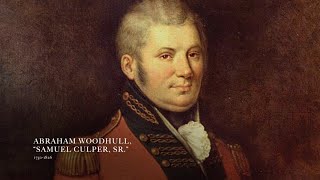
A narrated documentary account of the Culper Spy Ring during the American Revolution, explaining why Washington needed espionage after the 1776 defeats in New York and New Jersey and how Major Benjamin Tallmadge (codenamed John Bolton) organized a six-person network operating in British-occupied New York. The video describes key members (Abraham Woodhull/Samuel Culper Sr., Robert Townsend/Samuel Culper Jr., Caleb Brewster, Austin Roe, James Rivington, and a mysterious Agent 355), their tradecraft (encoded numbers, clothesline signals, couriers across Long Island Sound), and pivotal intelligence successes (stopping British counterfeiting, stealing a British naval code book, and exposing Benedict Arnold).
Questions this video answers
By November 1776
Roughly 1,300
Roughly 3,000
Fewer than 5,000 men
24
Chapters
In order to form a more perfect. Our lives, our fortune, and our sacred honor. When we think of the American Revolution, we often think of the famous battlefields of Valley Forge and Saratoga, of muskets and minutemen, of the Boston tea party and Paul Revere's midnight ride. But there was another war, albeit one kept under wraps and waged in the shadows, But a war that was no less dangerous than the kind fought on horseback as cannonballs whistled overhead. By November 1776, mere months after the signing of the declaration of independence, the continental army had endured heavy losses and a punishing string of setbacks in New York and New Jersey. In Long island, roughly 1,300Americans were killed, wounded or captured. At Fort Washington, General Washington was forced to surrender, roughly 3,000 men. In the five major battles between August and November of 1776, the Continental army was reduced to fewer than 5,000 men. Inside a candlelit tent along the New York harbor. Following the catastrophic defeat at the battle of Long Island, General Washington confronted a grim reality. Surrounded, outnumbered and outmaneuvered, he asked his officers for the unthinkable. Do we have any other options? Silence followed. They all knew the truth. Only a miracle could save them. In the months that followed, the mightiest military power in the world drove the beleaguered American forces from the New York region, pushing them through New Jersey and nearly to the brink of collapse. Supplies were scarce, spirits were low, and time was running out. In the winter of 1776, Washington's Crossing at Trenton and Princeton were astonishing victories. But these achievements alone could not reverse the tide of the war. The British army had captured New York, a critical stronghold for trade and transportation, and turn Manhattan into a fortress. New York, without exaggeration, is the pivot on which the entire revolution war turns, said John Adams himself. And without the city and without intelligence from inside its gates, Washington knew the American cause would not survive. He needed eyes. He needed ears. He needed spies. From this necessity was born one of the most audacious and consequential acts of espionage in our nation's history. The Culpr spy ring. Headquartered in British occupied New York City, this six person intelligence network changed the course of the revolutionary war and the fate of our new nation. Washington turned to a young officer named Benjamin Talmadge, codenamed John Bolton. Talmage replaced General Charles Scott, whose approach to espionage had been blunt and rather unimaginative. Scott would dispatch lone scouts on one way missions across enemy lines, hoping they'd return with scraps of intelligence. It was a gamble, and one that too often failed. The execution of Lieutenant Nathan Hale, who was caught, tried and sentenced to death within the span of 12 hours, was a grim case in point. Talmad suggested a new approach to Washington. Instead of risking the lives of uniformed officers by sending them behind enemy lines, why not gather intelligence through unsuspecting allies who already lived in British occupied territory, creating a network of spies living among the British. Washington agreed with the Talmadge strategy and appointed him Chief of Intelligence. Talmadge was only 24, but he knew both the people and the landscape on Long island well, which would prove to be invaluable. Major Talmadjamieli began creating a tight knit ring of embedded operatives working silently beneath the surface. In the British occupied Long island, what became known as the Culper spy ring was the most successful spy network on either side of the war. Talmadge's recruits were not particularly well trained. Indeed, these informants consisted primarily of old friends he had made while growing up in to talk at Long Island. They were farmers, merchants and laborers. Their intelligence network operated successfully in and around New York City for five years. No spy's true identity was revealed, not to General Washington, not even amongst one another. There was Abraham Woodhull, a young New York farmer who ferried messages under the Name Samuel Culper Sr. His counterpart, Samuel Culper Jr. Was Robert Townsend, who wrote for a loyalist newspaper while secretly reporting to Washington. Austin Rowe, a tavern keeper, carried messages hidden in saddlebags. Caleb Brewster, a defiant seaman, rode across the Long Island Sound to deliver intelligence to the Commander in Chief himself. Among the company of double agents, there was also a woman, her identity still unknown, codenamed Agent355. A lady shrouded in mystery. She seduced secrets from the lips of British soldiers. According to speculations, it was Agent 355 who relayed the critical information that ultimately exposed the treasonous actions of Benedict Arnold. Lastly, there was James Rivington. When the early sparks of the Revolution ignited into open war in 1775, Rivington found himself squarely in the crosshairs. His New York print shop, once a hub of Loyalist literature, was ransacked, torched by the sons of Liberty. Fearing for his safety, Rivington fled to England. But exile didn't last. By 1777 he was back in New York, quietly reopening his business. This time just steps from the dry goods store of a discreet patriot named Robert Townsend. Something had changed after Rivington's return. Whether it was a genuine conversion, a practical play for profit or frustration with the Crown, censorship, especially its muzzling of Rivington's attempt to criticize General Howe remains uncertain. What is clear however is that sometime in late 1778 the once loyal English born printer began to operate under the noses of British officers, feeding sensitive communications to the Culpr spy ring now to the world. Rivington was a first rate loyalist, owner of one of New York's most prominent coffee houses, editor of the Royal Gazette and personal printer to the King's most excellent majesty. The Gazette famously published biting satire against the American cause. His coffee house, nestled in the heart of British occupied New York became a veritable nest of loose lipped British officers. Rivington's outward loyalty to the British made him the perfect spy. No one suspected the outspoken Tory to slip coded messages inside book bindings and pass them along to Robert Townsend. To protect the ring of spies he commanded, Major Talmadge crafted a system, a system of extraordinary precision and given that names were too traceable, assigned each of his spies a code number in their encrypted communications. In total, 763 numerical identities were created, each site for protecting a patriot. Rivington was 726 in the culprit code book. Only once secrecy was no longer needed did it become public knowledge that this apparent traitor to America had in fact been one of its fiercest defenders. Information flowed from New York City northward to General Washington's camp in New Windsor, threading its way through miles of British controlled territory. The operation began with Austin Rowe, who would make the long ride from Long island into Manhattan under the guise of routine business. There, in the quiet of Townsend shop, Rowe would place an innocuous order, one encoded with Washington's prearranged phrases which Townsend had received via courier from headquarters. The request, signed by Talmadge under his alias John Bolton, triggered the next phase. Roe concealed the dispatches by folding them among the merchandise. Anna Strong, a local, would hang a black petticoat on her clothesline visible for the Long Island Sound to alert Caleb Brewster, the Continental Army's boatman. The series of handkerchiefs indicated a precise cove where Brewster could land under cover of night. Brewster would then ferry the intelligence across the Sound and into the hands of Talmage. The process spanned two weeks, from beginning to end. Through painstaking observation, the Culper spies uncovered a devastating British scheme of economic sabotage. Thousands of forged Continental dollars were being printed in New York and smuggled across enemy lines. The British were deliberately devaluing American currency, aiming to wreck the fragile economy of the nascent republic. Washington responded swiftly, shutting down the counterfeit circulation routes and launching efforts to stabilize the currency. It was an invisible victory, but without it, the revolution may well have buckled under the weight of economic ruin. But that was only the start of the Culper spy's successful espionage. In 1778, the culpr spy ring obtained the British naval code book and delivered it to French Admiral d'. Estaing. With the vital intelligence, the the French were able to anticipate British naval movements in American waters, enabling d' Estaing's fleet to evade traps, strike more effectively and secure critical victories at sea, culminating in naval dominance that helped corner British forces. At Yorktown, General Clinton and Admiral Graves were assembling a force of nine warships and nearly 10,000 troops, with plans to strike Rochambeau's soldiers in a surprise assault. Acting swiftly, Major Talmadge relayed the intelligence through trusted channels to deliver the intelligence directly to the French officers in Newport. Simultaneously, Hamilton rushed word to Lafayette and Washington, and they devised a successful scheme to divert the British forces back towards New York. What could have been a crushing British blow was was thwarted through daring espionage. Most famously, the spies uncovered the treachery of Benedict Arnold, exposing his plan to surrender West Point to the British. Had Arnold's mission succeeded, West Point would have fallen into British hands, the Hudson river would have been severed, the colonies divided, and the revolution itself smothered in its cradle. It's no exaggeration to say that the course of the American Revolution, indeed the very existence of the United States, turned on messages no one could see, sent by men whose names history almost forgot. The British intelligence officer Major George Beckwith put it this way. Washington did not really out fight the British. He simply outspied us. It may be more accurate to say Washington out fought the British because he outspied them. The heroes of the culprit spy ring operated undercover, without recognition, without reward and at immense personal risk. When the war ended, they sought no fanfare for their covert acts of courage. Indeed, several of their identities were not confirmed for nearly two centuries. It is tempting to read history as the dramatic tale of generals and statesmen presiding over events of grand significance. As the forces of destiny itself seemed to bend according to their will. Victory in the American Revolution was achieved not only on the battlefield, but in back rooms and back alleys from code letters and clever disguises. The heroes of the Culpa Ring did not seek glory. They sought freedom. Their courage reminds us that the fate of a nation can hinge on the quiet work of brave men and brave women who may forever remain unseen, unheralded and unnamed. Today we remember and honor their quiet courage and their willingness to risk their lives for this new nation. Their stories and names will not be forgotten.
More from Your







President Donald J. Trump and First Lady Melania Trump Visit Grieving Texas After Deadly Floods

💪 Thinking of starting a #biz? Go for it! — Kerry Boyle, Vermont #SmallBiz Person of the Year

President Trump Participates in a Bilateral Meeting with the Prime Minister of Canada, May 6, 2025

