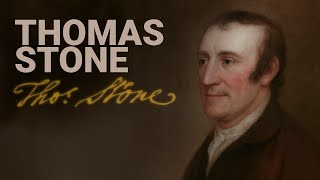
Thomas Stone, born in Maryland in 1743, trained in law and signed the Declaration of Independence despite favoring reconciliation. He helped draft the Articles of Confederation, served in the state senate, then withdrew from public life after his wife Margaret died, passing away months later.
Questions this video answers
1743 in Charles County, Maryland.
Thomas Johnson (later Maryland's first governor).
1764.
1775.
Margaret.
Chapters
I'm a lawyer, a legislator, and a reluctant revolutionary. I am Thomas Stone. I was born in Charles County, Maryland, in 1743, a planter's son with a hunger for books. I studied the classics, then moved to Annapolis to read law under Thomas Johnson. He would become Maryland's first governor. I opened my practice in Frederick in 1764. In 1775, I went to the Continental Congress, believing in peace and reconciliation. I wrote home, we must not move too quick. But Parliament moved quicker. The fatal stab, I called it, the break that turned negotiation into war. Thus I signed for liberty, for Maryland, for my children's future. They asked me to help draft the Articles of Confederation, and I did. I believed the states must be united not just against tyranny, but for the cause of self government. I served in the Maryland Senate, negotiated with Virginia over Chesapeake Bay, and chaired Congress itself near the end of my term. But my greatest act of devotion wasn't in Philadelphia. It was at home when my wife, Margaret, fell ill. I stayed by her side every hour, wrote to friends, praying she might recover. She. Her death broke me. I declined to attend the Constitutional convention. I stopped writing. I stopped practicing law. And just months later, I followed her into the grave. I built a life of restraint, reason and resolve. I sought peace, but never shrank from duty. And though I walked quietly through history, I stood firm when it mattered most. Sam.








