Tips for Women Starting or Growing a Business
Erin Andrew from the SBA and Dermalogica founder Jane Wurwand share resources for women entrepreneurs. Women start roughly 1,145 businesses daily and make up 36.3% of nonfarm business owners. Wurwand built Dermalogica from $14,000 into a $250M wholesale business operating in 107 countries.
Questions this video answers
March 8 (International Women's Day / during Women's History Month)
About 36.3%
Approximately 1,145 new businesses per day
$1.4 trillion in 2012 versus $1.2 trillion in 2007
$90 billion portfolio of loan guarantees
Chapters
With that, I'd like to formally begin the call and introduce Erin Andrew, assistant administrator for the Office of Women's Business Ownership at sba. Please go ahead.
Wonderful. Well, thank you so much and happy International Women's Day, everyone. Today is March 8th and we celebrate women around the world and it's during March, which is Women's History Month. So we are so excited to have everyone join this webinar and very excited for our special guest who I will introduce in a little bit. But first I wanted to kind of start out and give you an overview of where women are right now in terms of starting and growing businesses. So let's go ahead and move to the first slide, please. This is the agenda for today. So Jane Werwin we will be introducing very shortly.
So just to go, go ahead and.
Go to the next slide please, to the overview on women entrepreneurs. Wonderful. All right, so just women today make up about 36.3% of all non farm U.S. business owners. And according to data from the U.S. census Bureau, women's entrepreneurship is absolutely on the rise. So we definitely have something to celebrate this March. US business ownership rose nearly 27% for women. And overall, America added 2 million net new businesses from 2007 to 2012. And so many of these net new businesses are hiring new people as well. So we're very, very excited for the growth we've seen in women owned businesses. We also know that women owned businesses increased their receipts, producing 1.4 trillion in sales in 2012 compared to 1.2 trillion in 2007. And women are starting 1,145 new businesses per day, which is incredible. Most have no employees though, and we do know that roughly 90% of them do not have employees. So one thing that we're really focused on at the SBA and we'll continue to talk about is helping women owned businesses not only start but also grow and employ more people. Today I'm going to talk a little bit about, if you want to go ahead and move to the next slide, some of the programs we have here at SBA for women entrepreneurs and we usually call them our three C's capital, contracting and counseling. And so in terms of capital and increasing access to capital for women business owners, on average, we know that women start their businesses with half as much capital as men and women owned and men owned high growth potential firms experience larger disparities and capital at the time of founding. So access to capital is a huge challenge. When we talk about women owned businesses, our president continues to be committed to increasing women's access to capital, as well as our administrator contrary suite here at sba. And through the Recovery act and the Small Business Jobs act, the administration put much needed capital into the hands of women entrepreneurs by expanding the availability of loans that we have at SBA. Now we have a 90 billion portfolio of loan guarantees. We have two different loan products, a 7A product and a 504 loan guarantee product. And those go up to $5 million with no floor. We also have a microloan product which is under $50,000. And I can tell you some of the changes that have happened. The SBA has made available more than 4.5 billion through more than 16,000 loans to women owned businesses. And in fiscal year 15 alone, lending from SBA was expanded and reached historic levels with 3.72 billion in capital available to women. And that is a 19.2% increase from fiscal year 2014. And we also know that SBA loans are three to five times more likely to to go to women and minorities than conventional bank loans. And we're really focused on getting those loans and that capital to women as much as possible. I also want to say that SBA has done a lot, really looking at the underwriting of smaller dollar loans to ensure that women are getting the access to capital that they need. We did a fee relief for banks on loans under $150,000 because we were seeing a lot of women. Women tended to be a little bit more in the less capital intensive industries, they were more in the service industries, and they were having a hard time. They might just need a $150,000 loan, but they were having a hard time, especially after the recession, getting that $150,000 loan because it would cost the bank the same to do the $5 million loan versus the $150,000 loan. So we really wanted to focus on making it easier for banks to give out loans that were smaller dollars because we saw women really playing in that space and getting their foot in the door with some of our 7A and 504 products. So we've made some of those changes. We've also introduced Linc, which is called Linc. If you go on to SBA and just Google Linc, it's an online portal and it's a matchmaking essentially between lenders and borrowers. So if you are a borrower and interested in finding a potential lender, whether it's a micro lender or a conventional bank, you can put your information onto link. So that's kind of our first C, which is access to Capital and definitely one of the most popular ones here at sba. The other C, the second C is contracting. And the federal government has a goal of 23% of all federal contracts going to small firms. And we then have sub goals, one of which is 5% to women owned firms. And we know when the government contracts with women owned businesses, it empowers women and acts as a catalyst for small business growth and innovation while supporting the economic security of this nation. So we know that when women are doing business with the government, they are growing, they are hiring more people and they're helping their communities. So that's something we're very, very focused on. And I'm happy to say that just last week, for the first time in history, the federal government achieved the 5% prime contracting goal for women owned small businesses. And yes, we've had this goal on the book since 1998 and we had not made the 5% goal until just last week when we announced it. So it is a great thing, but we definitely have more to do and there are additional opportunities there. But if you're interested in the government contracting space and learning more about the government contracting space program that we have in the federal government, you can go to sba.govwosb that's sba.govwosb for the women owned small business contracting program. And I'm also happy to say that last week when we announced that we made the goal, we also announced the expansion of the NAICS codes, the industry codes that qualify under the women owned small business contracting program. So if you go to that website, you can find out more and find out if you qualify, there's a self certification option through that program as well as a third party certification option. But if you're already doing business with state government or in the private sector and are engaged in a lot of those supply chains, the federal government is definitely something to consider. And then finally, counseling is our third C. And we have over 12,000 free counselors and trainers across the country that provide free and low cost counseling and training. And they do that through our women's business centers. We have over 100 women's business centers, we have about 1,000 small business development centers and 12,000 SCORE volunteers. And they are in every community, almost every community across this country. And we also have district offices, about 68 district offices across the country that can help you identify which resource partner might make the most sense for your business. And they also can help you identify which bank might make sense. If you're looking to access capital for your business I have to say our women's business centers, they are located in nonprofits and they definitely there's a bit more of a focus on socio and economically underserved populations. That being said, that definition is different in every community and they help a wide range of businesses across this country, especially women, get started and grow. And I also, I want to say that a lot of those centers provide services in other languages. At least 90% of the centers provide services in Spanish and then there's a whole list of other languages that they do provide services and depending on the community where they are. So definitely something to look at. Our Small Business Development centers are located at universities and colleges and they work with all businesses. They work with a lot of in business businesses as well, grow and expand. And then our SCORE counselors are a volunteer network and they, through that volunteer network, oftentimes have owned a business at some point and want to give back. So they are volunteer mentors to a business who's either getting started or trying to go to grow. And we've had folks that have gone to a couple of resource partners before. They've gone to just one and they found a perfect fit. So I would just say work with your district office and definitely work with the resource partners that are available. And if you have not already, take your business plan or take your growth plan and go and sit down with one of these counselors to really get some help on your overall business. Okay. And I just want to tell you one more thing, an initiative, if you want to go to the next slide, those are kind of like our three major programs. One that I did not highlight on here I want to talk about. And then I'm going to talk about our Innovate Her Business challenge. We have the Small Business Investment Company program as well as the Small Business Innovation Research Program. Now, our Small Business Innovation Research Program, there's a group of agencies who have a percentage of their research budget that go to grants to small businesses who are testing something that the government can use or might need that might not be covered in the private sector. And if you go to sbir.gov, that's sbir.gov, you can learn more. We have a lot of great, great inventions and ideas coming out of universities and just startups that apply for some of these research grants that really make a huge difference in getting their business started. Another program is a small Business Investment Company program and it is a debt and equity program. So earlier I mentioned our 7A loans, our 504 loans, and our Microloans and those are kind of our access to capital space. Our SBIC program is the SBIcs are essentially investment firms that we work with the, that work with the government and they provide debt and equity options. And if you go to our website, you can find out more about both of those programs, but wanted to quickly mention those. And then finally I'm going to quickly mention Innovate Her Business Challenge and then hand it over to our special guest as we hear about her story and her experience as a woman entrepreneur. So Innovate Her Business Challenge. We were looking as an agency at the number of women that were underrepresented in the investment space. It's less than 6% and less than 4% of venture funding goes to women, small businesses and women entrepreneurs. So we were looking at those two things and at the same time we're really looking at women have about 85% of the purchasing power, not over 80% of the purchasing power in this country. But yet the investment decisions and sometimes the technology were decided by women. So we created Innovate Her Business Challenge, which was a call to action to organizations across the country to hold competitions focused on products and services that impact women and working families lives. And I have to say, in this path, we started it this last year, earlier in 2015 and then this fall. Over that time we've had over 300 organizations engaged in 2015. And we will have our final pitch competition in March on March 17th. And I put the link there because you can watch the livestream of the event on on SBA.gov and we partnered with Microsoft. Microsoft actually has given us prize money and so there's $70,000 of prize money available during this final pitch competition on March 17th. So just wanted to put that out there. That's something we're doing during Women's History Month. And with that I wanted to hand it over to our special guest. We're very lucky to have the chief visionary and founder of Dermalogica, Jane Werwon here. I was telling her earlier I was very excited she was coming. I've read the confidence code before and if you haven't read it, it's a great book and she is highlighted in that book.
But she has taken this company to incredible places.
So with that I'm going to let her tell her story. Thank you for being here, Jane.
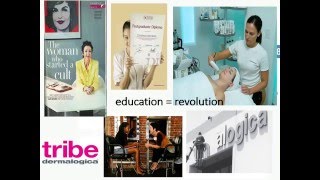
Thanks so much. Thanks, Erin. It is a pleasure to be here and a pleasure to talk about really how we scaled Dermalogica, how it started and what my motivation is for being an entrepreneur. And being an entrepreneur that scaled a business, I guess it started really with my mother. My mother was widowed at age 38 with four daughters to raise and the youngest of four. And she said five words to me which really defined my life. And the five words she said was learn how to do something. Learn how to do something. Not just learn something. Not just learn what to do, but actually learn how to do it. And in saying that, she really had an impact on my sisters and myself. Because you can imagine being a young woman widowed with four children, there wasn't a lot of money to go around. She had a training as a nurse. And as such, those words learn how to do something were very real. We watched her set an example, not just of a work ethic, but we watched her set an example of resilience. Life wasn't about balance, it was about resilience. And so when she said that to me, it totally resonated. I got my first job at age 13 working on a Saturday in a local hair salon. And then I went through high school and went straight to study skin care. Went through my vocational training from high school. I believe that vocational training is the fastest way to financial independence. And the fastest way to financial independence is a vocational training with entrepreneurship. And that really led for me anyway, when I emigrated to the United States in 1983, it was really clear that we were going to start in an industry which we knew. I came to the United States with a suitcase in one hand and my beauty school diploma in the other to really pursue the American dream. And when we came to the United States, I came with a boyfriend who then became my husband and is my business partner. We knew the professional salon industry. And here was the lesson I learned when I got here. If you can spot the pain in an industry, you just spotted the greatest opportunity. When I got here, There were only seven states out of the 50 that even had a license to do skin care, to work in a salon. It was a very different model than I had seen and trained with in Europe, which was a two year full time training. So this idea of spotting the pain in an industry was really about what was lacking in this industry that we knew. And what was lacking was a good education. And so even though There was a 10.4% unemployment rate in California, when we got there, we set about filling the gap of education between the four month 600 hour education that was standard in the industry then and the two year full time training that I'd had the opportunity to go through. So we spotted the pain and we started off with an educational program to offer advanced education to people working inside. We had a deep understanding of the professional skin care industry. And I think as an entrepreneur, if you know the segment that you want to operate in and you know it well, you're going to spot the pain because you're going to spot where the lack is, where is the gap, and that's what you can step in to then fill out. We wrote our business plan literally at our kitchen table, and I started going to trade shows in the industry to talk about the opportunity. We were teaching classes that would not just teach technique, but would teach how to grow your business. And so I believe that you can create a revolution through education. And when we started out in 1983, educating in Los Angeles, and remember, only seven states out of the 50 even had this qualification that people could work in skincare in a salon. We knew that we were going to build an industry and build a tribe in that industry through education. So we saw the gap in the industry, we saw that there was a need for advanced education. And we were teaching not just how to offer techniques in the salon, we were teaching how to build your business, how to run pr, how to build their book in a salon. And I guess one of the most exciting things about our industry is it puts more women into their own business than any other industry in the world. 64% of women salons are owned by women. And the other unique opportunity is, according to the United States Department of Labor, there is a 44,0 40% projected job growth in our industry between now and 2022. That's second only to tech. So this is an industry which we were growing in the 80s. And we grew it by teaching those small entrepreneurial businesses, the salons, how to grow their business, how to be empowered in their business, and how to go on to not just employ themselves, but employ two or three other people as well. I guess by creating that education, we are able to start and grow a revolution. And the app that connects the Dermalogica salon owners and there are 48,000 around the world, they create Tribe Tribe. Dermalogica is our online app where everyone communicates best practices. So we spotted the pain in an industry. We believe the best way to secure our spot in that industry as an entrepreneur was through education. I believe education doesn't just change the way people think and change the way people feel. I believe it sets a human soul on fire. And so we had a tribe that began to grow their businesses in a more successful way. We teach in 40 training centers around the world. And we train over 100,000 skin therapists every year around the world to start and grow their business. So this is an industry that really is a blueprint for entrepreneurs and a blueprint of how to take an idea and scale it. We started Dermalogica on $14,000 of self funding. We were new immigrants. We didn't have a network. We didn't have a college network or alumni. We didn't know anybody and no one would have lent us anything. And so we self funded on $14,000 and we bootstrapped it up. We worked with small businesses that were taking our product and paying cash on delivery. We were cash positive immediately. We didn't deal with large businesses that would have asked for 120 days of credit. We learned that by dealing with small businesses and scaling like that, we would be cash positive. So we started with self funding. We never gave away equity and we never took outside funding. And in that heart that we love the industry that we're in and we were dealing with all of our small entrepreneurs, we realized there was an enormous purpose in what we were doing. And the purpose that we were doing was helping to empower other entrepreneurs and encouraging them to scale their business. So for 30 years, we've really been in the business of entrepreneurial empowerment. And that led us to embedding a social impact piece into our business. And I have to say that going forward, I don't believe a business can be successful without a purpose that is authentic and embedded into it. And that led us to fight financial independence through entrepreneurship. Fight F I T E is our social impact piece. We've taken the model, the blueprint of what we learned in the industry that we're in, what Dermalogica learned in building a tribe, in building a tribe of 48,000 independent entrepreneurs around the world. And we use that as a blueprint to help empower other industries and entrepreneurs in other industries. We launched Fight in January of 2011 and so far we have funded and taught over 73,000 entrepreneurs around the world. This social impact piece of fight has really revealed to us our purpose. Our purpose in growing Dermalogica was to empower the individual entrepreneurs. 98% of the women in the salon industry, which puts more women into their own business than any other. But within doing that and growing our own business of Dermalogica and scaling it to a point where last year at wholesale we did $250 million and selling in 107 countries worldwide. In, in doing all of that, we really found our true purpose and the social impact purpose of Dermalogica, which was really empowering entrepreneurs to become financially independent. And the lessons we've learned over the 30 years has really been to speak to the fact that as entrepreneurs, we are job creators, not job seekers. And as the UN says, we need 600 million new jobs. Where are they going to come from? It's not going to be from big corporate anywhere. It's going to be from the individual entrepreneurs, the majority of which will have had a vocational training that build our high streets and our main streets and our neighborhoods and our communities and go on to employ themselves and a handful or several hundred handful of other people. Entrepreneurship is not just a social issue. It's not just a political issue. It is an economic issue. Because when we create new jobs and specifically when we empower women economically, it is going to contribute trillions of dollars back into our economy. The McKinsey report in September of last year said conservatively, just pay parity is going to kick in $12 trillion to our GDP. We have not just a desire for more entrepreneurs, we have a critical need. And I'm absolutely delighted and thrilled to be able to share a brief part of our story of how Dermalogica has contributed to that growth and excited to take and answer any questions that anyone may have.
I think Emily's going to look for the questions that came in online. We've got a lot of questions, Emily. With that, please feel free to mention any of the questions that have come in.
Absolutely. And the first question is, you stated that there are only certain NAICS codes that qualify for government financing. How do we find out which ones?
No, great question. If you go to sba.gov wosb. That's WOSB for women owned Small Business. Everything on the Women Owned Small Business program is listed there.
And the new NAICS codes, this study.
That just came out that we released last week will be available and information will be available on that website so folks can find out exactly which NAICS codes they qualify under.
Fantastic. We do have requests to provide the website for contracting.
Again.
Yes, it's www.sba.gov wosb. So for women Owned Small Business. So.
Yep.
Thank you so much. It's on the site now.
All right. And there's a question as to how to locate a specific office for an area.
If you go to sba.gov again, sba.gov, there's a local resources tab, and you can put in your zip code and you can find out within that area which district office you should go to and which of those counselors that provide free and low cost counseling and training where they are located.
Great. When you get a chance, can you mention the loan programs again?
So the loan programs, yes. And if you go to SBA.gov, we have information on all the loan programs, the three main ones that I had mentioned. One is our 7A program, which is for working capital and it goes up to 5 million with no floor. The second is the 504 program, which is for real estate machinery and it goes up to 5 million with no floor. And then we have our microloan program, which is under $50,000. And I did mention women get about 51% of our microloans, which is really great. And I talked a little bit about the changing of the underwriting for our smaller dollar loans to get more women into accessing that 7A and that 504 loan as well. But all of that, if you go to sba.gov, there is a loan tab, a capital tab on our website and they are all listed out and the terms. And just to clarify, on the guarantee, you're working with a conventional bank, sometimes people don't know they're getting an SBA guarantee. That doesn't always happen. But you're working with a conventional bank sometimes to get that loan guarantee. So we don't provide the capital directly.
All right, and the next question, for funding purposes via sba, is there a certain percentage of ownership by a woman needed in a company to qualify? Currently, the spouse and I are 50%.
No. So the only time that we have 51% is when we're looking at government contracting. If you want to access a federal government contract, we don't have specific programs just for women. So you don't have to have the 51% ownership as a woman to access an SBA loan. We do. You know, we love diversity in our lending programs and think it's a great thing and want women and everyone else to access as much as possible the loans that are available. But there is no program specifically for women. The only set aside program we have is through our contracting.
Fantastic. And I believe this is our first question for Jane. How did you connect with salon owners to meet with them and did you charge for your service?
That's a great question.
We started off, and I want everyone.
To remember this was in the 80s, it was pre Internet. So I have to say it's a lot easier now than when we did it. I literally, I was a new immigrant. I'd been in the country six months. I knew there was a state board of cosmetology that licensed everyone in our industry because I had to go through that examination when I got here. And so I called the state board of Cosmetology in Sacramento, California and asked if there was a public record list of people that were licensed and own salons. They said that there was. I asked if I could buy it. They said that I could. I asked how much it was and they told me $25. So for $25, I bought a list of every single salon owner in the state of California. And I, quite simply, old school, stuck a stamp on a postcard for everyone within a 50 mile radius on a zip code basis. And I hosted a series of free one day classes that I held in the showroom of a skincare equipment manufacturer so I wouldn't have to pay for the venue and they would have all the equipment there. And that's how I started off. Very grassroots. People came to my classes, they thought they were great. And then after a couple of months of teaching every Monday in that showroom, I started teaching for $10 a class and I would have 70 students in my classes. And you can imagine it was a pretty big payday. And then went on to take premises and start in 1,000 square feet in Los Angeles and literally scale the business organically from that by offering classes and ultimately charging for.
Fantastic. Thanks. The next question, Jane, Were you afraid of failing in the beginning? And how did you overcome that fear?
Well, I think as a classic entrepreneur, you have to be a risk taker. And that fear of anything is kind of exciting. I believe that adrenaline is the same chemical that fuels your, your fight and your flight response. So even though I was, you know, probably should have been terrified half of the time, I thought it was a heck of an exciting challenge. And when things happen, as an entrepreneur, I think you're an optimist. There's actually been, I think in Inc. Magazine this month, there's a psychographic of what makes an entrepreneur. And if you read it, you actually realize you're a half crazy person because you will take risks that make no sense. You are excited by constant stress and you see every challenge as productive discomfort. And that certainly described me. I could look back and see a lot of challenges that we had, but I saw now, see now how we overcame them. And therefore that challenge became a lesson. So I think that the definition of bravery is not whether you are scared or not, it's whether you can function through your fear. And if you can, congratulations. You're an entrepreneur, and if you can't, I'm not quite sure if entrepreneurship is for you, because you have to have that ability, I think, to function through your fear.
Wonderful. Thank you. The next question is, as a stay at home mom of three, my dream is to start a business. However, I am having such a difficult time figuring out what I want to do. What advice do you have to those who have lost themselves in family and can't find their purpose? Thank you.
What a great question. I will say that more. We find our purpose in our passion. So what are you excited about? What is it that you really love? Sometimes I say to people, what did you want to do when you were 11 years old, before you had a family? What was the thing that engaged you? And no matter how random it might seem, somewhere in there is something that speaks to your heart. It's also no coincidence that so many new baby products are developed by new mothers and fathers who suddenly spot the need for something. I remember, I have two grown daughters now, but I remember when they were little, applying diaper rash cream, which was oopy, sticky, goopy out of a tube, and you kind of smeared it on with your fingers. It has never changed. I think there's a huge opportunity in spray on diaper rash cream that doesn't require somebody smearing it. I think instead of a baby wipe, the baby wipe should be like a baby wipe mitten, where you could put your hand in the mitt and use both sides as a baby wipe. So even if you stay at home and you have three children, I absolutely guarantee you there's something, there's a challenge, there's a pain that you are facing every single day. And in that pain, there is an opportunity. And so I think that you are probably surrounded by it and would also be something that speaks to your heart.
Wonderful. Let's see. Next question. Hang on. I lost it for a second. Can you talk a little more about the early stages of your business? And it says, I run an incubator and I'm interested in that part of her story. And another related question, when did you know it was time to reach out to larger businesses?
We started targeting small businesses that probably would have difficulty asking for credit because perhaps credit wasn't an option for them. And we targeted cash on delivery. The salon industry traditionally is a cash on delivery business.
And so we were, first of all.
For the first three years, we were selling classes. And then we launched Dermalogica. And the classes were obviously cash on payment when you enrolled for dermalogica when the product was delivered, cash was secured from the salon owner. We purposely avoided large businesses that would ask for credit. And so while it was very appealing to have some of the larger chain accounts come to us and want the product, we actively said no because we knew that we could not carry a debt of 120 days and be able to replenish inventory if we didn't have cash flow. So we were very purposeful in targeting small businesses, literally knocking on their doors, going in, talking about our product. I would hold classes at trade shows where we also had a booth and. And in order to redeem the gift at the lecture that I was giving, you'd have to go down to the booth. So it's very grassroots, building it in that way. We put together guest speakers where people would come to our premises and speak about everything from financial literacy to how to design your menu. And we would host those classes, those events. Sorry, and those were free. But we would always push for enrollment on the classes that were paying when people came to us. So every opportunity we could look to reach out to those very small businesses, we did. And we didn't go after large accounts where we would have had to have carried debt for them really until we'd already been in the industry and successful for 20 years. We did not go for major department stores because we didn't want to carry 120 days. And instead we went outside of the United States and appointed individual exclusive distributors in other countries who would buy product from us and then handle the distribution in those countries themselves. We were actually in Australia and distributing there and a host of other countries before we ever took our first chain account. So it's about growing the business organically.
And growing it within our and not.
Overextending ourselves too quickly with which would have put us in the position that we had to actually carry debt and perhaps not be able to cover overhead. I think we have time for one more question for Erin at the SBA and one more question for myself.
All right, One moment.
So we have a question.
I am starting with my husband, a cheese making and cooking class and value added local foods business based on a farm. Any advice as to where to look for funding is a mainly women's business?
No, it's a great question. And I definitely, you know, I keep mentioning our SBA.gov website and I joke, we don't have marketing dollars or ad dollars, so earned media is everything. So if you visit SBA.gov, it's a good thing and please spread the word I also would look at usda, the Department of Agriculture, the US Department of Agriculture. USDA also has microloans that are available. SBA has microloans that are available. And depending on the type of business, if it's a food business, value add or ag related business, there is funding available and we work very closely with our partners at USDA on that. So those are two government resources. There's also oftentimes state and local resources as well. So I would look at your state, sometimes there's state grants available in the food industry and I would also look at your local options through your city or county too. And I think there are a host of. We have some other resources on our sba.govwomen website, some other women's organizations and some other places to look for funding, where it could be, you know, where it is available. And I think, Jane, you saw a question.
There was a question that I just actually saw pop up, which was.
Just.
Having a quick look, sorry. Did you ever have to change the focus of your business in the beginning of your journey due to lack of of funds? As a result, you had to scale back or change your business model? If so, how did you get over switching gears both emotionally and professionally? That's a really great question because sometimes the idea that we think we're going to pursue turns out not to be the idea that is ultimately going to lead us to our entrepreneurial success. And here's my analogy.
You know, for those of you who.
Have given birth, and even if you haven't, I'm sure you can imagine what it's like. You have a baby and a baby's kind of messy. When you give birth to a baby, it doesn't kind of look, doesn't come in a blanket. They take the baby away, clean the baby up, wrap it in a blanket and hand it back to you. That's like an idea. When you have an idea, you birth an idea, you birth a business. Trust me, it's kind of like having another child. It's messy. Your idea isn't cleaned up. It, it doesn't quite look the way it's going to look eventually. Sit down.
It doesn't mean it's a bad idea.
Sit down, clean up the baby, clean up the mess, make it tidy, wrap it in a blanket, you have a good idea. The critical challenge for an entrepreneurial brain is not pursuing something through to fulfillment. We tend to get an idea if it hasn't kicked in with success in six months. We're like, okay, that must have been a bad idea. Onto the next idea. No, no, no. Hang on. That first idea may have been the right one. Don't abandon it too quickly. Your Runway is long on success. Don't think you're going to run out of Runway. Don't shrink yourself or your idea. Look at it carefully. Start back with it again. Clean it up. What have you really got there? Because that thing that speaks to your passion is likely the thing that is going to lead you to entrepreneurship. So I really encourage you. Don't abandon it too quickly. It's fine to clean it up. It's fine to edit it. We originally started in skincare. We thought perhaps one day we would expand into makeup and hair products. No, Our focus was skincare. It's the thing that we love the most. It's the thing that we do the best. And having a tightly edited and focused goal is often the thing that will.
Lead you to your dreams. Great. Well, thank you so much. I just wanted to close by saying thank you to Jane for being here.
Thank you.
We're excited. We love to highlight amazing women entrepreneurs, and you definitely are one of them. So thank you for your words of wisdom. We encourage everyone to check out SBA.gov if you're looking for resources, whether it be counseling capital or contracting resources. And we just want to thank you all for your time. For those of you who are running a business, thank you for what you do. To Jane's point, it's not an easy thing, and just we want you to know that you have people there that will help you along the way if you need it. So visit SBA.gov and with that, I just want to say, happy International Women's Day. Let's continue to celebrate women not only today, but the rest of the month of March, and, quite frankly, all year, because we make up over half the population, and we need more women to start in classes. So with that, thank you so much, everyone, and have a wonderful afternoon.
More from Your







President Donald J. Trump and First Lady Melania Trump Visit Grieving Texas After Deadly Floods

💪 Thinking of starting a #biz? Go for it! — Kerry Boyle, Vermont #SmallBiz Person of the Year

President Trump Participates in a Bilateral Meeting with the Prime Minister of Canada, May 6, 2025

