Vice President JD Vance Attends the American Compass Fifth Anniversary Gala
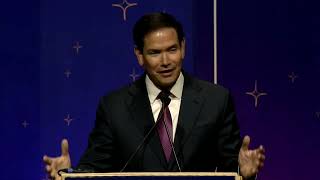
Vice President JD Vance argues that decades of offshoring have weakened U.S. economic strength and national security, calling for reshoring critical supply chains like rare earths and pharmaceuticals. He discusses manufacturing's role in innovation, the need to restore industrial skills through community colleges and unions, and concerns about university ideological capture.
Chapters
Thank you. Thank you. Bernie Moreno. How's the Senate? Thank you guys for having me. It's an honor. I want to thank Chris for the introduction. Did you get my office? He just said, I just the one. I used to have, the one in Russell. Yeah. Did you find any cash or gold bars?
No.
Is there media here's. It's a joke. It's a joke. You know, guys, thank you, Chris, for that introduction and actually very proud of the work he did with us on the Small Business Committee and Oren and everyone here at American Compass for hosting me here tonight. A couple observations of seeing someone. We really only got to serve together for like 10 days, you know, because I got confirmed pretty quickly. And by the way, the president was so, I mean, I got 99 out of 100 votes because the vice president, at the time, his seat had not been filled. And the president for some period of time expressed great concern about the fact that I had 99 votes in the Senate. He didn't know if that was a good thing or a bad thing. But I told him recently, sir, you don't have to worry about that anymore. I don't think I'd get 99 votes now. And anyways, but thank you for this chance to speak to you. And by one more thing I want to tell you about, I spent, you know, now that I'm in an executive branch, we oftentimes have to deal with the fact that, you know, we want to do something and it's like, well, but there's a statute or there's a law on the books that limit our ability to do things by executive action. You know, it requires us to go through certain steps. And so I increasingly find myself saying, who the hell wrote these laws? And today I was reminded it was actually me who passed a certain law that stood as an impediment to quick action. So, anyways, I've grown in my appreciation for the executive branch more and more each day. But that's also. The media is going to say, oh, he's for an authoritarian form of government. No, I just, you know, some of these laws I passed are getting in the way of my current life. So we have to work through it. We will. But thank you guys for this, Chancellor, and the work that you've done. And I know that obviously you're going to spend a lot of time focused on domestic decisions. But I want to hopefully pitch you a little bit tonight about what I've learned and what I already believe coming into this job, that so much about what happens domestically, economically, is increasingly intertwined in geopolitics. It always has been. I think that's one of the lessons we forgot. But I think we've been reminded of that here most recently, and a number of events have brought that to bear. The first thing I would say is I think it's always been true. One of the amazing things, one of the reasons why history repeats itself, people like to say that, is because human nature does not change. Technology's change, the clothes we wear change, even languages change, governments change, a lot of things change. But the one thing that is unchanged is human nature. It's the same today as it was 5,000 years ago. And that's one of the reasons why history often repeats itself. And one of the things about human nature. I'm not trying to sound like a psychologist here, but one of the things I think history proves is that one of the things we are programmed as people with is the desire to belong. In fact, if you notice one of the. If you put humans anywhere, a handful of people anywhere, one of the first things they start doing is trying to create things that they can join or be a part of. And that's true for nationhood and nation states. The concept of nationhood now, it's a new concept. I mean, before that, we all. But we had something, you know, we always had organizations, whether it was city states or tribal organizations. But the advent of the nation state is a normal evolution of human behavior because people think it's important to belong to something, and being part of a nation is important. And I think that's really true, obviously, increasingly in how geopolitical decisions are made. I think that's obvious and people understand that. But it's one of the things that we forgot, and we certainly forgot it at the end of the Cold War. If I can take you back the end of the Cold War and understand for me, these are formative years because I grew up in the 80s, the greatest, probably the greatest decade ever confirmed by the. Yeah, you know why I know this? Because my kids might have young, you know, young. I say young. They're like 24, 22, 20 just turned 20 and one who's 17 every. All they do is watch reruns from the 80s and 90s. They don't make good TV anymore. Everybody wants to watch stuff from the 80s and 90s. So that's just my pitch. The 70s were a dark period of time because of disco music. But in the 80s we had a disco fan back there. But the 80s, you know, the hair was a little too big, But Other than that, but going back the 80s, you grew up. And I remember in 1983, now I'm aging. I just turned 54. I feel 55, but I. And it must be 1983. Do you guys remember a movie called the. Oh, gosh, what was it? It was about nuclear war. Do you remember this? No. War Games. That was a great movie. I'm talking about when I was on tv. That scared the hell out of me. There was the day after. Do you remember that movie? The day after. This was traumatizing. And they had this thing on television, but basically grew up understanding that the world at any moment could end because the United States and the Soviet Union were headed for conflict and war. And that, you know, maybe we wouldn't even make it to 25 and things of this nature. I forgot about War Games. War Games, another good movie where this guy hacks into the computer. This is an 80s hacker, this is not. I can remember the phone and the modem and what was that actor? It was the same Matthew Broderick. It's a great movie. I know I'm completely off topic, but let me just tell you, I lived in Las Vegas at the time. And if you recall, the first city that he blows up in the War Games is Las Vegas. And I was sitting in the audience, everybody's like chuckling. There's nothing funny about this Las Vegas strike in any event. So this is what we grew up in. And then in 1989 and 1990, 91, it was my first years in college and literally the entire world just transformed before my very eyes. Understand, you grow up your whole life and like the whole world is about the Soviet Union and. And all of a sudden the Soviet Union no longer exists. My favorite memory of that is that I was actually taking a course that fall by a Soviet expert at the. I think it was in Gainesville, Florida. And this poor guy's entire career came crumbling down over a three month period as the Soviet Union collapsed. It's like all these years of work, you have a PhD in Soviet Studies and now the Soviet doesn't exist anymore. So I don't know what he did after that. I need to check up on that guy because. But anyways, the point is the whole world transformed. And there was this effusive exuberance, the belief that the Cold War is over, we won, and now the entire world is going to become just like us, free enterprise democracies. This is a very idealistic thing to believe, but here's the other conclusion they made. And that is that everybody. That nationhood no longer mattered when it came to economics, that that right now the world would no longer have borders, it wouldn't matter where things were made. What mattered is they were made in the most efficient place. And it became mantra. And look, I think it became part of Republican orthodoxy for a very long time, an orthodoxy that I came up in, which was, it's okay if productive capacity moves to another country, because what that will do is it will free up our workers to do work that's even more productive and pays them more. It was the famous or the infamous idea that who cares that you lost your job at a factory, you're going to learn how to code, and then you're going to make a lot more money doing that. Well, it was completely unrealistic, number one, and became incredibly disruptive if that decision was made. But here's the other implication of it. It robbed the nation of its industrial capacity, of its ability to make things. And its industrial capacity and its ability to make things has two ramifications. The first is it hurts your economy. It hurts your country. It robs people of jobs. And the transition is not nearly as easy, but it also ends up becoming corrosive and destructive to communities as a result. We had a rust belt. We had places that were gutted, and we had families that, for generations, that worked in a certain field or for a certain company. And all of a sudden, that company or that field vanished because it moved somewhere else where it was cheaper to do. And those jobs were gone. And obviously became incredibly destructive, not just for the United States, by the way, but for many nations in the industrialized West. But the other thing it robbed us of is the ability to make things, which is a national security impairment and a very significant one. If you go back to World War II, the admiral who had been tasked with planning Pearl harbor thought it was a really bad idea. He went through and obviously followed orders, but he thought it was a very bad idea because he had spent a substantial amount of time studying in the United States when he was younger. And his conclusion was that attacking the United States was a bad idea, because even though at the time, militarily, we were behind the Japanese, certainly technologically and otherwise, we had factories and we had access to raw material and resources. And he knew that over time, once those factories and those raw materials were put to the war machine, the Japanese would not be able to keep up. And you could very well argue that the end of World War II, that the victory in World War II, both in Europe and especially in Asia was the result of America's industrial capacity. When the Japanese lost a plane, they lost a plane when we lost a plane. And their planes were better than ours for a long time. When we lost a plane, we were able to produce hundreds to replace it. Industrial capacity mattered in terms of national security. And that's never changed. That's always been true. And so today, what you find is because of all those years of neglect, because of the loss of industrial capacity, we didn't just undermine our society, we didn't just undermine our domestic economy. We've undermined our position in the world. And what you will find, and what we find even now, is that increasingly on geopolitical issue after geopolitical issue, it is access to raw material and industrial capacity that is at the core. Both of the decisions that we're making and the areas that we're prioritizing now, the technologies are different, but nonetheless, that is what we're increasingly prioritizing. And that's become really apparent to me. I think it was even going into this job. But in the months that I've been there on place after place, every country in the world is now pitching themselves as a source of rare earth minerals. Every country in the world, by the way, they're not that rare. So every country has access to it, but it's become a big. But that alone is not enough, because you have to have access to rare earth minerals, but then you have to have the ability to process them and you have to make them into usable material. And frankly, what the Chinese have done over the last 25 or 30 years is they've cornered the market. And this is one of the true challenges to sort of pure free enterprise view of these things. You cannot compete with a nation state who has decided they're not interested in making money, that they're not interested in making money in this field. They are interested in the short term, in dominating the market, being the sole source provider for the world of a certain product. Because once you establish industry dominance in any one of these fields, you can charge the world whatever you want. Now, one thing is, if we said, well, this happened because they're just better than us, but that's not why it happened. It happened because we literally gave it away. Because we made the decision, we made the policy decision that it was okay, we were okay with 80 something percent of the active ingredients in most of our generic pharmaceuticals coming from another country. We were okay with giving that away, we were okay with giving away all kinds of things like that. And now, now we are in a crunch. And I say we, I mean the rest of the world is in a crunch because we have realized that our industrial capability is deeply dependent on. On a number of potential adversary nation states, including China, who can hold it over our head. And so in many ways, the nature of geopolitics has now adjusted to that and is adjusting to that. And it will be one of the great challenges of the new century, and one of the priorities of this administration under President Trump is to reorient our domestic and the way we pursue geopolitics to take into account for the fact that you can never be secure as a nation unless you're able to feed your people and unless you're able to make the things that your economy needs in order to function and ultimately to defend yourself. There is virtually none of the leading edge industries of the 21st century, and we don't have some level of vulnerability. And it's become one of the highest geopolitical priorities that we now face. Not simply access to raw material, but figuring out how can we have more industrial capacities in these critical fields, ideally domestically, but if not here, then diversify the global supply chain so that it cannot be used against us as a point of leverage at a time of potential conflict. In fact, unless we fix it, some of these conflicts will never happen because we will never be able to enter the amount of levers they will have on us will begin to constrain our ability to make foreign policy. Unable to get into a tremendous amount of detail, let me just say that even as I speak to you now, there are a number of foreign policy issues in which we're having to balance what we would ideally want to do with what we may not be able to do in the short term until we fix these problems. This is a real challenge in American geopolitics, and it's one that's become a priority and goes right to the heart of the decisions that were made over the last 20 or 30 years that were a mistake and that we're now trying to correct. The other, which is more broad but I think also ties to economic policy, is the following. Part of the decisions that were made were, in the end, if something is good for the global economy, that's really what matters. Ultimately, a lot of public policy decisions were made without the nation state in mind. Rather, the decision was, is this good for the global economy? Is this good for global economic growth? Is this good for prosperity in other places, even if it may not be in our interest? And we made those decisions even during the Cold War, to some extent, we allowed nations to treat us unfairly in trade, but we allowed them to do it because we didn't want those countries to become victim to a communist revolution that would overthrow them. But then we kept it going. And so today there are multiple countries around the world that are fully developed economies, but whom we have enormous trade imbalances because they want to continue that system moving along, and that has to be corrected. But here's the final point, and here's why this is also critical. Because not only did we take out nation state interest and the national interest out of economic policies, we also took it out of the way we made foreign policy decisions. The idea that our foreign policy, depending on the place and on the issue, should be centered and focused primarily on what is good for the United States, was completely lost. Time and again, we made decisions in foreign policy because of what was good for the international order or what was good for the world. And I'm not saying those things are irrelevant, but the number one priority of our foreign policy of the United States, the number one foreign policy priority of the United States needs to be the United States and what's in the best interest of the United States. That's not isolationism. That's common sense. On the contrary, in order to do that, we have to engage in the world, but we need to engage in the world in a way that prioritizes our national interest above all else. And the reason why we do that goes back to my point at the outset of this with human nature. And that is that that's what other countries do all the time. Virtually every single nation state we interact with prioritizes their national interest in their actions with us. And we need to begin to do that again, and we're beginning to do that again, prioritizing the national interest of the United States above everything else in making these foreign policy decisions. And I'll close by saying that's where foreign policy works best. As I've said to multiple foreign leaders, including some with whom we haven't had engagements with for many years, I said the way foreign policy works best is when our national interests are aligned. When they're aligned, that's where we have incredible opportunity for partnership together. And when they're not aligned, that's where I expect them to pursue their national interests and us to pursue ours, and to do so peacefully if possible. And that's the work of diplomacy. And so I think the work you have done to reorient our thinking towards the national interests, both in our domestic economic policies, as well as in our foreign policies, is critical work for 21st century conservatism. And I thank you for all the work you've provided. You've done great work. When no one else was talking about these things, when no one else was providing the material that allowed us to build public policy and challenge thinking, you were doing it. And I encourage you to continue to do it, because this is going to be the work of a generation. There's still much work to be done. We are in the midst of an important and long overdue realignment in our thinking in American politics. And it takes organizations like American Compass to drive the innovation and the thinking. And we appreciate everything you've done up to this point and encourage you to continue to do that. And one of the people who has really been a leader in this regard, someone who I actually got to know as part of this project in this thinking back when he was only a best selling author and not even a political figure yet, is our current Vice President, who is doing a phenomenal job and someone who I've grown tremendous. My admiration for him has grown tremendously. I admired him before, I admired him in the Senate. I admire him a lot more now as Vice President because I think vice presidents are just more impressive than senators, Bernie. That's how I. But I can say that now that I got 99 votes, because I don't need their votes anymore. But the Vice President's doing a phenomenal job and I think is one of the most powerful and clearest voices in the world, really at the edge, at the leading edge of this new thinking in American politics. And it's my honor to serve with him in this administration. And it's my honor to invite him onto the stage now to speak to all of you. So thank you for the opportunity to be here. Ladies and gentlemen, the Vice President of the United States, J.D. vance.
Thank you. Thanks. Thank you, guys. Thank you. You sit here.
Yeah. Great.
Great to see you all. I think the last time I was in here was the night before the inauguration. We had a dinner in here and it was so tightly packed that you like actually couldn't get up to go to the bathroom or, you know, like request an additional glass of water. That's how tightly packed we were in here. And you guys are doing pretty good, actually. Maybe not that tight, but, you know, comfortable, but you're doing good.
Tastefully packed. Yeah, yeah, that's well, happy Medium.
Before you like say whatever introductory thing you want to say, I'm sure, or has a spiel. Oren Always has a spiel. But I just want to say thanks to Secretary Rubio for the very kind words of introduction. So, you know Marco, I was very fond of him as Senate colleague, but, you know, you learn a lot about somebody when you see them actually operate behind the scenes. And Marco is, if anything, more impressive privately than he is publicly, which is very hard to do. But he's very thoughtful. He actually listens, which is a rare skill in politics. We're very good at talking, us politicians. We're not so good often at listening. He's just a very, very important part of what the President and I are trying to do, and so thrilled to have him here. And as you know, I think one of the first times I ever met, maybe the first time I ever met Marco was in a conference room in a Senate office with Mike Needham and Oren Cass, talking about some of the very things we're talking about here tonight and some of the very things American Compass is focusing on. So it's kind of amazing to see it come full circle to where we are today.
Well, that's a perfect segue into my spiel, so thank you. I had a few different spiels we could start with, but this is a good one. We are thrilled to have you here. I am thrilled to have this opportunity to talk with you, and so grateful that the work you're doing, and in a sense, so in awe of it, because there are politicians out there who are. They've just been politicians. But you are someone who was an intellectual first. Some people don't like the word intellectual, but I mean it in the good sense of the term. You were writing for National Review. You were at the bar late at night arguing about and helping shape these ideas that you are now.
I come here for free, and you insult me and you call me an intellectual. Remind me that I wrote for National Review. What an asshole this guy is.
That's fair. I will admit that I, too, wrote for National Review, but as I said in my introductory remarks earlier, I have no higher compliment than this guy likes to argue. So that is. It's a wonderful thing. And I think it really distinguishes you as someone who not just cares about and believes in these ideas, but has formed them. Sure. And so I wanted to ask you a little bit about some of the substance, what's going on, a few of these topics, but also ask a little bit about sort of how your thinking has gotten here and how being in the role you're in now affects that and what people who are not in that Role sort of need to understand, to do it well. And so let's start here on the substance though, because, you know, obviously trade is in the news from time to time. Trade is, and I think you've articulated this well, trade is one element of what is a much broader project about reshoring re industrialization. I wanted to ask you, how do you define that project? What is the broader goal that the trade agenda is part of and where do you see it ultimately going if it's going to be successful?
Yeah. So first of all, congrats. I see here on the screen this is the five year anniversary of American Compass. You guys have accomplished a lot in five years. And I want to echo what Secretary Rubio said, keep doing it, because it really has influenced my thinking. It's influenced the thinking of multiple people within the administration. And if I were to try to summarize the project, I mean, I think there are a few different things going on, but maybe one thing that really worries me is you have, I think in many ways, stagnating living standards for normal Americans, for the median worker, for people who just want to start a family, work a, you know, working a decent job, earn a, earn a living salary and have dignified work. I think you've seen so many evidence, pieces of evidence of stagnation in the lives of the normal people that we serve. Right. The people who actually go to work, who keep the country running. And there are different ways to sort of measure this, but I think my favorite way of measuring it actually is probably you see stagnating productivity in this country for about 50 years. Okay. And I think there are a whole host of reasons why you see that. I think, number one, we've offshored a whole host of industries and so you see less innovation in a lot of the critical manufacturing sectors that actually drive the American economy. I think part of it is we've really underinvested in technology, especially in, you know, the heavily regulated spaces. I think part of that is we've really harmed energy production in our own country. That's a critical part of, you know, the heavily regulated space is actually doing well because the cost inputs of these industries are so heavily dependent on the price of energy. So there are all these different policy spins that I could put on it, but I just want normal people who work hard and play by the rules to have a good life. And I think that was very, very possible in the United States of America that I was growing up in. But you started to see some signs that it was fraying And I think in it got a lot worse over the course of the 90s and 2000s. And that has got to change. And I think that's fundamentally why Donald Trump is the president United States is because he was the first mainstream American politician to come along and say, this isn't working. These trade deals are not working for the normal people who power our economy. Our policies have not been productive either in the economic, national security, or diplomatic space. So it's complicated. The answer to your question is complicated. Summarizing it is necessarily very hard. But I think the best way to summarize it is we just want normal people to have a good life.
That seems reasonable.
Thank you.
There you have it, folks. I think that's obviously exactly right. I think it's remarkable that that is or has been a heterodox view to some extent, that it's something that has had to be said. You know, especially after your book came out, as you had a chance to talk with a lot of folks in a lot of different contexts. Then as you moved into running as a politician yourself, you had a chance to speak both with the normal people for whom this was not working.
Yeah.
And for a lot of people who either thought it was working or didn't care.
Sure.
My own sense is there's actually more thought it was working than didn't care. That for most of them, bad people, so much as oblivious. But I'm curious what. What your experience has been engaging with those folks. But how would you describe what do they look out at America and see and what is helpful in communicating to them why this is a problem and why they need to care?
Yeah. So let me give you kind of an elite answer to that question. And let me give you just a sort of normal political answer to the question. Question. So the lead answer to the question. I remember Oren talking to you about starting American Compass five years ago. And I think one of the things that we talked about. I don't know if you remember this, but, you know, what is the audience of donors? Because these things cost money. Funding fellowships and smart people to write papers and think about this stuff like that costs resources. Like, what is the universe of donors who would actually support something like this? And I think my takeaway of the last five years is actually quite a bit. And I think there's an assumption among whether you call it populists or whether you call it, you know, sort of trade hawks or like, whatever label you want to put on it. There's this assumption that donors are fundamentally misaligned And I actually think donors are much more pragmatic. And they see this stuff not necessarily because, you know, they're reading like a paper that Bob Lighthizer published 15 or 20 years ago. And I know Bob's in the audience and I love Bob, but, but because like they, they do business in China and they know how hard it is to actually get a fair deal for their companies or, you know, they've seen some of the ways in which, you know, I met with an industry leader today who was talking about all of the ways in which trans shipping through non Chinese Asian economies is destroying his very successful manufacturing business. And he's not worried about it for himself because his business is so successful, but he's worried about it for his industry writ large because some of his competitors are going to have their businesses destroyed. He doesn't want that. So there's a bit. I think one thing to take away is that people are much less ideological and much more pragmatic than I think that a lot of intellectuals give them credit for. So that's one thing I take away. I think the other thing that I take away from it is the American people are much, much more aligned with our way of thinking about things than people realize. And I think the misalignment between the like, again, the normal American and the talking heads in Washington is still so profound. And I'll give you an example of this. One of the very first truly political speeches I gave when I was thinking about running for Senate in Ohio back in 2021, I spoke to this group in Butler County, Ohio. It's actually the county that I was born and raised in in southwestern Ohio. And I was talking about how, you know, Big Tech was a major problem, censorship of viewpoints was a major problem. And we needed to get serious about antitrust and we need to get serious about actually treating these companies as the monopolist that they were. And a person came up to me afterwards and they said, oh, I really liked what you said, but I didn't agree with what you said on Big Tech. And I sort of assumed that I was about to, you know, sort of hear a kind of libertarian argument from the pages of the National Review. And what the guy said is, I don't think that we should break these companies up. I think we should throw all of their executives in prison. And I was like, oh. And it's, it sort of dawned on me the, the American people, like, they see these problems. They're not hyper ideological, they're not reading like conservative intellectual periodicals because they have day jobs and families to take, take care of. But they're much, much wiser about these things than intellectuals give them credit for. And I take a lot of inspiration for that. But I also take a lot of willingness to kind of test the outer limits because most of our fellow Americans, they're not nearly as dumb as Washington, D.C. assumes that they are. They're actually very smart and they're very wise.
I was speaking to the American Iron and Steel Institute this morning about the idea that making things matters. And I was sharing a similar story because we've done survey research on. Okay, do you think manufacturing matters or not? Overwhelmingly people say yes, sure. But we actually asked them why. We gave them a bunch of options. Is this about family and community and good jobs? Is this about national security? Is this about sort of dynamism and, and investment in economic growth? I sort of figured it would be like it's about jobs, maybe security. And Americans actually picked dynamism and growth as by a significant margin. That was their top reason they cared. And that was across political groups, that was across classes less educated, more educated, high income, low income. And exactly to your point, I think it's just something we don't give people enough credit for. I mean, not only are they quite wise in this respect, they are so much wiser than the economists who got this exactly wrong for so long. I was struck by the speech that you gave at the American Dynamism Conference, which I think touched on a lot of this because you focused on what is on one hand a potential, a real challenge in the new conservative coalition, where on one hand you have the working class, you have labor, on the other hand you have technologists, folks who are very focused on innovation. And I think you made what is such a critical point, which is that these are not necessarily in conflict. Ultimately, success is defined by the extent to which we synthesize these things. Yes, I think conceptually, in my mind, that's absolutely right. In practice, that can still be hard. I think there are a lot of places where you still see these collisions. Where do you see the. The biggest opportunity to actually bring these folks together, to actually build on that idea and show that. No, no, in fact, you do have the same interests. There is a real opportunity to move forward here.
Well, I think that the mentioned the American dynamism speech because I do think that's actually where the synthesis is right. That if you believe in growth and you believe that, you know, to have any opportunity to make people's lives better or you actually need sustained GDP growth, then you actually need to have the kind of industries that can support broad based technological innovation. And so I think that really is the combination like why do I care so much about manufacturing and why do I care so much about the kind of educational institutions we have to support those industries? It's because, yes, I care about workers and I care about their wages, but I do very much care about innovation. And I don't think you can have one without the other. Right. So the classic way of talking about this is to say, well, you know, if you open up an iPhone and you look at the box, it will say designed in Cupertino, California. Right. And of course the implication is that it's manufactured in Shenzhen. In reality, it's not necessarily even designed in Cupertino California anymore. It's increasingly designed in the place that's manufacturing it. This idea that we can separate the making of things from the innovating of things things is I think, totally farcical. You see this in pharmaceuticals in particular, where I think the countries that are really good at manufacturing pharmaceuticals, especially like the next gen biologics and large molecule pharmaceuticals, those guys are increasingly really, really good at innovating in pharmaceuticals too. And you know, one, one way this has come up in our work in the White House, and I won't get into sort of too many of the hair details, but you know, we've been thinking about how to solve a particular problem, problem meaning a particular kind of product that right now we have access to. But we're starting to ask ourselves these questions about like, well, what happens if the country that we're trading with completely cut off access to this stuff? And so we're thinking a lot about the supply chain, about how brittle our supply chains are. And by the way, Warren, one thing that is shocking about the prior government, about the government we inherited the White House from, is If I, on January 21st, in fact I, I did ask this question. Where are the biggest deficiencies in our supply chains? What are the 100 products that are complete were completely reliant on some other entity to make for us? Where are they made? And how hard would it be to onshore that manufacturing? I asked that explicit question and the answer was we don't know. Nobody in the prior government had actually asked these very fundamental questions. And so what is so crazy about the hyper globalized era is that you had these basic questions about the brittleness of our supply chains that were completely uninvestigated by the very people who supported globalizing those supply chains. We were actually Governed by complete morons. And we didn't even realize it until the Trump administration started to get underneath the hood of our. Of our government. But take, take it back to sort of the point that I was trying to make, okay, if you want to onshore this one piece of the supply chain, what kind of talent would you need in the labor force to make that possible? And I started talking to, you know, venture capitalists and technologists and people who run sort of industries in this space. And what kept on coming back is, okay, yes, there's a tariff question, there's a revenue guarantee question, there's a capital question, you know, how do you actually form the capital? How do you get the capital goods necessary to make the stuff that you're going to have to make? But the thing that everybody kept on coming back to is we don't even have the people who are skilled in this particular trade anymore because we've so offshored it. And, you know, you realize your point about trade policy, all of this stuff is connected. But when you atrophy critical skills in the economy, and it's not easy just to flip that switch back on, and I think that was the way in which the advocates of globalization were the most wrong, is they allowed our, the best skilled trades workforce in the history of the world to become a little bit atrophied. And I think we're still very good. Like, we actually have a pretty strong foundation from which to build, but we're actually not as good as we were 30 years ago. In the big basic question of skilled craftsmen who are able to do a whole host of different things very rapidly, that's one of the things that we have to fix in order for us to accomplish the things that we need to accomplish. The president's very focused on that. But it drives home, I mean, how much of a national emergency we're in that we've lost critical skills, and we weren't even aware that we had lost those skills until a few months ago.
Yeah. And of course, I mean, the part that drives me nuts about it is it is the same people who said, it does not matter where things get made. Yes, it does not matter if all this goes overseas. Now it's overseas, you say, like, well, why can't we bring it back? And they say, oh, well, because we lost all the expertise. The expertise is super important.
Yeah.
You want us, you know, somewhere you wonder, like, do they even, like, are they trying to lose? You know, it's. It's rough.
I think it's. I think it's very hard for them to realize that the sum of their work. And a lot of these people are good people, a lot of are well intentioned. It's very hard and I saw this in the United States Senate to look back on a 30, 40 or 50 year career and say the very thing that I tried to do, I accomplished the opposite.
Right.
It takes a special person to be able to actually change and pivot and accept new information. Unfortunately, we just don't have a lot of those people in the leadership class of the country. I mean the way in which this is most absurd is in, you know, the people who are most pro globalization, the people who are most indifferent to whether a given part of the supply chain existed here or China or Russia or somewhere else. Those are very often the same people who want us to fight wars all over the world with munitions that are increasingly made by the very people that we offshore our supply chains to. And the fact that, you know, I saw this in the Senate, the fact that you would have people say well we should send an unlimited number of munitions to this conflict even though we don't make those munitions in the United States of America anymore. The complete disconnect between their views on foreign policy and economic policy made me realize again that we're governed by people who aren't up to the job. Until, until four months ago when the American people actually gave the country a government it deserved. And obviously we're very early days, but I think that we've, we've done more in four months to solve these problems. But this is not a 5, a 10 or this is a 20 year project to actually get America back to common sense economic policy.
Well, thank you. That was a real downer for a moment. I appreciate you brought the mood back up. Very helpful. Let's talk about the workforce piece and education because you mentioned education system, which at this point interestingly means almost two different things. There is what is going on with universities and there's what is going on with how we would actually train people in these kinds of skills that we need. That would be good jobs. I guess it's a two part question on the university side, do you see what's going on there as mostly sort of just a sideshow? Minimizes it. It's incredibly important, but it is unrelated to the question of how we actually reskill correctly or do you think these two things fit together somehow that we need to get the universities more engaged in this process and also have other ways to do it?
I think of it as extremely connected. Connected though it's not necessarily obvious at the surface level. I mean, first of all, I never expect Harvard or Yale or, you know, the, the Ohio states of the world, they're not primarily going to be doing skilled craftsmen training. Okay. Some of the state schools, you might see that. But, but really this is going to be something that happens with particular, you know, unions are going to have a big role in this. Community colleges are going to have a big role in this. If industry is going to have a big role in this, I don't think the skilled crafts are going to be brought back by the four year plus university. That's just not their role. But what the four year plus university, one of the most important things that it does, obviously it trains hopefully very smart people, but it produces really the ground level of the innovation that the economy is going to run on for the next 10 or 15, 20 years. Okay. So if I want people in Indiana to be manufacturing the next generation pharmaceuticals, those pharmaceuticals have to get developed in the first place. And for them to get developed in the first place, I need places like Harvard to be doing really groundbreaking biomedical research. What I don't need out of Harvard is for the science to be so broken that 80% of the biology papers produced don't actually replicate. And that reproducibility crisis is one of the main reasons why I think universities are broken. What I really don't need to happen is I can't let Harvard have such an explicitly racist and in violation of the Civil Rights act approach to how it funds and trains scientists that the best and the brightest are being cut out of that process altogether. So these things are very much connected. But I mean, look, I am not anti university, I'm not anti Harvard. What I am is a person who recognizes what should be obvious to every single person at every elite university in the country, which is the model is broken, it doesn't work, and they're violating the social contract they have with the people of the country. And the people are now saying, we need you to change. And these institutions are really going to be confronted, and thanks to President Trump, have already been confronted with a choice. You can accept democratic accountability and you can reform, or you can accept that the government is not going to treat you kindly. We're not going to fund your garbage and we're not going to support you unless you do the job the American people need you to do.
That is very well said. I found myself at one of these universities speaking to a faculty board the day after the $9 billion Harvard announcement.
Did you tell Them you knew me.
It may have come up. It may have come up.
I'm surprised you survived.
You know, the thing about the faculty board and Ibuk University is it's not the most imposing environment in many respects.
They're not known for their toughness.
No, that is true. I'll let you stand on that particular point, but this actually happened to me a few times. I, in fact, also was scheduled to go to Canada two days after you made the Canada announcement. I may need to run my travel plans by some more folks. But it was fascinating to have this exact discussion and essentially to try to make the point. Nobody wants you to fail, but you are, in a sense, a quasi public institution. You are relying on enormous, both explicit and implicit public subsidy and participation in this contract that you have been violating wholesale for a generation. And so our preference would be that, that you guys decide to reform. But, but if you don't, this is the alternative. What do you think? What does reform look like? You, you described some of the things that, you know are particularly problems. I guess to some extent the reform is just stop doing that. But, but, but what do you, what do you aspire to for our, for our higher education system?
You know, I'd say a few things. I mean, one most obviously is why don't you just follow the civil rights laws of the country? Like, that's a very easy thing to do. And that nearly every elite university in the country is explicitly not doing okay. So that's one thing that they might consider doing. I think the second thing is they've got to be willing. And I have a friend of mine who's a geneticist, very bright, very bright young scientist. We have got to have a scientific community that is more open to unacceptable inquiry and that actually encourages bright young minds to go wherever the truth leads them. And I think that's where the universities have become almost quasi theocratic or quasi totalitarian societies. I mean, the way that I think about this is, you know, I don't know what the voting, you know, the voting in the 2024 election of Harvard University's faculty was. Okay, my guess is that at least 90% and probably 95% of them voted for Kamala Harris. Right? Very brilliant Kamala Harris, of course. But, you know, if you ask yourself a foreign election, a foreign country's election, you say 80% of the people voted for one candidate. You would say, oh, that's kind of weird, right? That's like not a super healthy democracy. If you said, oh, 95% of people voted for one party's candidate, you would say, that's North Korea, right. That's totalitarian. That is impossible in a true place of free exchange for that to happen. And so I think the ideological diversity of these universities has to get much better. And I think that if that got better, if you actually had a place where people were open to debating these things and weren't terrified they were going to lose their job for saying something that was a little bit outside the Overton window, then I think the science would get better, the reproducibility would get better, the quality of the institution would be so much better. And that's what I want, because we need high quality universities right now. The problem is we don't have them.
Absolutely. I think we have time for one more question. This is usually an awful cliched question, but in this case it's extremely relevant as I think, you know, one of American companies, key activities, we have what we call our membership group. It's now more than 250 young policy professionals. Dozens of them are in the administration. They're senior staff on Capitol Hill, they're in think tanks. They are why I am so optimistic about the future and what I think is most important, important about our organization. And so it is not at all a cliche to ask, what is the advice you would give to younger people, admittedly not that much younger, who want to be, who are deeply engaged in bringing about this kind of change? What do you need? What should they be doing more of? What are the things that maybe no one's doing because it's just not as much fun, but it's incredibly important. We what are the things that never occurred to you, needed to be done until you got to where you are now that you would like to assign to them all before you leave?
So I've reached the stage of my career, I guess, where I'm now the old guy.
You are the old guy.
I offer advice to all of you. Again, you started out by calling me intellectual, and your final question is effectively, hey, old man, give advice to all of these young people here. But here's, let me say, a couple of things. So first of all, I think that you guys should go forth with a lot of confidence because the conversations that are happening in this room and amongst all of you are far more interesting and far more influential in the policy conversation than almost anything else that's happening in Washington, D.C. there was a time in my life when I was incredibly, you know, I didn't like to talk about trade policy because I didn't Have a of piece PhD in economics. Well, it turns out that a lot of the people who had PhDs in economics were flagrantly wrong and they were given.
Would you like to be the chief economist at American Compass?
I. I already have a job, man.
We can do an honorary one.
It turns out the title, Ask Marco Rubio. He's got like five jobs. Maybe he'll take on a sixth. But I think that there is still among especially well educated D.C. conservative types, there is still this sort of apprehensiveness about, well, I don't have this credential, so should I not opine on this topic? And I think that in reality, you've got to realize that the people who grant these credentials have been gatekeepers and their ideas and their entire work in Washington has served to make the people that they should be serving poorer and less happy, has reduced their life expectancy and has made the national security of the country weaker. Ignore those people, they don't matter. And you have to beat them and not worry so much about what they think. That's, that's one piece of advice. I mean, this is to me the fundamental thing about our country. Right there. There's still, there's so much good in it. There's so much brilliance in it. We still have the best science and technology in the world. There's so much that I'm optimistic about. The thing that really worries the hell out of me is that you have people in Washington who have been calling the shots for 40 years and the life expectancy their country has dropped. And if that doesn't cause you to look in the mirror and say maybe I should be doing something different, then there's something fundamentally wrong with you. And so I've given up hope that we can persuade most of the think tank intellectuals of what Washington D.C. to change. We can't change them. What we can do is replace them with all of you. And that's exactly what we aim to do. That's number one. The second. I guess the second piece of advice that I'd give is look. Look where we are, right? This is a beautiful, beautiful place. Again, the last time that I was here, I was about to be inaugurated as the 50th Vice President of the United States. Like literally the next next day. Like, this is a very cool place to get to spend an evening. I'm sure the food is great. I'm sure the company is even better. But try to remember that all of this, you know, the job that I have, the white papers that you write, the work that you do, it is all in the service of making normal people have a better life. And so try to find opportunities to actually get out there and see the effects of what you're doing has on the American population. Try to get out there and get to know your fellow Americans. Try to not be. The problem with the generation of D.C. intellectual that was so broken is they were so cloistered they had no idea that they were about to get hit by a freight train. Don't ever be those people. Learn the lessons. I think one of the lessons you have to learn is be more open and be more willing to sort of test the Overton window. Another lesson is that you've got to have conversations with everybody and not like, try to cloister yourself off from everything that's happening intellectually in this town. But I think the most important lesson is to get out there and know the country that you serve and every single one of you in some form or another, are serving this country that all of us love so much. I think that if you actually get out there, it will give you an incredible optimism and hope for the country, but it will also, most importantly, give you an incredible sense of duty. You all are lucky to be here. You're lucky to have the influence on this country that you do. So get out there and do your duty with optimism and hope and a recognition that you're lucky to get to have the life that you do. Use that life to serve the people that all of us love so much. Thank you, guys.
Thank you, sir.
Please join me in thinking. JD Vance thank you all for everything you're doing.
Thank you all.
More from Your







President Donald J. Trump and First Lady Melania Trump Visit Grieving Texas After Deadly Floods

💪 Thinking of starting a #biz? Go for it! — Kerry Boyle, Vermont #SmallBiz Person of the Year

President Trump Participates in a Bilateral Meeting with the Prime Minister of Canada, May 6, 2025

