Voluntary Benefits: Not Just For the Big Guys
Kyle Addy from Colonial Life explains voluntary benefits for small employers: products like life, disability, and accident insurance that let employees choose and pay for coverage. Small firms gain without bearing costs, while workers get convenience and choice.
Hello everybody and thank you for joining us today. My name is Tony and I will be moderating today's session and I would now like to begin today's conference and turn the call over to Candice from score.
Thanks Tony and hello everyone. Welcome to the Small Business Week webinar and a big thank you to the SBA for your support of SCORE and small Business. As Tony said, my name is Candice and I'm the Director of Marketing at score. Before we begin today's presentation, I wanted to tell you about the free support available to you through score. SCORE is America's Small Business Resource. Our mission is to foster vibrant small business communities through mentoring and education and our goal is to ensure that every person has the support necessary to thrive as a small business owner. Score was formed in 1964 as a resource partner of the Small Business Administration. Mission is to help aspiring and existing businesses succeed. Since then, We've helped over 10 million people in pursuit of their business goals. We've helped these small businesses through our network of over 10,000 volunteers located in chapters across the nation, providing free mentoring and low or no cost educational workshops. You can contact the SCORE Mentor in your community or you can connect with one online at www.score.org. We provide guidance on a number of different topics including business planning, funding, marketing, human resources, startup basics, operations, and more. You can come to us with one question or a thousand. We're here to help you succeed as you work to achieve your goals in terms of how SCORE can help you. As I mentioned, we provide free mentoring services and training workshops. You can also take advantage of business roundtables and networking sessions. These events help you meet and learn from local entrepreneurs and business experts in your community and you can also access our library of free online resources including business templates, blogs and weekly live webinars. What's great about SCORE is that it ensures that you don't have to go it alone. If you're starting or growing your small business, you can turn to SCORE and we're here to help. You've got tons of free resources and support at your disposal with SCORE and the sba. Increase your chances for success and avoid costly mistakes with advice from our experts. Learn and grow in a way that feels most comfortable for you with one on one mentoring, local or online workshops and other business tools and resources. Again, you can find a mentor today@www.score.org and if you're not ready yet to connect with a mentor and ask a business question, you can connect with us on social media or subscribe to our newsletters and stay abreast of new trends and tools for small business owners. With that, I would like to wish you all a happy Small Business Week and turn things back over to Tony. Thanks for your time today.
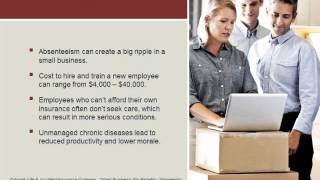
All right, Candice, thank you very much for starting things off for us. And guys, we are going to go now to Kyle Addy, who is the Vice President of Core Marketing Services for Colonial Life. Kyle, please go ahead. Thank you and good afternoon everyone and thanks for being on today. Coming to you live from our home office in Columbia, South Carolina. If you participated in our webinar last year, we want to welcome you back. This is certainly our second year working with the sba and during last year's events across the country, and especially our webinar, it was amazing. The need for education around voluntary benefits and their importance to small business owners. That's one of the primary reasons we wanted to do this again this year. And just make sure we got the word out to everyone. We'd love to solicit questions during the webinar through the chat area or you can certainly send us a question at askcoloniallife on Twitter. I've got a panel of experts standing by to help address all the numerous topics that may come up today. So let's get started. So Small Business challenges well, certainly the challenges felt by small business owners closely parallel the pain points cited by big business leaders as well economic uncertainty, finding and keeping qualified workers. But these challenges are really felt more acutely by leaders of firms with fewer than 100 employees, small businesses, small business owners, their sole proprietors often who must wear many, many hats, including financial expert, team captain, go to person and benefits expert. So why not offer benefits? Well, some firms don't offer those benefits, especially small ones. But and they say that affordability is the top reason their insurance premiums are often significantly higher than larger businesses because of increased risk pools. But employers also may believe they don't have enough employees, quite honestly, to qualify for a group policy, especially those firms with fewer than 10 employees. They also perceive honestly that plan administration can be too complex or too costly. And some firms typically pay more for lesser benefits than what larger companies can offer at a lower price. That's why many small firms do offer health, dental and vision and even life insurance benefits, but are unable to offer group benefit options for disability and accident insurance. So what are employee needs and how do they need benefits? Well, there's plenty of need from an employee standpoint. There's, there's some pretty telling statistics on this particular slide Some of them are around savings, which is a national problem and not necessarily related to benefits. But it really just compounds and adds to the financial uncertainty that many of America's workers face. For employees who don't have adequate benefit options, an unexpected life event could actually mean financial ruin for the household, especially for the 36% of workers who report living paycheck to paycheck. Certainly more than one third of small business employees are concerned about having enough savings if they're unable to work. And one third are concerned about not having the savings to cover medical costs not covered by insurance. So what's most important for operating a small business? Well, it's competing demands in operating a small business honestly leave little time for owners to focus on benefits. Employee benefits selection, comparing insurance plans, selecting a benefits package that provides value. It can be complicated and time consuming. As a result, many employers, excuse me, are simply unaware of the options that are available outside of the core benefits. Voluntary benefits in particular get little attention. While 57% of the large employers say voluntary benefits are important, only 31% of those companies with 500 or fewer employees assign a similar value. Most employers believe workers value take home pay over other benefits. But there is a demonstrated gap between what employers believe and what their workers say. Employees value non medical insurance benefits and voluntary benefits almost twice as much as employers believe. No doubt salary remains the top loyalty driver, but the majority of employees and small firms value health and retirement benefits. In fact, 44% say non medical benefits are also the key to keeping them loyal. So voluntary benefits can help. So voluntary benefits products that workers may buy through their employer at a lower rate than they could get on their own. That's a means for small businesses to overcome many competitive compensation challenges. They really fall in three areas. First, cost voluntary benefits are funded in whole or part by the employee. So employers can control how much they want to spend while at the same time adding to the menu of options of benefits available to their employees. Moving some benefits to voluntary coverage can also support a health plan design strategy. This can help alleviate some of the potential for employees to experience those unexpected yet higher out of pocket costs from higher deductibles and coinsurance that can be a part of any core benefits plan. Secondly, choice employees insurance needs are unique. By offering a wide range of low cost options, a small employer can help employees become more engaged in their benefits arrangements to choose options that really fit their budgets and their life needs. And then finally, convenience. Qualified benefits carriers can take the burdens of employee education and enrollment administration off of the employer they offer their expertise in handling the communication, group and individual counseling and technical details. And the employer can concentrate on running his or her core business. So Voluntary Benefits Voluntary benefits are insurance products that your workers and employees can buy through you at a lower rate than they can get on their own. They can range from identity theft to pet protection. The most popular voluntary benefits address critical life needs, health and security, and provide a financial safety net for employees when they need it most. Group rates, payroll deduction, and the prospect of portability make benefits both affordable and attractive. So let's talk about the benefits boost. For the benefits related to financial security, you can really sort these into key categories. So take a look at this picture and it's important to know where are your gaps. For example, the second header, income Protection, lists a solution as disability insurance. If you're working with a benefits provider, they can meet with your employees and help them determine what the best choices are for them based on their age, their lifestyle and their family status. So employees want protection, but they also want to be able to meet their other financial obligations as well. Underinsured employees need alternative benefit solutions that can help reduce their risk and give them the security and peace of mind they're looking for. Employers like you can play a key role in helping your workers create an affordable yet strong financial safety net. By integrating voluntary benefits with your core offerings, you can help your employees protect themselves against increased financial exposure and help alleviate the economic pressures many are now under. Life and disability protection are the basis of this safety net. So Securing the Basics let's talk about some of the very basic coverages which are life and disability. These are some pretty eye opening numbers that stress the need for income protection. Four in 10 employees are not confident their savings can carry them through a period of time where they can't work. Three in five have no life insurance or long term disability insurance outside of what is provided through their employer. And unfortunately, sometimes our lowest income workers have the most risk with debt and savings, but are least likely to have the protection for them and their families. So Life Insurance who's Covered? From a life insurance perspective, you can see at a glance here that less than half of Americans are adequately protected. 30% of our households have no insurance at all. 46% of our Americans die with $10,000 or less in financial assets or even worse, none at all. And 46% without life insurance haven't purchased because they're unsure what they need to buy disability insurance. In case you didn't know, this month May is disability insurance awareness month. And if you didn't know it. Well, it sounds like a great time to be talking about it, but really, honestly, anytime is a great time to understand the need for disability insurance and understand why it's such an important coverage to your employees. 90% is a big number, right? Well, common illnesses and health conditions make up 90% of the disability claims in today's market. More than 25% of our 20 year olds are going to become disabled before they reach retirement. And three times as many disabling injuries occur off the job rather than on the job and aren't covered by workers compensation. So certainly a lack of financial security in that particular area. So here are some of the common reasons that folks need short term disability and most people wouldn't even think of these if they were asked Normal pregnancy injuries and poison, joint disorders, digestive disorders, cancer and back disorders. So what are some of the other options that are available as well? Well, certainly one is hospital confinement Indemnity insurance provides a lump sum benefit to help with covered hospital stays or outpatient surgeries. Another one is accident insurance. It helps offset medical injuries due to a covered accidental injury. Cancer insurance, which helps offset out of pocket expenses related to cancer and critical illness coverage. Providing a lump sum benefit. They can be used to help employees pay coverage costs related to the coverage covered critical illnesses. So if you think back to the pie chart I showed you earlier, disability and life insurance are the most essential basic coverages, but this gives you some other ones to consider as well. So what is the cost of not providing benefits? What employers don't often take into account is the real cost of not providing access to these benefits, which can lead ultimately to unmanaged chronic disease or or preventable injuries. Employee absenteeism or presenteeism is more keenly felt in a 20 person shop than in a large business where co workers can step in to fill the gaps. Employee absenteeism can create a big ripple in your business because of smaller staff and capacity issues. And if you're not sure what I mean by presenteeism, that's when people come back to work before they're well and they're ready. And usually they're less productive and really at a greater risk for being out longer on second and subsequent absences. Plus you have to think about as a small business owner, the cost of training and hiring a new employee, which can range anywhere from $4,000 to $40,000 depending on the knowledge, skills and abilities that you need to run your business. Understanding the Options it's really important that your employees know what you're already providing to them regarding their benefits. Studies have shown that understanding is lower at small businesses. So the next question is, how can you fix that? Well, ultimately it's the need for education. In today's market, employees are playing a greater role in making their benefits decisions and choices. Yet employees at small firms are less likely to get the information they need to make an informed decision and complete their enrollment. Workers at businesses with 100 or fewer employers consistently report less familiarity with different types of insurance such as life, vision and disability. When employees don't understand or appreciate the benefits available, employers lose an opportunity to both boost their morale and increase loyalty. But I'll tell you, benefits education is more than just a brochure or website. Small businesses can really have a dedicated business benefit manager who can adequately educate and manage enrollment while taking on all their other day to day responsibilities plus personalized counseling. Taking into account the individual's financial, health and family situation requires an understanding of benefits that most small business owners just don't have. Voluntary benefits providers are often willing and qualified to provide these education resources for the employer in exchange for the opportunity to meet with their employees. There should be no cost for this service. Employees want and need benefits education. Almost three of four small business employees report that they are interested in their employer providing financial education programs, yet only 29% of small employers actually offer them. What you see on this slide are just a few stats from surveys returned on Colonial Life's benefits counselors and simply just highlights the desire for people to have someone explain their options to them. And that's not something employees at small businesses are often have access to. So how can a qualified benefits partner help? Well, many ways, entrusting your benefits communications and enrollment to a vendor is a partnership. It demands careful evaluation to ensure they're up to the task. They need to be able to have special experience in the small employer landscape. There's a world of difference between a company with 50 employees and one with 500. Look for a vendor with expertise and businesses that looks a lot like yours. You need someone who can bring a consultative approach. Your company culture is unique. Select a vendor who will take the time to learn your benefits communication and enrollment goals and who will work closely with you as a part of your team. Are they well informed? Are they honest, disciplined, creative and open to your leadership? You also want someone who can make your job easier. A qualified partner can handle the benefits information, education and enrollment process. Check to see if your vendor can verify employee and dependent information to help keep your records current and ensure employees and dependents are eligible for the benefits you provide. Strong benefits education and communication programs are important. Your benefits provider should be able to bring a range of communication methods from face to face counseling sessions to paper brochures and E based technologies. Materials should always be in simple to understand terms for your employees. And then finally a full portfolio of benefit offerings. You may be only interested in one or two products, say a voluntary disability in life insurance product for this year, but the market is constantly changing and your needs are constantly changing. Next year may bring a change in Selecting a vendor with a wide range of benefit offerings that can grow with your changing needs is important. So as I mentioned at the start of our webinar we had a lot of questions and great participation. So we thought we'd choose 10 from that top the top 10 from that list last year and run through those before we open the floor for any other questions that you might have. And we'll start with number 10. Is this presentation available after the webinar? And the answer is yes if you it will be made available. Last year, SBA posted recordings of all the webinars on YouTube the week after the presentation for over number nine, what types of insurance should employees of a small business consider? Well, if you're talking about benefits, disability and life are the basic building blocks that we would recommend. Number eight Can a business create a standardized plan to offer as a hiring package? Yes, of course. You certainly need to talk to a representative to figure out what is best for your situation. Number seven do employees enroll in voluntary benefits through an annual enrollment? Absolutely. But it doesn't have to be. Most businesses the annual enrollment coincides with the dates for core enrollment benefits such as health insurance, so it just makes it easier. Number six how are group meetings handled if the business has more than one location? Great question. The best way is to have multiple meetings. Unless the business can bring everybody together at one location, you need a vendor that is flexible and can meet your needs. Number five Are the benefits tax deductible? Another great question. They can be Accident is a great example of a product that can be paid for on a pre tax basis. Others, like life insurance for example, have to be post tax so that the benefit amounts are not impacted or reduced. A good provider will pay for the setup of a cafeteria plan that allows your employees to pay for the benefits pre tax. Even better, when they do that it saves you the employer on your payroll taxes. Number four Are voluntary benefits available to part time employees? Yes, certainly they are available and depends on the number of hours worked and the products that are being offered to your employees. Number three, do employees have to be W2s or can they be 1099 contractors? Absolutely. Both 1099 contractors and W2s are eligible as long as the business has both. Question number two. What the cost to the employer for the products for the services? So, great question. Sometimes an employer chooses to pay some of the costs, but oftentimes the products are paid for by the employees. Most employees at small businesses don't realize they have these plans available to them, and the services, such as enrollment and benefits communication, should be provided at no cost to you or your employees. And then finally, what's the minimum number of employees needed to offer voluntary benefits? Well, this certainly depends on the carrier, but at Colonial Life, we work with groups as small as three employees. So employers just to wrap up involuntary benefits can help businesses of all size, not just a large one. In fact, I'd even say that we can be of more help to smaller businesses. We can help control costs, enable you to offer a competitive benefits program, supplement benefits existing benefits, provide tax advantages, simplify payroll, give you support on enrollment and administrative services, and help, most of all importantly, provide your employees with needed financial protection. So now we're going to open up for questions and on the screen you'll see a few more ways to get in touch with you. Get in touch with us if you'd like, you can check out coloniallife.com smallbusiness and find lots of info designed to help small businesses. Not just benefits info, but all types of information that can help you grow your business. Once again, that's coloniallife.com small business. You can also send a tweet to us or follow us@coloniallife.com that's oloniallifebiz spelled B I Z. Or you can just email our small market address listed above and we'll get back with you. So now we'll get ready to open up the chat for questions. Okay, one of the questions that's in is how does this relate to the Affordable Care act, commonly referred to in this particular question as Obamacare. Most of our products are outside of the Affordable Care act provisions. Certainly we are conscious and work with business owners to keep them abreast of those types of questions and information that they may come upon. The second question is do you address or do you cover provide protection for employees abroad? At this time, we do not provide protection for employees abroad. One additional question is how can you help sole proprietors, partnerships and LLCs. Those are all companies that we specialize in and we're happy to provide needed coverages and financial protection to both their owners and to their employees. Next question is, does Colonial Life provide complete medical or medical coverage? The answer is we provide a number of supplemental products, but not major medical. We try to work with employers to customize and specialize a plan that meets their needs and oftentimes does fit with their major medical plan. We can help the business owner structure plans that actually help control cost and help employees make the right decisions for their age, lifestyle and family situation. So one of the questions is, how can I find out more about core benefits for small businesses? I would say probably the way we can help you most is send us an email@smallmarketolutions coloniallife.com we can be more specific in our answer versus giving you just a general sort of answer, but we'll be happy to help you. So one of our questions is do we do health and dental? As I mentioned earlier, we don't do major medical. However, we do have a brand new to the market dental product which already gotten a lot of interest in from employers and employees all across the United States. So one of the questions is the per employee cost for disability, income and life. One of the things, the best ways to approach that is actually sit down with a benefits counselor. There are variables that come into play, such as what is your age and what is the wage income that you have, as well as honestly the protection that you need for your family both now and in the future. Okay. One of the questions, a great question, is for the three employee limit, does that mean they have to participate or is that just the total number of employees at the company? And with Colonial Life, again, this varies by carrier, but we just look at the total number of employees and it just needs to be a minimum of three employees that we can offer benefits, education and counseling to. So one of the questions that came in, another great question is, do you work with nonprofits? And the answer is, absolutely we do. We're more than happy to help nonprofits take care of their employees and provide the needed financial security and protection. Okay, so one of the questions that came in is how do we get these benefits? Probably the best way we can help you is to shoot us an email at our small marketoloniallifebiz so we can put the right person in touch with you who can help you assess the actual benefits that you need. Another question that came in is can you have voluntary benefits without major medical? Absolutely. In fact, that's a great starting place sometime for small employers who aren't ready to take that bigger step up to major medical and other coverages, but yet want to do something for their employees. Okay. There's a great question, Ann, about learning more, a little bit about hospital income products. Well, hospital confinement that we offer. It's not, to be clear, it's not a replacement for major medical. It often supplements and takes care of some of the high deductible plans that employees sometimes purchase, and that's made available to them, but certainly not a substitute. We don't coordinate with major medical companies. And really, the benefit to your employee is that that puts money in their pocket so that they can make decisions about which expenses they're going to cover as they're struggling in a very, potentially very difficult time of their life. So one of the questions that came in, is there a flat fee for our service? And the good news is there is no fee for our services. The only thing that we ask is the opportunity to sit down with each of your employees face to face and one on one, to explore what their needs are and then offer them a wide array of products that you, as the employer, have approved for them to be offered. So a little more on the W2 1099. There just needs to be a 1099. Excuse me, a W2 employee, but we can sell two 1099s as well. We need to have at least one W2. So we could have, in a group of three, two employees and one 1099, and that would be. Okay. So a very specific state question. Are our products available in Tennessee and Texas? And the answer is yes. So a good question that keeps coming in is, what states are you in? And we operate in all 50 states in the union. So that's a quick answer to that question. Another good question that came in is, if you're starting with life, with offering life insurance, where is the best place to start? That's a question that has many answers. And the shortest answer I can tell you is that it really depends on the needs of each person, what their family situation is, their lifestyle, and who they're trying to protect. Okay, so we have a good question in on if I have employees in different states. Do we need three separate plans or can we just have one? And the answer is, it depends. You need a carrier that will offer both group and individual products, which Colonial Life does. And so it's more about what the business need is for you as the employer and what you're trying to solve for your employees. Individual policies are subject to each state's regulations, whereas group products are Driven by the primary domicile location of the employer. So a question that's come in is what is the advantage or benefit of a small business providing, obtaining and providing coverage through the business versus each individual employee? Really it's a couple things. One is availability, two is cost and three, quite honestly is that employees oftentimes need help. And we offer that through our benefits counseling. So that's sort of the simple and easy answer there. So a question came in around 1099s and how you can offer benefits and not run afoul of the employee versus contractor definition. Great, great question. That is on a lot of people's mind today. But as long as the 1099 is paying for it and not the employer, you're okay. So a question came in is can you tell us more about cafeteria plans and the tax savings that you mentioned earlier and do you provide that service plan? Absolutely, we do provide that service. In fact, that's one of the services that we provide to any employer who chooses to do business with us. The tax savings really surround those employees who choose to participate in a pre tax contribution and payment of their premiums for their coverages. And it really revolves around saving on the employee lawyer's portion of FICA costs because those are pre tax dollars. Okay, so a great question that just came in is can the employee keep their plan if they leave the employer? I will give a qualified answer on that, but generally with most of the coverages we offer, the answer is yes. So what resources are available to find vendors for these services? Well, certainly you can contact us. Some folks actually choose to work with insurance brokers. We actually do both. So we are open. Our main purpose is just to make sure that we're meeting the needs of your employees. Okay, a question just then. How do employees learn more about these plans? Is it up to our company to provide personal benefits counseling to the employees or do you do that? Actually Colonial Life specializes in benefits education and communication. And it's one of the mainstays of our business. We like to meet with each and every employee to make sure they understand one that the benefits that you are currently providing to them and also the benefits that they can choose to purchase based on on their personal situation. Okay, a question just in. What percentage of savings is an employer likely to realize when an employee chooses a pretax product? When an employee chooses a pre tax product, that means that it's not subject to fica. So the employer actually saves the matching FICA on any pre tax premium. So we did have someone join the call late, SBA will send out a link to the recording in full just for your information. There's a lot of information being covered today with you. Thank you for your time and I'm sure that you'll want to go back to and review some of this information as you think about your benefits for your employees. Okay. A question just in is, does your coverage apply to just employees or to also their spouses and families? We do offer coverage in varying levels to both employees and their families. So it's a situation specifically in each case. So good question, Ann. Is, can a group of employees go looking for these benefits or does it have to be an employer sponsored situation? So employees generally cannot find these products and at this price on their own. The best way to approach it is through an employee sponsored. And by employee sponsored, we're talking you sponsor the payroll deduction and that you allow access to employees and helping us determine what their needs are as well as explaining any benefits offerings that you are currently giving them. Can the owner, can the business owner participate as well? Absolutely. We welcome business owners and their employees, each equally. Good question. What happens if we start with three employees and somebody leaves no issues, no problems there? We continue to cover those folks who have elected and selected the coverages that are best for them and their families. There's a few questions that have come through that are probably very specific in nature. So if we haven't responded to those, don't hesitate to send us an email@smallmarketcoloniallife.com Some of those very specific questions are probably so specialized and situational that we need to give you a very specific response versus a general one. Okay. Well, once again, I'd like to thank you all for joining and for expressing interest in learning about benefits and benefits for your employees specifically. Specifically, small business is clearly the backbone of America and we appreciate the interest and the opportunity to share with each and every one of you today. Once again, the Small Business Administration will make this available later, so don't hesitate. If you came in late, I think you will get a link from them and you will be able to access. So thank you all very much for joining our call.
More from Your







President Donald J. Trump and First Lady Melania Trump Visit Grieving Texas After Deadly Floods

💪 Thinking of starting a #biz? Go for it! — Kerry Boyle, Vermont #SmallBiz Person of the Year

President Trump Participates in a Bilateral Meeting with the Prime Minister of Canada, May 6, 2025

