Washington, DC - SBW 2014 - Friday 5/16 Afternoon
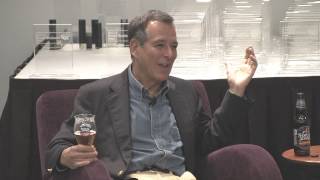
John Spears, Laura Miller, and Jim Koch speak at National Small Business Week about small business economics and entrepreneurship. Koch shares lessons on product quality and culture from building Boston Beer Company, while Sam Adams' Brewing the American Dream program offers loans and coaching to entrepreneurs.
Questions this video answers
May 16, 2014
Almost 30 million
About half of all American workers
More than 60%
$19 billion
Chapters
Hey guys. Welcome to the afternoon portion of national small business week 2014. We are so glad that you're here. We hope you're having a great time and learning a ton. My name is John Spears and I'm the director of Clusters and Skills Initiatives here at sba. And we have a great afternoon planned for you today. We're going to be presenting awards for our small business winners for each of the 50 states as well as the District of Columbia, Puerto Rico and Guam. This is an amazing group of companies when you think about it. They're creating jobs in their communities, they're innovating new cutting edge products and they're at the forefront of our economic comeback. But before we get to our keynote address this afternoon, I'd like to welcome Laura Miller from our presenting sponsor, Chase to the stage to deliver a few remarks. Laura?
Well, good afternoon to everyone in the room and good morning especially for all of those that are watching us live. It is such an honor to be here with all of you today, especially at the culmination of this really phenomenal event. And I speak for everyone at Chase when I say we could not be more proud of being a part of of the partnership with the Small Business Administration to celebrate you in this week. Clearly, Chase really understands the economic power of small businesses. It's huge and still growing and it's such a big part of the US did you know that there are almost 30 million small businesses in the US and about half of all American workers are employed by small businesses. Over the past 20 years, more than 60%, that's 60% of new jobs were created by small businesses and nearly 40% of high tech, new evolving industry, high tech employment is with small businesses. Phenomenal numbers and statistics to be very, very proud of. And you are all a part of that. As you know, small businesses are vital to the local communities that we all live in and work in. And many of our employees at Chase are really impacted and supported and surrounded by small businesses, whether it's family, friends, customers and even where they do business. We have 5,500 branches around the country to help small businesses do that business and to be present in local in the communities. And we pride ourselves on being able to be a significant resource opportunity for small businesses nationwide. And, and that means much more, but at a minimum, extending $19 billion of new credit in 2013 and over 55 billion in the last three years alone. But our commitment to small businesses goes beyond the numbers and the statistics. It's really about being a trusted partner for all small Businesses and being a part of the journey with you. After all, I always like to say all businesses start out small. Even the Apples and the Facebooks were once small businesses. Let's take an example. Vineyard Vines. The founders of this apparel company had a vision and they really wanted to work with a partner who could help see that vision, help take their business to the next level. Chase has been excited to join them on their journey where they started selling ties, just simply ties from Martha's Vineyard and now they're selling a wide variety of clothing and accessories all over the US we are enjoying growing and evolving with them as their business becomes more complex. And we can't wait to see what where they go next. Maybe the next small business success like Vineyard Vines is one of you here in the room today. Now it's my honor. We always want to recognize those who have really done a great job in being a best practice and a role model for small businesses. So I'm going to highlight a couple shining stars for all of you today. The first is Amir Varshovi. He is president of Gainesville, Florida based Green Technology. They provide environmentally sound farming and fertilizing products. Amir has grown his business to a 25 acre manufacturing facility that hires disadvantaged and homeless employees in times of heavy volumes. Talk about giving back to the community. He immigrated from Iran and worked several jobs through college to get educated and to get his business off the ground. Something to be very, very proud of. Lakeisha Grant, she's the CEO of Virtual Architect, Virtual Enterprise Architect llc. She's based right here in our nation's capital and she identified a need to deliver consistent IT capabilities and she invested $11,000 of her own personal savings to make this happen. Virtual Enterprise Architect, I'm proud to say is currently the 15th fastest growing IT services company in the U.S. what a star story that is. And Cynthia Reed, CEO of Mesa, Arizona, it's my hometown based Miracorp. Cynthia started a consulting firm providing general and administrative services to companies including the federal and the vet services. And she's grown her business from a bedroom office to 122 employee operation. What a phenomenal business that is. And think about all the new jobs she put back into the communities. Speaking of vets, helping veterans is something very close to our hearts at JPMorgan Chase. And we recently announced a $20 million pledge over the next five years to US military veterans and their families. The pledge is in support of the philanthropy Joining Forces Impact Pledge. It's a new collaborative effort of the White House's Joining Forces Initiative and well worth the mention today as we sit in our nation's capital. For me personally, why am I so passionate to work with small businesses? You know, it's a wonderful question and it's one that I'm so proud to answer and that is small businesses provide a tangible, tangible impact to our communities, to their families and to the US Economy. And being a part of small businesses allows me to see that and be a partner of that evolution and help make sure it continues to grow and be a big part of what we do here in America. And as a woman, I truly enjoy seeing women business owners succeed and become such an integral part of the small business growth. It's great actually to see a lot of women out there in the audience today, very proud of the women small business owners. Let's take S. Briles Johnson, for example. She is the director of the Women's Business center of North Carolina and Winner of the 2014 Women's Business center center of Excellence Awards. So congratulations, S. Briles. She has ensured the success and growth of women owned small businesses through important services, consulting, training, resources. Really talk about giving back to your community that promote economic self sufficiency for women across North Carolina through entrepreneurship. Allowing people to give back to their community and realize their dreams. So these are just a small example of some of the unbelievable work being done by small businesses being done by many of you here in the room and across the nation. Very, very proud to say thank you to all of you. I think we can all stand in awe of the inventive, the creative and all the hard work being done every single day by small businesses. Thank you very much for your passion, for your momentum and and for helping be a really great part of what makes this economy fabulous. So thank you very, very much for us having the opportunity to partner with you and for allowing us to be here today with you. Thank you.
Thank you, Laura. Next, I'd like to introduce our keynote discussion for today, which features Jim Cook, who is the founder and the chairman of the Boston Beer Company. Though Mr. Cook comes from a long line of brewmasters, he found his path to entrepreneurship only after a joint JD and MBA from Harvard University and a career in consulting. In 1983, he decided to strike out on his own. Mr. Cook founded the Boston Beer Company using an old family recipe, some money he had in savings and some additional capital that he raised from family and friends. The first beer they brewed became known as Sam Adams Boston Lager. I'm sure you've enjoyed it. I have as well. 20 years later. The Boston Beer Company has grown into one of the leading craft breweries in the United States. They generate over $600 million in annual revenue and brew over 20 varieties of of beer. But despite their growth, the company maintains the same get the job done attitude and commitment to their customers that they had on day one. We're very, very excited to have Mr. Cook here with us today. He'll be joined on stage by SBA assistant administrator Fred Baldassaro, who has a few questions prepared for him. Ladies and gentlemen, please welcome Jim and Fred to the st. Welcome, everyone. Welcome to Small Business Week, the Friday day.
The moment we've all been waiting for, the time for the winners to be announced. And I think you're already about ready to celebrate, aren't you? I said I'd do this. I didn't say I'd do it like dead sober. Well, I'm glad you could enjoy it. As soon as this is over, I plan to partake with you. Good. I hate drinking alone. I have the best job in this week. Yesterday I got to talk about pizza, and today I'm getting to talk about beer. So we're doing this right this week. Jim, welcome to National Small Business Week. It's great to have you here. And as someone who's originally from Boston, I know all about Sam Adams. I've been watching these commercials for years. So I'm really glad to meet you finally in person and talk about your product and give some advice to some of these entrepreneurs. Are you ready? I'm ready. Well, there are many. I think a good first question would be, there are many beers out there. How did you know that you could make the best beer? And how did you get started? Well, you have to go back 30 years to when I started. So this was 1983, 1984. And you know, at that point, the American beer lands landscape was completely different than today. It was basically a wasteland. You know, you really had, as a beer drinker, you had two choices. You could get the mass produced American beers, which are, you know, quite good for what they are. You know, they're not trying to be big, rich, flavorful beers. They're trying to be very, you know, easy to drink, clean, consistent, relatively intense, expensive. So that was one choice. And then if you wanted something better, you had to turn to an import. And I came from a brewing family and I knew that beer is perishable. Beer is not liquine. Beer is liquid bread. It's only good for about four months. And the imported beers were typically stale, often skunky because they were in green and clear bottles, which makes beer light struck and turns it skunky. So there really wasn't an alternative that was rich, flavorful beer delivered fresh. So it was just this huge opportunity and I thought, well, what if I made really good beer? I'll bet there's somebody out there besides me who will drink it. I didn't have a big plan when I started. I put $100,000 in my own money, another 140 from friends, relatives, drinking buddies that were enticed as much by the promise of free beer for life. Is that promise still good? Yes, it is more than maybe a return on their investment and my plan. And it's embarrassing today because you know, I'm like the most over educated guy that ever made beer and I should have known how to do like a business plan. So my business plan was that after five years we would grow to million dollars in revenue, 5,000 barrels of beer, eight people, and then it would level off. And I was totally wrong. But luckily in the right direction. Was it a help or a hindrance to you that your family had been in the brewing business before? It was a little bit of both because as I mentioned, I'm the sixth oldest son in a row in my family to be a brewer. So I had this long brewing tradition, actually longer than any other family in the United States. But my family's experience with making beer was not that happy or successful. My father was brewmaster. He got out of brewmaster school in 1948 and there were nearly 1,000 breweries, local regional breweries all across the United States. And that was 1948 when you I started Sam Adams. 36 years later, that thousand had dwindled down to 50 because as you see in a lot of businesses, the big guys just used their economies of scale, their size, their efficiency, their mass production, their mass marketing to drive out the little guys. So I thought my dad would be really happy that I was going to go back into the beer business. And he wasn't at all. He looked at me and he said, Jim, you've done some stupid things in your life. This is just about the stupidest. So I can't say that he was totally supportive in the beginning, but he did kind of grudgingly accept the fact that I was going to do this. And the good part was he took me up into the attic. We looked into this trunk, this old trunk that had a bunch of car magazines on top because my dad loved cars. And then underneath it he had his course material from Brewmaster school on these yellow mimeograph pieces of paper and then some family recipes and he gave me several of them. But the one that he picked out as the best recipe we had was originally called Lewis Cook Lager because my great great grandfather made it. That's what's in these glasses. So I guess it really did help. So from talking to you and talking to your staff over the last few months about this interview, it seems like you knew how to make a good product. You didn't know how to market it, you didn't know how to raise the money. How did you figure those things out and what advice would you have for the folks here that are trying to do the same? Well, I guess in terms of raising the money, I kind of skinnied the business down to what resources I could come up with. So when we started, the company was two people. It was me and a woman named Rhonda Kalman who was extremely talented, sort of the secret story behind Boston Beer Company. And Rhonda had been my secretary at Boston Consulting Group. And BCG had a lot of very qualified people. Rhonda was exceptionally qualified because not only could she juggle the demands of seven hyper crazy management consultants, but she tended bar at night. And that was the key skill. Rhonda knew bars. A bar was like Rhonda's natural habitat. And you combine that with energy, intelligence and just raw drive, which we all see in small business. It's a pretty common element that small business creates opportunities that are quite different from big business. And what I recognized in my first hire, Rhonda, was that in the United States we talk about meritocracy and opportunity for everybody. But in a large part of the economy, it's ruled by a caste system. It's not meritocratic. It is a caste system based on your education and the opportunities that allowed you to have that education. And it was very stark. At Boston Consulting Group. You had these high paid MBAs from the best business schools. And then you had somebody like Rhonda who had an associate's degree in secretarial science. And had I picked as a first hire partner one of Those high powered MBAs, I would never have gotten the energy, the drive, the creativity that Rhonda brought to it. She had a different experience set than I did. She knew people, she knew bars, she knew what it was like to be kind of at the bottom of the totem pole because we didn't do any marketing. We didn't have a marketing person for 10 years. I'm not a Big believer in marketing, and most small businesses succeed without it. What we had was sales, and we went out and sold. We went from bar to bar with cold beer and a sleeve of cups, and we just did street selling. And Rhonda built our sales force because she, you know, she didn't have a big fancy degree. She didn't expect to be treated well based on her caste system. She identified with everybody from the bar back to the owner and, you know, built rapport. I learned that by watching Rhonda do it. And that was really that sales drive, not the marketing, was what made Boston Beer company what it is. And to this day, we have one. We're still a small business. We have 1% market share. 30 years of working my tail off has gotten us to 1% of the beer business, and I'm proud of that. We started. We were, like, infinitesimal, and then we graduated to invisible, and then we finally got to tiny, and after 30 years, we've made it to small. Congratulations. Proud to be here. I do want to talk about people and what it means for your business, but before I do, when the first bar, and I think the first bar was in Jamaica Plain. Correct. Well, there were, you know, there's kind of a lot of people that were the first bar for Sam Adams. It's probably, you know, there's probably a lot of people that think they gave Paris Hilton her first kiss.
Or claim.
So there's like, a bunch of them. Like, there was the first place it was served, the first draft again, whatever. But, yeah, so how did you know? And what happened to your business when you had to scale up so someone wants to buy the product? Now what do you do? What did you have to do to take those steps? Because I think there's probably a lot of folks here, they might get a contract with a big business or be part of a supply chain. What were the tips that you had to get going to start to ramp up the business a bit? Well, we were very lucky in that we were able to grow bit by bit. I mean, it was crazy. We were growing 30 to 60% a year, but that happened every year. So, you know, it was part of our just culture of this kind of, you know, constantly growing, but it never, like, exploded. We never, like, got a big contract and tripled or anything like that. And so we were able to be very attentive. To me, the things that are still my job. You know, I've shed a lot of things that I used to do do when we're little. I don't have to drive the damn forklift anymore and deliver cases of beer into those basements in Faneuil hall with four foot ceilings. And I'm thankful for that. And today, to me, there's two things that I pay attention to which to me are kind of crucial to successful growth. And those two things are maintaining the quality of the product and the culture of the company. And I do believe that if we maintain and continually upgrade the quality of our product, because this beer in my glass today is a noticeably better beer than the Sam Adams from 5 years, 10 years, 15 years years ago. So there's this constant drive for, you know, not just good enough, but better, better, better. And that's important in the product quality because it's America. There's competition. People are always trying to, you know, copy Sam Adams and emulate it. And you got to stay ahead. And the second is the culture that got us there. So those are the things that I think have enabled us to, to grow really pretty smoothly. We've never had like any big crises of growth or something where I couldn't sleep at night. About the people. What are you looking for in an employee and how do you keep them on board? And if quality is so important, how are you working with them to make sure that the product is at the level you want it to be as you grow? Well, I think one of the things learned early on was that they don't teach at Harvard Business School is it's all people. Everything happens by, with, or through people. Nothing just happens on a thing. And small businesses, not that because we have to actually get things done. We're not sitting in some big office pretending to pull the levers and delegating. We actually have to get things done. And you very early see that it's all people. So we've spent a lot of time and attention on that. Maybe it looked like overspending at the time. I think our 11th employee was a full time recruiter. We were growing, so we were hiring. You know, at that point I remember telling her, we're gonna, we were, she was the 11th person. We were gonna grow 50% that year. I thought so we needed to hire six more people. And I said, your job, Fabrian, is to hire six great people, one every two months. And that's going to be harder than it sounds because our standards are very high. We have a very simple hiring standard that is, we've had it since day one, which is never hire someone unless they raise the average for the company. So that's very demanding. It Means that we've had jobs open for sometimes for quite long periods of time because we couldn't find somebody who was better than the average person that we had doing that job. And that's kind of. It sounds insane, but I think what happens in companies as they grow, you start out with the founders, the leaders, the entrepreneurs, and on a scale of 1 to 10, you've got eights, nines, maybe a 10. And then the company grows and needs to hire people. And the eights, nines and tens start hiring seven eights and nines. And then the seven eights and nines hire five sixes and sevens. And it's okay because they're all above average, but they're lowering the average for the company. And then eventually those five sixes and sevens start hiring some threes and fours and, and fives. Often what I think of as desperation hires. Like, we need somebody to do this job. We've been looking for two months, three months. We gotta just hire the best person that we can find. And we don't allow ourselves to do that. I think our record for hiring was a salesperson in Arizona. It took us 18 months to hire that person. Now, her name's Andrea. That was 15 years ago. Andrea's still with us today. So was it worth waiting a year and a half to hire somebody who's going to be with you for 15 years and just gets better and better? We've promoted her four times. Absolutely. So we've been very careful about hiring. We've developed processes around it. Our theory is we don't hire experience, we don't hire education, we don't hire resumes. Those things are a dime a dozen. We hire motivations, values, behaviors. What is this person going to do when nobody's looking? So we've developed interview techniques. We have standardized questions that we ask them for different jobs. I mean, different. There's a right answer for that question in that job. Different job might be a different right answer, but we've developed those over time. I actually believe that interviews, the standard person to person interview, you gotta do it and everybody relies on it. And that's a huge mistake. They give you very bad data. If you look at any of the research, it'll tell you that the interview process that everybody relies on and thinks, oh, I can tell a good person, you can't. Not in an hour, not in two hours. So for us, we develop these standardized questions. We generally will bring them in for a day as kind of an audition. Like, come in, do the job. Well, let's See how you behave when you're actually doing a job. And it works well both ways because we get particularly. I mean, it's the beer business, everybody. Oh, you know, beer, that'd be so much fun, you know, selling beer. What a great job. I go from bar to bar. Well, then they come in and they find out that you're in the basement, you're lifting kegs, checking freshness dates. You know, you don't go into the front of the restaurant when you're sitting selling beer. You go into the back, you know, and the floors are slippery and nobody speaks English and you get treated, you know, like crap. And that's, you know, that sorts out people. And then we can watch how they behave. Do they accept that? How do they relate to the customers? That audition is much more valuable than a standard interview. And then we, we actually do a little quick test. It's called the predictive index. There's lots of them out there. But it's one thing that we've discovered is that, I mean, everybody has different motivational needs. Everybody enjoys different things. Some people are very social. They like interacting with people. Some of them are more quiet. They don't like interacting with people. Some people have patience, some people have. Have patience. Some people are very proactive and like to take initiative. Other people don't, etc. Etc. And there's no good or bad person. It's all about fit. And, you know, it's been my experience that if somebody genuinely enjoys and is motivated to do the things that are crucial to their success in a given job, life will be easy. But if they are not motivated to do the things they don't enjoy doing the things that are going to make them successful in that job, life sucks. It's really hard. It's a quick story, but this is, I think, an important point. I remember interviewing a guy for an accounting job and I was looking at his profile and his name was Hank, and look at his profile. And Hank had a high need to take initiative, a high need for social interaction, low patience and low need for order and structure and a lot of energy. And I said, that's terrible profile for an accountant. You don't want people being creative accountants unless you're Enron. And you want them to not need social interaction because they're in a cubicle looking at a screen and you want them to be patient and you want somebody who enjoys order and structure. And Hank had none of those things, but he was a cpa. So I asked him, I said, hank, do you like being an accountant? He said, no. Nobody's ever asked me that, but no. He said, well, why are you an accountant? He said, well, my dad was a cpa. He told me I'd always have a good job if I got my cpa. And he was right. I've always had a good job. But you don't like it. He said, no, I don't. Then I put the hook in, and I said, have you ever thought about selling beer? Because that was the perfect profile to sell beer. Takes initiative, likes being with people, low patience, doesn't need order and structure, high energy. It's like you want to sell beer. Maybe came back the next day and said yes. So, long story short, we hired him. He was with us for 10 years, married another beer salesperson. They have their own sales training company now. Never went back to accounting. So it's. I guess my point is, resumes don't mean that much. What you're really hiring is a person, and that person is a set of values, motivations, behavioral traits, characteristics. And that's what we look for, is the right. And it's a fit. You know, the same person. There's no good person for every job. You want the fit for the job. I know we're going to take some questions from the audience in just one second, so I'll give you a chance to think about it. And I can't imagine you'll probably get a lot of questions, but can I have a beer? So we'll give people time to think of some other questions, but before we do, I know I'm doing the work up here. I get the beer. I know that when you said you started out, you felt very alone, and you guys had started a philanthropic program. Can you talk about that? Because one of the ways I think that SBA and Sam Adams and the Boston Beer Company come together is a little bit around this. And I thought it might be helpful to talk about this so folks could figure out if they can be a part of it, too. Yeah. Yes. I mean, it starts with a belief, which I think small businesses share, that we're very lucky to have our own businesses and to have the opportunities that we have. And we do live in a society and a community. And it just feels good to know that you're having a positive influence on your society and community. And we largely do that by creating jobs that can often change people's lives and creating great products that our customers not only embrace, but show it by paying us money for it. And that's a great thing. And so I'VE always felt that, that there is a. That companies that recognize their social responsibilities and engage with their environment, their communities, are actually better businesses. They're just more alert to what's going on and just more creative and energetic about what they're doing. If you're part of a community. So. And a lot of, to me, a lot of sort of corporate philanthropic activity is not really that useful. I mean, we're businesses. What we do best is we create value. We take 2 and 2 and we make it equal 5 or we make it equal 10, but we create value. And. And we, for a long time, really didn't pay that much attention. We were doing standard things. My epiphany was we took the management app for Team out for like this team building community event day where we went and painted a community center in our neighborhood. And everybody felt really great about it and talked about how it was cool and was going to do for the community center in the neighborhood. And I felt really crummy about it. And I couldn't figure out why. I remember walking back to my car, I was like, why don't I feel good about this? Then I realized I just spent like $15,000 worth of management time to do $3,000 worth of crappy painting. And that just. That's not what a business does. A business creates value. So. So I determined that we were going to rethink our philanthropic endeavors and do something that was going to create real value for something that we believed in and knew about, which in this case turned out to be small business. So we developed a philanthropic program. It's called Sam Adams Brewing, the American Dream Program. And it has two components, both of which came out of my experience starting Sam Adams. And I'm sure everybody's experience here as a small business person. And there were two things that struck me that I really would have liked to have, but I just couldn't get. One of them was loan money. Instead of giving away parts of the company, it would have been nice to at least have some access to loan money. And nobody would loan, loan me money. When I started, it just was not possible. And the second was nuts and bolts business advice, because I made a lot of stupid mistakes. Because as a small business person, you're the CEO, but that does not mean chief executive officer. You don't have anybody to execute. You got to do it yourself. What you are is the chief everything officer. You got to do it all. And most of its stuff, at least for me, I'd never done before. I mean, I have a Harvard mba, Harvard jd. I had six and a half years of management consulting. You'd think I'd know something about business, but not really because I go to start Boston Beer Company and there's all this stuff I've never done before where if I, you know, it's really important to the success of the company. But I'd never done stuff like designed a label. I'd never done stuff like set up a payroll. I'd never done, I'd never, you know, procured hard to get ingredients like the hops that go into here. I'd never made a sales call before. I'd never tried to get into a chain or a called on a big retailer. All those things I was doing for the first time, never negotiated any real estate lease. I was doing all that. And I did a lot of dumb things because it was the first time. It wasn't because I didn't know about business or because I was stupid. It was just, it was on the job training, which is really, really expensive. I thought a Harvard MBA was expensive. That was cheap compared to the stupid mistakes. Fifty hundred thousand dollars mistakes that I've made along the way. So the other component is coaching and counseling on nuts and bolts topics that we deliver through speed coaching. In the evening we'll bring in 2025 experts in all those different topics that are relevant to small businesses in food, beverage and hospitable hospitality. And people sign up for the areas where they have a real need for 20 minutes of solid business advice which can be incredibly powerful if it's focused and on topic. So those two components are brewing. The American Dream program, we made over 300 loans and we provided coaching and counseling to about 4,000 businesses. Those 300 loans, it's a little over $3 million. So the average size is about $10,000. And they have created or saved 2,000 jobs, which is way more than we only have 1,100. So to me that's leverage. And with the counseling part, the repayment rate on the loans is over 98%. That's how creditworthy. Small businesses are way more credit worthy than people think. It's actually not the credit worthiness, it's the cost that big banks and so forth have screening to find the good applicants and then supporting and administering the loan and helping the business. But small businesses pay their debts. I think we are going to take some questions to the audience. You're okay with that, right? As long as I got my beer, man, I'm good. So are there questions in the audience? And there's a mic in the corner over here. So let's take the question here in the center and then we'll come over this way.
Thank you. My name is Nick Mattiello. I currently run a catering company in Providence, Rhode Island. Used to be a beer salesman. I used to sell against you. I commend you.
Mancini.
Mancini. Yes, that's right. Providence Beverage. Good man.
You got a better job now?
I don't know. I question it sometimes. We have a lot of the same story that you have, and I think most businesses here pretty much have that same story. And working for the Mancini family, one thing I did learn, they kept getting bigger and bigger and we're doing the same thing. We're getting bigger and bigger. Our biggest fear, excuse me, my biggest fear is being bought out by your competitor. Do you have that fear of being bought out by. I commend you because you took on Budweiser Miller. Cause you took on all the big guys and no one was able to do that except you. But are you afraid of Budweiser coming in someday and giving you a ridiculous offer and you selling out?
Well, luckily though, we are a public company. We're public in a unique way, more creative way. Because there's two classes of shares, voting shares and non voting shares. The non voting shares are the publicly traded shares. The voting shares, I have all of them.
So.
To me, it's corporate democracy at its finest. We take a vote. I say yes, I say no. End of story.
Hi, Jim. First off, thank you for making my college life a little bit more enjoyable.
Glad you didn't waste those six years.
Yeah, thank you. My question is going to be about ethics. And it's top of my mind right now as I provide services to the health care industry and there are just certain medical procedures that I just have a tough time balancing myself between a business person, a moral person, an ethical person. And I'm sure that there's a lot of people here that may struggle with that same question too, as it relates to beer and alcohol and stuff. And you really impress me as a very sincere and honest guy. You do. And I'm going to bet that you struggle with some of that as well. And I just, I don't know. How do you make, when you make that call between the business which grows, makes you more successful, is really working for your employees, make them more successful in lives and it just goes on. But at times you just speak to that solve my problem.
It does, you know, happen sometimes. I mean, I. Luckily for me, you know, I make beer. And all the medical and epidemiological evidence tells us that people who enjoy beer and other alcoholic beverages in moderation, you know, one or two a day, every day for a man, maybe more like one for a woman, will live longer. So luckily God punishes people who don't drink with early mortality. So we're kind of in the healthcare business together. But it does, you know, kind of come up. I mean, there are times, I mean there are real issues. I mean, to extend it, there are some people who make beers flavored malt beverages type things that I think are just horrible and they sell really well and we wouldn't make them. I mean, there's these 24 ounce cans of 12% alcohol flavored malt beverage that's just way too much alcohol to, to put in something that you sell single serve to go in a convenience store. So we've just never wanted to go anywhere near that kind of thing. That one's kind of obvious. It's a business opportunity, but it just sucks. So I mean, there are other people that do it. They're good people, virtuous people, I know them, they're not like pond scummer, they're just tough chokes that as a business model, okay, God bless you, but that's not our business model. And then you, I mean, I don't know. So those are easy. The hard ones are what I, I guess what I've done is like talk to other people in the company and they have good moral compasses too. This is not, to me, it's not just about what do I think is right and wrong and maybe get a consensus around that. I'll give you, I mean it sounds a little abstract, so I'll give you another concrete example. There was one of our. We have a brewery in Los Angeles, it's called Angel City. It's a sort of a craft beer incubator. It's an innovative thing we're doing. And the guy who runs it wanted to come out with a very hoppy beer. And he had this killer name that he thought was just awesome and it was called Hop Slut. It was edgy, you know, and I didn't quite like it, but what I did. And half of my company is women and it's business and practicalities and moral aren't that far apart. So I just called some of the women that have been with us for a number of years that I know and I knew they would give me an honest opinion opinion and they said it doesn't make me feel Good. I just don't like that. And so went back and told them, no, you can't do it. Half the company is going to be uncomfortable with it. It's a little bit. It really doesn't meet our standards. It's difficult. But I didn't make the decision. I got input from other people. Because your own people have very good moral compasses, too. And if they're all uncomfortable, even if it's a business opportunity, it's going to degrade your effectiveness as a company.
The people who are providing service are.
Going to have their moral compasses as well. Yeah, you need them. You need them on board. I think there's a question over here. And then there was someone in the front row up here.
Thanks for being here. You are a fabulous speaker and the best one I've heard through the SBA program this week.
See, I don't do it sober. There's a lesson there.
You spoke to the importance of culture, particularly for your business and your way of doing business. Would you share with us how you maintain that culture in your company as you've grown, and then how you really bring that culture to those who don't work in the office every day, particularly salespeople that are out extending that culture to your customers but aren't around you every day of the week?
Two good questions. The first one, how do you maintain the culture? I'll just tell you, give you an example of something that's really important to me as we maintain the culture. Everybody that we hire comes to orientation. Typically, it's in Boston. Typically, it's a week. It's not training. It is orientation. It is learning about the mission, the values, the culture of the goals of the company. And everybody remembers their first day at a new job. At least that's my impression. And so their first day, when they come in, it is not filling out form. It is not learning about, you know, accounting and stuff like that. The first 9o', clock, first morning, first day with the company, I spend two hours with them and I have a presentation. I've been giving it for 25 years. It's about the mission, history, culture and values of the company. So they will spend their first two, sometimes two and a half hours with me because I want that to be their first impression of who we are and what we are. And then they'll have other people. Our CEO comes after me. He talks about the company's strategy and how we're going to get there, some of the tactics. So the first two people are the founder, and then the CEO. CEO. And then that carries them till lunchtime. Then they have a couple other people, and then when they're done, we do. It's typically about 5:30. I'll spend another three hours with them doing a beer tasting. And we will go through 25 or 30. We make 60 beers in a given year, so we'll have 25 or 30 of different Sam Adams beers. And I will walk them through all of those beers, give them the history, the ingredients, the flavor profile, some simple descriptors around the beer. But that's to convey to them our passion for our product. And so it's. I mean, for me, it's a long day. It's 8:30, you know, but that's absolutely crucial.
So.
So for their first day, they will spend five and a half to six hours with me, most of it spent drinking beer. That's a culture infusion at about a 0.06% blood alcohol. And then you had a. The second question was, how do you convey that culture out to the salespeople? And. And the only way I know how to do that is just put yourself on the road. To this day, I will spend a day or two a week working in markets with our salespeople. I mean, this week I worked the Palm Beach Fort Lauderdale market, and I worked the D.C. market. And that's. And that's hard because there's a lot of crap in the office that demands your attention. And it's just hard 30 years into it. I mean, I've got way more miles on most airlines than their flight attendants. I mean, literally. And you just. It's. It's quite demanding. There's. I don't know any shortcuts to that, but it, it's the essence of leadership that you're going to get out there with them and you're going to do their job with them. And what I've discovered, I guess two things, is once you do that, it's the best source of information because you're in front of customers. And for us, distributors and salespeople, and it is the best quality information. Market research, focus groups, reports, don't hold a candle to just 100 days a year in the market talking to people. And second, all that stuff that you thought was important back in the office, if you don't do it, somebody will step up, they'll do it. And you're replaceable there. You're really not replaceable. Out with the salespeople and the customers. That's what drives the business. I know. We had a question right Here in the front row.
The question was you talked about the importance of people in your organization and wanted to know when you were still small, how you attracted executives into the company who I would imagine worked for your competitors that were much larger and a much more stable big company. So how did you go about attracting that next level of talent?
Well, in the very beginning, you know, we just couldn't. So I had to supply it. Honestly, it was not so hard because I mean. Well, I guess the answer is you got to make yourself attractive. You want to attract it. There's magic, no magic bullet. People aren't stupid. They're going to go to an attractive company. So you got to make it attractive. We were lucky because we make beer. That's kind of fun. We were growing, but even we had a period of seven years where we hardly grew at all. There was a bunch of reasons for it, but we could still attract great people, I guess because we always, even when we weren't growing and, and everybody else was, we just always had the mentality of we're the best, we're the winners, and people want to go where I mean, the kind of people you want, want to go to companies that view themselves as the best, that view themselves as winners, that act that way, you know, because people, the really high quality companies may not be growing, but they don't bleed their people out. When you look, it's hard to pry people out of really good companies. So I guess just you have to think about, well, how do I, what do I do to be attractive to really high quality people? I want to, you know, I gotta be innovative, I gotta be exciting. I've gotta have passion, I've gotta have commitment. You gotta like model the behavior that you want in the people that you're hiring and they'll come. And we also, you know, I did believe in, you know, sort of over hiring in terms of, particularly for senior people. Senior people can make a huge difference. If you got the right person.
You.
Don'T have to overpay. People are not. The people you want are not coin operated. The people that are coin operated, you don't want because somebody will overpay them. So it's not. You don't want people that are motivated by simply money because they're gone. I mean, you see their resumes, they have, you know, they've been in five jobs in the last four, you know, in the last 10 years. They spend two or three years in a job and then they hop because somebody offers them 10 or 15% more money. You don't want that person. They may look great. You don't want them. Does that answer. I know we're starting to run out of time here. As a communications guy myself, I have a communications question for you. Your logger won an award three months into the start. How important is promotion and marketing and advertising for a business like yours? And would you recommend it to folks? You're probably not gonna like this answer. I'm not a big fan of like Mark, what everybody thinks of as marketing and promotion and advertising. I have an analogy that I probably can't use because it's too public, but let me just put it that way. I'm not a big fan of it. We did not hire a single marketing person for 10 years. We were 10 years into this. We hired our first marketing person in 1994. So we had. We'd become quite successful without a single marketing person. We didn't have anybody. So I think it's way overrated. I do. To me, you're better off spending that time, effort, money on product and on selling. Selling I believe in. We're this weird company in the beer business because, you know, we're 1% market share. We have 400 salespeople. Anheuser Busch is 50% market share. They have 400 salespeople. So we're just way out of proportion. We're like this infant, this tiny baby with a 40 pound head is weird. So to me, selling, getting in front of real customers, that drives the business a lot. Now, that being said, if you win an award, I think those are meaningful. I mean, everybody here won an award in their state. There was a lot of competition. You earned it and it's pretty cool. And for that kind of thing, yes, it's very meaningful. I would put that up not just for the external world, but as importantly, for your own people. People want to be proud of what, what they do when they come to work every day and when you get recognized for. We got picked. Fred's alluding to. It's actually six weeks after we hit the market, we got picked as the best beer in America. The company was two people. We put that on everything. That was pretty. Yeah. Now everything meant little table tents in bars, those little things you see when you go into those paper things. That was our entire advertising, marketing, promotional budget. But we put those table tents up everywhere. They'd allow us to do it in some places that they wouldn't. I used to put them up in the men's room as I know everybody eventually ends up there. No matter how Good your beer is. That's where it's going. Well, now we're about to celebrate the winners. Great. That's very cool. If you have a moment, Jim, we'd love to have you stay here and maybe as the winners come up, post some photos. Congratulations to all you guys. I never won this, so I'm in awe. Congratulations.
Thank you for that.
Sorry.
If we can get you. So without further, further ado, I would.
Like to call up the Small Business Administration's chief of staff, Michelle Chang, up to the stage to start the presentation. Thank you. Sure you don't want to finish that beer? It's just going to go to waste. Don't chug it, it's Sam Adams. You savor it. And don't worry, I can make more. Good point.
All right, thank you, Fred, and thank you, Jim, for sticking around around as we honor our amazing award winners. Now it's time for our state Small Business awards. These awards honor a small business owner in each state who creates jobs, produces revenue, lifts local economies, supports the local infrastructure and gives back charitably, to the communities that they live and work in. So, ladies and gentlemen, our state small business award winners, beginning with Alabama.
Alabama harvey nix, coventix systems, inc. Alaska gina and john call the be house of brent, anchorage, Arizona cynthia miracle 3 miracle, Arkansas john michael gehringer and paul arthur reesnet custom aircraft cabinets, inc. California mercado robless, pablo renee ropeles in jackboy ropeless I need a mexican food court. Colorado jan erickson, jenska llc. Connecticut Max Cuthbert and Roger Martine, Express Countertops, Kitchen and Flooring llc. Delaware marion r. Young and mark a. Lantern whitefield, District of columbia lakeisha grant, virtual enterprise architects. Florida amir a. Brashobi, green technologies, llc. Georgia usack van bernard and jeffrey allen manley, tailspin. Thomas shea, md Dr. Shade's clinic. Hawaii dave harderman, pacwamp marketing group and pr tech, llc. Idaho gary b. Multinet, susan a. Multitude, megan l. Multitan and jm multicon best bath systems, inc. Illinois Elizabeth Colon, Metaphrases, Language and Cultural Solutions, llc. Indiana microsooth hoosier spring co. Inc. Iowa mary connell, air control, inc. Kansas alex fox, rivet computers, llc. Kentucky tommy ray cornette bleed blue tattoo.
In p.
Louisiana keith derussa, keland construction, llc. Maine alan spear and mary allen ledman, coffee by design. Marilyn stephanie nobeck howe, chesapeake environmental management.
Inc.
Massachusetts valerie bonham, maria malloy, eric breziani and edwin breziani golden canoli, sam, Michigan michael o. Nevins, full spectrum solutions, inc. Minnesota scott h. Marzeca netgain technology, inc. Mississippi bruce ramesh, pacal fusion hospitality, Missouri nielsen goya, PhD, infinite energy construction.
Inc.
Montana w. Randolph aifer and jana sue afer, high plains architect. Nebraska douglas garwood and scott garwood, garwood enterprise, inc. Dba cardinal farms.
Sa.
Nevada gerard and season lopicolo and michael thomas, noble studios, New hampshire chris decata, blake's all natural foods.
It.
New jersey curran k. Gill, pars environmental inc. New mexico michelle shelley herbst moran and associates, inc. North carolina andrew kratz and joe grable, triangle rock club, North carolina andrew kratz and joe grable, triangle rock club, Ohio michelle therese kerr, oxford consulting.
It.
Oklahoma william larry moca, epsco inc. Oregon william charles taylor and brooklyn and harvey taylor, pacifica, Pennsylvania michael charok, ae work, Puerto rico iniel torres, ojeda proto dos la finca inc.
It.
Rhode island lisa petillia, pranzi catering and events, South carolina nancy porter, ogborn tomato palms llc, it. South dakota ryan mcfarlane, strider sports international, inc. Tennessee tracy solomon, tibet llc. Gregory r. Hudson, genesis concepts and consultants, Utah sandeep shemar global consulting international, inc. Vermont bill cherry and jeff nieblum, switchback brewing co.
It.
Virginia kevin l. Knight, knight solutions, Washington fred schewell and paul clark, cobalt enterprises, inc. West Virginia Kenneth H. Allman II, practicelink.com and Mountainplex Properties, Wisconsin thomas jaggerman and ralph hart, jaggerman stamping co. Wyoming jennifer c. Merrill, merrell.
All right, congratulations to all of our winners. Let's give everyone another round of applause. All right, moving on. Our next award goes to the SBA's exporter of a Year, a small business owner that has successfully taken his or her business global by expanding their customer base to countries beyond our borders. This year our award winner is a woman who founded a company whose tiny customers just need a comfortable place to rest their head. Baby Elephant Ears is a multi use soft headrest for newborns. The pillows provide spinal and neck alignment as well as comfort. They are ethically manufactured and made with sustainable materials. As a mother of a two year old myself, I can truly appreciate a product that will make nap time easier. So without further ado, ladies and gentlemen, our Expert of the Year is Alicia Overby of Baby Elephant Ears. Now it's my honor to introduce the top three small businesses of the year. Founded in 1991, her company has seen rapid growth in the past few years. After participating in SBA's 8A business development program and our Surety Bonds program, her company now employs a year round workforce of 26 people and has secured Countless of contracting opportunities with the help of the sba. Ladies and gentlemen, our second runner up is Jennifer Merrill, the president of Merrill Inc. And now onto our first runner up. This family owned business dates back to 1958 when it was founded as a flour tortilla manufacturer. Today, the company remains in the family and we are excited to honor its owners today. In 2012, the business faced a crossroads and needed to grow their operations. In order to support the dramatic expansion, the company acquired an SBA504 loan that helped them grow over 100% in the last 33 years. Their loan helped them increase their employee count from 230 people in 2012 to 359 people today. Please join me in congratulating Ricardo, Pablo and Jackie Robles of Anita's Mexican Food Corp. As this year's first runner up.
It.
And now to the moment we've all been waiting for. Our National Small Businessperson of the Year. If we can all draw our attention to the screen, the video is going to reveal the winner.
Pacific has been around for 15 years. Pacifica has been around for 15 years. We started as a candle company, as a fragrance company, gradually moved those concepts into personal perfumes, bath and body products, and now color cosmetics and skin care. We started Pacifica in the kitchen, took the concepts to a gift trade show in San Francisco, came home with $100,000 worth of orders, and then had to figure out how to manufacture the products. We put a very strong emphasis on making fragrance products that are decent and don't utilize a lot of bad chemicals that are commonly utilized in that industry. And as we've moved into skincare and cosmetics and more personal items, we're very intense about the quality of the ingredients and utilizing natural ingredients to achieve the best possible results you can with makeup. We couldn't have accomplished what we've accomplished over the last few years, which is essentially taking the Pacifica brand into new categories like beauty. Without the SBA credit facility, it was absolutely essential. It was also a very secure credit facility for Brooke and I to get graduated capital, get working capital and continue to grow our company. We started Pacifica because we loved ideas and we loved being able to just do whatever our ideas were in the purest way and getting them out to consumers in the simplest, purest way. Today, that's still the best part of Pacifica for me is the ideas, the concepts behind the brand, the names that we come up with for the products. Brooke is really the visionary for what Pacifica can be and can possibly be. I usually kind of help her with the architecture of building that out a little bit. But that's the best part is working together creatively with my wife and driving the company from that creative point of view. But what's really important to Brooke and I about anything that we do is kind of why we're doing it. Our values. And our values are really founded in taking care of the environment, taking good care of your kids, taking good care of the place where you live. So when we do Pacifica, everything that we do in Pacifica, we take those values into consideration.
Gentlemen, our national small business people of the year.
It.
Well, what an honor in this group of people to receive an award like this. It's truly humbling and obviously a little overwhelming for me. I don't know, I'm kind of blown away. I would never have expected this. But, you know, I mean, you all know how, you know, how hard you work, how much you put into things emotionally. And, you know, you build a lot of. You have built businesses around family. You know, it's a big deal. And, you know, when Pacifica just took off and it was just, you know, this easy ride for 10 years, we never needed capital. We started with nothing. We, you know, the next thing you know, we had 20 employees, 50, 100. Over 100 went to, you know, eight figures income for the company within 10 years with no outside capital, nothing. Just Brooke and I, great product ideas, you know, sincerity, honesty. I mean, I really appreciated Ed Cox presentation because that's what that was about. It's like, you know what? I'm gonna make the best product I can and put it out there. I don't need a marketing department. We just gotta go sell it. You know, very similar set of values at the Pacifica. But, you know, when the economy changed, 0708 09, everything changed for us. We went from, you know, our revenues declined. Our cost of doing business just got out of control and just went up and up. And for the first time in the history of our company, around 2009, 2010, we needed outside capital to kind of. Kind of take the brand into new categories like I was blabbering on about in that video. And you know what? We weren't bankable at that point. We're losing money. We were struggling. And, you know, in our case, I mean, like many of you entrepreneurial companies, that's everything you have is a bad company. So clearly, you know, I went from never even thinking about risks to thinking like, it's all about risk now. So we weren't really bankable. We went through this very painful process, I'm sure many of you have been through, of trying to seek out bank financing. And finally, Umpqua bank of Oregon, with the backing of the sba, delivered, presented a credit facility to us that, you know, was exactly what we needed. It was also very secure credit, as many of you may know, when you're, you know, when you're compromised or you have some cash flow issues and this and that, you may qualify for certain types of managed credit which are not very good and healthy for business anyhow, so the SBA came through, and, you know, that saying, like, a bank's always got an umbrella for you on a sunny day. Well, you know what? The SBA and Uma Umqua, you know, they came through with an umbrella for us on a very rainy day, revitalized our company. We took that capital, we expanded, you know, into new categories, took our, you know, stayed to our ideas, stayed true to our brand, went out there and, you know, just kind of redid everything and resourcefully. I mean, it wasn't like we had, you know, jillions of dollars to go spend on marketing, which we never did. We still don't have a marketing department at Pacifica, and we're, you know, we're in everywhere from Whole Foods to Target Ulta to specialty, you know, specialty natural products everywhere. And, you know, I have nothing but gratitude for, you know, what's happened and receiving this award is kind of overwhelming. But, you know, I gotta say that, you know, this is. You're the people who make this country the land of opportunity that it is. It's really. It's about people who step up there. They're fierce, they have courage, they act on their. What they believe in and their instincts. So with that, thank you. Thank you, sba. And what an honor.
Congratulations again. That's Portland, Oregon's Billy Taylor and his wife, Brooke Harvey Taylor of Pacifica Candle and Fragrance Company. And now, this concludes our lunch awards presentation. We do hope that you'll stick around after this. We do have two breakout panels, and we are continuing to have business matchmaking that will happen this afternoon. So we hope that you will join us for that. Have a great afternoon and happy National Small Business Week.
More from Your







President Donald J. Trump and First Lady Melania Trump Visit Grieving Texas After Deadly Floods

💪 Thinking of starting a #biz? Go for it! — Kerry Boyle, Vermont #SmallBiz Person of the Year

President Trump Participates in a Bilateral Meeting with the Prime Minister of Canada, May 6, 2025

