Webinar: 5 Steps to Building Business Credit
Transcript of a May webinar (SBA partnered with Dun & Bradstreet Credibility Corp.) explaining why business credit matters and outlining five practical steps to build and monitor a business credit profile. Speakers (Natalie Goriel, SBA; Amber Colley, D&B Credibility Corp.) cover: the four C’s of credit (character, capital, capacity, collateral), how D&B creates and tracks business credit files (DUNS numbers, trade experiences, paydex), actionable steps (check your profile, separate personal/business credit, pay bills on time, monitor reports, monitor customers/vendors), and available D&B tools (Credit Reporter app, CompanyUpdate.com, Credit Signal, Credit Builder). The session ends with a live Q&A.
Chapters
Hi, everyone.
My name is Natalie Goreal and I'm the online media coordinator for the U.S. small Business Administration. I'd like to welcome you to today's webinar. This webinar is made possible through a public private partnership with Dun and Bradstreet Credibility Corp. We are really excited to work with Dun and Bradstreet Credibility Corp. Because public private partnerships allow the government and the private sector to come together in support of the small business community. It also allows us to hold free webinars like this on a variety of business topics. In just a moment, I'll turn it over to the D and B Credibility Corp. Team to walk you through the steps of building business credit. But before I do that, I want to say a little bit about why SBA is so excited about this partnership. We know that as small business owners and entrepreneurs, you need more of two things, time and money. Our mission at SBA is to provide the nation's 28 million small businesses with the support they need in a world where time and money are both short. We do this what we call the three Cs. First, SBA provides capital to small businesses in the form of guaranteed loans to start, expand, export, or recover after disaster. Second, we help small businesses with government contracts, which is a $100 billion market. And finally, what brings us here today is that SBA provides counseling services, often at no cost. Many of you might be familiar with the SBA Resource Partner Network, including Small Business Development Centers, SCORE Mentors, Women's Business Centers, Veterans Business Centers, and our SBA field offices. I encourage you to visit SBA.gov to learn more about what services and events you can find in our Resource Partner Network. In addition to the SBA Resource Partner Network, we work with private companies to bring in expertise in high priority areas like building business credit. We often hear that there's confusion between personal credit versus business credit. Many people also don't know where to start when it comes to building business credit. And so, through this partnership, SBA and Dun and Bradstreet Credibility Corp. Plan to walk small business owners like you through the steps we should take to build business credit. This is the first of two webinars with Dun and Bradstreet Credibility Corp. The second will cover access to capital preparing to meet your lenders next week. Due to the high demand, this webinar is sold out. However, it will be available on SBA's YouTube channel at YouTube.com in early May, along with the recording of today's webinar. With that, I'd like to turn it over to business credit veteran Amber Cawley.
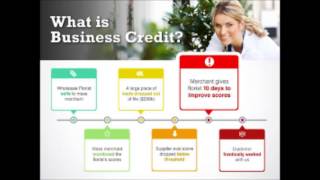
Thank you, Natalie. And hello everyone. My name is Amber Colley. I'm a director with Dun and Bradstreet Credibility Corp. And I would like to begin by mentioning how excited we are at Dun and Bradstreet Credibility Corp. To be able to be a part of this webinar and speak about such an important topic. Along with the sba, we recognize how critical small businesses are to the overall economic health of our nation. Small businesses are actually the backbone of our economy. They're the catalyst of change for our neighborhoods and community development. And too often the small businesses experience difficulty in access to capital that they need in order to start up or grow their business. So at Dun and Bradstreet Credibility Corp. We believe it's very important to help educate small business owners about business credit and and credibility and also to help facilitate the process between the small business owner and a means to affordable access to capital. So in an effort to help educate and prepare small businesses on their journey for growth, we want to help you better understand the five steps to build a strong business credit profile. Next slide, please. So running a small business can be tough and demanding at times. And we talk to thousands of small business owners every day through hundreds of credit advisors calling and consulting these owners about their business. These are the entrepreneurs who had the courage to go for it. And what we know is that their lessons and their experiences and their challenges and their successes are absolutely worth knowing about. So by using the most valuable lessons we've learned and sharing with those with you today, then perhaps if you're looking for ways to build your business credit, to get access to capital to grow your business, maybe to hire those new employees or potentially roll out that national marketing campaign or expand operations in another area of the country, then hopefully this presentation will help you along that path. So the things that we're going to cover today is who are we? Who is Dun and Bradstreet Credibility Corp. Why should you really care about your business credit? We want to outline for you actually how business credit works and then we'll walk through the concrete steps that you can take to build your business credit. The important thing is how important is business credit in the day to day operations of a business? How important is having access to capital when you need it? I can tell you that as a small business owner, this is more than likely one of the many things that are keeping you up at night. I'll give you an example. The other morning I was taking my oldest daughter to school and we stopped by a small coffee shop in our hometown. This is a drive thru coffee shop on a main thoroughfare through town. Great coffee, not a franchise. Probably two or three employees in the business at most. As the owner was taking our orders and preparing the coffee, I mentioned how much I loved his little shop and appreciated his coffee. And then I stated, I really wish you would also go open up a shop on the other side of town so I don't have to go out of my way to actually frequent your coffee store. And he said, you're right, I'd love to get another shop over there. And he mentioned many of his customers had also put in the same request. And he said at that point I'd love to do that, but in order to do that I need a few suitcases full of money and another employee just like myself that I can afford. Without that, you know he's unable to expand his business. If you're a small business owner, you can probably relate to this gentleman and the issues that he is facing in order to grow his business. Next slide please. So who are we? Dun and Bradstreet Credibility Corp. Is the leading provider of credit building and credibility solutions for businesses. Dun and Bradstreet Credibility Corp. Was founded in 2010 when it purchased and licensed certain assets related to Dun and Bradstreet Inc's self awareness solutions business. Dun and Bradstreet Credibility Corp. Operates as an independent business from D and B and Dun and Bradstreet Credibility Corp. Offers credit building and credibility solutions for businesses. We're actually headquartered in Los Angeles, California, but we have offices throughout North America. Dun and Bradstreet Credibility Corp. Provides monitoring solutions available to companies looking to monitor and impact their own business credit profile and our credit monitoring products are used by hundreds and thousands of companies interested in helping to protect their business reputation. Additionally, we do offer D and B solutions which help you gauge potential business risk of both end credit and creditworthiness of the companies that you do business with. Next slide please. So as a good starting point, let's talk about a company's credit worthiness and some of the ways that creditworthiness is actually determined. So what you see in the diagram is an outline of what's called the four C's of credit. Before anyone would lend you money, they want to carefully review your ability to pay them back according to the terms and conditions that are set, especially in tough times. But even when things are going well, they still want to review the following four items. So we'll begin with character. Character is Most often demonstrated by your prior financial history as a person or business. What type of credit history do you have or does your business have? Have you paid your bills late? Do you currently have any accounts that are delinquent? What's the total amount of debt that you currently have? And then have you used all of the credit that was available to your business? These factors are a good indicator of your financial character moving forward. It's often said that past performance can oftentimes be a good indicator of future performance when it comes to meeting your financial obligations. Next Capital capital is simply referring to the capital assets of your business. Lenders can consider capital and determine your creditworthiness. For example, if you're a manufacturer, heavy equipment or machinery could be considered your assets. Or if you're a restaurant, your oven fixtures could be included as an asset. But these assets can depreciate over time. So certainly a healthy cash flow is more appealing to a lender than capital assets. And then what is capacity? Capacity is referring to the company's ability to pay back a loan based on the amount of revenue that's currently being generated. If you're a brand new business, you don't have any revenue generated. So your capacity to pay back a loan is not as easy to determine because you have no prior history of doing business or no revenue currently being generated to rely on. If you purchased a business that historically had a positive cash flow where income exceeded your expenses, and that can be shown, lenders would look favorably towards that type of business capacity. The other c of the four Cs of credit is collateral. So in lending agreements, collateral is simply a borrower's pledge of property to a lender to secure repayment of the loan, it's serving as protection for a lender against a borrower's default. So if collateral ensures that the business owner is actually tied to the success of the business, and if for any reason the business were to fail, the business owner is personally invested in the success of the business. Next slide please. The four Cs of credit that I outlined in our prior slide can help to determine the overall creditworthiness of a company. But there are many factors that can impact your company's credibility and reputation. Business credibility is the amount of trustworthiness or expertise that a company has in the eyes of its clients and business partners and customers. Credibility is often a combination of the company's credit profile and also its reputation. So if it is lacking one or the other, then the company may be viewed as having poor credibility. On the other hand, if the Company is doing great in both companies credit profile and have a great reputation. It could be viewed as a credible company and certainly one worth doing business with. Next slide please. So why should you care about your business credit if you go to the next slide, Economic growth requires small business growth. So small business is a big deal. Small business is a catalyst of job creation. Without access to capital, they simply can't grow. And what most people don't understand is that the bulk of businesses in our country are small businesses. Next slide please. So small businesses need capital to grow. Healthy cash flow is actually the lifeline of any business. Purchasing, marketing, recruiting, distribution and payroll are just some of the many daily functions that fail to thrive without a dependable means of funding. So hiring that one to two employees is something that may be very important in terms of servicing that new customer you just brought on. Or if your sales reps are really successful and they brought on some new clients, how do you get those clients the support that they need without hiring one or two more people? Or maybe you're the business owner whose current employees have been with you for quite a while. They're loyal, they're hard working, and you'd love to give them a raise. How do you afford it? So in order to be competitive with other employers in your area, your company may have to increase benefits packages, 401k plans, medical benefits. So how do you afford all of this and still be profitable? Oftentimes by growing your business. Maybe that's through infusing capital into your business, but how do you get that capital? Next slide please. So banks want a loan to small businesses, and getting a small business bank loan is never easy. But as a small business owner, there are things that you can do to get ahead of the game in building your credit and demonstrating that you're a reliable business. Some of those include having a robust business credit profile that outlines a history of how you've historically paid your bills and the amount of business you can support. Make sure that your business credit profile is accurate and up to date so that there is a current report that shows the strength of your business. So, next slide please. Qualified small business owners are hard to find, so simply be aware of what your business credit profile currently says about you. If it's positive, leverage those positive scores in your negotiations. If the information about your business credit worthiness is limited, then work to build your business credit profile and start the process of keeping your personal credit personal and your business credit business. Next slide please. So here we have an article by David Nilsen in entrepreneur.com where they analyzed the NSBA's report, which estimated that roughly 8 million small businesses are strapped for cash and unable to hire or to take on new clients or sadly even keep their doors open. So unable to grow their business or expand their operations. This happens often. Maybe you have to reduce the number of employees you have because you simply can't afford them. You may not have the number of customers coming through the door that you had anticipated. Unable to finance increased sales. You got that big order, but how do you finance it then? You may have to inevitably, if you can't afford, you don't have enough money or revenue coming through your doors. Closed stores or branches due to lack of business or lack of funding. Next slide please. So let's talk about does business credit matter? Next slide. We get the question all the time from small businesses is I don't need credit. But let's talk about the ways that business credit makes a difference. Let's say that your company is located on a side street in your town. You'd really love to be on a main thoroughfare in your town or a newer building, a larger building. When you go to that landlord or you go to the property owner to discuss that new location you want to move into. One of the things that they want to know is let's talk about how you've historically paid your rent or your mortgage. Let's talk about the terms that we're going to set based on how creditworthy you are or if you're very little risk and what impact would that have to your business if you were able to get that newer location or larger location or in a better side of town? Another way that business credit matters do you have a product that you ship and what percentage of your costs are tied up in freight? So if you have a great business credit report, are you able to negotiate longer terms? Are you able to not have to pay cod? Does that make you more competitive because you can keep that cash on hand longer? Another for instance on business credit is payroll credit. Oftentimes payroll companies will float their accounts that will extend a line of credit to their current customers in order to process payroll for them. My personal experience is I've had a customer that called whose business credit scores declined and the line of credit that is normally extended to them while they are waiting for their accounts receivables to be paid was actually denied. So payroll was due and they are waiting for $100,000 increase or $100,000 float on this line of credit and the payroll company denied it based on certain scores having dropped, the immediate impact was the owners had to find a way to get to additional money and to pay payroll the following day. So that's a for instance in how business credit matters outside of just trying to get a loan. Another thing could be national distribution. Let's say you're doing business with a mass merchant and they're going to test your product in a certain area of the country. Maybe they're only going to test it in, let's say, the southeast U.S. but all of a sudden sales take off and they want to put you into other areas of the country. But guess what? You don't have the financing you need to buy the inventory or to ship the inventory to all of these areas of the country in order to fulfill this order. That could impact your ability to nationally distribute your product. Lucrative jobs on bids how many of you submit bids to contractors? One thing that you can do is use positive business credit to actually leverage to get more jobs when submitting bids. You can leverage the fact that your company pays their bills in advance of others in your industry. You can leverage the fact that you've got a long history of great credit. You can leverage the fact that you've got great reputation online and credibility. That's just one way or another way that business credit matters. Next, which is more common that people understand, Line of credit increases. Let's say you do get that big order, but you need inventory to actually fulfill the order. What's that going to require? That may also require an increase in your line of credit. And if you were to go to your lender today to ask for the line of credit, what does your business credit report look like and could you support getting that increased line of credit? If you'll go to the next slide. This is certainly not a comprehensive list of all the ways that business credit matters, but it does have a significant impact on the terms, the conditions, the ability for a company to leverage and negotiate. Having had a great history of business credit, if you have great credit, you can go to a property manager to say, or you can go to a landlord to say, I've historically been in these locations, I've paid my bills on time. We're a growing company. We have revenue coming in and we want this particular property and you have the ability to negotiate, or it's a freight company, they may not offer you terms. Then you have the ability to go to another competing freight company and use your business credit history and have that type of ability to leverage business credit. All of these are great ways to Actually understand and focus on why you need to build your business credit profile. But not only that, manage and monitor your business credit profile. Next slide, please. So I'll give you an example of what is business credit if you'll go to the next slide. People often think that business credit is about getting a loan or getting an increased line of credit. But I'll give you, for example of a business that I worked with personally, who was a wholesale florist that sold to a mass merchant who had great business credit. Most companies will monitor their customers, excuse me, their vendors, business credit reports to determine and manage their risk. So they want to know that all the people that provide to them are reliable and that they will be able to ship the goods and the terms and conditions that were actually negotiated originally. So in this, for instance, wholesale florist sells to a mass merchant, they have a business credit profile that is strong. What happened was all of a sudden one of the trade experiences in their business credit profile dropped out. That happened to be a quarter million dollar experience. So once the quarter million dollar payment experience fell out of the business credit profile, the only other credit experiences that were remaining were much smaller, to the extent of $5,000, $10,000, $1,000, much smaller, also still paid promptly. However, some of your scores and ratings are driven, especially the paydex score on a person's business credit profile is driven off of the size of the trade experience itself. So when a quarter million dollar experience would fall out of your file and other experiences remain that are significantly smaller, that may indicate within your scores that you have become higher risk. It doesn't show that you are able to pay the same amount of business on time promptly. It doesn't show the amount of business that you could support. So in this, for instance, their supplier evaluation score, a score that shows the reliability as a supplier had declined not because the company had not paid their bills on time, but because a certain experience had fallen out of their files. So they did get the call from the mass merchant that said, you want to make sure this has to be at a minimum number for us to continue to partner with you, because the current scores in your business would indicate that we have some risk in continuing to partner with you. So you have 10 days to have this score back where our minimum thresholds are met. Certainly at that time, the business owner was frantic to ensure that we have added back into their file higher, excuse me, D and B had added back into their file higher lines of trade to support that nothing had changed in their business other than a Particular experience had fallen out. That is an example of why you want to make sure you are monitoring your business credit profile to make sure it is accurate and reflective of the amount of business you could support, as well as how you pay your bills. A trade experience. So I can outline what that is. A trade experience is a record of how you've paid your bills to a particular vendor. So, for example, I have a vendor that requires that I pay my bills net 30 days and every month I pay $10,000. Excuse me, I actually pay a bill for $10,000 to that vendor and I pay it on the 30th day. So I've met my terms and I've paid it. And that would be recorded that I pay my bills promptly. And a $10,000 trade experience would fall on the file over time. A trade experience can fall out of a business credit report. So a trade experience will stay on a business credit profile 24 months. So you have a responsibility as a business owner to make sure that you're continually managing the content and monitoring it to make sure the information is reflective and accurate of your current business today. So this is, for instance, of someone who built business credit, was actually managing their business credit, but wasn't monitoring it. So it goes back to emphasize it's not a one time process. You can't look at your business credit report today and then forget about it. It's an ongoing process that you as a small business owner want to stay involved in. Very similar to your personal credit. You don't just pay your bills on time one month. And you just don't care about your FICO score only because you're getting a mortgage. You should throughout your adult life care about what your FICO score says about you. So that when you go get your car or maybe you're doing rental property, all those types of things, it continually allows you to manage and monitor the process. Next slide, please. So I want to talk about improved business credit. What can it help you with? Certainly increased sales and loan opportunities. How much easier is it for you to go to the bank to get an increase or get a loan? When you walk in there and you've got a proven history of how you pay your bills, higher lines of credit are available to you. I'm sure if you're a small business owner with a great business credit score, you're probably getting all of that mail that says, here, take this business credit card, take this business credit card. At these very low interest rates, improved finance rates and terms, we make a joke that says those Customers or those companies that have great business credit profiles, they're able to get that 2% eternity net never type of financing in terms because they literally have taken the time to differentiate themselves from the competition. They've got a proven track record, they pay their bills on time, they're very low risk. They're certainly someone that I want to partner with. Better cash flow and then greater credibility for increased deals and sales. So you work hard to get people that actually sell your company's product. You knock on doors, you are trying to get that particular job, you are trying to close that big deal. But what happens when your sales rep is no longer there or you are no longer there and that company looks you up online to figure out who you are, what you are about, and if you can support the amount of business that they need? What does that say about you? So you want to understand your business credit report. Next slide, please. So let's talk about how business credit works and you can go to the next slide. So we want to kind of help you outline how a business credit file could even be created. This slide is one example of how a business credit file is created via D and B. But there are other additional sources of business credit files available to the public, including Experian Equifax. This, for instance, is the D and B credit profile and how a business credit file is created. So you registered your business name somewhere. When you registered your business name, that indicated that there was a company at this address, at this phone number with this business name that was beginning to start. That could count as a piece of information that might indicate to DMV that there is a potential business operating. If a second incident happened, maybe you tried to take out insurance using the business name. Now we have two pieces of information and at that point a good indicator that a business is forming. So you may have done nothing with D and B directly and a business credit file can be created. Maybe you tried to partner with someone, or you tried to do business with someone, or you inquired about doing business with someone and they tried to investigate who you were and pull your business credit profile. That customer inquiry could also be another source of information to determine that there was a business operating at this phone number or address. So you could never get a call from D and B but still have a business credit profile. Certainly if you're shipping any goods and services under a company's name, that could indicate also to D and B, if that's being shared at that point, that ha we've got a business that's Registered. We've got people who are inquiring about this phone number, business address. They're shipping goods from here. Pretty good indicator that there's a business operating. There may not be much information in the filing on that business, but certainly a DUNS number could be assigned to that business entity. Next slide, please. So we're going to show a quick video actually outlining how D and B tracks your business activity.
By simply being operational. Your business may have been assigned a D and B DUNS number through D&B's data gathering process. If D and B comes across a business that isn't in its database, it tries to assign that business a DUNS number and start a credit file. It just needs confirmation that the business exists. D and B needs two or more sources showing that a business exists. D and B uses many sources to try and confirm a company's existence. A business could end up with a DUNS number by providing goods and services, setting up accounts with vendors, suppliers or banks, advertising, filing legal documents with courts and legal entities, or submitting financial statements. Because D and B gathers this information from outside sources, a company may be unaware that it has been assigned a DUNS number. For example, imagine that a company files incorporation papers with the Secretary of State. That filing could be one source documenting the company's existence. If that company enters into an agreement with a vendor that reports payment experiences to D and B, those reports could become the second source. D&B could match those two pieces of data, confirm that the company exists, and create a DUNS number for it.
So there we've showed you how D and B actually tracks business activity. Why would someone inquire about your business credit report? Because business is constant and ever changing. And here are some astounding numbers. In any given hour, 385 suits, liens or judgments will be filed against companies. 11 businesses will file for bankruptcy. 74 business phone numbers will be changed or be disconnected, and 87 new businesses will open their door. So think about that. If you have a subset of customers, how many of your current customers may fall into one of these four categories? And how would you be aware of it? The same is true if you are a customer of someone. So at that point, they want to ensure that you're not one of these 11 businesses in this hour that may file for bankruptcy, and if you were to, what type of debt would you still owe them? So it's just smart as a small business owner to be aware of how your customers pay their bills, how reliable your suppliers are, and to be aware of what your business credit report says about you. You can go to the next slide. Pete, next slide please. So in that same vein, we want to talk to you about the steps that you can take to help improve your business credit. Next slide. First and foremost, number one, check your business credit profile. How do I even do that? You want to start by downloading the Credit Reporter mobile app. Credit Reporter is the mobile credit report application for Dun and Bradstreet Credibility Corp. Products and it includes Credit Signal, Credit Alert, Credit Monitor and Credit Builder. So business owners can register a free Credit Signal account to view information about their business credit report and receive alerts and notifications when there are changes to their credit report. Existing Dun and Bradstreet Credibility Corp. Customers can log into their accounts to view a mobile dashboard for their respective products and credit report as well as if you have questions. Credit advisors can be contacted easily by simply tapping to call within the application. And again, this is the first and only product on the market to provide companies with a free mobile credit report application as well as free access to changes in their D and B credit scores and ratings. I highly recommend that you download the Credit Reporter mobile app and then sign up for Credit Signal for free. With Credit Signal, you actually get free alerts to changes to your D and B scores, including paydex. You get a monthly email alert to changes in your report and you can log in anytime to see all of your recent alerts in one place on your business credit profile. So let's say you login and then you see a discrepancy in your business credit profile information. At that point you can go to companyupdate.com Again this is free of charge and you can make changes to your company's information. So what is companyupdate.com it's actually a quick way for you to establish your business credit file. You can get a free D and B Duns number from Dun and Bradstreet. You can review and update your existing D and B credit report. You can review and dispute payment experiences reported to D and B. You can update financial statement information, you can review and dispute public filing information and you can view and print a copy of your D and V credit report. So I've just outlined three ways that you can actually check your business credit file and that is the very first step and it is the most important step of all the things that we'll talk about. Next slide please. So we talked about keeping personal credit personal and business credit. You want to make sure that you establish and build a business credit history for yourself. Oftentimes we talk to small business owners who are buying everything on their personal credit cards, who are putting invoices in with vendors under their personal names. So when we go to start the process to build a business credit profile, they have nothing to establish that they've actually been paying bills as a business for quite a while. So the very first thing that you can do is when you're filling out applications, when you're buying product, buy it under your business name, even for a while. If you have to personally guarantee it as a business owner and you want to add good payment history, you want to make sure that you are paying your bills on time and you want to make sure that you're paying your bills on time under your business name. So establish and build a business credit history. Next slide please. Excuse me. Yes, next slide please. We're actually going to show you a quick video about separating business and personal credit.
Your D and B business credit profile may play a big part in the decision process for banks, credit card companies, insurance companies, and other potential partners. It's important to understand that only business credit shows on a D and B report. Personal credit doesn't. If you're using personal credit for your business, people who look at your D and B credit file to make credit decisions may not see the full picture. You can start building a strong business credit profile at any time. The first step is making sure the information on your profile is accurate. An empty, incomplete or inaccurate file may result in higher premiums, higher interest rates, lost business, or challenges in raising capital. Add company details like the number of employees and financials to your D and B business credit profile. Complete information and positive scores can make your company appear stronger and more stable. Adding positive payment experiences helps show lenders and creditors that your company can deliver on its payment terms rather than paying cash on delivery. Your D and B DUNS number can also help build your business credit profile even if you're also required to provide your personal credit information. Whenever your company applies for lines of credit terms with partners and so on, provide your DUNS number on the application. Use it to negotiate better terms, or negotiate with your long term suppliers to remove the personal credit information from the account after six months or so once your company has proven its trustworthiness. That way, if your partners report your payment history to D and B, your company is rewarded for the payments it's making.
Overall, they were simply stating that you want to make sure that you don't have an incomplete business credit report because lack of information can negatively impact you it can cause you to get higher interest rates. It can cause you to get shorter terms. It can cause you to have higher premiums. Because people have a tendency, banks have a tendency to err on the side of being conservative. If you have very little information, there's not enough information to make an educated decision on the terms and conditions in which to do business with you. So number three in the steps to building your business credit pay your bills on time. We talked about that. But not all bills are equal. Higher bills or bills that are larger. For example, you have a vendor that is a $10,000 payment that you pay monthly and then you have $100,000 or let's say you have $500,000 that you're paying monthly. That will have a much more significant impact on your scores and ratings in your business credit profile than $100 payment experience. Paid promptly. So you want good credit history to be reflected on your file. And you do need to understand that you can have all the $25 trade experiences you want or all the $100 trade experiences you want paid promptly. If there is a negative experience of $5,000, then it will have a much more significant impact on your overall scores and ratings. Because we go back to historical payment information can allow a predictive score to predict the way that you will pay your bills over time or the amount of financial distress that you may experience over the next 12 months. A lot of that is going to be contingent on the current business that you show you support and the amount of that business and whether or not you pay that bill promptly. You can go to the next slide, please. So we talked about monitoring your business credit profile. Keep an eye on this. We went through the ways to do that. Keep an eye on your company's D and B scores and ratings. Did you know that you can be notified when you have an inquiry on your business credit report? Did you know that you can actually be notified and we can inform you of the industry that is looking at your business credit report and then you can identify how extensively your company's information is being used. But more importantly, you can know what areas of your business credit profile need to be improved because you are going to be alerted. If you are monitoring your business credit profile, you will be alerted to scores and changes in those scores that may overall impact how your company is being viewed. The next slide please. So just as important as you monitoring your own business credit profile, the same is true when other people are monitoring your business credit profile. You need to monitor the credit profiles of your customers. And also your vendors. Sometimes people ask me, why would I want to monitor the credit reports of my vendors? Because what would be the impact of your largest vendor experience financial distress. So you want to make sure that you are reliable and you can continue to deliver to your customers. What would be the impact of one of your current customers not paying you on time, which then you could not pay your current vendors on time? If your current vendor dropped you, do you have the flexibility and the credit history to go to another vendor that had the same type of product and negotiate a shipment of goods? So when you have good business credit profiles, you have the ability and flexibility to leverage that information, to operate more profitably and to negotiate. So next slide please. So these are the five steps. Build your business credit profile. Check it first. Make sure you have one. Someone asked the question, where would I find if I have a DUNS number? You can actually go and log on putting in your business information. And if there is a DUNS number associated, it will give you the choices or the companies to choose from by name that you can select from particular DUNS number. You may not have a DUNS number. And if you don't have a DUNS number, then you go to companyupdate.com like I mentioned and you can go through that process to have one created. Number two, establish and build a business credit history. We talked about ways to do that. Adding information into your file. You want to make sure that you have an accurate reflection in the number of employees. You want to have an accurate reflection in your sales volumes. If you choose, you want to include financial information of your business, because the more information that you can include, the more information there is to make an educated decision. And if it's favorable information, oftentimes you can leverage that to separate yourself from the competition. Most importantly, pay your bills on time. Monitor your business credit profile. I cannot emphasize that enough. I used the example of the customer that I spoke with directly, that was the wholesale florist to a mass merchant. Unfortunately, 80% of his business was tied up with this mass merchant. So had he lost that account, he mentioned to me 80 people would have been laid off because it was that significant part of his business. More importantly, not sure that he could find another customer of that size. So monitoring your business credit profile became very important to him. But don't wait. Don't be reactive. Be proactive in that process. And then, as importantly, monitor the credit profiles of your customers and your vendors. One way to keep business risk at a minimum is just to be aware. If you took your current vendors and ran them through a profile that said how risky are they? What percent of risk are you taking doing your business with these current vendors? And should you go diversify your supplier base so that you don't have that risk? Or have you looked at your top customers that you have today? Are any of them beginning to pay slow and have you looked at their business credit profiles? So making sure that you as a business owner are just as proactive about your current customers credit profiles and your vendors credit profiles is very important. Next slide please. So at Dun and Bradstrick Credibility Court, we're certainly here to help. We consider ourselves small business advocates as we consult with small business owners all day, every day. We talk to them on a variety of issues, including building business credit. So we want to make sure that you watch our educational videos. They will answer most common business credit questions that we get. And that is@education.dnb.com so again, that's education.db.com and that concludes the five steps to building business credit. And at this point I will actually open up the webinar to questions and I've been seeing a lot of them come across. So we'll just wait for those.
Hi. So this is Dustin Luther. Amber, thank you so much for the wonderful presentation. I've been tracking a lot of the questions as they come through here. We have similar questions that I think are a great place to start from Linda Singen and Leticia Bottom they just asked how do we check our business credit?
So you would check your business credit by going on to db.com and you can search for your company information. And at that point, if you're finding your business credit profile, clicking into that and actually looking at your business credit report is that process to take. So if you go to dndb.com you can actually get to that business information to see if you even have a business credit report. And then I go back to the steps that I asked you to make sure that you do. So if you do the Credit Reporter app, it's very, very simple in that process to type in your company information. And at that point, if you have a DUNS number or if you have a business credit profile, you can just register for credit signal there and get free alerts to changes in that information.
Thank you very much. And I thought I would throw out. I see some more questions coming through, people. We have about 10 more minutes to answer questions. So if you do have them, please add them to the chat there. The next question I thought was I would handle comes From Let me scroll back up again from Anna Stinkin. I like she says, how does this work for small business owners who are in the bakery and pastry fields, for example, that have they do not produce high sales or employ very few people?
The good news about business credit is that it doesn't. There's no discretion. It literally applies to all of us. So the baker is no different than 100,000 employee manufacturing company. Your business credit is relative and important. Let's say you're buying goods that you need in order to make those pastries or those rolls or that bread. Your vendors that supply you those goods want to know that once they've shipped those to you that you'll pay them back on the terms and conditions that are set. So let's say you've historically never paid your bills on time and then you go to this wholesaler of flour or what have you, and you say, I would like to buy $100,000 or $10,000 worth of product from you and I'd like to pay for it in 90 days. If they pull your business credit profile and you've never shown that you've purchased anything more than $500 and of that you've paid it slow, the likelihood of you getting terms on the goods that you're buying would be minimal. Or let's say that you are a thriving baker and you want to expand your operations to the other side of town or maybe another state and you have established no business credit history. How do you go to your bank or a lender and try to negotiate getting additional capital to infuse in your business because you've got no credit history to kind of talk the talk and walk the walk. So that's why it's so important no matter what your size is, if you're one employee, I would say that's as important as having 100 employees. Because how do you get to 100 employees without having great credit?
Makes sense to me for sure.
Thanks so much.
Another one. Hopefully this will be a pretty easy one. Gary Odom asks how do I figure out my DUNS number?
How do you figure out your DUNS number? It really goes back to the same thing that I was referencing. If you go into the Credit Reporter app and simply type in your company name state, it will pop up with some selections. There are several companies with your name. Choose which one you are and it will provide you the DUNS number for that organization. But again, I go back to also typed in www.dandb.com and you can search for your business information.
Very cool. So I had a question also come through I thought was interesting pretty early on from Sharonda Wesley. She asked, will we be able to download a copy of the slides? And this might go to the SBA team as well. I know that we said we'd make these slides available, but I'm not exactly sure where somebody will go to find that.
Yeah.
Hi everyone, this is Natalie Goriel. So what's going to happen is after the webinar, we will email all participants a copy of the presentation along with a recording of today's webinar. And just a reminder that recording of today's webinar will be available@YouTube.com SBA.
And Dustin, I want to emphasize I actually went to about the question on how do I get to my company's DUNS number? I went to dndb.com and my selection at that point is get a D and B credit report and I can check my business or another business. So you'll select that. And then you can search by business name or phone number or duns. If you already know your duns, you can put your duns in. If not, just put your business name or your phone number and you can search there to see if you have one. And then let's say you did not download the credit reporter app. You could go the same way. Dandb.com and there are some tabs at the top. And you click Business credit reports and you simply click the tab that says Credit Signal. And that is the free offering that I was telling you that would track alerts to your business credit report. And you simply click get it now for free. And when you do that, it asks for your business address. And then you can sign in that way. But first you're going to search for your business name or phone number or duns.
Very cool. I had another question relatively early on from John Hickam. He asked, he's in the beginning stage of starting a business. How does he separate his personal from his business credit? I know you answered some of that, but I also know that some of that was in a video that some people were having trouble with. Could you just give some highlights there? Just somebody starting a business. What should they be looking at?
Okay, and this is a really good question. It's a common question that we get all the time as a small business owner. Oftentimes we see sole proprietors using their personal credit cards, using their own cash on hand that they have in their bank accounts to pay bills. And they do not often ask whether it's a an office supply company or an office furniture company, they don't ask for a business account to be set up. So my suggestion is when you're purchasing goods, when you're doing anything, you should ask for whether it's a business credit card and you can personally guarantee it with your personal information. Making sure that you've established business accounts is the number one way that you can start to differentiate the two. And then at the same time, you would reach out to Dun and Bradstreet Credibility Corp. And you would try to initiate a free DUNS number through dmv. And then all of the experiences that you are recording or purchasing through your vendors as your business name, most of them are probably ones that could be reached out to to record that transaction. So let's say I'm ABC Florist company and I just started my business. I've always bought using my own personal credit. It would be to my advantage to go to the vendors of these flowers to tell them, moving forward, I want you to use my company name and my DUNS number. And if there's no history there, I'm trying to establish it. I'll personally guarantee, if that's what's required. But over time, I want to differentiate the two from each other. So it does take time sometimes, but it's certainly worth starting the process now. So over time, you can no longer have to rely on those personal guarantees or personal credit.
Very cool. So I had another question that come through here from Rex Kersey. I hope I'm saying his name wrong. Sorry. Or right. I hope it's not wrong. He says. Actually, let me just scroll right back to him.
He says.
Are there SBA or similar promotions? Subscribe to reporting services? I'm not exactly. He had a couple of questions. That was one maybe. Do you have an answer for that, Amber, or should we?
If you're talking about particular promotions or offerings that we have, we are oftentimes sending those out to small businesses either through direct mail or online. So I highly recommend that if you're looking for certain offerings that we have going back to dandb.com and playing around on that website, because there's tons of educational information, there's tons of product offerings, there's free samples, you can get the alerts, you can get the free credit signal. And at that point, there probably are at that point special promotions or offerings out there.
Very cool. He has another question I thought was interesting as well. He says, for cash purchases from suppliers, how do we self report?
Okay, so cash purchases do not weigh on a payment score. So do not, if at all. If you can negotiate that, I would suggest that you don't pay cash even if you said to them, I would like to have an invoice that stated we pay on net 30 day terms and I'll turn around and pay it today. Because the cash experience cannot be weighted in a historical view of how you pay your terms. So it can be recorded in your business credit profile, but it has no bearing or weight on your actual paydex score, which has a heavy weight on all of your other stress scores.
Very cool. I'm sorry if I'm scrolling here, there's so many questions actually coming through that I'm just trying to get up to the right ones as I go through these. I thought there was another one that was interesting. It's from Jeffrey Henderson. He says how do we verify ownership of a business? What info is required to avoid unauthorized fraudulent info being added?
So you would have to verify it through the your business license has to be included and there are a whole series of questions that you're asked in terms of building and determining that you're the actual owner of the business, what percentage of the business you may own, if there are other people included that are part owners in the business. And so we take that very seriously in terms of making sure that information that's reported to us will actually filter back and be accurate and up to date. But there is a series of steps that you go to to validate the authenticity of who you are and who owns that business, what address is it at, what email address is tied to it, a web address and all of those things. And we actually do have services that will verify your information that you've updated and you've provided across 125 different online platforms. So if you are interested in making sure that your information is complete and up to date across the web, it is certainly something to look into. So if you went back to dandb.com one of the credibility solutions that we offer is a product called Verified and you can data and that's actually sent out to 125 different publishers across the web. Especially as a small business or a new business. It's something that I highly recommend.
Very cool. There was a follow up question, one of the previous ones from somebody by the name of Erica Kirksey. She asked so is self reporting even an option?
Self reporting is an option and that is part of what we provide with our credit builder solution. We allow a small business owner to provide however many trade experiences that they have that they want us to, that they would like D and B to reach out to to record the trade experience into the business credit profile. That can absolutely be done. And our credit builder solutions offered by Dun and Brassic Credibility Corp. Address that particular need because there are so many small businesses out there that do business with certain companies that may not automatically report. This credit builder solution allows you to do that.
Thank you so much. So I see this just barely after 3pm Eastern time. And so I believe we're supposed to be wrapping this up right now, but there's still so many questions. I think we should let everyone know that we will be following up with people via email. I believe that will be an option to answer any unanswered questions here because we want to make sure that everybody gets answers to at least their questions. And can I turn this back over to Natalie, or is it who?
Yeah. Thank you.
So thank you again everyone for joining our webinar. Again, the recording of the webinar will be available later this week at YouTube.com sba. Thank you again for joining and thank you so much. Amber.
Oh, you're welcome. Thank you.
Thank you.
More from Your







President Donald J. Trump and First Lady Melania Trump Visit Grieving Texas After Deadly Floods

💪 Thinking of starting a #biz? Go for it! — Kerry Boyle, Vermont #SmallBiz Person of the Year

President Trump Participates in a Bilateral Meeting with the Prime Minister of Canada, May 6, 2025

