Webinar: The Power of Direct Mail
Small businesses can use direct mail to acquire and retain customers by following the 40/40/20 rule: 40% list quality, 40% offer strength, 20% creative design. The webinar covers data hygiene, testing methods, and how to combine direct mail with digital tools like QR codes.
Chapters
Hi, everyone. My name is Natalie Goriel, and I'm the online media coordinator for the U.S. small Business Administration. I'd like to welcome you to today's webinar. This webinar is made possible through a partnership with the United States Postal Service. We are really excited to work with the Postal Service because partnerships like this allow government organizations to come together in support of the small business community. It allows us to hold free webinars like this on a variety of business topics. In just a moment, I will turn it over to Bill Lang Bartels from the United States Postal Service. But before I do that, I want to say a little bit about why SBA is so excited about this partnership. We know that as small business owners and entrepreneurs, you need more of two time and money. Our mission at the SBA is to provide the nation's 28 million small businesses with the support they need. And in a world where time and money are both short, we do this through what we call the three Cs. First, SBA provides capital to small businesses in the form of guaranteed loans to start, expand, export, or recover after a disaster. Second, we help small businesses with government contracts, which is a $100 billion market. And finally, what brings us here today is that SBA provides counseling services, often at no cost. Many of you might be familiar with the SBA resource partner network, including small business development centers, SCORE mentors, women's business centers, veterans business centers, and our SBA field offices. I encourage you to visit SBA.gov to learn more about what services and events you can find in our Resource Partner Network. In addition to the SBA Resource Partner Network, we work with organizations to bring in expertise and areas like direct mail. According to a 2012 study by Exact Target magazine, 65% of consumers have made a purchase as a result of a direct mail piece. And so, through this partnership, we will offer you with some direct mail strategies to help you succeed. So let's get started. I'd like to turn it over to Bill from the United States Postal Service.
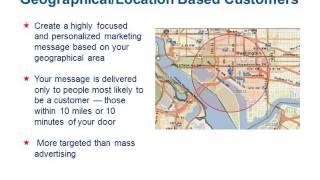
Thank you very much and hello and welcome to our webinar today. As we said, my name is Bill Enga Bartels and I'm with the USPS National Sales Organization. I've been with the Postal Service for a little more than 20 years and 10 of those being in sales, where I've worked with customers on mailing and shipping and how the Postal Service can help their customers grow their business. And that's what we're going to talk about here today, how mail can help you grow Your business. Now, you may think that people don't care about mail anymore. Everyone is into their iPads, their phones and electronic marketing. But the fact is, many large companies in America are increasing their direct marketing spend. In fact, the DM news, that's the Direct Marketing association news, reported back in September this year that even in this prolific digital age, direct mail proves to be a strong tool for marketers. Standard mail volume is growing at 3% and marketers will spend $45 billion on the channel in 2014. Now, I don't know about you, but $45 billion doesn't sound like a market that is dying or so let's take a look at why direct mail continues to be a strong channel for companies trying to grow their business. So just like with any other marketing plan, you need to define the key objectives of your business. Do you want to increase sales? There may be a time you don't want to increase sales. Maybe you don't have the productive capacity, but if you do, did you know that direct mail is one of the most effective acquisition media out there? Why is that? Because direct mail's purpose is to get customers to take action. Now, it's more than just advertising. It causes customers to pull out their wallet and spend some money. Now, while acquisition is one of the most common uses of direct mail in corporate America today, companies are also using mail to build brand recognition and develop strong long term customer relationships through loyalty programs. So what makes direct mail the workhorse of direct marketing? Just as we talked about on the last slide, it's the incredible return on investment or roi. You can increase revenue. Studies show that it's cheaper to grow revenue with existing customers. And direct mail can do that by surprising and delighting customers with the right offer, giving them an exclusive best customer dollars off on a particular product that you may be highlighting. It can generate sales leads. We talked about acquisition previously. We'll go into that more detail in just a minute. It can generate sales. Excuse me, Cross selling. Tangled there. Think about how customers who buy certain products from you might be a good candidate for another product that your company sells. With data, you can determine who makes a good cross sell candidate. And we will go into more detail on that one. With direct mail, data is your friend. The more data you have on a customer, the more precisely you can target offers toward them. Next we'll take a look at loyalty. We talked about that earlier and again it's knowing what's in your customer database. What do you know about your current customers? Can you use that to cement loyalty? Or even turn it into a cross sell opportunity. Building retail traffic is always a good purpose for direct mail. We're going to talk about Localey's marketing solution that we have. It's really second to none. It's called every door direct mail. It's really great at building traffic for local retail locations. Develop that database. The real power of direct mail is realized when you know a lot about your customers. It helps you get the ideal amount, deal, offer to the right person at the right time. That's really what it's all about, responding to your competition. It's much easier to get pieces in the mail than you might think. And we'll talk about that as well during this presentation. What's really nice about mail is you can get out there and respond to something that your competition is doing very quickly. You can also kind of see what your competition is doing if they are using the mail. So you can collect the database. You can collect your own direct mail pieces. I do that myself. You can collect them at home. You can collect and you have a nice library of other letters that you see other companies sending out. The last point here, augmenting with other advertising, we want to make clear that mail is part of an overall omnichannel marketing campaign. Are you running a newspaper ad? Then send a direct mail piece to bolster your response. Are you running a radio commercial? Tell your listeners to watch their mailbox for a great offer. So it's really the message we want to get across is it's integration, it's getting this as part of your marketing mix. So how can you put direct mail to work for you in getting new customers and how do you keep them coming back? It's really pretty simple. We're going to show you some of the ways to do that. We're going to show you the holy grail of direct marketing today and why so many companies use it and to do all the things that we're talking about right here. So this is the holy grail of direct marketing, the 40, 40, 20 rule. It's really an industry standard now. Everyone focuses on the mail piece. Right. When they think about direct mail. What a pretty piece this is or this is cool. How creative this agency piece is that they came up with? Yeah, so cool. But the problem is the real fact of the matter is the creative is really the least important factor when measuring success. The list is king. We have 40 here as part of that 40, 40, 20. But some experts really think it accounts up to. That's a bunch. So it really speaks to the need to have good data that is targeted to customers who will buy add an offer that will speak to the list what will make them buy. Testing all of these elements is really important to get the best bang for your buck. When we say testing, do you say $25 off or do you say 25% off? What's going to drive the highest response? Mess around with the fonts and the colors? Does that make a difference? And what about the list? Maybe you want to segment the list a little bit. How does that make a difference in your response? All of these things are taken into account when we consider what makes a direct mail piece or a direct mail campaign successful. So first we will take a quick look at the creative. Now, while it is a 20% factor in this equation, that is still pretty important. You will want to test your creative and make sure you are using the one that sells the best. Which elements do you want to include? And once you find that combination that works, that's your control piece. So you spend a lot of time tweaking your control the color, the font size, the list letter, all of these elements and through testing you try to beat that control all the time. So looking at the basics of creative here, as you can see, this comes from one of our postal pricing sheets. So it's not terribly pretty, but it is functional. These are the basics shapes the postal service uses to categorize different types of mail for processing. Now, most people know about letters and postcards, but you may not know why we call large. You may not know that we call large envelopes flats. You might also be wondering why parcels are included in this list when we are talking about direct mail. Well, think samples. Samples are very effective ways to get customers to buy. Nothing works like a sample. So we see a lot of this in commercial applications where a sample to a company might be just what they need to get that lucrative lead for their sales force. Now you can find this chart on the back of this particular document called Notice 123. To find that you're going to want to go to pe.usps.gov that's Postal Explorer is what that stands for. Don't Type in the HTTP or the WWW. You just want pe.usps.gov and that will give it to you in PDF format if you like. You can also find pricing information for all of our other products. This is a very ext document. USPS.gov also gives you some of our quick service guides. So if you have questions about how to format the mail specific for specific price Tiers. That's the place to find it. So here are some important elements about the creative. First of all is the offer. Now we're going to talk about the offer a little bit later as well. But it's really an integral part of your creative. Once you find what you need, once you have that offer, you want to repeat it often so customers don't miss it. I have some financial samples here at the office that have the offer on both the front, the back and in the envelope and in the letter and repeated over and over again. They want to make sure that people understand exactly what they should be doing. What do you want the customer to do when they get your letter? Now fonts. You don't want to be too fancy with fonts. Just use only clear, legible fonts. The last thing you want your customer to do is to have to work to figure out what your mail piece says. And as you see here, avoid reverse or light colored fonts at all costs. Anything that hurts your response, you want to avoid. Void Color is also an important consideration. You can go out and Google. There's a guy who did some color studies several years ago. His name is Dr. Siegfried Vogel and he identified the psychological impact of color. Some of you may have taken a seminar where the leader talked about the mood of certain colors. Well, those same concepts can be applied to direct mail when you are designing a piece. So take a look at that. The Power of the PS Every sales letter should include a postscript. Why? Iflow research shows that as consumers or customers scan letters, their eye goes to the PS first. So this is where you have to get the most compelling language of your offer to get the recipient to a lift letter. What's that? This is a little scrap of paper. It's sometimes called a buck slip intended to lift response. So if you think about a lift letter, you may remember the old Publishers Clearinghouse envelopes from years ago that had the yes and no envelope. So if you open the no envelope, there was usually a little yellow slip in there that told you why you should be reconsidering, why you don't want to say no. These have been shown to increase response in most cases. So ask yourself what extra push might your prospects need to buy? Put that in your lift letter. Finally, we have the control. Control? This has to do with testing. We talked about that a little bit earlier. Find a formula that works in the creative and then try to beat it. One well known company that everybody here has heard of once had a control that worked for 28 years. They had a formula that worked. And despite all the efforts of new people in the company, new copywriters, designers, they simply could not beat the rather simple package that was developed 28 years earlier. That's just phenomenal if you think about it, especially in the world of advertising. Does Anything last for 28 years? Well, here was a control that kept producing revenue. Just something to think about when you look at your own controls. So again, you want to come up with something that works and then continually try to beat it with your next piece. Now we are going to talk about the most important element and that is the list. Now it makes sense if you think about it. Your house list. Now, your house list that you have is probably the most important asset your company owns. It's really not the product, it is not the building or anything else, because the lifeblood of the list is your customers. And, and think about what you know about them or can find out about these customers. And that has more to do with your future success than anything else. We'll talk about that in a little bit. Now, there are a number of different ways to find target customers in an acquisition list. But it all comes back to how well do you know your house list? Once you know the customer is there, you can work with a list broker to determine the profile that you need to find the right list. Databases. Lists have a number of different factors. We know residential lists can have. The simplest level can be based on census data. So that's going to be included in that we know where high value customers live because people tend to cluster according to demographic factors. So another point of reference are psychographic factors. These groups don't cluster in the same way. For instance, you wouldn't find a neighborhood of fishermen in most cities and except by the coincidence that the neighborhood was on a lake. So geography can also play a factor. Forbes wrote an article in 2011 that showed that more than 80% of household income is spent within 20 miles of a consumer's home. So you might have a good reason to target those close to your business. That being driving store traffic and capturing some of those dollars they're going to spend at local businesses. Buying behavior, obviously a very important factor. Which leads us to our next slide. Now, before we go there, we're going to take a look at this little graphic over here. This comes from srds, which is a database that identifies different kinds of lists available out there and takes in the factors or selects which are down here. Some of these, you might have noted, are more expensive than others. Why would that be? Probably because if you look at this one, Lifestyle Premium versus Lifestyle Select Standard, those are probably more valuable customers and therefore you're going to have to pay more for them so they have more disposable income. They're probably going to have to buy, they probably have more of a chance to buy. So that's something to keep in mind. Again, consult a list broker. When looking at lists, they are really your guide to the industry. Now, a long standing analysis that's been done on the list is called rfm. It's a simple system that allows you to assign a value to each customer based on their purchase behavior, recency, when did they last make a buy? Frequency, how often do they buy, and then monetary, how much do they spend when they buy? Now, when you put your customers into the grid and analyze these three factors, something as simple as an Excel file, you get some idea where you should be targeting through your house list. This also leads to a discussion of modeling where you use demographic factors of your best customers and possibly through something like RFM analysis that we show here and use that to rent an acquisition list. Now, there are some issues with rfm. Some industry folks don't like it because it doesn't really analyze what people purchased and it analyzes just how often they make a purchase and how much they spend when they make that purchase. So recency means how often do they buy? Frequency, how often do they come back and buy again, and monetary value, how much do they spend each time? So some important things to consider when you're working with a list broker, and as I said, these are really the guides through the industry. It's going to be worth your time to work with these folks. You're not really going to be able to cut out a middle and save money by going to a list owner. The industry is set up in such a way that the list broker works with them, sets up, negotiates the fees and works with you to find the best thing. The reason a list broker is really a good option for anybody to look at is because they have a lot more experience with all these lists. So they know what makes good lists and which lists aren't so good. So here are some important factors to ask your list provider. Number one, and the most important question, who has used the list before? And repeat it. Now it makes sense if you think about it. If prior users who maybe look a lot like your company use this list more than once, you've got a winner, right? And keep that in mind. We're talking about renting, not buying. If you're buying a list, you've got something that will grow stale quickly and may not be updated. I remember I was working with a customer once who, who had purchased a list and I think he purchased it for like a nickel a name. But when I talked to him, he had had it for a while and he was trying to unload it on anybody that might be interested. It was a poor investment because the lists change over time. And buying a list means that you have something you're not going to be able to use very often. So make sure you're renting the list. Another important point is that when you do rent a list, never use it more than once unless it's written in the contract. If you use it more than once, or if you use it, let's say twice, when you're only supposed to use it once, you're going to get caught because there are seed names built into that list. And if one of the seeds gets a letter that they shouldn't have gotten, you're going to get charged again. The next point here, updates. Updates are vital. I was going to say important, but really vital to list health. About 33% of Americans move every year. If your list isn't updated on a regular basis, you're missing all those updates. Think about it. 33% is a lot, a lot of wasted effort, postage and resources if you're not doing the list updates. In fact, to qualify for automation discounts with the Postal Service, you actually have to update your list quarterly through an NCOA process. That's national change of address. And you can talk with your either your list provider or your print provider about how to use those different services. We don't provide those directly. We assign a license to folks out there to do that for us and then they charge accordingly. The next part here, what was the source? Now, your list broker should be able to help you identify the list source. List brokers know which lists are reliable and which one is kind of shaky. And finally, is the list compiled or is it a compiling customer list? So when we think about what's the difference between these two? A compiler. We're talking about a huge Lisp company that acquires Lisp based on phone or other types of directories. And if you've never visited one of these companies, it's really kind of interesting to watch this because it will tear apart directories, platbooks, etc. And scan them all into a database. But keep in mind, unless there's some kind of matching going on, these are just lists. Customer lists are always More valuable because they give you more buying data. They give you the buying data that comes with it. You know who you are getting the list from, you know the company and you know kind of their customer profile. So that can make a world of difference in what kind of a response you get. Compilers are good in cases when you just need a lot of leads and sometimes that's the case you really need to fill your sales funnel. Other times you want to be more targeted in your approach. So it really all depends again, going back to the earlier slide, what your goal is in using direct mail. Finally, let's talk about that last 40 and that would be the offer. Now, when you think about an offer, what does that mean? If you look here at the bottom of this slide, you see it says save $25 and we have a drop dead date on that. So if we think about what makes a good offer, it's first of all got to be believable. You can't promise the world, but you can offer somebody a free gift for acting on your offer involvement. Make them do something. Check a yes or no box, go to a website, scan a QR code, etc. This increases the chance the offer will be acted on. So remember though that your call to action must be clear. Don't leave customers guessing on the next step. Make it clear and repeat it often. You want to make sure they know what they are supposed to do. And then finally, creativity. Just about everyone appreciates kind of a really clever pitch or a visual element that makes them take a second look. Maybe you want to have a play on words or something like that that makes your offer really good and kind of pulls customers into what you're talking about. So let's take a look at five steps for making an offer. First of all, you're going to want to stick to one offer. Don't put several different offers on the same page. Remember, the recipient is probably skimming the mailer and if you have a little bit of confusion, it's going to derail your message. An important statistic to remember is you have three seconds to make somebody act when they get your letter. When they look at your envelope, you have three seconds to make them take the next step, which is opening the envelope. And then you have 15 seconds to get them to act on the offer inside. This is all based on years of research, but keep that in mind. You are going to have to get them to act very quickly and you are going to have to get their attention very quickly. Use language that entices even Though they are used everywhere, words like free, save, new sale, guarantee, all these things are always going to arouse some type of curiosity. You want to get a sense of urgency out there. That's what this limited time offer is all about. Here, phrases like for a limited time only or call now. Supplies are limited. These create excitement and encourage folks to respond. Display your offer prominently. Don't let graphics get in the way. Don't let busy colors overshadow your key message. One of the things I've seen on postcards is just multiple offers all over the place. See good offers on that postcard, but if they are all over it, what am I supposed to do as a customer? Give them a place to focus and act on it. And then finally again, tell them how to respond. If you want recipients to bring the mailer into the store to visit a personalized URL or to see what's in the mail and consider the time they spent with the mail as well. Spent. That's kind of amazing when you think about it. Can you imagine anything like this with any other type of advertising media? That's really the power of direct mail consumers. Your customers actually look forward to seeing what's in their mailbox. If we think about direct mail as a retention strategy here, we're talking about loyalty or retention. The 8020 rule is going to come into play here, and this is what we call the Pareto principle. Since this is generally the way most businesses are structured in terms of revenue, it's safe to say that your marketing efforts should be aimed at the top 20% of your customers. So that begs the question, do you know who your top 20% of your customers are? If you don't, you should. So if you're going with that basis, if you're sending five to six mailers out per year to your house list, you're sending that out to everybody. You may want to add two or three flights, additional flights with exclusive offers to your best customers, out to those best customers. Make them feel special, keep them coming back and doing more with you. That's really one of the key points when you're looking at how you want to segment your lists. When you get a flight of direct mail going and you're using your house list, always go for the 20%. Make sure that you communicate with them often. Now, we know a lot of marketers and companies have shifted their ad dollars to digital marketing channels. It's perfectly understandable. It's really difficult to imagine a more immediate or engaging channel. The great news here is that direct mail Helps break through that clutter. A 2012 channel preference study conducted by Epsilon showed that 73% of customers or consumers have email they just don't get to. Does that ring true for you? I know I have thousands of emails in my Yahoo account that I just never get to. Thousands more get caught by spam filters. And that's not to say that email is important. It doesn't say you shouldn't abandon that channel or abandon radio. But think about it. If that's really the only thing that you're using, you're probably leaving money on the table. Mail can act as a portal to any digital content that you may have online. You can create a QR code and you can usually do these for free online and then put it onto your mail piece and you have a direct connection to your customer's channel. That spent 81%. Remember our previous slide? They spent 81% spent several minutes with a day according to the Mail moment. If you do use mail as a hook to your digital marketing space, make sure you are including have a mobile optimized site. You don't want to send somebody to a PC site. You don't want them to be frustrated by that. The other nice thing is that you can also input those hooks that will help you measure that mail. And we will talk about that in just a little bit. Let's talk about augmented reality. This is a relatively new concept that allows you to incorporate sound and video to encourage customers to engage with your brand. Now we have a little icon here at the top. That is the USPSAR app, which is available on the iOS app store and also on Android. Kind of your homework assignment for today. Go ahead and download that, put it on your phone and then when you see one of our blue collection boxes nationwide, start the app and hold it up to the mailbox. And we have a little holiday treat for you. You may also have received some of our mail pieces through the year that uses this app. When considering AR though, you need to have a specific app that works with the content. So it's kind of a two step process. You have somebody that develops the back end and then makes the content on the piece starts a movie or some kind of website experience. And if you've ever gotten one of these, the effect is almost magical. It changes a stale print piece into an animated show that appears to to pop right off of the page again. Mail is a great way to get this content to your customers in a medium that they trust. It also gives you a chance to note who engaged with Your piece. Now, we talked about measurement a little bit earlier. If you build an augmented reality piece, you can work with your provider to put in those hooks that we talked about so that when somebody does scan your piece, you know who they are because they are uniquely tied to the address that is on the mail piece. You know how often they engage with the piece and most importantly, you know which folks folks use that engagement to buy. If you are using some kind of mobile marketing now, chances are you have a hard time determining who made a purchase because we like to engage mobile marketing on our phone. But then studies show that we go to our PC to make a purchase and marketers know that we kind of lose people in between there. If you have that on your mail piece, as we are indicating here, then you've got them tracked all the way along. You know who's doing what and that's really important when you consider your next marketing campaign. So let's talk about how you want to get started with direct mail. A little bit of just a few things to look at here. Just define your marketing strategy and goals. You want to identify the customers that you want to reach. Develop your message. We Talked about the 40, 40, 20 rule. Design Creative and impactful pieces. It only goes without saying, but again, they need to be creative, but they also have to be focused and they have to be focused on getting a response. And always, always, always measure your results. And that brings up a question for the marketing that you are doing right now, for the advertising that you're doing right now, are you able to measure it? If you can't answer that question, you're a little bit squishy about it. You want to take a look at direct mail because there are just all kinds of ways to measure it and prove the value of direct mail when you use. So let's take a look at some tactics. Use mail to get customers. Target the ones who are most likely to buy. Manage existing relationships through a loyalty program. These are some of the things we've talked about a little bit. We're talking about your house list here. When we talk about loyalty, one thing we haven't talked about is how direct mail can help you reach customers in a geographic area. Now, if you're a retailer listening to this webinar, you know that your business rises and falls based on store traffic. And you know also that Most consumers do 80% of their spending within 20 miles of their home. So that calls for a localized marketing solution. I told you at the beginning we are going to go into this and direct Mail or specifically Everydoor Direct mail really delivers here. Everydoor Direct Mail specifically is a simple way to get your message into the mail and into the hands of new customers in your neighborhood. This is really our small business solution. If you run a franchise or a stand alone business, this is the easiest way to get started with the mail. Now you won't have the degree of targetability that we talked about in terms of having the list and other things, but you will have a way to quickly and easily get into the mail. You don't need a list to use every door direct mail and you don't have to have a postage permit to do it. You can go online today just go to EDDM and use our free online tool that will help you identify neighborhoods within a certain radius of your business. And then we've also linked up with the US Census Bureau to give you some data about the neighborhoods that you are marketing to. So you can kind of target your offer based on the neighborhood demographics. If you are going to a senior neighborhood, maybe you want to change up the offer as opposed to if you are going to apartment buildings which might have a lot of younger folks. All of that is there for you to kind of do some simple targeting. So you have a screenshot here of the EDDM tool. To get started, you simply have to enter your address into the system, decide on the radius of customers that you want to receive your message. You can also work with business partners, printers, mailers, who can give you kind of a hybrid version of every door. This allows you to target according to traffic patterns perhaps. So you may want to target the folks who drive past your store on a daily basis when they are going to work. Combine that with your drive time radio commercials and you have really a great one, two punch, right? So the radio can increase brand awareness for you and let potential customers know you are there. And then when they get the mail piece in their mailbox, that closes the sale. After all, it's difficult to get a response from a radio ad, but very easy with direct mail. So let's talk about how mail and loyalty go together. Loyalty can be very simple. We've all used punch cards at the local pizza shop or barber. But think about how much you're missing if you're not collecting the data on your customers. Remember I said that data really drives direct mail. Now if you know how often a customer comes into your store, how much they spend, et cetera, what would you do with this data? Would that change the way you market? Would that change the way that you do things right now. So here again, data drives response. If you personalize your mail piece in a way that encourages existing customers to visit your store more often, think of what that could do for your bottom line. Especially when we talked about the top 20% of your customers. How much of a difference would that make? Now, mail with the right offer at the right time, delivered to the right person can increase your brand loyalty. Win customers trust by showing them that you really understand their needs because you know who's in your house list and who is going to buy what based on past behavior. Add that you can turn a good customer into an advocate. That turns them into somebody who will sell for you when you're not there. Sell to their with referrals Here we are thinking of member get a member strategy. So you want to surprise and delight your existing customers with incredible offers and build them up to advocate status. In my experience, too many companies save their best offers for acquisition the new customers, and they leave their best customers out in the cold. It's kind of like we've got them. That really goes against the Pareto principle we talked about earlier. Your best customers should always get your best offers. So here are some other ways that you can simply build customer loyalty. Thank you Notes thank you notes are pretty rare in today's world, but they do get noticed. It doesn't have to be fancy, it just shows that you are paying attention to them and appreciate their business feedback. The health of any business depends on customer feedback and customers usually appreciate the opportunity to provide that. Make it easy for them to respond and include an offer, possibly cross selling opportunity for them. Think about how customers may give you feedback differently through the mail than they might on social media. Social media maybe it's a little more guns blazing kind of thing. Whereas you'll get real feedback from customers who are getting a direct mail piece. Apologize. Think about that if you were an employee. Mess up. Apologize. Let's say you don't have a hot item that everybody wants in stock. Again, assuring customers that you understand their frustration and want to make it up to them with a terrific offer, let's say 25% off their next purchase. It's a great way to stay in their good graces and keep them buying. And finally, nothing works better than event marketing. Here we have the offer special on your birthday or anniversary. If you're a retailer, you know this birthdays and anniversaries are other special days. It just makes the point that if you have a loyalty program, you can be on the punch card and get your customer spending data so you can understand how you should be marketing them and maybe when you should be marketing to them. So we've talked about return on investment and that's really where direct mail shines as a mature medium. There's lots of documented methods of measuring your response or more importantly, your conversion rates. How many people buy? Response rates are one thing. Does somebody respond to an ad? A better measure, of course is how many bought once they got the ad. Because after all, if they are not buying, does their response or click through rate really matter? Test the elements of your creative and test your offer, tinker with the list segments, measure, review, plan for future campaigns. Direct mail is always kind of a learning process and that is what makes makes it so powerful. So that brings us to our final point. Direct mail is not advertising in the traditional sense. I really love this quote from the Geller Marketing Group because it gets to the point of why businesses use direct mail. The intent behind the medium is to get your customers to respond and respond now. Now if you think about this, think of direct mail as your little salesperson in the mailbox. Mail doesn't annoy customers. They look forward to seeing what's in the mailbox every day. They take the time to go through their mail so your piece gets the time it deserves, depending on how well you did your job in the offer, in getting the list and in the creative. Research has shown. Once again, remember this, you have 3 seconds to get customers attention on the outside envelope. 15 seconds to convince them once they start reading. And you always, always, always want to include a PS in your sales letter. Repeat your offer over and over again so they know exactly what they're supposed to do. We Talked about the 3 seconds. 15 seconds. That doesn't sound like a lot of time to get people to make a decision on whether they want to keep your piece or pitch it. But how much time do consumers give to emails once they hit a spam filter or if they just want to clean all but their personal emails out of their inbox? And again, emails are important, but it shouldn't be the only channel that you are using. So now here is kind of our call to action for you today. Visit our website@usps.com to get started now. You will find all kinds of resources here including every door direct mail which we discuss our USPS affiliate program participants. And these are print shops and printer mailers that can help you get started with direct mail right away. Service providers can also provide a complete solution for you that can save you money in the end because these folks may have access to additional discounts with a postage permit that you don't. And they can take advantage of our work sharing programs and do mail. So going to them, you actually might be able to get in the mail cheaper than you could if you did it yourself. Except for every door direct mail. Everydoor Direct Mail is our do it yourself service where you can put together your entire mail piece and get it into the mail using the tool more sophisticated mailings that have targeting you should be using a partner company. So if you look at our website here, if you click on the advertising mail, this red part here, you're going to be taken right to our everydoor direct mail site and you can do a little exploration around that and see what will work best for you. So I'm going to leave that slide up so you folks can copy that down. And Manny, my colleague on the call, do we have any questions?
Yes, Bill, we do. Thank you very much. That was really informative. We have quite a few questions. I'm trying to group them together. There's a number of questions related to lists. Finding a list broken. You may have addressed that in your final slide. But how does one go about finding a list broker? What would you recommend? What kind of avenues can they take?
Is there directories?
How do you actually find a list broker? What do you look up that type of question?
Sure, you can find list brokers. Typically the Direct Marketing association has those directories on their website a couple of places. I think if you Type in the dma.org, you can be taken to their website. Another publication that's really good that has lots of directories around list brokers. And the best part is it's typically free. There's a publication called the DM News or the Direct Marketing News. If you go to their website, and that's DMNews.com, you can find all kinds of great direct marketing articles. You can also find again, ads for list brokers. You can find directories on there. That's if I were to go looking for a list broker. That's what I do. You can check the yellow Pages as well. But to me, the first stop should be the Direct Marketing Association.
And Bill, we had some other questions about getting lists by specific industry. You kind of covered that in the slide when you talked about demographics, geographic. You want to go over that again? If you're looking at like real estate or brokerage industries, how you can buy lists that kind of supports those type of objectives that industry may have.
Sure. Again, to me, it starts with the list broker. I mean, you can go out and find these lists, srds and just googling a couple of other list sites. You'll get basic information about some of the lists. You can also, if you sign up for the DM news, you can even have these sent to your inbox every day. So you'll get offers that way. But I would again start out with a list broker. If you can't find a list broker, you may check with your printer mailer. They may have somebody that they work out with frequently. And again, that may be as simple as going to the local print shop in your hometown or if you use somebody else, maybe a larger. So much can be done through the Internet. So if you're looking for those kinds of lists, again, I would go to the industry experts and ask them to help you find that. And again, it goes back to, you don't want to just have the list. You want to know about the list quality. And that's where a list broker makes, makes a huge difference because they know they've used this list with other customers and they can tell you, I used this list with Company X. They looked a lot like you, like your company, and it really worked out well for them. So again, really advise you to look for those list brokers to help you find those kinds of lists.
That kind of leads to the next question. We received several questions about how do I find a good list broker? And I would imagine, Bill, that goes back to those questions about lists.
Yeah, I mean, just asking. Let's go back to that slide. Let me see if I can find that real quickly. It's going to make me circulate through here. I'm trying to take it the fast way, but it's not going to work for me. Before I do that, one thing I did want to mention, this is also an app that I forgot to talk about during the presentation. This is called USPS Ideas. Again, that's in the Android and iOS app stores. Lots of good direct marketing tips here that you can have right on your iPhone or on your Android device. Again, USPS Ideas. Just do a search for that. You should be able to find it. Let me go back here. Sorry, this is taking longer than I thought it would. Here we go. Here's our list questions. So again, when we talk about who's used the list before and who's repeated, this is where a list broker makes a huge difference because they can tell you if somebody else in your industry has used that, they're not going to Obviously tell you who it was, but if somebody has used it before and they repeated it, they used it again. Really a critical question because nothing is a vote of confidence and somebody laid down the dollars for that list. Again, when was it last updated? A critical question because lists get stale very quickly. As I said in the presentation, when you do an automated list automation compatible mailing with the postal service, we require that you have that list updated through some kind of a process, be that national change of address or NCOA quarterly before you can mail. That's something you'll want to check with your list provider, make sure that's being done. If that isn't being done, you take that list to and you don't have the certification from them. When you take it to the printer mailer, they're going to ask for that. And if you don't have it, they are going to say, well, to qualify for automation rates, we got to have that. And then you may pay for something that's already been done. Again, find out what the source is. Where did this list come from? What type of a company was this? And again compiled versus customer lists. You can do compiled lists if they are overlaid with demographics. So typically a list compiler and here I'm thinking of like infousa, they typically have services where it costs more money. But each time you spend money on the list, that's really an investment to again get the right piece, the right offer to the right person every time.
Okay, thanks Bill. What about you rent the list. How many times should you consider re renting the same list? Or is that something, I mean it seems to be a question. Do I re rent the same list? What do you have to say about that?
Absolutely, absolutely. I mean one of the case studies that I had read a while back, I just remember this terrific story from the retail industry. There was a guy, his name was Claude Johnson. Gems from Johnson. If you want to go back and look for it on the web, it's jjems. So gems from Johnson. He had a story of a retailer he worked with who had overprinted so the printer made a mistake. They got double the amount of cards they were supposed to get. And so he just recommended, you know what, a week after this one goes out, send it out again. And they got a lift from that. They actually got, if I remember right, it was about a 10 to 15% lift just sending that to the same list again. So it absolutely makes sense to rent it again. I think that you rent the list as long as you can afford it. And as Long as it keeps producing for you. If it stops producing, then maybe you have a problem. Now, obviously some of these folks that you're renting are going to become customers for you, so they get on your customer list. But if a list really produces for you, test it, test maybe some other offers, and then test some other lists to make sure what you want to figure out. What's that magic formula? Is it the list? Is it the mail piece? And tinker with that a little bit.
Thanks, Bill. Hey, let me shift gears a little and talk about frequency. Had a couple of questions about the best time to mail. Is it the holiday? Is it too late to mail for the holiday? You know, larger companies are already mailing to Holly during Halloween season. What do you have to say about, well, timing and frequency of a mail piece? When you look at, you know, when's the best time to mail or what's the frequency, how often should you be mailing a piece to a customer?
I think for retailers, you want to take a look at event marketing. Look around at all of the different events that happen throughout the year. You've got graduations, you've got retirements, perhaps maybe not retirements so much, but all of the holidays that we have. Look at your outlook calendar. Just check out all the holidays that are out there and kind of plan around that. So you start there and you go backwards and determine how many flights of mail, what kind of marketing you're going to be doing, what kind of radio ads or TV ads and newspaper and mail are you going to include to get to build up to that holiday. Is it too late to mail for Christmas? I don't think so. I think as long as you stay in front of your customers, I mean, I'm still getting ads from local stores. Obviously they wouldn't do it if it didn't work right, or they're testing. But I get so many that I think there's got to be something going on here. In the past, I know we had seen volumes drop off during the holiday, but that's not really necessarily something we do. It's just something we've noticed that folks sometimes do. But that's starting to pick up again as people rediscover the mail. We had a lot of folks move over to the electronic channels, but we're starting to see that all come back now. And mail numbers are up, volumes are up. So I think anytime you can tie it around a holiday, around an event, that makes sense frequency, that's something you're going to have to test. It just Depends on how it's working for you.
Thanks, Bill. Hey, Bill, can you go over the QR code again and how it jumps off the page? We had a couple of questions on the use of QR codes on a mail piece. What exactly does that mean?
Sure, sure. QR codes. And I don't know if you and I don't have a picture of one here, but they're these little squiggly line. If you just go to Google and look for QR code, you'll see them real quickly. They are symbols that were developed in Japan to help with inventory control. They kind of made their way into the mail out of Japan, into Europe and finally to the US and they allow you to. If you go to a QR code generator, which you can find lots of free ones online, you just type in the web address that you want your customers to go to. You say, generate the code. You just press a button, it will generate a code. You can copy and paste it and put it on your mail piece as you are designing it. It's really a nice, inexpensive way to include that as part of your mail piece. Now, where you want to place it, that all depends on you and how you think it affects your creative. Do you want to put it on the outside of the envelope? Maybe it's not really very pretty. So you want to take that into consideration. Although there are some companies that can insert a little bit of art into it, make it have kind of a theme, make it look like a Christmas tree or something like that. Maybe you want to put it on the letter inside so somebody can take out their smartphone and be taken directly to your website. But a key point about this is you are going to want to have a mobile optimized website for a QR code. You don't want to send them just to your website that they would work on a PC. They'll just get frustrated. So develop a site. Work with your IT provider and develop a mobile site that customers can go to directly when they scan that QR code.
Okay, Bill, I have an EDDM question. Evideo direct mail seems to cover all homes in a zip code. What if the homes are vacant? Do you get notified?
No, the postal service won't deliver to a vacant house and we're not going to provide notification that a home was vacant. I mean, what happens is you go to the website and that's based on our national address database. And so we will show you the possible deliveries for a particular route. Now, I used to be a letter carrier, so I know these Things change all the time. Okay, so you may have a house that was vacant today and tomorrow somebody is there. And you're not going to have that intelligence to know that unless you're doing those updates. So you're going to have some that get tossed because they can't be delivered or there's too many of them. But in general, you're going to get route counts on the website and then you're going to be able to produce enough mail pieces to hit every single address in a particular route. I will tell you a little story here. I worked with a grocery store in my territory once who said it was the best thing that they'd ever seen. They had never had a media that could hit 100% of a given neighborhood. That was because they said, we look at newspapers now, newspapers are good, but really only 30% of the population are subscribing to newspapers. Every door direct mail got everyone. So again, it goes back to having lots of different media that you're using to get to your customers. Don't depend on one media alone.
Thanks. Hey, Bill, we've got time for a couple more here. Is there a limit in the number of direct mailings you can send out?
Is there a limit? Absolutely not.
There are minimums.
So we're talking about every direction now. Yes, you're talking about every door direct now. Now, every door direct mail retail, you are going to be limited to 5,000 pieces per day, I believe five post offices a day, five zip codes. So you have some limitations. Using the free tool that we talked about online, if you go to a list provider or if you buy your own postage permit, which runs in the neighborhood of, I want to say, 250, $300 a year, you take off those limits. I mean, at that point, you can mail to as many as you want to as often as you want. So a key component here is everydoor direct mail retail. That's the do it yourself. You can do it all online. You don't need a postage permit and you don't need addresses versus Everydoor direct mail. Bmeu, that stands for business mail entry unit. That one, you also don't need addresses, but you do need to have a postage permit. And that one, you can mail as many as you want. Key point here is that you're going to get the lowest postage rates with every door direct mail if you actually take it to the post office that it's delivered by. With retail, you have to do that. You don't have a choice. With the BMEO version, we can do the delivery from one of our plants, but it's going to cost you. And a lot of folks will just either have somebody deliver that for them to the local post offices just to save that money, because the price break is pretty significant.
Thanks, Bill. Last question. There were a number of questions we couldn't get to, but here's the last one. Will this presentation be available.
At the.
End of the session? I believe the answer is yes. Maybe. Natal, that's a question for you.
Yes, the webinar is being recorded, so we will send a link. We will send an email to the webinar recording and also a link to the slides early next week to everyone who's registered.
Thank you, Natal. That's it for the questions.
Great. Yeah. So thank you all for participating in our webinar. And again, as I mentioned, you will receive an email early next week with the link to the recording and also a link to the slides. So thanks again, everyone, and have a wonderful day.
More from Your







President Donald J. Trump and First Lady Melania Trump Visit Grieving Texas After Deadly Floods

💪 Thinking of starting a #biz? Go for it! — Kerry Boyle, Vermont #SmallBiz Person of the Year

President Trump Participates in a Bilateral Meeting with the Prime Minister of Canada, May 6, 2025

