Building Success: Grant Roscoe on FinTech Innovation and Entrepreneurship
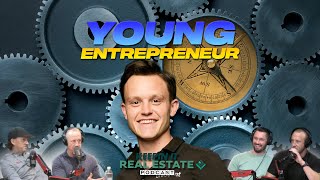
Grant Roscoe built Crescent, a B2B fintech platform offering high-yield business checking through partner banks. He raised about $10 million and grew the company by partnering with accounting software and payroll providers instead of going direct to customers. Roscoe started with sneaker-flipping and e-commerce before moving into fintech.
Chapters
Ladies and gentlemen, welcome to an episode of Keeping It Real Estate. Uh, first podcast appearance of his life, Brandon Tauber. Welcome to the show.
Thanks for having me.
Yeah, we, we're really excited to hear from you, Brandon. Um, Nothing but positivity. We also have a guest who didn't know he was gonna be a guest. That's my fault, my bad. Grant Roscoe, what's up, man? Lincoln native.
Thanks for having me.
Yeah, man. Nate Despain connected us, said you need to meet this guy, but you're only in town for a short time. And I said, why don't you come to the studio? I forgot to say that you're gonna be on a podcast. Here we are, guys. Here we are.
Not only that, but there's an insurance company and a dentless hail repair in here. So he walks in and he's like, like, where am I? And wandering around a building, and then they're like, oh yeah, go in the studio. He's like, studio? What's going on?
Yeah, we're in the land—
you're on a podcast.
Land of opportunities, guys. So this is going to be fun.
Bait and switch if I ever saw one.
It kind of is, but you, you know, what, what's the quote that I butchered earlier about the opportunities? Wayne Gretzky.
You miss 100% of the shots you don't take.
There we go, something like that.
So, you know, that was Abraham Lincoln, actually.
Hey, uh, you know, Grant, I know this was impromptu to you, but Since you're new to the crew, would just love to know what you're doing because you're out in Silicon Valley right now.
Yep.
FinTech company. You are basically name dropping every single important influencer and that you've connected with them, hung out with them, and that they're also, you know, taking interest in your company. So yeah, please open up the floor to you. I'd love to hear a little bit more and we're going to start rapping about other stuff. Sure.
Well, I guess I'll do a super tight bio and then where we're at today with the business. But born and raised in Lincoln, Nebraska. Lived there my whole life. Graduated from Southeast High School in 2018. I started flipping sneakers when I was 12 through Facebook Marketplace, buying them local, selling them on the coast. Then I got into e-com before everybody and their mom now does dropshipping. I was doing it, built about a dozen stores before 15, imported products from Asia, sold them across the US. So that's how I first got my start in online entrepreneurship. And fell in love with— when I turned 15, I took a finance class in high school and wanted to get into markets. So I fell in love with trading initially foreign exchange and then got into crypto in 2016. Fortunately, I did quite well in those markets before the big Bitcoin run-up, then had friends and family wanting me to manage capital for them. So I started doing that on a small scale, realized pretty quickly I did not want to be an asset manager. I wanted to be a tech founder. So to scale my impact that I was having for local friends and family, I started my company Crescent. Initially as a consumer investing and savings product. Our best product we had was a high-yield savings product back when traditional rates were near zero. And we had a lot of business owners here in the Midwest that wanted to start using it for their corporate cash. And so when inflation was raging a couple years back and traditional rates were coming up for the first time in almost 15 years, we evolved the business into business brokerage and banking. And I guess we got local backing because I was fortunate to win a pitch contest when I was 18 over in Monaco, the south of France, for $100,000, back when Crescent was doing blockchain stuff. And, uh, then I got the opportunity to speak in 8 countries before I was 20 about fintech evolution. Um, so I spoke in Monaco 4 times, the world's largest family office summit, also on a super yacht during the Monaco Grand Prix, spoke at the biggest, uh, the World Economic Forum in Davos, Switzerland. Back in January 2020. So that was a very formative experience. Got to really nice Rolodex for the company. I was like 18, 19, 20 years old at the time and came back to Nebraska. We raised from 20 of the biggest guys in Lincoln, then they intro'd me to some guys in Omaha, and now we've brought on a couple dozen great folks from here. And then since then, I've been fortunate to get plugged in with some of the internet entrepreneurs, influencers. And we're in a— today what Crescent is, is primarily a high-interest business checking account that offers companies more on their money. It's a liquid account. We're not your bank. We partner with banks here in the US that pay high interest rates, and we're the tech layer on top of the bank. So if we ever were out of the picture, if we ever failed as a business, your money's totally safe because it's owned in your company's name at a bank partner of ours. And we're just, again, the tech layer on top. We negotiate high rates. We make the account opening process super simple. Free payments, no minimums. And now we serve hundreds of businesses in the US and hundreds of millions of dollars in deposits from zero to start the year. So we're raised about $10 million in funding, about to do another big raise. And it's just been a 6 years in the making now, a rocket ship journey.
All led you to this basement on 25th and Dodge. I mean, speaking of success, speaking of the World Economic Forum in Davos.
Wow.
Monaco to 7 Dodge 68131.
You're comparable.
And this is Brandon's first speaking appearance in general, so this is actually pretty exciting. Two firsts.
No, he's— hey, I— we've done this before here when we first launched, uh, Liquid, and then he also did one in front of a banking, uh, little symposium. Yeah, see, he's a seasoned veteran.
Okay, cool. Oh, I, I remember that. I do remember that. So the, the initial intention, because, um, Once again, Nate connected us, and once again, this was the only time that worked, and these guys are cool. So I figured we were going to talk about hard money, and I think we still will, and just kind of financing and overall bringing you into it on the banking side. Obviously, you're a technology company, but yeah, where do you guys want to take this? What kind of— this is— you just kind of dropped the mic over there.
I was going to tell stories about how great I was in high school sports, but you also played arena football. But after hearing about Mr. Worldwide ride here. I don't really know if I'm going to speak about that at all. I also don't know if I'll be able to speak at all anyway, because the mic's not actually coming to me. So I might just sit this one out.
Thank God.
But, uh, let's— it's really, it's, it's falling off. It doesn't matter. Um, I don't know how to connect that. Uh, but so, so a little bit about what we do and it will not involve Switzerland or Monaco or anything. Um, but so all of us have either a financial or real estate background. And we invest in real estate. We've owned, operated, flipped, sold, refinanced everything. And we saw an opportunity in this space to offer financing to real estate investors who— it can be difficult, as we were talking about offline. The traditional lending is very rigid and they have to follow a lot of regulations. And so that can be really, you know, time's one of the most important things in real estate investing. And so if you have a really good deal and you want to be able to close on a deal, if you sit around and wait 60 to 75 days for some funding, that can— that's what a good flipper can flip a house in, you know, maybe 3, 4 months. But what I'm saying is you need that money right away. And so what we were able to do is we go out, we raise money, whether it's from a bank on a line of credit or whether it's from an actual— we have a lot of investors as well. We raise those funds, they get paid monthly on an interest rate predetermined already. So it's not really dependent upon how anybody's real estate's doing. It's just they get paid every single month. And we arbitrage that difference by simply lending it out to house flippers and we've done over— we're at 500 loans now.
We've—
the average loan length's about 4 months. So you put yourself in a position of a home flipper and you're— you have to wait 65 days just to get the house before you can swing a hammer. That really kills your ability. So what we've really caught a lot of traction in lately, the name of the company is Liquid Lending Solutions. And really we just offer that we can close in 48 hours, we lend on the asset, we oftentimes lend 100% of what the values of the asset is today. Sometimes with, uh, really seasoned borrowers, we'll even offer rehab funds, and it allows them to close within 48 hours, implement their business plan, pay us back, and really just use the velocity of money to their benefit. And we've never spoken in Switzerland or France or anything, but yeah, someday.
Yeah, so I think one of the most interesting things and why we started it— so we were We were borrowing these loans all the time. And to your point and what you're building over there is the arbitrage of capital is basically what you're doing. People had a lot of money sitting around in bank accounts earning nothing. For what we offer our investors, we offer 8%, 9%, 10% coupons for those individuals in an asset-backed investment vehicle, but also for our customers as well. To Chris's point, we have this velocity of speed in which allows these people to earn money with oftentimes 0% down. We are funding 100% of the deal and making capital, utilizing their resources to move these projects at a much quicker scale. I don't think any of us thought we were going to get it this big. And we're at what, $25 million lending capacity right now?
Yep.
As you're scaling your business, Grant, what are kind of the hurdles you see? What are some of the functional hurdles that you've kind of encountered? Is it Is it the amount of customers that you have, the amount of investors? Is it the scale of the business? Is it the employee count? Every business, I feel, kind of goes through some different growth stages. So, I'll equate it to the property management space. I started a PM company, just grassroots from scratch. I was the sole employee, 0 to 100 units. At 300 units, had 3 employees and all the profitability's gone. You know, at 500 to 600 units, that's when you actually start making a little bit of money. But at scale is when you start hiring higher qualified individuals. Individuals, you can start implementing systems, pay for platforms, and that's when you start to see fruits of your labor actually come to fruition. So, with your business, what are some of these growth stages? Because it's really, once again, astounding what you've done. I mean, I've known you for 15 minutes and once again, was connected. Obviously, very accomplished, but there's a lot of different things going on and I'm sure it's very capital intensive. I know that I was at a recent event in Colorado a couple months ago with one of Amazon's head customer acquisition people, and just the amount of money that's just spent on pure talent to build out these products is crazy. These individuals are getting recruited from everywhere. So what does that look like when you're a startup trying to put together the highest quality product, highest quality people, But initially you're capital constrained. And what do you do for forecasting looking in the future? Is it mostly investor capital that gets this run through? Is it the income from the actual product itself? What's— Yeah, curious.
Yeah, good questions. I mean, we are a venture-backed business, so we prioritize growth over short-term profitability. And so we're trying to go for the multi-billion dollar outcome. That's the floor of our level of success. Anything less than that is a failure in our industry, or at least with our level of ambition. So yes, we are investor-funded. We've raised just over 10 thus far. We'll do about double that here soon. And we're about 18 employees. I've learned a lot. We've made mis-hires, we've bloated the team, we've been understaffed, we've hired the wrong folks. So a lot of growing pains over the last 5, 6 years. I'd say in our industry in particular, financial services at large, Compliance is one of the biggest burdens. I'm less familiar with financing regs, and I'm sure you guys are taking a first lien on these properties you're lending against so you can do it fast and with conviction. For banking, there's an immense amount of regulation, and candidly, like the FDIC, the OCC, some of these regulators that oversee bank charters in the US, they don't love fintechs because we are leveraging the bank's charter their regulatory structure as a bank to do our offering. They don't love them, those partnerships. They're not going anywhere. It's just like Uber back in the day. The taxi regs, the taxi companies didn't like it, but it's inevitable. So I'd say compliance is hard for us, but we have— we hired a chief compliance officer who used to be a chief compliance lead at Wells Fargo and JPMorgan Chase. So he's a banking insider, been in the game for 30-plus years. So he is our seat at the table for these conversations with banks and our regulators. Other challenges as we grow, going from zero to hundreds of millions, and then looking into next year, we'll have conservatively billions of dollars on the platform. We will have deposit constraints with certain bank partners. So we just went from a bank partner to two. We're in talks with a few more banks right now to expand. Eventually we'll do segmentation by company type or geography or industry. So you can imagine that one of our bank partners in Tennessee wants to have more geographic depositors. So, uh, on the eastern part of America versus— we have a bank partner in Missouri and we're talking to some on the West Coast. We'll start segmenting our customer base. But in summary, compliance is a pain. Ops in general, customer requests, feedback, bugs. We're a tech company, so we're smoothening things out now that we have strong product-market fit. We've hired an excellent team, but I've failed more times than I can count. It sounds really good today, and you're getting, you're getting like the 30-second intro. It sounds all sexy, but it's literally hell for multiple years. We should have died a bunch, but now we're— that's, that's true.
That's awesome. I've got a quote, it's from, uh, and I've said it multiple times, but it's from the book Shoe Dog from, uh, Phil Knight's, uh, track coach, Bill Bowerman. "The cowards never started. The weak died along the way. And that leaves us, ladies and gentlemen." And I think it's the best quote. When you see most individuals in the world, they are— their fear drives them to not pursue their dreams. When they get into it, they realize it's incredibly hard and there is no rewards at the beginning. You may get these little rewards that, you know, kind of light some fire or put some wind in your sails, but you're getting your teeth kicked in. And those are the weak that die along the way, the ones that want to quit, that get their backs up against a wall and refuse to be creative, refuse to do the incredibly hard things you have to do as a business owner to get it to the next step. And that leaves us. So I applaud you for that. How old are you?
24.
24. That is incredibly impressive, dude. That's impressive for a 54-year-old. Much less. So you started this company, or you did it with some partners, or solo founder?
I started my senior year of high school and graduated. My parents gave me one gap year to pursue things, and that's when I won the pitch contest in Monaco, and they let me— I'm on my 5th, 6th gap year now, so they never made me go, fortunately.
Most people in their gap year go to Monaco to get pitches to—
no, most of them go to Amsterdam and get baked out of their brains, and you're out there pitching businesses.
So, so Grant, yeah, maybe I misunderstood, but you that some banks have deposit constraints, meaning that you're providing them too much deposits, or the fact that— I'm making assumptions here, so please correct anything— that you're negotiating literally the highest rate term possible, which is not something that's broadly offered from these banks. But in exchange, banks are getting this flood of deposits, which we all know they can lend out at 10x the capacity. I mean, we get talked to banks all the time. Deposits, deposits, deposits. It's one of the biggest factors. Did you say some banks you're providing them too many deposits, or it kind of throws their everything out of—
he'll have a lot sexier answer, but just to clean it up for the listener, he's literally offering an ICS account, which is what we already have. And I'm saying that to answer your question, he's going to make it sound a lot better, but when he says limited, he's talking about the amount of deposits that the FDIC can insure.
Oh, I got you.
What is an ICS account for those, uh, guests, uh, on that are sitting here right now that don't know, and our listeners.
It's an insured cash sweep. It's now been rebranded to the IntraFi Cash Sweep. It started— they've been around for about 40 years now. It's basically a network of banks. We partner with IntraFi, though, the nation's largest. They were founded by the former chief of staff of the FDIC itself, so it spun out of the government. So they're founded in like 2001. IntraFi now plugs into— they're used by over 3,000 financial institutions in the US. Over 60% of all banks are on their network, including 97 of the top 100 US banks. The beauty of IntraFi is that conservative depositors can access higher FDIC limits than the standard $250K limit per bank. So how it works is imagine you're a state government or nonprofit or publicly traded company with a large cash position. You're very conservative and you want to take no principal risk. What do you do? Well, you could open up, let's say, dozens of bank accounts independently, one by one. Or you could open up an ICS account where you have one point of contact, one entrance and exit point, just one routing and account number. Yet on the back end, IntraFi is sweeping those funds up to $250K per bank on your behalf. So if you put in $25 million, it'll go on the back end up to 100 banks. And you still maintain liquidity at your primary bank. So you can pull out your principal anytime. It's not like you're locking it up into a CD or a treasury. It's a liquid deposit account. So it's a beautiful structure.
Are most of your customers going to be family office, wealth management places, or are they actual consumers? How do you go about with acquiring new customers? How do you grow this?
It's B2B only, no consumers. We started out with a consumer product and burned the boats on that, returned all cash, closed the accounts because B2B gets us economies of scale much faster. So we work with predominantly SMBs across the US. We have customers in a few dozen states so far. We'll have small and medium-sized businesses. So we, we have a couple enterprises that have multi-eight-figure, tens of millions of dollar balances on Crescent for the higher rate and the higher FDIC coverage. But our bread and butter and the highest volume of our customers today is small to mid-sized businesses across about every industry you can imagine.
So do you call in like a— like, okay, so I'm thinking of pension funds, I'm thinking of, um, like maybe, well, I don't— cash positions within, let's say, 401(k) accounts or retirement accounts like that. Do you— is that a thing? Like, are you calling on those, those type of, uh, you know, potential employers that offer pensions, um, or nonprofits, you know, so on and so forth? It's a great question.
Not on the 401(k) on the 401(k) or retirement side, because that would be securities. It'd be securities and it's a consumer-oriented account. Like we, we do our fastest, one of our faster growing segments is in the nonprofit space. So we do work with a lot of nonprofit corporations because they're hyper-conservative and they have a lot of cash. Once you get into the big, you might think like, oh, go after university endowments or some of these major pension funds because they have billions of dollars in cash, which is true. But they also have treasury teams that manage these portfolios as their full-time job. And so we bring this enterprise-grade, like, rates that we're able to negotiate with our banks because we're a bulk supplier of deposits on behalf of our customer base. So we're able to get them much better rates than they would get themselves going to banks. But the big guys that have billions in cash, they have this solved already. So we're not a great fit for them.
Are they solved internally, meaning that they've built up structures or they've done their pre— they've done negotiations on their own behalf to get—
I mean, if you have a billion dollars in cash, there's every big bank is wining and dining you, giving you tickets to sports games. Like, yeah, they want your deposits. We just don't play there. Eventually we'll touch it and we'll win on services beyond just rate and insurance. But those are a couple of our primary value props.
And I'm sorry if you said this, what's the minimum size of a client?
Grant, no minimums on the account?
No minimums, but it's always going to be over $250K, so probably $1 million. Is that where you see the small?
Oh, if you have under $250K in deposits, it just sits at the primary part of ours. Okay.
The highest yield or best fit for whatever they're looking for. Now, what about— Okay. So you dove into this and you've got basically— I'm going to feed you back what I've heard so far. So a sweep account, so a high-yield savings account, or basically someplace a corporation could park cash. And get the best return without having to individually go out and hunt and deal with a whole bunch of the pain in the ass of having a million banks because they want $250K. Every time you exceed that, you're not covered by the FDIC. I'm curious, and maybe you're going to get into this, but it would seem to me there's a lot of spillover in the fintech world or even in financial services in general with wealth management and you get into all different kinds of banking and financial products. How are you, and maybe you do have other product lines, is that your primary and then you've got spinoffs of that, or how are you staying in a lane that you know you've got nailed down before you start chasing rabbits?
Yeah, certainly. I mean, you can, there's a good quote in startups. It's roughly that most startups die from, it's like overindulgence versus starvation or something like that. Basically they're so shotgunned in their approach versus snipers of, going after, I mean, focus is a very crucial currency for our business to be successful. So we went to market with a partnership with BNY Mellon Pershing like 18 months ago. So you could buy T-bills and money markets through Crescent before we had banking. The moment we launched banking, it was like rocket fuel to the business. And so we actually paused onboardings to the brokerage product to go all in on the banking so that we could maniacally focus on the success.
So you weren't fully sure that was going to be the case, correct?
No, we were initially going to be this, well, we were initially a treasury platform, so you could have your excess cash going into T-bills and money markets in the simplest way on the market, which has, I mean, we still have tens of millions on that platform as legacy depositors that we still maintain, but the liquidity of having it be a checking account that pays interest comparable to a money market that typically has like 1 to 2 day liquidity to call on it or a treasury bill that you're locking up for 1 to 12 months. It just was night and day. Better. You can do payroll from this account. You can have a payroll account, a savings account, a checking account. Like you can name whatever accounts you want. You can have multiple within the same business. And it's just so easy to sell. Like our close rate went through the roof. So we paused on brokerage. We went all in on banking. Now, if you think about what's a bank do, well, they store deposits and they lend you money. We today do the storing the deposits bit really well and we have a team that's is building out more enterprise-type functions. So like positive pay for checks to like avoid check fraud. So checks can only— are you familiar with positive pay?
Mm-mm.
Whatever, it's like there's a lot of check fraud. People will wash a check and change the numbers and deposit it. It's a very common form of fraud and it's on the rise. Surprisingly, you'd think checks are dead, but they're not. Positive pay will only deposit the check if the check number, the beneficiary who's receiving the check, and the number, like the dollar amount on the check, check, all triangulate and match. So it's a— every enterprise that sends a bunch of checks uses PositivePay. We're building that internally, whatever. Uh, the, the simple version is that we are building the banking platform to be the last bank account you'll ever need. It's going to be fully liquid because it's a checking account. It's going to be the best insurance because it's an ICS account. It's going to be the highest yield because that's our business model is finding the best banks. It's gonna be the easiest to use with the best features on top of it. Beyond that, we will launch financing with— we're not going to be a principal lender ourselves. We only partner. So we're not doing it on balance sheet. We're going to be working with— I mean, we're going to market with over 100 lenders on the back end, be it banks, credit unions, and private funds. These will primarily be for lines of credit and term loans to small and medium-sized businesses. But we will get into specialized verticals.
Think hard money lenders, hard money lenders, real estate side.
We have numerous real estate, uh, holding companies, property management companies, funds that are on us that we just partnered with. Uh, we'll cut this part out for the public bit, but we haven't announced it, but we just partnered with the largest apartment owner association in America for a 5-year exclusive where we're the only banking partner they'll co-promote and co-brand with. So we'll have access to an absolute ton of— as for multifamily, we can do the same thing for homeowners associations if we seek. We're talking to the biggest hotel association right now in the US. So there's a lot of these pockets of real estate alpha that we've identified that we want to bank and then cross-promote financing products, be it hard money or, or other. Candidly, I mean, the, the most depth of lending capacity with our current network of banks and credit unions will be lines of credit and term loans, standard stuff for a business, and we just get an origination fee cut up front. It's a great business for us, uh, it's great cash flow. And the beauty of that for us is, uh, the overlap of financing and banking, the requirements to get those accounts or to get funded and to open a bank account is damn near the same info. So you apply for one, you get the other.
Gotcha. So you already have their customer information, it's already like a click of a button.
Yeah, you want fries with that, here's your high-yield account. I was wondering, so you get paid by the financial institution that you basically are providing deposits to, right? You take a cut from them as the, okay. So you sell them on the service and then their eyes are going to light up probably because they're going to be able to capture a lot of additional deposits from large depositors. They can then lend that money out, you know, 8x, 10x, and it's, Yeah, I mean, it sounds great. I'm just thinking of like, you're a smart guy. I know you've spent probably a lot of sleepless nights thinking about this kind of stuff, but do you have big competitors in this space? Was this something where you, you were kind of the little guy on the block and you had to slug your way to, you know, getting toward the top? Or did you discover the space and then you had to like really struggle to keep up with people as they, they tried to do the same thing?
Oh, we're still a small dog. I mean, this is, financial services is one of the biggest categories on the planet. Banking is the epicenter of a business. It's the lifeblood. Every business, so long as you're solvent, has a business bank account. And so we have two buckets of competition. One is the incumbents. That can be anything ranging from community banks. We're here in Nebraska right now, huge community banking presence. You go to some other states, that's not the case. They have more regional banks that are mid-sized. And then you go all the way up to the big dogs. Some people are just, I will only bank with JP Morgan Chase or Wells Fargo, US Bank, whatever. So that's the, there's an umbrella there of incumbent banks as a competitor that we poach deposits from often, but it's, I like my relationship manager, or I like Chase's gravitas, their reputation, whatever. That's definitely our biggest competition by far when serving traditional businesses is they're at an incumbent. The second bucket is companies like Crescent that are also technology businesses partnering with fintechs. We're not the only digital banking product out there. There's a lot that serve markets that are early adopters. So where I spend a lot of time is in San Francisco, Silicon Valley, and there's numerous companies out there that have tens of billions of dollars of deposits from businesses that are tech companies just like Crescent. So we— it sounds cool with our deposit base. We are a nobody in this space. We're just started early this year.
So what's your competitive advantage? Where's your secret sauce that you feel like? What, what, what are What are the things that you're, the, the key things that you're focusing on? Is it the best rates? Is it the, the platform itself? Is it the ease of use? What, where, where do you guys lie and how are you gonna crush everybody?
Yeah, there's a few things. I mean, there's on the, like, we have a different philosophy than some of our competitors and then we also have a different distribution strategy. So I'll touch on both. The philosophical difference between us and our competition is a lot of our competition was founded back when rates were zero. And so they got fat and happy offering their customers 0%. Back then they weren't making much. As rates went up to 4 or 5%, they didn't adjust. They still pay zero on checking and they bloated their staff. So now our competition has hundreds of employees, in some cases 1,000+ or thousands of employees. And so they cannot do what we can, which I, I studied the evolution of two categories, one being retail brokerage over the last 50 years, and the second is retail, like in general. So if you look at retail, do you care about this? I mean, I can—
Yeah. Okay. Hell yeah. Everything you say is pretty interesting. Not gonna lie.
The retail broker, it's tight, but it's a very interesting story. I mean, from 1975, there's a, most people don't know, there's a regulatory change that deregulated commissions that stock brokerage firms could charge. So before it was standardized in 1975, that changed. And so you could price it however you wanted. Merrill Lynch was the winner at the time. They took that opportunity to increase commissions, so they raised their prices. At the same time, 1975, two companies were founded. What was at the time First Omaha Securities, which became TD Ameritrade— that's in our backyard here— and then the other was Charles Schwab, the company. And both of those guys pioneered discount brokerage. They were low-cost providers. They believed that, hey, this is a commodity product, buying and selling stocks as a retail investor. Fuck, we should drive this to as low a cost as we can. So they pioneered that model. Robinhood took it to the extreme about 40 years later, and now they— now Schwab had to go to zero-commission trading. So that's an example in the brokerage industry of disruption. Low-cost providers came in, they brought efficiency to a market that had fat, happy incumbents. And then if you look on the retail space, you had— I mean, the evolution of stores in general is fascinating, but to just jump to the chase, you had a Walmart come into the space in the '60s. You had Sol Price with Price Club, which spun— a guy that was there, Jeff Sinegal, founded Costco. And then you had Amazon be the digital version of a Walmart. Like, all these guys stole from each other. It's funny. If you read their biographies, they all reference stealing from each other's best practices. But look at the, look at how that space evolved. Now Amazon is king. Low-cost companies are low-cost goods were brought to consumers with great convenience. I say those examples to say it inspired me to build the business in the same way and bring that level of frugality as a business and value to our customers, to the B2B financial services world, the business financial service world. Business, like B2B lags consumer industries by a lot, in many cases decades. And so you haven't seen any of this efficiency come to business finance services, and we believe that's wrong. So here we are being a low-cost provider to customers. That is a philosophical difference from us versus our competition. Long way to say it, they are 0% checking. We are trying to literally give as much as possible while still cracking a profit. And we just know that that compounds over decades to become the biggest in our space.
Yeah. So it's really interesting and you probably know this. I was listening to the podcast Acquired. I'm not sure if you heard it. Okay. So they're doing something about Costco and saying that they have a maximum on what their profit margins will be per product. It doesn't matter how low cost they will get it. So I used to work at a different retail chain, Hy-Vee. Dude, if I had the chance, I was charging 70% margins on product, whatever I could to, you know, if I bought it low enough in a bulk discount. Costco, completely different. They're sticking to, I think it's like 12 to 16% margin. That is their absolute max with their core belief of one, taking care of their staffing, paying them, internally promoting, but also to their customers of truly passing along the savings, not just saying it, but literally going, doing the negotiation as you're doing with the high interest rates, then not creating this glut of, you know, possible profitability, credit card fees, et cetera, that they did not— Costco didn't have credit cards to begin with. They didn't allow those. They just allowed checks and cash because they didn't want to fight that battle. Now, most businesses were like, no, we need credit cards. We're going to miss out on all of those additional sales. They stuck with their guns and their guns were to take care of the customer in every which way. So that's really interesting. I'm glad that you brought up those points because you see, It boggles my mind when I see how large these banks are. Like, why does 10,000 people need to work there? And I worked at an insurance company with 1,000 people. 1,000 people did not need to work there. Not even close. You probably could have cut the staff by 70%. I hate to say that, but the massive issues with inefficiencies all over the place. So it's interesting.
I have been thinking since you were describing the early days of starting your business, discovering that what you were originally chasing for a product wasn't probably going to be the ticket and pivoting, and then all of a sudden finding out that your gas can was sitting really close to the campfire with this product that you have now. And you're going all in on that, but it sounds like you're also entertaining the opportunity to maybe launch new products, get into different spaces or lanes within the financial services or fintech world. I'm going to draw a loose comparison to the company that we have, which is Liquid Lending, in that we do hard money loans. We have a customer base that's primarily residential real estate, although we dabble a little bit in commercial and business loans as well. But we're about 4 years into this business, a little over that, and we are looking at growing our business continuous growth through organic capture of customer or investors, right? So we're growing our capital that way. We're also doing it with commercial banking partners, but we're really considering launching a new product in our business, which seemed like it would be a natural fit, which is a DSCR loan. So a debt service coverage ratio loan, typically for investors in real estate. And it's based on, as you guessed, best debt service coverage. Where I'm going with this is now we could grow our business by leaving that alone and really focusing on capital raising and then expanding our footprint into markets that we maybe aren't as familiar with, which has its own challenges and opportunities. I'm curious what the similarity with a business like ours is where we have a product line we're considering And also we have a geographic footprint, which we could expand. What do you think is your opportunity within foreign markets, or are you exclusively going to focus on the FDIC part of it within the US? Are those avenues you're looking at? Are you kind of like, we're a US company now and we want to kind of roll out some new products and then we'll look at expansion? Maybe talk on that for a second.
Yeah. I mean, we have time on our side. I'm young, ambitious, and I think long-term. So I want to build this company for the next 20+ years and the power of compounding. I just finished reading John Bogle's book, the founder of Vanguard, and that's another crazy tale about compounding, staying. It's called Stay the Course. And it's just literally about how it happens slowly, then suddenly. And so, I mean, what you're asking and how I interpret it is, do we go like vertically with our, do we go vertical or horizontal on expansion?
Yes.
And we today, right now, are vertical for building out end-to-end features on the platform so that we can serve more customers. And then we're going to go horizontal with— we already serve customers all across the US, but we will be global long-term and we want to be the biggest fintech there is. But we are in no rush doing those things with with, like, you can't do a half measure of going global.
Yeah, I can't get halfway pregnant. I, I like the, uh, the idea of, um, staying the course on that because, you know, we see this a lot in our industry too. If you get into real estate, um, most, most, uh, start with residential because it's easy. People understand, they know single-family homes, they probably grew up in one. Uh, so that's an easier thing to buy. You're— it's easy to buy and sell those. You can get typically great financing options on it. And then eventually, once they've done that, if they have— if they get the bug and they start buying rental properties or flips, so, and they start getting more and more involved in the real estate investing world, typically they start branching out into other asset classes within real estate, like commercial, or maybe it's going from single-family homes to multi-family, and then maybe they look at store— self-storage, or there's other spin-offs within that. So I think there's to, you know, it's very easy, I think, in our world to get FOMO when you're looking at what other people are doing, where maybe it's smarter to just stay in your lane and then maybe add people that are really familiar with the other lanes that you're interested in, as opposed to trying to learn everything from scratch. Brandon, what do you think about that?
Radio edit.
I just totally wanted to do that ever since we met.
That's amazing.
I wanted to ask you was like, what's the best, uh, interest rate environment you think for your company? I mean, rates have been, you know, pretty high here for the last year and a half. I mean, do you want to see them go down further or leaving them elevated? What best suits your business model, do you think?
I mean, the more elevated they are, the bigger the delta— biggest— bigger the gap is between us and those that didn't move their rates. So there's a ton of— we talked to a ton of clients that have a million dollars in local bank that pays them zero because that's what they're used to for the past decade. So the delta then, if rates are north of 5%, is 5 plus percent. Uh, we— another reason for launching financing is that it is a hedge for us. As rates go down, you earn less on your cash, but the borrowing appetite and credit availability goes up. So it's like inverse correlation. If rates are high, banking will crush, finance will do worse, and then the inverse is also true.
Smart. Smart. Yep. Now, one last question on this topic. When you are, let's say you acquire new customers, is your, I guess, pricing or your revenue model as a company based on assets under management similar to a wealth manager might have where they get, let's say, 1% of all the assets under management? Is that how that works? Is it like a subscription agreement or is it a one-time placement fee? Here's a new customer, Here's the amount of money they're bringing. I get one, I get paid one time and that's it.
Good question. So the way it works in our world for the banking product in particular is we negotiate a rate with our bank partners. They pay us as a partner that interest per month, and we control how much we pass on to the customer. So the principal always sits at the bank, but the interest itself is paid to us as like the program manager, quote unquote. Quote, and we can give it all, we can give none of it, and we can give anything in between. So as per my earlier, uh, mention, we want to give as much as possible, which is very different from traditional banks. So we choose to give almost all of it back to the customer, but we do take a little bit. So interest accrues daily, it's paid monthly, and therefore we get a spread of that interest every month.
Hmm, interesting.
12 months, 12 times a year.
So you're getting the compounding with it being daily? Correct.
Yep. Yeah.
Okay.
Based on the daily average balance in the account, that's how interest accrues. And we just get our interest today is recognized again on the first business of every month.
How do you guys decide how much you're going to like distribute or return to the customer? Is it just based on your whether or not you're going to Monaco to have a good time and you need the cash?
I'm trying. I've been there a few years, but we I mean, we're in a unique industry in that we don't need to be day one profitable. A lot of our costs are fixed for infrastructure and we have a team of 18 right now. And so we have non-zero employee and operating expenses, but that does not scale linearly with our growth. And so as we grow our deposits 10x, we're not going to 10x our infrastructure and headcount, our infrastructure costs and employee costs. It's just not how it works. So, We modeled out where we know we will be or where we think we can be in 6, 12, 18, 24 months, and we just honestly threw a dart at an educated board and this sounds good. We modeled it out with smart finance minds, but I don't want to make it seem like it's more of an art than it is.
I'm actually happy to hear you say that. It makes me feel better about myself. And these guys running our business. Because, uh, it is— I mean, when you gotta— that's a good thing about being lean and mean too. You can make, you know, quick decisions and be pretty nimble with, uh, reacting and being proactive when you see, you know, headwinds or tailwinds coming up.
So it's a two-way door. If we're wrong, then we can honor past customers that we paid that rate to, and point in time we can just say, hey, anybody that signs up this day forward, we're going to offer X rate instead. The past folks don't feel burned. The new folks don't know any better. And it's all the same.
Oh, I like that.
Yeah, it's a very reversible.
So we deal with a lot of cash. I mean, let's say that Liquid Lending Solutions wanted to store cash through you, through Crescent. How have you seen that be difficult then if none of the banks that we bank at participate with Crescent? Are we having to store cash with the bank in Missouri now, or how does that work for a business like us that's here? Maybe we have a line of credit tied to a bank in Omaha. But they're not a participating bank with you on the ICS side, like selfishly, but seriously, how does that synergy work for somebody like us with Crescent?
Yeah, I mean, if your banks require deposits to be stored there for line of credit, I mean, it's not a fit for that cash position because this is a new deposit account that you put money into. It's a unique routing account number at a different bank. And so we don't have to move everything. Some folks dip their toe, they put in some excess cash they don't need. They just kick the tires on the platform and then eventually they migrate over fully. But we can't solve the— if you have a line of credit somewhere, they probably want a portion of your deposits.
Well, that's fine. And I guess I couldn't ask it a different way or a different question.
What—
how do you guarantee, or how do you provide your customer the highest ICS rate? Because we have— Colin and I, in our business, we have 3 ICS accounts right now. Um, how are you going out and finding that rate? And if we were to be interested in a rate like that, and let's just say our current bank doesn't care that we bank elsewhere, uh, how does that work? How does that flow through to you?
Yeah, I mean, our biggest customer today moved over from a different ICS account at a different bank, and they moved over a substantial amount of cash. Uh, the ICS product itself is a commodity. You can get it thousands of banks, 60% of the banks. Yeah, that are— not all of them expose it because a lot of them are so archaic in how they open up these accounts. You have to like sign physical paperwork, which is insane but true. And some banks just don't even expose to the customer. They just do it for— it's a little technical, like, but for like balance sheet management. Sometimes they want to sell off some deposits to the network, and so they can do so, but they don't let customers sign up for an ICS account. But in the case where you do have an ICS account I would think of these as decoupled, like because a bank offers an ICS account, they still set the rate that they pay you. So the bank can have you an ICS account, pay you nothing, or they can pay you whatever their heart desires. Oftentimes Midwestern banks that have ICS, they treat that as the value prop, which I think is—
we have two ICS accounts that are different by a full point.
Yeah, that's absurd. It's because there's no pricing efficiency in this market. That's why you need disruptors to come and index the American banking system and give the most value back. We've seen ICS accounts with millions of dollars, and the customer thinks they're getting a deal because they're fully protected, but their rate is 0%. And so that's just, that's the bank's fault. That's the bank who sets the price. To go into an ICS account structurally, they just, IntraFi charges the bank a small fee.
So will you quote a percentage to a customer?
100%.
So what are the typical rates you're setting?
He just said it, 100%. You heard it here first. We are all signing up today.
The APY in the account today is over 4%. So it's pegged to the Fed rate. We will get more, like we're not geniuses on pricing of this today. This is something that we've modeled out confidently. We can have, we do have profitable unit economics. So when customers sign up, we're in a great spot, but we will eventually roll out tiers where if you have under— for really small businesses, you have under $100K, we can't be today paying out the full shebang. If you have $50 million in the account, you need a little bit more because we need to make less on that. But not every single customer today is north of 4%. It is pegged to the Fed rate. So it goes up, up and down 1 to 1. It's another thing that we do that incumbent banks don't.
Federal funds rate.
The federal funds rate. And so as the rates rise or get cut, A lot of banks will be giving you short-term promise. It's like, hey, we're at 4%. And then the Fed cuts the rates by like a quarter percent. And now boom, that account drops to like 2%. It's blasphemy. It's like nobody's keeping them accountable. And we move our rates one to one. If there's a 25 basis point cut, ours gets cut 25 basis points. So it's predictability that our customers also appreciate.
Yeah. More transparency too.
Totally transparent.
Is that after every meeting then you guys are are changing that.
Yeah, there's 8 meetings a year. They, they didn't change for over a year, and now they just did back-to-back cuts. I'd expect more to come. I don't know with the, the new administration where things will go, but, um, more cuts is not—
it's gonna be huge. Uh, if it's okay, I had a, I had a kind of a different, uh, topic on this I wanted to ask you about. You mentioned, uh, you know, being in the fintech world. I assume you I mean, you probably— and do you live in Silicon Valley part-time? Yeah.
Okay.
Most of my time's in San Francisco. Yeah.
So you are probably rubbing elbows a lot with just people that are on the cutting edge of new products, new businesses that are going to be ready to launch. In your opinion, from what you've seen, do you see any disruptors outside of Crescent? Obviously, it sounds like— I mean, I've learned so much today. I didn't know any of this stuff. What do you see happening over in the financial or banking world over, say, the next 5 years, maybe 10 years? Do you see any disruptors coming along that are going to make some major waves?
That's an interesting question. Fortunately, I do get to see a lot of— it's a little bit different living in San Francisco the past almost 2 years now versus Nebraska. Love them both for their own reasons, but San Francisco, I am fortunate to have befriended a lot of people that are on the cutting edge of their own companies that are way bigger than Crescent right now, like they're multi-billion dollar companies. For banking and fintech in general, we're in a pretty reactionary, I mean, we as a business have to be reactionary because the regulators we are kind of beholden to, like they change. There's a lot of proposed regulation right now impact how fintech evolves. And so we are on our toes. So I don't have a crystal ball for where things go. I think regulations will be passed that impact what we can do. But I'll say a couple maybe trends that I'm seeing that are interesting. Yeah. One trend is there's a company in Silicon— in San Francisco. I won't say their name because we don't partner with them right now, but they bought a bank and they're tech. Like, it's a previous founder of a multibillion-dollar company. He bought a bank in California for like $50 million.
As one does.
As one does. I mean, it's— we could buy a bank if we wanted to pretty quickly. It's— buying a bank is trivial. Owning a bank is the opposite. It's such an insane task with compliance and regulators. They don't like you to grow like a tech company. Like, they— banks, if you grow more than like 10% a year, you're an outlier. And it's like alarm bells.
You're on the— you're on their target list.
Yeah, it's crazy. So this— that's a trend that I've seen a lot of the banking— like, all banks— tell me to stop if this gets dull, uh, but the summary is like, how does a bank function? They have a bank core. The core is the, the tech that it's like their ledger. It's how you track transaction histories, account balances, everything. They don't build that themselves. They use one of 3 companies in the US, like 90%+ of banks do. They use Fiserv, which is in our backyards here. They use Jack Henry's and they use FIS. These are 3 companies that underpin like 90%+ of the banking system in the US. And these 3 companies are the ones that plug into the central clearinghouse that processes ACH transactions or the Fed that processes wires. Implementation details, but basically you're beholden to these 3 companies innovating. They are all dinosaurs. They're all 40, 50+ years old. They are so slow moving. Their tech stacks, like how they built their software, is very outdated. All their—
Fiserv used to be on— I don't know if they're— I don't know if they converted, but they were on mainframes.
Oh my God.
For years and years and years.
Sorry to report that some of that stuff still happens. Like it's truly absurd. And an interesting— to come back to the new company that bought a bank is a trend I'm seeing is there's two trends. One is next-gen core companies that are building the like the Fiserv killer or the Jack Henry's killer. And so you'll have lean and mean banks that are trying to stay alive and be nimble and be innovative that will do a migration to these new bank core providers, these more powerful and innovative companies than what Fiserv offers. And then a second trend is that They are vertically integrating a new core that they build themselves and they bought the bank, so they own the charter. That's what a company in Cali is doing. And so they've vertically integrated. They have a huge compliance team. They carry on the burden of regulation, but they also have a huge engineering team, which name another bank in the US that does that. I can count on like a hand out of 4,000 banks that have that. They all outsource their tech. They have no engineers on staff. And that's a fascinating trend because they're coming into a commodity market saying this, this tech sucks, super old, super outdated, and they're just building it with 1/100th of the people. They're building it 10 times more powerful, 1/10th the cost. Like, it's, it's, I think that will allow some pretty cool stuff.
You know, it's funny that you say that because when you look at banking in general, it's, it's like even though it's probably the most heavily regulated industry, and I can't think of another one, maybe nuclear energy, but it's so fragmented because you have mom-and-pop banks that have such old tech. I mean, they may like, "Oh, you're going to have to drive over here and sign. We need wet signatures on your files." And then you got other banks that are like, "We don't even have a brick and brick-and-mortar location. So it's all on DocuSign or whatever the latest tech is on that. It's just fascinating to see that because you have, and I don't remember what the bank name is, but you probably do. They were really heavily advertising as the brick-and-mortarless bank. It's all online. I don't remember what they were doing, a bunch of commercials years ago. Maybe they died a slow death, but—
There's a few of them.
Yeah. But I didn't know if that was going to be making more of a trend in the post-apocalyptic, uh, COVID era here.
You still have to drive into Wells Fargo to wire money.
Yes.
Oh, really? Yeah, I didn't know that. I don't have a Wells Fargo account.
I don't either. That's probably one of the reasons you have to drive there to do it.
It's embarrassing.
Yeah, I have— I, I have one of the banks I bank at is that way too.
I have a few thoughts on this, is that for B2B, it's again lags retail, that lags the consumer space a lot. So we haven't seen as many of these like like branchless digital-only banks for B2B. We are one of them as a fintech. Uh, I guess we feel like a branchless bank. We're not a bank ourselves, but, uh, for, for consumer, there is over $100 billion in cash deposits right now, conservatively, that have been brought on from not a single branch location. Think the cash product at Wealthfront, Betterment, Robinhood, Acorns. Like all these companies have a cash allocation. Or another one is like Marcus, which is owned by Goldman Sachs. That's their high-yield savings consumer product that has a ton of deposits. You have Ally. Ally is another app.
I think that's the one I was thinking of. Yeah, that's the one. Yeah. Ally Bank.
These crush. And if you do it right, they crush. The cost structure is very different. A bank normally has to open up more physical locations and staff those locations to get deposits. There's cheaper, better, more scalable ways to acquire customers that requires savvy that a lot of banks don't have, which is like distribution marketing prowess. So they partner with companies like Crescent and that's, that's why we exist.
I know we don't have too much longer, but I want to just curious on your, your future with this and, uh, you're doing seed rounds right now on your fundraising. Is that correct? Or how do you classify that? And is your goal eventually to take the company public?
Yeah, no question.
Yeah. Okay. Are you gonna do pre-IPO offerings, or how does that function?
Yeah, so right now we've done a pre-seed, seed, and seed plus fundraise across a few rounds. We brought in some local folks, then we expanded that to be more like large business owners in the Midwest that are strategic in nature. It's a very interesting story, uh, with our backing. I'm from, from the Midwest. We have have a very strategic Midwest cap table, and then I've sprinkled in some of the recent influential folks. We will do a small additional raise before a big venture capital round, which will be our Series A. That'll be a sizable—
is that like BlackRock and those individuals come in, or do they usually wait until it's a little bit more seasoned?
They usually do growth stage. They— a lot of those have seed funds that they'll cut baby checks into, but—
Gotcha.
Think like venture capital firms, like we're not talking, I mean, I'm gonna say general funds, we're not, no affiliation to Crescent, but think like Sequoia or Andreessen Horowitz or Benchmark, Greylock. These are venture capital funds that bet on tech companies. They're not private equity, they are venture capital. They just take moonshot bets. They're going for 100x or nothing. That is what we mean by institutional for a Series A. There are strategics that like, we have multiple banks that want to join our cap table. We play all that by ear. We have options, we control the cards in our hand. I'm a solo founder, so I can pick who we want on the cap table. But there is some high value of having venture capital firms that have been investors early stage in some of the most iconic companies of all time, because they can help pattern match things we can do to become successful.
Yeah, absolutely, because they, they have— I mean, they want you to succeed. So in those instances, I've had a couple friends take their company to private equity, but, um, as far as the venture capital side, do they then take a board seat? Is that in negotiations, or is it more as an advisory? What type of, what type of control, whether explicit, um, or implicit, uh, type of control do they have over your business, if any? Or is it more as an advisory role?
Great question. Depends on the stage, pre-seed and seed stage, which is typically like a million or less for a pre-seed round. A seed round can be anywhere from, I'd say the average in San Francisco is like a few million dollars. Could be less, could be more depending on the, is it like a second time founder? Have, do they have a previous exit under their belts? If yes, the seed round could be $10 million. But I'm just saying averages here. Pre-seed and seed, no board seats given, maybe a board observer seat. So it's non-voting, but they can be in consultant. Consultant Series A is extremely common to be giving up to your lead investor. Lead investor typically wants like 10% ownership is a common threshold. Some firms need less, some want more, but it's very common for the lead investor who is pricing the round and putting in the lead check. The lead check doesn't have to be, but again, speaking in averages, it's usually like half the round. So if you're raising $20 mil, the lead investor might put in $10 million, maybe put in $5 million, maybe they put in $15 million, but, uh, they would be the primary underwriter and the lead investor in the round. And that firm will very likely take a board seat. For a Series B round, which is just a, another funding round after you've hit more milestones, it's common for them to get a board seat. Series C, Series D, et cetera. Uh, it's common for them to be adding on if you're a kick-ass company and you're really growing, maybe you have more leverage where you just give up observer seats, which are non-voting. And there's all sorts of financial engineering. Like, if you're down bad as a company, they'll wrap— they'll put in a ton of conditions, like a Series C buyback or something. Yeah, they— if you need the cash, they have a lot more leverage. So it's a game of, yeah, who has the cards.
And in each one of those rounds, typically, unless it's a buyback, the valuation is increasing, correct?
So If we're playing out the happy path of a startup, maybe, maybe you raise at a $10 mil valuation, then $30 mil, then $80 mil, then $200 mil, $500 mil, a billion, couple billion onwards, and then you go public.
Are you able to say what you're valuing your company at now or no? If not, that's fine.
We can't yet.
No, that's fine.
We haven't been. So for a seed round and anything before Series A, you're typically not fully priced by the market. It's just you raise on a an agreement called a Simple Agreement for Future Equity, a SAFE.
Okay.
It's the most common instrument for startup investing before you raise a Series A. That's what we've raised all of our capital on thus far.
And so are people getting equity in that? Can that equity be diluted?
If so, the way that SAFE note works is you are— let's say you invest $250,000. That could have a price cap, which means that you are going to convert at no more than X price in the Series A. Or a very common part of it is that you get a discount, which means you might get a 20% discount for joining before the Series A. What's that mean? Well, you're going to convert at a guaranteed markup of— if you do the inverse here, you're buying 80 cents on the dollar, you're getting a 25% markup in that Series A. Discounts are extremely common. You're investing, you're taking on more risk before the—
before you actually know that these other institutions are going That's exactly—
okay, the Series A is when we'll get priced, so we'll know that when we raise the round in due time.
Do you, do you find that your life seems to be really similar to the, the, uh, show Silicon Valley?
I watched that like when I was, uh, when I was younger.
It is hilarious. And I didn't— I, I don't understand your world like, uh, you know, like I do some other things that I'm more familiar with, but I just thought that was a fascinating and hilarious, uh, take on that whole world of business startups and tech and living in, you know, Silicon Valley. Hilarious, hilarious show. But I was just like, while you're sitting there talking, I'm like, oh my God, this totally reminds me that where they're talking about seed capital and, you know, all the, the raise and round 2 and, and everything else. And, uh, man, that, that's a crazy world. Now one, one more question I have for you.
Last question.
Yeah, last question. When you're getting seed capital, when you're doing a startup like this and you're in the epicenter of technology, so you're in San Francisco, Silicon Valley, how are you able to eat? Because you're living off of essentially borrowed money or not, maybe it's not borrowed, maybe it's debt and equity or whatever, but how do you arrive at, okay, can I go get some groceries? Do you have to get permission from your investors? To be like, can I draw a salary? Like, how do you live, man? That's what I want to know.
He bought Bitcoin at $100.
Oh, it's all Shiba Inu.
Yeah, a little more than that. But, uh, yeah, I mean, some— sometimes you are self-sustained, but oftentimes— I mean, these investors are bestowing millions of dollars upon you, and they want you to not stress about anything that's not the company's success. And so personal finances— yeah, they'd be pissed if you lease a mansion and spend $20K a month on rent, but they want you to live.
Okay.
Be functioning, be healthy.
So you don't have TJ Miller in his bathrobe, uh, digging in the fridge for expired milk.
Yeah, frugal founders. Sometimes you live in a hacker house with like 10 roommates and spending like $1,000 a month on rent versus the average of like $3,000 in SF. So there's ways to be frugal. Maybe you're on a ramen diet, just eating a bunch of noodles and rice and stuff. But most founders that I'm friends with are fine. You can draw a salary of— I mean, SF's expensive.
It's—
yeah, goes back and forth with New York as the most expensive city. You can draw $100K, a little bit more if you need to. Taxes are a pain, but I—
this is slightly more than Lincoln, Nebraska.
I mean, yeah, I don't take it—
slight living adjustment you had to make, tighten the belt a little bit.
Yes.
Grant, this is fun, man. Thanks for dropping in, dude.
Impromptu knowledge bomb just went off here. Like, this is hilarious. You had no I had no idea that you were going to be on a podcast. We just got one, and you know, capital raising and new product launch 101. I love it.
Awesome, buddy. I appreciate it, man. Uh, tell everybody how they can find you and get ahold of you and root for your success.
I'm just Grant Roscoe. My last name is R-O-S-C-O-E. I'm on LinkedIn, Instagram. LinkedIn's my— where I post the most. And then our company is getcrescent.com.
Cool.
And going to be on the NYSE when?
10 years. I, I have no No vanity for going public before we need to.
Okay, cool. I love it, man.
All right.
Thank you.