A VC's Perspective on Creating Products w/ Hunter Walk, Partner at Homebrew VC
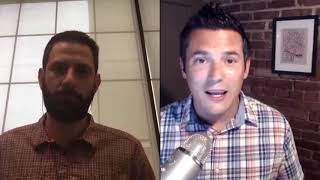
Hunter Walk, partner at Homebrew VC, spent years building products at Second Life, Google, and YouTube before becoming an investor. He explains how product expertise shapes early-stage investing decisions, what he looks for in founding teams, and why product people should consider moving into leadership or founding roles.
Chapters
Hey everybody, it's Mike DelSito, co-founder of Product Collective, and we're back for another industry interview. I am excited to be here today, and hopefully you all are as well because we have an awesome guest, one that he could probably let you know I've been trying to track him down for a long time. Actually, we— he'll respond to me a lot on social media. We love having chats, or at least I do. But anyway, Hunter Walk of Homebrew. Hunter, thanks a lot for joining us here.
Of course. Does Crowdcast have like AR lenses? Will I be able to turn myself into a dog or something for the next half hour?
I think people are probably like holding up their device and doing that to you right now, and they'll probably tweet about it later, so you'll probably see it.
Awesome. On the internet, nobody knows if you're a dog, right? Wasn't that the sort of 15 years ago sort of belief of identity on the web or something?
It was something like that.
So cool.
Well, no, I'm pumped that you're here. And before we get started, I just— I know that there's probably some folks with us that have never been to an industry interview before. So I'll give you just kind of the quick lay of the land. These are chats that we have typically twice a month on the first and third Wednesday of every month unless there's holidays and stuff like that. But we have them with product leaders from really all over the place. And this is not just a two-way conversation. The hope is that you have awesome questions, in this case for Hunter as well. So this there is a section called Ask a Question. Definitely, you know, put in a question there. If we're talking about a topic and I see your question come through, I might pull it up right then. I might wait till the end and pull in some questions. So I definitely have questions for Hunter, but I wanna make sure that you all can get in some questions as well. So know that that is there. Also, I do wanna let you know there is a chat feature. Definitely feel free to use that if you want to introduce yourself. Some people like doing that, some people don't, but it's just fun to see where people are from, what kind of product they're working on. So that's what the chat is there for. And then also another thing is we have all sorts of industry interviews coming up in the next couple of months as well, from Melissa Perry, who is writing a book called The Build Trap, to John Zarecki. He had a book called Sprint, which probably many of you have read, but also he's working on a new one with Jake Knapp. His co-author for Sprint. So, um, those are some awesome sessions coming up. I definitely invite you to check that out. And, and hopefully I will see some of you at Industry. That is our conference that we put on at Product Collective. That's happening, uh, well, the pre-conference workshops start exactly 2 months from today. So, um, if you're interested in checking that out and hanging out with us, but also BJ Novak, who used to be with The Office, or, um, we have Scott Belsky, Chief Product Officer at Adobe, and Catherine Ulrich.
That—
there's so many more. I think we have like 24 speakers this year. It's going to be a fun time. You could check that out at industryconference.com. We're always in Cleveland, Ohio in the fall and Dublin, Ireland in the spring, so you can check that out. Um, but with all of that out of the way, I figured we can start our chat, Hunter. Is that cool?
Perfect, let's go.
Awesome. So, you know, I— one of the things that interests me about you, and it's one of the things that I, you know, love following about you, whether it's social media or some of your writing, is you are, you know, an investor at this point now with Homebrew, and but you're a product person at heart. And I'm just wondering if you might be able to talk about sort of making that transition and what led you to make that transition from product person to investor.
Yeah, absolutely. So in terms of background, for people who might not know me, I had the chance to work in product roles out here in San Francisco from about 2000 2007 to 2012. So basically 3 products, 2 companies. The first one was the virtual world Second Life. I was kind of the non-engineer on the early team, did product and a little bit of everything else. Then spent a little bit over 9 years at Google, 3 years on AdSense, and then 5, 6 years at YouTube. The first 5 years of that, 5 of 6, running the product team over there post-acquisition by Google. So, um, All three of those, kind of the connective tissue there, were my love of technology as a creative tool, believing that it helps people more broadly, not just consume but create, do that within communities and for both audience and collaboration. And then all of those products either were economic models or had economic models to help creators see dollars from their creativity if they so desired. Why? So why? I guess two reasons. First was I started to get the notion that at some point I wanted to move from doing to helping. Doing I would sort of define as the ideas coming from myself or my organization, my, you know, my team, and helping, and then specifically trying to breathe life into those, iterate them, you know, create something that people wanted. Um, helping in my mind meant, um, still the end goal of trying to see things built, um, that didn't exist and, you know, that, uh, evolved the world in some way. But as opposed to betting on my ideas or my team's ideas, essentially betting on the capacity and capabilities of the rest of the world. I'm 44, and so I started to really get pulled in the direction of, hey, there's generations who are growing up with technology in different ways than I did, and they're fundamentally going to have different ideas, different assumptions about the way the world should work. And increasingly, those assumptions are going to be correct, as opposed to sort of the context that I grew up in. And so maybe I can take some of what I've learned and help those people. Since we should be betting on them for the future. The second was maybe a little bit of a, I don't know, ironic, like, sort of place I reached in my career, which was the intersection of being happiest in small teams working on a whiteboard with engineers and designers, but finding myself increasingly in roles that had myself at kind of the top of the org chart which meant I was spending most of my time actually doing resource planning and, you know, negotiating with other VPs at Google or whatever type of stuff. But I'm still too, I guess, control-oriented and have too much of an ego. I didn't like having decisions made above me. So I, at one hand, I was happiest when I was just kind of an individual contributor working with teams building stuff. But even then, I always longed for a degree of impact. But then when I finally found myself in roles where you theoretically have that impact, my job changed to the point of where it was unrecognizable to what had pulled me into product. And so I was going to just leave Google after, you know, approaching a decade and kind of take a year off to figure it out. But then my, you know, partner at Homebrew, Sacha, who had been running product at Twitter, left, and he and I had worked together at Google, always wanted to work together again. And so sort of the Hey, this helping versus doing, and maybe we can create something that will allow us to help people going forward in a way that we get leverage out of capital invested in addition to time invested, will be where we wanna spend the second half of our career. I wouldn't be a, I wasn't, it wasn't, I wanna become an investor. I probably wouldn't be doing venture investing if we hadn't created Homebrew. But I think I would have still figured out what it meant to go from doing to helping in some way.
That's awesome. Well, I'm confident that there are plenty of entrepreneurs that are very grateful that you went in and now are wanting to help. So thank you for that. Yeah. It is kind of a good segue, I guess, to the next thing I wanted to ask you, which as an investor now, but still having, you know, that product deep within you, you know, that product knowledge, that love for product, I'm curious, you know, I know we all— well, if we were investors, right, we're vetting the businesses that we're looking into investing in. But as a product person yourself, is it different for you? Do you also put the same level of vetting into product? I know some of the product people that are watching here, that might be totally relevant for them. They might be working on products that, again, the founders are going out and raising capital. And so just curious about that.
Everyone here is an investor. The most important thing you're investing is your time, right? And like, that's more valuable and more scarce than capital. And so I do think, you know, the notion of what am I going to commit myself to and where do I want to spend my time and energy, in some ways is no different in the choices I made, you know, in my operating career versus now. But, you know, I am thinking about those decisions in a different way. I get to make multiple investments versus you know, one, uh, in the sense that I was kind of serial monogamist in the products I worked on. Um, and I also don't sit on their org chart. My goal is to help them become the best version of what they're going to be. Um, and that has to sit in the head of the team building it, not in my head. I did, um, some lightweight kind of angel investing, uh, during my last 5 years at Google. Um, it was the byproduct of finding myself in an operating role where I was going very deep And there were things going on adjacent to me that maybe wouldn't have been as relevant in the near term to YouTube, but I wanted to learn about. I'm a liberal arts guy at heart, so I'm a big believer in sort of adjacent learning. And so I made some investments in spaces like mobile commerce, which in 2007, 2008, 2009 started to be very interesting. But YouTube at the time was fully an ad-supported product and wasn't really thinking about that. And I was the beneficiary of a little bit of pre-child. I was married, double income, no kids. Like, I could afford to lose some money. Money. And, um, I realized that, uh, you know, fortunately as a whole, like, I got to participate in a small way in some very interesting companies, but some of the ones that didn't work out, I was able to sort of look and say, you know, what did I do wrong? What did I, what did I, what didn't I realize during that process? And two of, two of the reasons, uh, that sort of befell me once or twice came back to a realization that now in a sort of professional investing role really benefits me. The first was— and there were issues of, I'd say, of ego or enthusiasm. Uh, the issues of enthusiasm were sometimes teams would pitch me and I was so excited about the vision of what they described that I would do a lot of talking as opposed to listening, or I'd be listening, but I'd be filling in the details in my head. I was bringing too much to the conversation because the question I was sort of ended up at thinking was, how would I build this versus how are they gonna build this? And that taught me to try to make sure that during a set of interactions with an entrepreneur, I'm really thinking, you know, even though we try to be sort of, you know, let's call it like value-add capital, and put sweat and reputation behind these teams, not just dollars. The question I'm trying to ask myself is, how would they build this, you know, if they didn't take any advice from me, since it's their company? And then listen and learn and sort of see where their blind spots, see where their tendencies— doesn't mean somebody has to be perfect, you know, we're all sort of works in progress, but understanding it a little bit more. The second was ego, where I just knew the team was good, not great maybe, but sort of felt that the idea was so compelling that I could coach them up somehow. Like, if I just spent an hour an hour a week with them, they'd, you know, we'd figure it all out, they'd be a great company. And those didn't work out. Like, I didn't spend an hour a week with them. And, you know, again, you're betting on the team, you're not betting on your ability to impact the team. And so fortunately, now when I come to sort of the question you asked, which was, you know, a role at Homebrew, we're making a small number of concentrated investments each year, but at a very early stage, What do I need to believe about the product capabilities of the team? I, you know, we like to see some experience, um, uh, taking, going from, you know, idea concept to product. Uh, it doesn't mean they have to have been a formal product manager. It could have been a designer, could have been an engineer, could have been somebody. Um, if they're maybe just a business side team and they don't necessarily have those capabilities in-house yet or hiring for them, We really need to understand how well they understand the customer, how well they understand the problem. Is it something that they can intuitively develop versus something that, you know, would require maybe a little bit more user research, customer development to really understand? But, you know, I think for the most part, maybe it's bidirectional self-selection. Like, we tend to attract people who are thoughtful about their product. Maybe they're at different levels of experience, so some might be very young or early in their careers, but they inherently want to build something that people are going to use. And that's a prerequisite for us. We probably over-index on, I guess, like founder market fit versus just product market fit. We want to know, you know, why in a success scenario do you want to spend 10 years of your life working on this? And how do you define the problem? And why do you have empathy for the answer. You know, why do you want to just— people use the word disruption all the time, right? So we sort of say disrupt with love as opposed to contempt. Like, it's okay to upset the apple cart, it's okay to piss some people off, it's okay to have a vision of the future that might be controversial. But, you know, we like to see it done in a way that sort of fundamentally means that they are like excited about the destination and want to, you know, transform it for the better versus just, you know, extract economic rent, you know, from an industry that's going through a transformation or something like that.
Yeah. Well, and somebody just asked this question. It's kind of relevant to what you just brought up. I'm curious, as a product person at heart, do you weigh product, do you feel like differently or more than other investors might compared to the other things that any investor would weigh when they're considering investing in a business?
Maybe. Like I said, I don't feel like we're— I don't, because we have that capacity in-house, maybe from an experience standpoint, I guess I feel like, man, if any of our companies that we backed invest, you know, like release a shitty product, I feel really bad about it because we probably could have like helped them. But, um, but I don't think it creates a higher hurdle in the sense of having like been in and around product innovation, um, uh, trying to, um, preclude taking risks, right? Like it's too early. Uh, I do bias towards people who make as opposed to talk, right? So for me, there's a bunch of different types of businesses where waiting for validation from an investor to see whether or not you should put sweat into it is a bad signal. Like a marketplace business, right? Like there's a lot of ways before you raise millions of dollars to do quick, cheap tests of whether you can like create demand side or supply side liquidity. And so somebody who may not have done any of that work before coming to us and has no experiences in marketplaces in particular, I'd say like, well, forget even, you know, whether you can convince me, like, what happens if you get this money? Like, you're signing up to work on this for a few years. Like, isn't your time in those few years like valuable enough that you'd want to like do a little bit of work on this before you come in with a pitch deck? And so again, like, that's not— I mean, it's a judgment, I guess, from me, but it's not a— I don't see that as like an absolute truism. It's just, you know, selection bias on whether or not I'm gonna be the right investor for you or not. I guess the other way is like, so what are some things when we encounter really great product people that we kind of push on to make sure that we think they can also be great entrepreneurs? And two come to mind. The first is, do they realize they're building a company, not just a product? right? So, uh, a company is a, you know, a structure that's like larger and more durable than any one product. And so people who are, um, are creating a startup just in order to build something that they weren't given permission to build sort of at an existing company, or that doesn't yet exist, but not thinking about what it means to be a company builder. Um, again, not a disqualifying, uh, sort of distinction, but something that we like to discuss because in some ways your company is another product and we try to urge people to be intentional about it. And also, there's a reason why I always sort of say this, you know, why do you want to work on this for 10 years? Because I think sometimes people think they're raising 12, 18, 24 months of capital, that, you know, it's obviously a phased approach, but in a, you know, we're all hoping this is successful. And if it is, like, the founders, whether or not they're in the exact same roles, whether or not, you know, there's a lot that they can sort of decide over that time. But like a founder who sort of comes to me and says, like, well, I don't really want to work on this for 10 years. It's the most exciting thing I want to work on right now, but like 10 years, I don't know. I'd sort of say, like, well, what— you know, help me understand, like, when you think the right time for you to exit is, because I'm going to be holding equity in that company probably beyond that, you know. The second thing is, you know, especially out here in San Francisco and given our networks, like, you can see a lot of very qualified people who have spent, you know, have spent time in some of the larger tech companies, and you learn a lot of things there, but there's also a lot of things you're protected from. You're protected from having to like fight and claw for distribution in a crowded marketplace. You know, you're protected from the idea that like nobody opens your emails, right? Like I could send an email from @google.com, @youtube.com, and I knew at the very least it would get open, right? Like @homebrew.co either, you know, in terms of side projects or in terms of the recognition of some of the things they, you know, they know they've done, or some of the things that are going to be hard in the model and how they want to sort of test and solve for that. You know, it's not as easy as, you know, taking a pitch deck to the SVP of marketing and getting a Google homepage placement, you know, when you're a startup. And so both of those things, I'd say, Even when somebody has excellent product experience, when they're thinking about going from product to entrepreneurship, are two of the things that I sort of try to get a sense of.
It's funny you mentioned the email thing. I remember when I was— I interned for a big sports agency back when I was in college, and my emails opened much more than when I was founder of my first startup. Nobody knew what eFuneral was. That was my startup at the time. But they knew what IMG was, at least the people in the world I was in. But anyway, I can relate to that.
I used to, I mean, exploit that to essentially, I'm, you know, I'm curious by nature and I really like meeting people who are outside of tech but excellent in what they do. And so I'd sort of get people's email addresses and I'd send them this email from, you know, hunter@google or hunter@youtube. And I'd sort of say, hey, like, I'm not crazy. Like, I, here's my, you know, I'm so-and-so. I am a believer in, like, you know, a lot of cross-pollination of ideas, and what you're doing has been very interesting to me. You know, I'm gonna be in New York next week. If you give me half an hour, I will come to you. Give me half an hour for coffee. I want to understand a little bit about, like, how technology is changing your business and how you do what you do. And in return, like, I'll answer any questions, you know, you have about, like, Google or YouTube or tech, you know, to the extent I can. And I promise to play sort of like an air traffic controller role for you. Like, if you need like Google's impenetrable, you know, if you don't know people there. And like, if a year from now you need to figure, you know, you're trying to figure out like who to get in touch with from the biz dev team on Google Maps because you're, you know, trying to propose something, like, I'll make that connection for you. And I ended up like getting to meet, you know, the editor-in-chief of Marvel Comics and like all these like crazy interesting people. Um, uh, and like sometimes I was able to, you know, turn those into interesting relationships, and it wasn't because I was trying to like necessarily network or like build out, you know, some sort of value. It was more just like, man, you know, the world's an interesting place. And if you have the opportunity to not just, you know, build the connections with the person next to you, but people who, you know, are excellent in what they do but from a totally different discipline, I always think you should like take 10% of your, you know, sort of time and put it in that direction as opposed to just like meeting yet another tech luminary, so to speak.
Yeah, I love— that's awesome. For people that are watching that are from companies that might have those recognizable names, that's like an awesome life tip. So that's, that's really cool. Thanks for that.
Take advantage of it while you can, or use your EDU address. Sometimes the other hack is if you have access to your EDU address, sometimes you'll get a greater open rate because people think you're a student and people always want to help students.
And you don't have to tell them you're not right away. I mean, you just email, you know, third paragraph. Um, by the way, for anybody that has more questions for Hunter, we don't have a ton more time left, so make sure you can ask those in the Ask a Question section. I'll keep looking there. Um, but I do have one more question for you right now. Um, you know, you work in your day-to-day now a lot with founders, um, but, you know, a lot of our audience, some are definitely founders, but, but most of them, they're, you know, professional product people, product managers, VPs of product. I'm curious if you might have advice for those product people on how to best work with founders? You know, now that you've gotten to know those founders real well, are there things that maybe product people should be thinking about, but they're not? This sort of goes back to the whole people thing. Like, this might help us all be better within our own organizations.
Yeah, sure. Well, let me say that I, I don't think there's a, like, I don't think there's a monolithic personality type, you know, for founders. We work with a lot of first-time founders, with, who maybe have more experience, you know, outside the tech industry than in the tech industry, but are exactly the right people to be building sort of the startup they're building. And then we work with lots of people who are on their second, third, fourth startup, you know, maybe even, you know, after or including, you know, sort of a stint at some of the iconic companies. And people come at it from very different perspectives. What I would say is that sometimes people who have, uh, who are in operating roles and have had success in those operating roles do two things. There's two different things I noticed with founders that are less helpful. The first is, um, they, you know, you know the expression like, to a hammer everything's a nail. They sort of take, you know, the approach that they've used successfully in their career and, uh, over-apply that as the, you know, solution for like how a startup should approach a problem, right? And I sometimes say like, well, you know, the best founders, uh, aren't just proficient in a tool, they're proficient in a toolbox. And so helping them understand how you solve the problem that faced you, uh, may or may not be the exact right tool for them to mimic, but it's a tool that they're going to get in their toolbox. So just like sort of assuming that the only right answer is the way that like you know, Apple does something, or Google does something, or Facebook does something, or your company does something, understand why it works for, you know, why it's worked for that company and within sort of a system thinking, and try to sort of convey that to the founder. And then the, you know, the best founders I think will follow up with very specific questions about sort of their own environments. But essentially, they'll be looking to say like, well, how do I use this tool? Maybe I use it exactly the way they're talking about. Maybe actually I I use the other side, it's the same tool, but I use the other side and maybe sometimes, you know what, I'm gonna put that in my toolbox and I'm gonna use that when we're a little bit bigger or, you know, when I get past this problem. The second is being somebody who in a conversation is 100% answers versus 50% answers, 50% questions. I think sometimes if you're trying to, let's say, advise or help a founder, what you're really trying to do is help them get to the right answer for the problem that's facing them, because you're also trying to help them build out a capability to answer that question going forward, right? So I try to sort of say, like, look, outside of— outside, you know, outside of trying to prevent startups from making fatal mistakes, right? Like, I'm going to try to help them build their own musculature. Um, because, you know, you can take it like, let's say they're, say they're startups, like a baby, right? You can take a baby and you can put a baby in like a robotic exoskeleton, right? And all of a sudden that baby can lift cars, right? But eventually, like, you got to take the exoskeleton off and you get kind of like this flabby, boneless baby that doesn't know how to do anything for itself. And so I guess I sort of take the mentality of, like what we're really trying to do is, you know, help these, help these founders build capacity, build musculature, build an organization, a culture that's, you know, going to allow them to grow and scale. So, and help them build capability to select the right tool and apply it in a way that's appropriate for their situation. And you'll be a great friend, you know, advisor, consultant, you know, to any of these organizations.
Yeah, that's awesome.
That's great.
Well, I know product people oftentimes, and they make the transition to being a founder themselves, or, or they want it— maybe there's a product manager that wants to get into more product leadership role, and then eventually they become a founder. I'm just curious, you know, you having those product leadership roles in the past, but also now working with so many founders. I'm just curious if you have feedback for product people that maybe they're at the— they're at that sort of individual contributor level now, but they want to get into more of a leadership role or might even want to start a company at some point. If there's things that they should look out for, just any sort of feedback that you might have for them.
Yeah. So one thing I see from a career standpoint that I have sort of like a personal bias against is people who stay, um, who stay through the first half of the curve but not the second half of the curve. Um, and I sort of specifically made like maybe a downward slope because like the second half of the curve can sometimes mean things are tougher. Uh, you're, you know, uh, uh, you're not learning, you're not learning as much from a skill-based perspective, but you're learning as much from a leadership perspective. It's sort of like the implementation and transition and scaling and success, not just the conception and launching. And you'll see your things, people say things like, oh, well, you know, it's not as much fun, or I'm not learning as much. And they end up leaving 15 months, 18 months, you know, into an interesting company. And you do that, like, You know, there's plenty of reasons to do that, especially if it's a company that isn't fulfilling its full promise or you don't, you know, you're, you're not working for somebody you respect or things like that. And, you know, all of these are sort of assuming people have multiple options, right? I realized that a lot of the time it's, you know, you go through phases where you just need to, you just need a gig, you just need a job. But I think if you do that several times in a row, what that sort of says to me is, like, you know, you don't know how to finish. You know how to start, you don't know how to finish. And you do that a few times in a row and all of a sudden you're 30, 32, whatever, and you're like, why don't you know, I think I want to be a VP, you know, like what, or like why, why am I not leading things? And it's because you never stayed, you know, you never stayed to finish the job. You never stayed to say, look, as a product manager, I'm owner of this product for a phase and my goal is to, I'm going to, you know, take it from point A to point B or point B to point C or point C to point D, and then figure out whether I'm right for the next phase or not. And if I'm not, hand it off to the next right team, you know, in a better position than it was left, you know, for me. And, and I think those phases take 2 to 4 years, 3 to 5 years. Like, they're real if you've— and especially if you've picked the right company. Like there's gonna be a lot of work to do. And I mean, some of this is sort of self-justifying, you know, my own choices and identity, but I feel pretty strongly that it's not just about sort of creating a rapid, you know, sort of portfolio of small equity grants or a bunch of names on a resume, that at some point, you know, did you finish the job matters. More so for, I'd say, linear advancement in an organization, or, you know, going from an IC role to a manager role to a VP role within industry. I don't necessarily look for that same path from a founder perspective, although somebody, you know, somebody— the founders that maybe have stayed for some period of time, gotten to the point where they think then they're ready to start the company is fine. People who did do a bunch of mercenary stints, I sort of wonder if they're ready to stay for a 10-year period. That's Slob, right? Um, but like, I don't, I'm not passive aggressive in that sense. Like I'll ask them, like we'll have real conversations about it because sometimes people have, you know, recognize something about themselves and they're ready to make a transition or commit or something. It was the big difference between that they realized was, you know, they just don't like working for other people and they want to, they want to build something that represents their values, their culture. So, um, you know, that's, that would be my kind of like 50,000-foot recommendation.
Yeah. Well, I wish I could ask you a million more questions, but we're actually, we'll come back, we'll come back another time.
We'll do, we'll do part 2.
That would be great to have you back another time. Well, and I also know that, I mean, you are active on social media. You just— maybe you could let folks know also where they could find you and some of your work.
I try to respond to everything at least once. Hunterwalk.com is where I blog. Hunter@homebrew.co is where I email. And @HunterWalk is where I tweet. In fact, like, HunterWalk is sort of my username on pretty much every service. For a while, like, people used to call me their first friend. I was like, what do you mean? They're like, well, any service I log into, like, you're, you're already there, and we get matched as like, would you like to follow so-and-so forth. Now that I'm older and investor and like not playing as much with every social app, uh, I may not be your first friend anymore, but, um, but I could be— I could still be your friend.
That, that sounds like a Twitter bio for people, like, Hunter Walk was my first friend. Yeah, that kind of Well, hey, thanks, thanks so much for sharing all that. Hopefully people can keep in touch with you there. And yeah, we'd love to have you back at some point. Just thanks for spending the time with us.
Yeah, no, absolutely. Thanks for inviting me. It's always great to talk with folks, and I've been keeping an eye on the right-hand column. And thank you everybody who's been asking good questions.
Awesome. All right, well, thanks a lot, Hunter, and thanks for everybody for joining us. And hopefully we'll see you all soon.
Have a good one, everybody. Thanks.
More from Greg

Changing Buyer Behavior | A Conversation With Greg Coticchia | Tech Done Different Podcast With T...

3 Decades, 5 Marketing Truths and The Power of Perspective with Greg Coticchia and Bryan Scanlon



Changing Buyer Behavior | A Conversation With Greg Coticchia | Tech Done Different Podcast With T...

Hot Topics in the Summer Heat: Greg Coticchia's Take on Product Prioritization

The Great CEO Podcast with Pam Singleton from The CEO Project and Greg Coticchia CEO at Sopheon.

🚀 Lessons in Innovation Management and Entrepreneurship with Greg Coticchia, CEO of Sopheon


Sopheon CEO Tackles Smart Product Development Challenges on World Product Day 2021

Product Management Misconceptions w/ Chad McAllister, Host of The Everyday Innovator