Adopting Product-Qualified-Leads for your SaaS Product, w/ Mickey Alon, CEO of Aptrinsic
This content was created by Greg Coticchia. This content was uploaded by Greg Coticchia. This is a YouTube industry-interview titled "Adopting Product-Qualified-Leads for your SaaS Product, w/ Mickey Alon, CEO of Aptrinsic" (recorded 2019-03-01). The session is a ~30-minute hosted conversation in English between host Mike Belsito (Product Collective) and guest Miki Alon (CEO of Aptrinsic) about product-qualified leads (PQLs) and product-led growth. Topics covered include how PQLs differ from MQLs, why usage and trial data matter (examples: Slack, Dropbox), when PQLs apply (trials, upsell/cross-sell, enterprise considerations), how organizations should get started (instrumentation, cross-team alignment), common pitfalls, and how Apptrinsic positions its product-experience platform to track and act on PQL journeys. Metadata: contenttype=YOUTUBE, createdtime=2019-03-01T12:14:25+00:00.
Chapters
Hey everybody, this is Mike Belsito, co-founder of Product Collective, and we're back for another industry interview. So thank you very much for joining us. Appreciate you taking the time out of your day. Hopefully you are eating a great lunch, or maybe it's past lunchtime, or if you're on the West Coast, it's probably not even lunch yet. But anyway, I'm just glad that you're here with us for this industry interview session. This is a really cool one, actually. We're gonna focus in on this topic that I've been hearing about lately, but admittedly, I know really nothing about it. So, but we're here with somebody that does know a lot about it, and that's Miki Allan, Miki Allan, sorry, from, CEO of Apptrensic. Miki, how are you?
Hi, nice and good to meet you, Matt.
Great to connect with you too. And I wanna get into a lot of what we're going to learn about today, but first, just a couple things for folks that are joining us for the very first time. These sessions usually go about half an hour, and really they're just meant to be, you know, kind of casual conversations with product leaders from all around the world. We actually have some awesome sessions coming up. In fact, there are several that are posted. I know we have John Zeratsky, the co-author of the book Sprint. Melissa Perry, she has a book coming out too called The Build Trap. I know Hunter Walk, I think, is the next session. So one of the partners at Homebrew. So there's a lot of awesome sessions coming up. I know these sessions used to be called Product Lunch. So if you still go to productlunch.com, it'll direct you right there. But I'd love if you check some of those sessions out. Also, I know we at Product Collective have coming up in less than 90 days our conference, Industry. So I'm wearing actually a t-shirt from last year's edition of Industry. We should have about 800 product people with us from really all over the world. Last year we had people from 37 states and 13 countries. I'm pumped for a lot of the speakers that some of them I'll be meeting for the first time. I know BJ Novak, he's a— was a writer and actor for The Office. He'll be joining us for a special chat, but we have all sorts of people. Mercy Victoria Grace, one of the first product people at Slack. We have actually some of the folks from the Apptrinsic team will be there, so you'll have to check it out. Go to global.industryconference.com or just industryconference.com and and you could check out all the details there as well. And yeah, I guess really with all of that, I just wanted to— we could kind of get right into it now. And Mickey, I know this is something— this is actually— you've written about this topic. In fact, I put a little button with a link to an article, or actually that'll take you to an ebook, wrote a post for OpenView Partners. So this is something that's kind of near and dear to you, the whole concept of the product-qualified leads, right?
Yes, definitely. We have also a book available on Amazon or ebook you can download. I've written a couple of posts in OpenView about that. But yeah, as a Prinseq, we really keep that qualified leads very close to our core business as well.
Yeah. And, you know, I know that this is a topic that, or a concept, I should say, that is kind of relatively new, right? It's not something that has just always existed in the field of product management, something that's kind of come to light and I'm curious if there are specific changes that have happened specifically within the software industry that, that has sort of brought this, you know, emergence of the product qualified lead and kind of made the topic relevant.
Yeah, definitely. You know, so in my past, I've, I was a co-founder of a SaaS company, Citera, and then I kind of the first time I try to think about how do I really go to market with a SaaS platform. And back then, marketing automation was a new way of launching your product, kind of nurturing leads. But it felt like, you know, it's a very cool way to use MQL strategy versus PQL that, you know, start to kind of come to my mind, how do I really take it to the next level? So it's a new concept and the macro changes that's happening in the market today are kind of— we are seeing that in the past 8 years we moved from on-premises to subscription, to the cloud and subscription model. So I would call this a subscription economy, for instance, that is driving a bottom-up approach as well in the decision process as well. And there's an expectation from the user itself to say, you know, we want to try before we buy. So there's a lot of forces that kind of drive that product and growth, and product qualified leads is a framework for that.
Awesome. And maybe I suppose I should rewind even all the way to the beginning, and maybe you could just talk about like what is a product qualified lead? How does that differ from, you know, maybe other types of leads that we're familiar with hearing a lot, like marketing qualified leads? Maybe you could do that. And by the way, just for everybody's sake, You know, I have all these questions for Mickey, but I definitely want you to have a chance to ask questions too. There is that chat section, but there's actually a section called Ask a Question, and I'd love it if you could ask any sort of questions that you have whenever it's on your mind. Put it in that Ask a Question section, and I'll, I'll keep checking back, whether it's at the end of the session or maybe you have a question that's right in the middle of what we're talking about. Maybe I'll bring it up right then, but, but definitely do that. But yeah, Mickey, maybe you could share a little bit more about What is a product qualified lead in the first place?
Sure. Let me just share a slide with you guys that might be useful to just depict the new situation here. One second. Again, sharing. And do you see my screen?
I can.
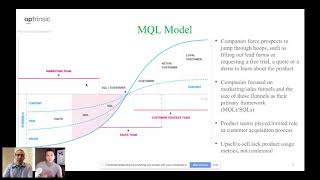
Cool. So as we said, there's a lot of the spectrum comes from sales lead models to product-led models. And most companies that we know in the enterprise business is in the product-assisted area. And just to kind of give you a high-level approach, you know, in a sales-led world, customer acquisition is led by primarily by sales team. In a product-assisted world, the product is becoming a part of the onboarding, part of the trial, if you will. So it's definitely there earlier in the buying process. In a product-led situation, the product is becoming the main channel for customer acquisition. Therefore, all the qualified leads are leads that demonstrated buying intent, product interest, if you will, instead of just the MQL or marketing qualified leads. So a PQL would be a buyer that basically signed up for your product, behaved in a certain way, and you can actually use specific usage metrics to qualify them in a new way. So just to understand why this is happening, this is basically a recent survey, 2018 survey from Kleiner Perkins, and the motivation and why do we lead with a product built on the fact that the industry leaders, the high-growth companies recently, focused on really building a consumer-grade product. And that's the expectation that is becoming from the user. And then also kind of using customer acquisition, using the product for customer acquisition is the concept they've used. And they were able to give you a trial or able to give you a freemium level and upsell you into a paid version. And there's another motivation why to think about product qualified leads is the cost of customer acquisition is becoming higher, so we need to justify that with customer lifetime value. And customer lifetime value is coming from the product. Today, if you think about that, companies are serving and communicating with their customers through the product. Once they sign up to your product, from that point on, my customer lifetime value depends on how much would I use your product, how much services and values your product can drive to me. Therefore, when you think about customer acquisition cost and customer lifetime value, you need to think in a new way, and these are recent statistics. So let's look at the marketing qualified lead model that we know today. And by the way, probably some of you know, I was I joined Marketo part of the acquisition of Insightera to Marketo, so I've been in Marketo for 3 years and Marketo led that whole notion of marketing qualified leads as a new strategy to scale awareness and to scale sales. So in this model, in marketing qualified leads, you can see that the customers are basically being nurtured through content and then Once they give the right signals, those leads are being passed to sales. Sales then qualifies those leads and then try to reach out to the customer and have a discussion. And at the end of that journey, they actually meet the product. This is the, the standard way. We can see how marketing teams are playing here, when is the sales team is engaging, and then customer success is getting the handoff of a customer. You could see that customers actually meet the product for the first time once they close the deal. They might see, we've seen a demo, but actually using it, actually understanding what you guys do happening pretty late down the road. So companies that approach, you know, use the marketing qualified leads, they do sometimes get you into too many engagement forms and nurturing processes, and sometimes the funnel for a customer might be very quick. He might have taken a decision and he wants to use the product, but then normally you would kind of push him through those forms and nurturing funnels. So scoring leads today, if you just rely on email opens, on website visits, that's not going to be enough. In many cases, you might get a a different sense of what the qualification metrics are. So that's kind of in high level what's happening with marketing qualified leads. The big challenge that we had at Marketo when we built new products and took them to market, we had a great success with the installed base, but we could not really have the usage data to qualify them. So when it goes to upsell and cross-sell, I think we started to feel that, hey, marketing qualified leads, has some challenges in that sense. Looking at other qualified leads, you can see that a sign-up is the point where actually a user can try, start the trial with your product. So marketing teams still play a major and important play here, but they take care of awareness and basically drive users or customers to try out the product. And then there's a, the product is basically becoming the channel that you can qualify your prospects. And then in a trial, normally you would have a lot of things you can use to really qualify. So it can be intent, usage, specific features, user and account data, everything becomes way more visible. And you can also have a sense of if the customer is really— what the level of usage and what's the right time to engage. There's another area for upsell and cross-sell that qualifying customers based on product usage is also very, very productive. Because sometimes, you know, when we used to go for customers and offer upsell and cross-sell, it was basically next to the renewal, not necessarily based on when they really need that. So in both areas, I think qualified leads play a major game. Especially around the upsell and cross-sell, when you get that visibility, you have a better conversation with your prospect. Another interesting point to see here is actually product teams suddenly become part of the play as well. So it's no longer just a marketing team passing to sales, passing to customer success. Now the product and product teams are being involved across the board as soon as you sign up and as soon as you become a customer. And there's another notion of kind of moving towards marketing to your users. Eventually your users are your buyers, your users are the key force to make your company successful. Quick examples that we're seeing in the market, as we mentioned, Slack, for example, pioneered that concept and they grew very quickly. And what's interesting here is just to look at daily active users as a business metric. So it's basically a use usage metric, which is becoming a business-critical metric that they can measure and associate revenue with it. Another great example is Dropbox. Again, started from a consumer, very individual solution and grew to a platform. And again, you can see that number of users and revenue are associated. So if you think about business metrics, suddenly usage metrics are becoming very important metrics. So even if you take into qualified leads as a metric, you can really qualify as well what's the overall state of the funnel. So I think that's kind of where I wanted to explain about qualified leads, and I hope it was helpful.
Yeah, that's super helpful to see it all laid out. Especially, you know, somebody had asked the question and I thought it's a good one, especially, you know, you brought up examples like Slack and Dropbox, right? Is the concept of a product qualified lead best suited or especially suited for the type of product where, you know, it's either freemium or super low barrier to entry, or does it also apply for, you know, companies that have products that, you know, maybe it's not like a Dropbox or it's something like, I know there's a, you month free trial, whatever it might be. Could you talk about that a little bit?
Sure, it's a good question and we get that question a lot. So I think it's relevant to every product that offers a trial at minimum. So you do want to lead with your product to qualify users. So that's why if you focus on trials and focus on customer acquisition, it's relevant to any company that offers a trial. On the other side, for upsell and cross-sell, it's relevant for all companies, all types of solutions. And from that point on, not looking at usage data basically might not give you the right timing or verification for that process. So I think PQL is very strong across the board when it goes to upsell and cross-sell, and it's being used more and more by the customer success team as well. And now also by marketing team that kind of want to see the usage data going in.
Okay. You know, what about, you know, I'm curious if there's probably people that are, you know, watching this and they're like, okay, this, this makes sense. You know, maybe my organization, we're only using the marketing qualified lead concept, but we should be adopting this product qualified lead concept. Where do you get started? Right? Like, I'm just curious, you know, for a product person that maybe they're a product manager, or maybe they're, you know, more senior level, director, VP, but they have to, they have to get buy-in, they have to, you know, kind of get the whole organization on board. Where might you suggest that they start?
So yeah, it's a big step. I think first and foremost, you need to start with the data, really understanding your users. There's a lot of aspects to that question. One is, is your product ready? Is your product instrumented? Can you really expose the usage data to feed those systems? Not all products are kind of built for even trials. I do still see, especially in the enterprise business or B2B business, some products are more focused on the true value once you onboard, once you really learn about the product, it's very, very useful. So I think changing the mindset as a product leader, change the mindset Hey, my first mile of product has to be ready. If I want to implement fully qualified leads, if I want to start offering my product, I need to understand that as part of a trial or trying a new feature, I need to really think about how— how much attention it will give me and how can I really learn about those usage metrics. So understanding that user behavior, also aligning with the business goals. Make sure that you understand the business goals and what you're tracking, you're funneling your users to do, will get the result your business is after. So it's really based on focus and really alignment with your business as well. And there's also being cross-team and collaborating across teams, not just the product team. So definitely you want your marketing team to play with it. You want to set the expectation where is the marketing qualified leads ends, and sometimes it's just supplementing. So you want them to still drive awareness and then drive sign-up. At that point, all the qualified leads kicks in. You can still feed usage data into the marketing system as well, but then marketing should play also in that field. So they can really do some adoption marketing and upsell and cross-sell marketing using those areas when it goes to upsell and cross-sell. There's also an effect on the sales teams. It used to be that the sales will pitch something, not necessarily know the product very well, and in many cases, sales are not that useful for a very educated buyer or user. So today it looks like we've seen one more product-proficient salespeople. They know the product, they're using the product, they can articulate use cases, and PQL is helping them really to have that discussion with leads about their use case, as opposed to just pitching the basics. So the product teams also need to tune to the data, use the data, leverage the data as well, and you need their buy-in as well. And it's again, as a product team, paying attention for those areas, the trial and the absolute cost sale, is key. If you pay attention to that, you're going to start seeing that you're going to prioritize your features even differently. All those improvement features from the backlog is becoming a front log because now everybody is behind a PQL. Eventually, in the classic way, is getting the entire company behind this, behind the product, behind the qualified leads, behind the the critical business metrics that also have that usage in it.
Yeah, no, that's great. And would you say, like, when you think about, you know, again, we learned a little bit about the concept of marketing qualified leads, and now this is product qualified leads. Is this something that typically would replace, or would you say more supplement, you know, marketing qualified leads? Would you see organizations sort of bringing both on as important metrics?
It's a good question. I think it goes back to the question we actually had, but if you're completely product-led, so trial is definitely the, it's a full PQL. It basically replaces the MQL. You always push for a trial, but it's definitely more relevant for solutions like Dropbox and something like, it's a very straightforward, it's the main core value and feature is very clear. So in this case, it looks like the PQL can completely take over. You still do the marketing activities, but the number one thing, every signup is a product signup. In many cases with product assisted, the marketing, the MQL is supplementing the solution. Even at Apptrinsic, we still use our notion of MQL to nurture users that just heard about AppTrinsic, and so they understand what the solution is all about, and then seeing once they're ready to actually take action and try, which is related sometimes to the fact that they have a compelling event in their company. So we do push both of them forward, but there's— MQL is moving towards awareness to sign up, And then from signup onwards, it's a PQL, which really complements that framework.
That's great. I want to take another question from the audience. And by the way, if anybody else has questions, now would be the time to ask because we probably only have time for, you know, a couple more. But this question is coming from somebody that is— they have an enterprise product and they're considering, you know, of using benefits of PQLs as justification to build out a trial concept, which it sounds like they don't have quite yet for their enterprise platform. So they were just asking, you know, any thoughts on really how to approach, you know, using the PQL concept for an enterprise, a SaaS enterprise platform?
Yeah, I think, you know, again, it goes back to really preparing that notion, understanding the customer journey, mapping the customer journey, what you want them to achieve, during a trial, or if you're building a self-service model, just what would be the goal and then kind of really building and understanding the product gap that you might have. Sometimes it's just, you know, you've built a great product, but then again, there's a long onboarding process to get their true value. So thinking about early value, how can you— because it's, it's a, it's not just a, it's a go-to-market notion as well, right? So If you're building, moving from an enterprise product, a sales-led model, and now you want to be product-led, that basically means you have a huge potential to grow quickly. So growth is completely different numbers, but there's another way you need to think about this. Now the product has to be ready because when you do offer trials and with a self-service model, the expectation from the end user is very high. They're basically looking at you as a consumer app, so to speak, and that value should be there. You should think about the initial journey, the main goal, and split it between initial and the further step that you're going to guide them through. Because normally in B2B enterprises, you have platforms and you have a lot of features and capabilities, And the decision is like, where do I start? How do I nurture them from, you know, stage 1, stage 2, stage 3? So I think the way to start is understanding the endgame and then understanding the implication on the product and then to try it out. I think trying it out is great. People are happy to try to see those things. I see that, you know, another nice thing to see is I see a lot of large companies trying that and actually from the buyer end, people are pretty happy about that. Change. They can really try, they can play with it, they give you feedback, they're very open about the feedback. So I think it's a, it's a definitely a strong strategy.
That's great. I'm curious if there are, for people that are approaching the concept of PQL maybe for the first time, are there sort of common mistakes or traps that people should look out for? Just interested in hearing about that.
Yeah, sometimes it's just open the gate and hope for the best. So signups just don't show up, especially if you're a large enterprise company, not necessarily people who even expect a trial. So you need to invest in awareness, you need to basically make sure that the launch is happening. And so one mistake is just putting a trial and expecting that you're going to see hundreds of signups a day. Second common mistake is again, not thinking about those differences. Your customers, they want simple and then powerful. And that is a very tough thing. So you need to think how to make it simple for the first stage and think about the early majority and just focus them on the simple area so they can gain value and then nurture them to the stronger or further value down the road. If you just open the platform and just wait like that, nothing, you know, would come out of it because people are not going to invest half an hour or an hour to learn about your product.
Well, we're pretty much coming towards the end of our time. I just— maybe if there's sort of a summary or like sort of the last couple things that, you know, people attending this session you want to make sure that they can walk out with knowing about PQLs? Maybe it's sort of a last piece of advice or just one thing that we didn't talk about. Like, what would you want somebody to walk away with?
I think that the, the big thing is just this is happening. This is like, uh, we see that software is taking the world. As we know, services are being, uh, across industries. We see healthcare and now are starting to compete based on their product. So This is coming. There's a lot of motivation around this. It's because of, from one side, the customer expectation for high-quality, fast, responsive, smart apps. And from the other side, companies see that as a very effective, cost-effective go-to-market strategy. If you look at the multiples that public companies have today, they look at their retention and net retention values. Investors look at that, and I think if you look at net retention dollars, is like if you're product-led, you're going to get a way higher valuation because you basically spend way more effectively and efficiently when it goes to upsell and cross-sell.
Yeah, well, I appreciate that, and I did want to make sure that we could talk about— and somebody even asked about this, somebody had asked, hey, Does the Apptrendizic platform, you know, help me as a product person sort of, you know, track the PQL journey? And, you know, I definitely want to make sure we could talk about Apptrendizic. And I know this is something that for product people, it's an analytics platform that it's already trusted by a lot of folks. But maybe you could answer that question and talk just a little bit more about that before we wrap up.
Yeah, sure. So Apptrendizic is a product experience platform. We do collect all usage data. That visibility is something you can gain with the fuses. The big difference is also we're actually learning. So you can actually take action, you can actually guide users to the right path. So we really span from trials to adoption, upsell, cross-sell as a platform. And we think about products first. We're kind of the product a usage platform for product teams that they can start associating feature usage with revenue, but become more growth-oriented. So this is what we actually built Uptrinseq for as a platform to really put the product in the focus and the company behind it. And for that, we provide both capabilities.
Well, I appreciate you sharing everything that you know about product qualified leads with us today. I know this session is going to be available immediately to stream. So for folks that are here, if maybe there's somebody that you thought should have been in on this session, you could send them this link and they can watch the video. But also, again, that green button— it should be a green button, I think, for everybody— that'll, that'll lead you to some awesome information that's coming from the Actrinsic team. But there's also— encourage everybody to, you know, read some of the posts that Nikki wrote on the topic. I know, again, you wrote some for OpenView Partners in the past, and And if any of you are going to be at Industry with us this October, again, the AppTransit team will be there with us. So we could definitely continue the conversation in person. But really, with all that, Miki, I just appreciate you being here for this Industry Interview. Thank you so much.
Thank you very much for having me.
Awesome. And everybody, thank you for attending. And hopefully we could see you at some future Industry Interviews. So have a good rest of the day and I'll see you all soon.
More from Greg

Changing Buyer Behavior | A Conversation With Greg Coticchia | Tech Done Different Podcast With T...

3 Decades, 5 Marketing Truths and The Power of Perspective with Greg Coticchia and Bryan Scanlon



Changing Buyer Behavior | A Conversation With Greg Coticchia | Tech Done Different Podcast With T...

Hot Topics in the Summer Heat: Greg Coticchia's Take on Product Prioritization

The Great CEO Podcast with Pam Singleton from The CEO Project and Greg Coticchia CEO at Sopheon.

🚀 Lessons in Innovation Management and Entrepreneurship with Greg Coticchia, CEO of Sopheon


Sopheon CEO Tackles Smart Product Development Challenges on World Product Day 2021

Product Management Misconceptions w/ Chad McAllister, Host of The Everyday Innovator