Becoming a Product-Led Organization w/ Eric Boduch, Co-Founder of Pendo
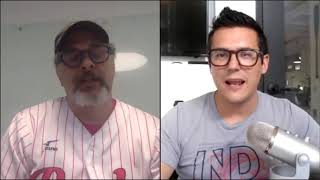
Eric Boduch, Pendo co-founder, explains how product-led organizations differ from product-led growth. Cloud computing and SaaS shifted buying power from CIOs to end users, making product strategy essential. He contrasts companies like Pendo and Intercom with sales-led firms, and warns that ignoring product-led approaches leads to customer friction and missed upsells.
Chapters
Hey everybody, this is Mike Belsito, co-founder of Product Collective, and we're back for another industry interview. So thank you very much for joining me today. It's a beautiful sunny day, like 70 degrees here in Cleveland, Ohio, so kind of feels like the San Diego of the Midwest right now. But I hope, hope wherever you're at is really nice too. But Today we're going to talk about what it means to be a product-led organization. And I'm excited for that one because this is something that you kind of hear that term popping up, I would say, especially recently, you know, these last couple of years in particular. And but, you know, what does that mean? So today we're going to dig into that with our friend Eric Bodak of Pendo. And I'm going to introduce Eric properly in just a minute. But before I do, just kind of some housekeeping things. If this is your first time attending an Industry Interview, so These are live video chats that we have typically on the first and third Wednesday of every month at 1:00 PM Eastern. And we love touching base with all sorts of different product leaders and really digging in on all sorts of different questions that are— and topics that are relevant to product people. So we have one other one that's coming up, and then very soon you'll see a few more that are actually scheduled to be announced. Soon. But this is a great chance for not just me to ask questions and for you to watch, but for you to ask questions as well. So there is an ask a question section right at the bottom of the page. You should see that at any point, including right now. You could tee up questions that you'd love for me to ask Eric, and I'd much rather ask your questions than mine. So I do have several questions for Eric, but I think it's a great opportunity for, for for you all watching to get your questions put to the forefront here. So if you would, please go ahead and do that at any point. But you'll notice a chat on the side as well. That chat is really for introducing yourself, just sharing maybe what product you're working on, where you're from. We have people from all over the world attend these, so it's pretty cool to see that. In fact, just so you can appease me and make sure you can see and hear me, maybe, maybe just say hello and where you're from in the chat. That'll, that'll be cool to see. So anyway, at Product Collective, we do a whole host of other things. We have a weekly newsletter that we send out to about 20,000 product people on all different topics every single week. We also have a Slack channel. It's a pretty active Slack channel. There's about 10,000 folks in the Slack channel just every day kind of popping in and sometimes trading ideas, best practices, that sort of thing. And of course, we all meet in person at Industry. We have a conference, Industry, the product conference. Our global edition is in like 3 weeks in Cleveland, Ohio. So we're getting really excited for that. And, you know, nerves are kind of high because it's so close. And we have about 1,000 people that will be joining us for that. I think it was 37 states and 10 countries this year. Actually, that was like a couple of weeks ago. So probably even more states and more countries now. We also do European edition every spring. That's in March 2020 in Dublin, Ireland. So you could learn more about all of that at industryconference.com and productcollective.com. And my friend Eric and the team at Pendo has a conference coming up too. So I'm going to let him talk a little bit about that in a minute. But I guess I might as well properly introduce you. Eric, welcome to Industry Interview here.
Thank you. Thank you. Glad to be here.
You are one of the very few return guests. We usually have new guests all the time, but you've been a guest in the past. So thanks for taking the time. I appreciate it.
Thank you. Thank you. Yeah, it's been 3 years or I think it's been a while. It was way back in the beginning. So I know a lot has changed. I mean, I have Quite a year now.
Well, you also have a very cool Pendo baseball jersey. I know, I know.
Look at this. It was pep rally day. We did our first ever pep rally for the upcoming conference on actually next week, September 9th. It kicks off. That's right here in beautiful Raleigh.
Pendemonium. This is the— is this the third year for it?
Yes, the third year. We'll be about 1,000 people when you include the Pendo people attending. So pretty crazy. I think there's a few tickets left.
Well, if every Pendo employee's coming to it, it seems like, man, you'd need to make more room because Pendo's growing, right?
We would. We would. You're like, you can come if you have a job. Right. But yeah, no, it's exciting. So we've seen it grow up, grow out of the space we did it at last year. This year we're at the convention center. We're going to have a lot of pink throughout Raleigh. You know, we're bringing back some of the popular things like live band karaoke. So that's, that's reason enough to attend. But, you know, seriously, some great speakers. April Dunford's coming in speaking. We got Dan Iarelli, who's an author, talks about a lot of cool things that are applicable to product managers.
That's awesome. I had a chance to go to the very first Pendamonium and I loved it. I remember moderating a fireside chat, but I got to take in a lot of other talks too. So definitely check it out. We'll have a lot of pink at Industry too, because Pendo is the presenting sponsor. Of the Global Edition of Industry. So really appreciate that. But, you know, Eric, I do want to get right into the topic, if that's cool with you, which is what it means to be a product-led organization, which is something, by the way, that I think is really important to Pendo, right?
Yeah, I mean, definitely important to Pendo. I mean, you think about it, Pendo is all about building and maintaining great product experiences, so that lends itself to being product-led. And our product set is all about this product cloud, you know, bringing together analytics, feedback and guided user engagement all through one platform. So, you know, when, when the product-led, I'll call it a movement, started, it made a lot of sense to us to be involved at the forefront of it. So to talk about your question though, you know, what does it really mean to be product-led? I think it's a different way of thinking. It's a different approach. And really it's a movement. It's about thinking about product different. It's about thinking about product not just as like a collection of features like we might typically think of products, but thinking about products as an extension of your sales channel, as a means to communicate with your customer, as a tool for doing customer education, and really the primary driver of that first, you know, touch, that first perception, that first experience with your company. So, you know, product-led is really a cultural movement around thinking about how the product can help other areas of your company. And, you know, one of the things that comes up is about a lot is this concept of product-led growth, and I want to talk about that really briefly, uh, because product-led growth is important, but it's also a subset of being product-led. So when people are talking about product-led growth, they're really talking about the sales and go-to-market side. They're talking about leveraging that in-application experience and your product data to do a better job, you know, doing things that sales and go-to-market would do, which is converting, retaining, and upselling customers. Where when you're thinking about being product-led, it doesn't just encompass the growth part, but it also encompasses, you know, how CS is working with customers, how product is getting feedback, you know, how engineering is interacting. It's really a touch point for your customers.
I'm glad that you brought up, you know, the topic of even product-led growth, because you're right, it's sort of a subset within what it means to be product-led. We had Blake Bartlett from OpenView Ventures not that long ago on for an industry interview talking about the growth aspect of it. And actually, if so many of you weren't a part of that or you didn't catch that, you could go back and actually view that session. It might be, might be useful right after this session too. But what I am curious about, Eric, is that we, for me, even anyway, personally, like I feel like it's a term that I've only started to hear these last couple of years. But software companies have been around for a very long time. Like, why do you feel like now is the time that we're hearing about what it means to be product-led? And like, why is now the time where it seems like this is important?
Yeah, so I mean, that's a really good question to ask because, you know, you'll hear buzzwords out there or, you know, quote unquote marketing trends and you start thinking, well, is this just something, you know, is this a campaign that someone's running? Or is this really important and why is it important? And part of that is why now? And you think about product-led and why that becomes important today. And you can think about some of these big trends that are happening and continue to happen, right? So there's a lot of these trends that have really affected why or how customers buy and interact and renew software, right? You have things like the cloud, You have things like design thinking, you have things like SaaS, you have things like departmental purchasers. So, you know, a combination of all these things means it's easier for competitors to build a product, right, because of the cloud. It's easier for them to steal market share because of how easy it is to scale things, especially in the beginning via digital offerings. When you talk about the shift away from like a CIO buyer to a user buyer or departmental buyer, it now means that these people also who are your buyers might often be your users. So there's more of an overlap there. And so they, they expect these great experiences from the product. And it's shifted that power. And obviously SaaS makes it really easy to quit software, right? You know, you buy software, it might be month to month, it might be annual, but it's really easy to quit it as opposed to the years gone by where you bought something and had really heavy implementations. So all of this comes together, you know, to put a lot of pressure on the product organization, and that's been both good and bad. It's raised the exposure of the product organization. They have a lot more toolsets for them. You know, companies like, you know, ProductPlan are out there today. Companies like, you know, Pendo obviously are out there today. Companies like FullStory. So you start getting this stack of products that wasn't there for product teams before. And it raises the bar of expectations from the product org. And so this drives this whole concept and this whole movement into product-led. And that's really this idea of, you know, extending the product to better enable other departments to fulfill their mission.
You know, and I'm glad you mentioned some companies that probably a lot of people might consider to be product-led. I'd throw other names. I mean, like Pendo's always come to mind, but like Intercom and Basecamp, like that, those are companies that some people will talk about as being like product-led organizations. I'm curious your take though on, you know, cause there's nothing that says on a website, well, I suppose that could be, but like we are product-led and another company's website, we're not product-led here at XYZ company. Like what's the difference? Like when you view a company that you would label as product-led versus another that isn't. Like what really differentiates those two companies? What makes them different from each other?
So I think it's fundamentally how you think about product. You know, when you look at these companies, you look at companies that are product-led, that product influences a lot of parts of their company, right? It influences most of the parts of the customer journey. It influences all their activities and all of these things that maybe were quote unquote, outside of the product before. Things like traditional POCs, things like marketing leads, things like, you know, even self-service trials. More of this is getting integrated into the product and the product experience itself, right? So at some level, you can think about this as user experience, but it's much broader than it was before. And I think you're seeing these cumulative value-added activities that surround the product being integrated into the product itself. And as they come together, you know, product then becomes this competitive battleground and more roles, more departments have a stake in the overall product experience. So you can, you can differentiate these companies based upon maybe even how they answer certain questions, right? You can think about it as like, like, let me ask some questions of your marketing department, right? Do you deliver content and news inside your product? Well, product-led companies would probably say, yes, we do. Product announcements, uh, we target those to individual users that are relevant. Where other companies would be like, no, we mostly use emails, we use webinars, we use phone calls, that kind of stuff. Uh, product-led companies, if you ask them if they enable customers to buy or upgrade inside the product, they would say yes. Other companies would say no, you have to do everything through sales, right? Uh, if you think about, you know, how it affects, you know, even the product organization, do they capture feedback and manage feedback inside the product? You know, product-led companies would say yes, and they're able to, you know, easily kind of integrate that with their workflows, uh, versus other companies would be like, no, we mostly get it via email, you know, through customer advisory councils, through that kind of thing. Um, product-led companies, if you ask them about sentiment, things like NPS, they'll say, yeah, we measure that right in the product. And maybe they would even say, we measure that, you know, for particular features and functional areas. Like, we know that lead scoring is a really popular area of our product and our NPS there is like 80, right? Where other companies that aren't maybe product-led are doing all that, you know, purely through email or maybe not even measuring sentiment at all. If you think about it from the CS lens, you know, CS company or product-led CS organizations are measuring customer health based upon things like product usage. They're supporting their customers inside the product itself. They're using a lot of this information they gather out of the product to prevent churn. And all this is probably not being done, or it's being done in a minimal case, by non-product-led companies. So there's a lot of different things there. I mean, you can go into it forever. Do you identify opportunities for growth based upon how people are using your product, right? There's a cool opportunity to take product data and use that to say, hey, Mr. Salesperson, here's, you know, 10 leads that are likely to buy based upon what we know about their current usage of their product. And by, by, I mean maybe by a premium offering, or if they're going through a trial, you know, these are ones that are more likely to convert based upon what features they're using in the trial, how often they're using the trial, you know, what they're accomplishing in the trial, and then maybe some external characteristics. All those things can be used as identifiers for looking at, you know, is a company product-led or not. Is that a good answer for that question? I think, you know, being product-led is really a cultural movement. It's about, you know, pulling in these other departments into your product.
I think that was a great answer. I thought that was perfect. And actually, I'm glad you answered it that way because we had an audience question come in which was like, hey, can you compare product-led versus the alternatives of business-led, sales-led? And you touched right on that before I could even ask that. Um, but it did actually remind me If anybody else has a question for Eric, keep those coming because again, I want to get to those as many as I can before I even get through all of mine.
And I think it's important to say that being product-led is not— and I talked about this, I did a talk at OpenView. So I remember, and I would highly recommend hearing the OpenView Crowdcast, right, that you have out there. He does a great job about talking about it. But even product-led growth you know, it's about helping your sales team do better, right? It's not about whether you're a product or a sales-led company, but being product-led is more about using your product to empower the other parts of the organization. So being product-led definitely does not mean you don't need sales and marketing and everything just happens through your product because the interface is great, you know, and we generate and sell our own product right there. Sales and marketing really still play an important role in your organization, It's just you're using product and product data to better empower them, where in the past maybe they were flying blind as far as the impact product usage and the product itself has on the customer journey in the sales cycle.
You know, one of the things that strikes me about Pendo, and again I put Pendo right in that class of companies that are product-led, but Todd Olson, your CEO, I mean he's a product guy. Product was sort of in his DNA throughout his career. Does it have to start at the top? Like, I'm curious for those companies that are product-led, does it really take having a product-minded CEO? Like, what's your take on that?
I mean, I think it definitely helps. I think, you know, while it might not need to start at the CEO, it definitely helps if it does. And it definitely helps if it happens at the executive level, that if people are really bought in I mean, in order to be product-led, I think there has to be a lot of cross-collaboration between departments. There has to be a lot of transparency. There has to be a lot of information sharing. So those are all real core values, you know, company-level values or executive-level values. And if they're not happening at that level, it becomes really difficult because if product, say, isn't sharing sentiment information with customer success or not sharing usage information, then customer success can't build outreach campaigns or retention or expansion campaigns based upon that, right? So there has to be this free flow of this data through to and from the departments. Otherwise, it becomes really hard to build an organization that way.
That's, that's helpful for sure. You know, we got an audience question that came in, and I'm going to add to it a little bit. The question was, do you have any tips for sort of changing an engineering-led organization to be more product led. And I guess it goes to say, like, this person that wrote in, chances are they're not the CEO, right? So what can we do to influence our organization to change to that, you know, to that direction?
Yeah, I mean, I think part of it is empowerment, right? If you're talking about moving from product-led, moving to product-led from being more engineering-led, you know, hopefully you're getting a lot more of the voice of the customer, the usage information. And you're sharing that with engineering. So you're making a strong case for, you know, we're building lead scoring because we're getting a ton of feedback via the product that it's missing, or we're— we want to deprecate this area of the product and pull resources away from it because A, customers don't like this area, and B, they aren't using it very much based upon sentiment and usage data we already have. So having that solid foundation of data in your product organization and sharing that back with engineering can help them think about, you know, how they integrate the customer's voice into the engineering direction. And that might mean cutting things, that might mean adding things, but it's just getting kind of more of the view of the customer and the jobs the customer is trying to, you know, accomplish into kind of the engineer's world.
Another, another person had asked if you had any advice on how to become product-led when the core product is, in their case anyway, it's a financial product that's enabled by technology. It's not a tech product itself. So I, I guess, you know, maybe another way to ask this is, are there only— are there certain types of companies where being product-led doesn't make sense, you know, or, or does make sense? You know, does it— does there have to be a certain type of company that, that should be product-led?
I think it's really a movement and mentality around, you know, using product and technology to empower the other parts of the organization. So you might not be able to do everything I saw, you know, talked about. Like, if people aren't actually, you know, uh, or rarely log into your product, then maybe it's not the best mechanism for communication. Like, think about like tax software, right? Uh, people aren't there except for a couple days of the year, you know, you might not be using it as your primary means of communication, where emails and things like that might be more effective just because of usage habits. So I think you focus on, you know, you focus on increasing the product-led direction in the areas that make sense. Like if you go back to the questions that I was talking through, right? Where instead of maybe using it as a communication mechanism in the world of tax software, because they're just not in there all the time, It might be, you know, you might focus more on helping them or helping your team identify more opportunities for growth. Like, I know, like, I think it was— well, I'm not sure which one it was. I think it was Quicken that added this whole CPA service on top of their product, right? And that, I imagine, was very driven by, you know, customer demand or things they saw as far as, you know, usage in the product itself that highlighted an opportunity to add on another product line, right? Or a product offering or SKU. So I think you look at the things that make sense for you as a company, who your customers are, and what your technology is, and you double down on those areas of using the product to help those departments.
That's great. Somebody else asked about, in their particular situation, they are wanting to shift to be more product-led, but they— and this is more of a sales-led organization. But they're anticipating that there might be some friction. You know, the company might be used to the way that it's been, and particularly on the front lines, you know, those that are working closely with customers, with the account management and such. Do you have advice for people in that situation to sort of mitigate that friction, maybe, maybe, you know, eliminate some of that friction?
Yeah, I mean, I think it's in how you empower some of the salespeople. And if you think about it from a standpoint of like, How can product make sales better, right? If you're actually helping them do that, you know, you're going to get a positive response because if I'm a salesperson, I want to sell more. And if product can come to me with like insights that are out of the product itself, like, hey, here's your top 20 candidates for this new product offering based upon usage of the product, right? We saw that, you know, people who do X, Y, and Z in the product are more likely to buy this new product than other people. And oh, by the way, here's a list of them. Then that's, as a salesperson, I'll be super excited because all of a sudden here's a list of places I can make money. You can also use product data to find new uses and personas. Like in Pendo, we found early on how active customer success was in our product. So we started doing more with empowering our sales and marketing team to go after those customers, you know, and talk about the value Pendo has for CS people. So that gave a new, a new persona for our salespeople to talk to, to help them open up accounts and help them close business. You know, and you can use it also from a sales perspective to prioritize leads. If they have things like free trials, right, you can give them a list of all your free trials, but it's even better if you stack rank them based upon likelihood to convert. And you can do that based upon data, you know, from your product, like people who do A, B, and C early on on the product are 50% more likely to convert. So stack rank those free trials and hand them over to sales. So all of those things, you know, help the sales team. And if I can help, if I can give, if I can use my product to help salespeople sell more, you know, that's awesome, right? They're going to be active to that.
I love that. I mean, it's like, hey, we have customer empathy and we We try to anyway as product people, but we have to remember to have empathy for the other folks in our organization too. So maybe having more empathy for those people on the sales team and just thinking about, hey, like if I was in their shoes, what's important to me as a salesperson and trying to use product to help them achieve that, that might help us, it sounds like, right?
Yeah, we've seen people do cool things like even just have like, oh, you know, we'll put in a product, you know, like little buttons that don't go anywhere but might lead to new future product offerings, like that's coming soon. and then that would be pushed right over to sales, like, here's a lead for an upcoming product we haven't even launched yet. And it's because someone in the product was interested in it, right? Or interested in this feature functionality. So those are really cool ways. There's so many cool ways to utilize your product, your product interface, your data itself to help other parts of the organization. I could kind of go on and on and on. I love that.
Well, you know, we've been talking about, you know, all the good things about what it means to be a product-led organization, and it sounds great. I'm curious if there's risks in, in like jumping on the product-led train, you know, especially if maybe our organizations weren't product-led before. Are there risks? Are there downsides? Like, what should we be mindful of?
I mean, I think there's risks if you're saying like, oh, we're a sales-led organization, we need to change it to product, right? Because that's not really what it's about. It's about using, like I've said over and over again, you know, empowering, using product to empower the different departments. And beyond that, beyond like, you know, creating your own roadblocks that aren't really there, I think the big downsides are to not doing it, right? I was using this software the other day and I was trialing it, and I remember going through and I'm like printing a report out and there's this column with a label and I have no idea what this label means. And I'm like looking at this label trying to figure it out, like what is this telling me? And I just didn't have any clue. And I'm looking for that little help icon or that little icon that I can You know, click on it in the product and it'll pop up with a definition of what this column really means, right? And then I'm like, well, what do I do? You know, do I want to contact support? I'm like, you know, it's just, you know, I'm only in a trial. Do I just say forget it? I don't really care because I was like, I was trying to get value out of this report. I just didn't understand how to read it, in particular a couple of columns out of it. So then I'm like, oh, I'm going to go through and try to see if I can, you know, email my salesperson and get them to explain it to me. And that that friction in the system is like a huge downside to not doing things product-led, where all those points that people struggle, you know, if you get a support call about something, you know, after you get it 2 or 3 times, you should probably think about like, how can I explain that in product? Either make my UX better or, you know, just have a pop-up that, you know, a walkthrough or a guide or an information icon, something like that would be useful, or maybe both, you know, the information icon first and then make some improvements in your flow. So not doing some of these product-led things, uh, you know, has huge downsides because it puts friction in that customer journey. And, you know, personally, I hate bad software. It just gets frustrating. You're like, I'm trying to do this and you're not letting me, uh, or I'm going through a flow. I, I know I used to, you know, I used to run marketing a few different times, and one of the things that always perturbed me about a particular marketing automation vendor was that I'd go all the way, I'd be creating a campaign and I'll get halfway through it and they're like, please attach your list. And I'm like, oh shoot, I haven't created a list yet. So I gotta go back and create a list and I'm like, feel like I'm starting over every time. And you know, after like, hey, I would love to them just guide me, you know, to be able to train myself, right? One of Pendo's new products is this product called Via that helps you put in like custom training on top of other people's software. and it would be like, hey, but I know you do this every month and every month you forget to create a list, so make sure you do that. I mean, stuff like that would be cool. Uh, but beyond that, from the vendor themselves, you know, if they start seeing that that flow happens with other people— I'm sure it wasn't just me— uh, they start seeing that flow happens, they should do the same thing. Reminder in the beginning, make sure you have these 3 things done before you start creating a campaign. That would be super useful because I get frustrated every time And I felt stupid because I know like I did the same thing when I did this a month ago, right? But because I wasn't doing that every single day, I would forget. And the natural flow is just like, yeah, I'll start a campaign and I'll go all the way through the end of the campaign and it'll step me through an order. But then you don't think about the prerequisites for actually building out the campaign. In this case, it was having a list and having the right list and, you know, all kinds of little things there. And so that guidance was just super frustrating. So I can imagine there's a lot of downsides to not doing things. There's not a lot of downsides to not being product-led. There's not a lot of downsides to being product-led. The only thing is just, you know, making sure you manage change in other ways, making, you know, like everything else, you just have to do that change management. And a lot of that is just making sure people don't have, you know, particular areas of fear that they don't need to have. Like, this isn't about, you know, taking power away from customer success or sales or marketing. It's about making them more powerful.
I love that. I think that's the theme of the session is empowerment and empowering folks within the organization. It sounds like that's what it's all about. So if there's a big takeaway, it sounds like maybe that's one big takeaway. Would you agree?
Like my big takeaway today, you know, being product-led is about empowering other parts of the organization. And it's about empowering your customers to be able to serve themselves too. You know, as that example talks about, whether it's the columns I don't understand in the trial, or what a workflow actually does, or whether it's just, you know, helping your customers understand what the prerequisites are to accomplishing a task or getting their job done, right? You want to make things better. You want to empower people, you know, to be more efficient, more successful, uh, with whatever they're trying to do, whatever your software helps them do.
Yeah, well, I— this has been an awesome conversation. We're coming up at the end of our time, um, but If I got through most audience questions, if there's questions we didn't get to, what are ways that folks might be able to keep tabs on what you're up to? I know Pendo has all sorts of resources. I know you're, you're on Twitter and things like that. You also have some podcasts. Maybe you could just mention some of those.
Yeah, so I mean, I run a podcast called Product Love, which is amazing. You know, it's been so well received. I'm super thankful for all my listeners there. I love getting those emails about how much they love different episodes, or even I even mic the episodes about improving things. So you can listen to Product Love. I'm also always looking for guests. You know, mostly, you know, we try to focus on bringing in, you know, product leaders. So people are leading a department or leading a product line, or authors who are writing about a particular area of product. Like we had April Dunford, you talked about positioning. So Product Love is the podcast. You can listen to it on iTunes or wherever. You know, podcasts are listened to, Spotify, etc. Uh, I'm always willing personally to answer questions. I'm just Eric, eric@pendo.io. I love talking about product. I mean, one of my roles as Chief Evangelist is just helping the community get better. So I love, you know, shooting the shit, so to speak, about product, where product is going, and how the craft can be better. And you can also reach me at eBodek at Twitter, uh, just @ebota.
So, or you could come to Pendemonium and look out for him in person, or come to Industry.
Eric will be at both. I will be at both Pendemonium and Industry, so seek me out anywhere there. I know we're gonna try to do some live podcasts, I think, at Industry. So if you're interested in that and gonna be at the Industry conference, or Pendemonium for that matter, reach out to me and say, hey, I'd love to be there.
Well, that's awesome. Well, Eric, I really appreciate you taking the time for this. And thanks to everybody for joining us for this. Hopefully you could join us for future industry interview chats and we will see you all next time. See you later, everybody.
This is great. Thanks all.
Thanks, Eric.
More from Greg

Changing Buyer Behavior | A Conversation With Greg Coticchia | Tech Done Different Podcast With T...

3 Decades, 5 Marketing Truths and The Power of Perspective with Greg Coticchia and Bryan Scanlon



Changing Buyer Behavior | A Conversation With Greg Coticchia | Tech Done Different Podcast With T...

Hot Topics in the Summer Heat: Greg Coticchia's Take on Product Prioritization

The Great CEO Podcast with Pam Singleton from The CEO Project and Greg Coticchia CEO at Sopheon.

🚀 Lessons in Innovation Management and Entrepreneurship with Greg Coticchia, CEO of Sopheon


Sopheon CEO Tackles Smart Product Development Challenges on World Product Day 2021

Product Management Misconceptions w/ Chad McAllister, Host of The Everyday Innovator