Being a Product Person: Lessons Learned w/ Maxime Prades, VP of Product at Algolia
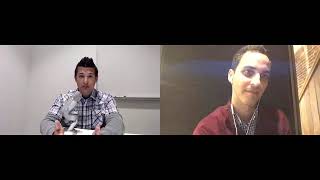
Maxime Prades, VP of Product at Algolia and former PM director at Zendesk, stumbled into product management after studying logistics and working in sales. He moved from shipping features to strategic thinking as he scaled Zendesk's PM team from a handful to dozens, then joined Algolia to introduce the PM role to an engineering-driven company. Top product managers need curiosity and grit, plus deep empathy for individual contributors.
Chapters
Hey, this is Mike Belcedo with Product Collective, and I'm here for another product launch session. So thank you everybody for being here. Um, for those of you that are joining us for the first time, these are essentially, you know, video Q&A chats. So today we have Maxime Plod with Algolia, VP of product for Algolia. I'm super excited to get into the conversation with Maxime. He's also director of product management for Zendesk in the past. So had a ton of great experience. Um, before we get into that conversation, just, I figured a couple of, uh, sort of housekeeping type things to share with everybody. The first is there are future product launch events already scheduled. So we have another one coming up in July and then another one in August. Those, you could go to productlaunch.com and check those out. Um, in fact, we have Emily Hasselman of Centercode and Gene Ngo of Pentaho. We have more that we're scheduling for later in the summer and already the fall. So you could stay posted there. Also, this is pretty exciting for Product Collective. We just launched a new podcast. So that is called Build Launch Scale. You could search for it on, you know, Apple Podcasts, Stitcher, you know, wherever you get your podcasts from and you can find it there. We already have 4 episodes up and we're about to release the 5th episode. 6th episode will be next week. So I'm excited for that. I'd love your feedback on that. Some of the sessions from Product Launch you'll see in the podcast and then some of the interviews for the podcast we just do specifically for Build Launch Scale. So I'd love it if you could check that out. But it's brand new. We just launched it about 2 weeks ago. And the only other last thing I want to let everybody know about, of course, we have our conference coming up, Industry, Industry, the product conference that's September 14th and 15th. But for those that register for an all-access pass, you get access to a half-day working session with Cindy Alvarez, Dan Olson, or Bob Mesta, your choice there. There are only a few spots left for each of those working sessions. So I just want to let everybody know here in case you're interested. If you have any questions about those, you can always email me. It's mike@productcollective.com. So So to get all that out of the way, I want to get into what we're all here for, which is to chat with Maxime. And Maxime, thanks so much for joining us. I really appreciate it.
You guys, no worries. My pleasure.
By the way, I told Maxime to cut me off in case there's any sort of echo. We were going back and forth and there might have been an echo at first. So Maxime has full permission to cut me off at any time because I want this to be good for everybody. And if anybody has issues, you can always mention it in the chat and I'll do my best to sort of keep tabs there. But, you know, Maxime, you are VP of Product at Algolia, which by the way has been, it seems like it's been growing like crazy. I know you guys just closed a massive funding round and to be VP of Product at a company like that, I imagine you keep pretty busy, right?
Yeah, there's some busy times indeed. We got very lucky about, 3 weeks ago we raised a big round of funding from Accel US. We raised a $53 million Series B. So it was super exciting. And yeah, you know, things are accelerating definitely here.
That's awesome. That's awesome. Well, you know, you're definitely no stranger to growth companies. You were, you know, Director of PM at Zendesk in the past. And I just thought it'd be cool to have you on here and talk a little bit about, you know, your getting into product management in the first place, being at the startup stage, being at the growth stage. And maybe we could start from the beginning. I guess, What led you to getting into the field of product management to begin with?
Yeah, that's a great question. I always say that, you know, I kind of became a PM by accident. I think, you know, anyone listening in of the 292 users actually— wow, that's impressive. I think everyone listening in who's been a PM for a few years will most likely agree with that story. No one goes to school to say, hey, mom and dad, I'm going to be a PM. That just doesn't exist. You don't go to a PM school, you don't get a PM degree. And so I think I kind of became a PM by accident, like most of us here. What happened to me is I went to business school in France, where I'm from originally, to study logistics and international trade. So completely different fields, I wasn't even in tech. And then, you know, one day I just joined a startup, and I don't know what really I was doing, I was just trying to, changed career paths in the middle of business school, as you do. And I started in sales and I was selling software, calling listings on Salesforce and cold calling people and trying to get demos. And then what happened is I started sitting down with engineers after work and just asking them to explain, what is this? What does this do? How does this work? And I started giving them insights. I was like, you know, I was on a call today with this prospect and he said this, like, oh, that's interesting. And this kind of just organically happened where I started really liking hanging out with engineers and understanding how software was built. And step by step, I just ended up realizing that I was doing PM work. That was in France, you know, 8 years ago, and PM wasn't really a thing. And so I literally had to Google what my job was. I was typing kind of what my duties were and the answer came out as like, oh, I guess I'm a product manager. That's what I do, I manage products. And so really by accident, it was super fun. I've done that ever since. But yeah, it was pure coincidence, just came from a passion of liking to see beautiful things and usable products and working with engineers.
Yeah, that's awesome. And I could relate. I mean, I remember my first product role, I was meeting with the company and I remember telling them actually, I don't know if I'm gonna be a fit for the position. I didn't go to school for product management. They're like, no, Mike, Nobody did. Nobody went to school for product management. I thought that was kind of funny. But, you know, thinking back to— so at that time, you know, you're just getting into product management and, you know, now you've obviously had a lot more experience working in product and managing product, managing product teams. I'm curious to know, when you first got in, what was important to you as a product person and how's that changed? Like what might have been important at the time, but now with your experience, you realize, ah, I probably was overrating, you know, that the importance of that one thing or two things, whatever it might be.
I don't know if I'll answer the question correctly, but I think at the beginning, the drive, when I started as a PM, like my first very much drive was shipping. I just, it was shipping stuff, just ship stuff. It was incredible. It's just an incredible feeling. You'd come into the office and you know that today was launch day and then you'd, You'd see it live and then you'd see customers picking, then you see data and then that was shipping, right? The feeling that every PM gets, the drive, the little like, you know, the incredible feeling you get in your spine when you're shipping something. And that's what was driving me at the beginning. What happened as I grew into my career and joined more and more structured companies and grew PM teams and then started managing PMs, the shipping thing never went away. I still love doing it. What went away was the actual doing it, right? Like actually being hands-on with the engineers and sitting next to them as they're deploying the code and kind of working with them hand in hand on defining what the experience is going to be. That kind of went away a little bit because I had to manage PMs that were then doing that and got to have all the fun. So I think it's more of a transition from, you know, a feature PM or an operational PM to a strategic PM, a business PM. I had to think more about revenue, I had to think more about long term, I had to think more about scalability, I had to think less about am I shipping the best thing in the best time to the best user. So that changed. It doesn't mean I care less about it, it doesn't mean I look back at it and say, oh, that was the wrong thing to care about, but it's definitely what has changed through the kind of growth phase of, you know, individual PO/PM contributor, you know, loving shipping stuff with the team that, you know, they work with. And then more of a, you know, Director of Product at Zendesk and then VP of Product now, where, where really I'm hands-off. I work with them on the process, I mentor them, but I don't get to have all the fun.
Yeah, no, I got you. Um, one, I, by the way, I noticed, you know, I'm asking questions here. I noticed there's some folks asking questions in the chat. If y'all wouldn't mind, um, there's the questions and the answer sections, actually an entire section devoted to those questions. Feel free to ask questions there because because I have that pulled up on my screen too. So I'm monitoring those. I'll pull them in as I can throughout the conversation and certainly at the end. So if you wouldn't mind that, and you can vote up and down on those too. So that'll help me out as well. You know, Maxime, you mentioned Zendesk and that's a company that so many people are familiar with. It's certainly, you know, been at the growth stage. Could you just talk a little bit about your experiences at Zendesk and just sort of what that brought to you in your career?
Yeah, Zendesk I think was hands down to this day, the best professional experience I've ever had. It was an incredible company, it still is. I met some incredible people. Zendesk was, I just, I don't have anything bad to say about Zendesk. It was the best time that I've had work-wise in the last 8 years. That being said, I think, you know, what was really incredible joining Zendesk as a PM is that I got to join them around, I don't know, like 65 to 80 employees-ish in that range. And then I left the company at 1800. So I saw PM team go from, you know, 3 PMs to 40 roughly when I left. And joining that team as a first-time PM, 'cause I only had one job experience before as a PM where I really didn't know what I was doing, right? Remember I had to Google my job. And so joining Zendesk who knew what PM was, who was in the Silicon Valley, who had structured and whose first 2 PMs were like, yeah, we know what PM is. Was incredibly useful for me. I learned what the job was at scale, I learned how to grow in the job, I learned how to do it with processes and structure instead of just being the one guy lost in the company that no one really understands what he does, but everyone knows it's important. So I think it's really what Zen has brought me. It's on top of just being an incredible company and a beautiful work experience, it was really this structure and processes and learning how to do PM at scale. And on top of that, what was amazing, and for every product manager on the call, No one will disagree with that, but the best thing for a PM is having users, having people use your product. I think Zendesk brought me a massive playing ground of up to 80,000 when I left, customers, paying customers, and people who were using the features that I was putting out there with my engineering squad, right? And that was, as a PM, it's just incredible. You get scale, you get to be able to experiment with stuff, you get to be able to talk to users And when you send a message to, you know, a thread with 500 users, you get 100 responses and you get 50 meetings. That's incredible. So I think that really are the best things that Zen has brought me, structure, mentorship, learning into the job, because I was never, I had never been a PM for a successful product before. And kind of learning how to grow that. And also just user base, people that you can try with and play with and talk to.
Yeah. Well, and now at Algolia, you're at a different role, VP of Product, different stage too. I mean, Zendesk certainly obviously scaled, and Algolia seems to be at that point where it's scaling now. Now that you're in this different role and different stage, what keeps you up at night now, and how might that have been different when you were, you know, just that, you know, first PM role, just getting started? Fewer than 100 people in the company, like what is the main difference there for you as a product person?
So I joined Algolia in January after about 5 and a half years at Zendesk. I joined Algolia, funny story, around the same 65 to 70-ish number of employees as Zendesk, so I'm hoping that this is another one of those, a sign that this is the next one. And Algolia was a little different because when I joined Zendesk, there was PM established. There was one, you know, the first PM, PM1 as it's called in the industry standards, and all the blogs and whatnot, there was actually PM1 and PM2. So there was already the idea of what PM is. When I joined Algolia, there was no PM. We had a UX researcher, we had someone who was doing PM work but didn't have the recognition of the title. And so Algolia had been a company that had grown organically by building a product for engineers by engineers without product management. And it worked out incredibly well for a company that did 3 years almost without product manager. And then they got to a certain point where they realized they needed PMs because they started to ship stuff out there that people weren't using. They started to be unstructured in the way they planned. They started to have dependencies and they didn't know what to do with them. And so at that point they thought about, you know, why don't we bring in some product leadership? I had been a customer of Algolia before, which is a search API. For those of you who don't know, hosted search API, an ability for us to power your search bar and search experiences with an incredibly fast API. You're purely for developers, I mean, build search, which is incredibly complicated as well. And so my first thing at Algolia was the thing that kept me up at night for the first 3 to 4 months was how to educate the company on what PMs are. I think there was a bit of a fear that product manager had manager in its title. Is he gonna take over stuff from me? Is he gonna manage things for me? Is it gonna be a relationship where, you know, if you remember in the old days of product management, it was, the PM who told the engineers what to build. And, you know, there was a real fear of that because some of the engineers had lived through that, and that's never healthy. And so I think educating them on the fact that it was a squad, we're all together, we're all at the same level, we do the same thing, we talk about the same things, and, and we all have the same vested interest in shipping the right things. It's just that we own different areas of the conversation. And so, you know, did a presentation around educating people on what is a PM at Algolia and things like that, and we invented our own definition of what is a PM. Because in an engineering-driven company, a PM is gonna be different than at Zendesk. To really answer your question though, and I'll just finish on that, what keeps me up at night now that I'm the VP of product, I think it's a little different. It's just trying to make sure that I build the best team. That's just the way I was always taught and mentored by VPs and great bosses that I've had at Zendesk or previously. And what they always told me is, you know, as a VP, your main skill is that just build a great team. You're literally like a soccer coach, right? Like, you're here to put the best players on the field and it's not really up to you. I'm not gonna be the one that writes the best spec. It's over, that time's over. I'm not the best PM anymore, or not saying I was, but I think my role now is about building the best team and enabling the best people. One question I ask all the time to my teams is, what can I do? Like, what can I do to remove roadblocks or help you do this? And I really constantly think of it this way. As a VP of product, how can I help my product team and the engineering squad and everyone else, the product designers, to do their job better and more efficiently?
Yeah, well, it looks like you're adding a ton to the team as well. I know I would share the link, you know, in terms of the— it was the career section for Algolia. Actually, I linked that there because I know you all are growing like crazy, so hopefully you have a, you know, many more team members joining pretty soon.
Yeah, we're actually hiring, you know, mostly in Paris for product management right now where our R&D is based, but always hiring. So if you're interested, just go on algowide.com/careers. That's it. That's only gonna be the one promotional link I drop in this talk. But yeah, if you're interested in working with us from a product management perspective, or even just being a product designer or anything else, please just drop us a line.
Yeah. I'm only going to ask actually one or two more questions from me because there are already a ton of questions coming in from the audience, which I'll save in just a couple of minutes here. But, you know, you had mentioned the sort of transition of, you know, from product person, you know, really managing product to now managing product teams. And it's the teams that you care about now. For folks that are maybe in those product manager roles now, but they want to eventually become VP of product. They want to care about the team. I want to say more than the product itself, but, you know, have, have really team be a big part of what they do. Do you have any advice for them on whether, you know, career progression, if you will, on getting to that VP level?
Yeah, um, I'm just going to give you the advice I got from, from my boss. Um, at Zenesk, I was lucky to have, uh, this guy Sam who was my boss for about 2 and a half years, and he was just the best boss, and he gave me some very, very tough love and very strong advice on that exact question, right? 'Cause I wanted to go into management. I knew that's something I really enjoyed and I wanted to go into there. I think the things he told me mostly were, you know, one, get a couple successes under your belt, right? Like ship some stuff, right? We were talking earlier about shipping products. I think we're product managers. If we're gonna talk about managing PMs or, being a VP of product or any role in product leadership, you gotta know how to ship stuff, right? The example I always take is pilots. In flying, in the airline industry, you've got pilot managers. There are people that manage pilots. And those people have to be pilots. It's just impossible to manage pilots if you don't know how to fly a plane. It's just not a thing you can do. And I generally believe in the same thing for product managers. As a product manager, as a leader of product, you gotta know how to ship product. You gotta have a couple successes under your belt. You gotta have a couple products that you put out there. You gotta have failed a couple times. You know, all those things that make a PM, like the shipping and the deployment with the engineers and things go wrong and you're sitting there and you're talking to users and having a product that isn't exactly what users want and you have to iterate and all those things that are standard in the book of product management, you have to have done them, I think, in order to move into more of a leadership position. To give you my perspective on hiring, I would never hire a director of product who hasn't been a proven product manager or product owner. The second thing I'd say is don't rush it. We all talk about this millennial thing and we want a promotion every 6 months. I mean, I suppose I'm a millennial, so I totally get it. I was the exact same. And I think that's the part where I was saying Sam gave me a lot of tough love, is that I was told very often just just chill, just stop, slow down. And so I think that's another thing I would give to people who wanna move into management roles of product management is don't do it too early. You have your entire life for that. Your best years as far as fun in the job and excitement of shipping products will be when you're actually working directly with an engineering squad. Currently at Algolia, one of the most fun part of my job, not that I'm not having fun in anything else, just wanna point it out, is that I got to keep one squad of two engineers and I work with them very closely. I'm their PO, and I love it. It's so much fun. I'm not doing a great job, and I apologize if they're on the call because obviously I'm very busy on other stuff, but I'm their PO. It's super fun. I get to still do it, right? And so I guess the general advice is don't rush through it. Work on your skillset as a product manager. Work on, you know, once you get to know your team after 6 months to a year, work on experimenting and innovating on your processes. Then you do a year of that, and then you find your sweet spot, and then you go to another team, and then maybe you do 2 teams. And you know, that kind of stuff. You belong to multiple squads, you see different ways of doing product management, you see different products, you raise your tech skills. Once you have all that toolset, once you have that belt full of tools of the product managers, you can go and pretend— sorry, not pretend, that's just a wrong translation from French— and you can go and want to get a job as a product leader. I think you'll be better able to manage and inspire people if you know what they go through. Than if you just go straight into management. So don't rush it and make sure you actually know how to ship product correctly before. Those would be my two biggest advice on that.
I love that. No, that's awesome advice. And by the way, most of the time as a product person, I feel like I'm pretending that I'm a product person. Maybe it's not so bad of a translation. I do want to go to audience questions because there are already a ton and a lot of upvotes for some of them. And one of them, this is a great one. I wish I had this on my original list of questions, but, you know, there you sometimes hear the 80/20 rule, like 80% of the value is delivered in 20% of whatever it might be. This is as far as product managers go, like what differentiates the top, say, 10% of the top, you know, the upper echelon of product people from the rest? You know, what are, what separates the leaders from the rest of the pack when it comes to product people?
Yeah, that's a tough one. Good one, Becky. That's a tough question. I think it's very personal opinion. I guess for me, it's one thing above all else is curiosity. Curiosity and grit. So the reason I say curiosity is that to me, a really, really good PM, or at least experience-wise has shown me that the best PMs in teams that I've managed have been people who are super curious, people who want to always just try everything, people who are on the, Product Hunt mailing list and try out, you know, 4 of the 5 products that come out every morning, or people who, you know, just try out new products on their phones and install Snapchat on their home screen just because they want to see what it's like and what all the fuss is about, and people who have this complete open mind about always trying new things. You always hear in companies like, oh, not another tool, not like— I think, I think the best PMs I've seen have been people who embrace that. They're always like, yes, another tool, let me try that, maybe I can learn something from it. So number 1 would be that curiosity, and number 2 would be grit. And grit and passion, I think, as one item. It's actually one of our core values here at Algolia is grit, and I think grit makes a lot of incredible PMs and just employees in general, because it's really down to how much you wanna do that's outside of what's written in the job spec. PM, of all the jobs, is probably one of the most scoped out jobs ever. As PMs, we like to write specs, So we have written incredible specs for product manager recs, right? Like we know how to write a spec and so we do a great job at it. So you have exactly what is expected of you, what is the deliverable, you know, we're PMs, that's what we do. But I think the best PMs are the ones that go beyond that. The ones that really try to empathize with the user and then just kind of do everything they can to just do more and just do something that wasn't expected. To give you an example, During the hiring process of a PM, I always look for the thing that I didn't ask. That's the one thing I look for. And usually if someone goes above and beyond and builds a full mockup on InVision app, like a full reactive mockup or something, like clickable of a product that he was supposed to just write a product spec for, that to me is going above and beyond. You don't need to do that. As a PM, you don't need to do mockups. It's not in the job description, but the ones who do are usually better, some 10% of the ones that don't. And so that's what I'm looking for, I think. I don't know if that's a good answer, Becky, but I think it's trying to find the thing that isn't in the spec.
Maybe Becky can approve in the chat, but I approve for what it's worth. I think that— I like that. I think that was great.
Thank you.
Yeah, yeah. And I want to make sure we have a few more, given that we're almost at the end of our time. But somebody had asked a question about you know, how you help develop your, you know, the product people that work for you, you know, in their own profession, basically. And the question was, you know, what are some typical— whether it's notes, activities, whatever it might be— that you give to PMs to help them grow in their competency?
Um, at the risk of repeating myself a bit, I'm gonna go ABC: always be curious. You know, um, always be curious. They're just trying to challenge them on always being curious. Don't become that person who's like refuses change and doesn't embrace new things. So that's advice number one. I would also really push them to get out there, right? Leave the office, just go, just go somewhere, go to a conference, go in the street, go talk to someone, go give them your phone and see how they play with it. Go, go take your computer to a customer and sit in the call center and, and give your Zendesk new interface to a support agent who's just bored after 8 hours of taking customer support calls, like, just do things like that, right? Put yourself in a comfortable position by getting out of the office. Number 3 would be be technical. I genuinely believe in this. I love coding. I'm terrible at it. I'm really bad. I can't actually do it, but I just love even when I write a couple lines of, you know, anything, if I can, I love it. It just gives me this great feeling. I just love it. And I think it's important for PMs, right, to be technical, understand what the engineers are doing every day, and also it'll help with them respecting you a lot more. I've definitely seen that 100% of the times where, when the engineer sees that you're really trying to be part of the squad, to understand what the squad is doing, not by just being over there in your specs, but also just putting your hand, getting your hands dirty, super important. And I think number 4 would be do offsites. I think those of you, I don't know if anyone on the call knows me, but the ones who know me know that I'm really big on offsites. I really believe in offsites. You know, you and your squad, as a squad together, designer, product manager, and engineers, the holy trinity, just get out of the office. Just rent a room, rent an Airbnb, go for 2 days somewhere and just have a mission and just go do your mission somewhere else. In Australia, where I had one of my teams, we went in the suburbs of Melbourne, rented a house for 2 days. When I had teams in San Francisco, went to Lake Tahoe. When I was in Dublin, we went to, I don't remember where, but somewhere in Ireland, right? Just get out of the office with your whole squad and do offsites with a mission. I don't know, those are kind of broad. I should have thought about them a bit more, but those would be the things I would push my PMs to do to help them grow in their role.
Yeah, no, I love that. I think that's great. Actually, one of my mentors always had the advice, you know, good things happen on the road, you know, and sort of get out of the office type.
That's a good one.
I subscribe to it, um, for sure. You know, one question that popped up, which I think is a— seems to be a relevant one for Algolia, because how many offices are there at Algolia? I mean, several in different countries, right?
Yeah, we've got 4 right now. We've got New York, Atlanta, San Francisco, and Paris, and we're going to open Australia, either Sydney or Melbourne, and potentially London as well.
Yeah, so The question was basically, you know, with the workforce becoming more and more mobile and remote, how do you approach leveraging remote resources? And even though, you know, your team members are in Algolia offices, you know, there, there is— oh, I'm curious, like, are there different teams at different offices, or are all teams in one place? And so it's like all product teams in one place, but marketing's over there. Like, how does it work at Algolia? And what advice might you give to other product people that are considering using remote teams or separated teams like that?
Yeah, there's no perfect answer really. I was gonna tell you that I really believe in PMs being co-located with their— with the engineering teams that they belong to, the squad that they belong to. I was just about to tell you that, but then I realized that for over 2 years at Zendesk, I was actually a product manager of teams that were in Australia and I was in San Francisco. So, and I'm currently working with our entire engineering squads in Paris. And so If I had said that, I probably wouldn't be true to the advice I'm giving, so I'm not gonna say that. But there's no perfect recipe. If you are a PM and you're remote and your team and your squad and the designers and the engineers are all somewhere else, you will have to be the one that does the effort. You will have to be the one that puts in the extra mile. You will be the one that has to stay up early for standup or super late to standup. I used to do standups at 2 AM I don't know, 9:00 PM or something. It was just, it was kind of insane, but you have to be the one that takes the fall. It's the only way it can work, I think. So that's one thing. I guess you just, there's no perfect answer. Just work hard at it, communicate, overly communicate, make sure you have process in your way you communicate, right? When you're in person, you can sit down and whiteboard something. When you're remote, you probably have to have a Google Docs with, a certain instructor, you probably have to use Slack for a certain way. You probably want to do your standups over some tool where you can actually see them if you miss one. And there's a whole bunch of things that happen when you're in your remote office, so you just got to work much harder at it. Um, I don't, I don't know if I have great advice on this. It's always worked okay for me. I've never thought it was a bad thing that my teams were in Australia. Everyone I told to were like, why are you guys doing this? Why don't you just hire over there? We ended up doing that eventually, but it worked really well for, for a long time. So I guess, yeah, work hard at it. It's not easy, never gonna be easy to do remote stuff, especially in the product development cycle. And go there a lot. I guess that is the one thing I think I would say is just fly there once a month or once every two months. I fly to Paris right now once a month. When I worked with the Australian teams, I would go there every two months. Just go there, just be present. Don't be just a guy on Skype.
I think that's awesome advice. And I'd love to keep asking questions, but we're really at the end of our time. And there are definitely questions that I didn't get to that other people had asked. Would you— I mean, given that, would you mind sharing with folks how they could get a hold of you on Twitter? Because I know you're on Twitter. You know, maybe they could keep the conversation going there.
Yeah. Yeah, my Twitter profile is interesting. Lots of political rants on there, so I apologize in advance. But you can absolutely find me on Twitter, uh, @prades_maxime. I'll just put it in the chat right here. Uh, so definitely tweet at me. I'll be happy to either meet for coffee if you're in San Francisco or in Paris or in New York when I'm there. Um, and, uh, otherwise you can just add me on LinkedIn, happy to answer there. Um, yeah, just feel free to engage. I love talking about this job that I think we all love. I'm super happy that I was invited today and I hope that I brought any sort of value. Just send me a tweet and I'll be happy to respond and interact.
Awesome. I appreciate that. And I will take you up on that when I'm in San Francisco too. So watch out for a note from me when, when I'm in your neck of the woods. But Maxime, thank you so much for joining us. I really appreciate it. And thanks for everybody for joining us. Again, we have a couple more product launch sessions coming up in July and August, so hopefully you'll be here for those. Otherwise, if you want to keep the conversation going with other product people, visit productcollective.com. We have a pretty active Slack group as well.
More from Greg

Changing Buyer Behavior | A Conversation With Greg Coticchia | Tech Done Different Podcast With T...

3 Decades, 5 Marketing Truths and The Power of Perspective with Greg Coticchia and Bryan Scanlon



Changing Buyer Behavior | A Conversation With Greg Coticchia | Tech Done Different Podcast With T...

Hot Topics in the Summer Heat: Greg Coticchia's Take on Product Prioritization

The Great CEO Podcast with Pam Singleton from The CEO Project and Greg Coticchia CEO at Sopheon.

🚀 Lessons in Innovation Management and Entrepreneurship with Greg Coticchia, CEO of Sopheon


Sopheon CEO Tackles Smart Product Development Challenges on World Product Day 2021

Product Management Misconceptions w/ Chad McAllister, Host of The Everyday Innovator