Generating and Cultivating Breakthrough Ideas w/ Anna Marie Clifton, Product Manager at Yammer
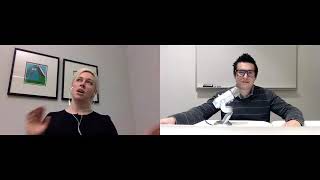
Anna Marie Clifton, a product manager at Yammer, describes how her team generates breakthrough ideas through a three-tier framework and collaborative brainstorming. She keeps sessions under eight people, breaks into groups of 2-4, and uses a weekly "tour of duty" where team members monitor customer feedback across Twitter, reviews, and UserVoice. Transparent prioritization and psychological safety let half-formed ideas surface.
Chapters
Hey, this is Mike Belcedo here, co-founder of Product Collective, and we're back for another session of Product Lunch. So thank you everybody for joining us today, whether it is your lunch hour or not. I appreciate you taking the time. And today we have an awesome guest and it's an awesome topic. And I know everybody else agrees because we've had more people register for this product launch session than we've had in a very long time. So Hopefully everybody seems excited about it, but Annemarie Clifton of Yammer is with us. So Annemarie, thanks a lot for joining us.
Yeah, thanks so much for having me, Mike.
I want to get into questions for you and specifically about the topic of, you know, getting to breakthrough ideas. I know that's something that you have to, you know, manage and keep hold of for your work at Yammer and also for work that you've done in the past. Before I do that, before we get into the questions, just sort of for everybody else's sake, a few notes about Product Launch, because I know some of you, this might be your very first session. So these sessions generally run about 20 to 30 minutes or so, somewhere in between there. And I have questions lined up for Annemarie, but if you all have questions, there is a questions tab. You could feel free to enter questions there. I will, especially towards the end, try to keep keep an eye out for those types of questions. Although, you know, do it at any time because if they're right in the middle of the conversation, I might, you know, I might ask it right then. Also, there is a chat feature and feel free to chat. I'll try to keep an eye out for that too. I know somebody had just said it sounds like sound is an issue for somebody, but it sounds like most people can hear. The one thing I will say is, you know, maybe logging off and re-logging back in Chrome tends to work better too. So just some little things that we've learned, but it looks like for most people sound is okay. So hopefully that will be the case. Otherwise, we are recording this, so everybody will be able to watch the stream after the fact. And only a couple more things I want to point out before we get to the questions. We have several more product launch sessions already planned. In fact, the next one is April 19th with one of your colleagues at Yammer, Annemarie. We have Cindy Alvarez that'll be joining us, so that'll, that'll be pretty cool. And then, you know, if you go to productlaunch.com, you could see the next few. And we have the founder of Balsamiq as one of them. So that's pretty exciting. Only other thing I'll point out is I know many of you are already aware of Industry, the product conference, which is the conference that we plan at Product Collective every year. April 15th is where, you know, ticket prices will increase a little bit. So I think it just goes up by $50, nothing major, but if you're planning to come You might want to check that out beforehand. And in fact, Cindy Alvarez is going to be one of our workshop partners for Industry. So you could check out the session, come to Industry, meet Cindy in person, and that'll be a lot of fun. So anyway, with all of that, I definitely want to get into questions with you, Annemarie, and maybe you could just start by— most folks probably done a little research on you, but just a little bit about you and the type of work you're up to right now at Yammer.
Yeah, absolutely. So I've been at Yammer a little bit over a year now. I've been a generalist PM here. We all take part in all parts of the product, so I've done work work on iOS, Android, web, as well as notifications, emails, things like that. I'm currently the product lead on our growth initiative, and so I'm doing a lot of management around ideas for our growth objectives.
Awesome. And so maybe we could just start by talking about what idea generation— like, what does that even look like at Yammer? Like, how does that process actually work?
Yeah, so it's interesting because there's several different tiers of idea generation, so I want to start by kind of defining that really quickly. So first of all, there's the project-level ideation. So it's like if you're you're working on a project for a feature, the ideas for how to make it work, different things that can come up within that context, that's like one tier of idea generation. And then there's the broader initiative level of what projects should we even be working on towards this initiative? And then what comes up there? So it's like our second tier. And then there's a third tier, which is kind of the entire company, the product direction, and like, what are the tectonic shifts that need to happen there to keep up with the industry and what's going on? So I think about it in those three different tiers, and there's like different levels of appropriateness with involvement of various functions and individuals. So I'm going to start kind of at the small level and then build up there. So on a project level, ideation, I think, is actually mandatory, that ideas come from everyone on the project, and it's really important that that happens as an open and fluid conversation. So we try at Yammer to have— we have a really flexible project, like our schedule for running projects is really flexible. Every team sets up how they want to do it for themselves. So currently I'm on a about 5 different projects that are in active development, and all of them have a different cadence for daily setups, weekly meetings, is the weekly just the engineers, or is it also like design and copywriting and things like that? And so it's just really important at Yammer that we specify that everyone has empowerment on the individual projects, and we wanna make sure that those ideas come up and come up fluently. So that's like the base level, and if that's not happening day in and day out, things just fall off the rails. So that's something about how we try and prioritize everyone on the front lines having the ideas and like being the ones to surface that. And that bubbles up outside of just the individual project to just like, what are the goals for the whole initiative? And so anyone who's staffed to a particular initiative, we also expect them to be ideating and like being bought in on the goal in order to like come up with ideas for other projects or things that I think this is going to be really leveraged and things like that. So it's like those two steps are kind of everyone's involved in that, every, all the engineers, our designers, our researchers, analysts, product managers, product managers who aren't even on the initiative. So it's a lot of conversation that happens around that. And then the third level of ideation that happens around the entire product direction, that's usually led by our head of product. Uh, but we have a lot of conversations around that informally, just around the desks. And then every, every 3 to 6 months, we'll have like a larger conversation. And then we're actually just gearing up for a big offsite around that next week.
That's awesome. I guess when, whether you're thinking about those types of experiences you've gone through at Yammer or even in your past, because it's not like this is your first, you know, this isn't your first PM role. Where do you find the best ideas, you know, that usually end up making it past the finish line? They end up being these breakthrough products. Where do they usually come from? Like, do they come from specific processes, whether it be the process you just described or more over the transom? Is it coming from different or specific functions? In your experience, what have you found?
So I found that the best ideas always come from some interplay between one, multiple human beings. So the best idea is not going to come from within a single mind. So the, the opportunities when you get different people together talking about what they see and they're like, well, I think that this particular like ABC objective would make a lot of sense. And then someone else comes like, well, A makes a lot of sense to me, but what about like D and E? And then a third person comes in with like, yes, I see D and E. And then also let's pull some C B, and then between the three of those humans, you've managed to get like an entire conversation around an idea that no individual could have had by themselves. So one of the things that's really interesting about that is that it can only happen if everyone feels really comfortable expressing their ideas that are half-formed and not all the way out there, and not an idea that's going to go all the way into production. So there's a— I think the key to having those really great breakthrough ideas that I've seen in my experience is people being comfortable with each other and being comfortable expressing an idea that's not necessarily going to survive, because that idea is going to spark something that's in someone else's mind, and then that's something else that's going to come up. So I found that there's a lot of forums for that. We have an open office plan, which is pretty popular, pros and cons, obviously, but pretty popular in the tech environment. And so we have a lot of just over-the-desk conversation, and the entire product team, the PMs, the analysts, the researchers, the designers, we all sit in pretty close proximity. So there is honestly a lot of like, oh, oh, that's interesting. I didn't, like, I didn't realize that Dan was thinking about that. Let me think about like how I would bring that in, into my, into my initiative. And I think that those kind of like informal, even just the water cooler level conversations are really important for like getting some of those ideas moving around. But it always happens that it comes from a combination of different people's ideas. Yeah.
What about in terms of, Are there specific exercises or any, you know, every company might have their own way of trying to bring things out, or if you have brainstorm sessions or anything like that, like, have you been a part of anything that's, that's worked really well when it comes to trying to pull ideas out of folks, maybe proactively versus just through the process?
Yeah, absolutely. So the way Yammer structures our projects is we built them into initiatives, and every initiative has kind of a gestation period, if you will, where we've decided as a product org that this is something that we're going to put resources into at some point in the future, but not necessarily yet. And during that time, there's a lot of brainstorming and ideation that happens. And we all— every product lead who runs an initiative gets to kind of decide how they're going to run that. So I can talk a little bit about ones that I've run. I can talk a little bit about ones that I've seen other people run that have been successful. So one of the first things is that we kind of have as much time to go through this ideation process as we choose. And it's kind of like, a bit of a gaseous substance. However much time we give ourselves on the calendar, we're just gonna take that up with coming up with ideas. That's just the way of it. So what we, we tend to like know maybe 3 to 5 months before we have staffing available for an entire initiative, that this is gonna be something we're gonna care about. So for example, I'm working on the, I was working on the notifications initiative. And so in advance of working on that, we were thinking about like, what are all the problems that we're addressing in notifications? Why do we think this is important? And then I got together a whole group of human beings to sit in a room and think about what it is that they have seen that have been problems. So we started out with trying to like walk back to this moment in time when it was actually a really successful brainstorming session. So we had about 12 people in the room to kick off the initiative, and we started by having everyone in the room list out in advance problems that they thought that we were solving. What are the problems that these people who use our product have that we are solving? And then we listed those out on the board and we thought about like, okay, so if these are the problems that we think that we're solving, these are things that people feel like really personally attached to, uh, what is it that we— so like, what are the ones that we think are the most leveraged problems that we as a product are set up to solve? And specifically within this notifications initiative, what are we set up to solve well? And so, and as a group, we picked out like, I think, 6 to 8 problems that our users have that we wanted to think about and brainstorm around. And then we divided up into groups, no more than 4 humans in any one group. And we had everyone like pick a couple problems that they wanted to think about. And so they went aside and they spent 30 minutes to an hour thinking about those problems and what are specific solutions to those problems that are notifications-driven that we could think about. And then we all came back with our list of solutions. And discussed them as a larger group, and then talked about what are particular, like, tactics or projects, and what are the most leveraged projects that we could do towards those solutions. Because it's really important to start from the, the problems that your users are actually facing, and everyone talks about that. It's one of those things everyone's like, user empathy, user empathy, but at the same time, it's actually really difficult because you get stuck into this routine of, well, we need to increase our MAU, we need to increase this metric, we need to do this, and so you're focused more on your problems within the product and the things that you really want to fix, as opposed to thinking about what are the things that the users need to fix. So that I found can really open up the conversation a great deal, like focusing on those problems to begin with, and you get a lot more kind of material to work with. So, um, some other tangible things to take away from this that I thought was really successful is, um, coming up with problems in advance was really helpful because it's difficult on the fly. Just everyone's kind of sitting there and like I don't want to talk. Do you want to talk? Like, who's talking? Like, I don't want to say something in front of everyone. So kind of giving some thought to that in advance. Another thing that was really successful was breaking up into smaller groups to address some things, because that gives everyone a little bit more space. And like I talked about earlier, the best ideas will always end up coming from a combination of different people approaching a problem. And so you want to make sure that you have a small enough group that everyone there feels comfortable speaking up. Because if you have a designer and an engineer and an analyst sitting around a table talking about a problem, they're all going to come from different angles and they're all going to have different solutions. And I think that that really sparks a lot of really good conversation, only if it's a small enough group that everyone has space to talk.
Is there a certain size, like what is that size generally that you found that tends to work pretty well?
Yeah, so I think there's, there's research in this space that says that if you have more than 8 people, it's almost impossible to arrive at a decision. Uh, so I think that brainstorming, it depends on what type of brainstorming you're running, and it also, it's really highly dependent on the personalities in the room. So I found that with, uh, softer personalities or people who are like a little bit less comfortable, you want to get smaller and smaller contexts for them. So even just 2 to 3 people where it would be almost uncomfortable for them to not talk. Anywhere more than 4 people, the people who have the softer personalities and are less likely to speak up in the first place, they're going to get muted. And that's one of the things I think Google did a long-running study on what makes the best teams. I don't know if you read this. This was, it came out, I think last year, Time Magazine did a big piece on it. And one of the things that they found is that the best teams were not the ones that had the highest performers individually, but the ones where everyone spoke equally.
Interesting.
And so that's one of the things that, I mean, they studied across their teams, across all their different products. For, I think, upwards of 8 years trying to find, like, what is it that these high-performing teams have in common? And it came down to the psychological safety to be able to speak your mind across the board. And so I think it's important to figure out whatever— what is the point for your organization that makes people feel safe? And so maybe you have, like, a really tight team of 20 humans who all feel pretty comfortable discussing things in front of each other, or maybe you have people who, like, they need a little bit more space and you need to get a smaller room for them. So I just like figure that out with the people that you're working with. Yeah.
But you, you know, you mentioned being empathetic to customers and this is sometimes a, well, at least we think, hey, this is a given. Of course we're going to do this. But how, how do you, whether at Yammer or just in your past experiences, like how have you involved the customer in the idea generation process, whether it is literally collecting feedback from them in some way or whether it is, you know, some sort of, um, some exercise you're doing to take in that, um, you know, make sure that you are empathetic to that customer. Like, how, how is the customer involved in your process?
Yeah, uh, we have a couple major ways that we do that. One of them is we do ongoing user sessions. We have a research team that's constantly running, uh, hour-long open-ended interviews with our users, and they do that as often as they can, and everyone is welcome to sit in on those. And in addition, in addition to being welcome to sit in, You're actually kind of encouraged and expected to. So that's one kind of ongoing open-ended thing. But the more interesting one that we've started doing about 6 months ago, I think, that's been really exciting for the team is we have kind of a tour of duty. Everyone on the product team takes a week listening to customers. And during that week, it is your responsibility to monitor and respond to the Twitter handle, read all the app reviews and all the app stores, respond when you can. Google Play lets you respond, Apple doesn't. We follow— we have 3 different sources for customer feedback as well. We use UserVoice. We also have a couple internal tools for Microsoft and a couple networks in Yammer for external users to speak to us directly. And so the person who would be a PM or a designer or researcher whose job it is to monitor that channel that week answers all those questions, responds to people, also pulls back into the product team as like, hey, you know, I'm seeing a lot of people who are requesting this kind of thing, or a lot of people who are having this kind of problem. Maybe we want to prioritize something like that. And at the end of the week, they write up a kind of a synopsis of, here were the top requests that I saw, here were the top problems that people are experiencing, here's something that I learned that was new, uh, here's something that we might want to consider going forward. And so those, uh, tours of duty that week We have it hashtagged in our products. Anyone can like follow that hashtag and like just keep updated on those weekly synopses. And then those tend to boil up every quarter into— well, there's a few different things. So first of all, we do actually take that into our prioritization on the product team when we're deciding what projects to run, what initiatives to kick off, and even like the entire product direction, like each of those three tiers. But additionally, we also do a quarterly hack day, which is technically like 2.5 days, but hack days where anyone in the company can work on any problem that they have. And one of the most interesting things about hack day from my perspective is the pitch session that we run at the very beginning of it, where someone from the product team stands up and recommends like, here are all of the problems and ideas and issues that we've been hearing about. If anybody wants to brainstorm on these or like work on a hack for that. And then the flip side, once our engineers have been working on that, or even, you know, anyone who can be hacking, uh, then we'll look into productionizing some of those on the other side. So there's like a whole slew of things. There's always like this constant churn.
Yeah, no, that— and it's— I'm sure that is the best way. It's like to involve customers, you can't just do one thing, you have to do many, many, many things. So yeah, that's awesome. Um, there are a couple questions that are coming in around a certain topic, and so I'm going to kind of combine a couple here. But basically, you know, when you're at the point where you're going through this brainstorm, you know, not brainstorm, but I mean, it's one aspect of it. You know, you got a lot of ideas coming in and you want to take an idea forward. How, like, who makes the call on what ideas go forward? And how do you deal with conflict that might come up that not everybody is going to agree with that idea? There might be some clashing there. So, How have, how have you been able to deal with that in your experiences?
Yeah, that's a really fascinating question because one of the things that has been impressed upon me this past year over and over and over again is that anytime you make a decision, anytime a decision makes it really to your desk, anytime you're making a final call on something, you're going to make somebody unhappy. Uh, you actually just aren't going to have any easy decisions. There's always going to be a trade-off. Either you're going to make a customer unhappy, you're going to make a designer unhappy, you're going to make an engineer unhappy. And there's just a lot of emotional management that goes around that. So one of the first things that I want to hit on is that as a PM, I think in addition to being decisive and making a path forward for the team, I think one of the primary roles of a PM is making sure everyone feels heard. Because again, that goes back to that psychological safety and you want everyone on the team to be able and comfortable to pose new ideas on an ongoing basis as they have them. And so finding a way to be able to say no to an idea in a very, very open way, in a way that makes people feel heard and comfortable is, absolutely mandatory for the long-term success of your company and long-term success of your teams. So there's just various tactics that I found. The first is making sure to really understand the idea and giving the person who had that idea the time of day. And so there's a few things there. So first of all, it's like talking in person about it. If someone sends you an idea on like a Yammer thread or an email or something like that, making time to just sit next to them and be like, hey, I saw you had this idea. I just want to make sure I understand it. Here's what I see that you're saying, and reflecting back and making sure they feel really heard in what it is that they tried to express. The other thing is, if you do choose to not do it, make that prioritization that helped you make that call transparent and clear. So I've been in a position where there were several different things that we were trying to prioritize against each other, and a lot of them were coming from the same person. And this person has like a lot of energy, and I'm really excited to see all this energy, and I wanted to keep that going. And he had, basically a gajillion ideas that we couldn't do for this particular project. And so we just sat down and went over them. It's like, here's this idea, here's what we think the impact of that idea would be, and here's the cost, and basically the expected value of it, and like why we're not going to do it. And kind of went item by item down on that in a way that made him feel— I mean, from my perspective, and I hope that it is true— made him feel like heard and understood and on board. And then again, you're just tying it back up to the overall goal of This isn't about like choosing one thing over another thing. It's about like, what are we trying to accomplish as a product? What are we trying to do as a company? And then is this piece put us closer there, or is the opportunity cost of doing this piece worse? And so we've got to think about that.
Yeah. And by the way, there was another sort of people-related question to it, which makes a lot of sense because, you know, you need to involve all sorts of people within the organization. We're talking about breakthrough ideas, but What happens if one of those people is not really being a team player? You know, maybe they're the person that's in the meeting that's, you know, kind of scoffing at ideas, that, you know, they're being sarcastic in tone. They're just, they're sort of, they have a toxic attitude. How do you, when you're the one that's trying to cultivate these ideas from everybody, how do you handle that?
So I have very rarely been in that position, but I've spoken with other people who have. I'm trying to think if I've experienced that here at Yammer. One of the things that I've spoken with a lot with other PMs here and at other orgs is about how caustic a single individual in the room can be and can throw off the whole conversation. Everyone's temperatures can rise because of a single person in the room who doesn't want to be there or is sending the wrong signals or is just like, for some reason, antithetical to what you're trying to accomplish. So my main advice would be, if at all possible, try not to involve that person. If it's something less formal and you can just choose like, oh, I want to pull like 5 people into a room and get some ideation on this, try to include 5 people in the room that you feel really comfortable with and they feel like they'll have like a really good working relationship. So we have a few processes where we get to just like pull people in. Product Council is this thing that we have where PMs who have an idea and it's mostly fully formed and we have a hypothesis and we have our success metrics, but we don't necessarily have engineers staffed to it or designs necessarily. At that stage, we'll bring in like 3 to 5 other people from the product team, sit in a room, walk them through what we're thinking and ask for really critical feedback. And in order to do that well, you have to be really comfortable with the people that are in the room and you have to know that they have your back and you have their back and it's okay for them to pose critical feedback. And so when you're in those kinds of informal situations, it's best to make sure that you're like choosing the people people that you are going to be able to work with best. In the larger space, I found, I mean, I haven't had exactly like a very sarcastic or caustic interaction, but I've definitely had interactions with a large group brainstorm where one person was clearly kind of at odds with another person. And as a PM in the room, it's, especially if you're running the meeting, we tend to, PMs here tend to be running those meetings, but it can vary org to org. So as the person who's running the meeting, you have to keep in mind that you have a lot of influence, a lot of authority, informal though it be. To manage that relationship between those people. So the words that you use, the people that you look at, the eye contact you make, that all sends really subtle signals. And it's really important to make sure that when you see that, if perhaps someone who is being like walked over and their ideas are getting squashed or things like that, to make sure to like elevate them, to call them out and be like, yeah, you know, that was, you know, Joe Schmo, that was a great idea. Thanks for posing that idea, Joe. Like, and kind of amplify and reiterate that that idea came from that person and trying to kind of like level the emotional tension there. I have definitely done that before. I'm trying to think if I've been in a situation where I've had a really caustic person in a group. I've definitely been in situations where there have been people completely checked out and on their computer, and I've been the person in the room to say, okay, everyone, we're— if you're not taking notes that you're going to publish to the group afterwards, kindly ask you to shut your computer, and then in return, I will keep this meeting as short as it can possibly be. I'm not going to keep you in the room longer than you need to be if you can keep your computer off and focused on this conversation and give everyone the respect who's in the room.
Yeah, no, that's, that's great advice, I think. I think hopefully we all don't have to deal with that person all too often, but, but if we do, I think that that can be helpful. You know, we're already getting towards the end of our time with you. I want— there's a couple more questions I wanted to make sure to ask. One is coming from the audience. When you're trying to bring together a group of people, is there a sort of ratio that tends to work really well in terms of, okay, making sure we have engineers, UX people, product folks, you know, but I want to have 2 product folks for every 1 engineer, you know, how does Have you, like, do you give it that kind of thought or is it making sure that at least you have some representation from around?
How does that work? Uh, I'm less concerned usually about the functional representation and more concerned about the emotional representation. So I want to make sure that there's a good mix of like really excited people and really pragmatic people. Um, and so maybe it tends to fall that like PMs are on the excited side and engineers are on the pragmatic side, but that varies with personality a lot. So I definitely give a lot of thought to like what the emotional mix will be in the room, but I tend to not think so much about the functional side. One thing I will say though is that it's, it's interesting to think about who you're leaving out of the room, because if you run a session— and I've done this before where I've run sessions where like perhaps analytics wasn't represented— well, that sends a signal to analytics that their opinions aren't significantly valued, and that's something that I don't want to be sending. So I do want to make sure that if anyone is concerned about being a part of these conversations and wants to, like, feel involved, or would feel left out or disrespected if they weren't there, that they have a voice there. And that is not necessarily just like the function, but it could be the individual on that team that is going to feel that way, making sure that they're involved. And again, it's like, it's all, it's all a lot of trade-offs. Like, you don't want to do a whole bunch of emotional management like that in advance of a brainstorming, because you want to be able to focus on actually doing good work. But those are the things that kind of tick in the back of my mind at all times that I think you kind of, it becomes second nature as you work on the job.
Well, to wrap things up, if you were to, you know, I know a lot of folks will tune in because we're trying to jot down like, all right, what are the 2 to 3 things I can do right now to be better at this? Like what, what am I going to do in the next couple of weeks to put myself on the track to help cultivate breakthrough ideas in my own organization? What might those 2 to 3 things be? What, what 2 to 3 sort of actionable things might people do, you know, following this session where it just helps them along the right path?
Yeah, so I'd say a few things. So first of all, if you are in a position to make decisions about ideas, I would recommend going around and having just informal chats, coffees, lunches, things like that. Ask individuals in your org what it is that they would do if they could do anything at the org. If you could be working on anything, what, what project do you think, what feature, what, what do you think we should be working on? And do that one-on-one with a majority of your coworkers if you can, or majority of people in the functional teams that you're working with, and, and jot down like a map of what the overlaps are. Because even if you can't bring about an entire session and set up a whole brainstorm, you can get it informally through looking through the overlaps of the individuals that you're talking to. So that's something that you can do as a— right away, and everyone's empowered to do that kind of thing. So the other thing I would caution against is trying to like run a brainstorming session, because those can be— they can backfire. If you get a big session running and then you're like trying to figure out how to do it, and you haven't given a lot of thought to best practices in the space, and you just put a lot of energy into getting people galvanized for that, it can fall down. The energy can go really flat. It can be really awkward. And I have definitely done this before. So highly recommend against doing that. I did that early in my career and it was just horribly awkward. And you can burn a lot of social capital in that way. So I wouldn't suggest running head in that way. I would start with one-on-one conversations. And then the other thing, the other thing I would say is that if you are in a room, be it brainstorming session or just like a weekly meeting, project recap, things like that. And you're trying to solicit ideas from people, make sure you verbally ask every person in the room for their input. So you may have had like 6 people in the room and 4 of them were talking the whole time. Ask those 2 people at the end, like, what do you think? And you can also prep in advance of the meeting if you know that they're going to be the types that aren't going to, and just be like, what do you want to bring up in this meeting? What is it you'd like me— I can like seed it or kind of ask you a pointed question or something like that. Because again, the most important thing is to make sure that everyone on the team is open to suggesting things. And so start getting in the habit with whatever project teams you're working with in making sure everyone there is speaking.
That's awesome. That's— and those are things we absolutely can do right away, so I appreciate that. Um, Annemarie, just thank you for joining me and spending all this time with all of us. I know I learned a lot for sure. If people wanted to keep the conversation going with you, I, I know you're on Twitter. In fact, I think it's an easy one. Tweet @Annemarie, is that your handle, right?
@TweetAnnamarie.
All right, and then how else can people keep tabs on what you're doing?
Yeah, I also have a podcast, Clearly Product, at clearlyproduct.com, uh, and that's with my co-host Sandy McPherson. We read books about core skills related to product, and then we discuss how we've used those in our career, uh, and how we would like to use them going forward. So that's an interesting way to kind of keep up on what I'm learning, what I'm thinking about. I also write pretty regularly on Medium. That's linked from my Twitter bio as well. You just search Anna-Marie Clifton Medium on Google, it'll be like the top result or so. And yeah, send me a ping and let me know if you have other questions.
Awesome. Well, thanks again, Anna-Marie, I appreciate it. And thanks everybody for being here. We'll see everybody next time. Again, it'll be Wednesday, April 19th, with another Yammer person in Cindy Alvarez, so that'll be a lot of fun. All right, well, we'll see everybody later. Have a good one.
Thanks, Mike.
More from Greg

Changing Buyer Behavior | A Conversation With Greg Coticchia | Tech Done Different Podcast With T...

3 Decades, 5 Marketing Truths and The Power of Perspective with Greg Coticchia and Bryan Scanlon



Changing Buyer Behavior | A Conversation With Greg Coticchia | Tech Done Different Podcast With T...

Hot Topics in the Summer Heat: Greg Coticchia's Take on Product Prioritization

The Great CEO Podcast with Pam Singleton from The CEO Project and Greg Coticchia CEO at Sopheon.

🚀 Lessons in Innovation Management and Entrepreneurship with Greg Coticchia, CEO of Sopheon


Sopheon CEO Tackles Smart Product Development Challenges on World Product Day 2021

Product Management Misconceptions w/ Chad McAllister, Host of The Everyday Innovator