Getting Executive Buy-In w/ Paul Young - VP of Product at Pragmatic Institute
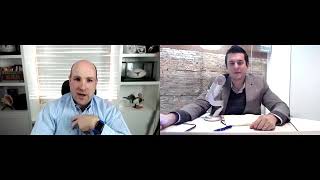
Paul Young, VP of Product at Pragmatic Institute, argues that executive buy-in is the single most critical activity for product teams. Product managers should act as presidents of their product, bringing market data and customer insights to executives, who in turn provide air cover and protect teams from firefighting. Market-driven organizations achieve higher profit and faster time-to-market.
Chapters
Another edition of Product Launch, and I'm really excited for this one in particular. But let me do a brief introduction first. Joining me is Paul from Pragmatic Marketing. Paul, thanks a lot for being here.
Thank you, appreciate it.
You know, we've had a lot of product launches in the past talking about various topics, and I want to get right into this one for a little bit. But I guess first, for people that are joining us for the very first time, I'll share a little bit more about Product Launch and Product Collective. And, um, and I want to let Paul, uh, Paul give a little bit of an introduction about Pragmatic Marketing, which is where he's VP of Product from. But Product Collective, and we're really an organization that's meant to connect product people all over the place. And so we do that in a number of ways. Um, we have our weekly product brief, we have these Product Launch webinars, which we do twice per month, We also have a pretty active Slack channel that's getting going, so that's all fun. We also put on a conference every year called Industry, and that's later in the year, it's in September, and that's where we usually get together and meet in person. This year we have Jason Fried at Basecamp and all sorts of other people. Actually, next week's, or rather the next product launch session with Cindy Alvarez, and she's the head of UX at Yammer, also the author of Lean Customer Development, She'll be giving a workshop at Industry. So we're excited for that. But with Product Launch today, you know, Paul and I are going to have a discussion. The topic is getting better executive buy-in for product people, which it's always been a challenge of mine personally in the past. So I'm excited about this one in particular. But throughout the talk, you know, this is, this is live for those of you that are joining with us. If questions pop up, ask them. We'll address some questions at the end, but if there's a question that I see coming through and it's relevant right in the moment, I might just ask that question right in the moment. So feel free to ask questions at any time. Love getting questions. So Paul, thanks again for being here. Maybe you could just start off giving a little bit more about who you are and in particular what you're up to at Pragmatic Marketing these days.
Good to meet everybody virtually. My name is Paul Young. I'm the Vice President of Products at Pragmatic Marketing. And if you're not familiar with Pragmatic Marketing, we are a training company and we focus specifically on product teams. So people who make decisions about what to build and what not to build and where to invest and so on. And over the last almost 25 years, the problem that we try to help teams solve is to make them more effective at their jobs so that they can connect with their market and come up with products that people truly want to buy. And so we teach teams how to do that and we have a whole training curriculum around how to make that strong connection with your market and become market-driven. For the last 6 years, I've been an instructor with Pragmatic Marketing, and recently I joined their executive team as their VP of products. And so I think about their product portfolio, and I do the same job that many of you on this product launch do. I think about how do we build the right things for our market, whether that's training or something else. How do we maintain that strong connection with our market? How do we not just listen to the noisy 20%, but how do we listen to the whole thing? How do we maintain good relationships with our customers? So that's what I think about. Before I joined Pragmatic, I was a product executive at companies like Cisco and Dell and also a bunch of startups here in Austin, Texas, where I'm talking to you from today. So that's Pragmatic Marketing and that's me.
Awesome. Very cool. Very cool. So yeah, I mean, in the topic, getting executive buy-in, you know, it's one of many challenges, I guess, that, you know, product people have to go through. I mean, There's all sorts of challenges, right? There's prioritization, there's, you know, hey, how do we motivate our teams? Where would you put getting executive buy-in or trying to, you know, really connect with the executive team when you're a product person?
Where would you put that on the level of importance compared to all the other challenges? There's a big list of things you have to do in the realm of product. And so I was thinking about this topic before we hopped on the call today and saw I'm going to I'm going to butcher one of my favorite quotes from Winston Churchill and say, "Getting executive buy-in is the most important thing that somebody in a product role can do, except for everything else." And so, you know, it's obviously super important because, you know, you could have all the market data, you could have all the, you know, field visits in the world, you could have good instrumentation in your product, you could have great prioritization and so on. But if you do all of that work and then you go to your executive team and they say, "Why are you doing this and not this?" then pretty soon it's all for naught. And so all the, all the rest of the job is important, but getting executive buy-in to the direction you're trying to take the product and getting executive buy-in for the even idea of listening to the market, not just building to the noisiest 20% of your customer base, is critical if you want to get the job done right.
Yeah, and when you look— and you've had a chance now to work with all sorts of product teams— I'm sure you've seen situations where they work great with their executives and the product teams have great relationships. Probably seen situations where maybe it's not the case. I guess of the product teams that thrive, how would you describe that relationship that they have with that executive team? What does it look like?
Just to use some words that I would associate with teams that are making it work, it's strong, healthy, communicative, open. It's words like, you know, they can have debate and they focus on numbers. They're, they're very open with each other. And so Executive teams that— and product teams that work well together are almost like hand in glove because a good product team should think of themselves as an extension of the executive team because a good product team are executives. They're the president of their product. I mean, it's not a perfect analogy, as many will tell you, because many product teams don't have the ability to hire and fire, but it's a mentality. And if you think of yourself as the president of your product, and you're going to drive your product as a business. And then it's very easy for you to go and have a relationship with your executive team to talk about, here's the strategy that we want to take, here's the direction, here's how it dovetails with what we're trying to do as an organization, and so on. I mean, if you get down to just prioritization and say, you know, what are we going to do in next week's sprint? You know, what does our backlog look like today? And so on, very tactical level. You know, it's essential that work does need to happen. But we have to elevate the thinking of a product team or at least have somebody on that team who can think up at that level and have that communication with the executives to tie it all together.
Got it. Thank you. When you think of the product teams that are working too, or I guess working really well in tandem with their executive team, is it— do you feel like it's more of what the the CEO just really buys into product and understands it and therefore the relationship is going to work? Do you feel like it's things that the product team is doing specifically to make sure that relationship's strong or is it a mix?
Just what are your thoughts on that? I would say the answer is yes. All of the above. So it's a two-way street and everything has to meet in the middle. So the product team has to do their side of the equation, which in the way that I think about it is, listening to the market, driving the conversation with data and not opinion, and then having the ability to communicate that data in a way that is relevant to executive teams. So to be able to tell a story and be able to illustrate how the story presented in the data reflects the direction that we're trying to go. So that, that's kind of the strategic upward communication part that a product team has to take the onus on themselves to be able to own. But at the same time, you have to have a willing partner sitting across the other side of the table who's ready to listen. And that's where the executive function comes in. And so the things that make it successful from the executive team standpoint are things like having an open mind, having the ability to admit that maybe you're wrong, and being able to look at data from the market and say, okay, that maybe goes against my original thought process, but it makes sense, and so let's take another look at it. Good executive teams are open-minded and willing to accept that maybe their first gut reaction isn't correct, but let's take a look at the data and then drive it from there.
Got it. Got it. I want to keep going on that note. First, it's been mentioned to me that my video might be cutting in and out, so sorry for that. Might have an issue with the signal strength right now. I'm going to keep rolling. Hopefully it gets better. If not, I heard the audio might be working. Better. Regardless, we'll have the stream available later, and the stream, you know, after the fact, it might end up being stronger, believe it or not. So, and if that's not the case, next go-around, I'll have to make sure that we have like—
I'll send you a wire from Austin.
I thought we did, but I'm very sorry for that. So, but I do want to keep— I want to keep rolling here. I, you know, putting myself— and I've been in roles myself where I was either a VP of product. I've also been in a role where I was product manager. So, you know, I'm working with other product managers, but there is another VP of product. In both of those cases, I did still have interaction with the CEO and the executive team. I'm just trying to think of if, you know, think of putting myself back in those shoes, but they're different levels. Are there certain things I could have done back then to make sure that relationship is strong? And it might be different for the PM versus the VP of product. What might that look like? What are my— what might be suggestions for things that I could have done or that somebody in that role, in those roles today, that they have a strong relationship with that executive team?
Repeat the question for those of you that maybe didn't catch it on the feed. So the question was, you know, how can, how can we build the relationship from both sides, the, the individual contributor product manager side, if you will, and the executive side? And I'll try to answer it in two parts because there are two different questions. So let's start with the executive side because that's kind of where my head is at right now. It's kind of most, most fresh for me. So when I think about what an executive, let's say a VP of product or a, you know, VP of marketing or somebody in that role, can do to drive a better relationship with, uh, with her product team, I think about things like, uh, what I colloquially call air cover. So a good VP provides strong air cover for their team. And one of the things that we teach every week at Pragmatic Marketing is this difference in the role for product teams where they have to venture between strategic-facing work of listening to the market and so on, and more execution, tactically-oriented work, like helping sales answer RFPs and things like that. If you're not careful, the very tactically-focused work tends to dominate and take over your entire role. And so you look up and you say, oh my gosh, you know, 95% of my team's time or more is going towards these tactically focused activities, which need to get done, but there's also this whole other side of the job that oftentimes won't happen unless we force it to happen. And so one of the things that I've always focused on as an exec, and also I've learned from my mentors, is that air cover for your team is important. And what I mean by that is providing your team the ability to get out from under some of those tactical pieces of work for a period of time, Maybe not the entire team, maybe not all of the time, but I need to provide like a week or a couple of days or a person whose role it is to get out from behind their desk and out of the building, not spend all their time in daily standups and actually get out and talk to real live customers in the market and people who aren't customers yet but should be. And we've got to figure out what's going on with them. If you're an executive and you provide that strong air cover and you fight for your team to go and get that, What I found is that it tends to attract the best people to your team, which then becomes a self-fulfilling prophecy because good product team members and up-and-coming people who are Type A personalities, they want to get stuff done. They don't want to spend all their time mired in the firefighting. They want to work for somebody who's going to have their back, who's going to bring them into discussions with the rest of the executive team and give them that exposure. Because, you know, let's be real, a good product manager is always looking at the next step. They're not just managing their product. They're managing their career as a product. So they're thinking about, you know, where can I go from here? So one of the things that I always like to do with my teams was bring people into those executive discussions whenever possible. And you can't always do it, but, you know, let's, let's bring in a member of the product team and rotate somebody new through an executive team meeting once a week. And let's give them a chance to have that exposure to figure out what's going on, to maybe add their two cents. And when they get that, they start to grow and they— and that just builds the relationship. So that, that was always huge. From an individual contributor standpoint, if you think about, you know, what can I— if you're in a product role today, if you're a product manager, a product owner, a BA, or whatever you call yourself, you know, what can you do to make your relationship more effective with your executive team? A couple of things that I would look for from my team members: a relentless pursuit of data from outside of the building. I go in and train with companies every single week and I ask them, you know, how are you doing your prioritization? You know, what's in your backlog? How do you know what to build next? And I get answers like, well, you know, this is the thing on the list that's easiest for development to go build next. You know, we can get— we can kill 3 birds with 1 stone. You know, those kinds of conversations, which are completely what we refer to as inside-out, right? It's all about what's going on inside your building. Nobody wants that, right? The market doesn't care what's easy for development. And so as an executive, I want somebody who can tell me what I don't know. And your executive team, by necessity, is running the business because they're inside the building doing that, managing the team and so on. They need someone to be their eyes and ears outside of the building to bring that fresh data to inform better decision-making. So if you, if you're an executive and you have an open mind, you're going to love your product team to be out there in the field gathering that data to inform better decision-making. And once you have that data, the right decision starts to speak for itself and it just becomes a self-fulfilling prophecy that rolls downhill from there. It's so important. That's why I say the one thing that you can do as an individual contributor is get out from behind your desk, go talk to some real-life people, bring that back to the building.
Yeah.
I love that. Somebody had also asked a question specifically—
I love that. Somebody had also asked a question specifically about UX designer and how they could get executive, but I imagine that might be the same thing. Even as a UX designer, it's— you could still go out and get data to show, hey, the reason why we're planning this experience is because of X. Is that true, or are there any other specific things that UX person might be able to do to get that data?
Yeah, 100%. So, you know, if you think about the question of, you know, what can a UX designer do that might be the same or different from a product team member, a lot of the things are the same. You know, a good user experience person is already outside the building anyways. Because I, for one, don't know how you can come up with an effective user experience if you don't talk to users. Right? It seems kind of self-evident. You know, most user experience people are pretty, pretty down with that already. And so they're going outside the building. What sometimes a lot of executive teams need though with regard to user experience is a little bit of education about the process of what it takes to come up with a good user experience. They're pretty familiar now, executives are, with in the world of hardware and software, to take those examples, what it takes to go through the process of building one of those, the timeframes are— let's say you do sprints for agile. We know that those take 2 weeks or 4 weeks or however long your sprint is. And at the end of that, you have something that you can show. With user experience, the timeframes are not quite so clean sometimes. Sometimes things take longer. Sometimes things are just a little bit more squishy. The way I always explain it to the executive teams that I work with is that the product team's job is to figure out, are we building the right thing? Whereas the user experience team's job is to figure out, are we building the thing right? And are we providing the right experience for that, for that, for that user? And so, you know, usually when you say it that way to executives, the light starts to go on and they can go from there. But a good, a good executive team, for better or for worse, Apple has changed this a lot. To drive home for executives the idea that user experience can be a differentiator.
That's helpful. That's definitely helpful. And a couple more questions are coming in. I'm going to, I'm going to ask a couple more and then we'll go to even more audience questions. But I wanted— because I wanted to ask specifically about, you know, sort of the opposite of that product team that is, you know, tight with the executives. They have their buy-in. You know, what about when product teams there's a disconnect. And so I'm curious for you, when you see that happen, when you see a product team that has a disconnect from the executives, is there a common root cause? Is it a number of things?
Yeah, so I'll give you a bunch of causes. I haven't done the study to say what correlates and what's causal, so I can't give you data on that, but I can tell you some characteristics that I see over and over again. From the teams I work with of what makes it not work and what dysfunction looks like. So in dysfunctional teams, what you almost always have is a lack of good communication from the top down. You know, I see all the time where I walk into product teams to help them understand what they're doing and they say, well, you know, last week the entire plan changed. We had to completely redo our roadmap, our prioritization got ripped up and redone. Et cetera, et cetera. And when you really dig into that, what you end up finding out is that the executive team either didn't communicate their strategy clearly upfront to the product team, or they didn't have a strategy, or they changed their strategy and didn't tell anybody. And then all of a sudden the product team went and started to build something. They got 6 months into building something and then were told that they're building the wrong thing. You know, sometimes it reminds me of the story that we tell down here in Texas called rock fetch and the farmer playing rock fetch with the dog where, you know, he would take a smooth stone and toss it into the river and the dog would go and grab the stone and bring it back like they're playing fetch. And then the farmer would say, oh, you got the wrong rock. And so, you know, you'd have to send the dog back into the river to find yet another rock. And it just went on forever. And a lot of product teams feel that way, like they're stuck in this like cycle where they can't get it right. And I don't consider that the fault of the product team. I put that fault on the executive team for not clearly communicating. You have to have a strategy, you have to know what your DNA is, and everybody has to be rowing in the same direction. And this happens all the time at every different size company. I just had a conversation the other day with somebody who was saying, I don't feel like I understand the DNA of our company and the culture we're trying to build. We need to more clearly communicate that, and that's the job of the executive team. On the individual contributor side, dysfunction, takes a lot of different forms and this is where correlation and causation are a little different. Typically I find that type A players, you know, the best product team members don't stick around in companies where they're not getting what they need from both the company and their executive team. And so dysfunction looks like people leaving, it looks like attrition, it looks like people getting into product roles that maybe shouldn't be there, maybe they're in their very first product role and they're trying to figure things out, they don't have the confidence yet to drive a strong and hard discussion with their executive team. Sometimes I see product managers who, for whatever reason, they just can't take it to the next level and have hard conversations. Maybe it's a lack of confidence or other things. And so they get bullied and they get bowled over by charismatic executives who are definitely Type A personalities and they wouldn't be in that role. And so dysfunction there looks like the product team just building what other people tell them to build. And not being an effective representative of the market and what the market really wants.
Well, so that might be foreshadowing to, to this audience question that just came in, so I'll ask it now. It is pretty timely. The question is basically, do you have suggestions on steps you can take if you're a part of a product team where for the company there isn't— first of all, there might— it sounds like there isn't an independent product team, but also it sounds like the executives in this case don't necessarily have product management principles in place. It sounds like they might not be getting a lot of, you know, kind of leadership on the product side. So I guess if you are a part of a product team and you find yourself—
yeah, so how do you—
what do you do?
I think the question, if I were to like restate it, is kind of how do you, how do you start to turn around that boat if you're facing in the wrong direction and your executive team doesn't value the product team or they don't understand product management? You know, how do you start to get things going the right direction? So I'll give you the snarky answer first, then I'll give you the real answer. So the snarky answer is, well, of course you send them to training. But beyond that, in all seriousness, there is, there is education that needs to happen at the executive team level from the product team if they don't understand what product management is all about. Good product management is a discipline and, you know, we happen to teach it, but there's a lot of other places you can get that education. You know, we get it from— there's a bunch of stuff on the pragmaticmarketing.com website that you can get for free. That's a good starting point that you could hand to an executive team to really get them going down the right track and thinking about things in the right way. So we've written a lot of materials about this topic. We write about it on our blogs and so on. And the training that we offer does actually help with that problem. But, you know, it really gets back to, does your executive team have an open mind? You know, do they understand what's going on? Are they open to listening to data in the first place? You know, I usually see teams driven by one of a couple of different factors. You know, some teams are executive-driven, where the executive team makes all the decisions down to sort of a minutiae level. Some teams are sales-driven, where the sales team drives the roadmap based on what they need to close the next big deal. Some teams are engineering-driven, where the engineering team decides what we're gonna go build next based on what they think is, you know, technically interesting or cool or whatever. And other teams are market-driven. And one of the things, you know, useful statistic that you might be able to take back if you're in that situation to your executive team is that of all those different ways of driving a business, market-driven, sales-driven, engineering-driven, and so on, This has actually been researched. There's a gentleman named George Day who wrote a book called The Market-Driven Organization, and in that book he did a bunch of research about companies driven by those factors. And what he found was that companies that were driven by the market and actually did the research in advance of building stuff tended to generate more profit, on average about 31% higher profit. And they also had faster time to market, in some cases up to 50% faster. Because companies that are market-driven are able to not add extraneous stuff to their product because they have a clear insight into what the market actually wants. And you can be successful as a sales-driven, engineering-driven, or executive-driven company. It's just that your risk is a lot higher. And if you're an executive and you think you're the next Steve Jobs and you can come up with amazing ideas on your own, well, you know, more power to you. But I would argue there's not that many Steve Jobs out there in the world, only one that I've ever heard of. And so why would you take that risk? And even if you wanted to take that risk, wouldn't you want to validate your great idea with the outside world first? You know, even Apple does that. And so that's exactly the kind of conversation I have with executive teams as to, you know, who do you want to be when you grow up? Do you want to make stuff up or do you want to actually listen to your market and get it right? Yeah, yeah. Well, and I'll ask this.
Well, I'll ask this. This is— I found myself in this situation in the past too, where this might be the, hey, I think I'm Steve Jobs type situation with the CEO. It's not that they don't care about product. They actually care deeply about product. They buy into it, except they also think that they have all the answers. And so instead of, you know, a roadmap being developed kind of organically through the product team, it almost, in some cases, pieces of it or maybe all of it gets handed down to say, hey, this is what we need to do this next year. If you're on a product team and you're in that position where you feel like you're being handed a roadmap and you're not a part of that process, what are ways that you might be able to work with the executive team to try to make it an organic process?
So what do you do if your executive team thinks they're Oracle and are going to come up with amazing ideas on their own? Again, you can be successful as an inside-out company who just comes up with great ideas and doesn't validate them in the market. It's just that your risk is quite a bit higher because you don't find out if somebody didn't want something until you launch it and find out that nobody's buying it. And so, you know, it's really a question about risk and what risk is your company willing to take. The conversation I have with executives goes around that very topic. You know, how much risk are you willing to take? Are you willing to bet the company on your great idea, because it's usually a lot less expensive to do just a little bit of market research in advance than to go through the process and launch something only to find out that you're wrong. I think that every product team has gone through this at some point in their career. If you don't have this scar, then you probably don't belong in product management. I remember that earlier in my career, I was, I was brought into a startup here in Austin to build a product team for the very first time. And right up until I joined the company and started to build that product team, there were basically two groups. There was the CEO and there were the engineers. And every day the CEO would walk down to the engineers and say, I want you to build this today. And he had a direct connection into them. And so he basically controlled everything. And all of a sudden there's this product team in there now that I'm leading and we're trying to, you know, change the way we do things to listen to the market. It was, it was hard. It took a, it took a long time to build that trust to where he would actually let go and, and allow us to drive some of that roadmap. I will always remember as long as I live very clearly one evening I got a phone call. It was like a Thursday, it was midnight. I got a phone call at midnight from the founder and he calls me up and says, Paul, we have a crisis. And I'm thinking, you know, is the building burning down? You know, what's going on? And he says, the color of the LED on the front panel of this device is the wrong shade of blue. And I always think about that because that's just like the prototypical founder who wants to be, you know, Steve Jobs, right? You know, when you're thinking about the, the color of the LED, love the attention to detail, but we also have bigger fish to fry and we have to think about what's right for the market. And the way we eventually got around that was I was able to pull out that probably most famous rule that we teach at Pragmatic Marketing, which is in the end, your opinion, although interesting, is irrelevant, and go to him and not maybe say it that directly, but you get the idea and say, look, This is not about me and this is not about you. This is about them, the market, and what they want. And so I'm not gonna put this into a me versus you discussion because we're not adversaries, we're on the same team and we're trying to build something that the market really wants. And so if I ever come to you and say that this thing that you have engineering working on is not the right thing, it's not me calling your baby ugly. It's me saying the market data that we have doesn't support that, it supports this other thing over here. And as an executive, As the CEO, if you want to override the market data and do that thing anyways and take that risk, well, that's your prerogative, right? That's why you're the CEO. But I'm just telling you that the risk will be a lot lower and the chance of success will be a lot higher if we go in the direction that the data tells us we should be going in and we build something for the market. And we had that conversation over a series of many months, and it was painful at times going through that conversation. In the end, he came around. It was a gradual process over a series of quarters for him to start letting go and start to come back and say, you know what, okay, I'm actually gonna give this up. And what's really interesting when you have somebody like that who's going through that process of letting go, founders oftentimes believe that their tastes and tastes of their immediate family represent the market. But it actually doesn't. It's the opposite. And so you just have to help them realize that. And there's no healthier way to do that than taking a real live user and taking a video of them or recording them or taking them in person and putting them in front of that founder or that engineer who thinks that their thing is the best thing ever. And then having that founder or CEO or VP of sales watch that person struggle with this amazing product. or what they think is amazing. I remember we did that once. We actually did a user test in a usability lab and we had a user, we asked them to accomplish a task and we had a little webcam up on the screen so we could watch their face as they did it. And this task should have taken them 20 seconds and it was taking them 5 minutes. And the engineer and executive who came up with that idea were sitting on the other side of the one-way mirror and they were almost banging on the glass wall saying, just click it, it's right there on the screen, just click it, it's so obvious. And at one point, the user actually heard them or could hear something. You could see them on the webcam kind of going like that, looking around. Nothing like real live market data and real live users to disarm that kind of behavior in a team. Yeah.
I hear one common thread that stands out to me in terms of getting better executive buy-in. It comes down to communication, that conversation you mentioned. Was painful, but also it sounds like it was really necessary. Aside from that, since we're coming up on our time, which actually went by really fast, which I think that's a good sign, um, are there any other— like, what are the other big takeaways that just for, for somebody tuning in here, they, you know, they're coming because they want to get that better executive buy-in? Better communication might be one of them.
Are there any other big takeaways you want to make about communication, building a relationship? And remember, building a relationship is not just about the business. You know, take, take your executive to lunch, uh, you know, once a, once a month and just talk about stuff. Doesn't have to be about the business. That outside-of-work relationship building goes a long way. You know, you don't have to be best buddies, but it is important to have a relationship that allows you to speak directly and sometimes off the record about stuff. And getting out of the building can help with that. Bringing market data to the table and being a messenger for the market is key. Because it disarms the emotion and makes it a more data-driven conversation. Thinking of yourself, if you're an individual contributor, as an executive, you know, drives the conversation in the right direction. And if you're already an executive today and you have a team, giving your team air cover, allowing them to get out from the building and then treating them like executives. You know, you don't have a team of product managers, you have a team of future VPs of product. And you have a team of future VPs of user experience and so on. And that's how I think of my teams whenever I was managing teams. Because I truly want those people to grow. I want them to go in that direction and I want them to think that way. And not everybody will make it, but for the people that will, when you allow that star to start to shine, then all of a sudden it does. And that's when, that's when really beautiful things occur.
Well, that's great. I really appreciate that. Paul, thank you so much for joining us today. I, you know, I know there are a couple more questions that maybe we didn't have enough time to get to, but I'd love for people to continue the conversation maybe on Twitter. Certainly if you're part of the Slack group that we have, you could do it there because you're in that group. And if you're not, for those tuning in, all you go to productcollective.com and sign up and you'll be in. So you could get that way. Paul, how can people get a hold of you on Twitter or learn more about Pragmatic Marketing?
Absolutely. So I'm on your Slack channel as well. I participate on there if you have a question, or you can hit me up on Twitter. My handle there is @ptyoung, like Paul Thomas Young. And if you want to email me, pyoung@pragmaticmarketing.com. And if you want to learn more about Pragmatic Marketing, just go to pragmaticmarketing.com. And we have a whole bunch of stuff that you can read all over the website. We have a really great a magazine that comes out quarterly that you can sign up for called The Pragmatic Marketer. We're always publishing great articles in there for you to read. So highly encourage you to go check all that stuff out and email me or drop me a line if you have any additional questions. I'm always happy to help. That's why I became an instructor.
That's awesome. Well, thanks again, Paul, and to everybody tuning in or watching the stream, thank you for being here. Hopefully We'll see you all in about 2 weeks, have another awesome session with Cindy Alvarez, Head of UX at Yammer. We're gonna be talking about challenging your assumptions, so I know that will be a great one. So until then, thanks, and have a great day.
More from Greg

Changing Buyer Behavior | A Conversation With Greg Coticchia | Tech Done Different Podcast With T...

3 Decades, 5 Marketing Truths and The Power of Perspective with Greg Coticchia and Bryan Scanlon



Changing Buyer Behavior | A Conversation With Greg Coticchia | Tech Done Different Podcast With T...

Hot Topics in the Summer Heat: Greg Coticchia's Take on Product Prioritization

The Great CEO Podcast with Pam Singleton from The CEO Project and Greg Coticchia CEO at Sopheon.

🚀 Lessons in Innovation Management and Entrepreneurship with Greg Coticchia, CEO of Sopheon


Sopheon CEO Tackles Smart Product Development Challenges on World Product Day 2021

Product Management Misconceptions w/ Chad McAllister, Host of The Everyday Innovator