Getting User Feedback that's Actually Useful w/ Michele Hansen, Co-Founder of Geocodio
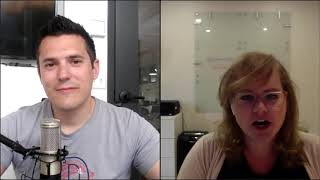
Michele Hansen, co-founder of Geocodio, explains how to run user interviews that actually work. The key is your behavior, not your questions: act like a sponge, stay non-judgmental, and use long pauses after open-ended questions to get deeper answers. Five interviews usually capture about 80% of useful feedback, and sharing findings directly with your team through clips and journey maps makes user voices stick.
Chapters
Hey everybody, it's Mike Del Sito, co-founder of Product Collective, and we're back for another industry interview. Uh, thank you very much for joining us today. Uh, actually today's session will be fun because it will be an interview about interviews. So kind of meta in a way, um, which I think will be good. But I, for me, it'll be really useful because I love doing attendee interviews, with folks that come to our conference. And but in my mind, I'm like, I'm probably not doing this right. So I think, I think today will be really enlightening for me and for everybody else too. But if this is your first time joining, I figure I'll give you a quick little intro first to share what this is all about and what Product Collective is all about. So first off, Product Collective, we're a community for product people. We've been around for a few years. We do a number of things. We have these video chats, but we also have a weekly newsletter that goes out We have a Slack channel that's pretty fun.
We—
I think there's about 7,000 people that are in our Slack channel, not all at one time, but, you know, here and there. And that's, that's pretty awesome. And then, of course, we get together in person twice a year at Industry: The Product Conference. That's a conference that we organize in Dublin, Ireland in the springtime. And then our global edition in the U.S. takes place in Cleveland, Ohio. This is my Industry shirt from last year in Cleveland. Actually, no, two 2 years ago in Cleveland, and that's coming up this September. Actually, I put a link there. We have early bird pricing that goes just to the end of June, then it, then it's our day of show rate that is active on July 1st. But that's, it's going to be a really fun time. We have, I think there's 20+ speakers, Grammy and Academy Award-winning artist Common, Jason Fried of Basecamp, um, growth coach Claire Sullentrop, Nikita Miller of Trello. So all, all sorts of folks there. You could check out the details on that link. But anyway, so if you wanted to get involved with anything with Product Collective, you could just go to productcollective.com and submit your email and you'll get an invite to the Slack channel, invites to these video chats, and that's all free aside from the conference. Conferences are free. But anyways, I'll go right into what today is all about. This is an industry interview. We love doing these interviews with product leaders and people from really all around the world usually tune in. If you're tuning in in the chat, feel free to introduce yourself and just share where you're from, maybe what product you're working on. That's always fun to see. If you have questions for our guests though, I do want to ask you to use the Ask a Question section. You should see it right at the bottom of the screen, and you could enter a question right now if you want, or if something popped up in conversation, you could enter it. I'll be monitoring that throughout, and I try to take in as many audience questions as I can. So Feel free to fill that up. Your questions are probably going to be a lot better than my question. So I would love it if you, if you did that. And I see some folks tuning in from Atlanta, from Chicago. So that's great. Again, thank you for introducing yourself. But I want to get right into the conversation now today. And our guest today, Michelle Hansen, is actually somebody that was connected with me from somebody that was attending another conference. I believe it was MicroConf. And she saw— or he saw Michelle speak at MicroConf and put on an awesome talk from what I heard, and it put the two of us in touch. And after we had a conversation, I said, you know, I, I think it'd be awesome to get you involved in what we're doing and maybe we could plan a chat sometime. And now here we are. So thanks a lot for joining us, Michelle.
Yeah, I'm so excited to be here and to chat with you all. And I love seeing this come in with what you all are working on and where you are. It's really cool.
Yeah, well, we appreciate you being with us, and maybe we could get right into it. You know, I know we figured that we would focus the topic on how we can pull out the best information from people, you know, whether it be users of our product, customers, what have you. And, you know, I'll kind of go more specific to focus on user interviews. And I'm just— maybe we could just start off by— I'll ask, like, what, what makes a good user interview? Like what, what are, you know, what are the core elements? Just when you think of a good interview, what do you think of?
When I think about a good interview, I think about an interview that really allowed me to understand the customer more deeply and to really know what they are trying to do, where they are in that process, what they're struggling with, and what else they have tried. So those are the key things that I always try to get out of them. But when you get a customer who will really open up to you. Those are always the special ones because they give you so much insight into what exactly it is they're trying to do. And then in turn, it helps me understand how I can help them better, whether that is reframing things about a product, adding new things, subtracting things, or new growth opportunities for us. And as product people, Many of you have probably run an interview and probably read about questions and things like that to ask. But I wanted to come here today to share some things that I've learned in the hundreds and hundreds and probably thousands of interviews that I've done.
That's awesome. And thousands is probably much more than I've done, that's for sure. I'd love to, you know, let's go with that. Let's go with some, some of those things that sort of come to mind for you. I mean, you mentioned that, yes, people have probably read all about all sorts of like, hey, what are the questions to ask? But, but I think you have a unique perspective on that. So maybe, maybe you can start with some of those things that sort of come to mind and maybe we could take it from there.
Yeah. So there are tons of great books on jobs to be done and running interviews. But one thing I found that, that is key to a great interview that isn't emphasized as much in a lot of the literature is that how you act in the interview is almost more important than the questions you ask. The purpose of the interview is to allow the user to open up to you and to be comfortable with them, and they need to be able to share their pains and their frustrations and their struggles with you. The problem is, is that in our daily interactions, talking about our struggles isn't something that's very normal to us. When we see someone, we say, hey, how are you? And there's always a reflexively positive response to that. We don't say, hey, how are you struggling today? It's just not something that's very normal to us to open up to people. And this, you know, the range of people I've interviewed range from from people in their 20s to men in their 90s. And I find that there are some tactics that you can use to help anyone open up to you. The key thing is to think about it less of a conversation and more like acting. So when we have a conversation with someone, we're sharing information back and forth about our own lives, about our own experiences with things. When you're doing an interview, you are there to be a sponge to absorb whatever that person is saying. And you can think of it more like improv than a conversation. So if you've ever watched improv, maybe you've seen Whose Line Is It Anyway, if you negate that person in some way who is on stage with you, the whole thing will fall apart. So for example, if they are standing there wearing, I don't know, a chef's hat and cowboy boots, and they tell you that they're a squirrel, you have to go with it because otherwise the whole thing will fall apart. And so when your user tells you something that's crazy or seems very inefficient or otherwise very unproductive, that's so helpful to you because what you're trying to do is build a map of what the world looks like in their head and what all of the different steps of their process are, even if they're doing loop-de-loops and doing all of these things that seem, um, bizarre to you or unnecessary, you need to understand why they are doing those things and then how they are frustrating to them and whether the person conceptualizes them as frustrating or whether they simply tell you that certain steps take a lot of time, they're very manual, they require them faxing things, they're doing something in a spreadsheet when really there could be a tool that does that. But to get them to open up to you, You have to think about it like acting, and you are there to just absorb whatever they say. So this means that if they say your product's name wrong, you can't correct them. If they tell you your product doesn't work right, you say, "Thank you for telling me that. How would you hope it would work instead?" If you negate them in any way, they will remember that you are a person like them with feelings and judgments, and they will start closing off to you. In the worst case, they might start trying to impress you. But if you can be as sort of blank of a canvas as possible, just think of yourself like a sponge. You are just there to absorb whatever it is they say and to just get inside their head and start building that map of what their world looks like. And that will give you so much information that you can use to improve your product.
Yeah, it sounds like, and let me know if I'm, I'm following you right here, like it's all about making them feel as comfortable as possible to, to be open and honest. Almost like, it's almost like we have to be therapists in a way, um, to just help them feel comfortable and honest. Is that right?
Yeah, absolutely. You are trying to get them to be as open as possible. Something to remember about interviews is that the, what, what your product focuses on in many cases people probably haven't talked to somebody else about this. So, I used to work in financial services and I would have people telling me about how they were consulting actuarial tables to figure out how long they might live and so to see how long their spouse might live so that they can figure out how much money they need. Finances are a very personal thing and people don't really talk about them with other people, but it also applies to very mundane, less personal things like riding the bus every day and your frustrations with that. And I talked to someone once, and that led her to switch cell phone carriers, which really had nothing to do with the cell phone or the cell phone carrier itself. But she had never really talked to anyone about her daily commute, even though it was something that happened to her every single day. And so when you're looking at scripts online for interviews, or you're developing your own script, which, by the way, I would strongly encourage you to do. I probably used a printed-out script for maybe the first 100 interviews I did and would scribble my notes in the margins. When you're asking those questions, basically what you're doing is priming the person to be thinking about this topic, to be thinking about their process, to be thinking about the things that are inefficient or frustrating in that process. But I would plan your questions to be half of the interview. So if you've told the person that it'll be an hour-long interview, or half-hour-long interview, plan that your questions will be half of that. And when you get to that end point of your questions, say, "Thank you so much. I've learned so much from you today. This has been incredibly helpful." And then, in your most curious and most harmless voice possible, you say, "Is there anything else you want me to know?" And I call this the reaching for the door question. And it actually comes from doctors. And so what they found is that someone will sit through the entire appointment with them, and then not until the very end when the doctor is reaching for the door come out with what it was they really are there for in the first place. And so asking this reaching for the door question at the end of your questions, you then pause. And you pause for longer than is comfortable. And then you let them fill that space. And I learned this trick actually from Terry Gross of NPR. If you've ever watched Fresh Air, I was watching someone speak once who had worked under Terry Gross. And her trick to getting really good information out of people in interviews is to ask the question and then pause. And she said that she finds that the most interesting part of the interview comes when you wait for that other person to fill the information. So you've spent the first half of the interview with your questions and with, you know, the questions you've pulled from literature and you have customized them to your specific products. But now that the person is thinking about the topic, they're thinking about their process, because you have set up an environment where they're comfortable, where they know that you're just going to accept whatever they say. Then when you open, ask that open-ended question, the floodgates will come out. I've had interviews completely turn around at that point. And one where I was like, I felt like I'm kind of pulling blood from a stone here. Like I'm not really getting a lot. I guess I got a couple of little pieces of information, but I was kind of hoping for more. But then I asked that question and I wait. And then I find that's when people really, really open up if you have acted in a way that allows them to in the first half of the interview and you've built that rapport with them.
I, I love that. I think that's an awesome piece of advice because sometimes, you know, we might ask that like it's just sort of standard to ask at the end, like, anything else? But if we left 5 minutes, you know, that person sees like, oh, there's only 5 minutes left in the meeting. That doesn't really encourage them to actually be open about it. And it kind of— our question comes across as a non-question or the one we don't really care about. But if there's like leaving half of the meeting for that, I like that. I think that's something— I think that's definitely something I'll plan on doing from here on out. I like that.
It makes it very clear to the person that you are only there to listen to them. I think so much in our everyday life, We don't have people who sit down and are there just to listen to us. As you said, it's kind of like a therapist, and that's very powerful to people. And I also find that when you do the interviews and you make it clear to the people that you are there to listen to them, they become incredibly powerful advocates for your company and for your product. And I have had people who, weren't even that long-term with users, or certainly not on our, on our highest paid plans, after doing an interview with them, then becoming people who were huge promoters of our product and led to so many more customers, just because they're like, wow, this is a company that actually cares about people and wants to help them and wants to listen to them. And it's kind of a rare thing these days to feel like you're really being listened to, and it makes a huge impact on people.
Yeah, well, that's great. I want to take an audience question. By the way, there's been a couple that have come in. Keep those coming in. I'd love to, I'd love to use your questions for sure. One of the questions was, is there an advantage or disadvantage to considering a group interview? Maybe you know, users of the same product, but from different companies versus one-on-ones. Do you have a perspective on that?
I would strongly encourage you to do your interviews one-on-one or maybe two people from your company with one user. When it comes to focus groups, focus groups are really good for seeing how people behave and make decisions in a group setting. So if your product involves several people concurrently making a decision, for example, you want to simulate what it's like when people are internally making a decision about whether to use your product and there are different stakeholders in that meeting, it can be good for that. But that's a relatively rare situation, and normally when people are making decisions about whether to use a product or whether this product is something they want to run up the chain of command and propose using. Generally, those are all one-on-one situations without that group dynamic going on. So I would encourage you to do most of your user interviews on a one-on-one or two-on-one setting, unless there's something unique about your product that involves people making decisions in a social setting.
Fair enough, fair enough. Um, I, you know, I did want to ask, no, especially knowing that you've done so many, so many interviews at this point, I'm sure that you've had many that, you know, you come off feeling really good because you, you've uncovered information that there'd been no other way to get it other than going through this interview. But you've probably had some interviews where it's like, all right, that was, it was okay, you know, it, but you know, it kind of It was just okay. Like nothing necessarily special. What sets those two apart? I'm curious if you felt like looking back, is there anything about the actual interview itself that you feel like separates one from the other so that maybe, you know, maybe we can, we can start doing things to try to get to those exceptional interviews?
I think the times when I walk away from an interview and I'm like, okay, I knew most, most of that, I didn't really learn a lot new is when I'm interviewing people for a specific topic and I'm getting to the 5th or 6th interview. So there are a lot of rules of thumb about how many interviews you need to do for any discrete question. Usually I use the Gartner rule of thumb for usability interviews, which is basically that you're going to get 80% of the feedback, uh, from 5 people. Um, that's of course for usability, not for interviews. But I generally find that about 5 people is the right number. But really the rule of thumb is when you start hearing the same thing over and over again, then it's time to stop. And so usually that last interview in a group of some question I've had, usually that one when it's like, all right, I didn't really learn a whole lot. I just had some things reinforced that I've heard from other people. That interview is valuable in and of itself because knowing that, okay, now is the time for us to go out and test things. Now is the time to go You know, start running tests, start making some changes, come up with a prototype. Like we've got enough information for this particular topic at that point.
That's, that's actually super helpful and it makes me wonder, so should each interview really then be focused on sort of a single idea or hypothesis or thing that you're trying to figure out? And, and maybe even out, I guess to go broader, like what, What is the sort of pre-work before the interview that you feel like is, is really critical too?
So I think there are kind of two or a couple of different types of interviews. So the first is when you do have a discrete question that you're trying to answer, you're doing a research project of some sort, you're trying to get to the bottom of something in particular. Then there's also the sort of, I sort of call them maintenance interviews, which are you are interviewing people who are using your product. And they are happy with it. I would encourage you to spend the bulk of your interviewing on these people. There are also cancellation interviews, which I know there's a lot of information about online, and they're definitely something that's worth doing. But I think the sort of maintenance interviews, everyday interviews, get overlooked a lot of the time because it's human nature to look for ways to save money or to save people from canceling. Um, loss aversion is a well-documented phenomenon in behavioral economics. We know that people would rather try to prevent themselves from losing money rather than gaining money. But I would encourage you to talk to the people who are happy because they will tell you why they're using your product, why they love it, why they continue using it. And you want to find more happy people. You want to frame your product for the people who are happy, where your product works for their process. It's so much easier to onboard people who are going to be happy rather than ones whose use case isn't quite a fit. But if you're only doing cancellation interviews, you're not going to get a really strong ear and a really strong sense of who that happy customer is that you are writing for when they're struggling with something else. So I generally do a couple of those maintenance interviews every week. So Jason Fried has sometimes said that there's only two people you should listen to: someone who has recently purchased your product and someone who has recently cancelled it. In that vein, I have automated emails that go out whenever someone makes a purchase. So if they have just renewed their subscription or they just paid an invoice, especially for the first time, they will get an email directly from me that asks them, you know, hey, I just wanted to learn more about why you're using Geocodio, what we're helping you with, and if we can maybe do anything better. And I get a very low response rate on that, which is what I expect, about 1%. And the purpose of those is just to figure out why are they happy. And how can I find more people like them?
And, and that's okay. So somebody did ask like, why focus the, the bulk on people who like the product? But I think you'd kind of had just mentioned it's really like, hey, can, how can, if this person's happy, like what could we do to continue to recreate this for other people? Like focusing on the good. Is that, is that right?
Exactly. Find the use case, the use cases that people already have. That make them really happy with your product. Of course, you do want to talk to people who haven't started using it yet or who canceled it because maybe there are some growth opportunities, or maybe you'll find that you have some usability issues that you need to fix, that people had the use case but there were some usability issues or other barriers that they had to using the product. Um, but I would encourage you to spend at least 50% of your time talking to people who are already happy because that will give you So many ideas for landing pages, for new features, for other growth opportunities, other adjacent things that you can find to help your product become even better for the type of customer whose problem is already well served by your product and your product is matching the mental map they have of how to solve the problem.
That's great. That's great. Well, all right. So I want kind of like on a timeline, you know, we, we do the prep, we have, you know, kind of things that we're after. We make these hypotheses. We now do the interviews. And, and I appreciate you sharing, you know, before it's sort of like 80% of what we're going to learn is through those 5 interviews. After those 5 interviews, I'm curious what happens next, because obviously we want to put this information to use. But I also imagine, and this kind of comes from an audience question, No, we have to share this now with other people, internal stakeholders. Like, what's the best way to do that and actually then start to do something with this information?
Yeah, that's one of the hardest pieces. It really depends on the size of your organization. So I would say that the most impactful way to get user feedback in front of other people in your organization is to have them hear it themselves. So if there are key stakeholders that are outside of your team, invite them to come into the room when you're doing an interview so they can be there as a silent party in the room and they can hear it as it's happening. Of course, they need to be really bought into the process because the person might not show up or it might be late, or the user can take it in a different direction than you were hoping for, which happens so much. And it's something I love because you end up learning things you hadn't anticipated, but bring them into the room with you, especially for key, really key stakeholders and functionaries on other teams who, if you're proposing changes to the product, bring the people who would be doing the work on the other team in there so they can hear for themselves why this is happening. If you can't get them in the room with you, sharing clips is really powerful. So whether that's a video clip from maybe from usability, or just an audio clip from somebody on the phone. Have that, have that piece there so that they can hear for themselves, because it's just so much more convincing when we hear somebody talk about something that they're struggling with than to read it on paper. But if you need to put it on paper, I would say be as aggressive as possible. So put things in Slack, email them out. When— so I currently run a small software as a service company from home, but when I was working in a corporate environment, we would get the interview results out in any way we possibly could. One of our favorite approaches was to make infographics and paste them on all of the doors in the office. So whenever someone was going into the stairs, whenever they were going to the elevator, they were seeing quotes from users. They were seeing, but they're also seeing not only quotes from the users, but they were seeing clips from survey data or clips from market data saying, you know, The user has told us this. You can also see this, you know, in this data that we got from the Fed. And also here it is in our survey data. So you're hitting them from multiple angles of the user's perspective, which makes it that much easier when you go into a meeting and say that we're proposing this, or we're going to have this change to our roadmap, or what you're defending, why things are on your roadmap. It makes it so much, so much easier when they're already familiar with the reasons why you would want to do those things. Because they've seen that infographic when they open the door to the stairs to go get their lunch, or they heard a clip from a user interview on Slack. Not everybody is gonna hear every single one of those pieces that you are sharing, but if they hear at least a couple of them, it's gonna make that confirmation, confirmation easier because they're familiar with what you're talking about. Of course, within your team, And if you're working, you know, within your product team and within your UX team and with your developers, you may need to go one step further in detail in terms of creating journey maps, actually sharing out push-pull diagrams summarized from all the interviews. You know, the people on your team are probably going to want a lot more detail, but getting all of those external stakeholders on board is just as important.
Well, I have a lot of other questions, but really we're getting close to the end of our time. So maybe to close out, if you could share just kind of, you know, one really quick sort of the, you know, what you'd love folks to walk away with, you know, just kind of one big takeaway that maybe we haven't talked about, but, but also just let people know how they could also stay in touch with you. I know you're on Twitter, but there's probably other places where folks could stay in touch with interview. So maybe we could close out with that.
Yeah, so the one thing I want you to walk away from here is that interviews are not just about the questions you ask. They are about how you ask them. And the most important thing you can do is to act in a way that makes the other person feel comfortable, because if you make them feel comfortable, they will then share their, their pain points with you which is your doorway to new opportunities with your products. And the best way to get in touch with me probably is on Twitter. My DMs are open. So if you ever have questions about doing interviews or anything else, I also run a bootstrap software company, and I'm always happy to talk about that with people who are getting side projects going or their own bootstrap companies. I'm always happy to chat and get on the phone with you for half an hour, figure out what it is you're trying to do, why you're struggling, and how you might be able to push through that.
Well, I have a feeling your, your Twitter DMs might blow up a little bit, but I hopefully that's, that's all good. I had a lot of fun chatting with you and yeah, just thank you for taking the time for this and I thought it was a great conversation.
Yeah, I really enjoyed this and I'm sorry if we ran out of time and didn't get to any of your questions, but I'm happy to answer them. Those are the best on Twitter later when we run out of time.
Run out of time pretty quickly because, you know, conversation goes by so fast. So no, I thought it was great. And yeah, thank you. And thank you everybody else for making time for this. Again, we, we do these on the first and third Wednesdays of every month at 1 PM Eastern. We have several more scheduled. So if you go to Product Collective, there's a link that'll take you right to the rest of the industry interviews, and I'll put a link down at the bottom as well. So thank you everybody,
More from Greg

Changing Buyer Behavior | A Conversation With Greg Coticchia | Tech Done Different Podcast With T...

3 Decades, 5 Marketing Truths and The Power of Perspective with Greg Coticchia and Bryan Scanlon



Changing Buyer Behavior | A Conversation With Greg Coticchia | Tech Done Different Podcast With T...

Hot Topics in the Summer Heat: Greg Coticchia's Take on Product Prioritization

The Great CEO Podcast with Pam Singleton from The CEO Project and Greg Coticchia CEO at Sopheon.

🚀 Lessons in Innovation Management and Entrepreneurship with Greg Coticchia, CEO of Sopheon


Sopheon CEO Tackles Smart Product Development Challenges on World Product Day 2021

Product Management Misconceptions w/ Chad McAllister, Host of The Everyday Innovator