How Product People Continue to Learn w/ Greg Coticchia of Carnegie Mellon University
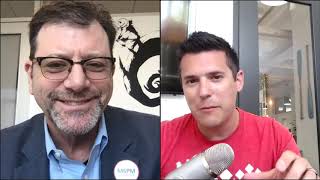
Greg Coticchia, founding director of Carnegie Mellon's product management master's program, explains why dedicated PM degrees are now common and how professionals at any stage can keep learning. He recommends certifications, online courses, podcasts, and conferences like Product Camp, but notes the field has a persistent gender-diversity problem.
Chapters
Hey everybody, this is Mike Belcedo, co-founder of Product Collective, and we're back for another industry interview. Uh, thank you very much for joining us today, especially, uh, day before Independence Day if you're here in the US. So I know that can always be a chaotic day, so I appreciate you joining us. I hope wherever you are it's a beautiful day. Um, here in Cleveland, Ohio, it's It does happen to be a beautiful day, so I will, I will take it. But I'm excited for today's episode because we're going to really focus in on a topic that I think is probably on all of our minds, which is just like, hey, how is we as product people, how can we continue to keep learning? How can we continue to basically, you know, learn and be better product people? So the guest for today is somebody that I've gotten to know over the past couple of years and He's probably as good of a guest we can have for this topic because he runs the first and to my knowledge, only master's program, a Master of Science program in product management. And it happens to be at Carnegie Mellon University. So that is Greg Katikia. And we'll talk to Greg in just a second. But before we do, just sort of a few housekeeping type things. If any of you have issues throughout, if you can't see or hear me, actually, if you can see or hear me, Maybe in the chat, just say like, hey, I can see you or hear you. I know maybe one person might be having some issues. Usually kind of logging off, logging back in does the trick. Also, these are recorded. So if for any reason you have to jump back on later on and you miss something, the recording will be available. It's actually— it'll be available at the same URL. So keep that in mind. And then if this is your first time here, we do these pretty often. So we do these on the first and third Wednesday of every month usually. And this is— we've done several dozen. You could actually view the recordings at productcollective.com and at the top that says interviews. You could check out some of the past ones, but we just basically sit down with product leaders from all around the world and talk through different topics. And it's a great chance for not just me to ask questions, but for you to ask questions, because being honest, your questions are probably better than mine. So actually there's a, there's a section at the bottom that says ask a question. And that's where I'd prefer you direct questions. You could do it at any time. You could do it right now if you had something in mind, but just use the ask a question section and I'll monitor that throughout. And I'd much rather take your questions and offer them up to our guests than mine. So feel free to do that at any point. The chat, though, that you'll notice, that's great too. That, you know, feel free to use it to introduce yourself, maybe just say where you're from, what product you're working on. Just fun to see where, where people are tuning in from. And I see a lot of you chatting already, so thank you for that. And then, yeah, if you aren't a member of Product Collective already, definitely encourage you to go to productcollective.com. We're a community for product people. So aside from coordinating these chats, we have a newsletter that we send out every single week of curated content, different topic every week. We also have a pretty active Slack channel. There's about 7,000 people in the Slack channel and all of that is free. So if you sign up at productcollective.com, we'll get you in on the newsletter, invite you into the Slack channel. We also meet in person twice a year at Industry, the product conference. That's the conference that we organize. I'm wearing one of the very first Industry shirts. So this is a few years old, but it's a fun time. This year, the global edition. Which takes place in Cleveland, Ohio, is in the fall. It's in September 23rd through the 25th. And we have all sorts of speakers. There's fireside chats, small group discussions. This year we've got, let's see, Jason Fried of Basecamp, Nikita Miller of Trello, even Grammy and Academy Award-winning artist Common will be with us. So it should be a really fun time, usually around 1,000. Well, this year probably around 1,200 product people. Last year was around 1,000 product people with us. So It's, it's definitely a fun time. You could go to industryconference.com and check that out. We're also already planning the European edition, which will be in March 2020. That'll be the third European edition in Dublin, Ireland. So check that out as well. But with all of that, I just want to maybe get that out of the way, the housekeeping out of the way, get right to the topic, which is how we can continue to learn as product people. And as I mentioned, Greg Katikia from Carnegie Mellon University is our guest. And Greg, thanks a lot for joining us.
Thank you, Mike. I really appreciate you inviting me, and welcome to all the people online and maybe people that will eventually listen to this recorded. I'm glad, I'm glad on the day before Independence Day you and I could bridge the gap between Cleveland and Pittsburgh and make sure that two rival cities can get along and talk about one great subject.
I am with you. I, and I love Pittsburgh. I may not love the Pittsburgh Steelers, but that's different than not liking the town of Pittsburgh, which is really just a lot like Cleveland. So it is very, very cool. You know, I wanted to— maybe we could start things off with, you know, you, you do, you know, you're the founding executive director of the Master of Science in Product Management program at Carnegie Mellon. And but it's, I will say, like academic programs that focus specifically on product management, even universities that have classes. Like, I, I am an adjunct professor at Case Western Reserve. I introduced the first undergraduate product management class. Before that, there was zero. It's like such a rare thing. Why do you think, why do you think it is so rare? Maybe we could just start there.
Yeah, it is rare. And I saw some comments about different universities offering different things. And it's true. I mean, there's a wide variety of things. We'll get into all that here today. But I think it goes to the history of product management in a lot of ways. You know, if you take a look at where product managers have come from, and then what has happened more recently. And we'll talk about some of those events and things in the timeline that have made it more critical to have product managers. I think the go-to degree for many years, let's say in the last 30 years, was to get an MBA. You know, you were maybe a suffering engineer that was listening to a product manager and said, hey, I can, I can do that job. Or maybe you were a field systems engineer or field engineer or customer service person or whatever, right? You say, hey, I like that product stuff. I could, I could define the what of that product. And so the typical thing is they sent you back to MBA school where you realize there was nothing there about product management.
Yeah, there wasn't in my program.
You know, you learned accounting and finance and economics and you got a good B2C marketing communications course, right? You got one of those few electives. Really nothing about product management. And I think that the inflection point that has changed things came around in the last, let me say, 15 years. Couple, couple things impacted us. One is agile methodologies and the definition of product owner, albeit not product manager, but the sensitivity around, well, what is a product manager, which has always been something kind of fluid, right? And then where does technical product manager, product marketing, where do they all fit? So I think that's one thing. So the Agile Manifesto and the adoption rates of Agile as a, as a way of doing things. The second thing that I've seen is digital transformation, you know, software eating the world and traditional companies now becoming software and data companies and requiring product managers. Both of those have come around where to the point where we now need more product managers, we always need a lot of product managers, there was never enough of them. And then never certainly never enough good ones. But, you know, now we have this inflection point where it is the, the supply of product managers is nowhere near the demand. We cannot rely on simply people going to MBA school, getting a certification, learning on the job, etc. It's not sufficient. So I think those have been the transitions that have happened that have made this more of an acute demand for product management skills and talents.
Well, and yeah, somebody asked the question, which you answered most of it already, which was just like, well, hey, what, what's kind of the difference between a Master of Science in Product Management and an MBA? But it sounds like, you know, it's like the, the specialization really, like the specific focus that like, hey, for, for all of your masters, like it's, it's focused on helping you become a better product manager, which an MBA, you're learning a number of things. I mean, I'm speaking again, having my MBA, but it's it doesn't focus on your career path as a PM. I mean, is that— would you say that's pretty much the major difference or anything else to add?
It's a great question. And quite honestly, because this is a new degree, we're only in our second year, we're about to embark in January on our third year. We get that question all the time. And of course, I'm housed here. This degree, the Master of Science in Product Management by Carnegie Mellon University, is half sponsored by the School of Computer Science, arguably the number one computer science school in the world, and the Tepper School of Business, a top 10 business school. And Tepper produces world-class first-tier MBAs, right? But the reason you would go get your MBA is different than what you're going to get out of your Master's in Product Management. One is a specialized master's degree, one is a broad-based generalized degree. They're not, you know, the MSPM degree is really, you're going to get some things that are MBA-like or light, you're gonna get your business fundamentals, your business communications, organizational behavior, negotiation, conflict management, conflict resolution type of things, principles and product management. But different than an MBA, you're also gonna get, you know, data services and designs for product manager, human-computer interface design, user experience, user design. You're not getting those in an MBA classroom, right? It's just not, it just doesn't happen. So we're really putting together a degree for those who said, hey, I really want to be a product leader. You know, that's what I want to do. We have had some people that actually have their MBAs come here and get a second master's degree, you know, and get their MSPM. But, you know, it really depends on what you want to do with your career. So I look at it, Mike, to answer your question, like a Venn diagram. And specifically MSPM is someone who's already decided, I want to be in product. That's my career path.
That's awesome. Now I can picture the Venn diagram right now. So thank you.
You know, so I'm an engineer with an MBA too, so I went into product management. So I get it. I get it.
You know, one of the, one of the questions that I've been thinking about, you know, we have— when I look at the folks that registered for, for this industry interview session, there's people that are product managers, there's people that are directors of product management, VP of product. So I'm seeing people at different levels, probably some people, maybe they have a year or two experience, others might have 10+ years of product experience. I'm curious your take on regardless of, you know, where somebody is in their career path, I would imagine that, you know, continuing to learn and continuing to refine your skills as a product person is important, but it might be different for that person at year 2 versus year 10. Could you maybe talk a little bit about that? Like, I guess, what would be the differences for those people and what might you, like, what might you recommend in terms of ways to continue to keep learning?
Yeah, you know, a lot of the, the what of product management really fundamentally hasn't changed since Procter Gamble invented the idea of a brand manager in 1931. Right. And so, you know, what you're doing, how you do it, has changed dramatically. And making sure the what of what you're doing as a product manager matches the how of how you're going to get that product built into marketplace has changed, you know, and it changes at a rapid pace. And certainly if you're at different stages in your career, different lengths of your career, the type of education that you may want to receive is going to be Depended upon your flexibility and your time, your lifestyle, you know, what you need to learn. There are, first of all, first and foremost, I tend to look at what CMU is offering here. I'm, we are first and only, but I'm hoping that there are other universities that join us because I think whether we decide to do it as a master's degree program, but it could be an undergraduate degree. It could be, we actually offer this degree also on campus, one year full-time. That's not for everyone, right? There's people that that's not going to fit their life and their, and their career. So if you take a look at different needs at different points in your career, you know, we tend to service like, like a lot of org— like a lot of certifications, people that are maybe 25 to 35 years old, They're looking to get a master's degree. They've spent a few years working. Our average student is about 5 years of work experience. So they, they know how to go to work, as I tell potential employers. And, and they're going back to school, making a sacrifice and coming here and joining us. But that is not for everyone. So there's wonderful online courses that you can take through Coursera and Udemy, and you can find all different stages. There's some wonderful certifications. And I think probably this group, because they're interested in education, knows so much about, about certification programs from, oh my goodness, Pragmatic Institute. We've got 280 Group, AIPMM, General Assembly, Product School, the list goes on and on and on. There are great ways to get educated. And what's great about all those different organizations is they offer varying levels of maturity for where you are, right? So you may not want the Product Management 101 class. You've been a product manager, now you're a vice president in product management, doing it for 20 years. But hey, you grew up with Waterfall and MRDs and PRDs and all that stuff. And you said, ah, you know, I don't know Agile Scrum as well as I should. And maybe I'll go take the AIPMM class because it's You know, it's going to get me a little more confident in terms of the language and the process that I need to learn for as an innovator, as a product manager. That's a great thing to do. And it's going to create value for you that a program like mine will not. But for someone else in their early or mid part of their career, it could.
No, I think it's, I think it's great to bring up all those, you know, the sort of like different different kinds of ways you can learn, whether it be certification programs or like even, I mean, I know when I first became a product person, I was turning to books and podcasts and, you know, there, there are definitely a lot of different ways that we can educate ourselves. So I appreciate you bringing those up.
Jump in on that, by the way. I don't want to do a disservice to those who have written books, myself included, but, and yourself, right? You've written a book, but You know, when I first went into product management, there was nothing, right? You couldn't find a book, you know, stuff that you found was all brand management, B2C. So we have people out there who are practitioners from all different aspects that really are writing from the strategic side to the tactical side, to the role side, to how to interview for the job, everything that you can find out there. And a lot of these resources are very inexpensive. Going to your point, programs like this and podcasts— I can listen to a different podcast every day on product management, and I will take away at least one thing if I want to spend a mere 20 minutes of my time. And there's some wonderful, wonderful podcasts and information sessions that are out there. Just do a search on product management under your podcast, you'll find all kinds of things out there as great resources.
And I will shamelessly plug Rocket Ship FM. I'm a co-host of that podcast. So, uh, your point— I mean, actually, at Industry, we have, uh, we invite some of the top product podcasts. So I know, like, uh, Mike Fishbein from This Is Product Management will be there, Eric Bodak of Product Love, um, there's Product to Product, which they're not— they won't— I don't think they're live recording at Industry this year, but folks that are a part of that will be there. So To your point, there are a lot of great podcasts out there for sure.
I will shamelessly plug one other element because you won't, and that's conferences. Yeah, I, you know, if you do a simple Google search of product management conferences, you will get lists that are unbelievable. One was, you know, 69 product management conferences you have to attend this year, right? And these are from little regional shows to big national, international events. My goodness, you know, bring your team, go to, go to Industry, go, you know, go to a Product Craft, go, go, go to one of these. You will meet people, learn things, get information that will open your eyes and help you take that next step. And people in this business are all kind of suffering the same thing. We all want to learn. And so there is a great deal of camaraderie and friendship that is built by product managers that you can use afterwards to say, hey, I need help with this, or do you have a template for this, or do you have information on that, or how do you get this done. Those conferences and the networking there is so valuable.
Yeah, well, I appreciate you saying that and mentioning industry, and we, and we definitely believe it's valuable. But I will say, for even for those that, like, let's just say you weren't planning to spend money on a conference, Product Camp— there's Product Camp practically everywhere. I know you organized the Pittsburgh Product Camp. I'm gonna be there this year, so I'm excited for that. But what I love about those are that's an opportunity to get in. And let's just say you as a product person have something that you want to share that you're working through. Like, that's the format of these product camps is you sort of pitch your idea and then right in the moment people sort of vote on it and, and you get the same benefit of conferences in a way in terms of like getting to meet other product people and sort of, you know, comparing notes, that sort of thing. So I love that as an option too.
You know, it's great because it's unstructured. It's an unconference, right? And they have these— you can go on, you know, Product Camp site and find them throughout the world. We do. We're in our second year of offering one here in Pittsburgh, which we're proud to have you, Dan Olson, Rohini Poudhany, and others that are going to be here. But we're going to have 20 sessions, right, that are going to have 300 or 400 people here on September 28th. Shameless plug. September 28th here in Pittsburgh. But we get people from the region, we get people from Cleveland, Northern Virginia, Buffalo, Philadelphia, whatever. And it is like a problem-solving session. People come there and say, I'd like to have a panel about hiring great product management talent. You'll get 4 or 5 people from all different types of industries say, well, what is your challenges? What kind of people you look for? Where do you find people? You know, we're building an MVP or, you know, taking a new product or idea to marketplace or retiring an old product that has still a good user base and, you know, all these classic issues. And it's great because it's live, it's on real time, and you get to solve those problems right there.
And it's inexpensive, or, you know, often it's like free. Yeah, it's a pretty good price. There you go. So that's— I mean, I know some of the product camps are free, so that's another reason why I love them. Sort of very low barrier to entry there. I love that.
I mean, can you imagine seeing these speakers? You'd pay a lot of money to go see them. You get, you get free speakers, free sharing, free problem solving, free presentations, free food. We even have a party at Google afterwards. It's free.
So it's hard to beat all that for sure. Um, I, I, we have some audience questions coming in, actually a lot of questions around your program in particular. So, um, might as well dig into there because there's definitely interest. So One, one of the folks asked, so beyond a, let's see, if should somebody consider a Master of Science in Product Management if they wanted to go beyond just the product manager role? So maybe, you know, they don't necessarily expand here, but that might mean maybe they're interested in product leadership, you know, wanting to get to that VP, Chief Product Officer. Do you see this as being sort of a foray into that potentially?
Yes, we want to— we are here to build the next generation of product leaders. That is our mission. Admittedly, we're at an early stage of that, so when we graduate somebody, they're not starting as the chief product officer of a company, but I fully expect our students getting a degree from this university, which happens to have core strengths in teaching the skills that product managers need to be successful. If you look at the classic, the other Venn diagram about what, you know, where's product manager, you know, the three technology, UX, and business. It's what, it's what CMU, and there's other schools too, it's what CMU is actually very good at, right? We know how to teach this. And then we work with corporate partners to actually have students apply it while they're here. But our students are engaged at companies like Cisco and PayPal, and, you know, it's kind of— it's Microsoft. It's a who's who of large companies. And then we have a variety of companies you haven't heard of that are startups where these— where our students are graduating and going to work at. But what we are preparing you is to get a degree where you're getting a master's degree, and you're choosing a career in product. And And we, yeah, we expect you to be that Chief Innovation Officer, Chief Product Officer, Vice President of Product Management. Oh, I lost you there, Mike.
Sorry about that. What does the program look like in terms of sort of commitment? And some people ask like, hey, if I already have several years of experience and I have a business degree, is it the same sort of experience for everybody? Is it full-time kind of for everybody? How does it— how does the program look?
Okay, so it is today not— it is not an online or hybrid program. We expect to eventually get there like we did with our MBA program or other master's degree programs. So I know that does eliminate some of you who may be interested. We do have executive education services that are provided by many of the same faculty here. So if your company or you're interested in and having executive education, Carnegie Mellon University can provide that for you. The program as it is defined today, the Master's in Product Management, is a 1-year full-time on-campus degree. It starts in what they fondly refer to in academic circles— I'm not a lifelong academic, I had a full career in enterprise software in product leadership roles and as CEO in small enterprise software companies, so I get to apply what I've learned in my career and working with students here and leading this program. So I like to think of myself as the product manager for the product management degree. But it starts in January, as opposed to September, and it finishes up in December. So in January through May, you have more orientation towards business classes. And so you'd be taking courses that are principles in product management, business fundamentals, things along those lines, business communication, communications. There are some electives and some user experience classes. In the summer you go through an internship and we have our interns at a wide variety of companies today. And that's where they are over here over the summer. I work with them over the summer in their internships. And then in the fall they come back and it is more user experience, user design, business with a heavy dose of electives. Coming to CMU, people wanna take courses in artificial intelligence and machine learning and robotics and all the things that are the hallmarks of CMU education. So you get to meet world-class professors in that. I met one gentleman who's, by the way, in our user experience faculty, John Zimmerman. One of my students says, "Hey, do you know John?" And I said, "Yeah." And he says, "You know, did you ever swipe up on your phone or swipe right?" Yeah, he said he patented that. He did it in 1997. So, wow, that was a little, little ahead of his time. So, yeah, I mean, you're dealing with people that are incredibly brilliant and great professors, and it's a great, it's a great class. Again, it's about our students have anywhere from a couple years work experience to a dozen years. So we have people in their early 20s to their mid-30s. We have folks that already have a master's degree, although most don't. People that have been in software or information technology development teams that want to take the next step but don't want to go for maybe a 2-year MBA or a 2-year degree somewhere else. Or, you know, it's a wide variety of people that are looking in the areas. Hopefully that addresses— Yeah, that's a great—
I think it's a great overview. This is, um, A question that I, you know, just kind of popping in my mind now, but it's the product person in me, right? So this program's, you know, relatively new, been around a couple years. I'm just curious your take on what have you— like, what have you learned? Like, what, what's— what have maybe weren't you expecting that you've seen happen? And, and, you know, maybe it'll lead you to iterate some things over the next couple years. But yeah, like, what have you learned from, from this master's program?
Just like me, Mike. I'm such a product geek too. That's exactly what I— every time I run this and We went from a handful of students, our little MVP, to mid-20s in terms of students. Now we're eventually going to build this up, probably getting 40 or 50 students on a cohort. You're launching a product, it doesn't matter what it is, you're always learning something. What classes did they take that were interesting? Which professors worked out? How do we get them in terms of internships? What is the mix that we need? Certainly, the thing that I struggle with, and I think the industry struggles with, is there's not enough women in product management. I really would like to get more women in our program. And because there aren't a lot of women with, in terms of engineering or computer science or technology background, fewer of them were. Some of the greatest product managers I've worked with throughout the years don't necessarily have a technical undergraduate and certainly work with, with women as product leaders. That's why we're inviting such great people here to the Pittsburgh Product Camp as well. So that's one thing I think in terms of the curriculum. It's really interesting to see the mix of meeting less on the technical side and more on the business organizational behavior side. I think people get real value, and when, especially after their internship, because a lot of people come here because of the quantitative nature and reputation of Carnegie Mellon University, they come here, you know, expecting a lot more of those types of courses. I think what, what we found is that they, they, they, they internship, they come back and say, wow, I really need that conflict resolution course, that negotiation course, which would be a good one for me to have, you know. And so you find those skills to be more valued and that there to be more of them. And so we've, we change a little bit of the mix of what we're doing there.
Yeah, got you. Yeah, I think I think it's definitely true that it's like you have the— you need the soft skills and the hard skills. And that's what I'm really intrigued about with a master's that's specifically focused on product management, just having the right mix of those, you know, taught in a— in, you know, throughout your academic career as a, as a, you know, product, product person taking a Master of Science in Product Management. So that's cool. Now, hopefully over the next few years, just Yeah, you keep learning, you keep iterating. And yeah, I mean, I totally agree with you in the fact that like some of the smartest product people I know happen to be women. So I think message to companies out there, hire more women product leaders because actually they're definitely out there.
We need more women.
Seriously, some of the— I think this year at Industry, it's— I think it might be 50% of our speakers are women and And it's not even a shock to me because again, it's like some of the best ones I know happen to be women. Again, nothing, nothing, nothing against you men out there too. But it's just, it's just the truth that there's, there's great ones on both sides. Well, we're, we're— time is flying. We're at 1:30 and that's when the session is set to end. I guess just in the, in the whole, you know, thinking about the subject of product people and learning or whether it's you know, again, anything having to do with the program, any sort of like final thoughts that you want to share? If somebody is walking away and you want sort of one thing to stick with them, you know, what might that be?
Education is a lifetime process. You, even if you have been a successful product manager and successful career as a product manager, don't stop learning what you were great at and you accomplished in 2000, 2005, 2010 is in many ways irrelevant in today's world. So go online, go to that conference, listen to that podcast, think about further education in any form that you like to digest it. It's all out there. I used to have a boss, when I asked him one time why we had so many different ways of pricing our product, he said, because I'd like to take the customer's money any way he'd like to give it to me. And I think education is the same way. You go out there any way you like to consume it. You want to have a formal master's degree? Great. You want to go online, get a certification? Wonderful. You want to go to an open class? That's great. You want to get a podcast? Fantastic. But consume it. Do it. Read a book.
I love it. I love it. I think that's a great way to end. So, Greg, thank you so much for taking the time to be with her. Here with us today. I really appreciate it.
Yeah, thank you, uh, so much, Mike. It's wonderful to see you. Happy July 4th, everybody. Thank you for being a part of the session, and I look forward to hearing from some of you.
Yes, happy Independence Day to all, and thank you for being here, and we will see you the next time. See you later, everybody.
Bye now.
More from Greg

Changing Buyer Behavior | A Conversation With Greg Coticchia | Tech Done Different Podcast With T...

3 Decades, 5 Marketing Truths and The Power of Perspective with Greg Coticchia and Bryan Scanlon



Changing Buyer Behavior | A Conversation With Greg Coticchia | Tech Done Different Podcast With T...

Hot Topics in the Summer Heat: Greg Coticchia's Take on Product Prioritization

The Great CEO Podcast with Pam Singleton from The CEO Project and Greg Coticchia CEO at Sopheon.

🚀 Lessons in Innovation Management and Entrepreneurship with Greg Coticchia, CEO of Sopheon


Sopheon CEO Tackles Smart Product Development Challenges on World Product Day 2021

Product Management Misconceptions w/ Chad McAllister, Host of The Everyday Innovator