Moving into a Product Leadership Role, w/ Rich Mironov, Author of The Art of Product Management
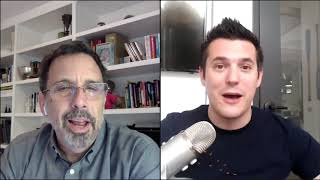
In this 30‑minute industry interview hosted by Product Collective, host Greg Coticchia (Speaker A) talks with seasoned product leader and author Rich Mironov about the transition from product management to product leadership. Mironov explains how product leaders differ from product managers: they move from caring for individual products to caring for the product organization, its people, and its portfolio. He outlines the core skills needed—understanding organizational behavior, influencing, mentoring, hiring, and portfolio thinking—while warning against promoting non‑product people into leadership roles. The conversation covers practical pathways for aspiring leaders, such as taking on cross‑functional projects, seeking mentorship, and self‑assessment tools like personality tests, and discusses the limited value of an MBA. Mironov shares advice for building a product function from scratch, including educating executives, consolidating fragmented backlogs, and making hard prioritization decisions. He examines the player‑coach model, noting it works only at very small team sizes, and stresses the importance of a peer relationship with the CTO, regular informal communication, and keeping engineering from becoming a feature factory. Finally, he highlights common early‑stage pitfalls for new product leaders—making no major changes in the first two weeks, learning to say no, and aligning sales compensation with product strategy—while also addressing how to determine if a product manager is better suited to stay an individual contributor or move into leadership or other senior roles.
Chapters
Hey everybody, we are back for another industry interview. I hope you're having a good afternoon where I'm at anyway. Good morning if maybe you're on the West Coast, or maybe it's good evening if you're joining us from, from Europe. But anyway, I'm glad that you're here. These are fun, so I hope that you are ready for a good chat with our guest today, Rich Mironov. Before we get into the chat though, I just wanted to sort of introduce what this is all about and introduce what else we're up to at Product Collective. And we're the company behind these industry interviews. So these industry interviews, these are 30-minute Q&A chats. So I've got questions for our guests, but really I hope that you also have questions because this is something that, you know, I've been excited about this topic, but I'm sure you have questions that are probably better than what I have in front of me. So there's a section called Ask a Question. You could see it right at the bottom and just put your question there. You'll notice there's also a chat on the side, and that's great for introducing yourself, sharing where you're from, what product you're working on. You can also let me know if you can see and hear me right now, because sometimes I'm always worried about that. But in all seriousness, use that ask a question section to fill it up with questions that you have, and I'll be monitoring that throughout. So I'll probably start off with a couple of my own, but If that gets filled up, I'll be going to that right away. The other thing is these are 30 minutes, so we'll stop pretty much right around 1:30 Eastern, but this will be recorded and the session will be available pretty instantly right after our conversation. You could come right back to the same URL. So that's what this session is all about. I'm glad that people can see and hear me okay for the most part, sounds like. Now, we at Product Collective, we're a community for software product people. And really, you know, we have all sorts of things. We have a newsletter that goes out every single week that around 20,000 product people get. We have a Slack channel where there's around 8,000 product people that are every day trading ideas and best practices. So if you aren't taking advantage of that right now, all you have to do is go to productcollective.com and just submit your email and that's it. You're a member of Product Collective then and you'll get access to all those resources. I will say, though, the, the really fun thing that we do each year, though, and now we do it 2 times a year, is our conference, Industry, the product conference. I actually just got back from Dublin, Ireland a couple of weeks back. Our guest was with us as well. He was one of—
it was a great time. I had a terrific time. Thank you.
We had fun with you, Rich, for sure. And so for those of you, if you've never come out to Industry, you could go to industryconference.com and check it out. Definitely feel free to do that. But I'm actually wearing the official Industry Europe 2019 t-shirt, so I am all industry'd out today. But yeah, we have our global edition, which is even bigger. We'll have 1,200 people with us, including our guests, coming up this September. So again, just, you could go to industryconference.com to check that out more. But with all of that, you know, I'd love to get into today's session and Rich, again, I know we were chatting before we went live, but it is great to see you again.
It's a huge pleasure. Thanks so much. I had a great time in Dublin and I'm really looking forward to the Worldwide Conference in September. So, and, and for all the folks online here, I hope to meet you there too.
Well, I, you know, I want to really jump right into today's topic, which is, you know, how do we start to move in from a product person to becoming a product leader and I know it's a— we're talking about two different ballgames here, right? Like, to manage product and think about product day in and day out, and then all of a sudden start to think about product teams and how do we manage those product teams. It's just different. So I'm just curious, like, maybe you can start by just sharing, like, what is the distinction between product people and product leaders? What sort of makes them so unique from each other?
I think it's not as drastic as it might sound. You know, I've been doing what I would call product leader work since 2001, so pretty long stretch for me. And just definitionally, I think of a product leader as somebody who's managing one or more product managers and the various processes and things that go around that. So product leaders just getting kicked one level up the org chart from where product managers are. Essential things for me, you know, as a product manager, I always mostly fell in love with my products. You know, I thought of my products the way I thought of my children. You got to raise them. It takes a long time. There's a lot of mistakes along the way, and I always apologize to them and put them in their best light and try to make them grow up to be big and successful and either, you know, playing Carnegie Hall or in the big leagues, whatever it turns out to be. So you know, product management where we're living through our products for our products. The product leader job, I think, is one step up from there, which is the, the thing you have to love and care about and look after and nurture is your product team, your product organization. So rather than fixating on one or two particular pieces of the portfolio, it's the organization. How are we hiring and firing and mentoring? How do we assign people? And then a lot of— I think of it as organizational thinking. How do we get our other peers at the top of the organization to appreciate what we do, to let us get our jobs done, to grab the authority to make decisions even though we have no authority? And so as the product leader, I'm much more working on the interactions, the staffing plan, the budgets, the mentoring, the hiring cycle, and a tremendous amount of How do we grow the folks on the team so they're better, stronger, better-looking product managers next year than they are this year? How do we share what we know so that as the product leader, actually, I want to make fewer and fewer product decisions. I want to build up my team such that I'm mostly agreeing and ratifying and selling through to the rest of the organization the really smart things that my product managers have come up with. Because they're closer to the details and they love the individual products way better than I do. So I become much more of a, you know, a merchandising person for all the good stuff that the product folks and the engineering folks and everybody else are doing.
That's a, that's a definitely a helpful start. You know, I know with a lot of product leaders, it almost seems like there's not necessarily a required path at all, but there is sort of a path that some product people envision for themselves, even where it's like, okay, you know, I'm this, I'm a product manager now, but I, but I aspire to be that VP of product or, you know, chief product officer or whatever it might be. But the things that you're mentioning, I mean, they're different tasks, they're different activities. I imagine it probably also requires a different skill set altogether. So maybe you could, could you just talk about like, what are the skills? We probably know what the skills of a product person should be, but How is it so different when you are that product leader?
Sure. And that's a really important distinction. If I back up a space, though, I spend a fair amount of time with a lot of my clients because I'm a consultant who works on really just this issue where the head of product is somebody who's been brought in and has no product experience. And in my many, many data points here in my pretty long career of trying to fix this, this is maybe the number one problem I run into. So it's anchored in the idea that what we do as product managers isn't that hard. And so therefore, because our company works on some really complicated technology, whatever, 5-factor authentication, we have to go get some CTO who's got a doctorate in 5-factor authentication instead of somebody who knows how to do the product job. Or we get somebody from sales or we get somebody from marketing and we put them in charge of a product team. And honestly, they don't know even what product managers do, let alone what product leaders do. And that's a pretty short failure mode. So the first thing for me is I strongly, strongly believe and encourage organizations to move somebody up into the product leader job who's been in the trenches, built and shipped a bunch of product, taken their bruises, has a lot of humility left over from the last couple of things. Now, within that, I think the key skills are around understanding how organizations work, how reward systems work, why people behave the way they do. I strongly push all of my senior product managers, if they haven't been, to go to some Myers-Briggs course or some other How to Influence People, get their copy of Dale Carnegie from the 1920s. Because for instance, if we think our salespeople act and think the way our engineers act and think, then we simply don't understand what's going on. So, you know, number one skill, really think about how the different folks in the organization behave, how they're rewarded, what makes their day, so that when we're selling all the good product things we need to sell internally, we're pitching it the right way. And again, a lot of thought about mentoring and training. How do we find good talent? How do we promote people who are ready to be promoted and give them as much responsibility as we can give them without setting them up for failure? So those are two key things. The other two things on my list, as an individual product manager, I love and pay attention to the revenue and outcomes and customers of my individual product. When you move up to the product leader job, you have to take a portfolio point of view. So some of the products are going to get more funded than others, and some of them are going to be more successful than others. Which ones are in supporting roles? Which ones are to make money? How do we have a portfolio of thoughts so the individual products don't run off in other directions and have an incoherent or non-portfolio view? So either I have to do that or I have to find someone on my team to do that so that we've got a well-thought-out set of stuff, not just a bunch of broken piece parts. And then, you know, the last one, I think there's a lot of work on really the process of product management. So are we using common tools? When we talk about roadmaps, do we know what we all mean and do we have a common way of representing those? How do we pitch our executives on getting things done in a way that they hear and understand? So all of that wraps around really delegating as much of the real work as I can delegate, but being the safety net, being the suspenders and belt on that so that folks don't fail.
And you know, what about, so for the cases where maybe they are product people now, again, maybe looking ahead to a leadership role, or maybe I should back up. Are there cases where that product person where you might recommend to them, hey, maybe continue to be a product person. You're a great product person. Product leadership, it might not be the right path for you, whether it's interests or skills or what have, like what would you look for in a person to make that sort of determination?
I think it's a really good question. And, and my analogy here, I think, is how I see really good engineering teams work. So the best folks who are engineers or software developers, whatever we want to call them, many of them don't want to be engineering managers. In fact, they'd be terrible at it. But we know that they want to be promoted and they want to have more responsibility. And so there's all kinds of vectors up where we make them architects. Some companies have this thing called distinguished Engineers, you know, there's all kinds of labels we can create and promotional paths such that we don't pull our absolute best individual contributor developers out of the team and force them to be managers, which they would hate. We find a way to keep them, reward them, enthuse them, show them that we care, and let them do the thing they're great at. So I see a lot of product managers who love the job. And honestly, I think that job is more fun than the product leader job because you actually are closer to the results and the teams and getting real things done. So somebody who, who loves what they do, we want to find a way to grow their job, grow their responsibilities without necessarily pushing them up the stack. But there's other folks who have terrific— sometimes we call them soft skills, although I think that underplays them. I would call them organizational and people skills, and they're great at getting collaboration from other departments, and they're great at driving consensus, and they're great at piecing together a strategy out of assorted parts, and they're great at a lot of budgeting and hiring and spotting talent. And those are the folks that I think I want to, you know, foster. I want to raise up and turn into product leaders if they can. There's a third path too. So sometimes folks don't want to do either of those or they're tired of them. I see senior product managers as great candidates to run other departments and functions. Who's running customer support? Who's running— or customer success, the sales engineering group in the field? There's a lot of places where all of your product skills are great, but there either may not be room to move up because there's very few of these leader jobs, or you want to branch out. So, you know, this is much more about helping somebody figure out what they should want to do next or what they do want to do next than to force fit, you know, to have a regimented path where everybody has to move into product leadership.
That's great. I, you know, we're getting some audience questions coming in, which is awesome.
Great, let's go for them.
Yeah, keep those coming in, by the way, everybody. And one of them, so the person that wrote He's a new product leader in a company, and this company's never even had a product manager before. But this is the new VP of product in this company. So it sounds like there's going to be some product managers, some, you know, they're building out that product organization. This person's asking for any sort of feedback you have for him, giving him, given that it's new to him for this company, but it's new for the company as a whole too.
Right. So I, backing up a step, I've often dropped into companies as the interim or temporary head of product, maybe 12 times already in my career. And generally they, people only reach out to me for that if they've completely failed to have a product organization or one that's working or somebody in charge. So I'm often walking into this very situation. Things I notice first, it's almost always true that the rest of the executive team doesn't really know what product people do or why we're valuable. So everybody understands what the engineering team does because they build the stuff we sell. Everybody understands what salespeople do because they bring in money, ideally for the things we build. But when I go around the executive team, there's almost nobody who can tell me whether we have a product team, what they do, how to know they're any good. And so I find that there's a whole— again, I'm going to use the word merchandising, but, you know, I have to sell the benefits of product planning and validation and not building the wrong thing and having a business model, maybe even doing our pricing analysis before the product's ready so we know if we can make money on it. I have to spend a lot of time with my peers to make sure that they understand why we're even going to bother hiring a product team that's more than just somebody who takes what sales says and writes it on a Post-it note and then trades it out for a Jira ticket. Usually that's all they see, and so they would like us to hire the cheapest, most junior product folks we can find because all they're going to do is sit with developers and write user stories and nobody really cares. So, you know, that's maybe the very first thing I would do. I would also— other thing I spend a lot of time seeing is inevitably there's about 40 times as many sets of demands and commitments and promises and things people want from the sales and customer side than we can ever build. And that's usually stacked up in 15 or 20 different backlogs owned by 15 or 20 different organizations, none of which are on the product side. And so the very next thing is to pull those lists together and to have a really tough conversation where we point out that almost all of those are never going to get done, even though they've been on somebody's list for 5 years, and that we're going to have to make some really hard choices about the 5 things we're doing, not the 500 things to put on the side of the road. And those are product leader problems because nobody in the rest of the organization actually wants to hear that their one thing ain't gonna ever get done.
I do remember, as a quick aside, I remember coming into a company and it was a small company, but as their VP of product, and I was so scared to basically, they had hundreds of of things on their, like, backlog, right? And I was scared to basically say the backlog doesn't exist anymore, we're going to build it. And, and it was like when I— when we kind of had that conversation, like, there was like a slow clap in the room. Like, it actually— everybody felt relieved about it.
Um, sure. And they don't always feel relieved, but, but the real answer is we're never going to get the bottom 600,000 of those things done. So the sooner we start telling the truth and sooner we have a plan or a roadmap or, or a, a whatever that has the 4 things we're really doing and pushes everything else out and doesn't waffle and doesn't apologize, the sooner we actually make sure we're getting the right few things done and everybody's ready to take them out. That's, that's really hard for individual product managers to do because they lack the political clout. So the head of product, the product leader, the VP product, whatever it is, has to be the person who takes all the arrows on this. Because otherwise the team can't do their work.
I want to go back to another audience question. Actually, I'm going to kind of combine a couple questions that are similar. The question, the first question was just how does one actually move up into a product leadership role? Like what, what are the— if I'm that product person that wants to go down that path, like what should I be doing to get there? You mentioned a couple of things earlier, like Hey, we could start to, you know, take certain tests to understand about ourselves. Are we prepared for this? Somebody else also asked, though, you know, a lot of postings have MBA required. Do you think an MBA should be required? Maybe you could talk about that for a little bit.
Sure. And let me take them in that order. So a fair number of people end up in the product leader job on a field promotion because the chair is empty and there's nobody else nearby. And It seemed like a good idea at the time without much thought, without much planning, and then, you know, you swim or you sink, or maybe you get some outside help. I do a fair amount of coaching of heads of product for just this reason. But the looking around the room, tapping somebody on the shoulder, giving them a new name tag that says product leader, I'm not sure is an ideal strategy, but it often happens. So if you're in the right place at the right time, great. Things I'd be doing if I'm one of the senior product managers on the team that will highlight, you know, the skills or talents I need. I'd volunteer to be on some cross-functional task forces that aren't necessarily about my product so I can meet lots of other stakeholders, figure out who the directors are, make connections. I would be mentoring some of the junior folks on the team because that's one of the things that your head of product will recognize in a moment and say, that's somebody I really respect and need. I'd be— again, I'd be thinking about those organizational classes. I would definitely go off and do the Myers-Briggs equivalent thing. I'd be trying to make a bunch of work friends across all the different functions and find out what they think is working in product or not. Key requirement of the product leader: who likes us? How do we fix it? And I think it's excellent, actually, if you're working for somebody who you think is really strong as the product leader, go to that person and say, I'd really like to have a job like yours someday. Let's talk about it. What skills am I lacking? How do I get prepared? Ideally, that person won't say, oh, they're out the door in the next 5 minutes and the job is yours. But, you know, if you're working for somebody you respect, that's the first place I would go and have a serious talk and maybe you'll learn something. As far as MBAs go, I do have an MBA from a famous university, but I don't think it's required. There's stuff you learn in your MBA program around finance. There's more important things you learn about how organizations work and how people are rewarded. But for the most part, I think the biggest outcome of an MBA program is you meet a lot of folks who go to a lot of interesting places. If you really want to be a product leader, Buckle down and do it. In the same way that if you want to be an entrepreneur, going off for 2 years of business school isn't an obvious side trip. So I appreciate all the things that many of us learned in our MBA programs, but I wouldn't make it a requirement at all. I would make it a requirement that anybody who's a product leader has managed some products of their own before, because otherwise they're lost.
That's great. Yeah, it's like if you can, if you can capture those things that you might have captured, you know, the different skills and things you'd learn in an MBA program doing other things, um, great. You might— that might not be a requirement. I, I agree with you though. It's like the network that you get sometimes maybe is the most helpful thing that comes out of it too.
And I think if you look at the cost of MBA programs, dropping out of a full-time job for 2 years So there's no salary coming in and huge tickets. So even if you're going to do an MBA, I think a lot of folks are smarter to do the night and weekend ones. Again, a lot of famous universities that have great programs that don't require you to drop out for 2 years.
Yeah, I, my young kids will be in college by the time my, my MBA is paid off. So there's, there is that too. Somebody else asked this question. I think this is a great one because I have seen executives sort of put this out there, and I've always wondered and questioned about this. The question is, what about the player-coach model where somebody that is in a product leadership role, they're also asked to manage certain pieces of product as well? Could— do you see that as being something that's viable? You know, can, can something like that work? What are your thoughts on that?
I think that's a scale and scope question. So I've joined a bunch of startups. I did 6 startups in my day, and 4 of those I joined as the head of product as employee number 10 or 12 or 15, when I was all of product and sometimes all of marketing, all of business development. So there I was doing, not coaching. I think if you're, if you're a product leader and you have 1 or 2 people on your team, particularly if they're junior, then you are a player coach because you're doing a lot of the work and you're doing their portfolio stuff and you probably own 2 or 3 pieces of product that you couldn't yet delegate down. But I think if you have 5 or 6 people working for you, I no longer think you can be a player coach. I think you can be a mentor. You can coach the work, but I don't think you can own your own piece of the product set and also manage 5 or 6 people. So, you know, the requirements of the job mean you're going to either fail at being a product leader or do a poor job of managing whichever product you retained. So as soon as possible, I want to hire both senior and junior people and hand off all the pieces. Then I'm required to make sure they fit together. So I may own the portfolio still, but, um, managing people's hard, managing organizations is hard. Getting executives to do stuff is hard. Pushing change is hard. Those are real jobs. So if you've got 5 people, and you're doing anything else, I think somebody's getting shortchanged. I'm not hearing you, you're on mute.
Sorry for that. I want to take at least one more audience question. We're getting sort of close to the end, but I think we have time for one more, then maybe a sort of a final closing question.
Sure.
Um, but so here, you know, coming— I just had it. Let me— yeah, so coming from the audience here, It's when you step into that product leadership role, what— how else should you work with the other leaders, particularly the CTO? Like, what do those new relationships look like for you that if you're that product person, you might not— you might not have any context there, right?
CTO is a really important job. Sometimes the product folks work for the CTO at pure software companies because I mostly work with folks who build software for a living. I believe in a model where the VP of Engineering and the VP of Product our peers, because we as product folks often have to take positions that engineering may not like. And so when product works for engineering or for the CTO, I worry that we become feature factories, that we get told what to do, that we skip all of the stuff at the beginning. If I look at where product management really, really, really adds the most value, it's at the very start of every process where we do the market validation and figure out if it's a good or bad idea. Mostly they're bad ideas and we decide not to build it. When we become subservient to engineering and we get told what to write requirements for, we get told what to shepherd out to the market without doing validation and customer interviews and, you know, discovery, whatever you want to call it, then I see engineering teams wasting probably half of all the work they do because we're building crap that nobody wants. And we gold-plated it and it's beautiful and it tested, but nobody uses it. So again, I think of product and engineering as peers. And within that, I still believe we as product folks every day have to sell to our engineering teams why we matter. So I'm going to take the CTO or the VP engineering out for lunch or drinks once a week, just the way I take the head of sales out for drinks or lunch once every couple of weeks. If there's issues, I want to settle them between us rather than in the staff meetings. If somebody on my team is not doing well, I want to find out early so we can coach them up, mentor them up, or move them on. If folks in engineering aren't doing what we need, then I want to go to the top first, gently. So I believe we're peers and we need each other's mutual respect. The good VPs of engineering I worked with over the last decades all know that if they have a good product team, engineering looks way better. And ship stuff that makes money. And so engineering should always want to be strong supporters of product because then engineering looks taller and better looking and more successful and their velocity is twice as high because we didn't build the half of the crap that we threw away at the end.
That's great. I appreciate that. Well, you know, we really have time for just one more question. Time goes by really quick when you're having fun, right? But I— we talked about a lot of things that we can do to set ourselves up well. I'm just curious if there are maybe a couple quick things that we should look out for, like common pitfalls, traps, things like that that we might not be expecting.
Sure. And there's an infinite number of those, and I've made most of those mistakes myself once each. But things that immediately come to mind: if you're the brand new product leader, I would suggest making no major changes or decisions for the first 2 weeks, because you're going to walk in thinking you know everything that's broken and you're just plain wrong. Dig, dig, ask lots of questions, interview everybody, find out what's working, do some retrospectives, run the numbers, right? Second thing, and somebody just came up with the right comment, an essential part of the head of product or the product leader job is to say no to all kinds of people all day long in the nicest possible, sweetest way so that you respect them as people but don't promise the thing they want. Right? So, you know, get everybody used to the idea that you're the bad guy. And when they want something from your team and their team says no, and then they escalate it to you, they get a no right back. And then probably the other thing I'd really focus on is my very first week in that job, I would ask the VP of sales for the comp plan for the sales team. Because if they're, for instance, paid just as much to sell the old product as the new product, and we're hoping they're going to spend extra energy learning how to sell the new product, but they can all make quota on the old one, I know what's going to happen. If a lot of the behaviors that we see in our products are driven by the way we pay and reward and organize our sales teams, I never want to let that go too long.
That's, that's great. I appreciate that. Um, yeah, we're kind of at the end of our time, but I know there are a ton of questions I didn't get to, and I'm— maybe if you wouldn't mind letting folks know how they could keep tabs on you, because I know you're on social media, on Twitter, and maybe, maybe they could connect with you there.
Right, I'm going to put my email address here, and then just for fun, here's my web address. Anybody who hasn't been to my site, I have 18 years' worth of blog posts on software product management and software leadership. They're all free. Take them. And a lot of tools and probably 10 years' worth of recorded talks and slideware. So that's the first place I'd point people. I try to answer questions in writing on my website so everybody can get a hold of the answers individually.
That's great. And I do know, you know, Rich has an awesome book. One, you know, one of the first great product management books, The Art of Product Management. Rich's video from Industry Europe will be available very soon on productcollective.com/videos. So his talk should be up, should be up pretty shortly in the next week or so, probably. So check those things out as well. Well, Rich, thank you for joining us. This is a lot of fun for me. I really appreciate the time.
Thanks. I had a great time. And anybody who has trouble finding me, just, just Google me.
Sounds good. And thanks everybody else for joining us today. Um, I know we have at least one other upcoming industry interview that's already posted, um, but if there's only one up there now, check back in a couple days because we have a couple more that will be posted soon. So join us for those soon, and we'll see y'all next time. Thank you, everybody.
More from Greg

Changing Buyer Behavior | A Conversation With Greg Coticchia | Tech Done Different Podcast With T...

3 Decades, 5 Marketing Truths and The Power of Perspective with Greg Coticchia and Bryan Scanlon



Changing Buyer Behavior | A Conversation With Greg Coticchia | Tech Done Different Podcast With T...

Hot Topics in the Summer Heat: Greg Coticchia's Take on Product Prioritization

The Great CEO Podcast with Pam Singleton from The CEO Project and Greg Coticchia CEO at Sopheon.

🚀 Lessons in Innovation Management and Entrepreneurship with Greg Coticchia, CEO of Sopheon


Sopheon CEO Tackles Smart Product Development Challenges on World Product Day 2021

Product Management Misconceptions w/ Chad McAllister, Host of The Everyday Innovator